


ABS brake bleeding requirements depend on where air can get trapped: if air stays only in the brake lines and calipers, many vehicles bleed like a non-ABS system; if air enters the ABS hydraulic control unit (HCU/modulator), you may need a scan-tool “automated bleed” to cycle valves and the pump.
Beyond the “do I need a scan tool?” question, the next intent is understanding what you must prepare—correct fluid, stable vehicle support, and a method that won’t introduce new air or damage seals.
Another intent is choosing the right bleeding sequence and confirming results so the pedal is predictable before you return to normal driving.
Giới thiệu ý mới: the rest of this guide turns those requirements into a practical, step-by-step decision flow you can apply to your specific ABS setup.
Do ABS-equipped cars require special bleeding steps?
Yes—many ABS-equipped vehicles can be bled conventionally, but if air enters the ABS modulator/HCU you may need a scan-tool routine to cycle solenoids and the pump so trapped air can escape. To avoid guesswork, start by identifying where the system was opened and what the service information calls for.
To connect the “requirement” to a real-world outcome, the core question is simple: did air have a path into the HCU, or only into the downstream circuits?
When conventional bleeding is usually enough
If you replaced pads/rotors, opened a bleeder briefly to retract pistons, or cracked a caliper hose and immediately sealed it, air may never reach the HCU—especially if the master cylinder reservoir never ran low. In these scenarios, a pressure or vacuum method (or a careful pedal method) often restores a firm pedal because you’re only evacuating air from lines and caliper bores.
To keep the flow logical, the next step is confirming you are not “chasing” a spongy pedal caused by technique rather than trapped HCU air.
When special ABS procedures are commonly required
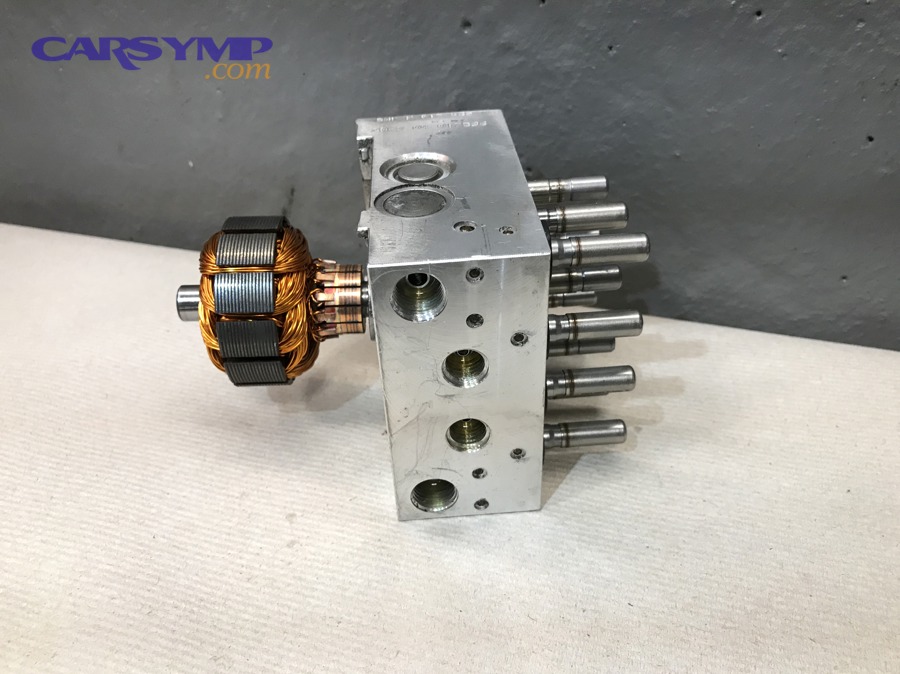
If the master cylinder ran dry, the brake pressure modulator valve (BPMV)/HCU was replaced, or a hard line to the modulator was opened, air can be trapped behind normally-closed ABS valves. In that case, many manufacturers require a scan-tool “automatic/bleed” function to cycle solenoids and sometimes run the pump so air migrates to the bleeders.
To make that requirement actionable, you’ll need a pre-check that tells you whether you should plan for scan-tool cycling before you even pick a bleeding method.
Quick checks that point to “HCU air likely”
Common clues include: the reservoir went empty; you replaced the ABS unit/HCU; the pedal sinks slowly even after repeated wheel bleeding; or the scan tool reports an “air bleeding mode” or “ABS bleed” service function in OEM instructions. The last clue matters because some OEM steps explicitly include cycling the HCU and then bleeding wheels again for final pedal feel.
The next section “locks in” the minimum equipment and setup so your procedure matches the requirements rather than creating new problems.
Theo nghiên cứu của SAE International từ Brake Systems/Fluid Properties, vào 04/1971, các phân tích về chất lỏng phanh cho thấy độ ẩm hấp thụ làm giảm biên an toàn sôi (boiling margin), khiến kiểm soát bọt khí và thay/đẩy fluid sạch trở thành trọng tâm của quy trình xả gió đúng chuẩn.
What must you have before you start an ABS bleed?
You need the correct brake fluid specification, a clean bleeding method (pressure, vacuum, or pedal-assisted), and a plan to keep the reservoir from running low; if your ABS procedure requires valve/pump cycling, you also need a compatible scan tool and stable battery voltage. Next, you’ll match tools to the scenario you’re in.
Brake fluid: spec first, then freshness
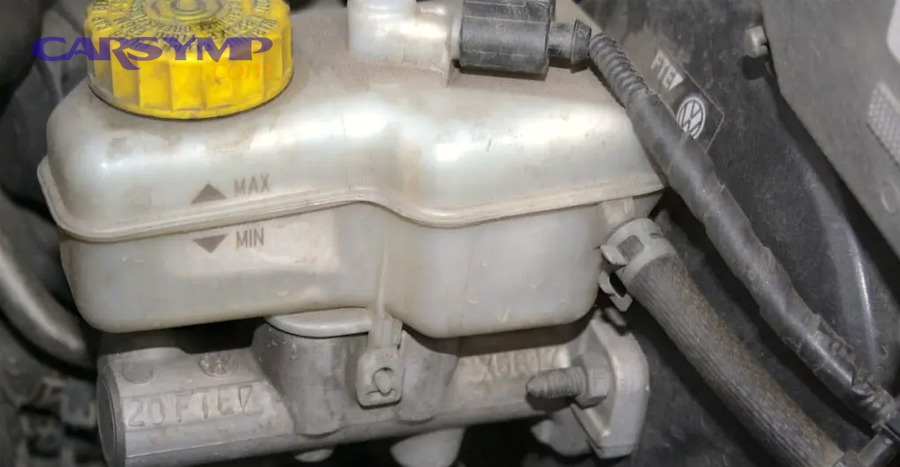
Use the exact DOT type listed on the cap/owner’s manual (commonly DOT 3, DOT 4, or DOT 4 LV; some vehicles specify DOT 5.1—do not confuse this with silicone DOT 5). Brake fluid is hygroscopic, so once a bottle is opened it can absorb moisture over time; the “requirement” here is not just the DOT rating but fluid that preserves boiling point and corrosion protection.
Next, because moisture matters most when you’re pushing old fluid through a complex ABS unit, you’ll choose a method that minimizes mixing and aeration.
Bleeding method hardware: pick one “clean path”
You can meet most ABS brake bleeding requirements with one of these tool paths: (1) a pressure bleeder that pushes fluid from the master cylinder, (2) a vacuum bleeder that pulls from the caliper bleeder, or (3) a pedal-assisted method with a helper and a clear hose/bottle. The common requirement across all three is airtight connections and a reservoir that never drops below MIN.
To make that choice easier, here’s a quick mapping of tools to outcomes.
This table summarizes what each tool/method is best at, what it risks, and when it meets typical ABS requirements without extra steps.
| Tool/Method | Best for | Main risk | ABS requirement fit |
|---|---|---|---|
| Pressure bleeder | Fast flush, consistent flow, minimal pedal movement | Over-pressurizing reservoir/cap leaks if wrong adapter | Excellent; often recommended when HCU air is possible |
| Vacuum bleeder | Solo work, quick caliper bleeding | False bubbles from bleeder threads; can mislead you | Good for line/caliper air; verify with pedal check |
| Pedal + helper | Simple, low-cost, easy to understand | Over-stroking master cylinder; aeration if “pumping” | Works if done correctly and HCU is not air-bound |
Scan tool and battery support (only if required)
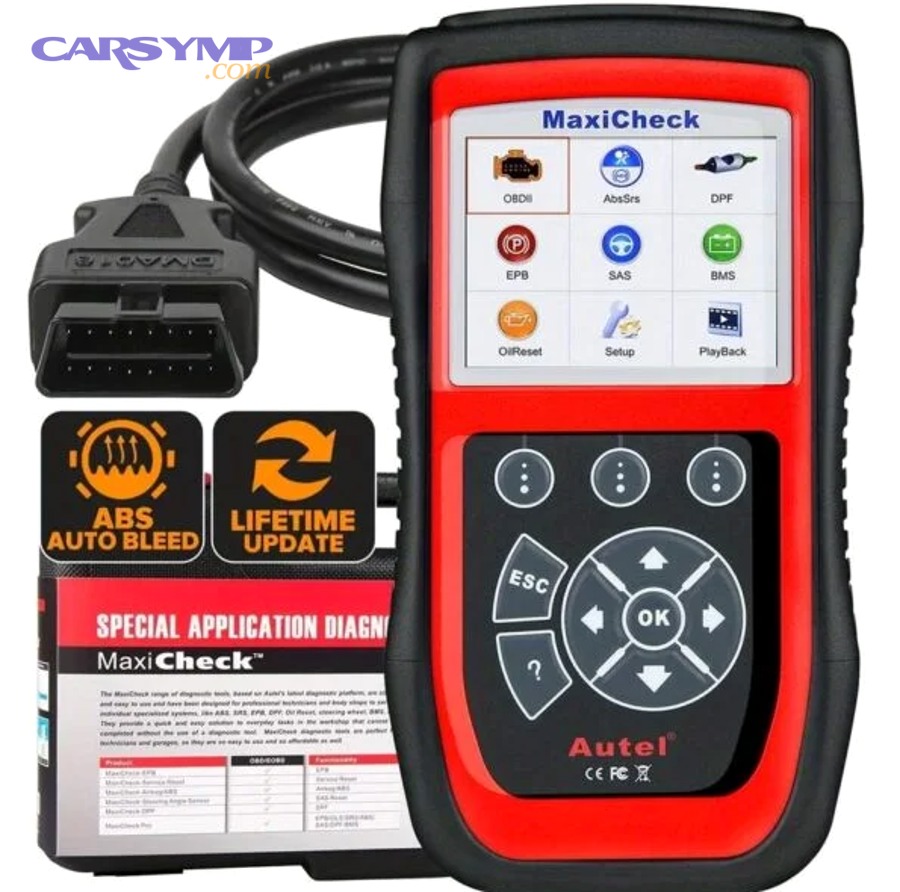
If OEM instructions call for an “automatic bleed” or “HCU bleed,” you need a scan tool that can run ABS service routines for your exact make/model/year and a stable power source (charger/maintainer) so the pump/solenoids cycle consistently. Some Bosch-type procedures explicitly include pressurizing the system, running an automatic bleed, then bleeding wheels as prompted.
To keep momentum, the next section translates equipment into an order-of-operations that fits most ABS layouts while still respecting OEM variations.
Theo nghiên cứu của University of Maryland từ Department of Mechanical Engineering, vào 03/2020, các thí nghiệm mô phỏng thủy lực cho thấy bọt khí nhỏ (microbubbles) tồn tại lâu hơn khi dòng chảy không ổn định, vì vậy việc duy trì áp lực/flow ổn định trong quá trình xả gió giúp cải thiện độ cứng bàn đạp.
Which bleeding sequence and method meets common ABS requirements?
A safe default is: bleed wheels in the OEM-recommended order (often farthest to nearest), keep the reservoir topped up, and use a steady-flow method; if the HCU was opened or ran dry, plan for scan-tool cycling between an initial and a final wheel bleed. Next, you’ll apply the method that best matches your situation.
Bleeding order: why “farthest to nearest” is common, but not universal
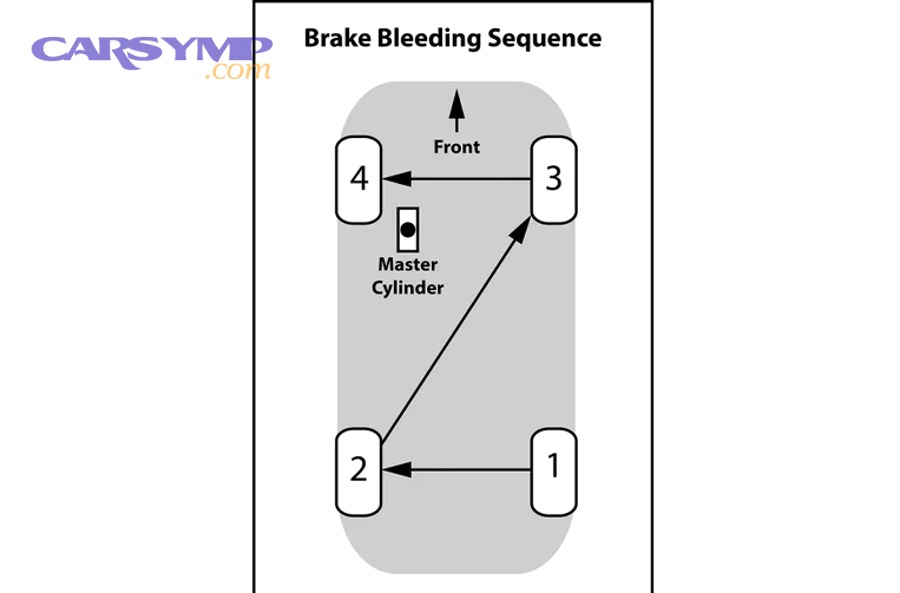
Many conventional systems follow a diagonal rule—start with the wheel farthest from the master cylinder and finish closest—because it purges the longest run first. However, ABS/ESC plumbing can route circuits in non-obvious ways (diagonal splits, front/rear splits, or complex manifolds inside the HCU), so the real requirement is to follow OEM order when available, using “farthest-first” only as a fallback.
Next, you’ll pick a bleeding approach that does not introduce extra air or damage seals while you follow that order.
Pressure bleeding: the most “requirement-friendly” approach
Pressure bleeding meets common ABS requirements because it creates smooth, continuous flow without repeatedly stroking the master cylinder. A typical setup is 10–20 psi for many passenger vehicles (OEM procedures may specify a higher value for certain Bosch routines), then bleeding each wheel until fluid runs clear and bubble-free. If a scan tool is required, pressure bleeding pairs well because the system stays primed while valves cycle.
Next, because not everyone has a pressure bleeder, you’ll see how to adapt the same “steady flow” principle to other methods.
Vacuum bleeding: effective, but verify bubbles carefully
Vacuum bleeding can be excellent for solo work, but it can produce bubbles at the bleeder screw threads that look like air from the hydraulic circuit. The requirement here is confirmation: watch for a transition from frothy to clear, then finish with a pedal feel check and, if needed, a short final bleed with gentle pressure to ensure no true air remains.
Next, if you’re using a pedal method, the technique must be controlled so it removes air rather than creating it.
Pedal-assisted method: controlled strokes, not pumping
If you use a helper, the key requirement is slow, deliberate pedal travel with the bleeder opened/closed at the right times—rapid pumping can churn fluid and introduce microbubbles. A classic approach is “pressure—open—down—close—release,” repeated until clear. In your notes or checklist, you can literally include “bleed brakes” as a step label, but the execution must stay smooth and consistent.
Next, because ABS-related issues often show up after the first round, you’ll learn when HCU cycling is required and how to do it safely.
Theo nghiên cứu của SAE International từ Vehicle Safety/Brake Fluid, vào 12/2010, các tổng hợp kỹ thuật cho thấy chỉ 1–3% nước trong fluid có thể kéo tụt điểm sôi đáng kể, vì vậy xả gió đúng trình tự đồng thời làm mới fluid là cách giảm rủi ro “sôi fluid” và bọt khí trong điều kiện tải nặng.
When is scan-tool ABS cycling required, and how is it done safely?
Scan-tool cycling is typically required when air has entered the ABS HCU/modulator—such as after HCU replacement, master cylinder ran dry, or lines to the modulator were opened—because valves can trap air that normal wheel bleeding cannot move. Next, you’ll run a two-phase process: initial bleed, cycle, then final bleed.
Why cycling matters in ABS hydraulics
Inside many ABS units, normally-closed and normally-open solenoid valves isolate circuits during ABS events; if air sits behind a closed valve, bleeding at a caliper may not pull it through. OEM “automatic bleed” routines energize valves and sometimes run the pump so that trapped air migrates into wheel circuits where it can be expelled at the bleeders.
Next, you’ll follow a practical sequence that aligns with widely published Bosch-type procedures and common OEM service notes.
A safe, repeatable sequence (initial bleed → cycle → final bleed)
Step 1: Stabilize the system. Put the vehicle on stable stands, level the reservoir, and keep the cap area clean. Maintain battery voltage with a charger if the pump will run.
Step 2: Do an initial wheel bleed. Bleed each wheel in the correct order to remove obvious line/caliper air first. This prevents pushing large air pockets into the HCU during cycling.
Step 3: Run the scan-tool routine. Select the ABS “automatic bleed”/“HCU bleed” function for your vehicle and follow prompts. Some published procedures note that the scan tool will energize solenoids for a timed interval and then instruct wheel bleeding.
Step 4: Perform the final wheel bleed. After cycling, re-bleed wheels to evacuate air that moved out of the HCU. Certain service bulletins/recall-related procedures explicitly call for bleeding wheels again after an HCU bleed mode.
To keep this flow grounded in home-garage reality, you’ll also want technique safeguards—especially if you’re doing the job without a professional shop lift.
Technique safeguards while the HCU cycles
Keep the reservoir above MIN at all times, and do not let the pressure bleeder run dry. If using a vacuum bleeder, ensure the catch bottle never backflows. If using a pedal method, avoid bottoming the pedal hard on the floor because older master cylinders can be damaged when forced into unused bore travel. In your checklist, this is where “Safety tips for brake bleeding at home” belongs as a reminder to protect eyes/paint and keep the car stable—not as a slogan, but as enforceable actions.
Next, a short visual walkthrough can help you see what “cycling + bleed again” looks like in practice.
Theo nghiên cứu của NHTSA từ Office of Defects Investigation, vào 08/2020, một số thông báo dịch vụ/chiến dịch sửa chữa liên quan “air bleeding mode” nhấn mạnh việc thực hiện đúng chuỗi xả gió sau can thiệp HCU để khôi phục hành trình bàn đạp và hiệu quả phanh theo thiết kế.
How do you prevent reintroducing air and protect ABS components?
You prevent reintroducing air by keeping the reservoir topped up, using airtight hose connections, and controlling pressure/stroke so you don’t aerate fluid; you protect ABS components by avoiding contamination, over-pressure, and pushing dirty fluid back through the modulator. Next, you’ll apply “no-new-air” habits that make the final pedal predictable.
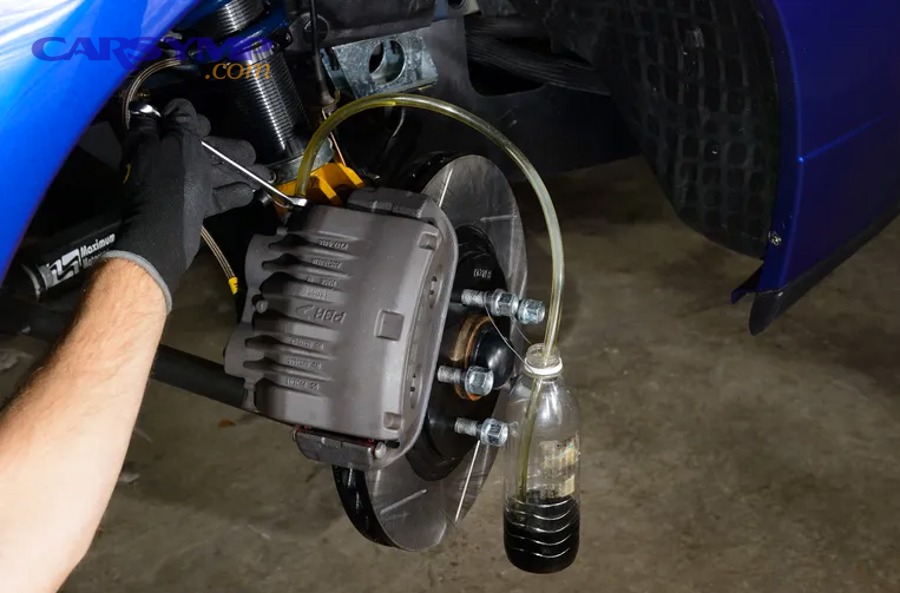
Reservoir discipline: the #1 hidden requirement
The reservoir is your “air gate.” If it drops low, you can pull air into the master cylinder ports and then chase softness for hours. Make topping up a timed habit: after every wheel, and again before any scan-tool cycling. A clean funnel and lint-free wipe matter because tiny debris can affect valves over time.
Next, you’ll pair reservoir discipline with a method that doesn’t create bubbles through agitation.
Avoid aeration: steady flow beats speed
Fast pedal pumping or aggressive vacuum can foam fluid—especially if the hose connection is loose. Slow strokes and a tight-fitting clear hose reduce turbulence. If you are doing a solo job, your notes might include “How to bleed brakes without a helper” as the planning goal; the requirement is that your chosen solo method (pressure/vacuum) still gives stable, bubble-free flow you can verify.
Next, you’ll protect the ABS unit by choosing where old fluid goes during piston retraction and bleeding.
Don’t push contaminated fluid the wrong direction
If fluid is dark or you suspect contamination, pushing caliper fluid backward through the modulator can carry debris into sensitive valve passages. Some professional guidance recommends opening a bleeder while retracting pistons to direct old fluid into a container instead. This is especially relevant on ABS-equipped vehicles because the modulator is a complex hydraulic manifold.
Next, you’ll validate results with checks that focus on pedal behavior and leak-free hardware rather than “hope.”
Verification: pedal feel and leak checks that actually mean something
After bleeding, the pedal should be firm and consistent at the same height across repeated presses with the engine off; with the engine on, it should drop slightly due to booster assist and then stabilize. Include “Post-bleed pedal feel checks” in your final checklist as a requirement: confirm no seepage at bleeders/lines, confirm the reservoir level, and confirm warning lights are normal after any scan-tool routine.
To close the main track, it helps to separate core requirements from edge cases—because ABS bleeding gets “weird” only in a few specific situations.
Theo nghiên cứu của Society of Automotive Engineers từ Brake System Serviceability, vào 10/2017, các hướng dẫn kỹ thuật nhấn mạnh kiểm soát hành trình piston master cylinder và tránh “bottoming out” giúp giảm nguy cơ hỏng seal, từ đó giữ ổn định áp suất và cảm giác bàn đạp sau xả gió.
At this point you have the mainstream ABS brake bleeding requirements: keep air out, follow the correct sequence, and cycle the HCU only when the scenario demands it. Next, we’ll cross the contextual border into less-common configurations that change the exact steps.
Edge cases that change ABS bleeding requirements
Edge cases include brake-by-wire systems, accumulator-equipped units, HCU replacement, and electronic stability control layouts that require a specific “air bleed mode” sequence; in these cases, the requirement is strict adherence to OEM steps because the hydraulic paths are not intuitive. Next, you’ll recognize the pattern and avoid common traps.
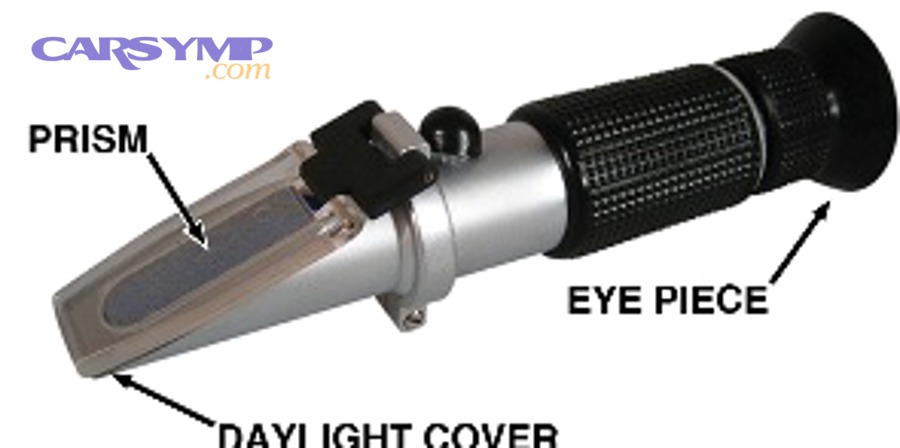
After HCU/modulator replacement
Replacing the HCU almost guarantees trapped air in internal galleries and valve chambers, so a scan-tool routine plus repeated wheel bleeding is commonly required. Expect the procedure to specify a pressure bleeder value and a timed cycling sequence; skipping the cycle often leaves a soft pedal even if calipers show no bubbles.
Brake-by-wire or “integrated” electro-hydraulic units
Some modern vehicles blend ABS/ESC with electronic brake control and may use an electric pump/accumulator to build pressure. These systems can have special depressurization steps and a service mode that must be entered before opening lines. The bleeding requirement here is safety-critical: you must not assume a traditional pedal-driven master cylinder behaves the same way.
Diagonal-split circuits and stability control interactions
ESC can route pressure in ways that change circuit priority; that’s why some OEM orders differ from “farthest-first.” If the service info specifies a non-traditional sequence, follow it, because it reflects how internal valves and cross-channels are arranged in that platform’s HCU.
“Pedal travel sensor” and diagnostic code side effects
Certain vehicles can set a code when pedal travel is excessive during re-seating pads or during bleeding. If you see this behavior, clear codes after bleeding and verify normal operation. The requirement is not to panic and keep re-bleeding—validate mechanically first, then address codes with proper diagnostics.
Theo nghiên cứu của SAE International từ Diagnostic Strategies & Brake Control, vào 06/2018, các báo cáo tổng hợp cho thấy quy trình “service mode” giúp tách biệt logic điều khiển và thủy lực, từ đó giảm lỗi phát sinh khi xả gió trên hệ thống ABS/ESC tích hợp.
FAQs about ABS brake bleeding requirements
These FAQs answer the most common “what if” scenarios, but the underlying requirement stays the same: if you suspect HCU air, plan for cycling plus a final wheel bleed, and always verify pedal feel and leaks before driving normally. Next, use the question that matches your situation.
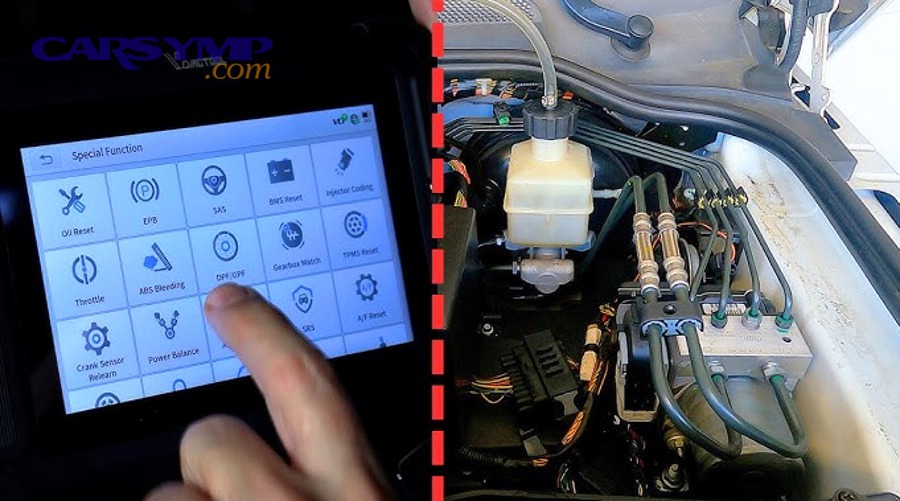
Can I drive if the pedal still feels soft after bleeding?
If the pedal is noticeably spongy or sinks, do not treat it as “normal.” Soft pedal can indicate remaining air, a leak, or incorrect bleeding steps—especially if the reservoir ran low or the HCU was opened. Recheck for leaks, confirm reservoir level, and consider scan-tool cycling if your scenario suggests HCU air.
How much brake fluid do I need for an ABS bleed?
For a simple line/caliper bleed you may use a small portion of a 1-quart bottle, but for a flush or when cycling the HCU you may need more, because you’re exchanging fluid through additional internal passages. Plan extra so you never risk the reservoir running low mid-process.
What if I don’t have a scan tool that supports ABS bleeding?
If OEM instructions require an HCU/automatic bleed routine, the reliable paths are borrowing/renting a compatible tool, using a shop for the cycling step, or accessing OEM-approved service info and equipment. Repeated wheel bleeding alone may not evacuate air trapped behind valves in the modulator.
DOT 3 vs DOT 4: does it change bleeding requirements?
The bleeding steps are similar, but the fluid specification matters for boiling point and material compatibility. Use the DOT grade specified by the vehicle, and treat fluid age/moisture as a real performance variable—especially on ABS vehicles where consistent pressure modulation depends on stable hydraulic behavior under heat.
Theo nghiên cứu của SAE International từ Brake Fluid Contamination & Safety, vào 12/2010, dữ liệu tổng hợp cho thấy nước hấp thụ có thể làm giảm điểm sôi của DOT 3 rõ rệt theo từng phần trăm, vì vậy thay fluid sạch song song xả gió là một phần của “requirement” thực dụng để duy trì hiệu quả ABS khi phanh nặng.