


Air enters a brake hydraulic system when the circuit is opened, the fluid level drops too low, or a bleeding method creates a path for suction—leading to a soft pedal, longer stopping distances, and inconsistent braking response.
This guide explains the most common mistakes that let air back in while you’re trying to remove it, so you can keep the fluid column sealed, move bubbles in the right direction, and finish with a firm, predictable pedal.
You’ll also learn how tool choice, bleeder-screw technique, and reservoir management change the outcome, especially on vehicles with ABS where trapped air can hide in places you can’t see.
To tie it all together, “Giới thiệu ý mới”: we’ll move from root causes (how air gets in) to practical prevention (how to keep it out) with simple habits you can repeat every time.
What does “introducing air” mean in a hydraulic brake system?
Introducing air means you’ve allowed compressible gas bubbles to enter the brake fluid path, so pedal force compresses bubbles instead of moving caliper pistons efficiently.
To start, it helps to picture the system as a sealed syringe: once the seal breaks anywhere, the fluid column can become a mixed column of fluid and air.
Why a tiny bubble creates a big pedal problem
Air compresses easily, so the first part of pedal travel becomes “springy” as bubbles shrink under pressure. Cụ thể, that springiness steals stroke from the master cylinder, so less clamp force reaches the pads for the same pedal effort.
Even if braking still “works,” the pedal can feel inconsistent from stop to stop because bubbles move, merge, and split as fluid flows through valves and narrow passages.
How bubbles move and where they hide
Air naturally migrates upward, but brake lines run up-and-down through the chassis, then loop around suspension components. Vì dụ, a high loop can trap a bubble that won’t move until flow direction and pressure change enough to dislodge it.
ABS hydraulic units can also act like bubble “shelves,” where air stays parked behind solenoids until the valves cycle or pressure pulses shift it.
What “new air” vs “leftover air” looks like
New air usually appears suddenly after a step that opened the system (cracking a fitting, letting the reservoir run low, loosening a hose), while leftover air shows up as gradual improvement that stalls short of a firm pedal.
Để hiểu rõ hơn, you’ll get a repeatable way to separate these two: if pedal feel improves with each wheel but then gets worse again later, you likely reintroduced air rather than simply chasing old bubbles.
Which prep mistakes let air in before you even begin?
Prep mistakes introduce air by creating open pathways, contamination, or unstable fluid supply before the first bleed cycle starts.
Sau đây, focus on keeping the system calm and sealed: stable reservoir level, clean connections, and a plan that avoids backtracking.
Opening the system without a step-by-step plan
If you open a bleeder “just to check” while the reservoir cap is sealed tight, you can pull fluid unevenly and create micro-suction as the reservoir tries to breathe. Cụ thể hơn, sudden pressure changes can draw air past weak seals or through loose tool fittings.
Instead, decide your method first (pedal, vacuum, pressure, gravity), gather the correct adapters, and commit to one controlled flow direction per wheel.
Skipping cleaning around caps, bleeders, and fittings
Dirt doesn’t just make a mess—it can prevent a proper seal. If grit sits on a reservoir cap gasket or bleeder-seat area, you may get tiny leaks that become air entry points under suction.
Quan trọng hơn, brake fluid attracts moisture and can carry debris into threads, which later causes slow seepage and recurring air intrusion.
Mixing tools, hoses, or bottles that contain residual air
Old clear hoses often have hardened ends that don’t clamp well, leaving hairline gaps. Để minh họa, a hose that “looks” snug can still leak air when vacuum is applied.
Use fresh, tight-fitting hose ends, secure them with small clamps if needed, and prefill the hose with clean fluid when your method creates suction near the bleeder.
Using incorrect or contaminated brake fluid
Wrong fluid type can swell seals or reduce system stability, while contaminated fluid can foam more easily. Cụ thể, foamy fluid behaves like thousands of tiny bubbles, making it harder to distinguish true air pockets from aeration.
If the fluid looks cloudy or has visible debris, flush rather than “top off,” because a partial bleed can leave the worst fluid in the ABS unit and master cylinder.
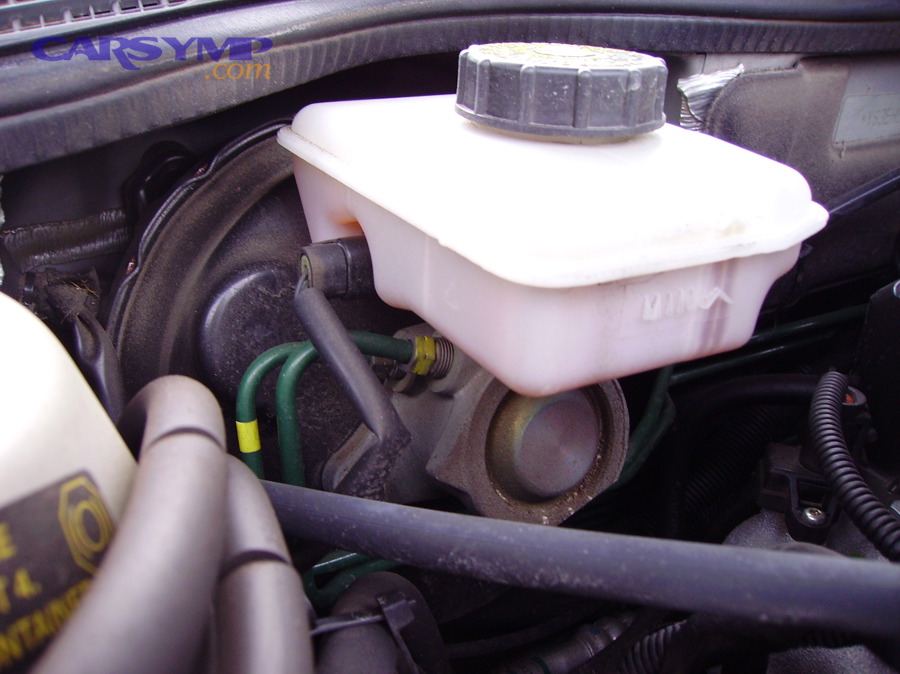
How does letting the reservoir run low pull air into the master cylinder?
Letting the reservoir run low introduces air by exposing the master cylinder ports, allowing the piston to push and pull air into the brake lines with each stroke.
Tiếp theo, treat reservoir level control as your “primary seal”—without it, every other technique becomes a gamble.
Why “just once” is enough to restart the whole job
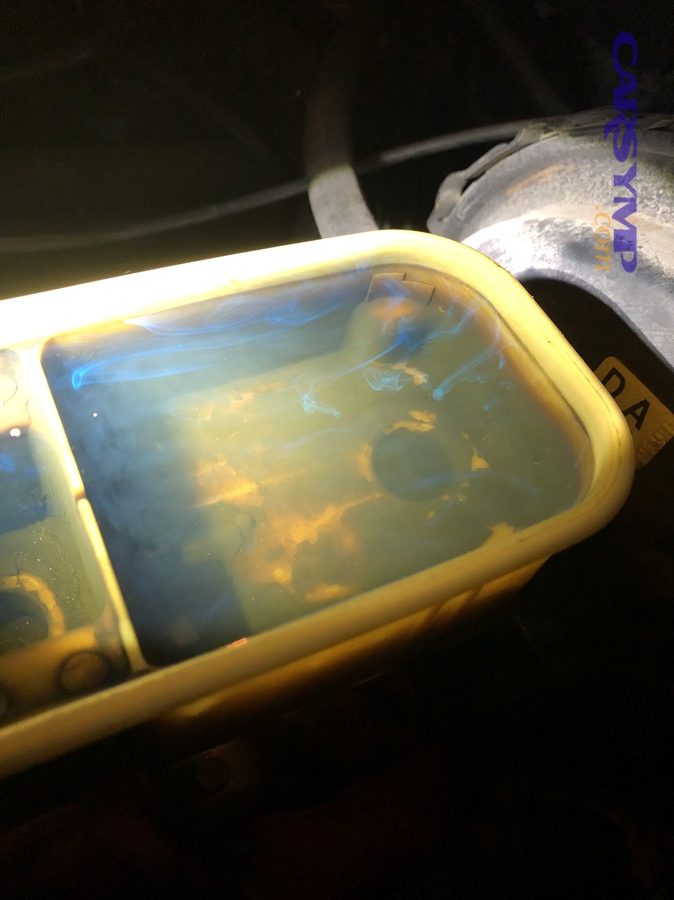
When the reservoir drops below the feed ports, the master cylinder can ingest air, and that air can spread to multiple circuits. Cụ thể, one low-level event can send bubbles down both front and rear circuits, even if you were only bleeding one wheel.
After that, the pedal may feel worse than before you started because the master cylinder now contains a larger, newly formed bubble volume.
Common ways people accidentally empty the reservoir
Fast pumping, ignoring fluid consumption, and starting at the wrong wheel can drain fluid quicker than expected. Ngoài ra, using a vacuum bleeder that pulls fluid aggressively can empty the reservoir in minutes if you don’t monitor it.
Make a habit: check and top up after every short interval—think “small and frequent,” not “big and occasional.”
Practical reservoir control that prevents air entry
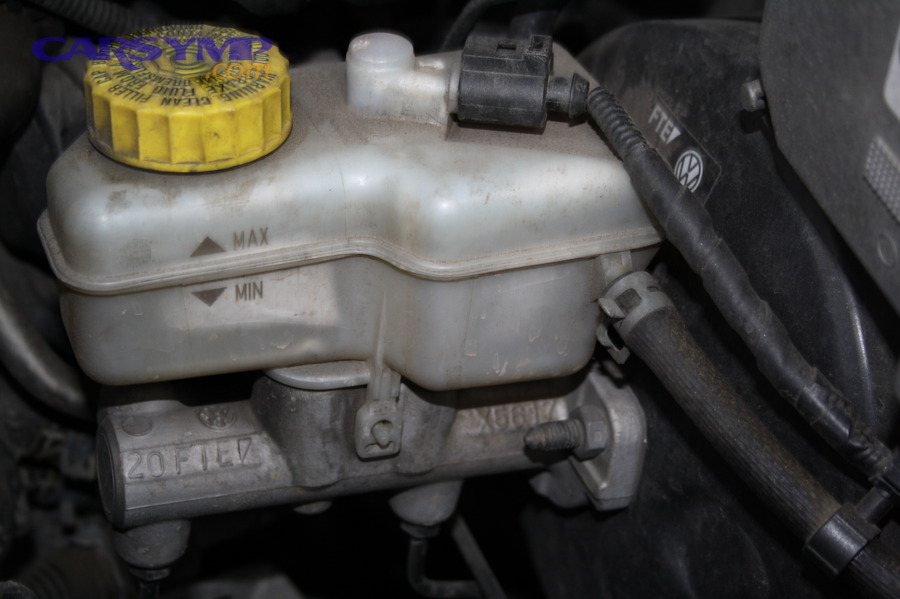
Level the vehicle when possible, keep the reservoir near the MAX line, and use a clean funnel dedicated to brake fluid. Đặc biệt, loosen the reservoir cap slightly when the method requires fluid to flow out continuously, so the reservoir can vent without vacuum-locking the supply.
If you’re working alone, set a timer or a repeating checklist prompt so you never go “one more cycle” without confirming the level.
What bleeder-screw handling errors suck air back through threads?
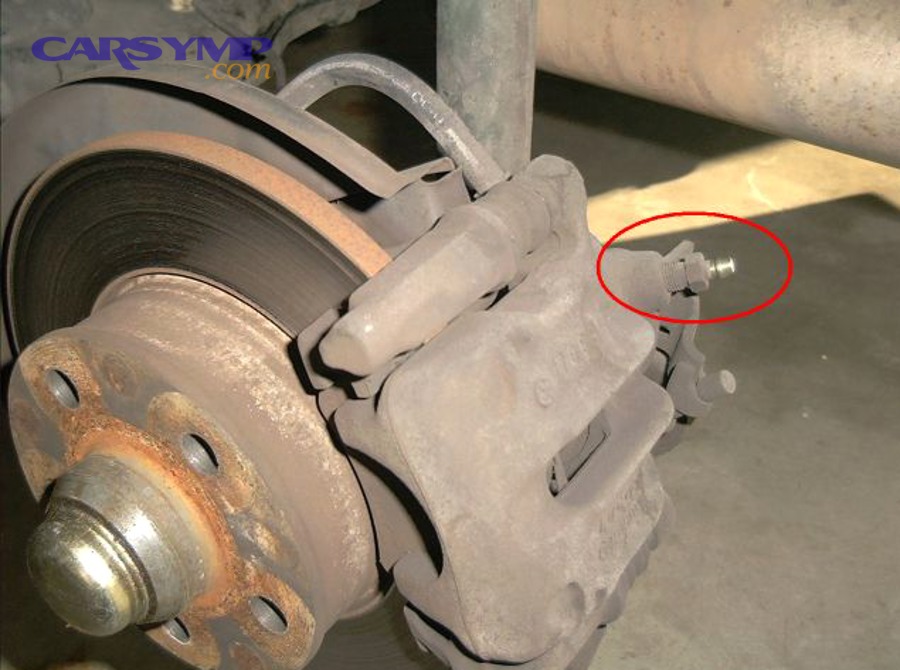
Bleeder-screw errors introduce air when the valve is opened too far, the hose seal is weak, or suction pulls air past the threads instead of only pulling fluid from the caliper.
Để bắt đầu, separate “fluid path” from “thread path”: your goal is flow through the bleeder seat, not around the threads.
Opening the bleeder too far
A common mistake is turning the bleeder multiple full turns. Cụ thể, this increases the exposed thread length, giving suction more surface area to pull air around the threads, especially during vacuum bleeding.
Use small movements: typically a quarter-turn to half-turn is enough to flow fluid while keeping thread exposure minimal.
Using a loose or oversized hose
If the hose doesn’t grip the bleeder nipple tightly, air enters at the nipple-hose junction. Ví dụ, you may see “bubbles” in the hose that are actually coming from the outside, not from the brake line.
Choose the correct inner diameter hose, push it fully onto the nipple, and clamp it if it can rotate easily by hand.
Closing sequence mistakes that pull air back in
If you release the pedal while the bleeder is still open, the returning master cylinder stroke can draw air back through the bleeder seat. Ngược lại, if you close the bleeder before the pedal returns, you keep the system sealed during the refill stroke.
For pedal methods, lock in a strict cadence: press and hold, open briefly, close firmly, then release slowly.
Overtightening or damaging the bleeder seat
Overtightening can deform the seat or crack the bleeder, leading to slow leaks that later pull air in under certain conditions. Quan trọng hơn, a damaged seat can “seal” when static but leak under vibration and heat cycles.
If a bleeder feels gritty or doesn’t seat smoothly, remove it, clean threads carefully, and replace it if the taper looks damaged.
Why can pedal pumping create new air and not just remove it?
Pedal pumping can introduce air by aerating fluid, pushing the master cylinder beyond its normal travel, and disturbing trapped bubbles into smaller, harder-to-remove microbubbles.
Cụ thể, faster isn’t better here—controlled strokes protect seals and keep bubbles merging instead of multiplying.
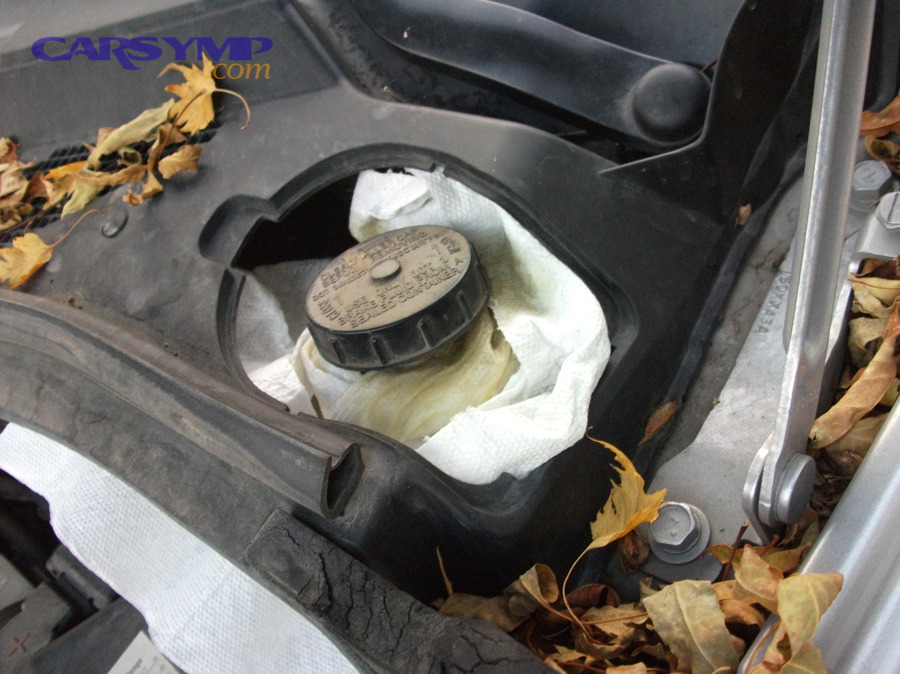
Over-stroking the master cylinder into rusty bore areas
When you push the pedal to the floor, the master cylinder piston may travel into sections of the bore it never normally uses. Ví dụ, older cylinders can have corrosion or deposits in that unused area, which can damage seals and create internal bypass or air entry behavior later.
Use short to mid-length strokes unless the vehicle procedure explicitly allows full travel and the system is known to be healthy.
Foaming and aeration from rapid strokes
Rapid pumping churns fluid and can whip it into foam. Cụ thể hơn, foam looks like air in the line but behaves differently: it can collapse later, changing pedal feel after you think the job is done.
Slow the rhythm, allow bubbles to rise between cycles, and avoid shaking the reservoir or bottle while topping up.
Inconsistent timing between opening and closing the bleeder
If the bleeder is open during the pedal’s return, you risk drawing air. Ngoài ra, if your helper releases early, the system may ingest air through the bleeder before it seats.
Use clear verbal cues and repeatable commands: “down—hold—open—close—up.”
When you’re ready to bleed brakes using the pedal method, treat that cadence as non-negotiable; it’s the simplest way to prevent the “back-suck” that ruins otherwise good progress.
How do vacuum methods accidentally add air instead of removing it?
Vacuum methods introduce air when the tool pulls air past bleeder threads, leaks at hose joints, or creates bubbles that look like system air but are actually external leaks.
Để minh họa, the vacuum tool can be working perfectly while your connections quietly feed it fresh air from outside.
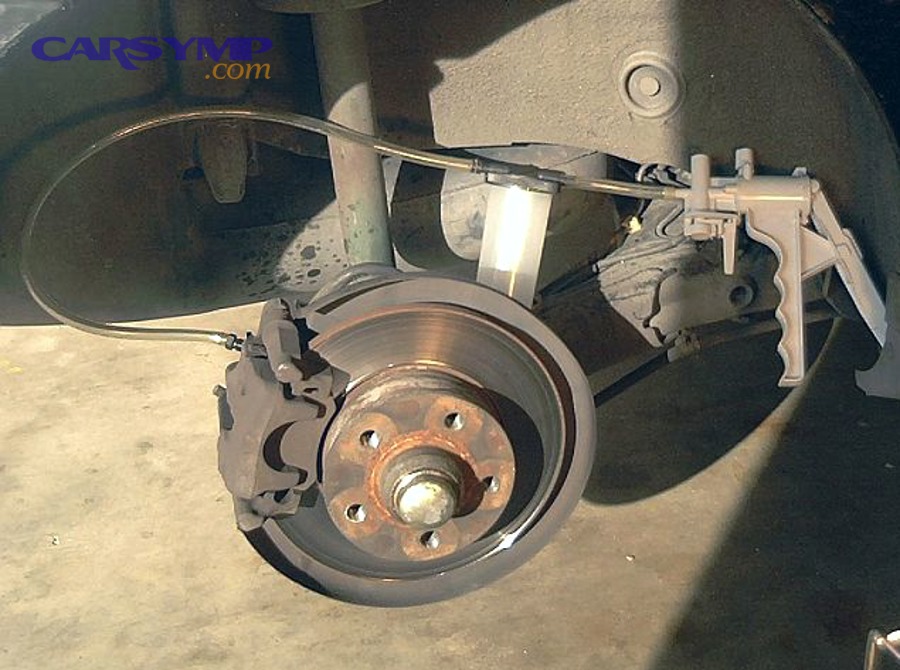
Misreading bubbles in the clear hose
Bubbles during vacuum bleeding can come from the bleeder threads rather than the brake line. Cụ thể, thread-leak bubbles often appear continuously and uniformly even after lots of fluid has moved, while true system air tends to taper off as the circuit clears.
To distinguish them, lightly reduce vacuum and watch whether bubbles reduce sharply; external leak bubbles often change immediately with vacuum level.
Tool jar and lid leaks
Many hand pumps use a catch jar with a lid gasket. If it doesn’t seal, you’ll see steady bubbles and weak vacuum. Quan trọng hơn, weak vacuum encourages you to open the bleeder more, which increases thread exposure and worsens the problem.
Inspect gaskets, tighten fittings, and test vacuum stability with the bleeder closed before touching the brake system.
Pulling too fast and starving the reservoir
Vacuum can move fluid quickly. Nếu bạn don’t top up often, the reservoir drops and ingests air at the master cylinder. Để hiểu rõ hơn, vacuum methods often fail not at the caliper, but at the reservoir because the operator is focused on the wheel, not the supply.
Keep the reservoir topped up, and pause often to let bubbles rise and settle.
Also remember the phrase “Safety tips for brake bleeding at home” belongs in your workflow: stable jack stands, eye protection, paint protection (brake fluid damages finishes), and no open flames near solvents and aerosols.
How do pressure bleeders introduce air when used incorrectly?
Pressure bleeders introduce air when the adapter cap leaks, the bleeder tank runs low, or the system is pressurized beyond what the seals and fittings can hold.
Tiếp theo, aim for steady, modest pressure and a perfect seal at the master cylinder cap—those two factors decide whether pressure bleeding feels effortless or chaotic.
Adapter cap not sealing on the reservoir
If the cap seal is imperfect, pressure escapes and can also draw air in as pressure fluctuates. Cụ thể, the system may “burp” around the seal, creating aeration in the reservoir that later migrates into the circuit when flow changes.
Use the correct adapter, ensure threads engage cleanly, and lightly lubricate the gasket (with compatible fluid) so it seats evenly.
Letting the pressure bleeder tank run low
When the pressure bleeder tank empties, it can push air into the brake system under pressure—often faster and deeper than other methods. Quan trọng hơn, this can send air into ABS passages and require extra steps to remove it.
Before starting, fill the pressure bleeder with enough fresh fluid to complete the job plus margin.
Over-pressurizing and chasing leaks
Too much pressure can create or worsen leaks at fittings that were “good enough” at normal operating pressures. Ngược lại, moderate pressure reduces stress and still moves fluid effectively.
If you see seepage at a fitting under pressure, stop and fix it; continuing can introduce air each time pressure drops and rises again.
What connection and line mistakes trap air for hours?
Line and connection mistakes introduce or trap air when fittings are loosened unevenly, calipers are mounted in a way that places the bleeder below the fluid cavity, or flexible hoses are twisted and create high points.
Dưới đây, you’ll focus on geometry: air rises, so your job is to give it a clean upward path to the bleeder.
Bleeder not at the highest point on the caliper
Some calipers can be swapped left-to-right accidentally or mounted incorrectly during a repair, placing the bleeder below the piston cavity. Cụ thể, you can bleed all day and still keep a bubble trapped above the bleeder.
Verify bleeder orientation before blaming tools: the bleeder should be the highest point of the hydraulic chamber.
Loose flare fittings and slow seepage
A fitting that seeps fluid can also admit air under certain conditions (especially during vacuum bleeding or after the system cools). Ngoài ra, seepage often appears as dampness that gets ignored because the pedal “still works.”
Dry everything, recheck after a short drive, and fix any wetness before repeating a bleed.
Twisted flexible hoses creating high loops
A twisted hose can create a loop higher than the hard line route, forming an air trap. Cụ thể hơn, the bubble sits at the loop’s peak and resists movement unless you change flow direction or reposition components.
Ensure hoses sit naturally with steering lock-to-lock and suspension movement, and reclip them to factory routing points.
Caliper piston push-back without reservoir preparation
Pushing pistons back during pad service can reverse-flow fluid and disturb debris, and if the reservoir is sealed tightly it can create pressure swings. Quan trọng hơn, if you later open a bleeder without managing reservoir venting, you can create suction conditions that invite air past weak points.
Work clean, slow, and with reservoir control so each change doesn’t create new variables.
When does ABS make air problems worse, and why?
ABS makes air problems worse when bubbles enter the hydraulic unit, because valves and passages can trap air where normal bleeding flow doesn’t reach effectively.
Đặc biệt, the challenge isn’t “more air,” but “air in harder places,” so the strategy becomes targeted and methodical.
Common ways air gets into the ABS unit
Air commonly enters after a master cylinder replacement, ABS unit replacement, a line that feeds the unit is opened, or the reservoir is run low during bleeding. Cụ thể, once air is in the unit, a normal wheel-by-wheel bleed may improve the pedal but leave a lingering softness.
If your pedal improves then plateaus, consider that the remaining air may be inside the ABS block rather than at the calipers.
Why “almost firm” can still be unsafe
An “almost firm” pedal can drop under repeated stops as bubbles shift. Ví dụ, the first stop feels okay, the second feels longer, and the third feels spongier—because trapped air relocates under changing pressure and valve behavior.
Don’t judge success by one press; judge it by repeated presses and repeated stops after a controlled test.
How to avoid reintroducing air during ABS-related bleeding
Keep the reservoir full, avoid rapid pedal strokes, and prevent tool leaks that create false bubbles. Ngoài ra, follow vehicle-specific procedures when ABS cycling is required, because guessing can waste fluid and add new aeration.
In practice, your best prevention is discipline: no shortcuts that risk the reservoir level, and no opening points you don’t plan to reseal correctly.
How can you confirm you removed air without accidentally adding it back?
You confirm success by testing pedal consistency, checking for leaks, validating reservoir stability, and ensuring each wheel circuit behaves the same under repeated pressure.
Tóm lại, the finish line isn’t “fluid looks clear”—it’s “pedal feel and braking response stay consistent after real-world conditions.”
Consistency checks that catch hidden problems
With the engine off, the pedal should firm up after a few presses and then stop traveling significantly. Cụ thể, if it keeps getting softer or gradually sinks, you may have remaining air, an external leak, or internal bypass.
With the engine on, the pedal will drop slightly due to booster assist, but it should remain stable with steady foot pressure.
Leak inspection that prevents air from returning
Even a tiny seep at a bleeder or fitting can become an air entry point later. Ngoài ra, leaks often show up after you clean and then drive, because vibration and heat expand and contract components.
Wipe every connection dry, then recheck after a short test drive and again the next day.
Final fluid handling that avoids aeration
Don’t shake bottles, don’t pour fluid from height into the reservoir, and don’t slam the reservoir cap. Cụ thể hơn, gentle handling reduces microbubbles that can mimic air-in-line symptoms and confuse your diagnosis.
Build a routine that includes “Post-bleed pedal feel checks” so you always verify results at the same milestones: immediate (garage), short drive (low speed), and next-morning recheck (cold system).
If you notice “Signs of air in brake lines” such as a spongy pedal, delayed bite point, or pedal that improves with pumping, treat it as a signal to recheck technique and seals—not as a normal outcome.
Contextual Border: You now understand the root mistakes that physically create an air path. Next, we’ll step into edge cases—situations where you did everything “right,” but air still persists because of component geometry, part replacement, or stubborn microbubbles.
Edge cases and advanced fixes for persistent air
Persistent air usually means either air is trapped in an unusual high point, a component was replaced and needs a specific priming step, or a small leak keeps reintroducing bubbles.
Hơn nữa, these fixes work best when you apply them one at a time, so you can identify the true cause instead of mixing variables.
Bench-bleeding a new or emptied master cylinder
A master cylinder that has taken in air can hold large bubbles that won’t purge easily through long brake lines. Cụ thể, bench bleeding (or controlled priming on the vehicle) removes bulk air at the source before you chase it at four corners.
If you skipped this step after replacement, you may keep seeing a soft pedal no matter how much fluid you push at the wheels.
Caliper replacement and bleeder position surprises
Some replacement calipers fit physically but place the bleeder slightly off the true high point due to casting differences. Ví dụ, a bleeder angled sideways can leave a small pocket above it.
In stubborn cases, safely unbolt and rotate the caliper (without stressing the hose) so the bleeder becomes the highest point, then bleed again.
Micro-leaks that only show under suction or cooling
A joint can seal under pressure but leak under vacuum, which is why vacuum bleeding sometimes “creates bubbles forever.” Ngược lại, pressure bleeding may look clean while the same joint later draws air when the system cools and contracts.
Switch methods strategically: if vacuum shows endless bubbles, test with low pressure and inspect each connection for seepage.
Foam vs true air after aggressive bleeding
After fast cycles, fluid can become aerated and look like air is still present. Cụ thể hơn, foam often clears with time if you stop disturbing the system and let bubbles rise naturally.
Pause, keep the reservoir steady, then retest pedal feel before restarting. If performance improves after resting, aeration was part of the issue.
FAQ
How much should I open the bleeder screw?
Usually a quarter-turn to half-turn is enough; opening it farther exposes more threads, which increases the chance of pulling air around the threads during suction-based methods.
Why do I still see bubbles after a lot of fluid has flowed?
Continuous uniform bubbles often indicate an external leak at the hose, jar lid, or bleeder threads rather than air remaining in the brake line; tightening seals and reducing thread exposure typically changes that pattern quickly.
Is it okay to push the brake pedal to the floor while bleeding?
It’s risky on older systems because it can over-stroke the master cylinder into unused bore areas and damage seals; controlled mid-strokes are safer unless the vehicle procedure explicitly permits full travel.
Can a tiny fluid seep really cause air to return later?
Yes—small seep points can admit air under suction, during cooling contraction, or under vibration; any wetness at a fitting or bleeder should be treated as a re-entry path and corrected.
Why does the pedal feel okay in the garage but soft the next morning?
Temperature changes can move trapped bubbles, and aerated fluid can collapse into fewer larger bubbles overnight; recheck for leaks, confirm reservoir level, and repeat consistency tests cold.
What’s the simplest habit to prevent reintroducing air?
Maintain reservoir level near MAX throughout the process and follow a strict open/close cadence at the bleeder; most “mystery air” problems trace back to low fluid level or an unsealed pathway during a refill stroke.