


Post-bleed pedal feel checks confirm your brake pedal is firm, consistent, and safe before normal driving, by separating “normal settling” from real problems like trapped air, leaks, or booster issues.
They also help you pinpoint where the issue lives—pedal mechanics, hydraulic sealing, caliper movement, rear adjustment, or booster assist—so you fix the right thing instead of repeating the same steps.
Just as importantly, these checks create a repeatable baseline: what the pedal feels like engine-off, engine-on, during the first stop, and after heat builds, so you can catch changes early.
Giới thiệu ý mới: below is a step-by-step sequence you can run in your driveway and on a controlled test drive to validate pedal feel with confidence.
What should the pedal feel like during post-bleed pedal feel checks?
A healthy pedal is high enough, firm enough, and repeatable: it moves a short distance, builds resistance smoothly, and holds pressure without slowly dropping.
To start, treat this as a baseline-setting moment, because every later test compares back to this “known good” reference.
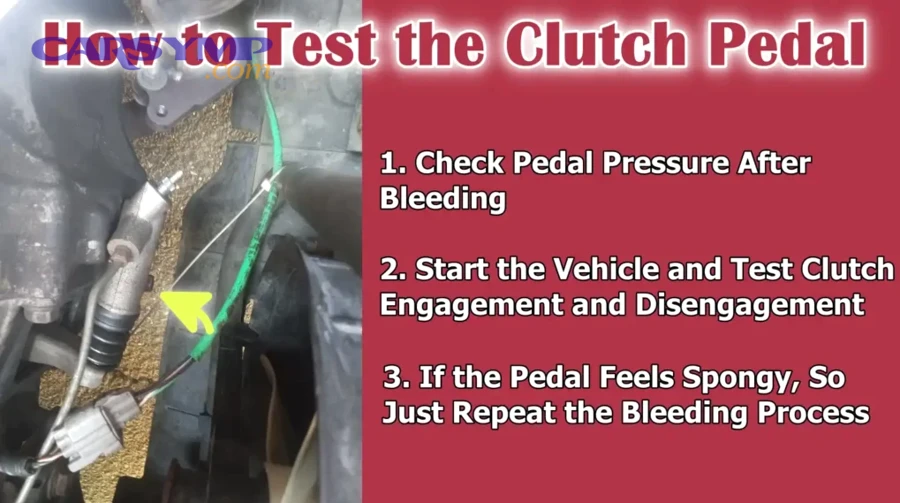
Engine off baseline: firmness and height
With the engine off, press the pedal slowly with steady force; you want a firm ramp-up (not a spongy spring) and a pedal height that doesn’t feel unusually low compared with before the work.
Next, repeat it three times to see if the pedal “improves” with pumping—because that pattern is a clue, not a success.
- Firm and consistent: usually a good sign that compressible air is minimal and seals are holding.
- Spongy and elastic: often compressible air, caliper flex, hose expansion, or pad knock-back returning.
- Improves with pumping: can indicate air, excessive pad-to-rotor gap, rear shoe adjustment, or caliper slide issues.
Engine on baseline: assist engagement and pedal drop
Start the engine while holding light pressure on the pedal; a small drop is normal as booster assist comes online, but the pedal should still feel solid and stop dropping quickly.
After that, do a second engine-on press: the travel should be stable and not “mushy,” even though assist makes it easier to push.
- Small drop then stable: typical booster assist behavior.
- Big drop and long travel: may indicate remaining air, rear adjustment, or system-specific issues (especially on modern assist systems).
- Hiss or changing feel: can point to a vacuum leak or booster problem.
Consistency rule: the pedal should repeat
If the pedal feels different every time—sometimes firm, sometimes soft—treat that as a problem to diagnose, not “normal break-in.”
Then, move into a structured static hold test, because that’s the fastest way to separate leaks from trapped air.
How do post-bleed pedal feel checks confirm there are no leaks?
You confirm no leaks by applying steady pedal pressure for 30–60 seconds and verifying the pedal does not sink and that no wetness appears at any hydraulic connection.
Next, you’ll link pedal behavior to what you can see—because the most reliable diagnosis uses both feel and inspection.
Pedal hold test: the “steady pressure” method
With the engine off (to remove booster variables), press the pedal to a firm mid-stroke and hold it; your goal is a pedal that holds position without slowly drifting downward.
After that, repeat the same hold with the engine on to see whether assist changes the symptom or simply makes it easier to feel.
- Pedal holds steady: generally indicates seals are holding and you likely don’t have an external leak.
- Pedal sinks slowly: can indicate an internal bypass in the master cylinder, an external seep, or air moving/redistributing.
- Pedal sinks quickly: often a significant leak or a major sealing failure—stop and inspect immediately.
Visual and tactile inspection: where to look first
Follow the hydraulic path: master cylinder area, reservoir grommets, all hard-line unions you touched, flex hose junctions, bleeder screws, and caliper piston dust boots for wetness.
Then, use a clean white paper towel under each suspect point—fresh fluid is easier to spot than a shiny surface.
- Bleeder screw seat: fluid tracks on the caliper body can come from a slightly loose bleeder or damaged seat.
- Banjo bolt washers: a slow weep often shows as wetness that collects at the lowest point.
- Hard-line flare: a flare that’s cross-threaded or mis-seated can seep without dripping.
Reservoir level and cap check
Confirm the reservoir is at the correct level (not overfilled) and the cap seals; spills can mimic leaks and confuse your diagnosis.
Next, move to a static “air signature” test, because trapped air often has a distinct feel even when there is no fluid loss.
How can post-bleed pedal feel checks detect trapped air without guesswork?
Trapped air usually feels like springy compression: the pedal moves more than expected with a rubbery, elastic response, especially on the first press after sitting.
To narrow it down, you’ll use controlled inputs—slow press, fast press, and repeated press—to see how the pedal “responds” to time and speed.
Slow press vs. fast press: compressibility clues
Press slowly and steadily: air compresses smoothly, so a slow press often feels like extra travel before firmness; a fast press may feel slightly firmer because flow dynamics change and seals “load” quickly.
After that, compare the two on the same spot on the pedal to keep your baseline consistent.
- Softer when slow: often points toward compressible air remaining in the hydraulic circuit.
- Same feel slow/fast but long: can indicate pad knock-back, rear shoe adjustment, or excessive piston retraction.
- Hard then suddenly gives: can be mechanical flex, loose hardware, or a component shifting.
Repeated press pattern: improvement is a clue
If the pedal firms up with two or three quick presses, that’s not “good news”; it’s telling you the system is taking up clearance or compressing air that re-expands between presses.
Next, you’ll decide whether the likely cause is air (hydraulic compressibility) or clearance (mechanical gap) using simple observations.
- Firms up then gets soft again after 30–60 seconds: more consistent with air moving back or bubbles re-forming.
- Firms up and stays better: can indicate rear shoes self-adjusting or caliper slides re-centering after service.
- Firms only when you pump hard: can suggest excessive clearance that needs correction, not more fluid.
Hose expansion and caliper flex: “false air” feel
Old rubber hoses can balloon under pressure and feel spongy even without air, and floating calipers can flex if slides are sticky or hardware is wrong.
Then, move to booster and reserve checks, because assist issues can masquerade as hydraulic softness.
How do post-bleed pedal feel checks verify booster assist and vacuum reserve?
You verify booster function by pumping the pedal with the engine off to remove stored vacuum, then starting the engine to confirm a controlled drop and stable assisted feel.
Next, you’ll check reserve—because a booster that can’t hold vacuum can feel inconsistent from stop to stop.
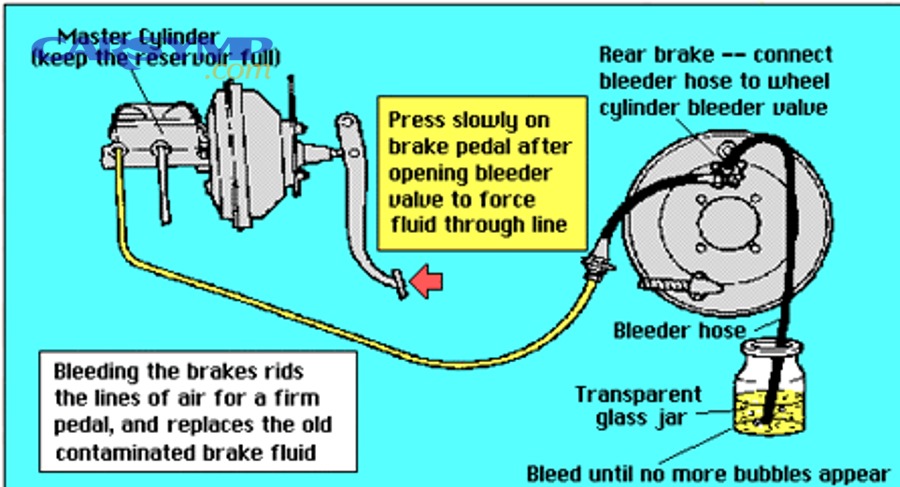
Vacuum depletion test (engine off)
With the engine off, press the pedal 4–6 times; it should get progressively firmer and higher as vacuum is depleted, indicating the booster was storing assist.
After that, hold light pressure and start the engine to observe a modest, smooth drop.
- Progressively firmer with pumps: normal reserve depletion behavior.
- No change with pumps: can indicate no stored vacuum, a leak, or a booster that isn’t functioning.
- Very hard immediately: may indicate no assist available from the start.
Engine-on hold: stable assist feel
With the engine idling, press and hold; assist should stay consistent without a wandering pedal feel or repeated hissing.
Then, listen: constant hissing during a steady hold can indicate a vacuum leak at the booster diaphragm or check valve area.
Electric or hydraulic assist nuances
Some vehicles use electric vacuum pumps, electric boosters, or hydraulic assist; the “drop” and “reserve” behaviors can differ, but consistency remains the goal: predictable pedal travel and repeatable stops.
Next, if the pedal is still concerning, isolate whether the issue is internal bypass, external leak, or mechanical clearance using a sinking-pedal decision tree.
What do post-bleed pedal feel checks mean if the pedal sinks?
A sinking pedal usually means pressure isn’t being held: either fluid is escaping externally, bypassing internally in the master cylinder, or a component is moving in a way that increases volume under load.
To avoid guessing, you’ll isolate each possibility in a simple order that prioritizes safety and evidence.
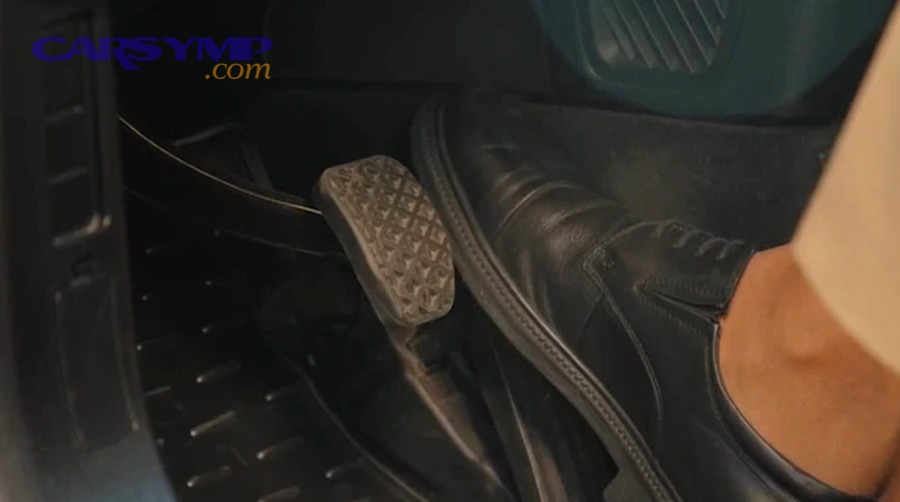
Differentiate “creep” from “collapse”
If the pedal creeps down slowly over 30–60 seconds with no visible leaks, suspect internal bypass in the master cylinder or air redistributing; if it drops quickly, suspect a serious leak or major sealing failure.
Next, take a flashlight and check every connection again—because a slow weep can be missed at first glance.
Isolate mechanical movement (caliper shift, pad knock-back)
Wheel bearing play, rotor runout, and pad knock-back can push pistons back, creating extra pedal travel that feels like sinking—especially after turns or bumps.
Then, compare straight-line stops versus after a few steering inputs: if the pedal is longer after turning, knock-back or movement becomes more likely.
Quick decision table: feel → likely cause → action
This table contains common pedal-feel patterns after service and helps you map what you feel to the most likely cause and the safest next step.
Use it as a guide, then confirm with inspection before replacing parts.
| Pedal feel pattern | Most likely cause | Best next action |
|---|---|---|
| Spongy, elastic; improves with rapid presses | Trapped air or excessive clearance | Re-check bleed points; inspect rear adjustment and caliper slides |
| Firm at first, then slowly sinks while holding | Internal bypass or small external seep | Inspect for wetness; evaluate master cylinder integrity |
| Long travel only after turns/bumps | Pad knock-back, bearing play, rotor runout | Inspect wheel bearings, rotor runout, caliper mounting |
| Hard pedal, poor stopping | Low assist, booster/vacuum issue, glazed pads | Check booster reserve, vacuum source, pad/rotor condition |
| Pedal varies randomly stop-to-stop | Air migration, intermittent leak, assist system fault | Stop driving; diagnose systematically and scan for brake faults if applicable |
Fluid type mismatch and contamination
A pedal that feels inconsistent after a short drive can be worsened by aeration, moisture, or incompatible fluid; confirm the correct specification and avoid mixing types unless the vehicle allows it.
Next, validate pedal feel in a controlled road test, because real braking forces reveal issues that driveway checks can miss.
How do post-bleed pedal feel checks continue during a controlled road test?
A controlled road test confirms the pedal stays firm under real deceleration, remains consistent after several stops, and does not change dramatically with heat, steering input, or surface variation.
To keep it safe, you’ll build speed gradually in a low-traffic area and stop the test immediately if the pedal becomes unpredictable.
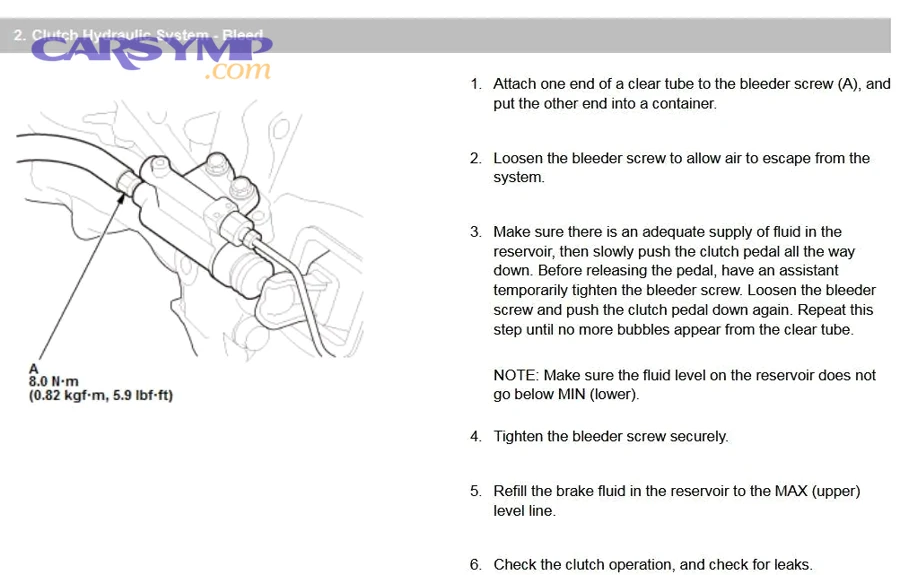
Step-up sequence: low speed to moderate speed
Start at very low speed and perform gentle stops; then increase slightly and repeat, watching for pedal travel changes and whether the car pulls left or right.
After that, add a few medium stops to see if the pedal stays in the same “zone” of travel as heat and pressure rise.
- Consistent travel every stop: good sign of stable hydraulics and hardware.
- Travel increases with each stop: possible boiling/contamination, air, or component flex increasing with heat.
- Pulling or vibration: may be uneven braking, rotor issues, or caliper slide problems.
Steering input check: turns and bumps
At low speed, do a gentle turn and then brake: if travel increases afterward, suspect pad knock-back, bearing play, or caliper movement under lateral load.
Then, repeat on a smooth straight stretch: if the pedal normalizes, that contrast strengthens the knock-back hypothesis.
One related video for technique and safety reminders
As you refine your process, it’s also helpful to review full-service workflows; for example, many DIYers revisit bleed brakes tutorials to compare expected pedal feel at each stage without changing any steps mid-test.
Heat soak re-check: park, wait, re-test
After a short test drive, park safely and re-check pedal feel with engine off and on; a system that felt fine cold but changes hot needs attention before normal driving.
Next, focus on rear brakes and adjustment variables, because rear hardware can create long travel that looks exactly like air.
How do post-bleed pedal feel checks account for rear brake adjustment and parking brake effects?
Rear brakes—especially drum systems or integrated parking brake mechanisms—can create excessive clearance that produces a low or “pump-up” pedal even when no air remains.
To avoid repeating the wrong fix, you’ll confirm rear adjustment and parking brake setup before chasing the hydraulic side again.
Drum brakes: shoe-to-drum clearance
If rear shoes sit too far from the drum, the wheel cylinders must travel farther before braking begins, translating into extra pedal travel that often improves with pumping.
After that, check whether the self-adjuster is working and whether the parking brake has been set up correctly after service.
- Pumps up and stays better briefly: classic sign of rear clearance or self-adjuster lag.
- Low pedal only after reversing: can indicate adjuster behavior or hardware shifting.
- Dragging rear wheels: over-adjustment can cause heat and inconsistent feel.
Rear disc with drum-in-hat parking brake
Some rear disc setups use a small drum parking brake inside the rotor hat; if it’s misadjusted, it can cause noise, drag, or odd pedal feel changes during the first few stops.
Then, verify the parking brake engages firmly without excessive lever travel and releases fully without drag.
Integrated caliper parking brake mechanisms
Rear calipers with integrated parking brake mechanisms may require a correct piston reset procedure; if the piston isn’t seated properly, pedal travel and braking balance can suffer.
Next, look at “false air” causes like slide friction, pad knock-back, and hub movement that can mimic sponginess.
Which mechanical issues can mimic air during post-bleed pedal feel checks?
Several mechanical issues mimic air because they increase clearance or allow components to move, forcing extra fluid volume to take up slack before braking becomes strong.
To diagnose efficiently, you’ll focus on what changes with direction, turning, and wheel rotation—because that’s where clearance problems reveal themselves.
Pad knock-back from rotor runout or bearing play
Rotor runout or loose bearings can push pads away from the rotor, so your first pedal press takes up that gap and feels long; the next press feels better until the pads get knocked back again.
After that, compare pedal travel after turning versus straight-line driving to see if lateral loads worsen the symptom.
Sticky caliper slides and uneven pad contact
Sticky slides can prevent the caliper from centering, causing extra travel and inconsistent bite; you may also feel pull, uneven wear, or a pedal that changes after a few stops.
Then, inspect slide boots, lubrication condition, and hardware fitment to ensure the caliper can move freely.
Flexible hose expansion and old rubber behavior
Aging rubber hoses can swell under pressure and feel spongy; unlike air, the pedal may not “pump up” much, and the softness can be more noticeable during harder stops.
Next, decide when to stop and escalate, because some pedal-feel outcomes are not safe to “test your way through.”
When do post-bleed pedal feel checks mean you should stop driving immediately?
You should stop driving if the pedal is unpredictably soft, sinks quickly, requires pumping to stop, or if any leak is visible—because those signs indicate braking capacity may be compromised.
To stay safe, treat “uncertain brakes” as a hard boundary: park, inspect, and correct before normal road use.
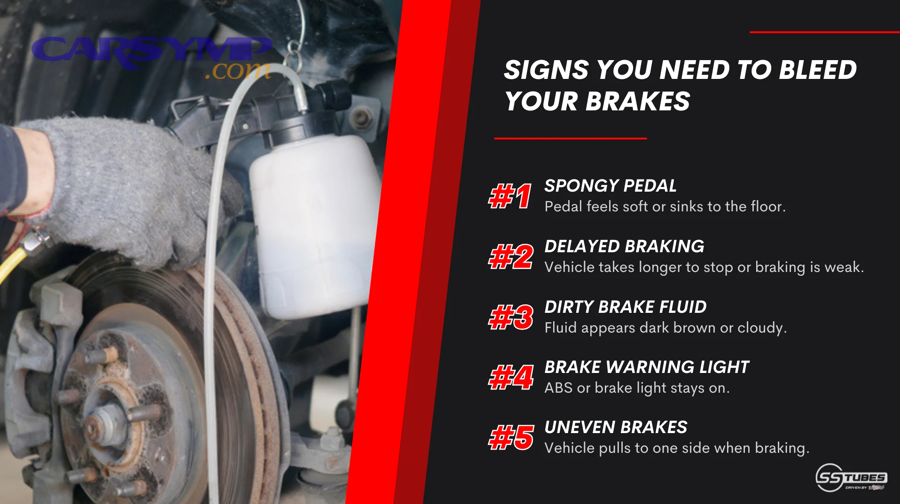
Red-flag symptoms you don’t “drive out”
If the pedal goes near the floor, changes drastically from stop to stop, or feels like it’s losing pressure while you hold it, stop and re-check the entire system.
After that, confirm the reservoir level and inspect all corners—because a small leak can quickly become a big one under repeated braking.
- Visible fluid anywhere: do not continue driving.
- Pedal requires pumping to get braking: do not continue driving.
- Brake warning lights or new alerts: do not continue driving without diagnosis.
Re-check sequence before repeating steps
Before repeating any procedure, verify basic items: bleeder screws tight and seated, banjo bolts correct with new washers, calipers mounted correctly, pads seated, and the reservoir not allowed to run low at any point.
Then, if you need to revisit technique, some DIYers reference How to bleed brakes without a helper workflows to ensure their process didn’t introduce aeration or allow the reservoir to uncover and pull air.
Escalation: modern systems and fault states
If your vehicle uses advanced stability control, electronic boosters, or brake-by-wire logic, a warning light plus odd pedal feel may require diagnostic steps beyond manual checks.
Next, cross into advanced considerations—because some “good enough” pedals still hide air trapped in specialized components.
Contextual Border: The sections above cover universal driveway-and-road-test validation. The next section expands into system-specific scenarios where pedal feel can remain abnormal even when basic bleeding and inspection seem correct.
Advanced post-bleed pedal feel checks in ABS and modern assist systems
Advanced systems can trap air in modulators or change pedal behavior via electronic logic, so your goal is still the same: repeatable travel, firm build, and stable holding—validated with the right system-specific procedure.
To keep the flow logical, start with ABS modulator considerations, then move into brake-by-wire and electric assist behaviors.
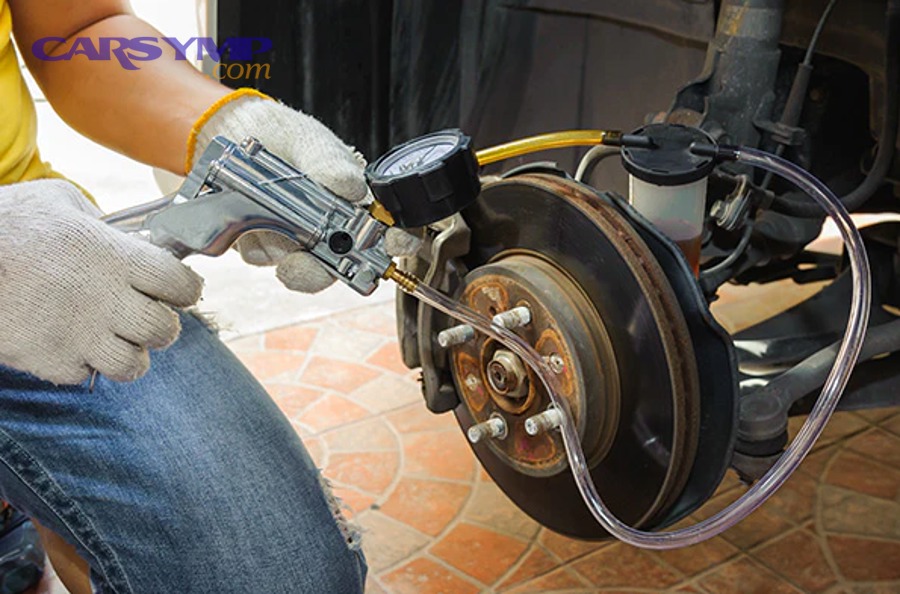
ABS modulator trapped air: why the pedal can stay spongy
Air can remain inside ABS hydraulic control units, especially if the system was opened upstream or the reservoir was allowed to run low; the result is a pedal that feels improved but never truly crisp.
Then, if your vehicle’s service information calls for it, follow the correct cycling procedure so valves and pump passages exchange fluid and release trapped bubbles.
In some cases, technicians rely on When to use a scan tool to bleed ABS guidance because commanding the ABS pump and solenoids can purge air that manual corner bleeding cannot move.
Brake-by-wire and electronic booster: “normal” can feel different
Brake-by-wire systems may simulate pedal feel with a stroke simulator, so the pedal can feel different from older vacuum-assisted hydraulics while still being normal for that design.
After that, focus on consistency and fault status: if the feel changes abruptly or warnings appear, treat it as a diagnosis scenario rather than a “keep bleeding” scenario.
Electric vacuum pumps and reserve behavior
Vehicles with electric vacuum pumps may maintain assist even with the engine off for a short time, and you might hear the pump run; that can change how reserve tests feel compared to older systems.
Then, validate that assist is predictable: the pedal should not suddenly become rock-hard after one stop unless the system is designed that way and operating normally.
Master cylinder priming and micro-bubbles
Micro-bubbles can cling inside a master cylinder or high points in lines, especially if fluid was poured quickly or the system was agitated; a slow, controlled re-check process can help them migrate out.
After that, if pedal feel remains questionable, follow manufacturer service info and consider professional evaluation—because the goal is not merely “better,” but reliably safe.
FAQ
How long should I wait before judging pedal feel after the work?
Start judging immediately with engine-off and engine-on baseline tests, then re-check after a short controlled drive; a pedal that improves slightly as pads seat is normal, but a pedal that changes wildly is not.
Is a slightly lower pedal always a sign of air?
No—rear adjustment, pad knock-back, caliper movement, or hose expansion can create extra travel that feels like air, which is why post-bleed pedal feel checks combine feel patterns with inspection and road-test clues.
Why does the pedal feel firm in the driveway but soft on the road?
Heat, repeated pressure, steering loads, and vibration can reveal issues like knock-back, flex, contamination, or a small leak; that’s why a step-up road test and a hot re-check are essential.
Can I keep driving “carefully” if the pedal is spongy?
If the pedal is spongy, inconsistent, or requires pumping, the safest choice is to stop driving and correct the cause, because braking performance can change suddenly when you most need it.