


To read repair estimates like a pro, you need to translate every line item into three things: what is being done, why it’s being done, and what you’re actually paying for (parts, labor time, and shop fees).
Beyond understanding the words, you’ll want a repeatable method to compare quotes fairly, so you can avoid paying extra for vague bundles while still choosing quality work and safe parts.
You’ll also learn how to ask the right questions before you authorize anything, so the estimate becomes a clear plan instead of a surprise bill.
Giới thiệu ý mới: the sections below walk you from “reading the paper” to “controlling the outcome,” step by step.
What should a professional repair estimate include before you say yes?
A professional repair estimate should clearly list the concern, the recommended work, itemized parts and labor, the shop rate (or labor cost basis), taxes/fees, and the authorization terms so you can approve work with minimal ambiguity.
Tiếp theo, once you know the required fields, you can quickly spot missing information that often leads to surprise charges.

Start by identifying the “story” section: complaint, cause, correction
The top of a good estimate reads like a mini-diagnosis: your symptom or request (complaint), the confirmed cause (if diagnosed), and the planned fix (correction). If the estimate jumps straight to parts replacement without linking symptom → cause, you don’t yet have a reliable plan.
Cụ thể, look for words that indicate certainty: “confirmed,” “tested,” “measured,” or “verified.” If you only see “possible,” “likely,” or “recommended,” ask what test result supports the recommendation.
Confirm the identifiers that prevent mix-ups
Make sure the estimate shows your vehicle details (VIN or plate, year/make/model/engine), mileage, and date. These are not “admin fluff”—they connect parts fitment, fluid specs, and labor guides to the correct vehicle configuration.
Ngoài ra, ask whether the estimate assumes aftermarket, OEM, remanufactured, or used parts, because that choice changes both price and warranty.
Check the authorization language and how changes are handled
You want to see how approvals work: signature, text/email approval, or recorded authorization. Also confirm how the shop will handle a change in scope (a revised estimate or change order) before any extra work starts.
Quan trọng hơn, insist on a “stop and call” threshold so you stay in control if new issues appear mid-repair.
Look for clear totals and a clean math trail
A pro-level estimate makes the math easy to audit: parts subtotal + labor subtotal + shop supplies/fees + tax = total. If you cannot reconstruct the total, you cannot evaluate fairness.
Theo nghiên cứu của Autoleap từ đơn vị phân tích “Average Automotive Repair Labor Rates by State”, vào 06/2024, most mechanics charge between $75 and $130 per hour—so the labor portion should be especially transparent.
How do you separate parts, labor, and fees so the total makes sense?
You separate parts, labor, and fees by grouping each line item into what you receive (parts/materials), what time is billed (labor hours), and what overhead is charged (shop supplies, disposal, taxes), then verifying each group adds up cleanly.
Sau đây, use a simple checklist to “decode” any estimate—even if the formatting is messy.
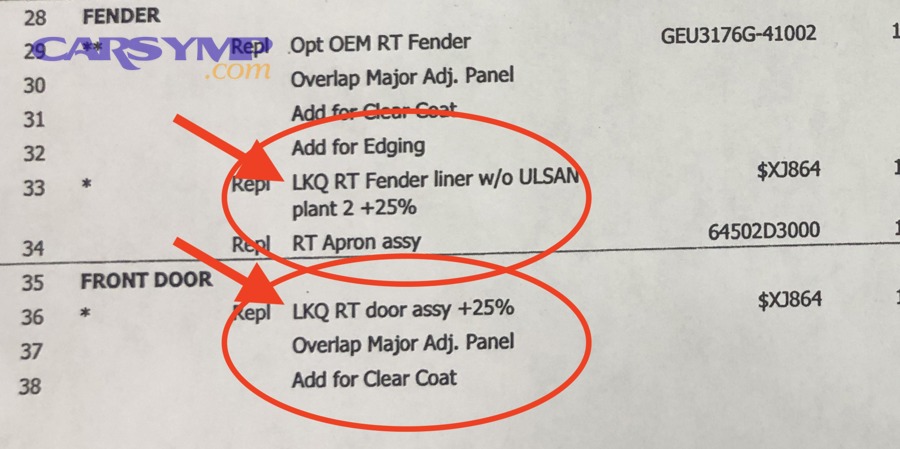
Parts: identify type, quantity, and quality level
Parts lines should show part name, quantity, and unit price. If it only says “parts” with a lump sum, you can’t judge quality or necessity. Ask whether parts are
Ví dụ, a “brake job” can include pads only, pads + rotors, hardware kits, sensor clips, brake fluid, and caliper service—each with different safety outcomes and costs.
Labor: verify hours and the billing method
Labor should show hours and either the shop rate or the labor total. Some shops use guide times (flat-rate) while others bill actual time—both can be fair, but you must know which you’re being charged for.
Trong khi đó, if labor is listed as a single lump sum, ask: “How many labor hours is this based on, and what rate?”
Fees: separate legitimate overhead from mystery charges
Common legitimate fees include shop supplies, hazardous waste disposal, and environmental fees, but they should be reasonable and clearly defined. Watch for vague “misc” fees with no explanation.
Cụ thể hơn, ask whether “shop supplies” is a flat percentage cap or a fixed line item, and whether it’s already included in labor.
A quick audit table you can use in real time
This table helps you map each estimate line to the three buckets so you can find hidden bundles and missing details fast.
It also helps you compare multiple estimates consistently, even when shops format their quotes differently.
| Estimate Component | What you should see | What to ask if missing |
|---|---|---|
| Parts | Part name, brand/type, qty, unit price | “Is this OEM/aftermarket/reman? Which brand and warranty?” |
| Labor | Hours, rate or labor basis (flat-rate vs actual) | “How many hours is this, and what is the rate?” |
| Fees | Defined shop supplies/disposal/tax lines | “What does this fee cover, and is there a cap?” |
| Authorization | Approval method + change-order policy | “Will you call for approval before any added work?” |
What does “labor time” really mean, and when is it negotiable?
Labor time usually means a standardized guide time or a documented time charge, and it’s negotiable when the job scope is unclear, duplicated across lines, or includes optional steps that aren’t needed for your repair goal.
Để bắt đầu, learn the three labor models so you know what you’re actually buying.
Flat-rate (guide time) vs actual time vs menu pricing
Flat-rate bills a published labor time for a job (e.g., “replace alternator: X hours”), regardless of how long it takes that day. Actual time bills the time spent. Menu pricing bundles parts + labor into one price.
Tuy nhiên, menu pricing can still be fair if it clearly states what’s included (parts quality and scope) and what’s excluded.
When labor time inflates: overlap, access, and “while you’re in there”
Labor grows legitimately when access is difficult (rust, seized bolts, tight packaging) or when multiple systems must be removed to reach the failed part. Labor inflates unfairly when overlapping steps are billed twice across separate lines.
Cụ thể, if you see “remove wheel” on several lines, ask whether those steps are already included in the main operation.
How to challenge labor politely but effectively
Ask for the labor basis: “Is this based on a labor guide? Which operation time did you use?” Then ask for a single consolidated labor line if the job has overlapping steps (for example, replacing multiple parts in the same area).
Theo nghiên cứu của U.S. Bureau of Labor Statistics từ Occupational Outlook Handbook, vào 05/2024, the median annual wage for automotive service technicians and mechanics was $49,670, which helps explain why labor is a major share of many estimates.
How can you spot vague language and “bundle pricing” that hides work?
You spot vague language by circling any line that doesn’t name a component, a measurable result, or a specific procedure, because vagueness makes it impossible to verify whether the work is necessary or completed.
Tiếp theo, use a “replace/repair/inspect” filter to force clarity without sounding confrontational.
Red-flag words that deserve follow-up questions
Watch for: “service,” “tune-up,” “clean,” “adjust,” “misc,” “shop charge,” “recommended,” “package,” and “as needed.” These can be legitimate, but only if the estimate states the target (what is serviced) and the outcome (what improves).
Ví dụ, “throttle body service” should specify whether it includes adaptation/reset, intake inspection for leaks, and whether symptoms match the service purpose.
Turn bundles into verifiable deliverables
When you see a package, ask: “What exact items are included—parts, fluids, hardware, calibration, road test, and recheck?” Then request that the shop lists included items on the estimate, even if the price stays bundled.
Ngược lại, if the shop won’t list inclusions, treat the bundle as a risk premium and compare another estimate that is itemized.
“Inspect” lines must state pass/fail criteria
An “inspection” should include what is inspected and what counts as failing. If an inspection is a paid line item, it should produce a measurable result (e.g., brake pad thickness, battery test printout, scan report).
Quan trọng hơn, ask for the inspection output in writing or photos, so you can make a decision based on evidence.
Which line items are legitimate add-ons vs padding?
Legitimate add-ons directly support safety, fitment, cleanliness, or warranty outcomes, while padding adds cost without changing the repair result—often through duplicated steps, unnecessary chemicals, or vague “conditioning” services.
Sau đây, evaluate add-ons by asking one simple question: “If we remove this line, what risk increases?”
Common legitimate add-ons that can be worth it
- Hardware kits (clips, pins, seals) when required for proper installation.
- Fluids when the procedure opens the system (coolant, brake fluid, transmission fluid).
- Calibration/adaptation for modern vehicles after certain repairs (steering angle, throttle, battery registration).
- Alignment when suspension/steering geometry is disturbed.
Bên cạnh đó, if the estimate includes calibration, ask what tool is used and what system needs it—this turns a vague charge into a verifiable operation.
Common padding patterns to watch for
- Duplicated “shop supplies” plus a separate “misc materials” fee.
- Chemical “treatments” that don’t match your symptom.
- Charging full labor for tasks that are already included in a larger labor operation.
- “Reconditioning” or “prep” without a defined checklist.
Theo nghiên cứu của AAA từ báo cáo “average mechanic labor rate” (tổng hợp thị trường sửa chữa), vào 2026, many shops cluster labor pricing in a mid-range band—so padding often shows up not in rate, but in duplicated hours and add-ons.
Ask for outcomes, not promises
For any add-on, request the outcome statement: “This prevents X, improves Y, or is required to meet Z.” If the shop can’t name the outcome, treat it as optional until proven otherwise.
Tóm lại, outcome-based questions protect your budget while still allowing the shop to recommend truly protective steps.
How do diagnostics, scan fees, and rechecks show up on estimates?
Diagnostics and scan fees show up as a separate labor line (or a fixed diagnostic fee) that covers testing time and tooling, and rechecks appear as post-repair verification or road-test time to confirm the fix solved the original complaint.
Để hiểu rõ hơn, learn how to tell “diagnosis” from “guess-and-replace” using the language on the estimate.
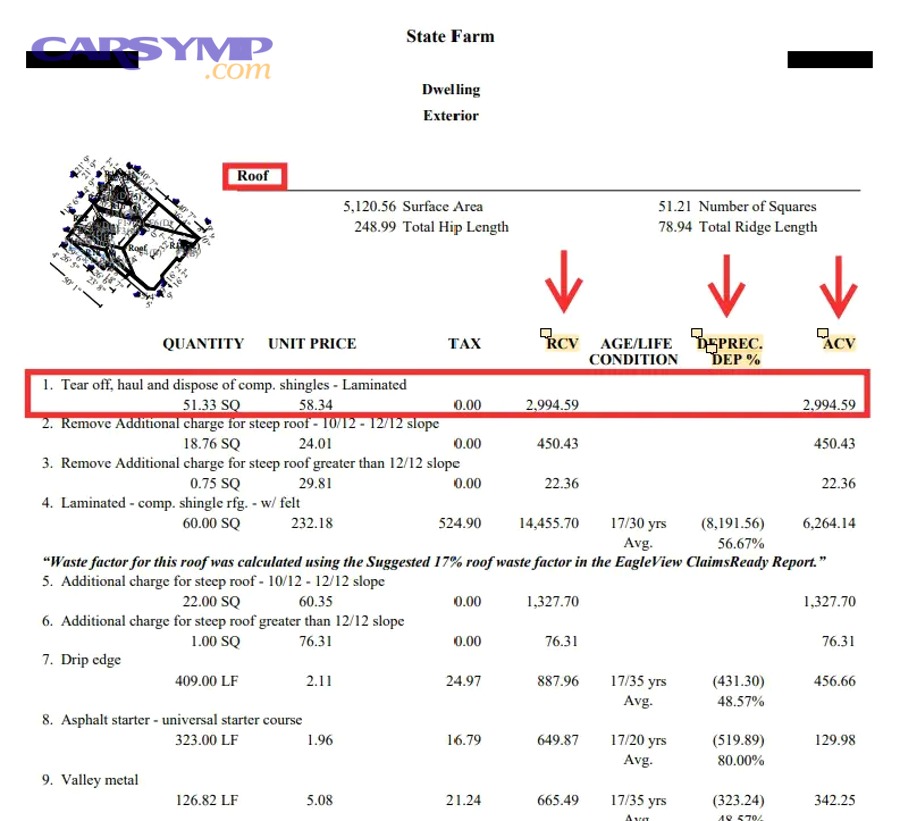
A scan tool is not the same as a diagnosis
A scan can pull codes and data, but diagnosis requires interpreting data, testing components, and proving the failure path. If the estimate lists a part solely because a code exists, ask what test confirmed the part actually failed.
Cụ thể, request the code list and the freeze-frame snapshot (or a summary) so you know what conditions triggered the issue.
When diagnostic fees are fair—and when they’re not
Diagnostic fees are fair when the shop documents time spent, steps performed (tests), and results that logically lead to the recommended repair. They’re questionable when diagnosis is billed but no test results are shared.
Quan trọng hơn, ask whether the diagnostic fee is credited toward the repair if you proceed, and get that policy in writing if possible.
Recheck and road-test lines protect you when done right
A recheck line can be a sign of professionalism: it covers verifying no leaks, confirming sensor readings, clearing/confirming codes, and road-testing for symptom resolution. This can prevent comebacks and warranty disputes.
Theo nghiên cứu của Automotive Service Excellence (ASE) từ mục “Test Series”, vào chu kỳ 5 năm (cập nhật chuẩn hóa liên tục), technicians must retest to retain certification—highlighting why verification steps and documented procedures matter in modern repairs.
How do you compare two estimates apples-to-apples without chasing the lowest price?
You compare estimates apples-to-apples by standardizing scope, parts quality, labor basis, and warranty terms, then ranking each quote by risk (uncertainty) before price.
Tiếp theo, use a “scope lock” method so each shop is bidding the same job.

Step 1: lock the scope in one sentence
Write your scope like this: “Fix symptom X by doing confirmed repair Y, including required fluids/hardware and any calibration, with post-repair verification.” Give that sentence to each shop so they don’t quote different jobs.
Sau đây, ask each shop to list “included” and “excluded” items to remove guesswork.
Step 2: match parts quality tiers
One shop quoting OEM parts can be higher than another quoting budget aftermarket parts, and both can look “itemized.” Make both quotes use the same quality tier before you compare totals.
Ngoài ra, ask if the shop will show the box/brand at drop-off or before installation—simple transparency reduces disputes.
Step 3: normalize labor models
If one quote uses flat-rate time and another uses actual time, compare by converting both into an “effective rate” for that operation: labor total ÷ hours basis. This reveals whether the difference is rate, hours, or both.
Trong khi đó, don’t ignore verification steps—cheap quotes often omit calibration, rechecks, and road tests that protect you later.
A comparison table that keeps you objective
This table helps you line up two quotes so you can see whether the “cheaper” option is truly the same repair or simply less defined.
It also helps you document your decision if you need to explain it to a partner, fleet manager, or warranty provider.
| Comparison Factor | Quote A | Quote B |
|---|---|---|
| Scope statement | Clear / unclear | Clear / unclear |
| Parts tier | OEM / premium aftermarket / budget | OEM / premium aftermarket / budget |
| Labor model | Flat-rate / actual / bundled | Flat-rate / actual / bundled |
| Verification included | Recheck / road test / scan report | Recheck / road test / scan report |
| Warranty terms | Written / vague | Written / vague |
What questions should you ask before authorizing work and signing?
Before authorizing work, you should ask questions that confirm diagnosis evidence, final price boundaries, part quality, timeline, and how changes will be approved, so you never pay for “assumptions” that were not agreed upon.
Để bắt đầu, treat the estimate like a contract draft: your job is to remove ambiguity before you commit.
Use a “why/what/how much” sequence
- Why: “What test result proves this part or system is the cause?”
- What: “What exactly will you replace/repair, and what is included?”
- How much: “What is the out-the-door maximum, and what could make it change?”
Tiếp theo, ask for the old parts back (where legal/possible) or photos of key failures—this encourages accountability and helps you learn.
Ask how the shop handles surprises
Many repairs uncover hidden issues (broken bolts, seized components, damaged connectors). Ask: “If you discover anything else, will you stop, document it, and send a revised estimate before proceeding?”
Cụ thể hơn, set a dollar threshold that requires your explicit approval (for example, “call me for anything over $X”).
Ask about training, standards, and responsibility
In the body of your discussion (not in the headings), it’s appropriate to ask whether the work is done by a certified mechanic for the system involved, and what diagnostic standards or service information they follow for your vehicle platform.
Ngược lại, if the shop can’t explain who works on the car and how quality is checked, a low price may simply mean higher risk.
How do you protect yourself after approval: updates, change orders, and the final invoice?
You protect yourself after approval by requiring documented updates, approving changes through a revised estimate, and matching the final invoice to the approved scope so the estimate and the invoice don’t drift apart.
Tiếp theo, learn to track the job with simple checkpoints that keep the shop and the customer aligned.
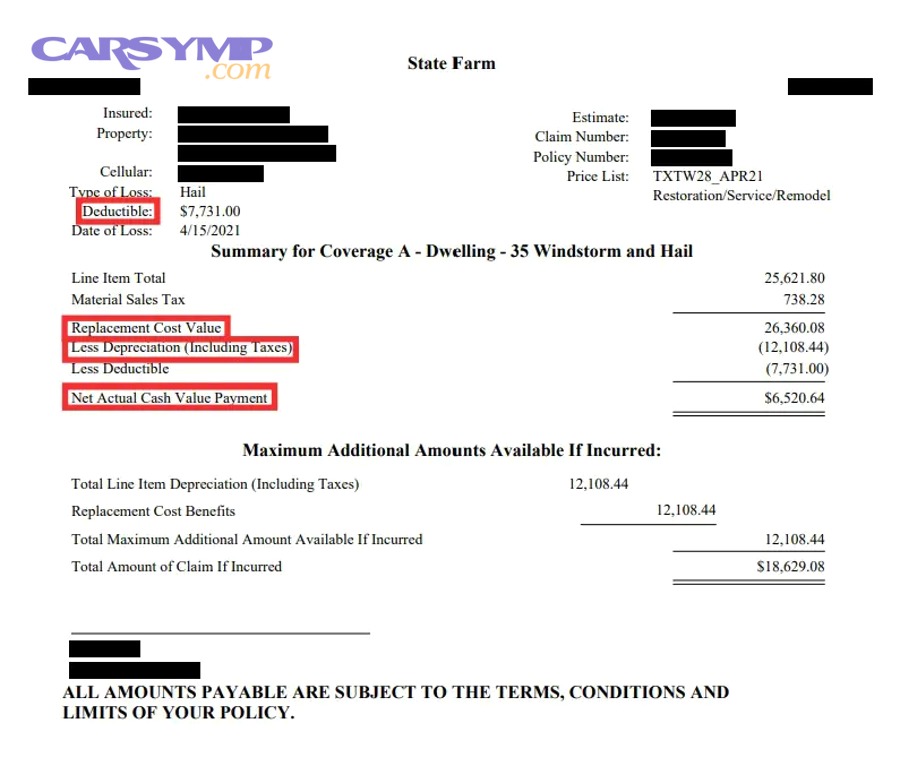
Always require a revised estimate for added work
If new work is needed, it should be listed as a separate change with its own parts, labor, and fees. You should be able to say “yes” or “no” to the added scope without losing clarity.
Quan trọng hơn, don’t accept “we had to” without a revised document—especially for large add-ons.
Match the invoice line-by-line to what you approved
When you pick up the car, compare the final invoice against the last approved estimate: same operations, same parts tier, same labor basis, and no extra fees that were not disclosed.
Cụ thể, if an invoice line appears that was not on the approved estimate, ask for the approval record (signature, text, email) tied to that change.
Use the estimate to protect your warranty rights
Warranty disputes often hinge on documentation: what was replaced, with what part quality, and what verification was performed. Keep the final estimate and invoice together, and request any test reports used to justify the repair.
In practical terms, you can also ask “What warranties certified shops offer” in plain language: get the warranty duration, what’s covered (parts/labor), and what voids coverage (overheating, contaminated fluids, customer-supplied parts), in writing.
FAQ about reading repair estimates like a pro
Yes, you can become confident quickly if you focus on the handful of lines that drive 80% of the cost: labor hours, parts tier, diagnostics, and any vague bundles that hide scope.
Tiếp theo, these common questions remove the last bits of confusion that catch most drivers off guard.
Is it normal for parts to cost more at a shop than online?
Yes—shops often mark up parts because they handle sourcing, returns, warranty processing, and the risk of delays. The fair question is whether the parts tier and warranty match the markup.
Trong khi đó, if you bring your own parts, many shops limit or deny labor warranty—ask this upfront so you don’t trade a small savings for a large risk.
Should I always get an itemized estimate?
Yes, itemization is your best defense against surprise charges and your best tool for comparing quotes. Even if a shop uses packages, the inclusions should be listed clearly.
Ngoài ra, itemization becomes evidence later if you dispute a charge or need to prove maintenance history.
What if two shops give different diagnoses for the same symptom?
This happens when testing depth differs or when intermittent faults are hard to reproduce. Ask each shop what test result supports the diagnosis and whether they can show measurements or scan data that ties to the symptom.
Đặc biệt, be cautious of diagnoses that jump straight to expensive assemblies without confirming the failure path.
How do I handle “Dealer tech vs independent certified mechanic comparison” in a practical way?
Don’t treat it as a brand debate—treat it as a documentation debate. Ask who will work on the car, what service information they use, whether they can perform required calibrations, and how they document verification and warranty terms.
Tóm lại, the best choice is the shop that produces the clearest scope, evidence, and accountability for your specific repair.
Contextual Border — From here, we move beyond reading the numbers to the habits and small print that make estimates safer, verifiable, and easier to negotiate without damaging trust.
Advanced habits that make every estimate clearer and safer
The fastest way to reduce cost and stress is to standardize communication: request evidence, require written scope, document approvals, and keep a clean paper trail so the estimate can’t quietly transform into a different job.
Tiếp theo, apply the four advanced habits below to prevent misunderstandings and protect warranty outcomes.
Use “estimate vs invoice” as your reality check
An estimate is a plan and price proposal; an invoice is the record of what was actually done. Your goal is to keep the two aligned by requiring a revised estimate for any added work, and by auditing the invoice against the last approved version.
Cụ thể, if the invoice has new labor lines, new fees, or a different parts tier, ask for the approval record and the reason for the change.
Request photos and measurable results for high-cost decisions
For expensive items (suspension, engine work, electronic modules), ask for photos of leaks, worn components, or test readings (voltage drops, compression, scan data). Visual and measurable evidence reduces “trust gaps.”
Theo nghiên cứu của Federal Trade Commission từ Used Car Rule (cơ chế minh bạch hóa thông tin), vào 11/2016, the Buyers Guide requirement emphasizes written disclosure of warranty terms—use the same mindset for repair estimates: get key promises in writing.
Clarify warranty terms and keep them separate from promises
A warranty should state duration, coverage (parts/labor), exclusions, and what you must do to maintain coverage. If a shop says “we’ll take care of you,” ask them to translate that into written terms on the estimate or invoice notes.
Ngoài ra, keep records of fluids used and calibration steps, because many warranty questions come down to whether proper procedures were followed.
Leverage a short educational video to spot common traps faster
Sometimes it’s easier to “see” estimate structure once. Watch a quick breakdown, then re-read your estimate and circle anything that still feels vague—those are your questions for the shop.
Hãy cùng khám phá one practical walkthrough below before your next repair conversation.