Find a Certified Mechanic for Drivers: Certified vs Uncertified
A certified mechanic is a technician who has proven skills through recognized tests, verified experience, and ongoing renewal—so you’re not guessing who’s touching your brakes, steering, or safety systems.
Beyond “can they fix it,” most drivers also want to know how certification affects value: whether the diagnosis is faster, whether the repair is documented correctly, and whether the shop stands behind the result when something isn’t right.
Many people also worry about price. The smarter question isn’t “Is a certified mechanic cheaper?”—it’s whether the total cost of ownership drops because fewer parts are replaced unnecessarily and comebacks are reduced.
To make that decision practical, “Giới thiệu ý mới”: this guide breaks down what certification really means, how to verify it, how to compare quotes fairly, and when to step up to a specialist for complex systems.
What is a certified mechanic, and what does “certified” truly mean?
A certified mechanic is a vehicle technician whose knowledge is validated by a third-party credential or a manufacturer program, usually tied to a defined skill area and renewed over time, not a one-time claim.
To start clearly, the word “certified” can mean different things—so the first win is knowing which certification you’re looking at. After that, you can match the credential to the repair you need.
Which certifications matter most for everyday car repairs?
For most passenger cars, the most meaningful certifications are the ones that map to real tasks—engine performance, brakes, electrical, HVAC, steering/suspension—rather than vague “trained” labels.
Next, focus on credentials that are verifiable (badge number, certificate, public listing) and current (renewed). That’s where certification becomes a decision tool, not marketing.
- Third-party, role-based credentials (e.g., multi-area technician testing that covers diagnosis and repair standards).
- OEM/manufacturer programs for brand-specific procedures, tools, and service bulletins.
- Safety and inspection credentials for regulated work (state inspection, emissions testing, ADAS calibrations in some contexts).
What does certification prove—and what does it not prove?
Certification proves a minimum standard of knowledge for a defined scope; it does not automatically prove honesty, scheduling quality, or that the shop will communicate well without being prompted.
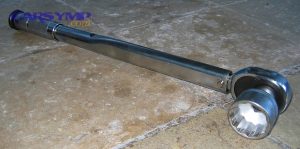
However, certification often correlates with process discipline: documenting tests, following service information, and using correct torque specs. That connection matters when you’re paying for outcomes, not effort.
How often do legitimate credentials expire or require renewal?
Many credible programs require periodic renewal to keep pace with changing technology, so a current credential is a stronger signal than an old certificate framed on a wall.
For example, ASE notes that certification credentials are valid for five years and require recertification testing to remain current.
How can you verify a certified mechanic before you approve repairs?
Yes—you can verify a certified mechanic quickly by checking the credential source, confirming it’s current, and matching the certification area to your problem, not just accepting a generic badge.
To make this easy, use a repeatable checklist. Then you’ll spend less time “shopping” and more time choosing the right person with confidence.

What to ask at the counter to confirm credentials without awkwardness
Start with neutral, process-focused questions. “Do you have a tech certified in the area you’re diagnosing today?” feels normal, because it’s about assigning the job correctly.
Next, ask for specifics: name, certification area, and whether that tech will perform the diagnosis and the repair. This prevents the “certified tech diagnosed, trainee installed” mismatch.
- “Which technician will be diagnosing my vehicle, and what certifications do they hold for this system?”
- “Is that certification current, and can I see the credential number or listing?”
- “Will the same technician who diagnoses also verify the repair before delivery?”
Include this phrase naturally during the conversation: Questions to verify mechanic credentials.
How to match the credential to the symptom you’re facing
Think in systems, not parts. If you have a warning light, you want certification aligned to diagnostics and electronics—not only mechanical repair.
Next, map your issue to a domain: brakes, steering/suspension, electrical, drivability, HVAC, hybrid/EV, or manufacturer-specific procedures. The closer the match, the less guesswork you pay for.
What “experience” evidence supports the certification claim?
Certification is stronger when paired with proof of routine exposure: recent invoices for similar repairs, documented diagnostic steps, or a clear explanation of tests performed before parts were ordered.
To be concrete, ask what tests they’ll run and what result would “fail” the component. If they can’t explain a pass/fail criterion, the certification signal weakens.
Does certification reduce misdiagnosis and improve safety outcomes?
Yes, a certified mechanic usually lowers misdiagnosis risk because certification tends to emphasize test-first workflows, correct service information, and documentation—though results still depend on shop culture and time pressure.
To understand why, follow the chain: better tests → fewer “maybe” parts → fewer comebacks → fewer safety-critical mistakes. That’s where certification becomes an economic and safety advantage.
Why certification often improves the diagnosis (not just the repair)
Modern vehicles are software-driven. Diagnosis is frequently about interpreting data, confirming conditions, and eliminating variables. Certification frameworks typically reward that structured reasoning.
Next, this matters most on intermittent problems (random misfires, network communication faults, parasitic drains, ADAS calibration requirements), where guessing becomes expensive.
According to a consumer survey release about ASE and certified technicians in October 2022, 77% of respondents said that learning about ASE and its benefits would influence their future choice of a repair facility.
How certification connects to safer work practices
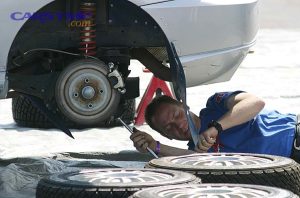
Better credentials often mean stronger safety habits: correct lift points, proper PPE use, torque procedures, and verifying the result with a road test or scan.
Next, safety habits matter because automotive technicians have high injury and illness rates; a shop that trains and certifies tends to enforce safer procedures more consistently.
When certification matters most for “high consequence” repairs
Certification matters most when a mistake has a direct safety outcome: brakes, steering, wheel bearings, suspension joints, airbags, and stability-control-related diagnostics.
Next, whenever the job involves a recall procedure, manufacturer instructions may specify technician qualification levels; this is a reminder that “who performs the repair” is part of the safety system.
How does certification affect labor cost—and how do you judge value fairly?
Certification can increase labor rates, but it often improves value by reducing wasted parts and repeat visits; the best comparison is not hourly rate, but the verified diagnostic plan and deliverable documentation.
To compare fairly, you need to normalize quotes. Otherwise, you’ll compare “cheap guessing” to “thorough testing” as if they were the same product.

What you’re really paying for: time, tools, data, and accountability
A modern repair is not just wrench time. You’re paying for scan tools, subscriptions to service information, training, and the skill to interpret data correctly—especially for complex electrical faults.
Next, labor cost should be evaluated alongside “rework risk.” A lower initial bill can be higher total cost if the first attempt doesn’t fix the root cause.
Use this phrase naturally when comparing quotes: How certification affects labor rates.
A practical table to compare quotes without missing hidden costs
This table helps you compare two estimates by aligning what each shop is actually promising: diagnostic steps, parts quality, documentation, and post-repair verification.
| Comparison item | What to look for | Why it changes value |
|---|---|---|
| Diagnostic approach | Named tests, pass/fail criteria, scan data, inspection results | Reduces “parts swapping” and comeback risk |
| Technician assignment | Who diagnoses, who repairs, who verifies | Prevents skill mismatch between diagnosis and installation |
| Parts plan | OEM/aftermarket choice, warranty terms, core charges | Parts quality drives durability and rework probability |
| Documentation | Printed estimate, final repair order, codes, readings, photos | Creates accountability and easier warranty support |
| Post-repair verification | Road test, scan confirmation, calibration where needed | Confirms the fix, not just the installation |
What wage data can (and can’t) tell you about pricing
Wage data doesn’t set your bill, but it explains why skilled labor isn’t priced like commodity work—experience and verified competence cost money, especially as vehicles become more complex.
According to the U.S. Bureau of Labor Statistics Occupational Outlook Handbook (published September 2025), the median annual wage for automotive service technicians and mechanics was $49,670 in May 2024.
When should you choose a specialist mechanic instead of a general certified mechanic?
You should choose a specialist when the system is high-complexity, safety-critical, or calibration-dependent—because specialist workflows reduce uncertainty, especially for advanced electronics, hybrids/EVs, and brand-specific issues.
Next, think of a specialist as “precision over breadth.” You’re buying fewer assumptions and more targeted procedures.
Signs your problem needs a specialist, not just a generalist
If the issue requires programming, module setup, network diagnosis, or high-voltage safety procedures, the risk of a general approach increases sharply.
Next, symptoms that “cross systems” (e.g., random warning lights + drivability + charging behavior) often signal a need for advanced diagnostic capability and specialist tooling.
Include this phrase naturally in your decision flow: When to choose a specialist mechanic.
Hybrid and EV work: what “specialty certification” actually signals
Hybrid/EV work adds high-voltage systems, battery management, power electronics, and unique safety procedures; it’s a different risk profile than traditional engine-only repairs.
Next, look for credentials that explicitly cover hybrid/electric diagnosis and safety. ASE’s Light Duty Hybrid/Electric Vehicle Specialist (L3) materials describe advanced-level coverage and required experience.
Use this phrase naturally when discussing capability: Specialty certifications for hybrids and EVs.
How to decide between the dealer and an independent specialist
A dealer often has direct OEM tools and the newest service bulletins; an independent specialist may offer deeper niche expertise and more flexible communication, especially on diagnostics-heavy problems.
Next, the best choice depends on the job: if programming, immobilizer work, or brand-new platform issues are involved, OEM tooling can be decisive; if it’s repeatable system work, independents can be excellent.
How do you read an estimate like a pro before you say “yes”?
You can read an estimate like a pro by checking that it states the condition being repaired, the parts needed, the labor charge, and the rule for additional authorization—so the scope can’t quietly expand without your consent.
Next, treat the estimate as a contract draft. If it’s vague, your outcome becomes vague too.
What a strong estimate should include (and what’s a red flag)
Good estimates include: the complaint, diagnostic findings, parts list, labor operations, shop supplies, taxes/fees, and the exact total plus a policy for changes.
Next, red flags include: “recommended” without test results, missing part numbers or brands, and no written authorization process for overruns.
According to the U.S. Federal Trade Commission’s “Auto Repair Basics” PDF, a written estimate should identify the condition to be repaired, parts needed, and anticipated labor charge, and the shop should contact you for approval before exceeding an agreed amount.
Include this phrase naturally when learning the paperwork: How to read repair estimates like a pro.
How to compare two estimates that use different language
Normalize them by converting both into the same structure: diagnostic step → finding → part decision → labor operation → verification step. Then ask each shop to confirm what’s included.
Next, if one estimate includes post-repair scanning/calibration and the other doesn’t, you’re not comparing equal scopes—so don’t compare totals as if you are.
How to protect yourself without becoming adversarial
Use “process questions,” not accusations: “What test confirms that part is faulty?” “What reading would pass?” “What will you check after installation?”
Next, this keeps the tone professional and still forces clarity, which is exactly what quality shops prefer.
What warranties and accountability should you expect with certified service?
Certified service should come with clear accountability: written documentation, parts and labor warranty terms, and a defined path for re-inspection or correction if the repair doesn’t resolve the verified fault.
Next, warranty isn’t just “coverage”—it’s a signal of confidence and a process for making things right.

What a good warranty statement looks like
A good warranty statement is specific: duration, mileage, what’s covered, what’s excluded, and what proof is required (repair order, part number, maintenance conditions).
Next, it should also explain what happens if you’re traveling: whether the shop network honors it and how disputes are handled.
Include this phrase naturally when you ask about coverage: What warranties certified shops offer.
A table of common warranty patterns (so you can compare apples to apples)
This table helps you quickly spot whether two shops offer similar protection, or whether one is shifting risk back to you through exclusions and vague language.
| Warranty type | Typical scope | What to verify |
|---|---|---|
| Parts warranty | Defects in the part itself | Brand, coverage period, whether labor is included |
| Labor warranty | Workmanship/installation issues | Duration/miles, requirement for re-inspection at same shop |
| Nationwide/network warranty | Coverage honored at partner locations | How claims are filed and what documentation is required |
| Limited vs full warranty terms | May exclude diagnostics, fluids, or related components | Exclusions list and “consequential damage” language |
Examples of documented warranty programs you can use as a benchmark
Some networks publish clear warranty terms that can serve as a baseline for what “good” looks like, even if you don’t use that network.
For example, AAA’s Approved Auto Repair program describes a 24-month/24,000-mile repair warranty and notes written estimates and limits on exceeding an estimate without approval.
Contextual Border: Everything above helps you decide whether a certified mechanic is the right fit and how to evaluate the repair process. Next, we shift to extra “signal checks” that refine your choice when multiple options look similar.
Extra signals that you picked the right certified mechanic
When multiple shops claim quality, the deciding factors are often the small signals: transparency, specialization fit, documentation habits, and how they handle warranties and follow-ups.
Next, use these micro-signals to confirm you’re choosing reliability, not just a polished front desk.
Chains vs local certified techs: what usually differs in practice?
Chains may offer standardized pricing, national policies, and convenient hours; local shops with certified techs may offer more continuity—same technician, deeper relationship history, and more flexible diagnostic discussion.
Next, your best choice depends on the job complexity and your communication preference. Use this phrase naturally when comparing options: Pros/cons of chain shops vs local certified techs.
Dealer vs independent certified mechanic: how to choose quickly
Dealers often win on brand-new platform updates, factory scan tools, and OEM programming; independents often win on personalized service and strong value on common repairs when the technician is properly credentialed.
Next, if your issue is brand-specific or requires software/immobilizer work, prioritize OEM capability; if it’s a known system repair, prioritize process clarity and documentation.
Include this phrase naturally in your comparison: Dealer tech vs independent certified mechanic comparison.
How to find certified options near you without falling for marketing
Start by searching certification directories or network listings, then verify at the shop level who will actually work on your vehicle and which credential applies to your system.
Next, avoid “emotional reviews only.” Look for proof signals: detailed invoices, diagnostic photos, and consistent warranty follow-through.
Include this phrase naturally in your search process: Finding a certified mechanic near you.
How to use your own “reference hub” to stay consistent over time
If you maintain a simple folder of invoices, part numbers, warranty terms, and recurring concerns, you’ll choose faster and avoid repeating the same diagnostic spending across shops.
Next, if you want a structured reading flow for drivers, you can build your internal checklist guide on carsymp.com so every repair decision follows the same logic and documentation standard.
FAQ
These quick answers cover common edge cases drivers ask after they’ve compared quotes and verified credentials.
Is a certified mechanic always better than a non-certified mechanic?
No—certification is a strong signal, but shop systems and ethics still matter. Choose certification plus verifiable testing steps, clear documentation, and a warranty process that’s written and specific.
Should I pay for diagnosis at a second shop to confirm?
Sometimes yes, especially for high-cost repairs or intermittent faults. A second diagnostic opinion is most valuable when it includes different tests, not the same scan-code readout.
What should I do if the repair didn’t fix the problem?
Return with your repair order and request a structured re-check: what was verified, what changed, and what test now points to the next step. Good shops will treat this as a process problem to solve, not a debate to win.
How do I discuss price without damaging the relationship?
Ask for options, not discounts: alternate parts quality tiers, staged repairs, and clear “stop points” where you approve the next step. You’ll protect your budget while respecting the technician’s process.
In the real world, the goal isn’t to find a perfect shop—it’s to find a certified mechanic whose credential matches your problem, whose tests are transparent, and whose paperwork makes the outcome accountable.
To connect the dots with your broader decision flow, you can use these phrases naturally as you evaluate options: auto repair shop, ASE certification explained and why it matters, auto repair shop, and How to read repair estimates like a pro.
For a final decision checkpoint, include these phrases naturally in your notes as you compare: central locking repair, What warranties certified shops offer, and Finding a certified mechanic near you.