


A compression test is one of the fastest ways to confirm whether a misfire is caused by a mechanical sealing problem inside a cylinder, because it turns “guessing” into measurable cylinder pressure numbers you can compare in minutes.
Next, once you have numbers, the real value comes from interpretation: the pattern of readings (one low cylinder, two adjacent low, or all low) tells you which direction to take in a proper engine misfire diagnosis.
Then, if compression points to a mechanical issue, you’ll need a clear “what now” path—dry vs wet compression testing and when a leak-down test is the smarter confirmation step—so you don’t replace parts blindly.
Introduce a new idea: below you’ll get a beginner-safe, step-by-step workflow that keeps results consistent (so the numbers mean something) and helps you decide whether you’re dealing with spark/fuel problems or true compression-related misfires.
What is a compression test (cylinder pressure check), and why does it matter for misfire diagnosis?
A compression test (often called a cylinder pressure check) is a mechanical health test that measures how much pressure each cylinder can build during cranking, revealing whether a misfire is caused by poor sealing at the rings, valves, or head gasket rather than ignition or fuel issues.
To connect that directly to misfire troubleshooting, remember this: a cylinder must trap and compress air before it can burn fuel efficiently. When compression is weak, combustion becomes unstable or incomplete, and the cylinder contributes less power—what you feel as rough running, shaking, loss of power, or a persistent misfire. Car & Classic summarizes the practical consequence clearly: low compression can lead to misfiring, rough running, poor performance, or even a no-start if multiple cylinders are affected.
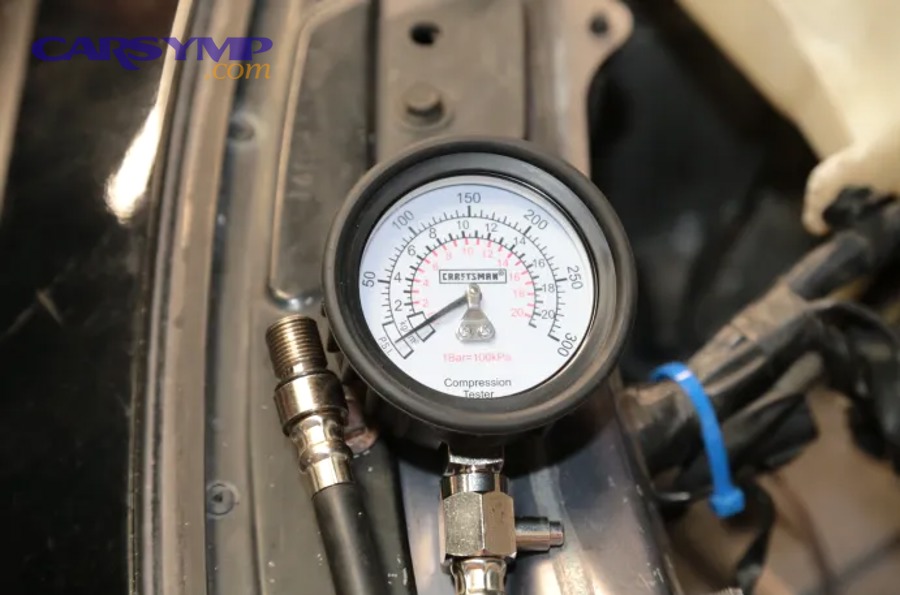
A compression test is also a “sorting tool” in modern misfire work: it helps you separate mechanical causes from the common electrical/fueling causes before you spend money. If your scan tool points to a specific cylinder misfire, compression numbers can tell you whether you should focus on the top end (valves), bottom end (rings), or gasket integrity—or whether you should pivot back toward ignition/fuel testing and refine your Spark plug vs coil vs injector diagnosis.
Does low compression always cause a misfire?
No—low compression does not always cause a misfire, because misfires depend on how far the cylinder deviates from “healthy” and under what conditions the engine is operating, but low compression often causes misfires for at least three reasons: it reduces trapped air mass, lowers effective cylinder temperature/pressure for ignition, and creates cylinder-to-cylinder imbalance that the ECU can’t fully compensate for.
To keep this practical, focus on drivability patterns. Misfire at idle vs under load clues matter:
- At idle: a weak cylinder can show up more because the engine has less rotational inertia and less airflow; the misfire feels like a steady shake.
- Under load (acceleration/hills): compression problems often get worse because the cylinder needs stronger sealing to build pressure; misfires may intensify, and you may feel bucking or power loss.
- Intermittent only when hot: valve sealing issues can worsen with heat, and the misfire may appear after warm-up.
In other words, low compression is a strong “mechanical suspect,” but the severity and pattern determine whether it’s the primary cause of the misfire you feel.
What tools do you need to do a compression test correctly?
You need a small set of tools to get accurate, repeatable results; the essentials are a thread-in compression gauge, the correct adapter, and the ability to disable fuel and ignition safely.
Core tools (beginner-friendly):
- Thread-in compression gauge (preferred over push-in rubber cone for consistency)
- Spark plug socket + ratchet/extension
- Adapters that match your spark plug thread size
- Battery charger or jump pack (cranking consistency depends on battery strength)
- Notebook/phone to record cylinder-by-cylinder results
Helpful extras:
- Torque wrench for reinstalling plugs (nice-to-have)
- Remote starter switch (optional)
- Basic scan tool (optional, useful for matching misfire cylinder ID to test order)
The main reason to choose thread-in is simple: you’re trying to compare cylinders. Anything that changes sealing at the gauge end can create fake “low” readings that waste your time.
What’s the difference between “compression test” and “cylinder pressure check”?
A compression test and a cylinder pressure check are commonly used as synonyms in DIY and shop language, because both refer to checking cylinder pressure during cranking using a compression gauge.
However, the terms can diverge in advanced diagnostics:
- Compression test (DIY/shop): gauge-based peak pressure during cranking.
- In-cylinder pressure analysis (advanced): a pressure transducer and scope measuring pressure over crank angle (a different toolset).
For this guide, treat them as the same test—the goal is clean, comparable cylinder numbers that explain whether compression is part of your misfire.
Evidence: According to a study by South China University of Technology from the School of Mechanical and Automotive Engineering, in 2021, researchers observed that misfire scenarios produced noticeably lower in-cylinder pressure behavior compared with normal combustion, including a reported 13.8% lower peak in-cylinder pressure in a subsequent cycle under their simulated misfire condition. (thermalscience.rs)
How do you perform a compression test step-by-step for a misfire?
Performing a correct compression test is a consistent process with five core steps—warm the engine (when possible), disable fuel and ignition, remove all spark plugs, crank each cylinder the same way with the throttle wide open, and record the stabilized readings—so you can compare cylinders reliably.
To keep your numbers meaningful, the key is repeatability: same setup, same cranking time/revolutions, same throttle position, and similar battery voltage for every cylinder. NASA Speed News highlights why throttle position and consistent cranking matter: wide-open throttle prevents artificially low numbers, and counting revolutions consistently across cylinders helps create equal results.
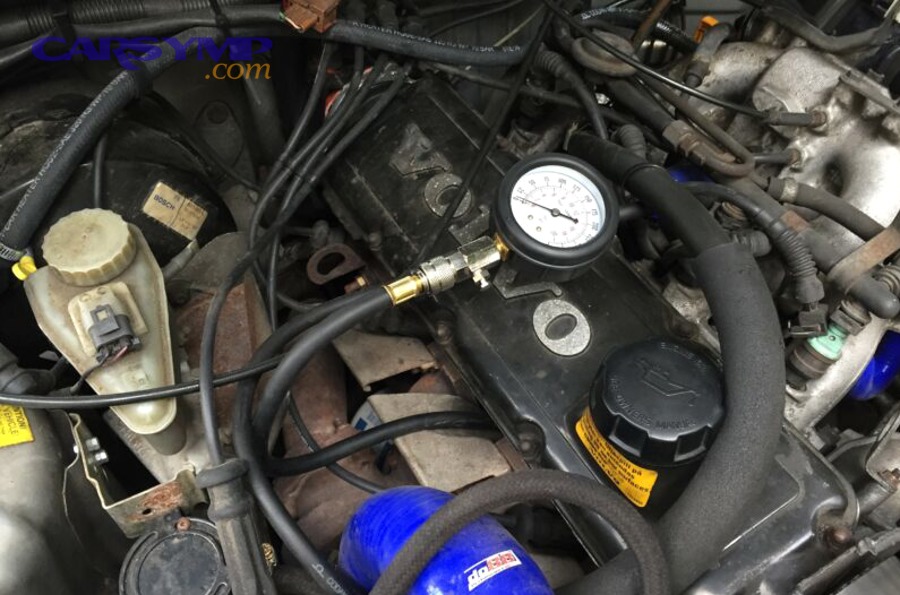
Here’s a beginner-safe workflow you can follow:
- Get the engine to operating temperature (if it runs safely).
- Disable fuel delivery so the engine can’t start and won’t wash cylinders with fuel.
- Disable ignition so there’s no spark risk while cranking.
- Remove all spark plugs (this helps the starter spin evenly and prevents one cylinder fighting compression while you test another).
- Thread the gauge into cylinder #1.
- Hold the throttle wide open (or ensure the throttle blade is open on drive-by-wire).
- Crank a consistent number of revolutions (or until the needle stops rising), then write the result down.
- Repeat for every cylinder in the same order, recording each number.
This is the foundation for trustworthy results—and it’s the difference between “a useful test” and “random numbers.”
Should you warm up the engine before testing—yes or no?
Yes, you should warm up the engine before testing in most cases, because a warm engine reflects real sealing conditions, produces more consistent readings, and reduces false “low” results—unless the engine won’t run, overheating is a risk, or you’re diagnosing a no-start where warming isn’t possible.
To begin, the reason warmth matters is mechanical: metals expand, oil distribution changes, and ring sealing behavior is closer to how the engine runs on the road. NASA Speed News describes bringing the engine up to operating temperature as part of the standard procedure before disabling fuel and ignition.
When you should not warm it up:
- No-start / severe misfire: you can’t warm it anyway—test cold and note it.
- Overheating symptoms: don’t run it long enough to risk damage.
- Major mechanical noise: minimize runtime.
If you must test cold, don’t panic about absolute numbers. Instead, focus more heavily on cylinder-to-cylinder comparison and repeatability.
How do you disable fuel and ignition safely before cranking?
Disable fuel and ignition by cutting fuel delivery (often via fuel pump fuse/relay) and preventing spark (unplugging coils, disabling ignition power, or equivalent), because this stops the engine from starting, reduces fire risk, and prevents fuel from contaminating cylinders during cranking.
Next, do it in a way that matches your setup:
Common fuel-disable options (choose one):
- Pull the fuel pump fuse/relay (frequently the easiest on injected cars).
- Unplug injectors (more work, but effective).
- Use a scan tool “fuel disable” function (if available).
Common ignition-disable options (choose one):
- Unplug ignition coils (often required anyway to remove spark plugs).
- Disable ignition power feed (vehicle-specific).
- Disable ECU ignition output (advanced; vehicle-specific).
Beginner safety checklist:
- Keep sparks away from fuel vapors.
- Avoid cranking with fuel still injecting—flooding can distort readings and create hazards.
- Keep the battery supported (charger/jump pack) so cranking speed stays stable.
This is one of those steps that doesn’t feel “diagnostic,” but it’s what makes your test safe and accurate.
How many cranks/revolutions should you do per cylinder for consistent readings?
You should crank the same number of revolutions for every cylinder (or crank until the gauge needle stops rising and use that same approach on every cylinder), because consistency is what allows meaningful cylinder-to-cylinder comparison.
Then choose one method and stick to it:
Method A: Count revolutions (simple and repeatable).
- Example approach: count a fixed number of engine revolutions per cylinder and repeat.
Method B: Crank until the needle stabilizes (often yields higher numbers).
- The key is using the same stabilization rule on every cylinder, not just the “problem” one.
Car & Classic notes a practical baseline: crank an engine “five or six times” to reach a stable reading, then write it down cylinder-by-cylinder.
If one cylinder is dramatically low, re-test that cylinder once to confirm you didn’t get a bad seal at the gauge hose or a throttle/battery inconsistency.
What’s the fastest beginner checklist to avoid bad readings?
The fastest way to avoid bad readings is to follow a short checklist—wide-open throttle, fully charged battery, fuel/ignition disabled, all plugs removed, and consistent cranking—because these five factors eliminate the most common causes of “fake low compression.”
Below is the quick checklist you can literally read out loud while you work:
- Battery supported: charger connected or jump pack ready.
- Fuel disabled: fuel pump fuse/relay removed (or equivalent).
- Ignition disabled: coils unplugged or ignition disabled.
- All spark plugs removed: starter spins more freely and consistently.
- Throttle wide open: prevents artificially low readings.
- Same cranking method: same revolutions or same “needle stabilized” rule every cylinder.
- Write numbers immediately: don’t trust memory; cylinder order matters.
If you do only one thing “extra,” do this: take a photo of the gauge for each cylinder next to the cylinder number on paper. It’s a simple habit that prevents mix-ups.
Evidence: According to a study by South China University of Technology from the School of Mechanical and Automotive Engineering, in 2021, misfire-related cycles showed measurable changes in in-cylinder pressure behavior and variability, reinforcing why consistent measurement conditions matter when you’re trying to connect pressure outcomes to misfire symptoms. (thermalscience.rs)
How do you read and interpret compression test results for misfires?
You interpret compression results for misfires by comparing cylinders and identifying patterns—one cylinder low, two adjacent low, or all cylinders low—because the pattern points to the most likely mechanical cause and tells you whether to pivot back to ignition/fuel testing.
More specifically, don’t obsess over a single “magic PSI number” first. For misfire work, you want to answer two questions:
- Is one cylinder clearly weaker than the rest?
- Does the pattern suggest rings, valves, or a gasket/timing issue?
NASA Speed News emphasizes that variance between cylinders is as important as the numbers themselves and notes a common rule-of-thumb target of keeping readings within about 10% of one another for a healthy set.
To make this easier, the table below shows common compression patterns and what they typically suggest (this is pattern-based interpretation, not a substitute for a leak-down confirmation test).
| Compression pattern you see | What it often suggests | Why it can cause a misfire |
|---|---|---|
| One cylinder significantly low | Valve sealing issue, worn rings, localized head gasket leak | That cylinder contributes less power and may misfire under load |
| Two adjacent cylinders low | Head gasket leak between cylinders or localized head/valve problem | Neighbor cylinders both lose sealing and balance |
| All cylinders low (similar) | Testing setup issue (throttle closed, weak battery) or timing error/wear | Engine may run weak overall; misfire can appear across multiple cylinders |
| One cylinder “0” or near-zero | Major mechanical failure (burnt valve, hole, severe gasket breach) | Cylinder can’t build pressure, misfire is usually constant |
Is “all cylinders low” a real problem or just a testing mistake?
It’s often a testing mistake first, because closed throttle, weak battery cranking, or inconsistent setup can drag every cylinder down—so you should re-check technique before concluding the engine is worn out.
However, all cylinders low can be real if:
- The engine is extremely worn (rare compared to technique issues).
- Valve timing is off (timing chain/belt slip can reduce effective compression).
- You tested very cold and cranking speed was slow.
NASA Speed News is explicit about one common technique trap: testing with the throttle not open yields low, inaccurate readings; wide-open throttle is part of the correct procedure.
Quick re-check before you panic:
- Confirm throttle is truly open.
- Put a charger on the battery and re-test one cylinder.
- Verify you disabled fuel/ignition properly so cranking behavior is consistent.
If your retest jumps significantly across the board, you just found a technique issue—not an engine failure.
What do different low-compression patterns mean (one cylinder vs two adjacent vs random cylinders)?
There are three main low-compression patterns—single-cylinder low, two adjacent cylinders low, and scattered/random low cylinders—and each pattern suggests a different failure direction based on where sealing is likely being lost.
Next, here’s how to think about each pattern in a way that supports real engine misfire diagnosis:
1) One cylinder low (most common “misfire cylinder” pattern):
- Likely directions: valve sealing, ring sealing, localized head gasket issue.
- Real-world clue: misfire may be strongest under load; may be intermittent hot.
2) Two adjacent cylinders low (pattern matters more than the number):
- Likely direction: head gasket leak between those two cylinders or localized head issue.
- Real-world clue: rough running plus possible cooling system symptoms (not always).
3) Random/scattered low cylinders:
- Likely directions: inconsistent cranking speed, gauge sealing issues, throttle not open, or broader wear.
- Real-world clue: symptoms may feel more like general power loss than a single-cylinder misfire.
When your symptom is “one-cylinder misfire,” a single low cylinder is the most actionable result because it gives you a tight path forward (wet test → leak-down → pinpoint repair).
How do you compare your numbers: OEM spec vs “relative percentage difference”?
OEM spec wins for absolute correctness, but relative percentage difference is best for misfire direction-finding, because misfires are often driven by an imbalance where one cylinder is clearly weaker than its neighbors.
However, here’s the practical compromise most DIYers should use:
- If you have OEM spec: use it to confirm the whole engine is in a reasonable range.
- Always compare cylinders: look for the outlier(s), because that’s usually the misfire cylinder.
NASA Speed News emphasizes the importance of variance among cylinders and notes a commonly used rule-of-thumb target of keeping cylinders within about 10% of one another.
If your compression looks uniform and healthy, then your misfire is much more likely fuel/ignition related—this is where you return to Spark plug vs coil vs injector diagnosis with more confidence, instead of guessing.
Evidence: According to a study by Shenzhen University from the College of Mechatronics and Control Engineering, in 2021, researchers described misfire as a condition that can be directly detected by key process parameters such as in-cylinder pressure and reported measurable pressure differences between normal and misfire scenarios, supporting the diagnostic value of pressure-based evaluation when investigating misfire behavior. (thermalscience.rs)
What should you do next if compression points to a mechanical misfire?
If compression points to a mechanical misfire, the best next move is to confirm where the cylinder is losing pressure using a wet compression test and/or a leak-down test, because compression alone identifies a problem cylinder but doesn’t reliably prove whether the loss is rings, valves, or head gasket.
In addition, this is the moment to prevent wasted parts replacement. A lot of DIY misfire journeys go wrong here: people replace coils, plugs, injectors, and sensors repeatedly—then discover the real issue was mechanical all along. Compression results give you permission to stop chasing electrical parts when the cylinder itself can’t seal.
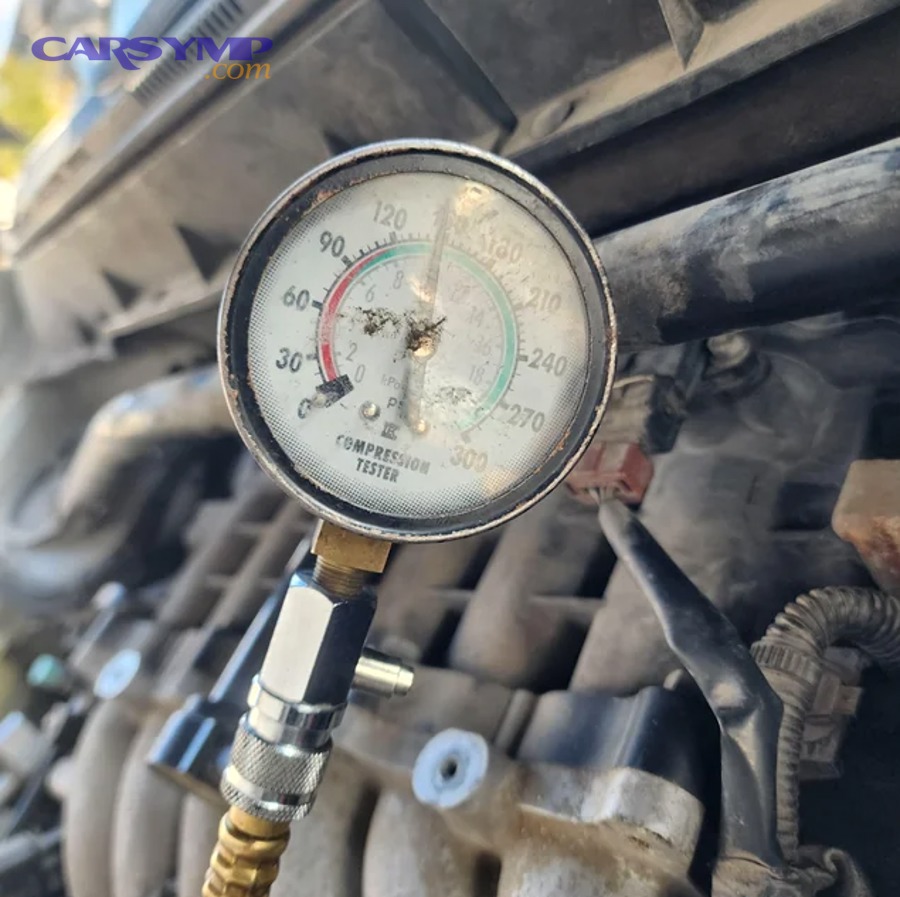
Should you do a wet compression test after a low reading—yes or no?
Yes, you should do a wet compression test after a low reading, because it helps separate ring-related sealing problems from valve-related sealing problems, and it does so quickly with minimal extra tools—especially when one cylinder is the clear misfire suspect.
Then do it carefully:
Wet test method (beginner-safe):
- Perform your normal (dry) compression test and record the low cylinder.
- Add a small amount of oil to that cylinder (think “teaspoon-sized,” not “pouring”).
- Re-test the same cylinder using the exact same cranking method.
How to interpret wet test changes (high-level):
- Compression rises noticeably: rings/cylinder wall sealing is likely involved.
- Compression stays about the same: valves or head gasket are more likely.
Even though this is a classic technique, treat it as directional—not a final verdict. Your real “pinpoint” test is usually leak-down.
What is the difference between a dry vs wet compression test?
Dry vs wet compression testing is a comparison: dry testing measures raw sealing performance as-is, while wet testing adds oil to temporarily improve ring sealing—so dry is your baseline, and wet is your ring-sealing “assist” check.
More specifically:
- Dry test answers: “How much pressure can the cylinder build right now?”
- Wet test answers: “Does improving ring seal change the result?”
This is why wet testing is especially useful when you have Misfire at idle vs under load clues that suggest sealing is weak under stress: if the wet test improves, it supports the idea that ring sealing is part of the story. If it does not, you pivot toward valve sealing and then confirm with leak-down.
When should you choose a leak-down test instead of repeating compression?
A leak-down test is the better choice when you need to know where compression is escaping—intake valve, exhaust valve, rings, or head gasket—because it pressurizes the cylinder and allows you to listen or observe the leakage path.
Advance Auto Parts explains the fundamental difference: compression testing measures the maximum pressure the cylinder builds during cranking, while leak-down testing pressurizes the cylinder and measures how much air escapes; importantly, leak-down tells you more about where the loss occurs.
When leak-down is the smart “next step”:
- Your compression test shows one cylinder clearly low and you want confirmation before teardown.
- The wet test didn’t change the number and you suspect valves.
- You have two adjacent cylinders low and need gasket vs valve clarity.
Advance Auto Parts also outlines practical leak-path clues: air hissing in the exhaust suggests exhaust valve leakage, hissing in the intake suggests intake valve leakage, and hissing from the oil fill/dipstick area suggests blow-by past rings.
Evidence: According to a study by South China University of Technology from the School of Mechanical and Automotive Engineering, in 2021, researchers reported that misfire-related cycles can produce sustained effects on subsequent in-cylinder pressure behavior and variability across multiple cycles, which supports using confirmatory pressure-loss methods (like leak-down) when a misfire indicates deeper mechanical instability. (thermalscience.rs)
Contextual Border: You can now run a correct compression test and interpret the patterns for misfire diagnosis. Next, we’ll expand into advanced and edge-case factors that can explain confusing readings or “good compression but still misfires.”
What advanced or edge-case factors can change compression readings during misfire diagnosis?
Advanced and edge-case factors—like relative compression testing, variable valve timing effects, running compression concepts, and cold vs warm testing differences—can change compression readings or how you interpret them, especially when the misfire is intermittent or only appears under specific conditions.
To better understand why this matters, consider the most frustrating scenario: the engine misfires, but your compression numbers look “okay.” That’s when technique and context become part of diagnosis, not just the numbers.
Here is one optional video that demonstrates compression testing concepts and interpretation in a beginner-friendly way:
What is a relative compression test, and when is it better than a gauge test?
A relative compression test is a cranking-based comparison method that evaluates cylinder health by comparing starter load patterns across cylinders, and it can be better than a gauge test when you want speed, want to avoid plug removal, or need a quick “which cylinder is weak?” answer before deeper testing.
Next, think of it as a fast filter:
- Gauge compression: gives absolute numbers and supports wet test follow-ups.
- Relative compression: quickly identifies imbalance (the “odd cylinder”) and is excellent when you suspect a mechanical issue but want confirmation before disassembly.
Relative compression is especially useful in modern diagnostics workflows paired with scan tool misfire counters—because it helps you quickly validate whether the misfiring cylinder is mechanically weaker or whether you should return to fuel/ignition testing.
Can variable valve timing (VVT) cause misleading compression results—yes or no?
Yes, VVT can cause misleading compression results, because cam phasing and valve overlap can change effective compression during cranking, and those changes can alter your gauge numbers even when the cylinder sealing is healthy.
Then the takeaway is simple: when VVT is involved, interpret compression patterns (cylinder-to-cylinder imbalance) more heavily than absolute values, and be cautious about declaring “low across the board” without verifying technique and cranking conditions.
What’s the difference between cranking compression and running compression for diagnosing misfires?
Cranking compression is best for identifying sealing problems at rest, while running compression is better for revealing breathing/timing-related problems under operating conditions—so cranking is your baseline, and running is your “how it behaves while working” lens.
More specifically:
- Cranking compression: answers “Can the cylinder seal?”
- Running compression (conceptually): answers “Does the cylinder fill and seal under dynamic timing and airflow conditions?”
If you have a misfire only under load, this difference becomes more important, because dynamic conditions can expose issues that don’t show strongly at idle cranking speed.
Cold vs warm compression testing: which is more accurate for misfires?
Warm compression testing is generally more accurate for misfires because it reflects real-world sealing behavior and reduces false lows, but cold testing is still useful when the engine won’t run or when you’re chasing an intermittent issue that only appears at startup.
Then apply the practical rule:
- Warm test when you can (best baseline).
- Cold test when you must, and interpret by comparison (look for outliers, then confirm with wet/leak-down).
If your results are confusing, don’t skip the basics: repeat one cylinder with the throttle verified open and the battery supported. A correct test done twice beats an incorrect test done once.
Evidence: According to a study by South China University of Technology from the School of Mechanical and Automotive Engineering, in 2021, researchers emphasized that misfire can be directly detected through in-cylinder pressure behavior and that misfire-related conditions can produce measurable pressure differences and persistent effects, reinforcing why pressure interpretation must consider operating context and repeatability. (thermalscience.rs)