


Fuel trim data interpretation for misfires works because STFT and LTFT show how hard the ECU is “correcting” the air–fuel mixture, and misfires often create a predictable correction pattern. If you learn what “positive” and “negative” trims mean—then compare how trims behave at idle vs. under load—you can narrow most misfire causes to unmetered air, fuel delivery, sensor bias, or ignition/mechanical faults.
Next, you’ll learn the “lean vs rich” trim signatures that most often appear during a misfire, including why a misfire can look “lean” on the scan tool even when the cylinder isn’t actually lean. That pattern-level understanding is the fastest way to stop guessing and move into repeatable engine misfire diagnosis.
Then, you’ll see the most common fuel-trim patterns that point to vacuum leaks, MAF/MAP errors, fuel pressure problems, injector issues, and ignition faults—and how to tell whether the problem is affecting one bank, one cylinder group, or the whole engine.
Introduce a new idea: the keyword focus here is fuel trim data interpretation for misfires, the predicate is decode/interpret, and the lexical relation is an antonym pair (lean vs rich clues)—so the guide is structured as definition → comparison → grouping → how-to → comparison, matching how people actually troubleshoot in the bay.
What is fuel trim data (STFT/LTFT) and why does it change during a misfire?
Fuel trim data is the ECU’s percentage-based correction to injector pulse width—STFT reacts quickly, LTFT learns slowly—and during a misfire it changes because the feedback sensors and airflow models “see” a mismatch and the ECU tries to compensate. (thegrouptrainingacademy.com)
Then, to make fuel trim data useful for misfire troubleshooting, you need to understand what the numbers represent, how they’re calculated, and when they’re trustworthy.
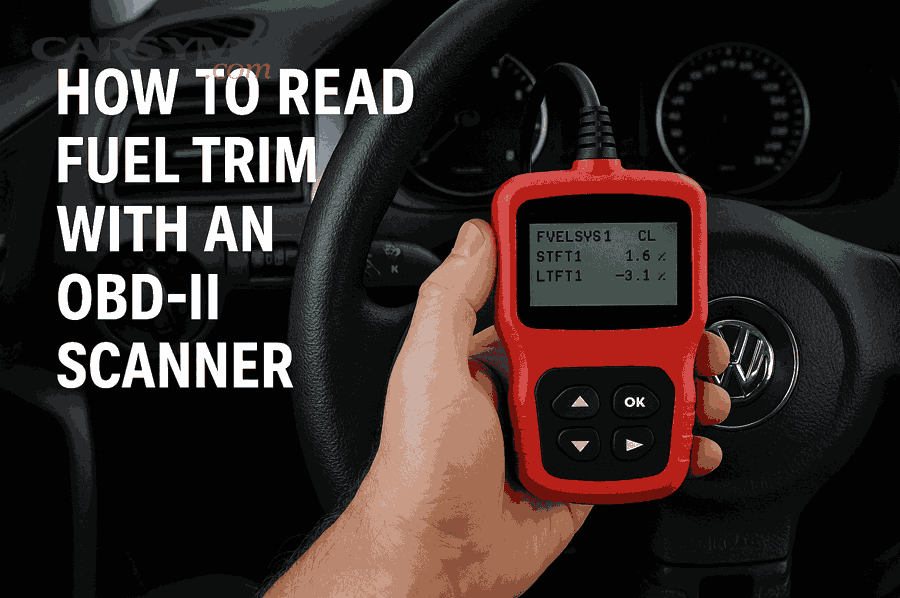
What do STFT and LTFT mean in plain English?
STFT (short-term fuel trim) is the ECU’s moment-to-moment “tweak” to keep the mixture on target in closed loop, while LTFT (long-term fuel trim) is the ECU’s memory-based correction stored by load/RPM “cells” to keep STFT from working too hard. (thegrouptrainingacademy.com)
- STFT changes fast (think: seconds) and swings positive/negative as feedback changes.
- LTFT moves slower (think: minutes/hours of driving) and reflects a persistent bias (vacuum leak, weak fuel pump, skewed MAF, etc.).
- Many training references treat ±10% as a “generally OK” ballpark for a warmed-up engine at steady conditions, while large deviations suggest a real underlying fault (exact “acceptable” ranges vary by platform). (smog-tech-training.com)
Why can a misfire make fuel trims look “lean” when the engine isn’t lean?
A misfire can push trims positive because oxygen remains in the exhaust when a cylinder doesn’t burn normally, and the feedback system interprets that oxygen as a lean signal—so it adds fuel even though the root issue might be ignition or compression, not lack of fuel. (smog-tech-training.com)
To illustrate, this is why you can see:
- Misfire + high positive trims (ECU “adding fuel”)
- even when the true problem is spark blowout, a weak coil, low compression, or a valve issue.
When is fuel trim data trustworthy for misfire diagnosis?
Fuel trims are most trustworthy when the engine is fully warmed, the system is in closed loop, and you’re looking at steady states (idle, 1500 rpm hold, 2500 rpm hold, steady cruise) rather than transient throttle movements. (thegrouptrainingacademy.com)
Specifically, treat fuel trims with caution when:
- The engine is cold (open loop),
- The throttle is snapping open/closed,
- There’s an exhaust leak ahead of the front O2/A/F sensor,
- The O2/A/F sensor is slow or biased,
- Misfire is severe enough to create chaotic feedback oscillation.
How do lean vs rich fuel trim patterns point to different misfire causes?
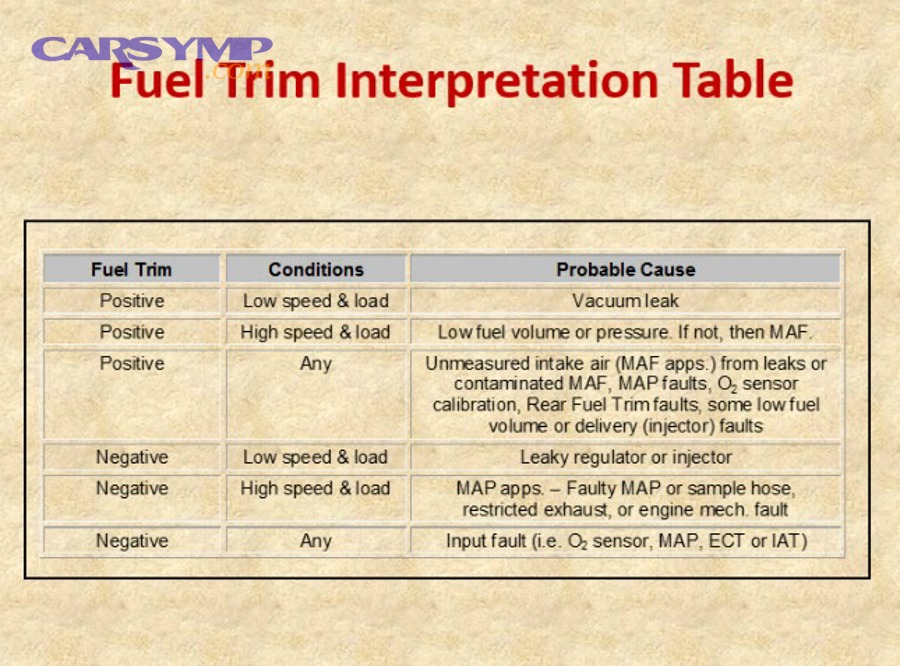
Lean vs rich fuel trim patterns point to different misfire causes because positive trims usually mean the ECU is adding fuel to correct a “lean” signal, while negative trims mean it’s subtracting fuel to correct a “rich” signal, and the RPM/load conditions where the trims change often identify the subsystem at fault. (smog-tech-training.com)
Next, use the “where it happens” clue: idle vs cruise vs load is often more important than the raw number.
Do positive fuel trims always mean a vacuum leak misfire?
No—positive trims do not always mean a vacuum leak misfire; they can also point to low fuel pressure, restricted injectors, MAF under-reporting, unmetered air, or even ignition misfire artifacts that fool O2 feedback. (thegrouptrainingacademy.com)
Use this quick filter:
- Positive trims worst at idle, improve at 2500 rpm (no-load): classic unmetered air/vacuum leak behavior. (thegrouptrainingacademy.com)
- Positive trims remain high at idle and at higher RPM/load: more consistent with fuel supply limits (pressure/volume), MAF under-reading, or widespread airflow measurement error. (thegrouptrainingacademy.com)
- Positive trims + obvious misfire counters on one cylinder: could be ignition or compression (misfire “looks lean”).
What does a negative fuel trim misfire pattern indicate?
A negative trim misfire pattern indicates the ECU is pulling fuel because it believes the mixture is rich—common causes include leaking injectors, excessive fuel pressure, purge stuck open adding vapor, or sensor bias (e.g., MAF over-reporting airflow). (smog-tech-training.com)
However, don’t forget a “rich misfire” possibility:
- If a cylinder is over-fueled (stuck injector), it can misfire from overly rich mixture and drive trims negative as the ECU tries to compensate.
How does trim behavior at idle vs 2,500 rpm change the diagnosis?
Trim behavior across RPM/load changes the diagnosis because vacuum leaks and PCV issues dominate at idle/low load, while fuel pressure/volume and MAF scaling errors show up more under load. (thegrouptrainingacademy.com)
A practical way to apply this:
- Record trims at hot idle.
- Hold 1500 rpm in park/neutral.
- Hold 2500 rpm in park/neutral.
- Then check steady cruise and a gentle uphill load.
If trims normalize as RPM rises (no-load), you’re often chasing unmetered air. If trims worsen under load, you’re often chasing fuel delivery.
What’s the difference between Bank 1 vs Bank 2 trims for misfires?
Bank-to-bank trim splits matter because a bank-specific trim problem points to a bank-specific cause (intake leak on that bank, exhaust leak, injector set, valve timing issue, etc.), while similar trims on both banks point to a global issue (MAF, fuel pressure, large shared vacuum leak). (thegrouptrainingacademy.com)
A useful rule:
- LTFT Bank 1 high, Bank 2 normal: look for leaks/airflow issues feeding Bank 1, or bank-specific fueling problems. (thegrouptrainingacademy.com)
- Both banks high positive: look for shared unmetered air, weak pump, MAF under-reading.
- Both banks high negative: look for excess fuel pressure, purge/vapor, MAF over-reading.
Which fuel trim patterns are most common in misfires (vacuum leak, MAF, fuel pressure, injector, ignition)?
There are five common fuel-trim patterns in misfires—idle-biased lean, load-biased lean, global rich, bank-split, and “misfire looks lean”—and you identify them by when trims deviate and whether deviation is global or localized. (smog-tech-training.com)
Then, use pattern recognition to avoid parts-swapping and to focus your tests.
What are the classic “vacuum leak misfire signs” in fuel trim data?
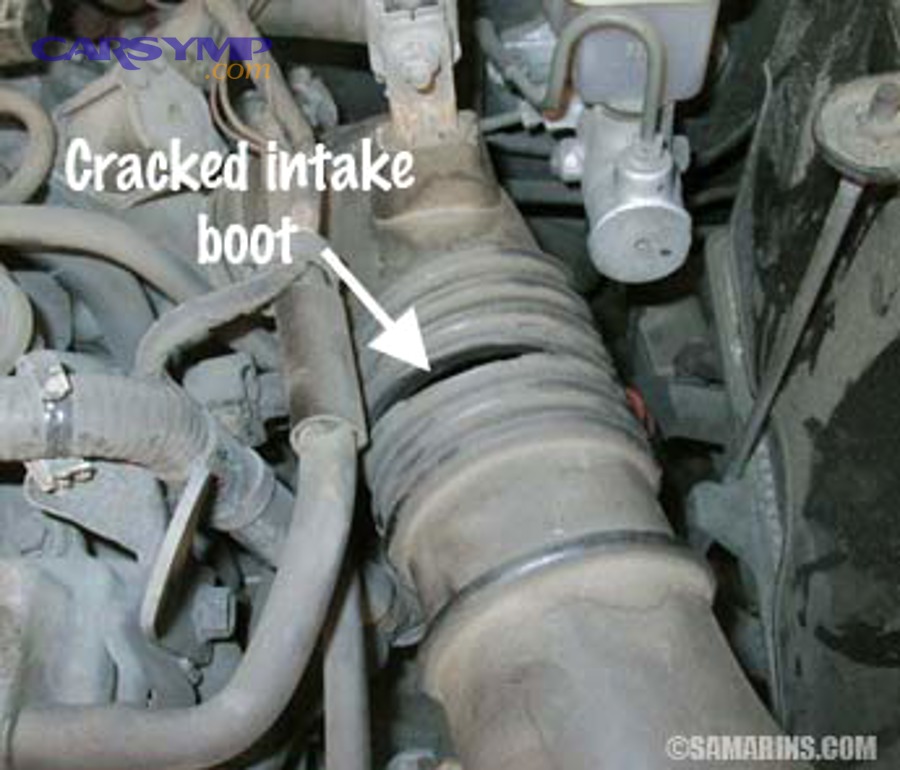
Vacuum leak misfire signs usually include high positive trims at idle that improve as RPM rises (because the leak becomes a smaller percentage of total airflow). (thegrouptrainingacademy.com)
Common leak locations that match this pattern:
- Cracked intake boots/bellows,
- Intake manifold gaskets,
- PCV hoses/valves stuck open,
- Brake booster leaks,
- Purge valve stuck open (acts like a calibrated vacuum leak).
How does a dirty or misreading MAF create a misfire-related trim pattern?
A MAF that under-reports airflow pushes trims positive because the ECU calculates too little fuel for the real air entering the engine; at certain loads this can create lean combustion and misfire. (thegrouptrainingacademy.com)
A MAF issue often looks like:
- Positive trims across multiple RPM ranges, not just idle.
- Driveability that can feel like fuel starvation (hesitation, stumble under load). (smog-tech-training.com)
How do fuel pressure/volume problems show up in fuel trims during misfires?
Fuel pressure/volume problems tend to show positive trims that worsen under load because the engine demands more fuel, and a weak pump, clogged filter, or voltage drop can’t maintain pressure/flow. (thegrouptrainingacademy.com)
Look for:
- Positive trims not just at idle,
- Misfire under acceleration or uphill,
- Lean codes (P0171/P0174) plus misfire codes (P0300–P030x).
How does an injector problem change trims and misfire behavior?
Injectors create two opposite patterns:
- Restricted/dirty injector → lean cylinder(s) → trims positive (often bank-specific) + cylinder-specific misfire.
- Leaking/stuck-open injector → rich cylinder(s) → trims negative + rough idle + fuel smell/washed plug.
Because injectors can be bank-biased or cylinder-specific, pair trims with:
- Bank trims (if V-engine),
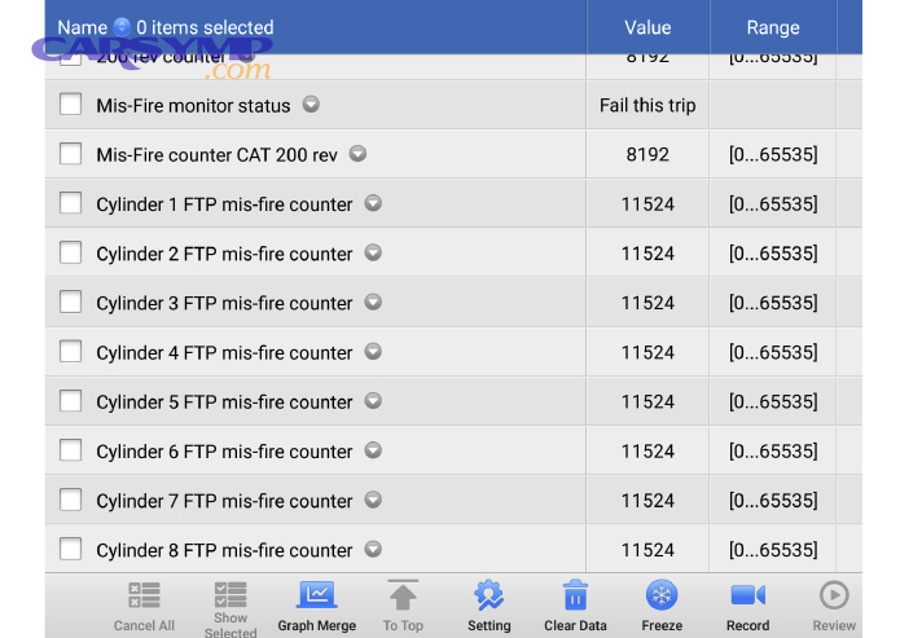
- Misfire counters (Mode $06 or enhanced data),
- Plug reading and fuel pressure leak-down tests.
Can ignition misfires distort fuel trim data?
Yes—ignition misfires can distort trims because oxygen feedback interprets the unburned oxygen as lean, leading the ECU to add fuel; this is why you should never let trims alone “convict” the fuel system. (smog-tech-training.com)
A common trap:
- You see STFT +20% and assume “needs fuel,”
- but the real issue is a weak coil, worn plugs, or high secondary resistance causing intermittent spark failure.
How can you interpret fuel trims step-by-step with a scan tool to diagnose a misfire?
Interpret fuel trims step-by-step by (1) confirming closed loop, (2) capturing STFT/LTFT at repeatable operating points, (3) forcing controlled rich/lean changes to test sensor response, and (4) validating the most likely subsystem with one targeted test. (thegrouptrainingacademy.com)
Below, this becomes a repeatable workflow you can use for engine misfire diagnosis instead of guessing.
Step 1: Are you in closed loop and are your sensors responding?
Yes—you should verify closed loop and sensor responsiveness first, because fuel trim data is only meaningful when the ECU is actually using feedback and the sensor can swing rich/lean when conditions change. (thegrouptrainingacademy.com)
Practical checks:
- Confirm ECT is normal (fully warm).
- Confirm loop status = closed.
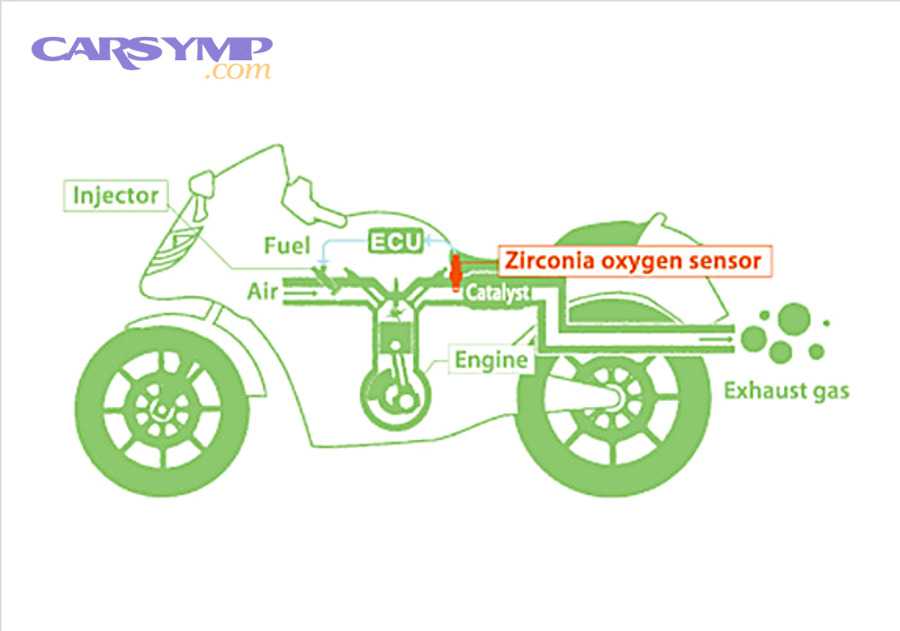
- Watch upstream O2/A/F response: it should react when mixture changes.
Step 2: What operating points should you record to “fingerprint” the misfire?
You should record trims at hot idle, 1500 rpm no-load, 2500 rpm no-load, steady cruise, and light load, because those points reveal whether the issue is idle-biased (leak) or load-biased (fuel delivery/MAF). (thegrouptrainingacademy.com)
Before the table, here’s what you’re capturing: a snapshot of how the ECU’s correction demand changes as airflow demand changes.
| Test point (repeatable) | What it stresses | What a big positive trim often suggests |
|---|---|---|
| Hot idle | High vacuum, low airflow | Vacuum leak/PCV/purge, bank-specific intake leak |
| 1500 rpm no-load | Moderate airflow | Smaller vacuum-leak effect, sensor bias shows up |
| 2500 rpm no-load | Higher airflow | MAF scaling, fuel delivery trending, exhaust leaks |
| Steady cruise | Real-world load cell | Weak fuel pressure/volume, MAF bias, injector flow |
| Light uphill | Higher demand | Fuel volume/pressure limits, ignition breakdown under load |
Step 3: How do you use quick “forced rich/lean” tests to validate the feedback system?
You can validate the feedback system by creating a temporary rich condition (propane enrichment or brief fuel add) and a temporary lean condition (small controlled vacuum leak), then confirming the sensor and trims respond in the correct direction. (thegrouptrainingacademy.com)
If response is delayed or wrong-direction:
- Suspect a biased/slow sensor, wiring issue, exhaust leak, or an ECU stuck in open-loop strategy.
Step 4: How do you go from “trim pattern” to the one test that proves the cause?
You go from pattern to proof by picking the test that directly confirms the dominant hypothesis:
- Idle-biased positive trims → smoke test / propane around intake, inspect PCV and hoses.
- Load-biased positive trims → fuel pressure under load, pump voltage drop, filter restriction.
- Negative trims + rich symptoms → injector leak-down, fuel pressure regulator check, purge flow.
- Trims weird + misfire counters spiking → ignition scope tests, coil swap, plug inspection, compression/leak-down.
Here’s one optional visual walkthrough:
How do fuel trim clues compare with other misfire tests like compression, vacuum, and cylinder balance?
Fuel trims win for speed and direction, vacuum and compression win for mechanical certainty, and cylinder balance/misfire counters win for cylinder-level precision—so the best diagnosis combines trims with one confirming test instead of treating trims as a final verdict. (thegrouptrainingacademy.com)
Next, use trims to choose the right mechanical/electrical test so you don’t waste hours.
What do fuel trims tell you that a compression test can’t?
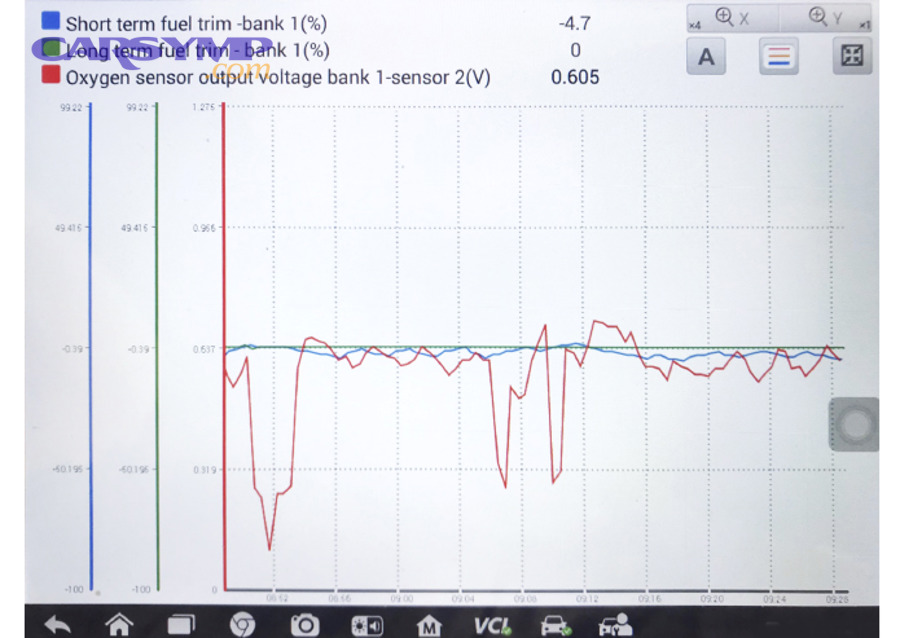
Fuel trims tell you which direction the ECU is compensating (adding/subtracting fuel) and when the compensation is worst (idle vs load), but they can’t prove whether a cylinder seals properly.
That’s where Compression test basics for misfires matter:
- Compression testing confirms whether a misfire is rooted in low compression from valves, rings, head gasket, or cam timing issues.
- A mechanical misfire can create “lean-looking” trims, so compression testing is a critical cross-check when trims don’t match fuel-system findings.
What does a vacuum gauge or smoke test prove that trims only suggest?
A vacuum gauge or smoke test can prove an intake leak because it directly measures or reveals unmetered air, while trims only indicate the ECU is compensating. (samarins.com)
Use this pairing:
- High positive trims at idle + unstable vacuum → strong leak hypothesis.
- Smoke test finds the exact leak path (boots, gaskets, hoses, brake booster).
How do cylinder balance and misfire counters complement trims?
Cylinder balance tests and misfire counters (often via Mode $06/enhanced data) help you pinpoint which cylinder(s) are affected, while trims tell you whether the underlying issue is global or bank-specific.
A practical combo:
- Bank 1 trims high + misfire counter spikes in cylinders on that bank → bank-specific air leak or fuel distribution issue.
- Trims normal + one cylinder misfires → ignition, injector electrical, or mechanical fault localized to that cylinder.
When should you stop chasing trims and move to ignition or mechanical testing?
You should stop chasing trims when:
- Trims are near normal but misfire persists,
- Misfire is intermittent and load-dependent (classic ignition breakdown),
- The engine shows symptoms that don’t track with fueling (sharp “snap” misfire under load, single-cylinder pattern).
At this point, you’ve used fuel trims to narrow the “system,” and the contextual border is clear: now you’re solving the exceptions—misfires that don’t move trims much at all.
Evidence (if any): According to a dissertation by The Ohio State University from the Graduate Program in Mechanical Engineering, in 2007, researchers reported that NOx emissions were reduced by up to 91% at an optimum EGR level with maximum brake torque timing, while combustion instability near dilution limits increased slow-burn/partial-burn behavior associated with misfire and higher HC emissions. (mae.osu.edu)
What should you check when fuel trims look normal but the engine still misfires?
There are four main checks when trims look normal but misfire remains: intermittent ignition faults, cylinder sealing/mechanical issues, injector electrical/control faults, and feedback/monitoring blind spots—and you confirm them with cylinder-level data, not mixture correction data.
Then, treat “normal trims + misfire” as a signal that the ECU isn’t fighting mixture errors; it’s fighting combustion quality.
Is an intermittent ignition breakdown the most common cause of “normal trims” misfires?
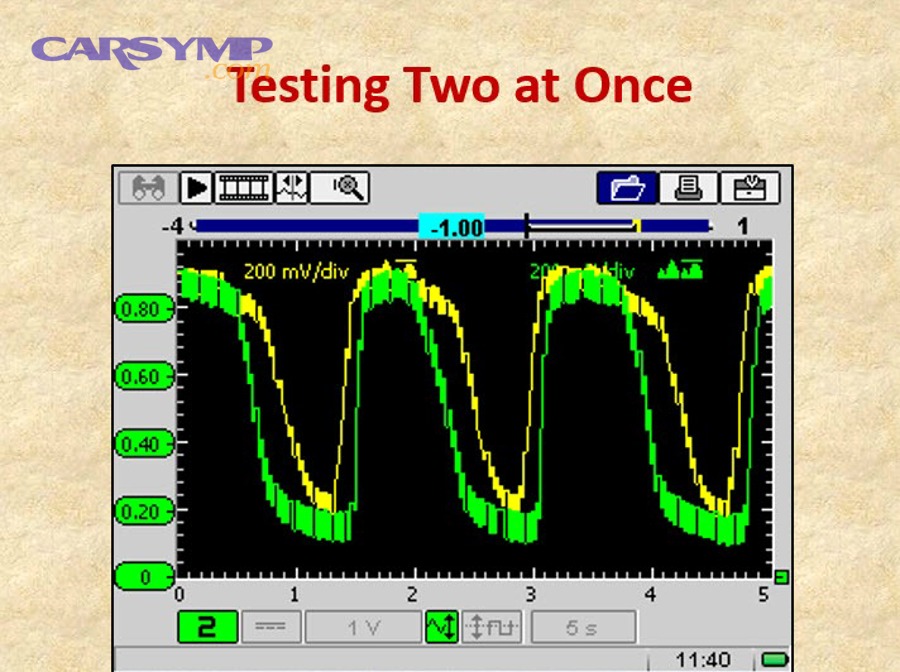
Yes—intermittent ignition breakdown is one of the most common causes of misfires with normal trims because the mixture can be correct on average while spark fails under specific conditions (heat, load, humidity), producing a miss without a consistent lean/rich correction signature.
Quick confirms:
- Watch misfire counters under the condition that triggers the miss.
- Load-test coils/wires (or swap components if appropriate).
- Inspect plugs for cracks, carbon tracking, and gap growth.
What mechanical issues can misfire without moving fuel trims much?
Mechanical issues can misfire without moving trims much when the problem is cylinder-specific and not a global mixture shift—examples include:
- Burnt valve or weak valve spring,
- Cam timing/timing chain stretch,
- Minor head gasket leak,
- Low compression in one cylinder that only shows under load.
A compression test or leak-down test is the cleanest fork in the road here.
How can injector electrical faults cause a misfire with normal trims?
Injector electrical faults (open/short, poor connector contact, ECU driver issues) can cause a cylinder to drop fuel intermittently without creating a stable global trim correction—especially if the miss is brief or occurs in a narrow operating window.
Best follow-ups:
- Noid light or scope pattern on injector control,
- Harness wiggle test,
- Cylinder contribution test.
Could the O2/A-F sensor be masking a mixture problem even when trims look normal?
Yes—if the sensor is biased, slow, or influenced by an exhaust leak, trims may appear deceptively “reasonable” while cylinder-level combustion is unstable.
If you suspect masking:
- Confirm sensor switching and response to induced rich/lean changes. (thegrouptrainingacademy.com)
- Inspect for exhaust leaks upstream of the sensor.
- Compare commanded vs actual equivalence ratio on platforms that support it.