


An engine misfire fix can cost anywhere from “under a hundred bucks” to “painfully expensive,” and the difference usually comes down to which part is actually failing and how much testing is needed to prove it. You’ll get the clearest answer when you treat misfire repair like a parts-by-parts equation: diagnostics + the most likely component + labor complexity.
You also need to know when a misfire is merely annoying versus when it’s risky and can snowball into bigger repairs. Some misfires let you limp to a shop; others (especially with a flashing check engine light) can push raw fuel into the exhaust and escalate damage fast.
Next, the smartest way to spend less is to make your decision based on pattern and evidence: scan the codes, read the misfire type, and confirm with simple checks before replacing parts. That’s the heart of good engine misfire diagnosis—and it’s what keeps you from paying twice.
Introduce a new idea: once you understand the cost breakdown and the likely culprit, you can read repair estimates with confidence, spot unnecessary add-ons, and recognize the rare scenarios that turn a cheap fix into an expensive one.
What does “engine misfire” mean, and why does the cause change the repair cost?
An engine misfire is a combustion event that fails or partially fails inside one or more cylinders, and it changes repair cost because the “root cause” can be a simple wear item (plugs) or a complex fault (fuel delivery or mechanical damage).
Next, that definition matters because misfires are not repaired by guessing—misfires are repaired by identifying which system failed (ignition, fuel, air, or mechanical) and paying for only what’s necessary.
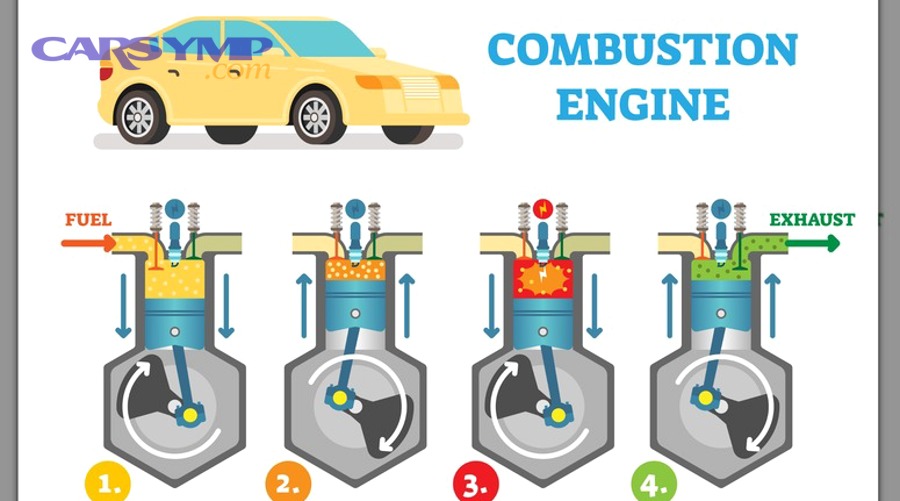
A misfire is basically the engine saying, “One cylinder didn’t do its job.” The engine controller detects this by monitoring crankshaft speed fluctuations and other signals, then stores a trouble code that points you toward the right category of problem. That’s why the same symptom—rough idle—can lead to very different invoices.
Here’s the cost logic in plain terms:
- Ignition-side misfires (spark plugs, coils) often have lower parts cost and faster labor on many vehicles.
- Fuel-side misfires (injectors, fuel pressure) can cost more because parts are pricier, access can be harder, and confirmation testing may take longer.
- Air leaks or sensor issues can be cheap to fix but sometimes take time to pinpoint.
- Mechanical misfires (compression/valves) are the most expensive path because you’re no longer “replacing a part,” you’re addressing internal engine condition.
The cause changes cost because you’re paying for a different combination of: 1) diagnostic time, 2) parts price, and 3) labor complexity .
Is it safe to keep driving with a misfire (and can it make the repair cost higher)?
No, you should not keep driving with an engine misfire safely in many cases, because it (1) can overheat and damage the catalytic converter, (2) can create sudden power loss that increases driving risk, and (3) can turn a small ignition fault into a larger, more expensive repair.
However, the urgency depends on severity, so the smart move is to treat it like a triage decision.

Use this simple rule set for “Can you drive with a misfire safely”:
- Stop driving (or drive only a very short distance to safety) if:
- The check engine light is flashing (often indicates catalyst-damaging misfire).
- The engine shakes violently, stalls, or won’t accelerate normally.
- You smell raw fuel, hear backfiring, or see smoke that wasn’t there before.
- Drive cautiously to a shop (short trip) only if:
- The misfire is mild/intermittent, the light is not flashing, and the car remains predictable.
- You avoid heavy throttle and high speeds.
The cost can rise because prolonged misfire can push unburned fuel into the exhaust, increasing heat load downstream. In a controlled dynamometer test scenario with a catalyst-equipped exhaust system, misfire conditions have been observed alongside very high exhaust gas temperatures (on the order of 1000°C) in testing contexts. (Source: diva-portal.org)
What are the most common misfire causes that affect cost the most?
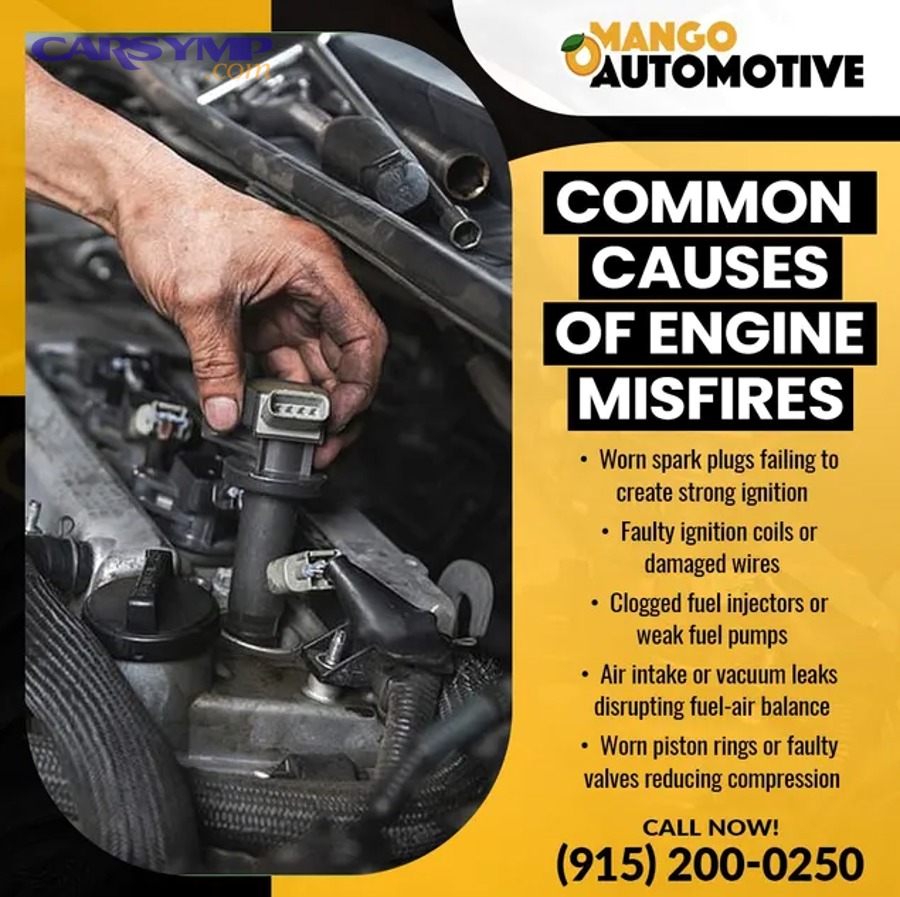
There are 3 main types of common misfire causes—spark (ignition), fuel delivery, and air/mixture—based on which system fails to deliver the correct combustion ingredients at the right time.
Then, once you know the category, you can predict whether you’re looking at “maintenance-level” cost or “diagnostic-heavy” cost.
1) Ignition (often the most common and often the easiest to fix)
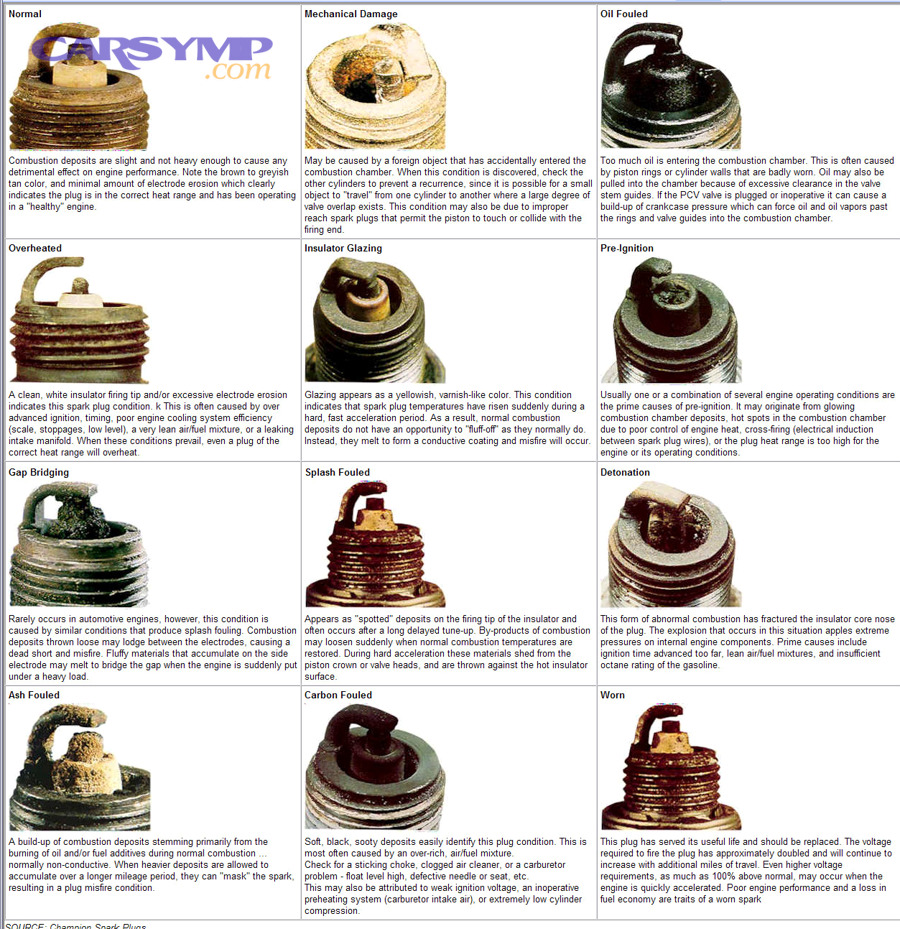
- Worn spark plugs
- Weak ignition coils or coil boots
- Plug wire issues (older systems)
- Moisture/oil in plug wells causing spark leakage
2) Fuel delivery (common, but often pricier to verify and repair)
- Clogged or failing fuel injector
- Low fuel pressure (pump, filter, regulator)
- Contaminated fuel
3) Air/mixture (can be cheap or time-consuming)
- Vacuum leak (intake hose, gasket)
- Faulty MAF/MAP sensor data causing a bad mixture
- EGR-related issues on some engines
A key point for cost: ignition problems frequently allow “confirm by swap test” logic, while fuel and air problems may require deeper testing to avoid replacing the wrong component.
How much does it cost to fix common misfire causes (spark plugs, coils, injectors) at a shop?
There are 3 main cost buckets for common misfire fixes—spark plugs, ignition coils, and fuel injectors—based on parts price and labor time, and most real-world invoices are the sum of diagnostic fee + the chosen repair.
To begin, you should look at cost as a range, not a single number, because access and engine layout can swing labor dramatically.

Before the numbers, here’s what the table below represents: it summarizes typical U.S. shop estimates for the three most common part-level misfire repairs, assuming the misfire cause is correctly identified and no major secondary damage exists.
| Repair that commonly fixes a misfire | Typical total cost range (parts + labor) | Why it varies most |
|---|---|---|
| Spark plug replacement | ~$276–$391 average range | Access difficulty; number of cylinders; plug type |
| Ignition coil replacement | ~$231–$333 average range (per coil on many vehicles) | One coil vs multiple; OEM vs aftermarket; access |
| Fuel injector replacement | ~$741–$927 average range (often per injector/repair scenario) | DI vs port injection; intake removal; parts pricing |
Those average ranges are consistent with RepairPal estimator figures for these repairs. (Source: repairpal.com)
Now add two practical modifiers that matter more than most people think:
- Diagnostic fee: many shops charge a diagnostic amount to confirm the cause; it’s often the “money-saving step” that prevents wrong-part replacement.
- Replace one vs replace a set: some repairs are economically smarter as a set (plugs), while others depend on evidence (coils/injectors).
How much does it cost to replace spark plugs for a misfire (and when do you replace the whole set)?
Spark plugs are a maintenance part, and replacing them is usually the best-value misfire fix when plugs are worn because a full plug set restores consistent spark energy and prevents the next cylinder from failing soon after.
Specifically, plug cost is rarely the problem—labor and access are what drive the bill.

What you typically pay for (and why):
- Parts: standard plugs vs long-life platinum/iridium plugs
- Labor: depends on whether plugs are easy to access (top of engine) or buried (tight V6/V8 bays, some transverse engines)
- Bundled items: boots, minor intake duct removal, inspection for oil in plug wells
When to replace the whole set (most common):
- Plugs have high mileage or unknown service history
- Multiple cylinders show signs of weak spark
- The engine is due for plugs by schedule and a misfire appears
When a single plug replacement makes sense (less common):
- A specific plug is clearly damaged (cracked insulator, fouled from a one-off event)
- The plugs are relatively new and the issue is isolated (still verify the cause)
Practical money-saving tip: if plugs are due, replacing them early can prevent repeated diagnostic visits for intermittent misfires—especially when the misfire only shows under load.
How much does it cost to replace an ignition coil for a misfire (single coil vs all coils)?
Ignition coils are best replaced based on evidence, and the cost logic is: single-coil replacement wins for confirmed single-cylinder failures, while replacing all coils can be justified only when multiple coils test weak or failures are repeating in a high-mileage set.
However, the “replace them all” approach is not automatically the best deal—proof matters.
Single coil replacement is usually best when:
- You have a cylinder-specific misfire code (like P0302)
- A swap test moves the misfire to the new cylinder (strong confirmation)
- Visual inspection shows cracking, carbon tracking, or water intrusion damage
Replacing all coils can make sense when:
- Multiple cylinders show coil-related misfire symptoms
- The car has high mileage and you’ve already replaced coils one-by-one repeatedly
- The coils are known weak points on that engine family (still confirm first)
A realistic cost anchor: RepairPal’s estimator for ignition coil replacement commonly lands in the low hundreds for average cases, but your total can increase if coils sit under an intake plenum or require extra disassembly. (Source: repairpal.com)
How much does it cost to fix a fuel injector misfire (cleaning vs replacement)?
Fuel injector cleaning is the best option when deposits are the confirmed cause and the injector is still electrically healthy, while injector replacement is optimal when the injector has an internal failure, poor flow, or leakage that cannot be corrected.
Meanwhile, the biggest cost swing comes from injector type and access: direct-injection systems tend to be more expensive than simple port-injection setups.
Cleaning makes sense when:
- The misfire is mild/intermittent and matches a deposit pattern
- A shop can perform a proper injector balance/flow check or targeted cleaning
- Fuel quality history suggests buildup (short trips, long storage, inconsistent fuel)
Replacement is the right call when:
- The injector fails electrical tests (open/short)
- The misfire follows the injector during component swapping (where applicable)
- The injector leaks or has poor flow and causes a persistent lean/rich condition in one cylinder
Cost-wise, injector replacement often sits higher than plugs or coils because parts are expensive and labor can include rail removal or intake removal. RepairPal’s general fuel injector replacement estimator commonly falls in the mid-hundreds to near a thousand range for average situations. (Source: repairpal.com)
How can you quickly tell whether it’s plugs vs coils vs injectors before paying for repairs?
Spark plugs win for “wear-based misfires,” ignition coils are best confirmed by pattern and swap testing, and fuel injectors are most likely when misfire behavior matches fuel delivery symptoms or fuel-trim evidence—so you can narrow the culprit quickly by combining codes, symptoms, and a few targeted checks.
Below, that’s the practical path because the cheapest misfire fix is the one you can prove before you buy parts.
If you want the fastest decision process, follow this sequence:
- Read codes and freeze-frame data.
- Identify whether it’s random/multiple or cylinder-specific.
- Use symptoms to prioritize ignition vs fuel vs air.
- Confirm with a swap test when safe and applicable.
Does a cylinder-specific code (P0301–P0308) point to a cheaper fix than P0300?
Yes, a cylinder-specific code often points to a cheaper fix because (1) it narrows the problem to one cylinder’s plug/coil/injector, (2) it enables confirmation tests like swaps, and (3) it reduces diagnostic time compared to chasing a system-wide issue—but not always.
However, the exception matters: a cylinder-specific code can still be caused by something deeper like compression loss or an intake leak affecting that cylinder.
This is where “Misfire codes P0300–P030x explained” becomes practical:
- P0300 = random/multiple misfire (could be fuel pressure, vacuum leak, sensor/airflow, multiple ignition issues)
- P0301–P0308 = misfire on a specific cylinder (often plug/coil/injector, sometimes a localized leak or mechanical issue)
If you’re cost-focused, treat codes like a map:
- P030x often lets you start with the lowest-cost confirmation steps.
- P0300 often requires you to confirm system-wide health first (air leaks, fuel pressure, mixture control).
Which symptoms most strongly suggest ignition (plugs/coils) vs fuel (injectors) issues?
There are 3 symptom groups that separate ignition-type misfires from fuel-type misfires—based on when the misfire happens, how it feels, and what the engine “tells” you through behavior and codes.
More specifically, you should combine symptoms with code pattern, because symptoms alone can overlap.
Ignition-leaning symptoms (plugs/coils more likely):
- Misfire is worse under acceleration or load, then improves at steady cruise
- Misfire is intermittent and changes with moisture/temperature
- You feel a sharp stumble that comes and goes (classic coil breakdown pattern)
Fuel-leaning symptoms (injector/fuel delivery more likely):
- Misfire is consistent on one cylinder and may worsen as engine warms
- You smell fuel or see evidence of rich running (possible injector leakage)
- The engine hesitates more smoothly or lacks power across a range (fuel volume issue)
Air/mixture symptoms (vacuum leak/sensor more likely):
- High idle, idle surge, or misfire mostly at idle
- Multiple-cylinder lean conditions
- Misfire improves when you add slight throttle (leak influence changes)
The cost implication is direct: the more your symptom pattern points to a single cylinder ignition fault, the more likely you are to have a quicker, cheaper confirmation and repair.
Can you use a “swap test” to confirm coils or plugs and reduce diagnostic cost?
Yes, you can use a swap test to confirm coils or plugs because (1) moving the suspected part to another cylinder can move the misfire, (2) it creates strong cause-and-effect evidence, and (3) it prevents buying unnecessary parts—if you follow safe handling and interpret results correctly.
Next, you should only do it when the engine design allows easy access and you can keep track of what you moved.
A safe, effective swap test looks like this:
- Read the code: e.g., misfire on cylinder 2
- Swap coil #2 with coil #4 (or swap plug #2 with #4)
- Clear codes, drive briefly, re-scan
- If the misfire becomes cylinder 4, the swapped part is highly suspect
Swap tests work best for coils and plugs because they’re relatively easy to move and don’t require opening fuel lines. For injectors, swapping is usually more labor-intensive and can introduce new problems, so it’s often left to a shop unless you have strong mechanical experience.
Evidence note: According to a study by Chalmers University of Technology from the Department of Applied Mechanics, in 2011, experimental work noted that achieving misfire detection performance above roughly 80% without false alarms becomes more difficult as engine speed increases—supporting the idea that structured testing beats guesswork. (Source: publications.lib.chalmers.se)
What extra costs commonly appear on misfire repairs, and how do you avoid overpaying?
There are 3 common extra-cost categories on misfire repairs—diagnostic time, bundled maintenance items, and “secondary-damage prevention”—and you avoid overpaying by demanding a clear cause-and-effect explanation for every line item.
Besides, misfire repairs are one of the easiest places for costs to balloon, because “it runs rough” can tempt people into replacing multiple parts without proof.
Think of your invoice in two halves:
- Finding the cause: scan, tests, confirmation steps
- Fixing the cause: parts and labor that address the confirmed fault
If you keep those halves separate, you can judge whether each charge makes sense.
Should you pay for diagnostic time first, or replace cheap parts immediately?
Diagnostic time is the better first step when the symptom or code pattern is unclear, while replacing cheap parts first can be reasonable when the vehicle is overdue for maintenance and the failure is strongly consistent with wear.
However, you should decide based on “probability,” not hope.
Pay for diagnosis first when:
- You have P0300 (random/multiple) and symptoms vary
- The vehicle has multiple codes or drivability issues beyond a misfire
- You already replaced basic ignition parts and the misfire persists
Replace cheap maintenance parts first when (with restraint):
- Plugs are overdue and you have a mild misfire
- A visual inspection clearly shows a failed boot or obvious plug damage
- The cost of the part is low and the job doesn’t risk collateral damage
Even then, do one change at a time. If you replace plugs, test again before you buy coils. If you replace one coil, confirm the result before you authorize a full set.
What line-items on an estimate are normal vs questionable for misfire repairs?
There are 2 groups of estimate line-items—normal diagnostic/repair steps and questionable “blanket replacements”—based on whether the shop can explain what test result triggered each recommendation.
More importantly, the best estimates read like a story: symptom → test → result → fix.
Normal line-items (usually reasonable):
- Scan and confirm misfire counters / freeze-frame review
- Pinpoint testing time (spark test, coil test, smoke test for vacuum leaks)
- Compression test or leak-down test only if ignition/fuel checks don’t resolve it
- Replace the confirmed failed component (plug, coil, injector) and verify
Questionable line-items (ask for justification):
- Replacing plugs, coils, injectors, and sensors “because misfire” with no test evidence
- Fuel system cleaning as a default upsell when the misfire is clearly ignition-side
- Replacing the catalytic converter before fixing the misfire cause
A simple script that works: “What test result proved that part is bad?” A good shop answers in one sentence.
Do OEM parts vs aftermarket parts change total misfire repair cost and reliability?
OEM parts win for reliability in many ignition and fuel components, aftermarket parts can be best for budget when quality is proven, and “cheap no-name parts” are the most expensive choice long-term because repeat failures create repeat labor and repeat diagnostics.
Meanwhile, the best strategy is to choose OEM where failure is costly to redo, and quality aftermarket where replacement is quick and simple.
Use this decision rule:
- Go OEM (often) for: injectors (especially DI), coils on sensitive systems, critical sensors
- Consider quality aftermarket for: spark plugs (name-brand equivalents), coil boots, some coils (brand-reputable)
- Avoid ultra-cheap parts for: anything that would force you to pay labor twice
This ties directly to cost-to-fix: the cheapest invoice today can become the priciest total cost if it doesn’t actually solve the misfire.
What uncommon misfire scenarios can drastically increase repair cost (and what’s the opposite outcome)?
Uncommon misfire scenarios become expensive when they involve high labor access, system-level faults, or mechanical engine condition, while the opposite outcome—a cheap fix—happens when the root cause is a simple air leak, overdue maintenance, or an easily confirmed ignition fault.
In short, you’re looking at an antonym pair: cheap and confirmable versus complex and compounding.
This section sits beyond the core cost breakdown to expand what “misfire cost” can mean in edge cases—so you can recognize when it’s time to stop guessing and escalate diagnostics.
Can a vacuum leak or low fuel pressure be a “cheap fix” misfire compared to parts replacement?
Yes, a vacuum leak or low fuel pressure can be a cheap fix because (1) a split hose or loose clamp can be inexpensive to replace, (2) fixing unmetered air can immediately stabilize combustion, and (3) the repair often prevents unnecessary parts replacement—if you find it early.
Next, the key is that these issues can mimic ignition faults, so confirmation still matters.
Examples of “cheap fix” outcomes:
- Cracked intake tube or PCV hose causing a lean misfire at idle
- Loose intake manifold fastener or degraded gasket on one bank
- Weak fuel pressure regulator (in applicable systems) that’s simpler than injector replacement
The “cheap” part is the component; the variable is the time to locate it. A smoke test can shorten that search dramatically.
Do direct-injection (DI) engines make injector misfires more expensive than port injection?
Yes, DI engines often make injector misfires more expensive because (1) DI injectors and related seals are typically pricier, (2) labor can increase due to access and procedures, and (3) DI fuel systems operate at higher pressures, increasing diagnostic and repair complexity.
However, some port-injection setups can still be costly if access is poor or multiple injectors are affected.
What to expect with DI injector scenarios:
- Higher part cost and stricter installation steps (seals, torque procedures)
- Greater emphasis on confirming the injector fault before replacement
- Higher likelihood that carbon buildup or fuel quality history is part of the story
If your misfire is DI-related, it’s even more important to avoid “parts darts” and lean into structured testing.
Could low compression or valve problems cause a misfire—and is that usually the most expensive path?
Yes, low compression or valve problems can cause a misfire, and yes, it is usually the most expensive path because (1) internal engine work is labor-intensive, (2) parts and machining can add major cost, and (3) diagnosis often requires specialized tests like compression and leak-down to confirm.
More importantly, once you suspect mechanical issues, you should stop replacing ignition and fuel parts without proof.
Clues that point to mechanical misfire risk:
- A persistent misfire that does not move with coils/plugs/injectors
- Low compression reading on the misfiring cylinder
- Misfire accompanied by unusual noises, heavy oil consumption, or coolant loss
Mechanical causes aren’t common compared to plugs/coils, but they define the upper end of the misfire-cost spectrum.
Does misfire under load vs at idle change the likely cause and total cost?
Yes—misfire under load often points more strongly to ignition breakdown or fuel delivery limits, while misfire at idle more often points to air leaks or mixture instability, and that difference changes total cost because it changes which tests you need and which parts are most likely.
Meanwhile, the “when it happens” clue is one of the fastest ways to prioritize your diagnosis.
Use this pattern guide:
- Mostly at idle: vacuum leak, mixture control, EGR/air issues, sometimes plugs on very worn engines
- Mostly under load: coils breaking down, plug gap issues, fuel pressure/injector flow limitations
- Random across conditions: broad mixture control issues, multiple weak components, or intermittent electrical problems
When you align “when it misfires” with “what the codes say,” you reduce both diagnostic time and the risk of buying the wrong parts.
Evidence (if any)
According to a study by Chalmers University of Technology from the Department of Applied Mechanics, in 2011, experimental results indicated that maintaining misfire detection performance above roughly 80% without false alarms becomes more challenging as engine speed increases—reinforcing the value of structured confirmation tests before replacing parts. (Source: publications.lib.chalmers.se)