


A misfire after repairs is usually fixable when you troubleshoot in the right order: confirm what changed, pull scan data, and test the system that was touched first. The fastest path is to treat it like a post-repair verification problem—you’re proving whether the repair introduced a new fault, exposed an old one, or simply left something disconnected.
Next, you’ll check whether this is “normal” (brief roughness after a battery reset or parts swap) or a true engine misfire diagnosis case that can damage the catalytic converter. You’ll use misfire codes, freeze-frame, Mode $06 (if available), and basic tests (spark, fuel, air, compression) to narrow the cause quickly.
Then, you’ll map the most common post-repair culprits—plug/coil issues, vacuum leaks, swapped connectors, incorrect torque gaps, injector disturbance, and timing/airflow relearns—so you can target your checks instead of guessing.
Introduce a new idea: below is a structured workflow that starts with the highest-probability mistakes and moves toward deeper mechanical tests only if the easy checks don’t explain the misfire.
Is it normal to have a misfire after repairs?
Yes—“misfire after repairs troubleshooting” is sometimes normal for a short time, for three reasons: (1) the ECU may be relearning idle/fuel trims after battery disconnect, (2) new ignition parts may settle while the ECU adapts, and (3) a minor installation issue can cause a temporary stumble that becomes obvious only at idle.
Next, the key is separating a brief adaptation roughness (seconds to a couple minutes) from a repeatable misfire that triggers a code, shakes consistently, or flashes the MIL.
When is a brief rough idle “normal” vs a real misfire?
A brief rough idle can be normal if it lasts under ~1–2 minutes, does not worsen under light throttle, and does not set a misfire code (P0300–P0308) or flashing MIL. However, treat it as a real misfire if any of these are true:
- The MIL flashes (especially under load).
- The engine shakes rhythmically (one-cylinder “skip” feeling).
- The misfire counter rises (Mode $06 or live misfire data).
- The misfire returns every time you restart.
- You smell raw fuel or the exhaust pops.
Should you drive with a misfire right after a repair?
No—driving with a confirmed misfire after repairs is not a good idea, for three reasons: (1) unburned fuel can overheat and damage the catalyst, (2) the misfire can escalate into no-start or stalling, and (3) you can wash oil off cylinder walls, accelerating wear.
Next, if the MIL is flashing, assume catalyst risk and keep driving to an absolute minimum (or tow). A University of Michigan–affiliated paper notes a catalyst doesn’t work efficiently until it reaches roughly 650°F, and “light-off” is often described around 50% HC conversion efficiency—misfire conditions that dump raw HC can undermine this warm, efficient state. (grizzle.robotics.umich.edu)
What safety checks should you do immediately?
Do these before deeper testing:
- Listen for obvious vacuum hiss near any hose you touched.
- Check for fuel leaks (smell + visual).
- Check oil level (especially if injectors/fuel rail were removed).
- Confirm coolant level (if the repair involved cooling/thermostat/intake).
- Scan immediately—don’t clear codes yet.
What does “misfire after repairs” mean and why does it happen?
A misfire after repairs is a post-service condition where one or more cylinders fail to burn the air-fuel mixture consistently due to a new disturbance (installation/connection), a revealed weak component, or an ECU adaptation mismatch triggered by the repair.
Next, you can troubleshoot faster when you classify the “why” into three buckets:
- Introduced fault (something left loose/unplugged/misrouted).
- Exposed weakness (old coil/plug/injector barely worked before; now it doesn’t).
- Adaptation/relearn mismatch (idle air control, throttle body, MAF scaling, trims reset).
Why do misfires show up right after “successful” repairs?
Misfires often appear because repairs change one of the misfire ingredients:
- Spark: new plugs/boots/coil connections, wrong gap, cracked porcelain, boot not seated.
- Fuel: injector connector swapped, rail O-ring pinched, injector disturbed.
- Air: intake tube not sealed, vacuum hose left off, PCV hose cracked.
- Timing/Mechanical: timing slipped during a related job, low compression exposed.
- Controls: throttle body cleaned but not relearned; MAF unplugged and reconnected; trims reset.
Can a single unplugged connector cause a “random misfire” code?
Yes—a single missed connector can cause a random/multiple misfire pattern, for three reasons: (1) airflow sensors (MAF/MAP) can skew fueling across all cylinders, (2) a shared ignition/fuel power feed issue can disturb multiple cylinders, and (3) a ground/connector with high resistance can create intermittent events.
Next, your goal is to confirm whether the misfire is cylinder-specific (P0301–P0308) or system-wide (P0300 with fuel trim extremes, lean codes, or sensor codes).
Which recent repairs most often cause a new misfire?
There are 6 main categories of repairs that trigger a post-repair misfire based on what system they disturb: (A) ignition service, (B) intake/airflow work, (C) fuel system work, (D) engine mechanical/timing work, (E) emissions/PCV/EGR work, and (F) electrical/battery/ECU work.
Next, start with the category that matches what you just repaired—because “new misfire after repairs” is most commonly a touch-related problem.
Ignition work (plugs, coils, wires): what goes wrong most?
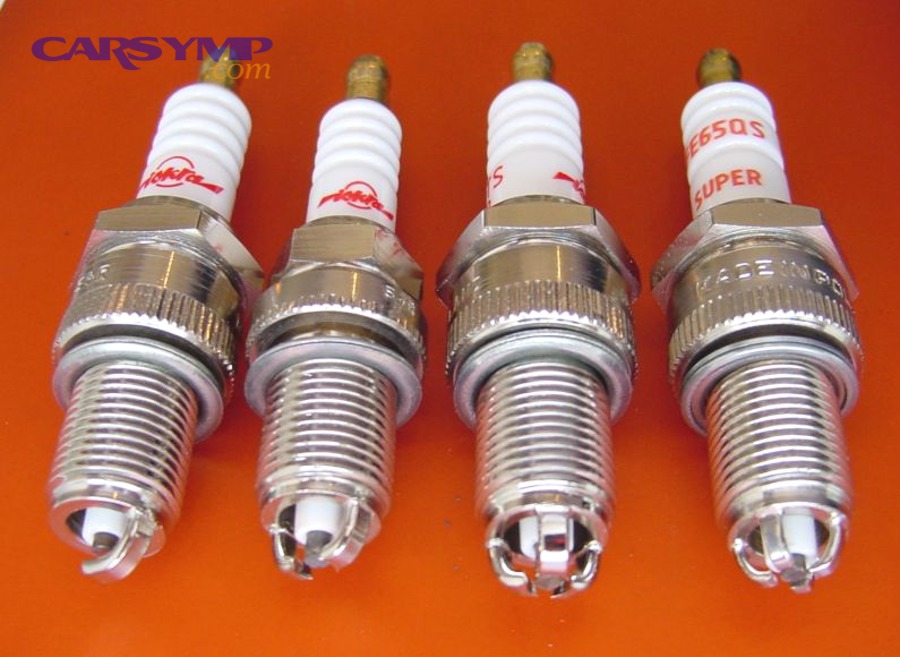
Common post-repair ignition mistakes:
- Wrong plug type (heat range, reach, seat type).
- Incorrect gap (even “pre-gapped” plugs can be off).
- Coil boot not fully seated; torn boot spring.
- Coil connector not clicked in; pin backed out.
- Plug cross-threaded or under-torqued causing compression leak at seat.
Intake/airflow work (MAF, throttle body, intake manifold): what goes wrong most?
Most common: unmetered air and airflow measurement errors:
- Intake tube clamp not tight (after the MAF).
- PCV hose split or left off.
- Brake booster hose loose.
- Intake manifold gasket pinched.
- Throttle body cleaned, but idle airflow relearn not completed.
Fuel system work (injectors, rail, pump): what goes wrong most?
Typical causes:
- Injector connector swapped between cylinders.
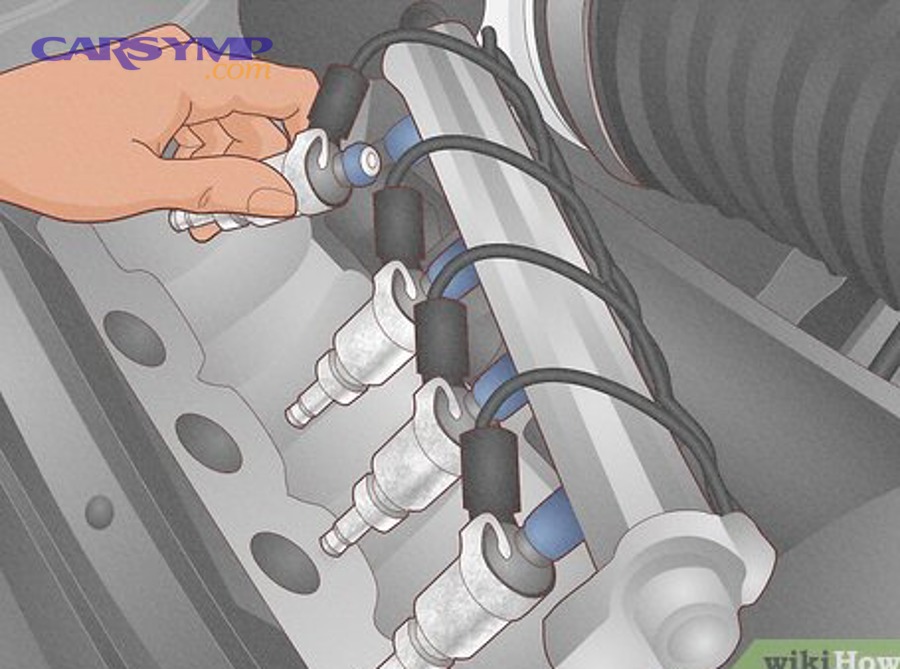
- Injector O-ring nicked → vacuum leak at injector seat (port injection).
- Injector not fully seated → fuel trim swings + misfire.
- Fuel pressure low (pump/filter/regulator issue revealed during job).
- Contaminants introduced during rail removal.
Mechanical/timing work (belt/chain, head gasket, valve work): what goes wrong most?
Higher-stakes causes:
- Cam timing off by a tooth.
- Compression loss from a valve sealing issue.
- Vacuum leak from manifold removal.
- Coil/injector harness routed wrong and rubbing/grounding.
Electrical/battery/ECU work: what goes wrong most?
Common:
- Grounds not reattached after starter/alternator work.
- Battery disconnect resets trims; idle may be unstable until relearn.
- Aftermarket tune/flash mismatch with new parts.
How do you use scan data and fuel trims to pinpoint the cause?
Use scan-first triage in 5 steps—(1) read codes, (2) save freeze-frame, (3) watch misfire counters, (4) read fuel trims at idle and 2500 rpm, and (5) confirm sensor plausibility—to pinpoint the likely system before you turn a single wrench.
Next, this is where “Fuel trim data interpretation for misfires” becomes your shortcut: trims tell you whether the ECU is adding fuel (lean condition) or pulling fuel (rich condition), which strongly suggests air/fuel problems versus ignition/mechanical ones.
What codes and freeze-frame fields matter most for a post-repair misfire?
Focus on:
- P0300–P0308: random vs cylinder-specific.
- Lean codes (P0171/P0174): often vacuum leak/MAF.
- Rich codes (P0172/P0175): leaking injector, high fuel pressure, skewed MAF.
- MAF/MAP codes: airflow measurement issue.
- O2 sensor codes: can be cause or symptom.
- Freeze-frame: RPM, load, coolant temp, STFT/LTFT, speed.
How do fuel trims separate vacuum leaks from ignition failures?
A practical trim read:
- Lean at idle, improves at 2500 rpm → likely vacuum leak (unmetered air).
- Lean at idle and lean at 2500 → fuel delivery (pressure/volume) or MAF underreporting.
- Rich at idle and rich at 2500 → leaking injector, high pressure, or MAF overreporting.
- Trims normal, but cylinder misfire persists → ignition or mechanical.
To make this concrete, here’s a quick interpretation table (it maps scan patterns to likely causes):
| Scan Pattern (What you see) | What it usually means | First checks |
|---|---|---|
| P0301 only + trims near 0 | Single-cylinder ignition/fuel/mechanical | Swap coil, inspect plug, injector balance |
| P0300 + LTFT high at idle | Unmetered air (vacuum leak) | Intake clamps, PCV, smoke test |
| P0300 + rich trims | Overfueling | Leaking injector, fuel pressure, purge stuck |
| Misfire under load only | Spark blowout or fuel starvation | Coil output, plug gap, fuel pressure |
| Misfire at idle only | Vacuum leak, EGR/PCV issue, weak cylinder | Vacuum lines, compression, injector |
Can Mode $06 help you confirm a “borderline” misfire?
Yes—Mode $06 can confirm borderline misfire behavior, for three reasons: (1) it shows monitor results before a code sets, (2) it helps identify which cylinder is accumulating counts, and (3) it validates whether your fix reduced misfires without waiting for a drive cycle.
Next, if your scan tool labels are confusing, focus on relative changes: the cylinder with the highest increment is often the true culprit—even if the code is still P0300.
How do you isolate ignition vs fuel vs air vs mechanical causes?
Ignition wins for fastest confirmation, fuel is best for consistent load-related misses, and mechanical is the most likely when the same cylinder misfires regardless of parts swaps—so you isolate by doing controlled swaps and targeted tests instead of replacing parts blindly.
Next, this comparison is the core of efficient engine misfire diagnosis: you’re proving which system can create the exact symptom you’re seeing.
Ignition misfire signs vs fuel misfire signs vs mechanical misfire signs
Ignition-leaning signs:
- Misfire worsens under load (spark blowout).
- Plug/coil service was just done.
- Cylinder misfire follows coil swap.
- Spark plug shows carbon tracking or cracked insulator.
Fuel-leaning signs:
- Misfire is worse after warmup (injector coil resistance changes, fuel vapor).
- Misfire improves when you add throttle slightly (sometimes).
- High positive trims, especially under load.
- Cylinder misfire follows injector swap (advanced).
Air (vacuum/MAF) signs:
- Random misfire + lean trims at idle.
- Hissing sound, idle hunts.
- Repair involved intake tube/manifold/PCV.
Mechanical signs:
- Misfire is steady at idle and load.
- Cylinder contributes less even after ignition/fuel checks.
- Compression or leak-down shows a weak cylinder.
Misfire vs no-start: what’s the real difference after a repair?
A misfire means the engine runs but one/more cylinders aren’t contributing consistently; a no-start means the engine cannot sustain combustion at all. After repairs, misfire vs no-start often comes down to degree of the same underlying fault:
- A small vacuum leak → misfire.
- A massive intake boot off → no-start or immediate stall.
- One injector unplugged → misfire.
- Fuel pump power unplugged → no-start.
How do you confirm a vacuum leak quickly without special tools?
You can do fast checks:
- Inspect every hose you touched (PCV, brake booster, purge, small vacuum lines).
- Check intake boot clamps—especially after the MAF.
- Lightly mist water around suspected leaks (idle change can indicate leak; use caution).
- If you have access: a smoke test is definitive.
What step-by-step tests should you run in order?
Run a 7-step workflow—visual verification → scan and data capture → cylinder isolation (swap test) → air leak test → fuel verification → mechanical verification → final validation drive—to identify the cause without unnecessary part replacement.
Next, this order is intentional: it prioritizes post-repair mistakes and high-probability failures first, then moves toward deeper tests only if required.
Step 1: What is the fastest visual checklist after repairs?
Check these items in under 10 minutes:
- Every connector you touched is clicked (coils, injectors, MAF/MAP, throttle body).
- Grounds and battery terminals are tight.
- Intake tube and clamps are sealed.
- Vacuum hoses are connected and not split.
- Coil boots seated; plug wells dry (no oil/coolant intrusion).
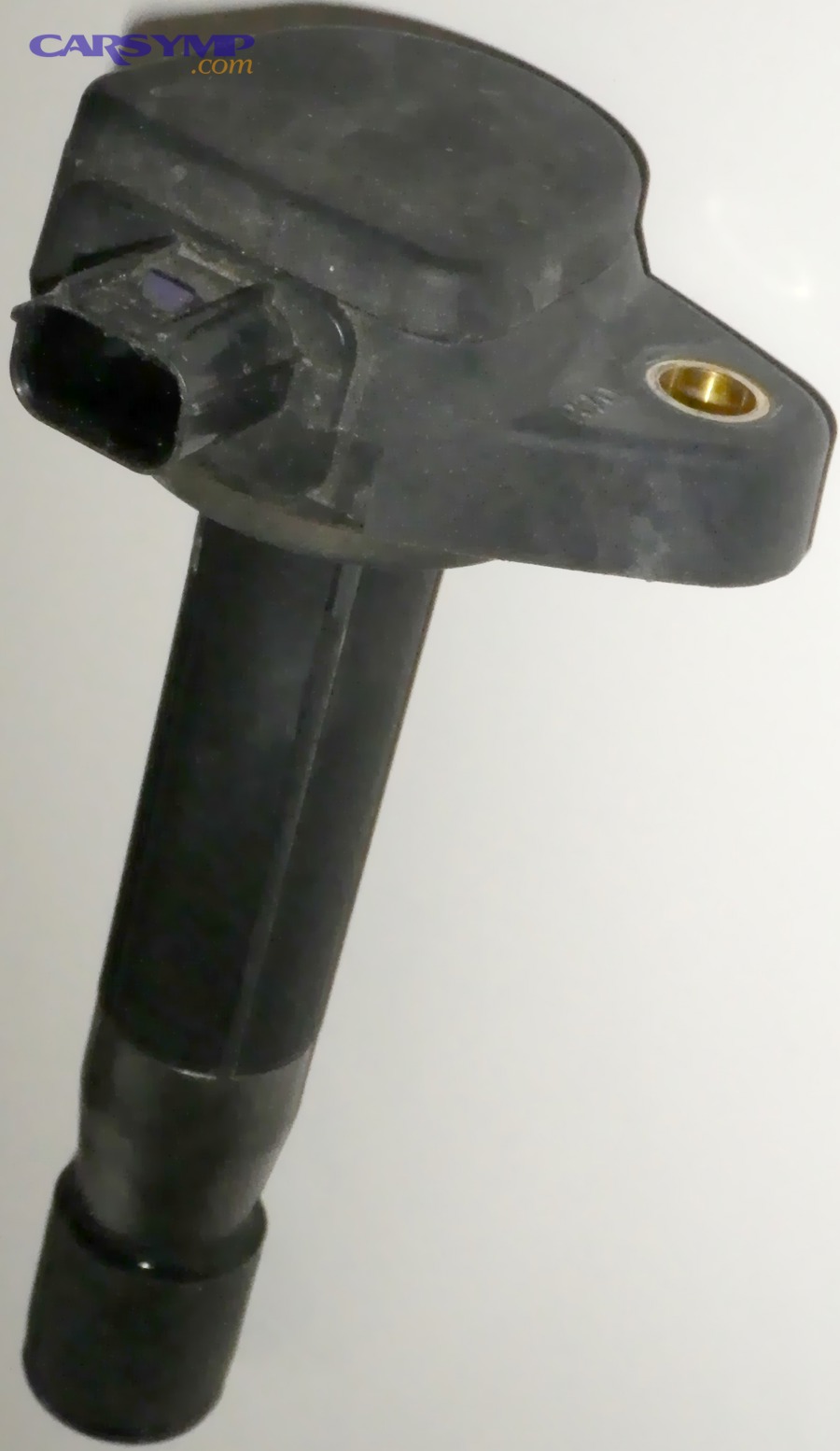
Step 2: How do you do a “swap test” correctly on coils and plugs?
Swap testing is the simplest proof method:
- Identify the misfiring cylinder (e.g., P0302).
- Swap the coil from cylinder 2 with another cylinder.
- Clear codes (or record misfire counters), then run the engine.
- If the misfire moves (now P030X matches the swapped cylinder), the coil is suspect.
Repeat for plugs if needed (takes longer). This prevents guesswork and keeps your troubleshooting anchored to evidence.
Step 3: How do you test fuel delivery and injector contribution?
Start simple:
- Confirm fuel pressure meets spec (if you have a gauge).
- Listen for injector clicking (stethoscope/screwdriver trick).
- Use scan tool to check short-term trim response to a light throttle snap.
If you have advanced tools, do:
- Injector balance test (pressure drop per injector).
- Cylinder drop test (RPM change when disabling cylinder—if supported).
This is also where you can naturally include “Cost to fix common misfire causes”: fuel testing often saves money by preventing unnecessary injector replacement.
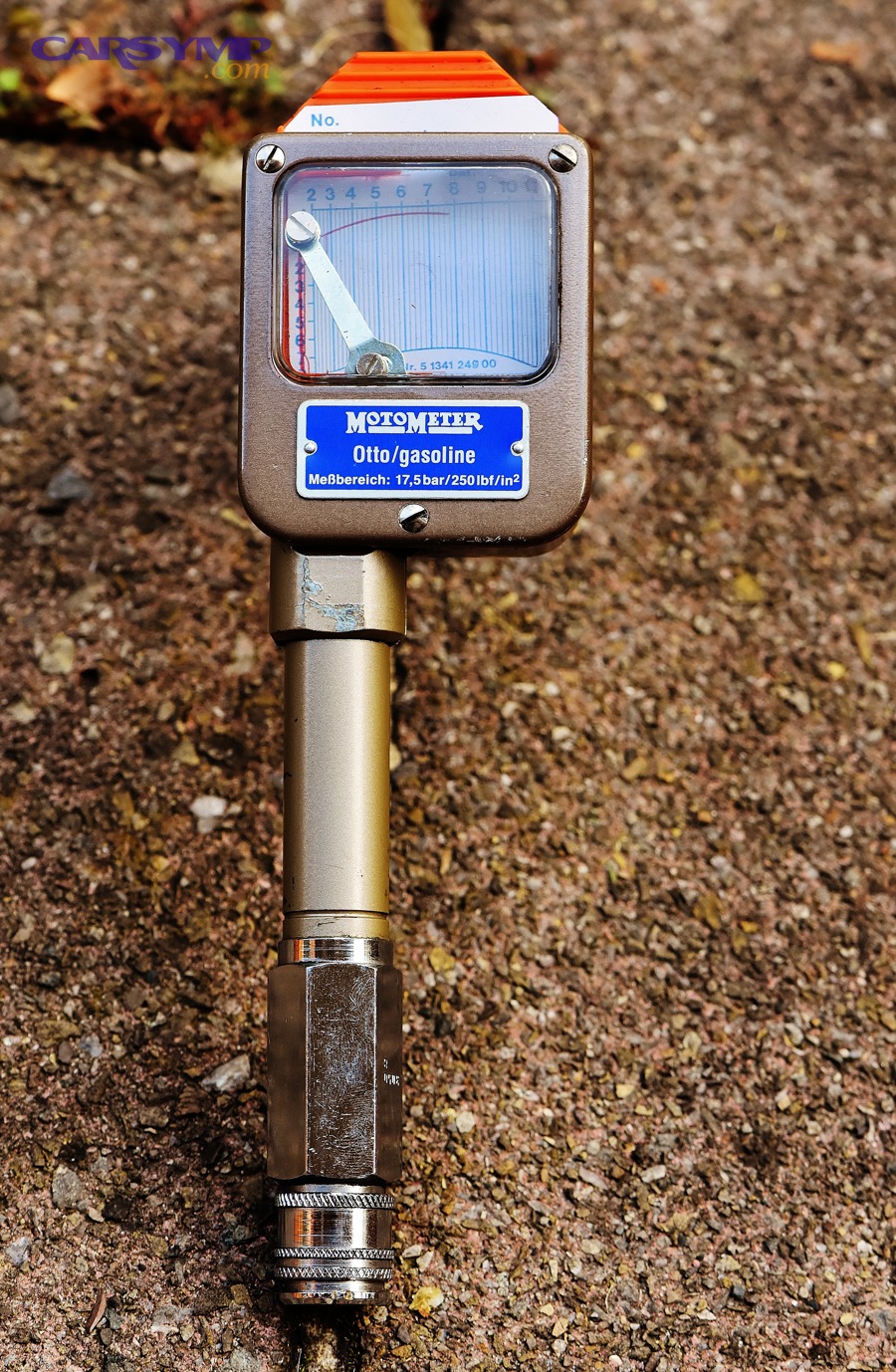
Step 4: How do you check mechanical health (compression/leak-down) when needed?
Do mechanical tests only after ignition/air/fuel checks point that way:
- Compression test: compare cylinders; look for a low outlier.
- Wet compression test: helps differentiate rings vs valves.
- Leak-down test: pinpoints air escaping (intake valve, exhaust valve, rings, head gasket).
Step 5: How do you validate the fix so the misfire doesn’t return?
Validation is part of the repair:
- Re-scan: confirm no pending misfire codes.
- Watch misfire counters at idle and under load.
- Check trims: confirm they moved toward normal.
- Road test: include the conditions that triggered the misfire (cold start, light load, hill).
A Chalmers University of Technology master’s thesis (Department of Applied Mechanics, Division of Combustion) noted that as engine speed increases, it can become difficult to achieve misfire detection performance over 80% without false alarms due to noise in signals—so your validation should include the RPM/load range where your vehicle actually misfired, not just idle. (publications.lib.chalmers.se)
How much does it cost to fix common post-repair misfire causes?
The cost to fix common misfire causes after repairs depends on whether it’s a simple installation issue (often near-zero parts cost) or a component failure discovered during the repair (coil, injector, vacuum leak parts, or mechanical).
Next, use the table below as a planning tool: it separates DIY-friendly fixes from shop-level diagnostics.
Typical cost ranges by cause (parts + labor ballpark)
Here’s a cost table that maps typical causes to typical repair scope (these ranges vary by vehicle and region, but the structure helps you estimate):
| Likely Cause | Typical Fix | DIY Difficulty | Typical Cost Range |
|---|---|---|---|
| Loose connector / missed ground | Reseat/clean/tighten | Easy | $0–$50 |
| Intake boot loose / vacuum hose off | Refit/replace hose/clamp | Easy–Medium | $0–$80 |
| Spark plug gap / wrong plug / cracked plug | Replace correctly | Medium | $20–$200 |
| Bad coil | Replace coil | Easy–Medium | $40–$250 |
| Injector O-ring leak / injector issue | Reseal/replace injector | Medium–Hard | $20–$600+ |
| Fuel pressure issue | Diagnose pump/filter/regulator | Hard | $150–$1,000+ |
| Low compression / valve issue | Mechanical repair | Very Hard | $800–$4,000+ |
What repairs are “high risk” for accidental misfires (and why)?
High-risk jobs share one trait: they disturb many connections:
- Intake manifold removal (many vacuum and electrical connectors).
- Fuel rail/injector service (O-rings, connectors, seating depth).
- Timing work (mechanical timing accuracy).
- Throttle body removal/cleaning (idle airflow changes).
When is it cheaper to stop diagnosing and go to a shop?
Yes—sometimes it’s cheaper to stop DIY diagnosis, for three reasons: (1) mechanical tests and advanced fuel diagnostics require special tools, (2) repeated parts swapping can exceed the cost of one correct diagnostic session, and (3) driving with a persistent misfire risks catalyst damage (a major cost multiplier).
Next, if you’ve done scan triage + swap test + vacuum checks and still have a single-cylinder misfire, a shop can run scope patterns, injector balance tests, and leak-down more efficiently.
When should you stop driving and get professional help?
Yes—you should stop driving and get help when a post-repair misfire is severe, for three reasons: (1) a flashing MIL signals catalyst risk, (2) shaking under load can mean dangerous ignition or fueling faults, and (3) a misfire paired with overheating, low oil pressure, or fuel smell can create safety hazards.
Next, treat these as “red flag” conditions:
Red flags that mean tow it (not “drive it carefully”)
- Flashing MIL
- Strong raw fuel smell
- Misfire plus overheating
- Loud mechanical noise (knock, clank)
- Misfire after timing work (possible timing error)
- Misfire that worsens rapidly within minutes
What to tell the shop to avoid paying for “repeat diagnosis”
Bring them the most useful data:
- What repair was performed (exact parts touched).
- The first moment the misfire appeared.
- Codes + freeze-frame (screenshots).
- What you already tested (swap results, trims).
This helps them skip the basics and confirm the highest-probability causes faster.
How can you prevent a misfire after future repairs?
This section expands beyond the core troubleshooting workflow into prevention and micro-details that reduce recurrence—especially useful if you’re a frequent DIYer or you work on multiple vehicles.
What post-repair checklist prevents the most misfires?
Use a “touch-to-verify” checklist:
- Touch every connector you unplugged (confirm latch).
- Tug lightly on hoses (confirm seating).
- Verify clamp alignment on intake boot (no rolled lip).
- Confirm plug torque and correct plug type.
- Recheck grounds and battery terminals.
How do you avoid connector mix-ups on coils and injectors?
- Label connectors with tape before removal.
- Work one cylinder at a time.
- Route harness clips back into original holders (prevents rubbing and intermittent faults).
What “rare” issues cause post-repair misfires that most people miss?
A few specialized culprits:
- Pinched harness under a bracket causing intermittent coil/injector power.
- Aftermarket parts mismatch (coil dwell characteristics, wrong plug reach).
- ECU relearn needs after throttle body work (idle adaptation).
- Contamination introduced during intake/fuel work (debris in injector seat).
Why does “mistuning” matter so much for misfires and emissions?
Even small tuning/adjustment errors can massively increase unburned hydrocarbons in exhaust. According to a study by Michigan State University from its Automotive Research Experiment Station (small engines emissions research), in 1993, measurements showed that when engines are mistuned (or run without air filters), as much as 50% of the fuel can be exhausted as unburned hydrocarbons. (egr.msu.edu)
That’s why prevention matters: avoiding the post-repair misfire isn’t just about smooth idle—it can protect your catalyst, keep fuel trims stable, and prevent expensive secondary damage.