


When an engine stalls, you can usually diagnose it faster by sorting the problem into Fuel vs Spark vs Signal: fuel delivery (often the fuel pump), ignition (spark creation), or sensor/ECU signal (the engine “timing and truth” inputs). This guide shows how to separate those three buckets using stall patterns, symptoms, and a few confirm-or-deny tests—without guessing or replacing parts blindly.
Next, you’ll learn how stall behavior (idle vs acceleration vs cruising, hot vs cold, gradual vs instant shut-off) points toward one system more than the others, and how to use that pattern as real diagnostic evidence rather than “vibes.”
Then, you’ll get practical checks for each bucket—fuel pressure and pump power checks, ignition/misfire clues, and sensor-signal indicators—so you can move from “maybe” to “probable” with clear, repeatable steps.
Introduce a new idea: once you can classify your stall as Fuel, Spark, or Signal, you can use a short decision flow to reach a confident next action—whether that’s a safe driveway test, an OBD scan, or deciding it’s time to tow.
Is engine stalling more likely caused by fuel, spark, or sensor signal?
Fuel wins when the stall is load-sensitive and feels like starvation, Spark is best matched to misfire/rough-running before shutdown, and Signal is most likely when the engine cuts out suddenly as if the ECU “lost RPM.” More importantly, the fastest diagnosis comes from matching your stall pattern to the correct bucket first, then running one confirming test.
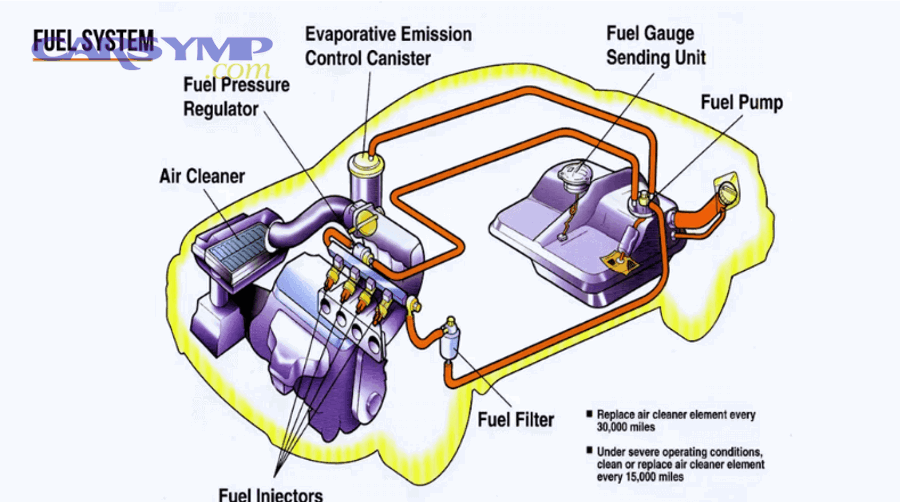
To make that pattern-based approach concrete, the table below summarizes what drivers typically notice and what it means in Fuel vs Spark vs Signal diagnosis:
| What you notice (context) | Fuel (fuel pump / delivery) tends to look like | Spark (ignition) tends to look like | Signal (sensors/ECU input) tends to look like |
|---|---|---|---|
| Before stall | Gradual bog, hesitation, surging under load | Roughness, misfire, bucking, “popping” | Often little warning; may be instant cut |
| Restart behavior | Long crank, may start after a few key cycles | Starts but runs rough; may worsen under load | May restart after cool-down; intermittent no-start |
| Best clue | Fails hardest on acceleration/hills | Misfire sensation and/or misfire codes | Tach drops suddenly; RPM signal loss behavior |
What are the 3 stalling categories—Fuel, Spark, and Signal—and what does each control?
There are 3 main stalling categories—Fuel, Spark, and Signal—based on which core requirement for combustion fails first: fuel delivery, spark energy/timing, or the sensor signal the ECU needs to keep timing and fueling synchronized. Next, once you know what each category controls, you’ll see why stalling symptoms repeat in predictable ways.
- Fuel (fuel delivery): The engine needs adequate fuel pressure and volume at the injectors (or carb). When supply can’t keep up—especially under load—the mixture goes lean and power falls off until combustion can’t sustain.
- Typical “feel”: bogging, weak acceleration, sputter that worsens the harder you ask the engine to work.
- Spark (ignition): The engine needs a strong spark at the right time. Weak spark under load causes misfire; repeated misfire can make the engine shake, lose torque, and sometimes stall.
- Typical “feel”: jerking or bucking, roughness that comes and goes, and a strong “misfire vibe.”
- Signal (sensor/ECU inputs): The ECU relies on certain signals (especially crank/cam position) to know engine speed and timing. If it loses those, it can’t fire injectors and coils correctly, so the engine can cut out abruptly.
- Typical “feel”: sudden shut-off like someone turned a switch, sometimes with a quick restart later.
What stall patterns most strongly differentiate Fuel vs Spark vs Signal?
Fuel-related stalls are usually “demand-triggered,” ignition stalls are often “misfire-led,” and sensor-signal stalls are commonly “instant cut” events—especially when hot or when wiring is disturbed. Then, use the pattern below to tighten your first hypothesis.
- Stalls under acceleration, hills, or high-speed cruising:
- Fuel moves up the list because load increases demand. A weak pump can supply idle but not load.
- Ignition can also fail under load because voltage requirements rise with cylinder pressure—so you must look for misfire clues.
- Stalls at idle or when coming to a stop:
- Spark problems can show up here, but so can air leaks and EGR issues (covered later).
- Signal issues can still appear, but many signal-loss stalls feel more “instant cut” than “idle fade.”
- Hot-only stalls (after driving, then idling or restarting):
- Signal sensors and ignition components are heat-sensitive more often than fuel delivery is.
- Stalls on bumps or when turning:
- Bumps suggest wiring/connectors or a failing relay/power feed.
- Turning suggests fuel slosh/pickup issues when the tank is low—or a loose connection that shifts.
Should you keep driving when your engine stalls intermittently?
No—if your engine stalls intermittently, you should not keep driving because it can (1) remove power assist for steering/brakes, (2) shut off in traffic without warning, and (3) mask a failing electrical or fuel system that can worsen suddenly. Moreover, treating stalling as a safety issue keeps you from turning a diagnosable problem into a roadside emergency.
- Reason 1: Loss of control assistance. When the engine dies, power steering assist and brake vacuum/boost can drop quickly, increasing stopping distance and steering effort.
- Reason 2: Sudden shutdown risk in traffic. If the car stalls on a turn, merge, or intersection, you lose acceleration instantly.
- Reason 3: Some causes cascade. A failing fuel pump, overheated ignition component, or intermittent sensor can progress from “rare stall” to “no-start” with little warning.
If the engine stalls while driving in a way that feels sudden or repeatable, prioritize a safe stop and diagnosis over “limping it home.”
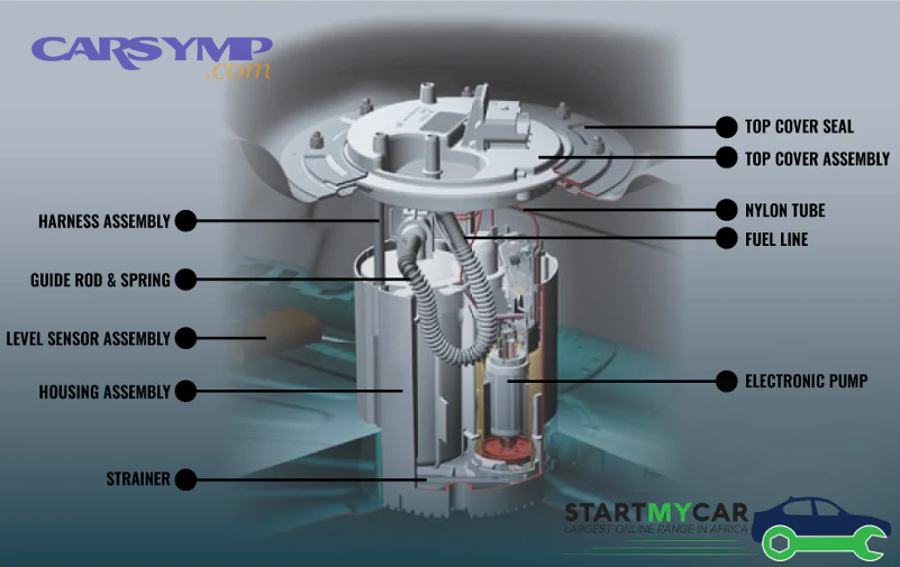
What does a fuel pump–related stall feel like, and how can you confirm it quickly?
A fuel-pump-related stall is best diagnosed by running 4 quick checks—stall pattern under load, fuel pressure/volume evidence, pump power feed integrity, and restart behavior—to confirm fuel starvation without guessing. To better understand fuel-side stalls, start with what the driver feels and then translate that into measurable fuel delivery evidence.
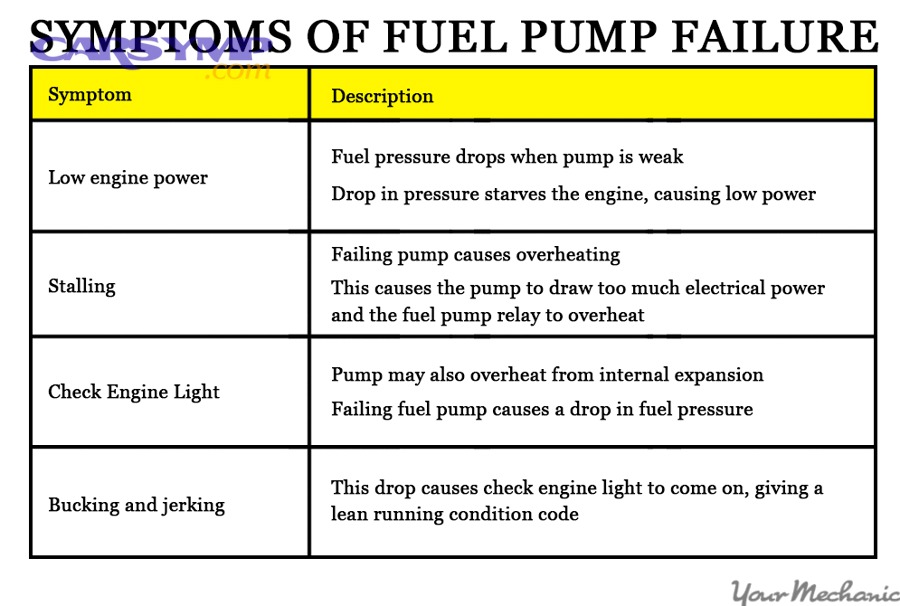
What are the hallmark symptoms of a weak fuel pump vs a failing fuel pressure regulator/filter?
A weak fuel pump typically shows “demand failure” (pressure/volume collapse under load), while a regulator or restriction often shows pressure behavior that is abnormal in a different way (too low, unstable, or slow-to-recover) depending on design. Specifically, you’re looking for consistent patterns that repeat with engine demand.
- Weak fuel pump (common pattern):
- Hesitation or surging when you accelerate
- Loss of power at highway speed
- Stalling after sustained load (long hill, fast cruising)
- Long crank time, especially after sitting
- Sometimes a noticeable pump whine (not always)
- Restriction (filter, sock, line) or regulator issue (varies by system):
- Restriction can mimic a weak pump: it starves the engine under load.
- Some regulator failures create pressure that’s too high or too low; symptoms can include rich/lean operation depending on the failure mode.
- You may see inconsistent pressure recovery after throttle changes.
The practical takeaway: don’t try to “feel” the difference—measure fuel delivery if possible, because restriction and pump weakness can feel similar.
How does “stalls on acceleration” differ between fuel starvation and ignition breakdown?
Fuel starvation usually produces a smooth-to-worsening bog or surge (lean behavior) as demand rises, while ignition breakdown produces sharper misfire events—often a jerky, bucking sensation—because individual cylinders stop firing cleanly. However, because both can worsen under load, you need one extra discriminating clue.
- Fuel starvation clues:
- Power fades like the engine is “running out of breath”
- May surge as the ECU trims fuel, then bog again
- Often improves when you back off the throttle
- Ignition breakdown clues:
- More “violent” bucking or intermittent power hits
- May feel like the engine is stumbling in discrete beats
- Can be accompanied by a raw-fuel smell (unburned fuel)
If you can safely reproduce the symptom, note whether backing off the throttle restores smooth running (fuel starvation often improves quickly when demand drops).
Does the engine usually sputter before a fuel-related stall?
Yes—fuel-related stalls often sputter first because the mixture leans out gradually as fuel pressure/volume drops, and combustion becomes unstable before it stops entirely. In addition, the “sputter-before-dead” pattern is one of the most useful differentiators from a hard signal cut.
That said, a fuel pump power interruption (relay, wiring, ground) can mimic a sudden signal loss because the pump shuts off instantly. That’s why fuel-pump diagnosis must include both fuel delivery and fuel-pump electrical feed checks.
What quick tests can you do for fuel delivery (no guesswork)?
You can confirm or deny a fuel delivery problem with four quick tests: (1) key-on prime behavior, (2) fuel pressure evidence under load, (3) voltage/ground integrity at the pump circuit, and (4) residual pressure behavior after shutdown. Next, pick the tests that match your tools and comfort level.
- Key-on prime and sound check (basic, not definitive):
- Many cars prime the pump for a second or two at key-on.
- Hearing a pump doesn’t prove it’s healthy, but silence can be a clue (unless the car doesn’t prime audibly).
- Fuel pressure test (best confirmation):
- If your vehicle has a test port, use a fuel pressure gauge.
- Compare pressure at idle vs under load (a snap throttle or controlled drive test where safe).
- A healthy system should maintain pressure within spec under demand; a weak pump often drops.
- Pump power feed check (multimeter test):
- Check fuse/relay integrity.
- Measure voltage at the pump connector when the pump is commanded on.
- A weak ground can reduce pump output even when the pump is “working.”
- Residual pressure / leak-down behavior:
- A rapid pressure drop after shutdown can suggest a leak, a check valve issue, or an injector leak—depending on system design.
According to a study by Chalmers University of Technology from the Department of Applied Mechanics, in 2011, the thesis notes that misfires can be caused by fuel-system malfunction and that significant increases in HC and CO emissions have been observed at a 2% misfire rate, reinforcing why fuel delivery faults often show up first under demand. (publications.lib.chalmers.se)
What does an ignition-related stall feel like, and how do you narrow it to coils, plugs, or wiring?
An ignition-related stall is most likely when the engine runs rough or misfires before shutting down, and you can narrow it quickly by checking misfire behavior, inspecting plugs, validating coil performance under load, and ruling out simple connector/wiring faults. More specifically, ignition diagnosis works best when you separate “spark quality” issues from “spark command” issues.
What are the classic signs of weak spark before a stall?
Weak spark usually shows up as misfire first—rough idle, hesitation, bucking under load, and unstable acceleration—because cylinders fail to ignite consistently before the engine loses enough torque to stall. To illustrate, ignition failures often feel “choppy” rather than “smoothly fading.”
Common weak-spark indicators:
- Roughness that changes with load (worse climbing hills or accelerating)
- Jerking/bucking that feels like intermittent power cuts
- Rough idle that can worsen when electrical load changes (A/C on, lights on)
- Occasional backfire or popping (depending on engine/exhaust setup)
If you’re diagnosing an engine stalls while driving scenario and it always feels like misfire chaos first, ignition rises on the suspect list.
Fuel trims/lean clues vs misfire clues—what do they suggest (fuel vs ignition)?
Misfire clues point more strongly to ignition (or compression), while persistent lean behavior points more strongly to fuel delivery or unmetered air—so you should treat “misfire evidence” as Spark-first unless other data clearly contradicts it. However, misfire can also be caused by fuel starvation, so the goal is to match the dominant clue to the right bucket.
Practical ways to interpret clues without overcomplicating:
- If it feels like rhythmic stumbling and the exhaust note breaks up: suspect Spark first.
- If it feels like smooth power fading and surging with throttle: suspect Fuel first.
- If it shuts off like a switch: suspect Signal (or power/relay) first.
If you have an OBD tool, misfire counters or cylinder-specific misfire codes strongly support an ignition or cylinder-specific problem—though you still confirm with inspection.
What are the fastest ignition checks a DIY driver can do safely?
The fastest safe ignition checks are: (1) visual inspection of coils/connectors, (2) spark plug condition reading, (3) controlled coil swap testing where appropriate, and (4) moisture/boot tracking checks—because they can confirm a weak-spark pattern without special equipment. Moreover, these checks reduce “parts cannon” behavior by giving you evidence.
- Connector and harness check (free and fast):
- Push-test connectors on coils.
- Look for broken locks, oil contamination, or stretched wires.
- Lightly wiggle the harness at idle (if safe) to see if misfire changes—this suggests wiring.
- Spark plug inspection (high value):
- Look for excessive wear, oil fouling, cracked insulator, incorrect gap (if measurable).
- One plug that looks very different from others is a clue.
- Coil swap test (only when design allows):
- If one cylinder is consistently implicated, swapping coils between cylinders can reveal if the misfire “follows the coil.”
- Use this as a test, not as a permanent “diagnosis by swapping everything.”
- Moisture and arcing checks:
- Look for carbon tracking (dark lines) on boots/insulators.
- Moisture intrusion can cause intermittent misfire and stall in damp conditions.
Can a bad ignition coil cause stalling without any check engine light?
Yes—a bad ignition coil can cause stalling without a check engine light because intermittent coil breakdown may not persist long enough to set a code, and some ECUs require repeated fault conditions across drive cycles to trigger the light. Especially, an intermittent failure under a narrow condition (hot-soak, heavy load, rain) can stay just below the threshold for a warning—while still being severe enough to cause an occasional stall.
According to a study by Linköping University from the Department of Electrical Engineering, in 2015, the authors describe a misfire detection approach using the flywheel angular velocity signal and note that misfire detection is a difficult problem across varying conditions like cold starts and operating points—supporting why intermittent ignition-related misfires can be real even when they’re hard to catch in a single scan. (wcl.cs.rpi.edu)
Which sensors most commonly cause stalling, and how do you tell “signal loss” from other causes?
There are 2 main sensor groups for stalling: “engine-critical timing signals” (especially crank/cam) that can shut the engine off abruptly, and “drivability sensors” (like MAF/TPS/MAP) that more often cause poor running—so Signal loss is identified by sudden cutouts and timing/RPM anomalies. Next, use the sensor group to decide whether you’re dealing with an actual “engine stop” trigger or a “runs badly until it dies” trigger.
Which sensors can directly shut the engine off (CKP/CMP) vs usually just cause poor running (MAF/TPS/MAP)?
Crankshaft position (CKP) and camshaft position (CMP) sensors are the most likely to directly shut the engine off because the ECU needs them for timing and injector/coil synchronization, while MAF/TPS/MAP more commonly degrade drivability and can cause stalling indirectly. Then, treat “hard shutoff” as a Signal-first event until proven otherwise.
- More likely to cause abrupt shutoff (Signal-critical):
- CKP (engine speed/position)
- CMP (phase/synchronization on many systems)
- Some vehicles also have critical power/communication dependencies that mimic sensor loss
- More likely to cause drivability issues that can lead to stall (not always abrupt):
- MAF (air measurement)
- TPS (throttle position)
- MAP (manifold pressure)
- ECT (coolant temperature, fueling strategy influence)
What’s the difference between a crank sensor stall and a fuel pump stall?
A crank sensor stall often feels like an instant engine “cut” with a sudden loss of RPM signal behavior, while a fuel pump stall more often feels like progressive starvation with sputtering—especially under load. However, a pump power interruption can still mimic a hard cut, so you confirm with one additional clue.
- Crank sensor-style stall:
- Sudden shutoff, sometimes as if the key was turned off
- May restart after cooling down
- Can cause intermittent no-start (cranks but won’t fire)
- Fuel pump delivery stall:
- Bogging/hesitation and loss of power first
- Often worse under acceleration or sustained load
- Long crank and repeated key cycles may help temporarily if pressure builds
What does “limp mode” mean, and can it be mistaken for stalling?
Limp mode is a protective ECU strategy that limits power and throttle response to prevent damage, and yes—it can be mistaken for “almost stalling” because the car may feel like it’s dying even though the engine is still running. More importantly, limp mode usually preserves idle and basic operation, while a true stall is a complete engine stop.
Signs that suggest limp mode rather than true stall:
- Engine stays running but power is severely limited
- Throttle response becomes dull or restricted
- Vehicle may be stuck in a low gear or have limited RPM
- Warning indicators may appear (varies by vehicle)
If the engine actually shuts off and you lose all propulsion, that’s a stall—not limp mode.
Is an intermittent hot stall more suggestive of sensors than fuel or ignition?
Yes—an intermittent hot stall is often more suggestive of sensor signal issues because heat can cause internal sensor electronics or marginal connections to fail temporarily, and the engine may restart after cooling. Meanwhile, ignition coils can also be heat-sensitive, so your job is to decide whether the event looked like a misfire decline (Spark) or a clean cut (Signal).
Use this quick tie-breaker:
- Hot stall + misfire/roughness before dying: Spark tends to rise.
- Hot stall + instant cut with minimal warning: Signal tends to rise.
- Hot stall + load-sensitive bogging: Fuel can still be the cause, but confirm with pressure/voltage checks.
What is the fastest step-by-step diagnostic flow to identify fuel vs spark vs signal?
The fastest method is a 5-step triage flow—capture the stall pattern, run baseline checks, scan for clues, test the highest-probability bucket (Fuel/Spark/Signal), then confirm with one “deny” test—so you can identify the true cause without unnecessary parts replacement. To better understand this flow, think of it as moving from observable → measurable → confirmed.
What “baseline checks” should you do first regardless of cause?
There are 6 baseline checks you should do first—battery/charging health, obvious air intake integrity, visible vacuum line condition, major grounds/connectors, fuel level and recent refuel context, and recent repairs—because these can mimic Fuel, Spark, or Signal failures. Next, these checks prevent you from diagnosing a “phantom” caused by something simple.
- Battery and charging: low voltage can destabilize ignition and sensors.
- Air intake path: loose intake clamps can create unmetered air issues.
- Vacuum hoses: cracked/disconnected hoses can cause idle issues and stalling.
- Grounds/connectors: loose grounds can create random cutouts.
- Fuel level: low tank can expose pickup issues on turns/bumps.
- Recent work: anything disturbed recently is suspicious (connectors, grounds, hoses).
What can an OBD2 scan tell you immediately vs what it can’t?
An OBD2 scan can immediately reveal stored codes, pending clues, and freeze-frame context, but it cannot automatically prove the root cause because codes often describe symptoms (misfire, lean, sensor correlation) rather than the exact failed part. However, scanning still saves time because it narrows where to test next.
What a scan can do quickly:
- Point you toward misfire vs lean vs sensor correlation categories
- Show whether the fault is cylinder-specific (Spark/compression) or system-wide (Fuel/air/Signal)
- Provide context (RPM/load/temperature when it happened)
What a scan can’t do alone:
- Confirm a weak fuel pump without pressure/voltage evidence
- Prove an intermittent sensor drop-out if it didn’t occur during the scan
- Replace real testing for wiring faults or mechanical issues
How do you use symptom timing (cold start, hot restart, turns, bumps) as diagnostic evidence?
You use symptom timing by matching when the stall happens to what changes at that moment—heat, load, fuel slosh, vibration, or airflow—because timing is often the best clue when the fault is intermittent. Specifically, timing gives you “natural triggers” that expose weak systems.
- Cold start stalls: can suggest sensor strategy issues, air leaks, or ignition weakness.
- Hot restart stalls: can suggest heat-soak sensor/coil failures.
- Turning/low fuel: can suggest pickup starvation or tank-related supply issues.
- Bumps: can suggest wiring/connector/ground intermittency.
Write down the trigger like a technician would: “Stalls only after 20 minutes of driving, then idles for 30 seconds and dies; restarts after 5 minutes.” That level of detail turns guesswork into a test plan.
Should you replace parts based only on a single code?
No—you should not replace parts based only on a single code because (1) codes can be downstream symptoms, (2) intermittent faults may set misleading flags, and (3) wiring/air/fuel issues can mimic component failure—so you must confirm with at least one targeted test. Moreover, one confirmation test typically costs less than one wrong part.
A safer rule:
- Use the code to choose a bucket (Fuel/Spark/Signal).
- Run a bucket-specific confirmation test.
- Only then replace the component that fails the test.
What less-common issues can mimic Fuel vs Spark vs Signal stalling—and how do you rule them out?
There are 4 common “mimics” that can look like Fuel/Spark/Signal stalling—EVAP tank venting problems, 5V reference or ground faults, immobilizer/ignition switch interruptions, and airflow control issues—so you rule them out by testing for patterns that don’t fit the main buckets. In addition, this is where you address Vacuum leak and EGR-related stalling and shift from “what is it” to “why does it keep coming back.”

Can EVAP/tank venting problems (vacuum lock) imitate a failing fuel pump?
Yes—EVAP or tank venting problems can imitate a failing fuel pump because a restricted vent can create tank vacuum that reduces fuel flow, causing power loss and stalling that looks like starvation. Then, the key is to look for a refuel/drive-duration pattern.
Clues that fit EVAP/venting:
- Symptoms appear after a longer drive, especially in warm weather
- A “whoosh” sound when opening the fuel cap (carefully and safely)
- Stalling improves after the car sits or after the cap is loosened (do not drive with the cap loose as a “fix”)
If the pattern strongly correlates with fuel cap behavior or post-refuel changes, EVAP/venting becomes a higher-priority check.
Can a 5V reference short or bad ground cause multiple sensor faults and random stalls?
Yes—a 5V reference problem or bad ground can cause random stalls because it can corrupt multiple sensor signals at once, confusing the ECU and producing symptoms that bounce between Signal and Spark behaviors. More importantly, multi-sensor weirdness often screams “shared electrical problem,” not multiple simultaneous component failures.
Red flags for shared electrical faults:
- Multiple unrelated sensor codes appearing together
- Readings that look impossible (e.g., throttle or MAP values that jump)
- Stalling that correlates with harness movement or vibration
A practical approach (if you’re comfortable and it’s safe):
- Inspect harness routing near hot/exposed areas.
- Look for rubbed-through insulation near brackets.
- Check key grounds for tightness and corrosion.
Can an immobilizer/security system or key/ignition switch cause sudden shutdown?
Yes—security/immobilizer or ignition switch issues can cause sudden shutdown because they can interrupt fuel, spark, or ECU power in a way that feels exactly like Signal loss (instant cut), even though the engine itself is fine. Meanwhile, these issues often leave a behavioral “signature” on the dash.
Clues that fit security/ignition power interruptions:
- Instant stall with dash indicators behaving oddly
- No gradual sputter or misfire lead-up
- The car may crank but not start until a reset/cooldown/second key attempt
If you suspect this, avoid chasing fuel and spark first—confirm power supply integrity and look for security-related warnings.
What preventive maintenance reduces repeat stalling (filters, plugs, connectors) without “parts cannon”?
Preventing recurring stalling issues works best when you maintain the weakest links in each bucket—Fuel (filters and supply integrity), Spark (plugs and coil/boot health), and Signal (clean connections and stable grounds)—because recurring stalls often come from marginal components, not total failures. In short, prevention should target known wear items and known failure points, not random replacements.
High-confidence prevention checklist:
- Fuel bucket prevention:
- Keep fuel system service on schedule where applicable (filter service depends on vehicle design).
- Don’t run consistently at very low fuel levels if your vehicle is sensitive to pickup issues.
- Address any relay/ground corrosion early.
- Spark bucket prevention:
- Replace spark plugs at recommended intervals and use correct spec plugs.
- Inspect coil boots for oil contamination and tracking.
- Fix valve cover gasket leaks that soak ignition components (if present).
- Signal bucket prevention:
- Clean and secure key grounds (battery-to-body, engine block grounds).
- Ensure connectors are fully seated after any engine bay work.
- Protect wiring from heat and abrasion with proper routing/clips.
Finally, don’t ignore airflow-related “mimics” because they blend into the three buckets in confusing ways: Vacuum leak and EGR-related stalling often shows up as unstable idle, stalling when coming to a stop, or stalling after warm-up when the ECU shifts operating modes. If your car stalls mostly at idle or decel, include vacuum leaks, intake gasket issues, and EGR function checks in your plan—because they can look like fuel/ignition trouble even when the pump and coils are fine.
Evidence (if any)
According to a study by Chalmers University of Technology from the Department of Applied Mechanics, in 2011, the thesis reports that significant increases in HC and CO emissions have been observed at a 2% misfire rate, and it also discusses catalyst-damaging misfire conditions—supporting why misfire-related stalling (often tied to Fuel or Spark faults) is treated as an emissions and drivability priority. (publications.lib.chalmers.se)
According to a study by Linköping University from the Department of Electrical Engineering, in 2015, the authors describe developing a model-based misfire detection algorithm and emphasize the challenge of detecting misfires reliably across varying conditions like cold starts and operating points—supporting why intermittent Spark-related issues can be real even when they’re difficult to capture in a single snapshot scan. (wcl.cs.rpi.edu)