


A rough idle, hunting RPM, or stall at stoplights often comes down to one thing: the engine isn’t getting the right air at the right time—and the throttle body + idle control system is where that airflow is managed. This guide shows you how to diagnose the real cause and fix it without wasting money on the wrong part.
Next, you’ll learn how to confirm the throttle body/idle system is actually responsible (and not a vacuum leak or fuel/spark issue), so your repair starts with evidence instead of guesswork.
Then, you’ll see how to interpret symptoms and tell the difference between a dirty throttle body, a sticking idle air control (IAC) valve, and a failing throttle position sensor (TPS), using simple checks you can do at home.
Introduce a new idea: once you can identify the likely culprit, you’ll follow a step-by-step DIY diagnostic path, clean the throttle body safely, and decide when an idle relearn—or full replacement—is the smarter move.
Is my rough idle or stalling caused by the throttle body or idle control system?
Yes—rough idle or stalling can be caused by throttle body/idle control issues because (1) airflow at closed throttle is restricted by deposits, (2) idle bypass control sticks or responds slowly, and (3) throttle position feedback becomes inconsistent.
That said, “it stalls” isn’t specific—so you need fast filters that separate throttle/idle faults from vacuum leaks and fuel/spark problems.
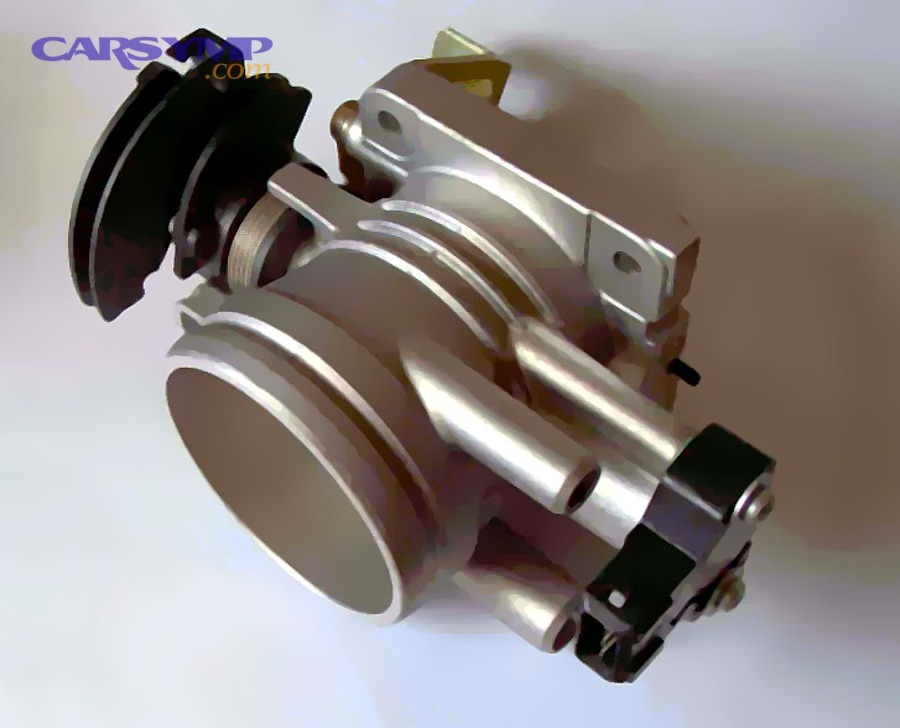
The 60-second symptom pattern check (DIY-friendly)
Use this quick pattern check before touching tools:
- Stalls mainly at idle or when coming to a stop: Strongly suggests throttle body deposits, IAC sticking, incorrect idle adaptation, or an unmetered air problem (vacuum leak).
- Idle hunts up/down repeatedly (surging): Often a dirty throttle plate bore, sticky IAC, or adaptation mismatch after battery disconnect/cleaning.
- Stalls only with loads at idle (A/C on, steering at full lock): Points toward idle control authority issues (IAC can’t compensate, throttle plate control lag, or incorrect learned idle).
- Starts fine cold, worse hot (or vice versa): Can indicate sticking air control, sensor drift, or borderline vacuum leak that changes with heat.
Three “rule-out” checks that protect you from misdiagnosis
Do these before you buy parts:
- Vacuum leak rule-out (simple): If idle improves when you lightly open the throttle, it can still be vacuum-related—so don’t assume throttle body. Look for lean codes, hissing, and brittle hoses.
- Fuel delivery sanity check: If it feels like it “falls on its face” under load (not just at idle), fuel pressure or injector issues climb the list.
- Ignition/sensor sanity check: If the car engine stalls while driving (not only at stops), don’t tunnel-vision on the throttle body—intermittent ignition or timing signals can mimic airflow issues.
A practical stall fork: idle-only vs driving-stall
Here’s the key split that saves time:
- Idle-only stall → throttle body deposits, IAC, vacuum leak, incorrect relearn/adaptation.
- Stall while cruising → widen scope to “Fuel pump vs ignition vs sensor stall diagnosis,” because airflow at steady cruise is usually not limited the way it is at idle.
If your stall happens at random while moving, learn the Crank/cam sensor intermittent failure signs: sudden drop to zero RPM on the tach, no sputter (it just dies), restarts after cooling, and often no obvious warning until it becomes frequent.
What does the throttle body do, and how does it affect idle?
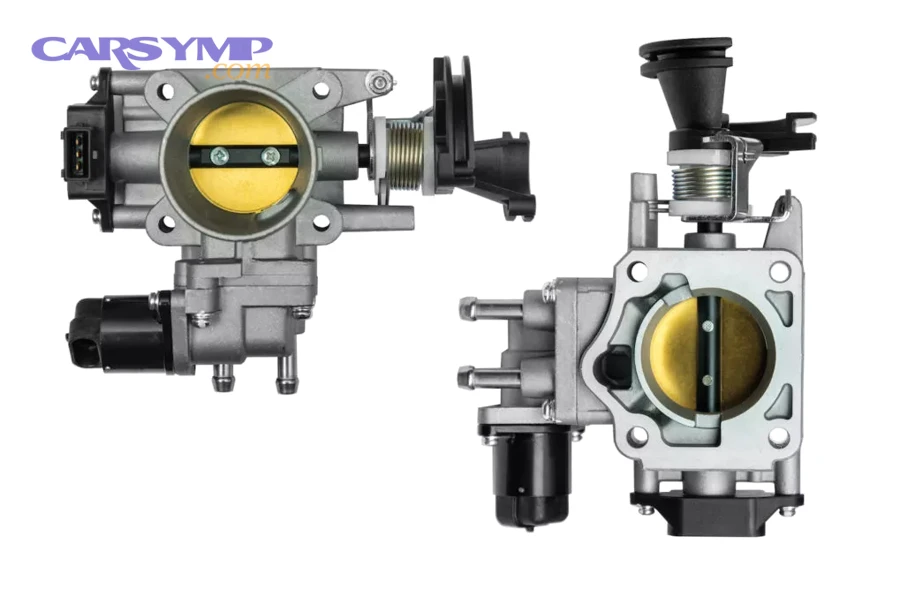
The throttle body is the engine’s main air metering gateway, controlling how much air enters the intake; at idle it works with idle control strategies (bypass air or electronic throttle control) to maintain target RPM under changing loads.
Because idle requires only a small, precise airflow, small disruptions—deposits, sticking, or incorrect calibration—create big RPM swings. Research on throttle flow at idle emphasizes how sensitive idle airflow is to small changes around the throttle plate position. (sae.org)
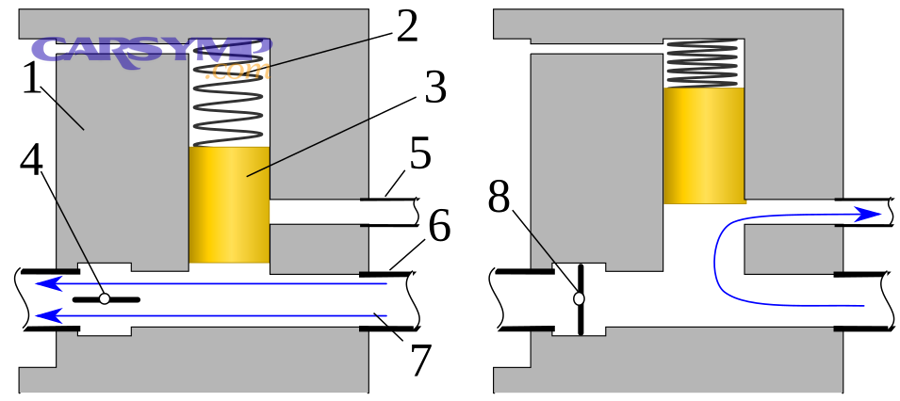
Idle is “small airflow, high sensitivity”
At idle, the throttle plate is near closed, and the engine depends on one (or a mix) of these to keep RPM stable:
- Idle air bypass path (common on older cable-throttle vehicles) regulated by an IAC valve
- Electronic throttle body (ETB) that cracks the throttle plate open tiny amounts to control idle airflow
- ECU/PCM adaptation (“learned idle”) that stores correction values over time
The IAC valve (when present) is designed to regulate idle speed by controlling bypass air under ECU command; when it sticks or jams, idle RPM becomes unstable and stalling becomes more likely. (en.wikipedia.org)
Why deposits cause “sticky” behavior
Throttle body deposits typically build up at the throttle plate edge and bore where airflow velocity and oil vapor residue promote buildup. Over time, that deposit ring:
- reduces effective airflow at “closed throttle”
- increases friction/stiction at the plate edge (ETBs)
- disrupts the stability of bypass airflow (IAC systems)
In plain English: the engine tries to hold a steady idle, but the airflow pathway is no longer consistent, so RPM hunts.
Which symptoms point to a dirty throttle body vs a faulty IAC vs a bad TPS?
A dirty throttle body is most associated with unstable idle and sticky return-to-idle, a faulty IAC is most tied to load-dependent idle control failure (A/C, steering), and a bad TPS is most linked to inconsistent throttle signal behavior like hesitation, tip-in stumble, or erratic throttle response.
To make this actionable, use a symptom-to-suspect matrix—then confirm with one targeted check per suspect.
Symptom-to-suspect matrix (what this table contains)
This table links common idle/driveability symptoms to the most likely cause, plus a quick DIY confirmation step so you don’t replace parts blindly.
| Symptom | Most likely suspect | Why it happens | Quick DIY confirmation |
|---|---|---|---|
| Idle hunts (RPM surges up/down) | Dirty throttle body / adaptation | Airflow at near-closed throttle becomes inconsistent | Visual deposit ring + idle improves after cleaning/relearn |
| Stalls when A/C turns on | IAC / ETB idle authority | Idle control can’t add bypass air quickly enough | Watch idle dip when A/C engages; IAC command/response (scan tool) |
| High idle that won’t come down | Vacuum leak or IAC stuck open | Extra unmetered air or bypass stuck | Pinch/inspect hoses; smoke test; check IAC sticking |
| Hesitation on tip-in, throttle “flat spot” | TPS signal noise / dead spot | ECU misreads throttle angle change | Live TPS sweep test: smooth 0–100% without drops |
| Rough idle improves if you lightly press gas | Throttle body deposits / IAC restriction | Small opening bypasses dirty bore/plate edge | If slight throttle stabilizes idle, suspect airflow control |
| Random stall while driving | Often not throttle body | More consistent with ignition/fuel/sensor loss | Use “Fuel pump vs ignition vs sensor stall diagnosis” flow |
Important nuance: TPS problems often show up during throttle movement (tip-in/tip-out). A dirty throttle body/IAC problem is often worst at closed throttle transitions and idle stabilization.
What are the most common causes of throttle body and idle control issues?
There are 6 main causes of throttle body and idle control issues: (1) throttle plate/bore deposits, (2) sticky or failing IAC valve, (3) vacuum leaks, (4) ETB motor/gear wear or binding, (5) TPS signal faults, and (6) adaptation errors after power loss or service.
To diagnose efficiently, group causes by airflow restriction, unmetered airflow, and signal/control faults—because each group has different “tells” and fixes.
1) Deposits on throttle plate and bore (restriction + stiction)
- Most common on higher-mileage engines, engines with PCV oil vapor carryover, and stop-and-go driving.
- Causes: sticky plate return, unstable idle airflow, poor idle control resolution.
2) IAC valve contamination, sticking, or electrical failure
- IAC passages collect dirt and oil residue; stepper/solenoid can jam.
- Failure pattern: idle compensation fails under loads; stalling at stop, rough idle. (en.wikipedia.org)
3) Vacuum leaks and unmetered air
- Cracked hoses, intake boots, PCV issues, intake gasket leaks.
- Pattern: high idle, lean codes, idle changes when you spray/brake-clean around leaks (use caution).
4) Electronic throttle body (ETB) friction or actuator issues
- ETBs can develop friction/binding that makes fine control harder; some systems will log throttle actuator codes.
- Pattern: reduced power, throttle warnings, inconsistent idle control.
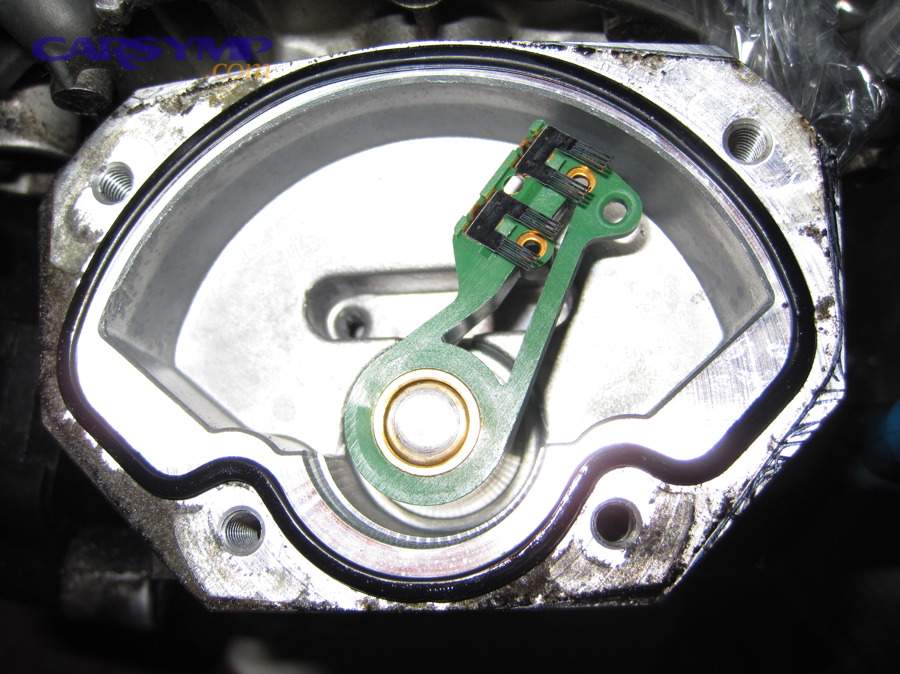
5) TPS wear, dead spots, connector corrosion
- Potentiometer-style TPS can wear; hall-effect sensors can fail electrically.
- Pattern: erratic throttle angle, stumble, inconsistent fueling transitions.
6) Lost adaptation / incorrect idle learn after service
- Battery disconnect, throttle body cleaning, or ECU reset can remove learned corrections.
- Pattern: idle is “off” right after service, then slowly improves—or never improves without relearn.
How do I diagnose throttle body and idle control issues step-by-step at home?
You can diagnose throttle body and idle control issues at home in 8 steps—starting with symptom patterning, then checking for unmetered air, confirming sensor signals, and finally validating airflow control—so you reach a confident fix instead of guessing.
To keep this DIY-safe and repeatable, follow the steps in order; each step either confirms a branch or rules one out.
Step 1: Pull codes and freeze-frame (even if the check engine light is off)
- Use an OBD2 scanner that reads live data and pending codes.
- Note RPM, coolant temp, load, and throttle position when the issue occurred.
Step 2: Observe idle behavior under controlled loads
At warm idle, test one load at a time:
- A/C on/off (if equipped)
- headlights on/off
- steering at full lock (briefly)
If idle dips sharply and stalls, idle control authority is suspect (IAC/ETB/adaptation).
Step 3: Quick vacuum leak check (visual + behavior)
- Inspect intake boot, PCV hoses, brake booster line.
- Listen for hissing.
- If idle is high and trims are positive (lean), vacuum leak becomes more likely.
Step 4: Check live data essentials (what “normal” looks like)
Look for:
- TPS % changing smoothly with pedal input (no drops/spikes)
- Short/Long fuel trims: big positive trims at idle that improve off-idle suggest unmetered air
- Idle speed command vs actual: if the ECU commands higher idle but can’t achieve it, airflow control is constrained
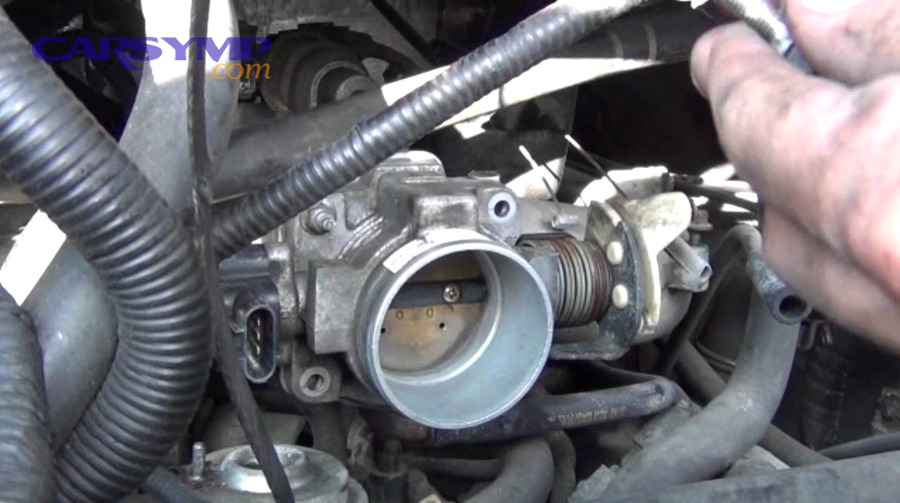
Step 5: Throttle body visual inspection (the deposit ring test)
Remove intake tube and inspect:
- dark varnish ring at throttle plate edge
- oily residue pooled in bore
A heavy ring is a strong candidate for idle instability and “sticky” return-to-idle.
Step 6: IAC valve / bypass passage inspection (if applicable)
On IAC-equipped engines:
- inspect IAC passages for sludge
- check connector condition
- if you have live data: see if the ECU changes IAC duty/steps when loads change
Step 7: Controlled “airflow influence” test (safe version)
- If idle is unstable, gently open throttle a few millimeters.
- If idle stabilizes instantly, the problem is often at the closed-throttle airflow path (deposit ring, bypass restriction, or incorrect adaptation).
Step 8: Confirm you’re not dealing with a driving-stall root cause
If you have engine stalls while driving, branch here:
- Check tach behavior (drops to zero instantly?)
- Consider Crank/cam sensor intermittent failure signs
- Apply a “Fuel pump vs ignition vs sensor stall diagnosis” approach: fuel pressure drop, spark loss, or crank signal loss can all kill the engine while moving—often without the gradual bog typical of airflow restriction.
Evidence: Throttle airflow at idle is highly sensitive to small changes in throttle plate/geometry, which is why deposits and tiny mis-calibrations can produce big idle effects. (sae.org)
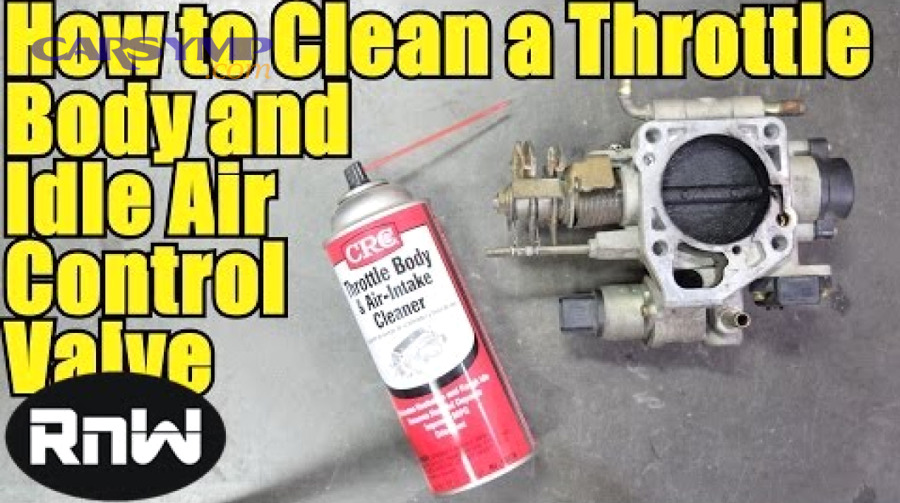
How do I clean the throttle body correctly, and will it fix idle issues?
Yes—cleaning the throttle body often fixes idle issues because (1) it restores consistent airflow at near-closed throttle, (2) reduces plate stiction and improves fine control, and (3) reduces the ECU’s need for extreme idle corrections that can cause hunting.
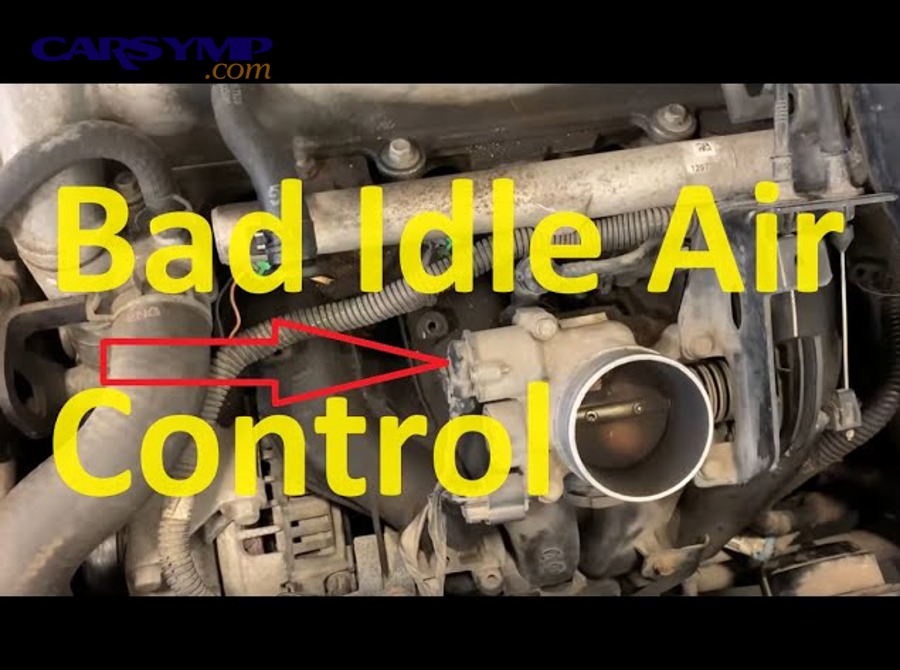
However, cleaning only works when deposits are the core problem; if the IAC is electrically failing or the TPS signal is unstable, cleaning alone won’t solve it.
What you need (and what to avoid)
Use:
- throttle body cleaner (sensor-safe)
- clean lint-free cloths
- soft nylon brush
- basic hand tools, gloves, eye protection
Avoid:
- scraping the bore with metal tools
- soaking electrical components
- forcing an electronic throttle plate aggressively (some ETBs can be damaged if you pry them open)
DIY cleaning procedure (safe, effective sequence)
- Disconnect intake ducting and inspect the bore/plate edge.
- Key off, and for extra safety, disconnect the battery negative if your service manual recommends it (some vehicles require specific steps—don’t create extra problems).
- Apply cleaner to the cloth, not directly into the throttle body (reduces risk of pooling).
- Wipe the bore and plate edge where deposits concentrate.
- If the plate edge is heavily coked, use a nylon brush lightly—then wipe clean.
- Reassemble intake ducting, check clamps, and ensure no vacuum leaks were introduced.
- Start the engine and let it stabilize; expect a temporarily high idle until adaptation settles.
- If idle remains unstable, proceed to relearn/adaptation.
Add one targeted check after cleaning
After cleaning:
- if idle improves but still hunts, adaptation may be needed
- if idle is unchanged and load-compensation is poor, suspect IAC/ETB authority
- if throttle response is erratic, suspect TPS/live data inconsistency
Evidence: According to a study by Latvia University of Life Sciences and Technologies from the Mechanics and Design Institute, in 2020, changes in throttle-body leakage/flow characteristics were shown to meaningfully alter idle behavior and mixture dynamics, highlighting why small airflow differences can matter at idle. (iitf.lbtu.lv)
Do I need an idle relearn or throttle adaptation after cleaning or replacing parts?
Yes—many vehicles need an idle relearn/throttle adaptation after cleaning or replacing throttle/idle components because (1) the ECU must re-map “closed throttle” position, (2) it must rebuild idle airflow corrections, and (3) it must stabilize idle control under loads (A/C, steering, alternator).
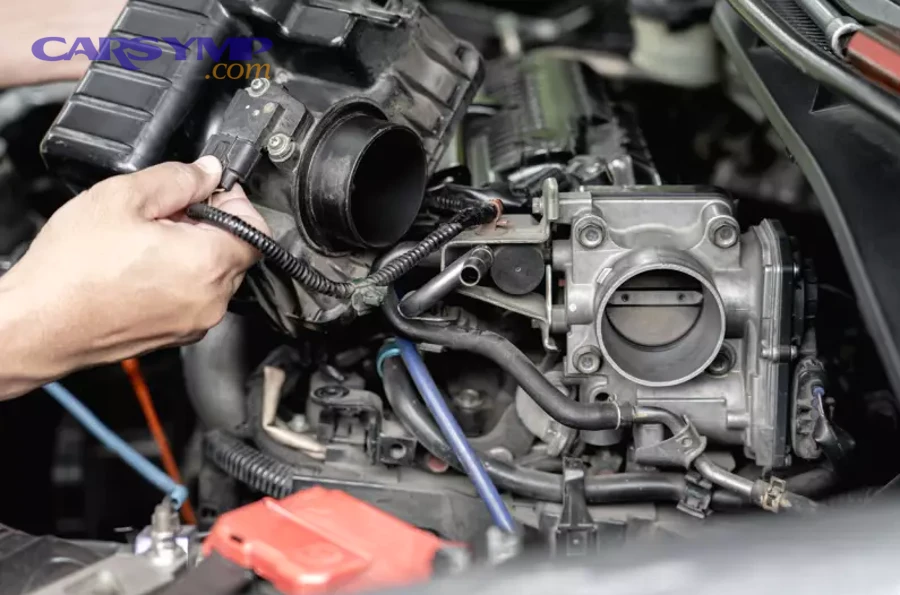
Next, treat relearn as a controlled calibration step—especially on electronic throttle bodies—because “cleaner airflow” changes the baseline the ECU was compensating for.
When relearn is most likely required
- Electronic throttle body vehicles after cleaning
- Battery disconnect / ECU reset
- Throttle body replacement, IAC replacement, TPS replacement
- Persistent hunting idle immediately after service
A relearn procedure is meant to recalibrate the ECU’s understanding of throttle closed/open positions and idle control baselines, and skipping it can leave you with rough idle or stalling.
When should I replace the throttle body, IAC valve, or TPS instead of cleaning?
Throttle body replacement wins when there’s mechanical/electrical actuator failure, IAC replacement is best when the valve sticks electrically or can’t respond under load, and TPS replacement is optimal when the signal is noisy or has dead spots during a smooth sweep test.
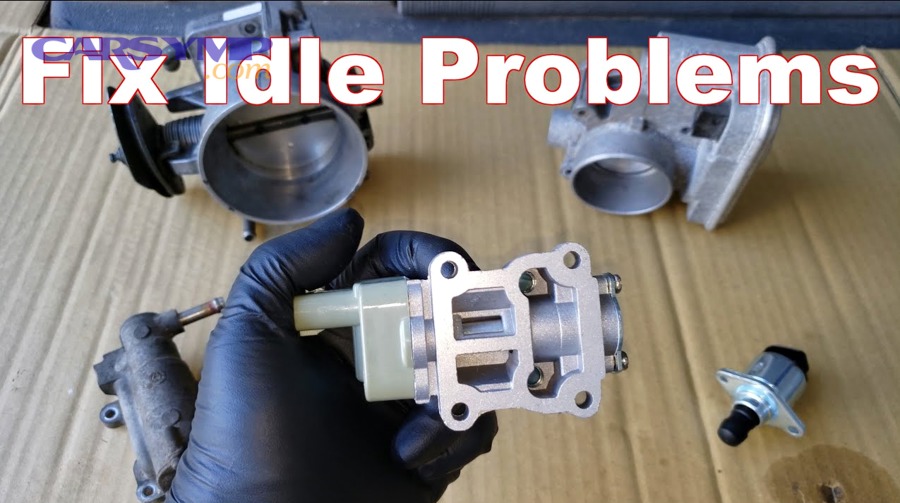
In other words: clean for deposits, replace for control integrity.
Replace the throttle body when…
- ETB actuator codes persist after cleaning and relearn
- the throttle plate binds mechanically
- the throttle motor/geartrain is failing (erratic response, reduced-power mode)
- you see physical damage or severe corrosion
Replace or service the IAC valve when…
- idle compensation under loads fails consistently
- IAC duty/steps change but RPM does not respond (authority problem)
- the valve is repeatedly sticking shortly after cleaning
- electrical tests show out-of-range resistance (per service manual)
Replace the TPS when…
- live TPS data is not smooth from closed to wide open
- you see dropouts, spikes, or flat lines
- hesitation and throttle transitions match TPS inconsistency more than idle airflow restriction
A cost-saving rule
If cleaning + relearn improves idle substantially, you likely avoided a parts cannon. If nothing changes, stop repeating the same action—move to measurements and targeted replacement.
Contextual border: At this point you’ve covered the primary “diagnose & fix” path for throttle body/IAC/TPS. The final section expands into less common causes that mimic these failures, so you can protect your diagnosis when symptoms don’t fit the usual patterns.
What are the less common causes of idle instability that mimic throttle body or IAC failure?
There are 7 less common causes of idle instability that can look like throttle body or IAC failure: (1) EGR stuck open, (2) EVAP purge valve stuck open, (3) MAF/MAP sensor skew, (4) coolant temperature sensor errors, (5) intake valve carbon issues (some engines), (6) low compression/misfire at idle, and (7) intermittent crank/cam signal loss.
Besides being “rare,” these are dangerous because they trick you into cleaning or replacing throttle parts repeatedly without solving the root issue.
1) EVAP purge valve stuck open (acts like a vacuum leak)
- Adds unmetered vapor/air at idle → rough idle, lean trims
- Check: pinch purge line at idle; see if RPM stabilizes
2) EGR stuck open (dilutes intake charge at idle)
- Idle becomes unstable because exhaust gas disrupts combustion
- Check: EGR command vs actual; block-off test (only if procedure-safe and legal for diagnostic use)
3) MAF/MAP skew (bad airflow estimation)
- ECU delivers wrong fuel for actual airflow → idle unstable
- Check: compare expected MAF at idle to known-good ranges for your engine, inspect sensor contamination
4) Coolant temp sensor drift (wrong warm-up strategy)
- ECU holds wrong idle target and fueling strategy
- Check: compare live coolant temp to actual engine temp after warm-up
5) Misfire that’s worse at idle (coil, plug, injector)
- Can mimic “air control” because RPM drops sharply at idle
- Check: misfire counters, cylinder balance, plug inspection
6) Mechanical issues (compression imbalance, vacuum loss at a runner)
- Idle is the most sensitive operating mode
- Check: compression/leak-down, intake runner inspection
7) Intermittent crank/cam signals (driving-stall look-alike)
If your top complaint is engine stalls while driving, don’t ignore Crank/cam sensor intermittent failure signs. These stalls can be abrupt and may resemble throttle shut-off, but the actual cause is loss of engine position signal. Pair that insight with a structured “Fuel pump vs ignition vs sensor stall diagnosis” path so you test what can actually kill the engine instantly.
Evidence: Engine idle control relies on a tightly controlled airflow window, and even small deviations around the throttle plate can shift idle behavior—one reason technical literature emphasizes throttle-flow sensitivity at idle. (sae.org)