


Stalling at idle is most often solved by confirming whether unmetered air (a vacuum leak) or unwanted exhaust flow (an EGR fault) is destabilizing combustion when the engine has the least airflow and the smallest margin for error.
The fastest path is to use symptom patterns and a few safe checks to decide which direction to test first—because vacuum leaks and EGR problems can feel similar, but they don’t behave the same under the right test conditions.
Once you pick a direction, the goal is to verify the fault before replacing parts, using an ordered workflow (visual inspection → targeted testing → confirmation) that reduces guesswork and repeat breakdowns.
Introduce a new idea: instead of chasing every possible cause at once, you’ll build a simple decision chain that links what the engine is doing to what you should test next—and why.
What does “stalling at idle” mean—and why do vacuum leaks and EGR faults cause it?
“Stalling at idle” means the engine cannot maintain stable RPM at low airflow, and yes—vacuum leaks and EGR faults cause it because they disrupt the air/fuel and combustion stability exactly when the engine has the least tolerance for change.
Next, because this problem is really about airflow control, it helps to define what “unmetered air” and “wrong-time EGR flow” actually mean in plain terms.
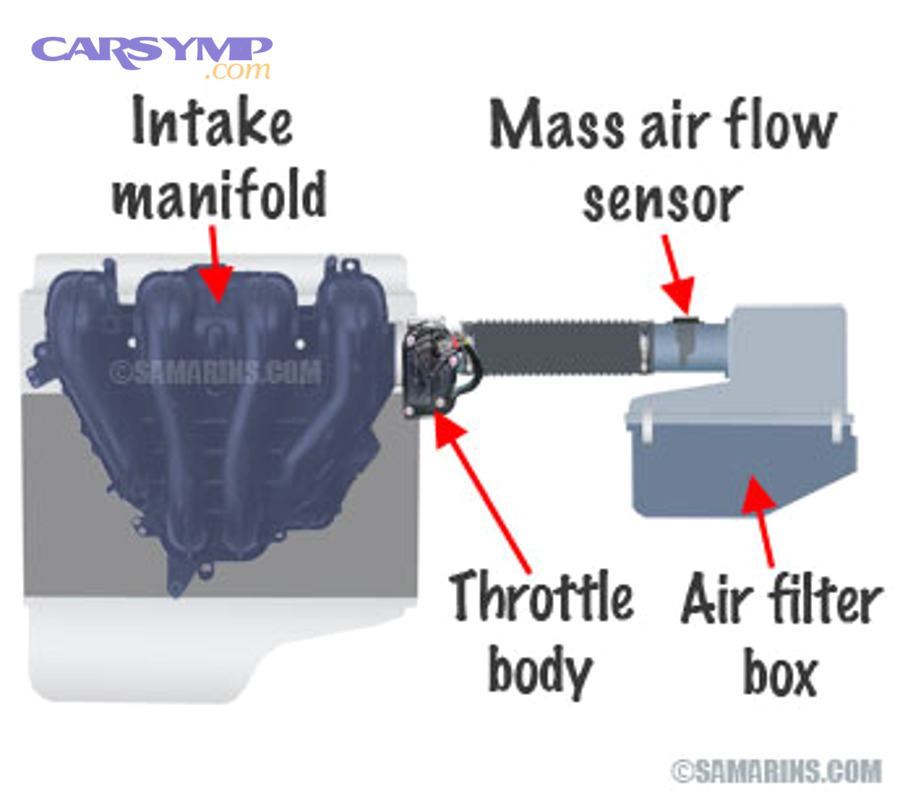
What is a vacuum leak (unmetered air leak) in a modern engine?
A vacuum leak is unmetered air entering the intake after the engine has measured airflow, usually after the MAF sensor or outside expected MAP calculations, causing the engine computer to underfuel and destabilize idle.
To better understand why idle suffers first, focus on the standout feature: at idle, total airflow is low, so a small leak becomes a large percentage error.
In a modern fuel-injected engine, the ECU tries to keep the mixture near target by adjusting injector pulse width based on oxygen sensor feedback. When air sneaks in through a cracked hose, leaking gasket, or split intake boot, the ECU often detects extra oxygen and responds by adding fuel. That correction can work at cruise, but at idle it can become a constant tug-of-war:
- The throttle is nearly closed, so airflow is limited.
- The leak is “fixed size,” so it represents a bigger share of total intake air.
- The ECU adds fuel, idle speed shifts, load changes, and the control loop can “hunt.”
That’s why vacuum-leak stalling often comes with rough idle, surging, and sometimes a stall when you lift off the throttle and the engine returns to idle.
What is the EGR system—and what happens if the EGR valve is stuck open at idle?
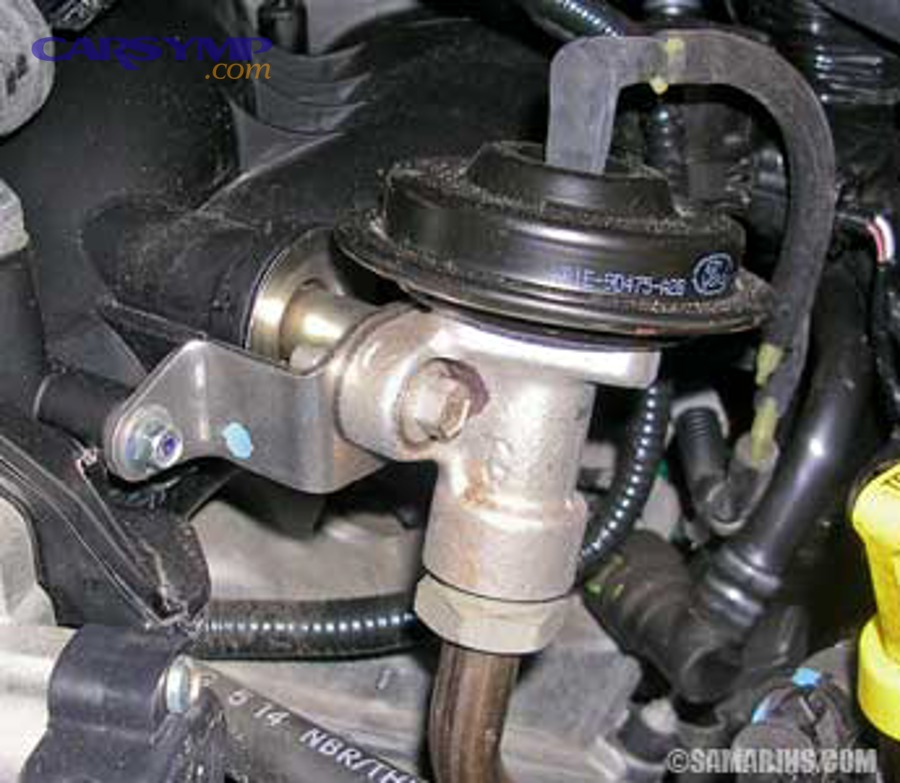
The EGR system is an emissions-control system that routes a measured amount of exhaust gas back into the intake under specific conditions to lower combustion temperature and reduce NOx.
Then, because EGR is not supposed to flow at idle on most engines, a stuck-open EGR valve acts like a controlled “internal leak” that dilutes the mixture and can kill the flame at low RPM.
Exhaust gas doesn’t burn like fresh air-fuel; it mostly displaces oxygen and changes how the mixture ignites. When EGR flows at the wrong time—especially at idle—it can cause:
- Rough idle due to diluted mixture
- Stumbling or near-stall as cylinders misfire sporadically
- Stall after highway driving (classic pattern) when carbon buildup makes the valve hang open
According to a study by Colorado State University from the Department of Mechanical Engineering, in 2020, research on EGR use in engines noted EGR’s role in lowering combustion temperatures and influencing knock/combustion behavior—showing why incorrect EGR flow can quickly destabilize combustion at sensitive operating points.
Can vacuum leaks and EGR problems create the same symptoms?
Yes—vacuum leaks and EGR problems can create the same symptoms because both change what enters the intake when the ECU expects something else, and both can cause rough idle, hesitation, and stalling.
However, the overlap is exactly why you need a test-driven approach: a vacuum leak adds fresh air, while EGR adds inert exhaust, and the engine responds differently when you isolate each one.
Is your stalling more likely a vacuum leak or an EGR fault?
A vacuum leak is more likely when stalling comes with lean indicators and “air leak” behavior, while an EGR fault is more likely when stalling follows cruising and behaves like unwanted dilution at idle.
To begin, use quick symptom logic to decide which direction to test first—because the correct first test saves the most time.
Does the engine stall mostly at stoplights or during deceleration to a stop?
Yes—this pattern can point strongly toward EGR or vacuum issues because deceleration closes the throttle and returns the engine to its most sensitive state.
More specifically, separate the “when”:
- Stall when stopping after highway cruising: often suggests an EGR valve that sticks open or an EGR control issue that shows up when hot and carbon-loaded.
- Stall randomly anytime it returns to idle (cold or hot): often leans toward a vacuum leak, PCV issue, or another airflow metering problem.
- Stall only when you tap the brakes or hold brake at idle: can hint at a brake-booster vacuum leak (covered later).
Do you notice a hissing sound or idle changing when accessories load the engine?
Yes—hissing and load-sensitive idle changes often point toward a vacuum leak because leaks frequently whistle or hiss and become more noticeable when idle control is working harder.
For example, turning on A/C, turning the steering wheel at a stop, or switching on electrical loads increases engine load. A healthy idle system compensates smoothly. A vacuum leak can push that system past its limit, so you get a dip, stumble, or stall.
Quick checks that support the vacuum-leak direction:
- Audible hiss near the intake side
- Rough idle that improves with RPM
- Strong “idle hunting” (surging up and down)
Is there a check engine light—and which code families point toward EGR vs intake leaks?
There are two main code families that help point your diagnosis: lean-condition codes and EGR-flow/performance codes, based on what the ECU thinks is happening.
Meanwhile, treat codes as clues, not verdicts—because a stuck-open EGR valve can trigger lean-like behavior, and a vacuum leak can trigger EGR-related complaints indirectly.
A practical grouping:
- Lean-condition codes (often P0171/P0174): commonly support unmetered air (vacuum leak) or fuel delivery issues. Unmetered air is a known cause of lean codes because extra oxygen enters without matching fuel.
- EGR-related codes (often flow/performance like P0401/P0402 families): point you toward EGR valve, passages, control solenoid, or sensor feedback issues.
If you have a scan tool that shows fuel trims, a vacuum leak often shows high positive long-term fuel trim at idle that improves when RPM rises (because the leak becomes a smaller percentage of airflow). This “trim pattern” is one reason vacuum leaks are often felt most at idle.
What are the most common vacuum leak sources that cause stalling at idle?
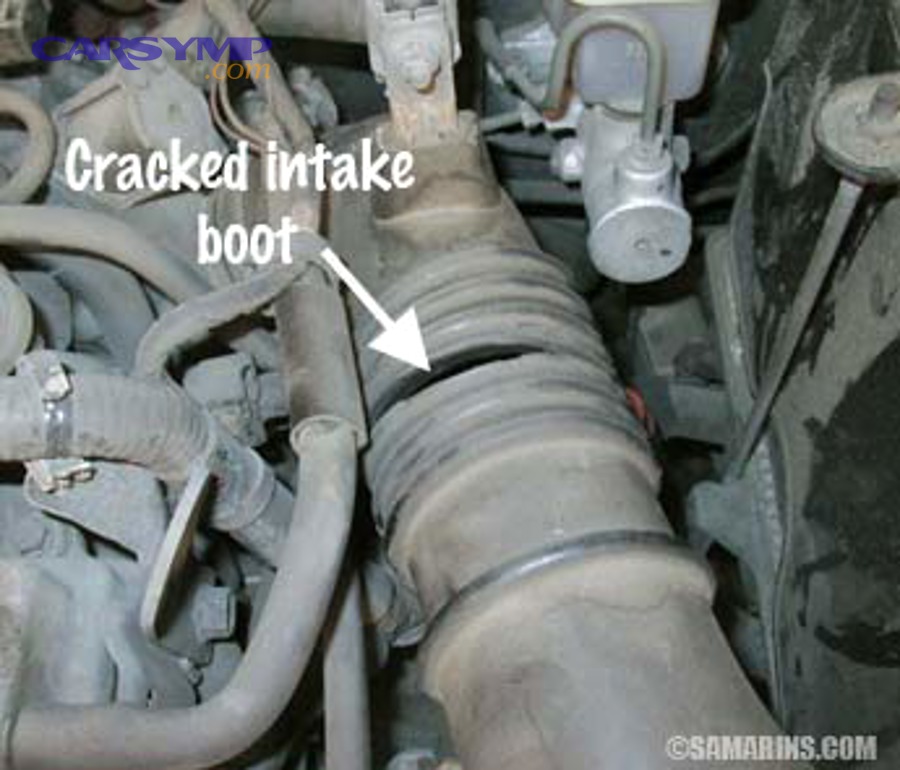
There are four main types of vacuum-leak sources that stall an engine at idle: intake boot/duct leaks, gasket leaks, vacuum hose/line leaks, and PCV-system leaks, based on where unmetered air enters.
In addition, knowing the common failure points lets you inspect the highest-probability areas before you reach for tools.
Which vacuum hoses and plastic lines fail most often?
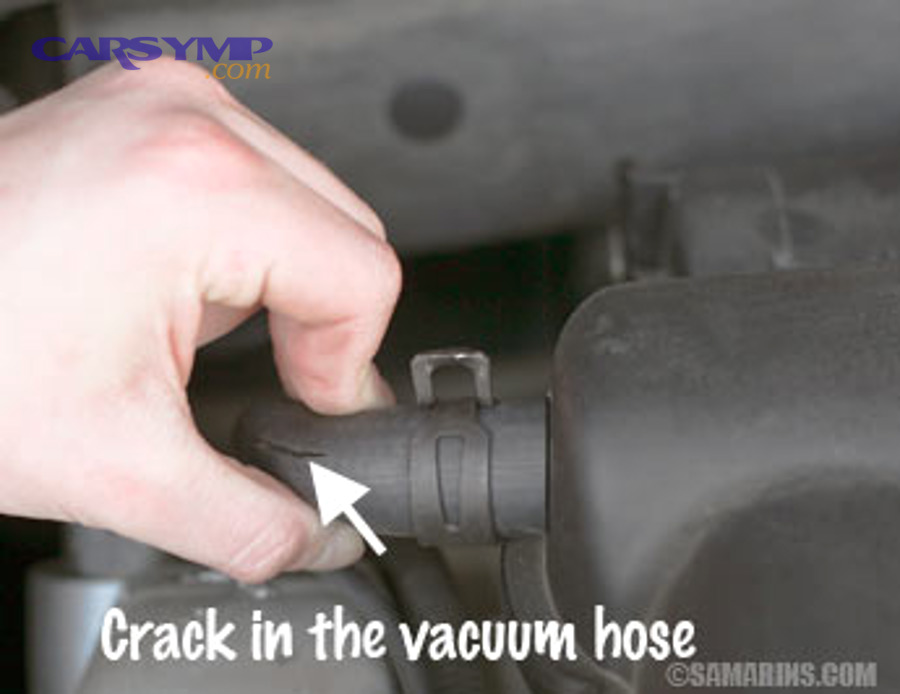
The most common hose/line failures are brittle vacuum elbows, cracked small-diameter vacuum lines, and PCV-related hoses, because heat and oil vapor harden rubber and plastic over time.
More specifically, inspect these first:
- Small vacuum tees and elbows near the intake manifold
- Brake-booster vacuum line and its check valve (if equipped)
- EVAP purge line connections near the intake (a loose fit can mimic a leak)
- PCV hoses that get oil-saturated and swell, then crack
A simple rule: if a hose feels brittle, cracks when flexed, or looks oil-soaked and spongy, it’s a prime suspect.
Which gaskets and intake components commonly leak unmetered air?
The most common gasket/component leak points are intake manifold gaskets, throttle body gasket areas, injector O-rings, and plastic intake manifold cracks, because sealing surfaces and polymers degrade with age and heat cycles.
For example, many engines develop small sealing failures that only show up at idle, when manifold vacuum is highest and airflow is lowest.
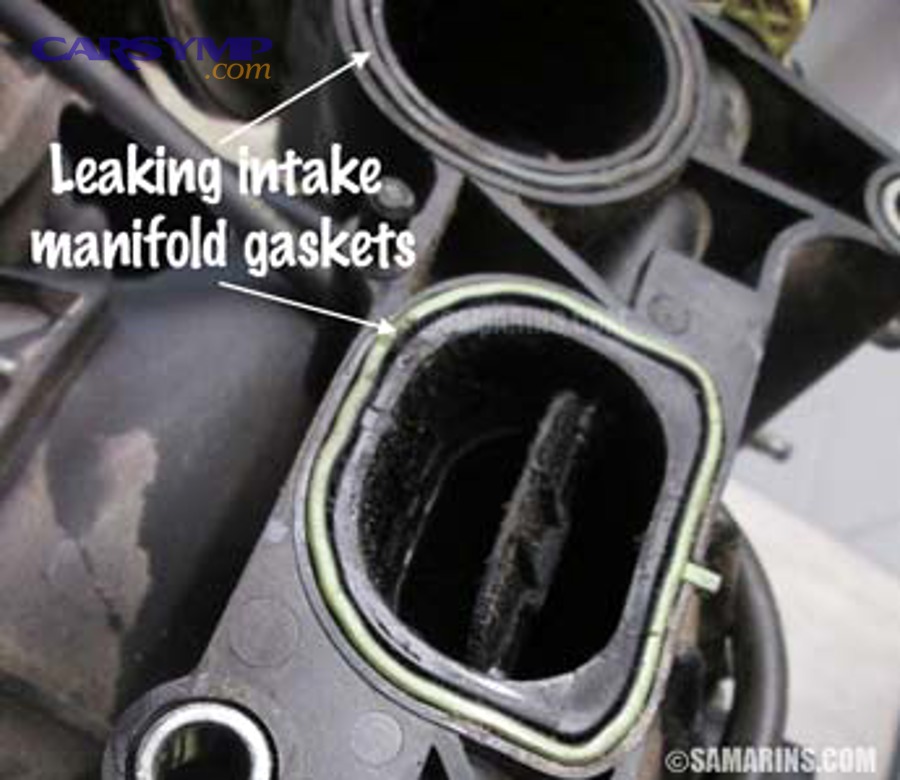
Common “hidden” leak spots:
- Back side of intake manifold (hard to see)
- Under plastic covers (noise insulation hides hiss)
- Around injector seats (O-rings shrink or harden)
- Intake boot clamps (loose or misaligned ducting)
Can the PCV system create a vacuum leak that leads to stalling?
Yes—the PCV system can create a vacuum leak that leads to stalling because a stuck-open PCV valve or torn diaphragm allows too much unmetered airflow, leaning out idle and forcing extreme fuel-trim corrections.
Especially on engines with diaphragm-style PCV units integrated into valve covers, a failed diaphragm behaves like a large, constant vacuum leak.
If your engine stalls at idle and also shows:
- Whistling from the valve cover area
- Oil consumption changes
- Rough idle that changes when you remove the oil cap (sometimes dramatic)
…then PCV moves up your priority list.
How do you test for a vacuum leak step-by-step without guessing?
A reliable vacuum-leak diagnosis uses a 5-step workflow—inspect, listen, isolate, confirm, and verify—so you can identify the leak source and prove the fix.
Let’s explore the safest order so you don’t jump to parts replacement before you have a confirmed leak.
What is the safest order of checks for finding an intake/vacuum leak?
The safest order is: (1) visual inspection, (2) physical hose checks, (3) sound/spray-free detection, (4) isolation tests, (5) smoke test confirmation, because each step increases certainty without increasing risk.
Next, follow this sequence:
Step 1: Visual scan (engine off, good light).
Look for obvious problems first:
- Split intake boot
- Disconnected vacuum line
- Missing clamp
- Collapsed or oil-soaked hose
- Cracks near hose ends (where they slip onto fittings)
Step 2: Hands-on hose inspection.
Gently flex hoses and elbows. Many leaks only reveal themselves when you move the line.
Step 3: Listen for hiss (engine running, careful).
Use a length of hose as a “stethoscope” (one end near your ear, the other near suspected areas). Keep clear of belts/fans.
Step 4: Isolation tests (targeted).
If you suspect a branch circuit (like a small vacuum line), temporarily clamp it with a soft clamp or pinch tool and watch for idle improvement. Do not clamp hard plastic lines that can crack.
Step 5: Confirm with smoke (best).
A smoke test visually shows where air escapes, turning “maybe” into “yes.”
Does spraying cleaner around the intake reliably confirm a vacuum leak?
No—spraying cleaner is not reliably conclusive because it can create false positives/negatives, carries fire risk, and can affect idle for reasons unrelated to a leak.
However, if you use any spray method, treat it as a rough hint, not proof, and prioritize safety: hot exhaust components and ignition sources can ignite flammable aerosols.
Safer alternatives include:
- Listening tests
- Vacuum gauge patterns
- Smoke testing
What is a smoke test—and why is it the most reliable way to find unmetered air leaks?
A smoke test is a diagnostic method that introduces low-pressure smoke into the intake system so leaks show up as visible smoke escaping, making it the most reliable because it confirms the exact leak location.
More importantly, smoke testing finds the leaks you can’t hear—like cracks behind the manifold or small gasket seep points.
A smoke test is also useful because it’s “binary”: either smoke escapes (leak confirmed) or it doesn’t (push you toward other causes).
What EGR faults cause stalling, and how do you confirm them?
There are three main EGR fault types that cause stalling: stuck-open EGR valve, EGR control failure (vacuum/electrical), and restricted/incorrect flow behavior, based on whether exhaust enters at the wrong time or in the wrong amount.
Besides, confirmation matters because EGR issues often get misdiagnosed as “random stalling” or “fuel problems.”
Which EGR failure modes are most likely to stall the engine at idle?
The most stall-prone EGR modes are stuck open, leaking diaphragm (vacuum EGR), and commanded open when it should be closed, because they introduce exhaust dilution at idle.
More specifically:
- Stuck-open valve from carbon: most common “stall after cruising” story
- Leaking diaphragm: valve doesn’t hold position; can drift open
- Faulty control solenoid or wiring: valve opens when it shouldn’t (or doesn’t close)
- Passage issues: can cause performance codes; less often direct stalling, but can complicate behavior
A helpful mental model: at idle, EGR is usually “no.” If it becomes “yes,” idle stability suffers fast.
Can you test an EGR valve with a hand vacuum pump (vacuum-style EGR)?
Yes—you can test a vacuum-style EGR valve with a hand vacuum pump because you can check whether it holds vacuum and whether applying vacuum changes idle as expected.
Then, interpret the results carefully:
Test 1: Does it hold vacuum?
Pump it up and watch the gauge.
If it won’t hold, the diaphragm may be leaking.
Test 2: What happens when you apply vacuum at idle?
On many engines, applying vacuum should make the engine stumble or stall because you’re forcing EGR open at idle.
If nothing changes, passages may be blocked or the valve may not be opening.
Test 3: Does it return closed cleanly?
Release vacuum and observe if idle returns to normal quickly.
A slow return can suggest sticking.
This is a confirmation tool, not a replacement trigger: you’re proving valve behavior under controlled conditions.
How do you diagnose an electronic EGR valve without specialized tools?
Electronic EGR diagnosis without a scan tool focuses on physical condition, connector integrity, harness damage, and carbon binding, because those are common real-world causes you can verify directly.
Next, use a structured check:
- Inspect the connector and wiring for corrosion, broken clips, oil saturation, or rubbing damage.
- Check for carbon buildup at the valve and passages (a common reason for sticking).
- Listen for idle behavior changes when you gently tap the valve body (not a “fix,” but can hint at sticking).
- If you have even a basic scan tool, compare commanded EGR versus actual EGR position (when supported). A mismatch is powerful evidence.
Vacuum leak vs EGR fault: what’s the fastest diagnostic decision tree?
A vacuum leak vs EGR fault decision tree works best when you choose one quick confirmation test per branch, because the fastest diagnosis is the one that eliminates the most possibilities with the least risk.
To illustrate, use the table below as a practical “what to do next” guide based on what you observe.
This table summarizes symptom patterns, the most efficient next test, and what counts as confirmation.
| What you observe | Most efficient next test | What “confirmation” looks like |
|---|---|---|
| Rough idle + hiss + lean codes/trim pattern | Smoke test intake/vacuum circuits | Visible smoke escaping at a specific hose/gasket/boot |
| Stall after cruising, especially when stopping | Test EGR valve for sticking/holding vacuum | Valve doesn’t close fully or fails hold-vacuum test (vacuum type) |
| Idle improves when a suspected vacuum branch is isolated | Repeat isolation + smoke test | Same branch consistently changes idle, smoke reveals leak source |
| Stalling seems random and not tied to idle-only | Expand to “look-alikes” section | Evidence points away from intake/EGR (e.g., sensor dropout) |
If the idle improves when you temporarily block a suspect vacuum line, is that proof of a leak?
Yes—idle improvement is strong evidence of a leak because isolating the circuit reduces unmetered airflow and stabilizes the mixture.
However, “strong evidence” is not the same as “confirmed location,” so the next step should be to find the exact leak point (cracked elbow, loose fitting, failed gasket) with smoke or close inspection before you replace parts.
A clean workflow looks like this:
- Idle improves when isolated → likely leak in that branch
- Inspect fittings and hose ends → common crack points
- Smoke test → pinpoint the leak and verify repair
If disabling EGR stops stalling, does that confirm the EGR valve is the cause?
Yes—if disabling EGR stops stalling, it strongly indicates EGR-related stalling because removing exhaust dilution restores stable combustion at idle.
Meanwhile, you still want to confirm why: is it a sticking valve, a control signal problem, or an installation/passages issue?
A practical confirmation approach:
- If the valve is vacuum-operated, confirm it holds vacuum and moves smoothly.
- If electronic, confirm connector/harness condition and look for binding carbon.
- If the issue happens after highway driving, prioritize “sticky hot valve” behavior.
What fixes actually solve stalling—without creating new issues?
The fixes that truly solve stalling are the ones that repair the confirmed root cause, restore correct airflow/EGR behavior, and include verification, because stalling often returns when repairs are partial or when a second weak component is ignored.
More importantly, this is where Preventing recurring stalling issues becomes a practical mindset: fix the cause, not just the symptom.
What is the correct repair for a confirmed vacuum leak?
The correct repair is to replace the failed sealing component (hose, boot, gasket, O-ring) and restore factory routing and clamps, because patch fixes often fail under heat and vacuum.
Specifically, match the repair to the leak type:
- Cracked hose/elbow: replace with the correct molded part or vacuum-rated hose; avoid generic thin tubing that collapses.
- Split intake boot: replace the boot; ensure clamps are aligned and snug.
- Leaking gasket/O-ring: replace gasket set; clean mating surfaces; torque evenly to spec.
- Loose fitting: reseat and secure; replace brittle connectors.
After repair, verify the result:
- Idle stable at operating temperature
- No hiss
- Fuel trims normalize (if you can view them)
- No stall when returning to idle after a short drive
What is the correct repair for a confirmed EGR fault? Clean, replace, or control repair?
Cleaning is best when carbon is the problem, replacement is best when the valve is mechanically or electrically failing, and control repair is best when vacuum/solenoid/wiring is the cause.
On the other hand, don’t guess—choose based on what you confirmed:
Choose cleaning when:
- Valve is sticky from carbon but otherwise intact
- Movement improves after cleaning
- No electrical failure signs
Choose replacement when:
- Vacuum diaphragm won’t hold (vacuum type)
- Position feedback faults persist (electronic type)
- Valve movement is inconsistent even after cleaning
Choose control repair when:
- Vacuum solenoid lines are cracked or misrouted
- Wiring/connectors are damaged
- Command/feedback mismatch points to control circuit issues
How do you verify the repair so the stalling doesn’t return?
You verify the repair by recreating the original stalling conditions and confirming stable idle across temperature and load, because many stalling issues only appear in a specific scenario.
To sum up, validate in three stages:
- Hot idle test: let the engine warm fully, then idle for several minutes with lights/A/C on.
- Decel-to-stop test: drive and coast to a stop several times (the classic stall moment).
- Post-cruise test: if your stall happened after highway speed, recreate that, then exit and stop.
If the engine previously stalled at stoplights, this test sequence should reveal whether you truly fixed it—or whether you still have a hidden leak, sticky valve, or another “look-alike” issue.
At this point, you have a complete, confirm-first workflow to diagnose and fix stalling at idle caused by a vacuum leak (unmetered air) or an EGR fault. Next, you’ll widen the net to catch problems that mimic these symptoms—especially when the engine stalls while driving, which often points beyond intake leaks and EGR.
What else can mimic vacuum leak or EGR-related stalling—and how do you rule it out?
There are four common “look-alikes”—brake booster leaks, EVAP purge faults, throttle body/idle control issues, and signal-drop sensor problems—that can mimic vacuum leak or EGR-related stalling based on how they alter airflow, fueling, or timing.
Especially when the symptoms expand beyond idle-only behavior, these checks keep you from replacing the wrong parts.
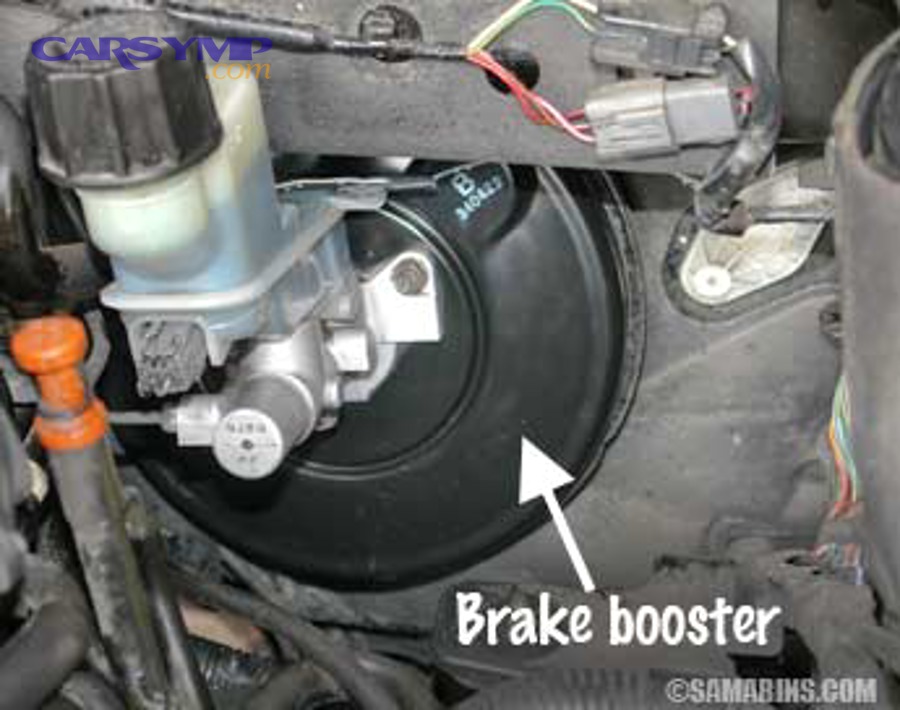
Can a failing brake booster cause a vacuum leak-like stall at idle?
Yes—a failing brake booster can cause vacuum-leak-like stalling because a leaking booster diaphragm introduces unmetered air and can suddenly change engine load when you press the brake.
More specifically, suspect the booster if you notice:
- Hissing near the pedal area
- Hard brake pedal or reduced brake assist
- Idle drop or stall when holding the brake at a stop
A cautious isolation method (if safe and you understand your vehicle) is to inspect the booster vacuum line and check valve for cracks and loose fitment, then retest idle behavior. Any brake-assist issue is a safety priority.
Can an EVAP purge valve stuck open mimic a vacuum leak and cause stalling?
Yes—an EVAP purge valve stuck open can mimic a vacuum leak because it can pull vapor/air into the intake at the wrong time, leaning or destabilizing idle and causing stalls after refueling or during idle transitions.
To illustrate, purge faults often show patterns like:
- Rough idle shortly after refueling
- Stalling when coming to a stop
- Behavior that changes when purge lines are isolated
Because purge flow is “uncommanded air/vapor,” it can look like a vacuum leak on scans and symptoms.
Can a dirty throttle body or idle control strategy cause stalling even with no vacuum leaks?
Yes—a dirty throttle body (or idle-air control issue on older setups) can cause stalling even with no vacuum leaks because airflow control becomes inconsistent exactly where the engine needs precise control: near closed throttle at idle.
However, the feel is often different:
- Idle may stick high then drop suddenly
- Stalling may happen when the throttle “snaps” closed
- Cleaning and relearn procedures (vehicle-specific) may be required
This is where a vacuum leak vs. “not a leak” antonym is useful: sometimes the issue is too little controlled air, not too much unmetered air.
When should you stop DIY testing and get professional diagnostics?
Yes—you should stop DIY testing and get professional diagnostics when the symptoms include safety risk, inconsistent behavior you can’t reproduce, or stalling that occurs beyond idle.
More importantly, when engine stalls while driving, you need to consider ignition timing and signal integrity—especially Crank/cam sensor intermittent failure signs like sudden random stalls, no-start moments, or intermittent misfires.
Professional help is also smart when:
- You need a smoke machine but can’t access one
- Electronic EGR diagnostics require live data you don’t have
- The vehicle stalls unpredictably in traffic
- You’ve replaced parts without confirmation and the symptom persists