


If you need a clear, reliable way to find where fuel vapors are escaping, a smoke test (also called a vapor-leak test) is the fastest “see-it-to-believe-it” method for checking the EVAP system. In this guide, you’ll learn exactly how to connect a smoke machine, seal the system correctly, introduce smoke safely, and pinpoint the leak path without guessing.
Because EVAP diagnostics can feel abstract—valves opening and closing, vapors moving through charcoal, pressure tests running in the background—you’ll also get a practical overview of how the EVAP system is designed to work and which parts commonly fail. That foundation makes each smoke-test step make sense, so you’re not just following instructions blindly.
To keep the process realistic for both driveway and shop work, we’ll cover the tools you actually need (and the optional tools that make testing cleaner), the best connection points (service port vs. purge line), and the specific sealing strategies that prevent smoke from escaping the “wrong” place.
Introduce a new idea: once you understand the procedure, the real skill is interpreting what you see—what smoke from the rear canister area really means, why you might see no smoke even with a leak code, and how to re-test after repairs so you can close the hood with confidence.
What is an EVAP smoke test (vapor-leak test) and what does it diagnose?
An EVAP smoke test is a low-pressure diagnostic method that fills the evaporative emissions system with visible vapor so you can locate leaks, faulty seals, and unmetered openings by watching where smoke escapes.
To understand why this works so well, it helps to remember what the EVAP system is trying to do: keep gasoline vapors from venting to the atmosphere, store those vapors in a charcoal canister, and then purge them into the engine to be burned when conditions are right. A tiny crack in a hose, a loose clamp, a hardened O-ring, or a valve stuck slightly open can all create a leak that triggers EVAP codes—yet the leak can be nearly impossible to find by smell alone.
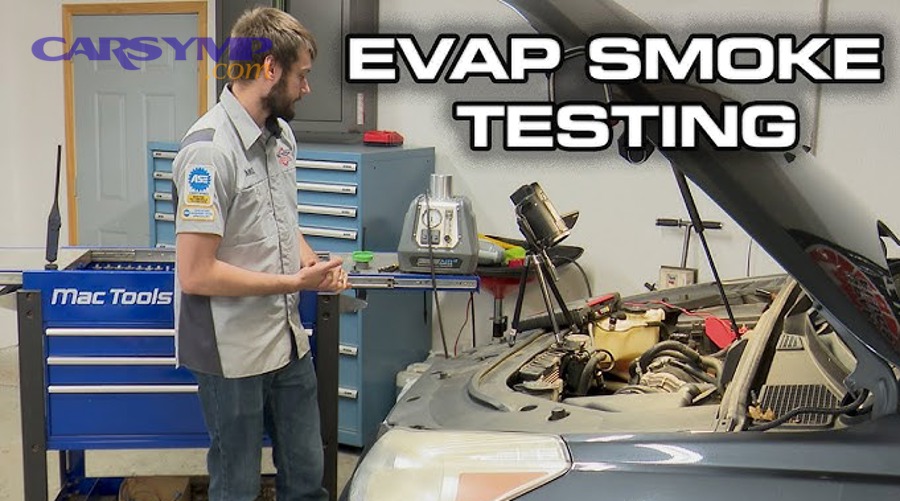
Specifically, a smoke test diagnoses physical problems in the vapor containment path: split rubber lines, damaged plastic tubes, leaking canister seams, compromised filler neck seals, tank sender O-rings, and valves that won’t seal when commanded. It can also reveal “human-caused” issues like a loose gas cap, missing cap seal, or a service port core that doesn’t seal after someone tested the system.
In real-world EVAP diagnostics, smoke testing is popular because it turns an invisible problem (escaping vapor) into a visible one (escaping smoke). It also supports a disciplined workflow: seal the system, add smoke, observe, repair, then re-test. That workflow reduces repeat comebacks and prevents random parts replacement.
According to a study by the University of California, Berkeley from the Department of Civil and Environmental Engineering, in 2009, fuel vapor emissions accounted for about 31% (±2%) of gasoline-related VOC in Riverside, highlighting how significant vapor losses can be when containment is compromised.
Does an EVAP smoke test find the exact leak location?
Yes—an EVAP smoke test can find the exact leak location because smoke visibly escapes at the leak point, because the test uses low pressure that flows through the same vapor paths the system normally seals, and because you can isolate sections to narrow the source quickly.
Next, that “exact location” depends on doing three fundamentals correctly. First, you must create a sealed test environment—if the system is venting to atmosphere normally, smoke may exit at a vent filter and mislead you. Second, you must introduce smoke at a connection point that lets smoke reach the suspected leak area. Third, you must watch carefully, because the smallest leaks may produce only a thin, slow wisp.
In practice, most people lose accuracy when they rush sealing steps or skip isolation. For example, if the purge path is open to the intake manifold, smoke can drift toward the engine bay and look like an “engine-side leak” even if the original problem is at the rear vent valve. When you seal properly and use controlled smoke flow, the leak location becomes obvious.
What EVAP components are involved in a smoke test and where do leaks usually occur?
There are 7 main EVAP component groups involved in a smoke test: the fuel cap/filler neck, fuel tank and seals, vapor lines/hoses, charcoal canister, purge valve and purge line, vent valve/vent filter, and the EVAP service port (if equipped), based on where vapors can escape or be intentionally routed.
Then, you can use those groups as your mental map while you test:
- Fuel cap & filler neck: A worn cap seal, a damaged filler neck lip, or corrosion can leak and set “cap loose” style codes.
- Fuel tank & seals: Sender unit O-rings, tank seam issues, rollover valve seals, or cracks on older plastic tanks can leak.
- Vapor lines/hoses: Brittle rubber, rodent damage, quick-connect fittings not fully seated, and heat-cracked plastic lines are common.
- Charcoal canister: Cracked housings, saturated charcoal, or damaged fittings can leak and also cause flow issues.
- Purge valve & purge line: A purge valve that doesn’t seal can mimic a leak by bleeding pressure/vapor to the intake.
- Vent valve & vent filter: A vent valve stuck open prevents sealing; a clogged filter causes abnormal flow behavior.
- EVAP service port: The cap, valve core, or adapter seal can leak during testing—always verify this early.
Most leaks show up at connection points and seals because those areas flex, heat cycle, and get serviced. That’s why the best smoke-testing habit is to scan the “easy leak zones” first (cap, service port, quick-connects) before you start disassembling anything major.
What tools and supplies do you need to smoke test an EVAP system?
There are 2 tool tiers for an EVAP smoke test: a basic setup (smoke machine + adapters + plugs) for finding obvious leaks, and an advanced setup (scan tool control + isolation accessories) for faster pinpointing and fewer false positives, based on how precisely you can seal and command the system.
To better understand what you truly need, start with the purpose of each item: you need a controlled smoke source, a way to connect it without leaks, and a way to seal openings so the smoke is forced to reveal the fault. Everything else simply improves speed, safety, and interpretive clarity.
Basic tool list (works for most DIY and many shop situations):
- Smoke machine (regulated low pressure): The core tool that generates vapor and provides controlled airflow.
- EVAP service port adapter set: Lets you connect cleanly to the port (often under a green cap) if the vehicle has one.
- Rubber plugs / caps: Seal hoses, vent outlets, or disconnected lines during isolation.
- Flashlight: Strong, directed light helps you see thin wisps along dark underbody areas.
- Safety gear: Eye protection and gloves; ventilation matters because smoke fluid is not “fresh air.”
Advanced tool list (makes EVAP diagnosis faster and more accurate):
- Scan tool with bi-directional controls: Command the vent valve closed and command purge behavior to isolate sections.
- Soapy water spray: Helpful when smoke is faint—bubbles can confirm micro leaks at seams or fittings.
- Optional UV dye capability: Some professional machines can add UV-trace dye to show leaks that smoke alone may not reveal.
Because EVAP testing is essentially controlled “leak physics,” the most important “supply” is patience and process discipline. A careless adapter seal can create a test leak that looks exactly like a vehicle leak. When you treat the setup like a sealed lab experiment, the results become trustworthy.
Many smoke machine instructions emphasize using low pressure and watching a gauge/flow behavior to confirm leakage and leak size ranges during testing, reinforcing that EVAP leak diagnosis is a controlled-pressure process, not a brute-force air blast.
Do you need a scan tool to smoke test an EVAP system?
No—you do not need a scan tool to smoke test an EVAP system because you can still fill the vapor lines with smoke, you can still spot obvious physical leaks visually, and you can still confirm improvements after EVAP system repair by re-testing the same sections.
However, a scan tool becomes a major advantage when the system will not naturally seal during your test. Many EVAP systems are designed to vent to atmosphere through a vent valve/filter during normal conditions. If you cannot command the vent valve closed (or temporarily seal it correctly), smoke can exit at the vent path and make you think the “system is leaking everywhere.”
In addition, a scan tool helps you diagnose valve behavior, not just hose cracks. If the vent valve won’t close when commanded, your smoke test may never build stable pressure—an immediate clue in the “Purge valve vs vent valve failure signs” decision tree: a purge valve leaking often bleeds smoke toward the engine, while a vent valve stuck open often vents smoke toward the rear canister/vent area.
Which connection point should you use: EVAP service port or purge line?
The EVAP service port wins for speed and convenience, the purge line is best for vehicles without a service port or when you need direct control of routing, and the vent-side connection is optimal when you want to isolate rear components, based on access and isolation goals.
Meanwhile, the choice becomes simpler when you match the connection point to your question:
- If your question is “Is there any leak?” start at the service port because it’s designed for testing and is usually easy to reach.
- If your question is “Is the purge path leaking into the intake?” connect near the purge line and isolate intake routes.
- If your question is “Is the leak near the canister/vent area?” connect closer to the rear vapor line and seal forward paths.
In general, begin with the simplest path that gives you clean, repeatable results. If results are confusing, switch connection points and isolate sections until the smoke behavior tells one clear story.
How do you smoke test an EVAP system step-by-step (beginner-friendly workflow)?
A beginner-friendly EVAP smoke test is a 7-step method—prep, connect, seal, pressurize lightly, introduce smoke, inspect systematically, and re-test after fixes—designed to reveal vapor leaks without damaging components or chasing false paths.
Below, the key is to treat the procedure like a checklist-driven diagnostic, not a one-shot trick. When you follow the same sequence each time, your results become comparable, and your confidence goes up with every test.
Step-by-step workflow:
- Confirm the problem: Note EVAP-related symptoms (fuel smell, hard-to-fill tank, intermittent check engine light) and any codes if available.
- Prepare the vehicle safely: Engine off, cool area, no sparks/flames; work in ventilation.
- Choose your connection point: Service port (common), purge line, or rear vapor line depending on access.
- Seal the system: Close/command the vent valve or temporarily seal vent paths so smoke is forced to escape only through leaks.
- Lightly pressurize and stabilize: Use regulated low pressure; watch for immediate “won’t build” behavior.
- Introduce smoke and inspect methodically: Start near connection points, then move along known leak-prone areas.
- Repair, then re-test: Fix the found leak and repeat the same test conditions until smoke no longer escapes.
To make this even more practical, the table below summarizes what your smoke behavior usually means at each stage, so you can diagnose while you test.
| What you observe | What it usually means | What to do next |
|---|---|---|
| Smoke escapes at your adapter/port | Test setup leak (not vehicle leak) | Reseat adapter, check O-rings, verify port core sealing |
| System won’t stabilize; smoke vents freely at rear | Vent path open or vent valve stuck open | Command vent closed (scan tool) or seal vent outlet correctly |
| Smoke appears near intake/purge line | Purge valve not sealing or line leak | Isolate purge line; test purge valve sealing behavior |
| Thin wisp at a fitting or seam | Small leak (micro crack or seal) | Use bright light, soapy water, and patience; repair and re-test |
Many manufacturer-style instructions also emphasize sealing the EVAP system from atmosphere and testing with the engine off to reduce risk, reinforcing that the method is about controlled conditions and careful observation.
What are the exact steps to prep the vehicle before introducing smoke?
Prepping the vehicle means shutting the engine off, removing ignition risks, selecting a safe connection point, and planning your inspection route, because EVAP smoke testing relies on stable conditions, clear visibility, and consistent sealing.
To begin, set yourself up for success with a repeatable prep routine:
- Engine OFF and cool area: Avoid testing near hot exhaust parts or ignition sources; smoke fluid can be flammable if mishandled.
- Ventilate your workspace: Work outdoors or with doors open and fans if indoors.
- Locate key components: Identify the EVAP service port (often under a green cap), the purge valve area (engine bay), and the canister/vent area (often near the tank).
- Baseline quick checks: Verify the fuel cap seal looks intact and that obvious vapor lines are not disconnected.
Next, decide whether you’re doing a broad test (“find any leak”) or a targeted test (“confirm whether the vent valve is sealing”). That single decision determines whether you connect at the service port, the purge side, or the rear vapor line.
How do you seal the EVAP system correctly so smoke doesn’t escape the wrong place?
You seal the EVAP system by closing the vent path, blocking unintended open routes, and ensuring your adapters don’t leak, because smoke must be forced to escape only through an actual fault for the test to stay trustworthy.
Specifically, sealing is where most beginners accidentally create “phantom leaks.” Use this practical sealing logic:
- Seal/command the vent valve: If you have a scan tool, command the vent solenoid closed so the system is isolated from atmosphere.
- Control the purge path: If smoke is flowing toward the engine and you want to focus on the rear, plug or isolate the purge line so you’re not filling the intake path.
- Verify adapter integrity: Test leaks often come from loose clamps, dry O-rings, or a service port core that doesn’t seal.
- Use “section testing” when needed: Plug one branch at a time so smoke is forced down the branch you want to evaluate.
More importantly, watch for the sealing clue that tells you a vent valve is the real problem: if you command the vent closed and smoke still vents freely from the vent filter area, that pattern strongly suggests a vent valve that cannot seal—one of the clearest “Purge valve vs vent valve failure signs” you can observe without removing parts.
How long should you run the smoke machine and what pressure is safe?
You should run the smoke machine long enough to fill the EVAP system and reveal stable smoke behavior, while keeping pressure low and regulated, because EVAP components are not designed for high-pressure air and excessive pressure can create new leaks.
Then, treat “safe pressure” as a controlled range guided by your equipment instructions and the idea of gentle pressurization. Many smoke machine manuals describe low-pressure operation and gauge-based verification, such as pressurizing a sealed system to a low level and observing whether pressure holds or falls—an approach that emphasizes control rather than force.
Practically, this means:
- Start with minimal flow: You want smoke movement, not a blast of air.
- Wait for saturation: Give smoke time to travel through long vapor lines to the rear of the vehicle.
- Adjust slowly: If you increase flow too quickly, you can push smoke out of normal venting paths and confuse the result.
- Stop and inspect repeatedly: Often, the best leak visibility happens when flow is steady and gentle.
If you’re using a machine with a gauge/flow meter, let the instrument guide you. A stable, low-pressure condition with decreasing pressure indicates a leak; stable pressure that holds indicates a sealed system under the current test configuration.
How do you interpret smoke test results and confirm the repair?
You interpret EVAP smoke test results by matching where smoke escapes to the component group that normally seals that area, then confirming the repair by repeating the same sealed test until no smoke escapes and the system holds stable behavior.
Let’s explore the most important interpretive principle: smoke only tells the truth when the system is sealed the way you think it’s sealed. If the vent path is open, smoke exiting at the vent filter may be normal behavior—so your first interpretive step is always to confirm sealing status (commanded closed vs. open to atmosphere).
Once sealing is confirmed, interpretation becomes straightforward:
- Smoke at a fitting or hose: Physical leak at that joint—often a cracked line, loose clamp, or damaged quick-connect seal.
- Smoke at the fuel cap/filler neck: Cap seal, filler neck lip, or neck-to-tank seal issue.
- Smoke at the canister housing: Cracked canister, damaged fitting, or seam leak; sometimes also indicates impact damage.
- Smoke toward the engine/purge area: Purge valve leaking, purge line crack, or intake-side routing issue.
For EVAP system repair, the highest-leverage habit is re-testing immediately after the fix, before you reassemble shields and covers. When you can still see the repaired joint, you can verify that the smoke no longer escapes under the same conditions. This prevents the classic cycle of clearing codes, waiting for monitors, and then learning later that the leak is still there.
Many diagnostic procedures also recommend re-testing after repairs until no leaks are found, reinforcing that confirmation is part of the method, not an optional extra.
If smoke comes out near the rear canister/vent area, is that always a leak?
No—smoke near the rear canister/vent area is not always a leak because the vent path may be open by design, because the vent valve may not be commanded closed during the test, and because smoke can exit at a vent filter outlet even when the rest of the system is sealed.
However, the key is to separate “normal vent exit” from “uncontrolled leak.” Use this quick logic:
- If the vent valve is open: Smoke exiting at the vent filter is expected, so it doesn’t automatically identify a leak.
- If the vent valve is commanded closed (or sealed) and smoke still exits freely: That strongly suggests the vent valve is stuck open or cannot seal.
- If smoke escapes from the canister body or fittings: That points to a physical leak in the canister assembly or connections.
This is exactly where “Purge valve vs vent valve failure signs” become practical instead of theoretical: a vent valve that won’t seal produces chronic inability to isolate the system; a purge valve that won’t seal tends to route smoke forward toward the engine side.
What should you do if you see no smoke but still have EVAP leak codes?
“No smoke” wins as the most common result of poor sealing, “too-small-to-see” leaks are best handled with slower saturation and secondary methods, and valve-related routing issues are optimal for isolation testing with a scan tool, based on why smoke isn’t appearing where you expect.
Specifically, work through this decision path before you conclude the system is fine:
- Check for setup leaks first: If your adapter leaks, smoke may never build into the system—it just escapes at your connection.
- Confirm the system is sealed: If the vent path is open, smoke may exit in a place you’re not observing.
- Increase observation quality, not pressure: Use brighter light, inspect slower, and watch “quiet” zones like the top of the tank area and sender seals.
- Isolate sections: Plug the purge line to keep smoke from disappearing toward the engine; plug rear lines to focus on engine bay routing.
- Consider intermittent leaks: Some seals leak only when cold/hot or when the vehicle flexes; re-test at different conditions if needed.
For DIY work, it helps to formalize this as a “DIY EVAP troubleshooting checklist” so you don’t repeat steps or skip the obvious. If you can keep your test configuration consistent (same connection point, same sealing approach, same inspection order), you’ll be able to compare one test to the next and spot changes that reveal the real issue.
How do you re-test after repair to make sure the EVAP leak is fixed?
You re-test by repeating the same sealed smoke test configuration, verifying that no smoke escapes at the repaired point, and confirming stable system behavior under low pressure, because the only meaningful “pass” is a repeatable pass under the same conditions.
Then, use this re-test sequence:
- Leave components accessible: Don’t reinstall shields until the re-test passes.
- Run the same connection and sealing strategy: Consistency is what makes the confirmation valid.
- Inspect the repaired area first: Confirm the original leak is truly gone.
- Inspect the surrounding joints: Repairs can disturb nearby connectors or hoses.
- Only then clear codes/drive if needed: Don’t rely on time to “prove” a repair when smoke can prove it now.
When this process becomes routine, EVAP system repair shifts from “hope it works” to “verify it works.” That is the difference between swapping parts and doing diagnostics.
How do you isolate small EVAP leaks and avoid false positives during smoke testing?
To isolate small EVAP leaks, use section-by-section sealing with controlled low-pressure smoke, and to avoid false positives, verify your test setup seals and confirm valve states, because micro leaks require precision while test leaks can mimic real failures.
More specifically, small leaks are challenging for two reasons: the smoke wisp is faint, and the EVAP system has multiple intentional flow paths that can mislead you if you don’t control them. The solution is to shrink the “search space” until the smoke can only escape through one suspected branch.
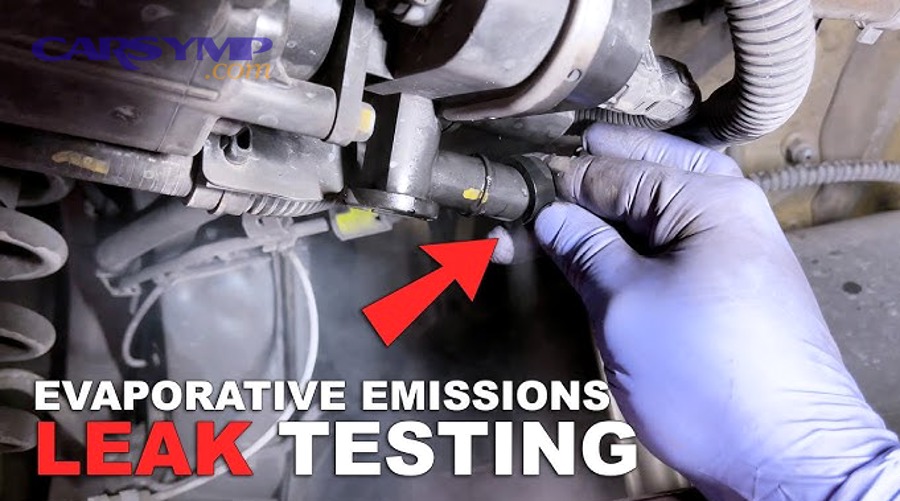
Use this isolation strategy:
- Start broad, then narrow: Begin with a full-system test to see general behavior, then isolate front vs. rear sections.
- Control the vent valve: Command it closed if possible; if it won’t close, that becomes a primary suspect.
- Plug branches intentionally: Plug purge line to prevent smoke migration into intake, or plug rear line to focus on engine bay.
- Inspect with “light discipline”: Use a strong flashlight at a low angle; thin smoke is easier to see against dark backgrounds.
- Confirm with secondary cues: Soapy water bubbles, smell near a fitting, or a consistent pressure drop can confirm what your eyes barely see.
Finally, treat the whole process as a repeatable workflow. If you’re chasing a “small leak” code, you’re doing precision work—so a written “DIY EVAP troubleshooting checklist” prevents random, inconsistent setups that produce inconsistent results.
How do you smoke test for a “small leak” (0.020”) versus a “large leak” (0.040”)?
A “small leak” test requires slower saturation and closer inspection, while a “large leak” test reveals itself quickly with obvious smoke escape, because 0.020-inch-sized leaks release smoke gradually whereas 0.040-inch-sized leaks vent smoke rapidly and prevent stable sealing.
However, the best way to treat leak size is operational, not theoretical:
- Small leak approach: Keep flow gentle, give smoke time to fill long lines, and inspect with light and patience at seals and seams.
- Large leak approach: Look for immediate smoke exit at a disconnected hose, missing cap seal, broken line, or stuck-open valve.
Many smoke machine guides describe using flow behavior to indicate small versus large leak ranges, reinforcing the practical reality that leak size changes how quickly the system stabilizes and how aggressively smoke escapes.
What are the most common false positives in EVAP smoke tests?
There are 6 common false positives in EVAP smoke tests: adapter leaks, service port core leakage, vent path not sealed, purge path open to intake, loose plugs during isolation, and smoke exiting from an intended vent outlet, based on setup-related escape routes rather than vehicle faults.
Next, prevent these false positives with a quick pre-check routine:
- Adapter and O-ring check: Reseat and lightly lubricate O-rings if appropriate so the seal is airtight.
- Service port integrity: Verify the cap and core aren’t leaking; a leaking core can look like a “mystery” under-hood leak.
- Vent control verification: Confirm whether the vent valve is open or commanded closed; don’t interpret vent exit as a leak unless it should be sealed.
- Purge isolation: If the purge path is open, smoke can drift into the intake system and confuse the origin.
- Plug security: A loose plug can leak only when flow increases, creating an intermittent false result.
When you eliminate false positives first, your remaining smoke escapes become highly credible—and that’s when EVAP diagnostics starts feeling “easy.”
Which EVAP trouble codes most often lead to smoke testing, and what do they usually mean?
There are 4 common EVAP code groups that lead to smoke testing—gross leak, small leak, cap-related leak, and vent/purge performance—because each group implies a containment or sealing failure that smoke can reveal visually when the system is isolated.
Besides the code itself, the pattern matters. A code that returns immediately after clearing often points to a major leak or a stuck-open valve. A code that returns after a few drive cycles often points to a smaller leak or an intermittent sealing problem.
- Gross leak-style codes: Often caused by a disconnected hose, missing cap seal, broken line, or vent valve stuck open.
- Small leak-style codes: Often caused by hardened seals, hairline cracks, minor fitting leaks, or a weak cap seal.
- Cap-related codes: Often caused by cap seal issues or filler neck sealing problems.
- Vent/purge performance codes: Often caused by valves that do not respond correctly, clogged vent filters, or routing issues.
According to a smoke machine instruction manual that outlines EVAP-specific procedures, the process often includes closing the EVAP vent solenoid (commonly via scan tool) to isolate the system from atmosphere before evaluating pressure loss and locating leaks with smoke.