


DIY injector cleaning can help—yet it’s also one of the easiest “simple fixes” to turn into a misdiagnosis, a bigger drivability problem, or a fuel-system mess if you choose the wrong method, overdose chemicals, or skip safety basics. The safest approach is to avoid risky shortcuts and match your method to the real problem you’re trying to solve.
Next, this guide breaks down which DIY options are low-risk versus high-risk, so you can choose a safe at-home path that fits your tools, your engine type, and your comfort level—without guessing.
Then, you’ll learn how to tell when injectors are actually the issue, because many “injector symptoms” are caused by ignition, air leaks, sensors, or fuel pressure problems that cleaning won’t fix. If you diagnose first, you avoid wasting money and time.
Introduce a new idea: once you understand the risks and the safest methods, you can make a clear decision—DIY cleaning, professional service, or replacement—based on what your engine is telling you.
Is DIY fuel injector cleaning risky (Yes/No)?
Yes—DIY fuel injector cleaning is risky because (1) you can misdiagnose the problem and chase the wrong fix, (2) you can worsen deposits or clogging by using the wrong chemistry or dosage, and (3) you can create safety hazards if you disturb fuel-system components without proper precautions.
More importantly, those risks are avoidable when you choose the least invasive method that still matches the symptom and you stop before “cleaning” becomes “experimenting.”
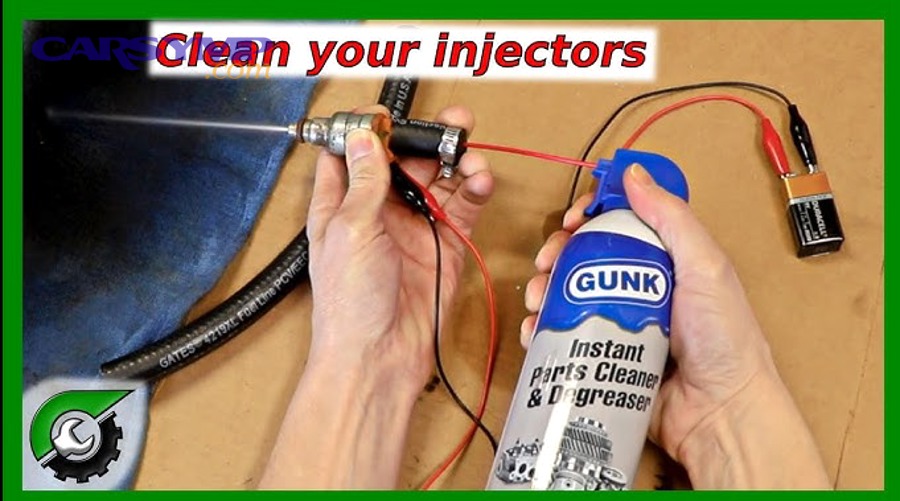
Which DIY injector-cleaning methods are generally low-risk vs high-risk?
Pour-in cleaners win in lowest risk, pressurized on-car kits are best for stronger cleaning with moderate risk, and off-car/bench cleaning is optimal for maximum verification but highest complexity—because each method changes how much you disturb the system and how much control you have over results.
To better understand why that matters, think of injector cleaning as a “risk ladder”:
- Lowest-risk: Top-tier gasoline + pour-in detergent cleaner
- You do not open the fuel system.
- You reduce the chance of fuel leaks or broken fittings.
- You’re mostly relying on detergent action over time.
- Moderate-risk: Pressurized rail cleaning kit (on-car)
- You may need to interact with fuel-system connections and seals.
- You can introduce air or contaminants if you’re careless.
- You can create stronger cleaning action—useful, but easier to overdo.
- Higher-risk: Removing injectors for cleaning
- You’re handling O-rings, seats, clips, and sometimes brittle connectors.
- You can tear seals or create a vacuum leak during reassembly.
- You can “fix” one issue and accidentally create two more.
- Highest-risk: Unverified DIY “homebrew” solvents or mixing chemicals
- Unknown compatibility with seals and plastics.
- Higher chance of dislodging debris quickly and clogging downstream components.
- Harder to predict drivability changes after treatment.
This is why “Fuel injector cleaning methods compared” is not just a convenience topic—it’s a safety topic. If you don’t need the higher-risk method, you don’t earn the benefit.
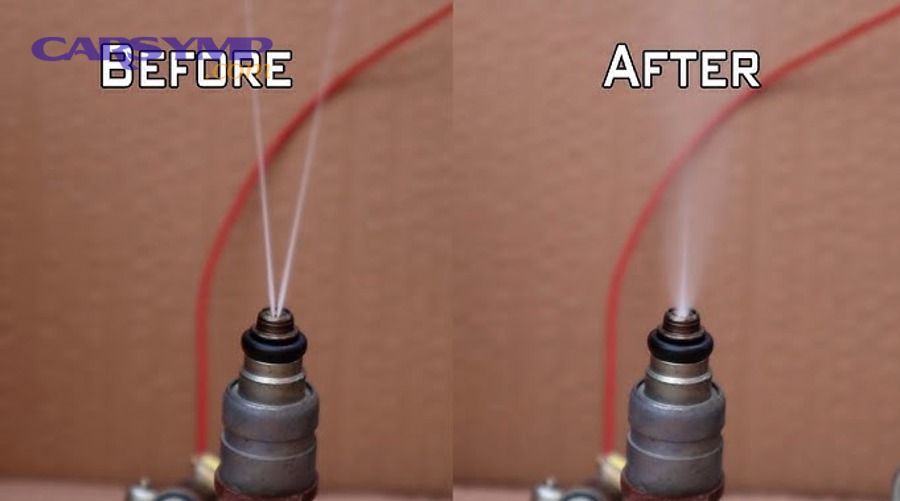
What are the most common DIY injector cleaning mistakes that cause damage?
The most common DIY mistakes are (1) treating the symptom without confirming injectors are the cause, (2) overdosing cleaner or stacking products, and (3) disturbing seals and connections and then reassembling without replacing worn parts.
Next, here’s what those mistakes look like in real life—so you can avoid them:
- Mistake 1: Cleaning as a first step instead of a last step
- A rough idle from a vacuum leak or worn spark plugs does not improve with injector cleaner.
- You lose time and may mask the real issue until it becomes a misfire.
- Mistake 2: “More chemical = more clean” thinking
- Overdosing can loosen deposits too quickly or create temporary drivability issues.
- Mixing cleaners can be unpredictable and can waste money fast.
- Mistake 3: Skipping contamination control
- Dirt introduced into a fuel connection can become a new clog.
- A tiny particle can affect injector spray quality because injector passages are extremely small.
- Mistake 4: Reusing old O-rings or forcing brittle connectors
- A small seal nick can become a fuel smell, a leak, or a vacuum leak—each of which creates new symptoms.
- Mistake 5: Ignoring warning signs after cleaning
- If drivability worsens sharply or you smell fuel, you stop and reassess.
- Pushing through can create more expensive consequences.
These errors are why DIY injector cleaning “fails” so often—it’s not always the product; it’s the process.
What does “injector cleaning” actually mean in a DIY context?
“Injector cleaning” is the process of removing or reducing fuel-derived deposits that restrict injector flow or distort spray patterns, usually using detergent chemistry or controlled cleaning equipment—yet it does not repair electrical failures, mechanical breakage, or fuel-pressure problems.
Then, once you separate “deposit cleanup” from “injector repair,” you can pick a method that fits your goal instead of gambling on a magic fix.
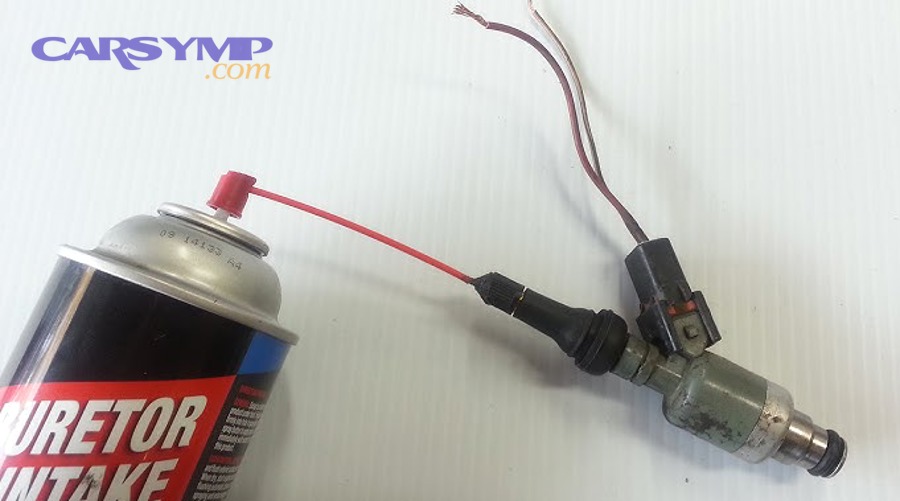
What problems can injector cleaning realistically solve—and what can’t it solve?
Injector cleaning wins for mild-to-moderate deposit restriction, while it cannot solve dead injectors, wiring faults, or fuel-pressure problems—because cleaning changes deposit load, not the injector’s electrical health or the pump’s ability to deliver fuel.
Specifically, here’s the realistic “can vs can’t” boundary:
Cleaning can help when:
- Idle quality is slightly rough and improves with load (early restriction signs).
- There’s evidence of imbalance (one cylinder consistently runs leaner/richer) after you rule out ignition and air leaks.
- The car has a history of poor fuel quality or long storage (varnish risk).
Cleaning cannot fix when:
- The injector coil is electrically open/shorted (a scanner or test often reveals this).
- The injector is physically leaking (dripping) or mechanically stuck.
- The engine has low fuel pressure from a weak pump, clogged filter (where applicable), or regulator issue.
- The misfire is driven by ignition (plugs/coils) or unmetered air (vacuum leak).
This is the first semantic anchor for the rest of the article: if the problem is not deposits, cleaning cannot deliver the outcome you want.
How do fuel injector cleaners work (detergents vs solvents) and why does dosage matter?
Fuel injector cleaners work by using detergent chemistry (often deposit-control additives) to dissolve or disperse deposits gradually, while stronger solvent-heavy approaches act faster but can be harsher—so dosage matters because too much “cleaning action” too quickly can create drivability side effects.
Moreover, your goal is not “maximum strength.” Your goal is controlled deposit reduction that restores spray quality and flow without creating new restrictions.
A practical way to think about it:
- Detergent-forward cleaners
- Designed to clean over a tank (or a few tanks).
- Lower risk when used as directed.
- Best for mild deposit issues and prevention.
- Aggressive solvent-forward cleaners
- Can dislodge material rapidly.
- Higher chance of temporary roughness if debris migrates.
- Higher chance of material compatibility issues if the product is poor-quality.
Research from the University of Birmingham’s School of Mechanical Engineering highlights why chemistry and dosage rate matter: injector deposits affect flow and spray characteristics, and detergents can control deposit formation when optimized for chemistry and dosage.
Do you actually need to clean your fuel injectors (Yes/No)?
No—most drivers do not automatically need injector cleaning because (1) many modern fuels already contain deposit-control additives, (2) many drivability issues that feel like injectors are caused by ignition or air leaks, and (3) cleaning only helps when deposits are the actual constraint.
Next, the smarter question becomes: “Do my symptoms match injectors, and did I rule out the common look-alikes?”
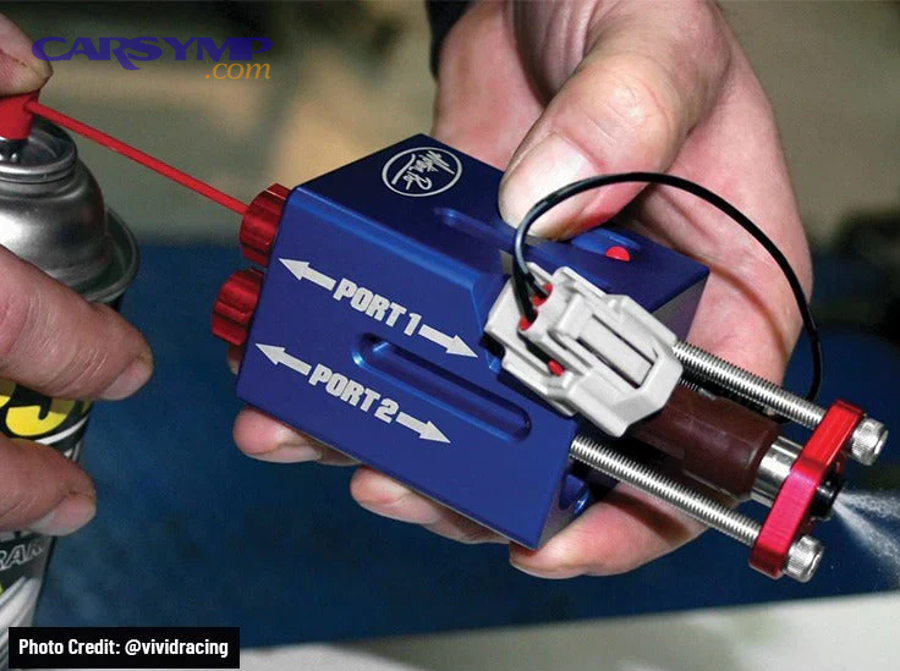
Which symptoms point to injectors—and which symptoms usually point elsewhere?
Injectors are more likely when you have consistent cylinder-specific lean/misfire behavior, while plugs/coils, vacuum leaks, or sensors are more likely when symptoms are random across cylinders or change dramatically with load and temperature.
For example, “Injector clog symptoms” often overlap with other issues, so you use patterns:
More injector-likely patterns
- A single-cylinder misfire that persists after swapping coil and plug.
- Rough idle that’s subtle at first and then becomes a recurring misfire as restriction worsens.
- One cylinder showing different behavior in fuel-trim or misfire counters.
More likely not injectors
- Misfire that jumps between cylinders without a pattern.
- Rough idle that improves immediately when you correct a vacuum leak.
- Hesitation paired with low fuel pressure or pump noise issues.
- Problems that start right after unrelated work (intake duct left loose, sensor unplugged).
MotorTrend notes that rough idle is a common symptom of a clogged injector and that worsening clogging can progress into a persistent cylinder misfire.
Also, keep this phrase in mind because it’s the diagnostic bridge you’re building: Misfire and rough idle linked to injectors is a pattern, not a guarantee. You confirm it with checks.
What quick checks can you do before cleaning to avoid misdiagnosis?
Before you clean, do quick checks that confirm the problem is deposit-related rather than ignition, air, or fuel pressure—because the fastest “fix” is the one that targets the correct system.
Below is a practical, DIY-friendly checklist that avoids deep disassembly:
- Scan for codes and freeze-frame data
- Look for misfire codes (often P0300–P030X).
- Use freeze-frame to see conditions when the fault occurred.
- Check the basics that mimic injector issues
- Intake hose clamps tight, no obvious vacuum leaks.
- Air filter condition.
- Spark plug service history.
- Use simple swap logic (when appropriate)
- If you can safely swap a coil or plug to another cylinder and the misfire follows, it’s not the injector.
- Observe fuel trims (if your tool shows them)
- Big positive trims can suggest lean conditions, but vacuum leaks can cause the same.
- Confirm the problem is repeatable
- Random, one-time glitches are not a reason to pour chemicals into the tank.
If you do these checks first, injector cleaning becomes a targeted intervention instead of a coin flip.
What are the specific risks of DIY injector cleaning?
There are three main risk groups in DIY injector cleaning: safety risk (fuel and fire), mechanical risk (seals, connectors, new leaks), and performance risk (making drivability worse by dislodging debris or treating the wrong problem).
More importantly, these risks cluster around one theme: the more you disturb the fuel system, the more you must control variables—cleanliness, reassembly quality, and method selection.
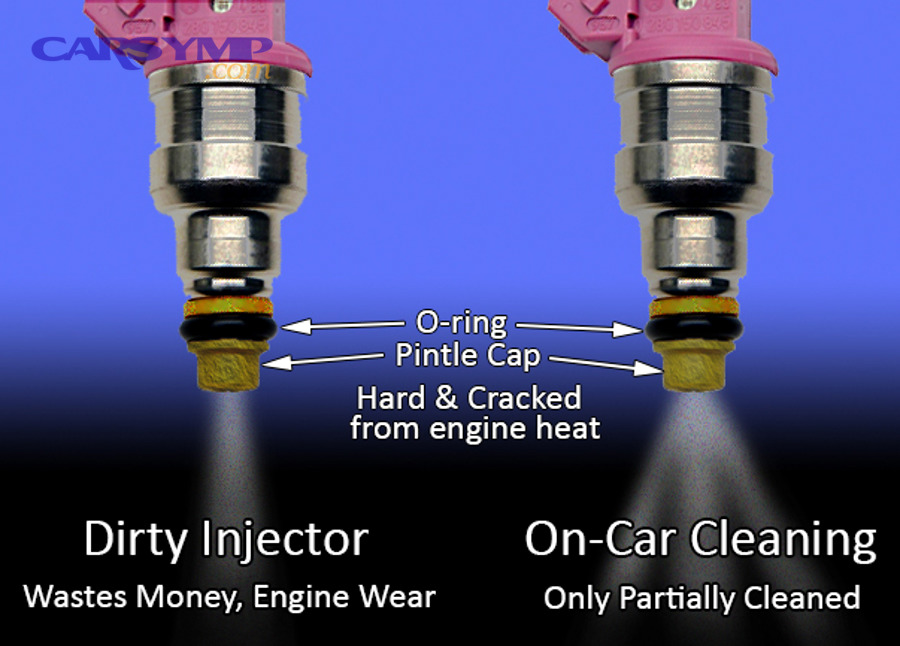
Can DIY injector cleaning cause a fuel leak or fire (Yes/No)?
Yes—DIY injector cleaning can cause a fuel leak or fire because (1) disturbed seals and fittings can leak, (2) fuel vapors can ignite if basic precautions are ignored, and (3) improper reassembly can create ongoing seepage that you only notice later.
Then, the safer mindset is: avoid opening the fuel system unless the benefit is worth it, and treat fuel-related work as higher-risk than most DIY tasks.
Practical prevention that stays within safe, general guidance:
- Follow the vehicle’s service information when interacting with fuel components.
- Replace damaged or hardened seals rather than “making them work.”
- Work in a ventilated area and keep ignition sources away.
- If you smell fuel afterward, treat it as an immediate stop condition.
This isn’t about fear—it’s about respecting that fuel-system mistakes have higher consequences than many other DIY mistakes.
Can injector cleaner make performance worse at first (Yes/No)?
Yes—injector cleaner can make performance worse at first because (1) loosened deposits can migrate and create temporary restriction elsewhere, (2) the engine may run differently while deposits dissolve and burn off, and (3) the underlying problem may not be injectors at all.
Moreover, “worse before better” is not a free pass to ignore red flags. You separate normal adjustment from dangerous symptoms.
Possibly normal short-term effects (mild, temporary):
- Slight roughness that improves after some driving.
- Minor change in idle feel that resolves as the tank runs down.
Stop-and-reassess red flags:
- Strong fuel smell or visible leak.
- Sharp, worsening misfire that wasn’t present before.
- Warning lights that appear immediately after treatment and persist.
The risk-reduction move is simple: choose mild methods first, and don’t stack treatments.
When should you NOT DIY because the risk outweighs the benefit?
You should not DIY when (1) the engine uses high-pressure direct injection and you’re not equipped to work safely around it, (2) symptoms suggest a mechanical or electrical injector failure, or (3) you already have safety warnings—fuel odor, leaks, or severe misfires—because cleaning won’t be your limiting factor.
Next, use these practical “do not DIY” signals:
- Recurring cylinder misfire that doesn’t respond to ignition swaps
- This may require injector balance testing or professional diagnosis.
- Known injector leakage or fuel dilution signs
- Cleaning does not fix a leaking injector body or damaged seat.
- High-mileage vehicle with multiple concurrent issues
- Cleaning can become a distraction from the real maintenance needs.
- Any sign of fuel leakage
- You solve the leak first—always.
This is how you protect your budget: you avoid spending time on the wrong layer of the problem.
What are the safest at-home methods to reduce injector risk?
There are three safest at-home methods to reduce injector risk: (1) use high-quality fuel and a reputable detergent cleaner as directed, (2) diagnose and confirm injector-likely patterns before adding chemicals, and (3) measure outcomes with scan data and symptom tracking rather than “seat-of-the-pants” guessing.
Then, once you treat injector cleaning as a controlled test, you can keep it safe and repeatable.
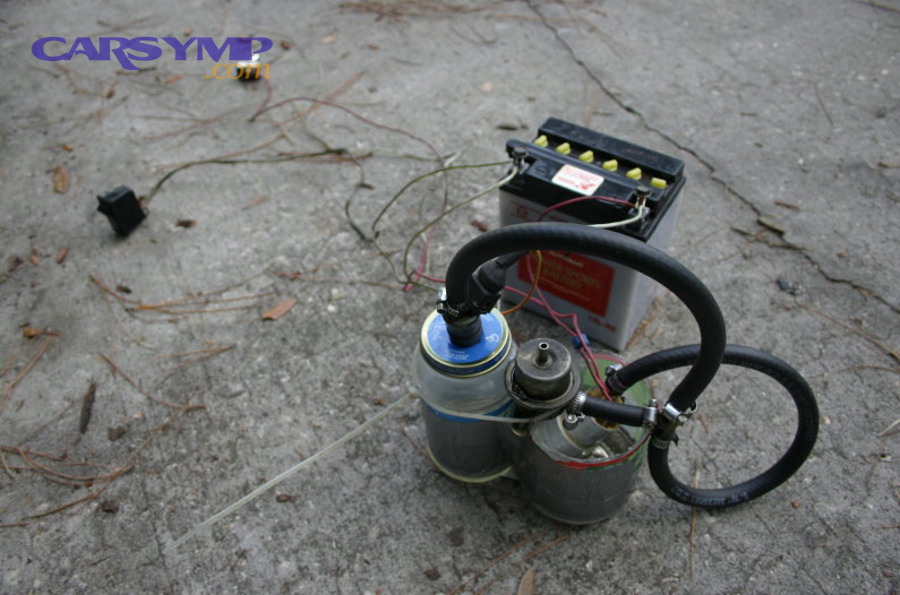
Which “safe DIY” method should you choose based on your situation?
A mild pour-in cleaner wins for prevention and mild symptoms, a stronger on-car method is best for confirmed deposit issues with DIY skill, and professional service is optimal for persistent cylinder imbalance—because each step up increases both cleaning power and risk.
Specifically, choose based on symptom strength and your confidence:
- If you have no clear symptoms (maintenance mindset)
- Stick to quality fuel and an occasional reputable detergent cleaner.
- Your goal is deposit control, not aggressive “restoration.”
- If you have mild rough idle but no hard misfire
- Start with the lowest-risk method and track changes.
- If you have a persistent cylinder-specific issue
- You’re beyond “generic cleaning” territory.
- Consider professional testing or cleaning, because verification matters.
This is how safe DIY stays safe: you don’t escalate methods without evidence.
How do you use a fuel injector cleaner safely (without overdoing it)?
Use a fuel injector cleaner safely by following three rules: (1) follow the label dosage exactly, (2) do not stack multiple cleaners in the same cycle, and (3) track results with objective symptoms (idle stability, misfire counts, trims) so you know whether the method worked.
Moreover, safe use is mostly about restraint:
- Pick one reputable product and run one full cycle.
- Avoid mixing products “just to be sure.”
- Don’t treat repeatedly without evaluating what changed.
- Plan for monitoring, not just pouring and hoping.
This is where the phrase fuel injector cleaning should feel like maintenance science—not folklore.
What results should you expect—and how soon should you see improvement?
You should expect modest improvement in idle smoothness and drivability within one to two tanks for mild deposit issues, while severe or cylinder-specific problems often won’t meaningfully improve without testing, cleaning off-car, or replacement.
In addition, you measure outcomes in two layers:
Subjective outcomes
- Smoother idle.
- Less hesitation.
- Better throttle response in low-load conditions.
Objective outcomes
- Reduced misfire counts on a scanner (if available).
- Fuel trims moving closer to normal (if your tool supports it).
- Fewer recurring injector-related codes.
If you see no change after a reasonable cycle, that’s not “bad luck”—it’s feedback that deposits weren’t the primary constraint.
DIY vs professional injector cleaning vs replacement: which is best for DIY car owners?
DIY wins in cost and simplicity, professional ultrasonic cleaning wins in verification and balance, and replacement is optimal for hard failures—because the “best” option is the one that matches the failure mode, not the one that sounds easiest.
More importantly, you make this decision faster when you compare methods by what they can prove.
Below is a quick decision table so you can see “Fuel injector cleaning methods compared” in a way that matches real DIY constraints (tools, risk, certainty):
| Method | Best for | What it can’t prove | Risk level | Typical outcome clarity |
|---|---|---|---|---|
| Pour-in detergent cleaner | Mild deposits, prevention | Flow balance, spray pattern | Low | Medium (symptom-based) |
| On-car pressurized cleaning | Confirmed deposits, stronger cleanup | Spray pattern verification | Medium | Medium |
| Professional ultrasonic + flow test | Cylinder imbalance, performance, repeat issues | Electrical failures beyond test limits | Low-to-medium (for you) | High |
| Replacement | Leaks, dead injector, mechanical failure | Root-cause deposits elsewhere | Medium (labor dependent) | High |
When is professional ultrasonic cleaning the better option than DIY?
Professional ultrasonic cleaning is better when (1) you have a cylinder imbalance that requires flow matching, (2) symptoms persist after low-risk DIY steps, and (3) you need verification—spray pattern and flow rate—before spending money on parts.
Then, professional service becomes a diagnostic tool, not just a cleaning service.
Here’s when it’s especially worth it:
- You’re chasing a recurring misfire that doesn’t follow ignition swaps.
- You suspect one injector is partially restricted compared to the rest.
- You’re building or maintaining a performance setup where flow balance matters.
University of Birmingham research reviewing injector deposit impacts notes that deposits can reduce injector flow and alter spray characteristics, which is exactly why spray/flow verification becomes valuable when symptoms are persistent.
When is replacement the only sensible fix (Yes/No)?
Yes—replacement is the only sensible fix when (1) the injector is leaking or physically damaged, (2) the injector has an electrical failure, and (3) cleaning has failed and objective data still shows the same cylinder-specific fault.
Moreover, replacement is not “giving up.” It’s choosing a method that matches the problem:
- A leaking injector is a hardware problem.
- An electrically failed injector is a hardware problem.
- A mechanically stuck injector is a hardware problem.
Cleaning targets deposits, so when deposits aren’t the limiting factor, replacement becomes the cleanest path to a stable result.
How do injector cleaning risks change for GDI vs port injection engines?
Injector cleaning risks change significantly between GDI and port injection because GDI systems involve higher pressures and different deposit mechanisms, while port injection systems are generally more forgiving—so a “one-size-fits-all” DIY approach can be safe on one engine and risky on another.
Next, this is where many DIYers get misled: they “clean injectors” and expect it to solve a problem that actually lives on the intake valves (a different deposit location).
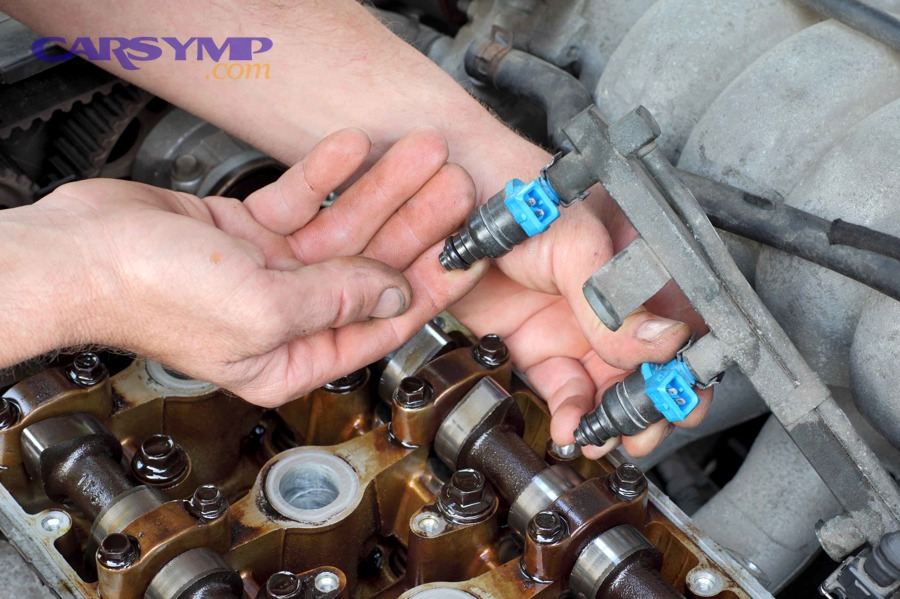
Why doesn’t injector cleaning fix intake valve deposits on many GDI engines?
Injector cleaning doesn’t fix intake valve deposits on many GDI engines because the fuel is injected directly into the combustion chamber, so fuel detergents don’t wash over the intake valves the way they do in port injection—meaning “injector cleaning” and “valve cleaning” are different targets.
More specifically:
- Port injection (PFI): fuel passes the intake valves → detergents can help keep valves cleaner.
- Direct injection (GDI): fuel bypasses intake valves → valves can accumulate deposits from other sources.
So if your symptom is actually airflow disruption from dirty valves, injector cleaning may not deliver the change you expect—even if the product is high quality.
What are the unique risk points in high-pressure GDI fuel systems for DIYers?
High-pressure GDI systems raise DIY risk because (1) the system operates at much higher pressures than port injection, (2) components and seals can be more sensitive to handling errors, and (3) small mistakes can create big drivability and safety consequences.
Then, the safe rule becomes: treat GDI fuel-system disassembly as “advanced DIY” unless you have the correct training, tools, and service information.
A practical decision guideline:
- If you’re only using a reputable pour-in detergent as directed, risk stays relatively low.
- If you’re planning to disturb high-pressure components, the risk climbs sharply—and professional support becomes the smarter move.
Which diagnostic clues suggest a single bad injector vs a system-wide fuel issue?
A single bad injector usually shows one-cylinder repeatability, while system-wide issues show multiple-cylinder patterns—because injectors fail individually more often than the whole fuel system fails evenly.
Use these clues as a quick classifier:
Single injector more likely
- One cylinder consistently misfires.
- The same cylinder remains problematic after ignition swaps.
- Cylinder-specific trim or misfire counters trend consistently.
System-wide issue more likely
- Multiple cylinders misfire randomly.
- Lean conditions across the board.
- Symptoms worsen under load in a way that suggests pressure delivery limits.
This is the difference between “clean one thing” and “diagnose the system.”
Are ultrasonic cleaning and flow testing worth it for performance builds or high-mileage cars (Yes/No)?
Yes—ultrasonic cleaning and flow testing are worth it for performance builds or high-mileage cars because (1) flow balance affects smoothness and performance, (2) testing verifies spray and delivery rather than guessing, and (3) it can prevent repeated part-swapping and wasted labor.
Moreover, this is the rare-but-valuable layer of injector work: you don’t just hope the injector is “clean,” you confirm it behaves like the others.
If you want one high-level takeaway from the University of Birmingham review: injector deposits can alter flow and spray, and the consequences can include misfiring and malfunction—so verification becomes more valuable as the cost of uncertainty rises.
Evidence (if any): According to a study by University of Birmingham from the School of Mechanical Engineering, in 2015, vehicles using high-sulphur fuel (around 523 ppm) were reported in the reviewed literature to reach about 30% injector flow-rate loss in fewer miles than low-sulphur fuel (around 20 ppm).