


If your car hesitates, loses power, or won’t start, you can diagnose a fuel delivery issue by matching symptoms to how fuel pressure, fuel volume, and flow restriction behave—then confirming with a simple checklist that narrows the cause to the fuel pump, fuel injectors, or the fuel filter.
You’ll get the clearest answers by looking at when the problem happens (cold start, idle, acceleration, highway load) and whether it feels consistent or intermittent, because those patterns often separate a weak pump from a clogged filter or injector imbalance.
You’ll also learn a practical at-home workflow—starting with no-tool checks, then basic electrical and pressure checks—so you can avoid swapping parts blindly and confidently decide what to fix first.
Introduce a new idea: once you can identify the most likely culprit, you can prevent repeat failures and avoid “false diagnoses” caused by system variations like returnless fuel systems, direct injection, contaminated fuel, or EVAP venting problems.
What does “fuel delivery issue” mean, and why do fuel pumps, injectors, and fuel filters fail in similar ways?
A fuel delivery issue is a problem in the fuel system’s ability to deliver the right amount of fuel at the right pressure to the engine, and pumps, injectors, and filters can feel similar because they all end up starving—or mis-metering—the engine under certain conditions.
To better understand why these failures overlap, focus on three fundamentals: pressure, volume, and restriction.
Fuel delivery problems often show up as:
- Hard starting or no-start
- Hesitation on acceleration
- Stalling at idle or when coming to a stop
- Loss of power at highway speeds or uphill
- Rough idle that feels like a misfire
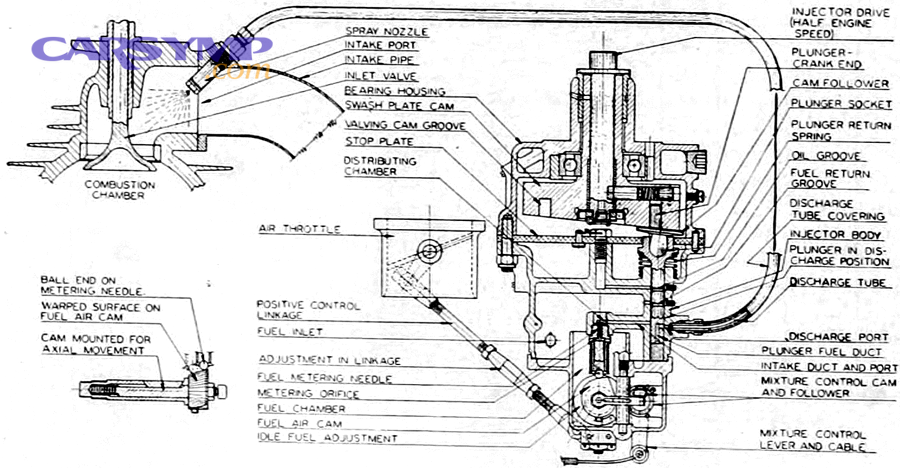
The reason these symptoms overlap is simple: an engine needs a stable air–fuel ratio, and the fuel system is the “supply chain.” If the supply chain drops pressure, can’t maintain volume under load, or becomes restricted, the engine runs lean (not enough fuel) or runs unevenly (cylinder-to-cylinder imbalance). Either one can feel like the engine is “choking.”
What are the fastest “is it fuel or not?” checks before blaming the pump, injectors, or filter?
Yes—there are fast checks that can tell you whether fuel delivery is even likely, and they work because they quickly separate fuel starvation from ignition, air, or sensor issues.
Next, use these quick triage checks before you chase fuel pump symptoms:
- Check the “when” pattern
- Only under load (acceleration/highway): often pump weakness or restriction.
- Mostly at idle/rough idle: often injector imbalance, vacuum leak, or ignition.
- Only after refueling: consider contaminated fuel or EVAP issues first.
- Listen for a basic fuel prime
- Many vehicles run the pump briefly when you turn the key to ON.
- No sound doesn’t prove a bad pump (some are quiet), but it’s a clue.
- Scan for codes if you can
- Misfire codes (like P030x) can point toward cylinder-specific problems (often injectors/ignition).
- Lean codes (like P0171/P0174) can point toward fuel starvation or an air leak.
- Smell and look
- Strong raw fuel smell, black smoke, or wet plugs can point toward a leaking injector (rich/flooding), not a weak pump.
- Visible leaks are a stop-now safety issue.
- Sanity-check recent maintenance
- If the fuel filter is overdue (and your car has a serviceable one), that’s a meaningful clue.
Is it safe to keep driving with suspected fuel delivery problems?
No—driving with a suspected fuel delivery problem is not safe in many cases because it can cause stalling in traffic, sudden power loss during merging, and engine damage if the engine runs persistently lean or misfires heavily.
Then, use these three “stop driving” reasons as your safety line:
- Stalling or near-stalling that could leave you stranded in an intersection.
- Severe hesitation or power drop during acceleration or at highway speed.
- Strong fuel smell or visible leakage, which raises fire risk.
If the car only has mild symptoms and remains predictable, you can sometimes drive a short distance for diagnosis—but treat that as a risk decision, not a default plan. The safest approach is to diagnose where it sits.
Which symptoms point to a bad fuel pump vs clogged fuel filter vs failing injectors?
Fuel pump problems win in “high demand” symptoms, fuel filter problems are best identified by “progressive restriction” patterns, and injector problems are most obvious in “uneven cylinder behavior” and rich/lean imbalances that don’t match a simple starvation curve.
However, symptom overlap is real, so the key is comparing conditions—idle vs load, cold vs hot, and consistent vs intermittent.
Here’s a quick comparison table to orient your diagnosis (it’s a symptom map, not a final verdict):
| Driving Condition / Clue | More consistent with a weak fuel pump | More consistent with a restricted fuel filter | More consistent with injector issues |
|---|---|---|---|
| Power loss at highway speed / uphill | Common | Common | Less common unless severe |
| Worse when fuel level is low | Common | Sometimes | Rare |
| Gradual worsening over weeks/months | Sometimes | Common | Sometimes |
| Rough idle that “feels like one cylinder” | Less common | Less common | Common |
| Fuel smell / black smoke / flooding | Rare | Rare | Common (leaking injector) |
| Hard start after sitting overnight | Possible (pressure bleed-down) | Possible | Common (leaking injector) |
| Surging/uneven acceleration | Possible | Possible | Common |
If the car loses power under acceleration or at highway speed, is it more likely the fuel pump or the fuel filter?
The fuel pump is more likely when power loss appears under high demand and worsens with heat or low fuel level, while the fuel filter is more likely when the problem feels progressively worse over time and behaves like a steady restriction that shows up during sustained load.
Next, use these practical differentiators:
Signs that lean toward a weak fuel pump
- The car feels okay at idle but falls flat when you demand fuel (hard acceleration, uphill, passing).
- Symptoms can be intermittent, especially as the pump heats up.
- The issue can be worse with a low tank, because the pump relies on fuel for cooling.
- You may notice a whine from the tank area (not guaranteed).
Signs that lean toward a restricted fuel filter
- The problem is progressive: mild hesitation becomes frequent, then stalling/hard start.
- Power loss feels consistent under sustained load, like the engine can’t “keep up.”
- The vehicle has a serviceable filter and it’s overdue or unknown history.
- The problem may improve slightly after sitting (restriction temporarily “relaxes”), then returns.
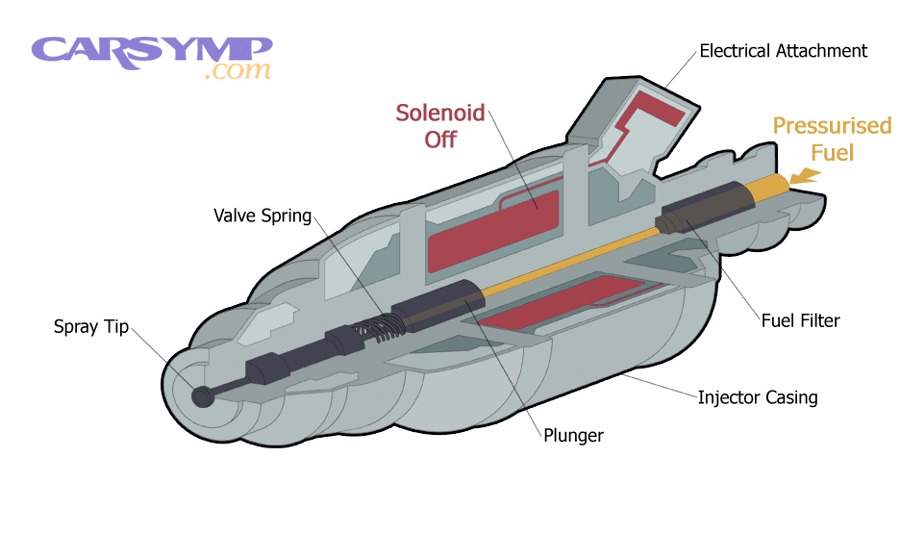
In a Hard start and stalling fuel delivery diagnosis, think of the filter as a narrowing pipe and the pump as a weakening motor. Both can starve the engine under load, but the filter tends to fail like a slow choke, while the pump tends to fail like a device that can’t maintain output when stressed.
If the engine idles rough or misfires, are injectors more likely than the pump or filter?
Yes—injectors are more likely when rough idle or misfire behavior is uneven and cylinder-specific, because injectors control fuel delivery at each cylinder and problems often show up as imbalance rather than a whole-engine starvation pattern.
Then, look for these injector-leaning clues:
- Misfire codes tied to one cylinder (for example, one cylinder consistently misfires).
- Idle instability that doesn’t correlate strongly with fuel level.
- Fuel smell, rich running, or black smoke (suggests leaking injector or over-fueling).
- Spark plug evidence: one plug looks wet/sooty compared to others.
A weak fuel pump usually affects the whole engine similarly. When one cylinder clearly behaves differently, injectors (or ignition) rise to the top of the list.
If the car cranks but won’t start (or hard-starts), which component is most likely and why?
A crank-no-start or hard-start is most likely caused by (1) insufficient fuel pressure (pump or severe restriction), (2) pressure bleeding down after shutdown (pump check valve or leak), or (3) leaking injectors that flood the engine, and the “why” depends on whether the engine seems starved or flooded.
Next, separate starved vs flooded starts:
Starved start (not enough fuel) often feels like:
- Long cranking, occasional “catch,” then it dies.
- Starts briefly with throttle (on some cars) but won’t stay running.
- No strong fuel smell at the tailpipe.
Likely culprits:
- Pump not building pressure
- Electrical supply problem to the pump
- Severe filter restriction (less common for sudden no-start, more common when progressive)
Flooded start (too much fuel) often feels like:
- Strong fuel smell
- Starts poorly when warm (hot restart) and may stumble heavily
- Sometimes starts if you hold the pedal down (varies by vehicle)
Likely culprits:
- Leaking injector(s)
- Fuel pressure regulator issues (on systems where applicable)
If you can distinguish “starved” from “flooded,” you can avoid wasting time on the wrong component.
How do you diagnose fuel pump vs injectors vs fuel filter step-by-step with a DIY troubleshooting checklist?
Use a process-of-elimination checklist in 6 steps—symptom pattern, maintenance context, basic electrical checks, pressure behavior, cylinder clues, and confirmation—so you can identify the most likely cause without guessing and reduce the chance of replacing the wrong part.
Below, follow this order because it minimizes cost and effort while maximizing diagnostic certainty.
What is the simplest test for a fuel filter restriction without special tools?
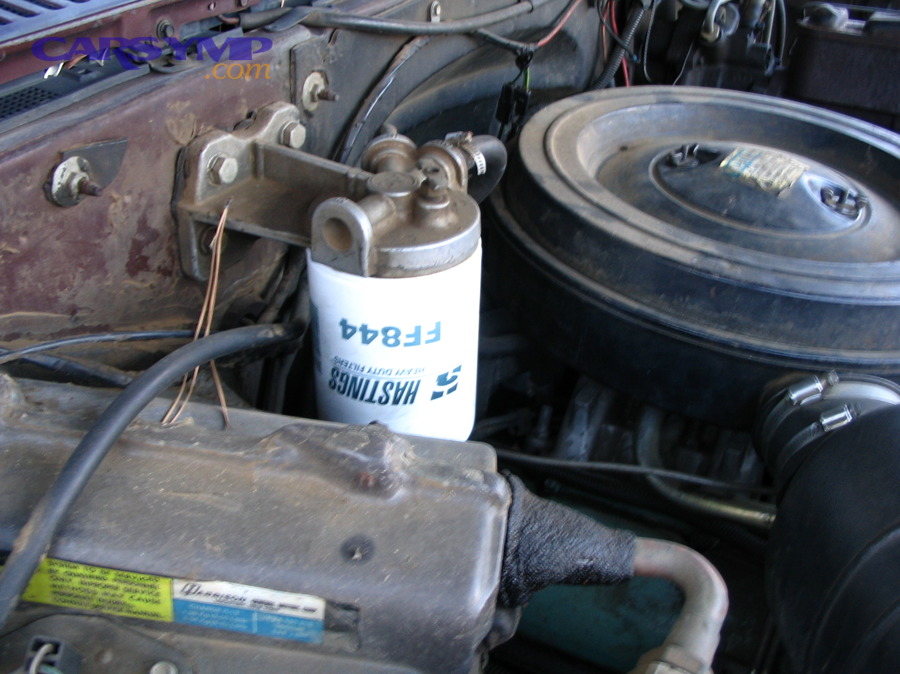
The simplest filter restriction test is to compare symptoms against service history and load behavior, then replace the filter only if it’s serviceable and overdue, because a restricted filter behaves like a steady choke that shows up under sustained demand.
Then, apply this practical checklist:
- Confirm the filter is serviceable on your vehicle
- Many modern cars have filters integrated into the in-tank pump module, so you can’t replace “just the filter.”
- Check maintenance interval or unknown history
- If you can’t verify replacement history, treat it as suspect—especially on higher-mileage vehicles.
- Compare symptoms to restriction behavior
- Strongest clue: power loss during long pulls, highway speeds, or uphill driving.
- Replace as a diagnostic step only when the evidence supports it
- If your symptoms are cylinder-specific misfires, a filter swap is less likely to help.
Important caution: don’t use “filter replacement” as a universal first step if your car doesn’t have a separate filter or if the symptoms strongly suggest injector problems.
How do you test a fuel pump at home (sound, relay/fuse, and fuel pressure basics)?
To test a fuel pump at home, check (1) pump power supply (fuse/relay), (2) pump prime behavior, and (3) fuel pressure stability—because a pump can spin but still fail to maintain pressure and volume when the engine demands fuel.
Next, work through these steps:
Step 1: Check fuses and relays
- Find the fuel pump fuse and relay location in your owner’s manual or fuse box diagram.
- Inspect the fuse; swap the relay with a similar known-good relay if possible.
Step 2: Listen for pump prime
- With the key turned to ON (not START), many vehicles run the pump for 1–3 seconds.
- A silent pump is a clue, but not proof (quiet pumps exist; some cars don’t prime audibly).
Step 3: Check electrical connectors (easy visual)
- Look for corrosion or loose connectors at accessible points.
- If the pump connector is accessible, verify secure fitment.
Step 4: Do a basic fuel pressure test (best confirmation)
- Many engines have a Schrader valve on the fuel rail; some require an inline adapter.
- Compare your pressure reading to spec (often listed in repair manuals).
Here’s one helpful demonstration video for the general method (fuel rail Schrader valve style). (youtube.com)
Step 5: Interpret the pressure behavior
- No pressure / extremely low pressure: pump isn’t delivering, or there’s a severe supply/electrical issue.
- Pressure builds but drops quickly after shutdown: could be pump check valve bleed-down or an injector leak (needs more context).
- Pressure OK at idle but collapses under throttle/load: could be pump volume weakness or restriction.
Fuel pump replacement cost estimate
If your tests strongly confirm a pump failure, a real-world fuel pump replacement cost estimate can be significant because many pumps are part of an in-tank module; one published range is about $1,247–$1,506 on average (parts + labor), though vehicle and location change the number. (repairpal.com)
How can you check for injector problems with an OBD scan and simple observations?
You can check for injector problems by combining (1) cylinder-specific clues from OBD misfire data and fuel trims with (2) simple physical observations like plug condition and fuel smell, because injectors often fail as an imbalance problem rather than a whole-system pressure problem.
Then, use this injector-focused flow:
Step 1: Look for cylinder-specific misfire codes
- Codes like P0301–P0308 indicate which cylinder is misfiring.
- A repeating pattern on the same cylinder points away from “global starvation” and toward injector/ignition/compression.
Step 2: Check fuel trim direction (if your scanner shows it)
- Large positive trims often mean the engine is adding fuel to compensate for lean conditions (fuel starvation or unmetered air).
- Large negative trims can indicate rich conditions (possible leaking injector).
Step 3: Use smell and exhaust clues
- Strong fuel smell and black smoke raise suspicion of leaking injectors.
Step 4: Compare spark plugs (if accessible)
- One plug wet/sooty compared to others suggests a cylinder-specific fueling issue.
Step 5: Decide whether “injector cleaner” makes sense
- Cleaner may help mild deposits, but it won’t fix a mechanically stuck injector or an electrical failure.
- If misfire is severe and consistent, go to testing/repair rather than additives.
According to a study by University of Birmingham from Department of Mechanical Engineering, in 2014–2017, injector deposit accumulation testing was associated with injector flow loss and measurable increases in fuel consumption and emissions under controlled conditions. (pure-oai.bham.ac.uk)
How do you interpret results when symptoms overlap or tests conflict?
When results conflict, the correct interpretation is to prioritize tests that measure the fuel system’s ability to meet demand (pressure stability and load response) and to treat cylinder-specific evidence as injector-biased, because overlap is normal but patterns are rarely identical across all three components.
Next, use these “conflict resolver” rules:
Rule 1: Pressure OK at idle does not clear the pump
- A weak pump can look fine at idle and fail under load.
- If your pressure drops when you snap the throttle or during a road load test, the pump remains suspect.
Rule 2: Lean codes don’t automatically mean “pump”
- Lean codes can come from air leaks, MAF issues, or EVAP issues.
- Use symptom timing and pressure behavior to avoid false conclusions.
Rule 3: One-cylinder misfire doesn’t automatically mean “injector”
- Ignition and compression can mimic injector faults.
- But if the misfire follows injector-related clues (fuel smell, plug wetness, rich trims), injectors climb the list.
Rule 4: Two problems can exist at once
- A partially restricted filter can overwork the pump.
- Aging pumps and dirty injectors can coexist, especially on high-mileage vehicles.
If you’re stuck, repeat the most informative test under the condition that triggers symptoms (often a warm engine under load). Diagnosis improves when you test where the failure lives.
What should you replace or repair first: fuel filter, fuel pump, or injectors?
The fuel filter is usually the best first replacement only when it’s serviceable and evidence suggests restriction, the fuel pump is the right first repair when pressure/volume evidence is weak under load, and injectors should be addressed first when you have cylinder-specific imbalance or flooding signs.
Next, follow a “lowest regret” order: do the cheapest, most evidence-backed step first—without ignoring clear pump or injector proof.
Is replacing the fuel filter first a good diagnostic step?
Yes—replacing the fuel filter first can be a good diagnostic step when it is serviceable and you have at least three supporting reasons: it’s overdue/unknown, symptoms worsen under sustained load, and you lack strong cylinder-specific evidence pointing to injectors.
Then, apply it correctly:
- Replace the filter only if your vehicle has a separate filter and it matches your symptom profile.
- If the filter is integrated into the pump module, a “filter first” strategy may not be possible or cost-effective.
- After replacement, repeat the same driving condition that triggered symptoms to confirm improvement.
When is it clearly a fuel pump (not the filter or injectors)?
Yes—it is clearly a fuel pump problem when you have at least three reasons: fuel pressure is low or collapses under load, the pump power supply checks out (fuse/relay/voltage), and symptoms track high demand (acceleration/highway) more than cylinder-specific behavior.
Next, look for these “pump-likely” combinations:
- Low pressure + correct electrical supply → pump output problem.
- Pressure drops during load → pump volume weakness or pickup limitation.
- Worse with low fuel → pump overheating or pickup starvation.
Also, if you hear an abnormal pump whine that increases over time along with worsening symptoms, it supports—but does not prove—a failing pump.
When is it clearly injectors (not the pump or filter)?
Yes—it is clearly an injector problem when you have at least three reasons: misfire or roughness is cylinder-specific, fuel trims or plug evidence suggest rich/lean imbalance at a single cylinder, and pressure behavior is stable enough that global starvation is unlikely.
Then, confirm with practical injector-focused evidence:
- One cylinder consistently misfires while others behave normally.
- A strong fuel smell, wet plug, or rich behavior suggests a leaking injector.
- Rough idle persists even when fuel demand is low (idle/low load), which is less typical of a weak pump.
At this point, professional testing (injector balance/leak-down) often gives the fastest final answer, because injectors can fail electrically, mechanically, or by deposit restriction.
What edge cases can mimic fuel pump, injector, or fuel filter failure—and how do you avoid a wrong diagnosis?
False fuel-system diagnoses happen when a related system changes fuel pressure behavior, air–fuel ratio control, or tank venting, so you should rule out these edge cases once your core checklist is complete and your results still conflict.
Next, use these micro-level checks to protect your diagnosis from “look-alikes,” especially when symptoms appear suddenly or after refueling.
Can a returnless fuel system or a faulty fuel pressure sensor mimic a bad pump?
Yes—a returnless system or faulty pressure sensing can mimic a bad pump because the control strategy depends on sensor feedback, and a bad reading can cause fueling behavior that looks like starvation even when the pump is capable.
Then, reduce the false-positive risk by:
- Comparing commanded vs actual pressure (if your scan tool supports it).
- Watching whether symptoms correlate with electrical/sensor events rather than mechanical load alone.
- Treating sensor codes or implausible readings as a separate branch of diagnosis before replacing a pump.
Can direct injection vs port injection change injector symptom patterns?
Yes—direct injection can change injector symptom patterns because DI injectors operate at much higher pressures and deposit behavior can alter spray and combustion differently than port injection, making roughness, emissions changes, and load sensitivity show up in less intuitive ways.
Next, focus on what a DIYer can still do reliably:
- Use cylinder-specific codes and plug comparison as first-line evidence.
- Consider deposits more seriously if symptoms include cold-start roughness and gradual performance changes.
- Treat “DI-specific complexity” as a reason to confirm with pressure readings and professional injector testing if you’re uncertain.
According to a study by University of Birmingham from Department of Mechanical Engineering, in 2014–2017, injector deposit research notes that deposit accumulation changes spray characteristics and is associated with measurable deterioration in fuel economy and emissions under controlled engine test conditions. (pure-oai.bham.ac.uk)
Can contaminated fuel (water/debris) cause symptoms that look like a clogged filter or bad injectors?
Yes—contaminated fuel can mimic a clogged filter or injector issues because debris increases restriction and water disrupts combustion, causing hesitation, stalling, and hard starts that resemble fuel delivery failure even when the pump is healthy.
Then, watch for these contamination flags:
- Symptoms start immediately after refueling.
- Multiple vehicles at the same station report issues (if you hear it locally).
- The car runs erratically across many conditions, not just under load.
If contamination is likely, avoid repeated cranking and consider draining/diagnosing fuel quality, because pushing contaminated fuel through the system can create real filter restriction and injector problems.
Can EVAP/tank venting issues create fuel starvation symptoms that disappear when you open the gas cap?
Yes—EVAP or tank venting issues can create fuel starvation symptoms because a blocked vent can allow vacuum to build in the tank, reducing fuel flow to the pump and mimicking a weak pump, and the symptom may change when you open the cap and relieve vacuum.
Next, confirm the pattern safely:
- If you hear a strong “whoosh” when opening the cap and symptoms temporarily improve, venting becomes suspect.
- If symptoms strongly track tank vacuum rather than engine load alone, don’t rush to replace the pump first.
According to a study by Cranfield University from the IVHM Centre, in 2017, controlled testing on a fuel system rig showed that filter clogging produces measurable local pressure-drop behavior that can be replicated and tracked—highlighting how restriction and pressure changes can look like component failure when interpreted without system context. (papers.phmsociety.org)