


Replacing an upper or lower radiator hose is a practical DIY repair when you follow a safe sequence: let the engine cool, relieve pressure, drain coolant below the hose level, swap the hose and clamps, then refill and bleed the system so the engine runs at normal temperature without leaks.
Next, you also need to decide whether your situation is truly “DIY-safe,” because a hot, pressurized cooling system can spray coolant and because some vehicles use plastic necks or tight packaging that makes a simple hose replacement turn into broken fittings.
Then, preparation matters as much as the swap itself: the right hose, the right clamps, the correct coolant, and a clean sealing surface are what prevent repeat leaks—especially after the first heat cycle when rubber settles and clamps “relax” slightly.
Introduce a new idea: after the hose is installed, the real success test is the refill-and-bleed process, because trapped air can mimic overheating or weak cabin heat and can make you think the repair failed even when the new hose is perfect.
Is it safe to replace a radiator hose yourself (and when should you not)?
Yes—radiator hose replacement is safe for many DIYers because it uses basic tools, follows a predictable procedure, and usually requires no special calibration, as long as the engine is cool, the system is depressurized, and you have stable access under the vehicle.
To begin, safety is about controlling two risks—heat/pressure and coolant spills—before you ever touch a clamp.
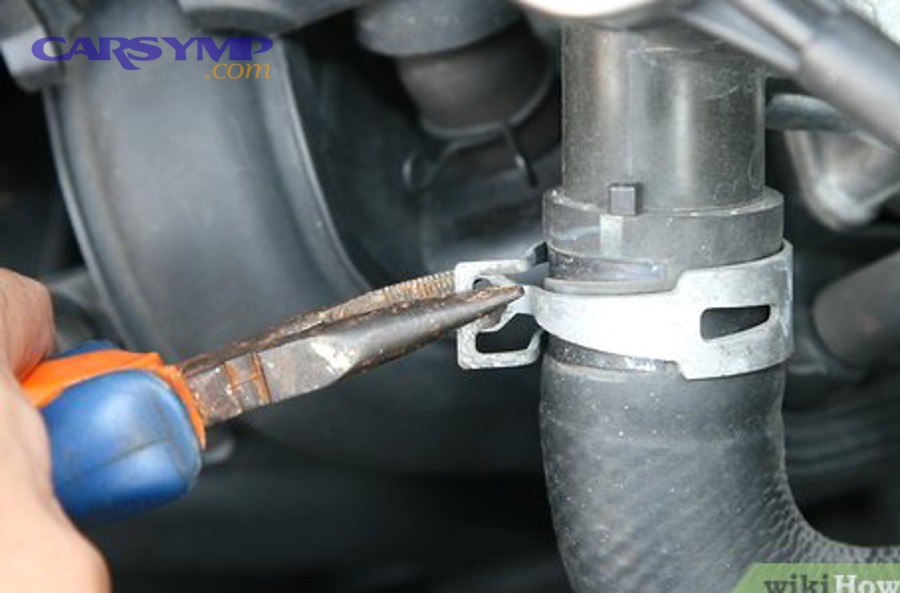
A radiator hose is part of a sealed, pressurized cooling loop. When the engine is hot, the coolant can be near boiling temperature, and system pressure can force coolant out aggressively if you open the radiator cap or pull a hose. That is why the first “step” is not turning a wrench—it is making the system safe to open.
You should not do this job yourself if any of the following are true:
- You cannot wait for a full cool-down and you must drive immediately (overheating risk).
- The hose connects to a brittle plastic neck that is already cracked, deformed, or leaking.
- You see evidence of a bigger cooling problem: repeated overheating, oil in coolant, coolant in oil, or heavy steam events.
- You cannot safely lift and support the vehicle (lower hose access often requires room underneath).
- You have no way to dispose of used coolant safely and legally.
If your car is already overheating, treat the hose replacement as one part of a larger diagnosis. A hose can be the failure point, but a failing thermostat, weak radiator cap, or trapped air can create symptoms that look like a bad hose and can return immediately after the swap.
Do you need to let the engine cool completely before removing a radiator hose?
Yes—you must let the engine cool completely before removing a radiator hose because the cooling system can stay pressurized, hot coolant can spray under force, and hot aluminum/plastic fittings can crack when stressed.
More specifically, “cool” means the upper hose is no longer hot to the touch, the radiator area is not radiating heat, and the temperature gauge has been at cold for a while.
A practical cool-down checklist:
- Park on a level surface, set the parking brake, and pop the hood.
- Wait until you can touch the upper hose comfortably with your bare hand.
- Squeeze the hose gently: it should feel pliable, not rock-hard from pressure.
- Only then, crack the radiator cap slowly (if your vehicle uses a radiator cap) with a thick rag—stop immediately if you hear strong hissing.
When you do this, you are protecting yourself and protecting the parts. A hot plastic radiator neck is more likely to crack if you twist a stuck hose aggressively.
Should you drive if a radiator hose is leaking or bulging?
No—you should not drive with a leaking or bulging radiator hose because it can burst without warning, coolant loss can cause rapid overheating, and overheating can warp engine components.
Besides, a “small leak” can become a large leak when engine speed increases and pressure rises, and a bulge often means the hose structure has weakened internally.
If you must move the vehicle a very short distance for safety (for example, off a highway shoulder), keep it minimal and watch temperature constantly. Otherwise, the safest and cheapest path is usually a tow or mobile repair. A single overheating event can cost far more than the hose replacement.
What is an upper vs lower radiator hose (and what does each one do)?
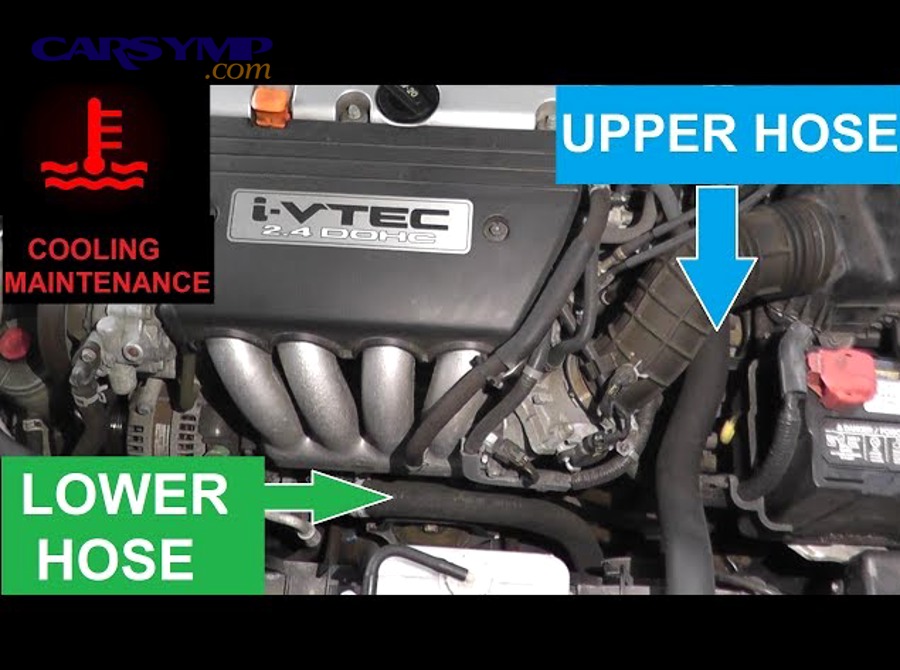
An upper radiator hose is the hot coolant path leaving the engine toward the radiator, while a lower radiator hose is the cooler return path feeding coolant back toward the water pump and engine, and both are critical for stable engine temperature.
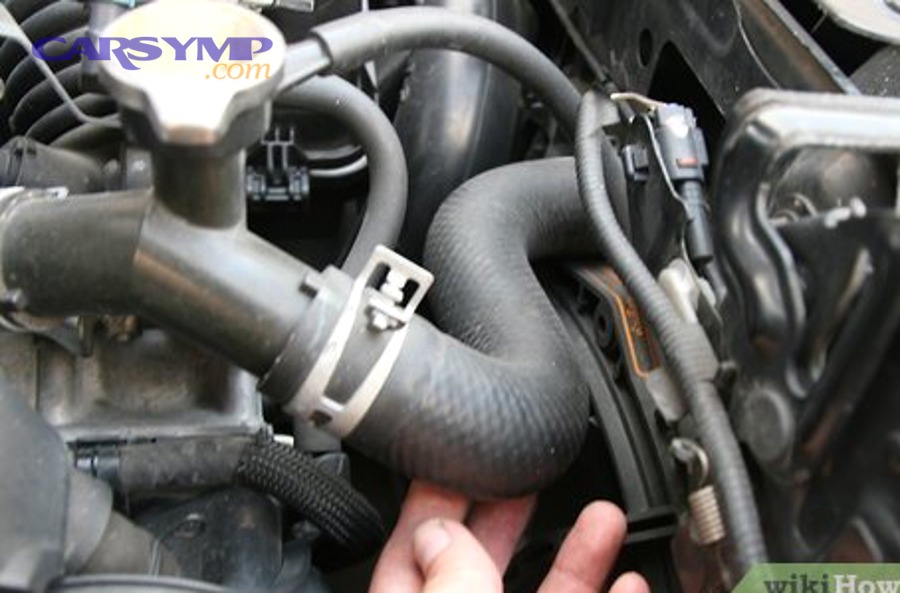
Then, understanding which hose you are replacing helps you predict access difficulty, coolant loss, and the best bleeding method afterward.
Most engines circulate coolant like this: the engine heats coolant, the thermostat regulates flow, the radiator removes heat, and the water pump keeps the coolant moving. The upper hose is commonly tied to the thermostat housing and radiator inlet. The lower hose often connects the radiator outlet to the water pump inlet.
Where is the upper radiator hose located and how do you identify it?
The upper radiator hose is the larger hose that typically runs from the thermostat housing (near the top of the engine) to the upper portion of the radiator, and it usually feels hotter than other hoses after the engine warms up.
To better understand, look for the thickest coolant hose in the engine bay that arcs from the engine to the radiator’s top tank.
Identification cues you can use:
- It connects near the thermostat housing or a metal outlet on the engine.
- It routes to the top portion of the radiator.
- It is often easier to see from above with the hood open.
- After a normal warm-up, it is noticeably warm/hot compared with hoses going to the heater core.
Where is the lower radiator hose located and why can it be harder to replace?
The lower radiator hose is the larger hose that usually connects the lower radiator outlet to the water pump area, and it can be harder to replace because it may require access from underneath, may be blocked by splash shields, and often releases more coolant when removed.
However, difficulty is not just about access; it is also about time and mess control.
Common reasons the lower hose feels “harder”:
- You may need to lift the vehicle and remove an undertray.
- Clamps may be positioned in tight spaces near the fan shroud or accessories.
- More coolant sits at the lower part of the radiator, so removal often drains more fluid.
- Some lower hoses have an internal anti-collapse spring; installing the wrong hose can cause problems under suction.
When you choose your replacement hose, match shape and length, not just diameter. Many lower hoses have molded bends that prevent kinks; a universal straight hose is rarely a good substitute.
What tools, parts, and supplies do you need before replacing a radiator hose?
There are 6 main groups of items you need before replacing a radiator hose: the correct hose, correct clamps, coolant and water, spill-control supplies, basic hand tools, and safety gear, based on the goal of preventing leaks and preventing air pockets.
Next, gathering everything first keeps the job from stalling mid-way with the cooling system open.
Below is a quick checklist so your hose replacement stays controlled:
- Parts
- Correct upper or lower radiator hose (molded to match routing)
- New clamps (or reuse OEM spring clamps if still strong and correctly sized)
- Optional: new radiator cap if yours is old and suspect
- Fluids
- Correct coolant type/spec for your vehicle
- Distilled water (if mixing concentrate)
- Tools
- Pliers for spring clamps (or dedicated hose clamp pliers)
- Flathead screwdriver or nut driver for worm-gear clamps
- Ratchet/socket set for shields or brackets
- Pick tool or hose removal tool (used carefully)
- Spill control
- Drain pan
- Funnel
- Rags/paper towels
- Gloves
- Safety
- Eye protection
- Jack and jack stands (if doing a lower hose from underneath)
- Wheel chocks
To illustrate why this matters: the most common DIY failure is not “installing the wrong hose,” but rushing the refill/bleed process because supplies are missing and you want to finish fast.
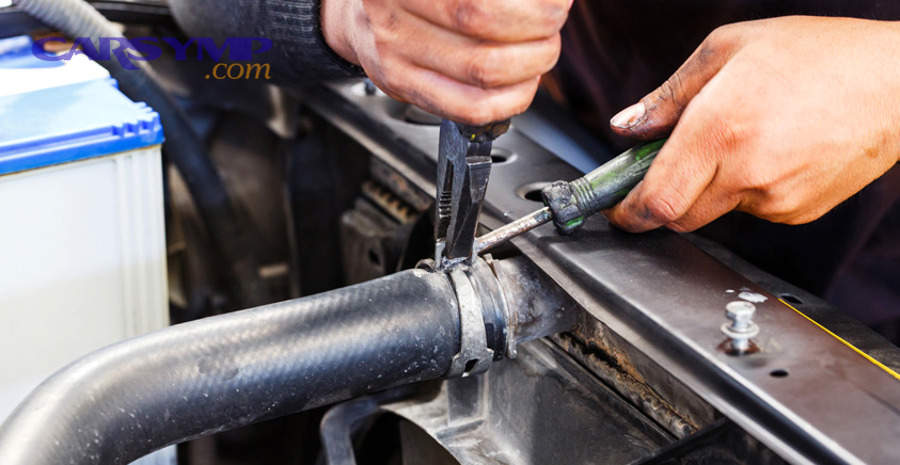
Which radiator hose clamps should you use: spring clamps or worm-gear clamps?
Spring clamps win for temperature-driven expansion control, worm-gear clamps are best for easy adjustability, and constant-tension style clamps are optimal when you want consistent sealing through heat cycles.
Meanwhile, the best clamp choice is usually the one that matches how the joint was engineered.
Spring clamps (OEM-style)
- Pros: maintain tension as rubber expands/contracts; often the most leak-resistant in normal use
- Cons: harder to remove/install without the right pliers; can weaken if corroded or overstretched
Worm-gear clamps
- Pros: easy to install with a screwdriver/nut driver; widely available; adjustable
- Cons: can cut into hoses if overtightened; may loosen slightly after heat cycling if not rechecked
Constant-tension clamps
- Pros: maintain a more consistent clamping force across temperature swings
- Cons: require correct sizing and correct placement; not always stocked locally
If your car used spring clamps from the factory, keep that design unless you have a clear reason to change. A mismatched clamp can seal initially but seep later when the hose relaxes after several heating cycles.
What coolant should you use after a hose swap ?
There are 3 common coolant approaches—manufacturer-specified premix, manufacturer-specified concentrate mixed with distilled water, or a vehicle-specific “ready to use” formula—based on protecting aluminum surfaces, controlling freezing/boiling points, and maintaining corrosion inhibitors.
More importantly, you should treat “correct coolant” as part of the repair, not an afterthought.
How much coolant you need depends on how much you drain:
- Upper hose replacement often loses a partial amount if you drain only below hose level.
- Lower hose replacement can lose more, because coolant sits lower in the radiator and hoses.
- If you drain the whole radiator, you may need several liters/quarts depending on capacity.
Key rules:
- Use the coolant type specified for your vehicle (color alone is not a reliable identifier).
- If mixing concentrate, use distilled water to reduce mineral deposits.
- Do not spill coolant where pets can access it, and dispose of used coolant properly.
This is also a good point to perform Coolant hose leak symptoms and inspection as a system habit: damp fittings, crusty residue, swollen rubber near clamps, or a sweet smell can signal other hoses are aging and may need attention soon.
How do you replace an upper radiator hose step-by-step?
Upper radiator hose replacement follows a 7-step method—cool the engine, depressurize, drain below hose level, remove clamps, remove hose, install new hose and clamps, and refill/bleed—so the cooling system returns to normal temperature without leaks.
Below, the goal is to keep the job clean and avoid damaging the radiator neck.
- Cool the engine fully and open the hood.
- Relieve pressure slowly at the radiator cap or expansion tank (only when cool).
- Drain coolant until the coolant level is below the upper hose connection.
- Remove the clamps (spring clamp pliers or loosen worm clamp).
- Break the hose seal by twisting the hose gently before pulling.
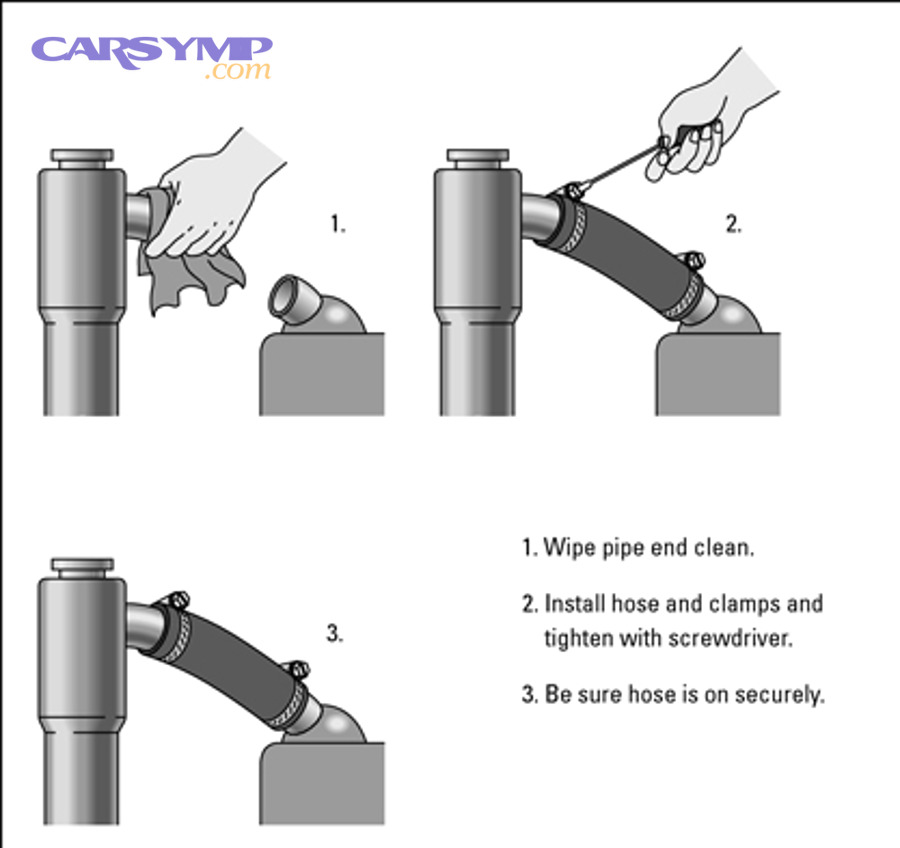
- Clean the fittings and install the new hose fully seated.
- Reinstall clamps in the correct position and refill/bleed the system.
At each step, you should think in terms of sealing surfaces. The hose seals by pressing against a bead or lip on the radiator neck or engine outlet; your clamp must sit behind that bead to hold pressure.
How do you drain enough coolant for an upper hose replacement without over-draining?
You can drain enough coolant for an upper hose replacement by lowering the radiator level just below the hose connection using the radiator drain (petcock) or a controlled partial drain, which reduces spills while keeping most coolant in the system.
Specifically, you are not trying to empty the system—you are trying to stop coolant from pouring out when the hose is removed.
Practical methods:
- Radiator petcock method (preferred if accessible):
- Place a drain pan under the radiator drain.
- Open the petcock slowly.
- Drain until coolant level drops below the upper hose outlet.
- Close the petcock.
- Lower hose “crack” method (only if no petcock and you’re prepared):
- Loosen the lower hose clamp slightly and allow coolant to drain into a pan.
- Tighten temporarily once level drops.
- This is messier and requires more control.
If the coolant is clean and relatively new, you can drain into a clean container and reuse it. If it is rusty, contaminated, or unknown age, treat the hose replacement as a good moment to refresh coolant.
How do you remove a stuck radiator hose without cracking the plastic neck?
You remove a stuck radiator hose safely by twisting to break the seal, working the hose off gradually, and avoiding prying force on the plastic neck, because twisting reduces adhesion while prying concentrates stress where plastic cracks.
Then, your hands and technique matter more than strength.
A controlled removal sequence:
- Confirm the clamp is fully released and moved away from the sealing bead.
- Grip the hose near the fitting and twist left-right to break the bond.
- Pull straight back while continuing slight twist.
- If it still will not move, insert a plastic or blunt tool carefully between hose and fitting to admit a little air—avoid stabbing the hose into the fitting.
- As a last resort, cut the hose lengthwise with a razor blade, stopping short of the fitting surface, then peel it off.
After removal, wipe the fitting clean. Remove crusty residue and ensure the bead is intact. A clean bead with a correctly seated hose is what makes your hose replacement durable.
How do you replace a lower radiator hose step-by-step?
Lower radiator hose replacement follows the same core method as the upper hose but adds access, draining, and routing steps—so you can remove the return hose safely, avoid kinks, and prevent leaks after the first heat cycle.
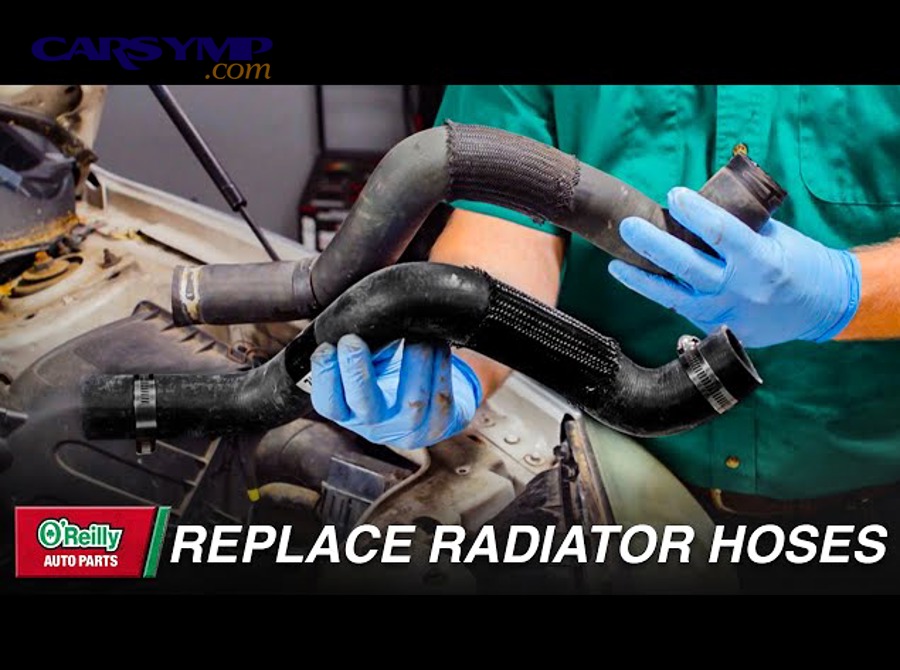
More importantly, you must plan for more coolant loss and possibly working under the vehicle.
A straightforward lower hose flow:
- Cool and depressurize the system.
- Lift the vehicle safely if needed (jack stands, wheel chocks).
- Remove splash shields/undertrays blocking access.
- Drain coolant to a level below the lower hose.
- Remove clamps and free the hose (twist first, pull second).
- Install the new lower hose with correct routing and clearance.
- Reinstall shields and refill/bleed.
If the old lower hose had an internal spring, match the replacement exactly. The lower hose experiences suction from the water pump; a weak or kinked hose can collapse and restrict coolant flow.
What extra steps are needed for lower hose replacement (shields, access, routing)?
Lower hose replacement often requires removing underbody shields, improving clamp access, and confirming routing clearance, based on the fact that the lower hose lives in a tighter space near moving parts and heat sources.
To begin, prioritize vehicle support and visibility.
Access and routing checklist:
- Use jack stands on a solid surface—never rely on the jack alone.
- Remove the undertray or splash shield (often several bolts/clips).
- Rotate clamps so their fasteners are reachable for future service (without rubbing nearby parts).
- Match the hose routing so it does not contact:
- the serpentine belt path
- sharp bracket edges
- exhaust heat
- fan shrouds or rotating assemblies
This is also a good time to scan nearby hoses. Many cooling systems include bypass hoses and heater hoses; if you see cracks or bulges, consider bundling the work rather than reopening the system repeatedly.
How do you prevent leaks after installing the lower hose?
You prevent leaks after installing the lower hose by fully seating the hose past the bead, positioning clamps behind the bead in the same sealing zone, and tightening/locking clamps evenly, because uneven compression creates micro-gaps that seep under pressure.
Next, make leak prevention a process instead of a guess.
Leak-prevention habits that work:
- Seat the hose until it bottoms out on the fitting stop (if present).
- Place the clamp about 3–6 mm behind the bead (not on top of it).
- Tighten worm clamps until snug—do not crush the hose.
- For spring clamps, ensure the clamp returns to its original tension position and sits flat.
- Wipe the joint dry before refilling so you can spot new seepage quickly.
After the first full warm-up, inspect again. Many “mystery leaks” are simply clamps that needed a minor reposition or a small snug after the hose relaxed.
How do you refill and bleed the cooling system after replacing a radiator hose?
Refilling and bleeding the cooling system means adding coolant correctly and removing trapped air using a controlled warm-up process, because air pockets reduce coolant circulation, can trigger overheating symptoms, and can cause weak cabin heat even after a perfect hose swap.
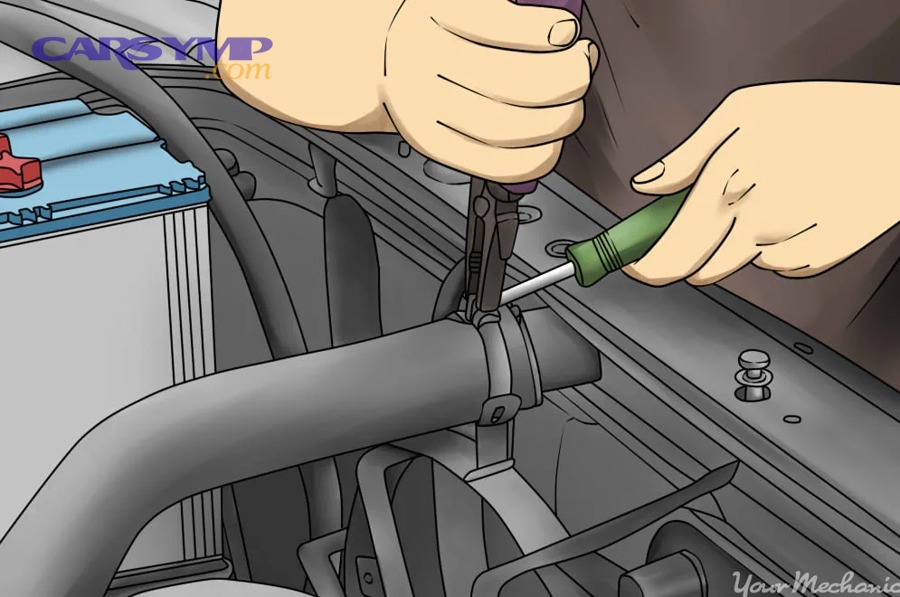
Then, your goal becomes stability: stable temperature gauge, stable coolant level, and stable heater output.
Basic bleeding workflow (general approach):
- Confirm drains are closed and hoses/clamps are secure.
- Fill slowly at the radiator cap (or at the expansion tank if that is the designated fill point).
- Set the heater to HOT and fan to a low/medium setting.
- Start the engine and let it idle with the cap off (if safe and appropriate for your vehicle).
- Watch for the thermostat opening—coolant level may drop as flow begins.
- Top up as needed, then install the cap and continue warming to normal operating temp.
- Let the engine cool fully and recheck the level again.
Different vehicles bleed differently, and some require a specific procedure or bleed screw usage. Still, the macro logic stays the same: remove air, restore full coolant circulation, confirm stable operation.
Should the heater be set to HOT when bleeding coolant (and why)?
Yes—you should set the heater to HOT when bleeding coolant because it opens coolant flow through the heater core, helps purge trapped air from that circuit, and gives you a real-time indicator of coolant circulation through cabin heat output.
More specifically, the heater circuit can trap air that does not purge quickly if the valve stays closed.
What you should look for:
- Cabin heat transitions from lukewarm to consistently hot as coolant circulates.
- Gurgling sounds behind the dash fade away as air clears.
- The temperature gauge remains stable rather than swinging.
This is where the phrase Heater hose replacement overview belongs in your mental model: the radiator hoses are the main highway, but heater hoses are the side roads. Air trapped in the heater circuit can create “no heat” complaints even when the engine isn’t overheating, and the fix is often proper bleeding rather than new parts.
How do you know when all air is out of the cooling system?
You know air is out of the cooling system when the temperature stays steady at normal range, the heater blows consistent heat, coolant level stops dropping after multiple warm-ups, and there are no bubbling surges at the fill point during a controlled bleed.
In addition, you should confirm the radiator fan cycles normally (for vehicles with electric fans), because that shows the system reaches operating temperature and regulates as designed.
Signs you still have air:
- Temperature gauge rises quickly then drops suddenly (air pocket moving past sensor).
- Heater output fluctuates from hot to cold.
- You hear persistent gurgling in the dash area.
- Coolant level keeps falling significantly after each cool-down.
If these signs persist, you may need a vehicle-specific bleed procedure, a bleed screw process, or a vacuum-fill method. Still, do not assume “still overheating” means the new hose is wrong—air management is often the real culprit after hose replacement.
What final checks confirm the hose replacement worked?
There are 5 final checks that confirm your hose replacement worked: a dry joint inspection, a pressure-and-heat-cycle leak check, a stable temperature gauge during a test drive, a stable coolant level after cool-down, and no abnormal hose behavior like swelling or collapse.
Thus, the job is complete only when it behaves correctly both cold and hot.
A clean, repeatable check sequence:
- Cold check (before start): verify clamp placement, hose routing, and clearance.
- Warm idle check: watch for seepage as pressure builds; inspect with a flashlight.
- Fan/thermostat check: confirm stable operating temperature and normal fan operation.
- Test drive check: short loop with monitoring; then inspect again.
- Next-day level check: after full cool-down, confirm coolant level is at the correct mark.
If you see any wetness, do not guess. Dry it completely, then recheck. A fresh leak shows itself clearly once the area is clean.
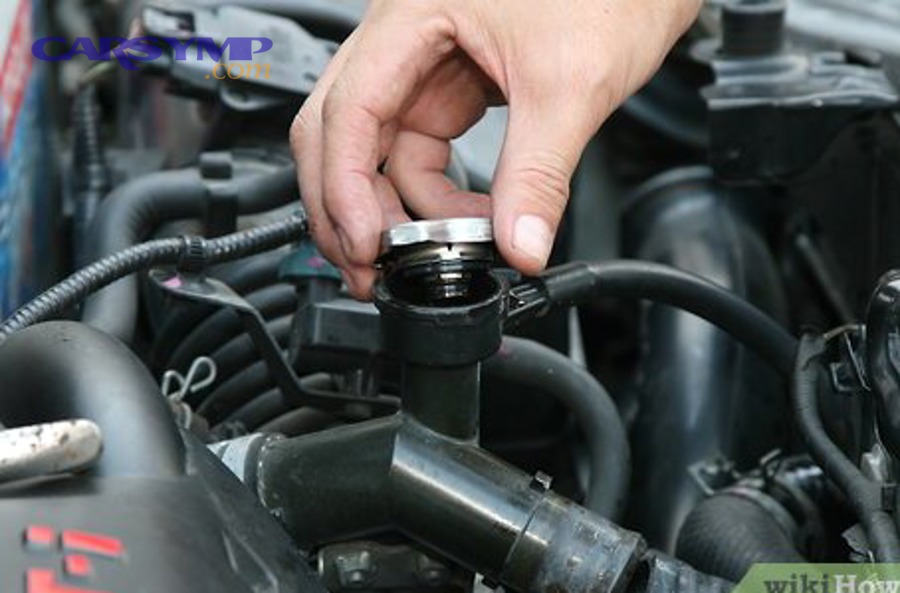
Do you need to re-check clamps after the first heat cycle?
Yes—you should re-check clamps after the first heat cycle because new hoses compress slightly as they heat and cool, clamp tension can settle, and early micro-seeps are easiest to fix before they become coolant loss that triggers overheating.
In short, this is the simplest habit that prevents the “it was fine yesterday” leak.
A good re-check routine:
- Let the engine cool completely.
- Run your fingers around the joint for dampness (wear gloves).
- If using worm clamps, apply a small snug if needed—do not overtighten.
- If using spring clamps, verify the clamp is still centered and fully seated behind the bead.
If the joint still seeps after correct clamp positioning, inspect the fitting bead and the hose end. A cracked plastic neck, corrosion pitting, or a deformed hose end can defeat even a perfectly tightened clamp.
Contextual Border: Now that you’ve completed the step-by-step replacement (upper or lower), refilled and bled the system, and verified stable temperature and no leaks, the section below expands into secondary questions—cost, upgrades, and less-common causes of repeat issues.
What else should you consider when replacing radiator hoses (cost, upgrades, and uncommon issues)?
Radiator hose work goes best when you also consider preventive replacement strategy, realistic shop cost, hose material choices, and “still overheating” troubleshooting, because these micro-decisions often determine whether your repair lasts years or returns as another leak or temperature problem.
Let’s explore the secondary questions that people search right after completing a hose replacement.
Should you replace both upper and lower radiator hoses at the same time (or only the failed one)?
Replacing both hoses wins for long-term reliability, replacing only the failed hose is best for lowest immediate cost, and replacing the failed hose plus all clamps is optimal for preventing repeat leaks in the same sealing zones.
More specifically, the right choice depends on age, access, and condition—not just budget.
Use this decision logic:
- Replace both upper and lower hoses if:
- the hoses are the same age and show similar aging (soft spots, hard spots, cracking)
- you already drained coolant and have access
- the vehicle is older and hoses are likely near end of life
- Replace only the failed hose if:
- the other hose is clearly newer and healthy
- access to the other hose is extremely difficult
- you need a fast repair and will schedule preventive work later
- Replace clamps whenever:
- a worm clamp is stripped or deformed
- a spring clamp is corroded, stretched, or no longer clamps evenly
- the clamp no longer sits flat around the hose
This is where Coolant hose leak symptoms and inspection becomes a repeatable habit: if you inspect hoses at oil-change intervals, you can replace them before they burst and before you get stuck roadside.
How much does radiator hose replacement cost if you don’t DIY?
Radiator hose replacement cost is typically driven by labor access, coolant type and refill needs, and whether additional parts (clamps, thermostat housing, plastic necks) are required, so shop pricing varies more by vehicle layout than by the hose itself.
On the other hand, the core cost categories stay consistent.
A shop estimate commonly includes:
- Parts: hose + clamps (and sometimes new coolant)
- Labor: remove shields, remove old hose, install new hose, refill/bleed
- Environmental/disposal fees: coolant disposal or recycling
Expect costs to rise when:
- The lower hose requires undertray removal and tight access.
- The vehicle uses specific coolant formulas or requires special bleeding steps.
- A plastic fitting breaks during removal (common on older vehicles).
If you want a smoother shop visit, tell them what you observed: bulge location, leak point, and whether overheating occurred. That short summary helps the technician confirm whether the hose was the primary failure or whether pressure control (radiator cap) or thermostat function needs attention too.
Is a silicone radiator hose better than a standard rubber (EPDM) hose?
Silicone hoses win in high-temperature durability and long-term flexibility, EPDM rubber hoses are best for OEM-style fit and cost-effective everyday reliability, and reinforced performance silicone is optimal when you need extra heat resistance in demanding conditions.
Meanwhile, “better” depends on your use case.
Silicone hose strengths:
- resists heat aging well
- stays flexible longer in harsh environments
- often used in performance or heavy-duty contexts
EPDM hose strengths:
- OEM-level fitment and routing
- proven compatibility with factory clamps and fittings
- typically lower cost and widely available
Compatibility notes that matter:
- Some silicone hoses need clamp choices that won’t cut into the material.
- Fitment must match; a slightly different molded bend can create rubbing or kinking.
- Quality varies widely; use reputable brands if going silicone.
For most daily drivers, a high-quality EPDM molded hose plus correctly sized clamps is the simplest, most reliable choice.
Why can a car still overheat after a hose replacement (and what should you check next)?
There are 6 common reasons a car can still overheat after a hose replacement: trapped air, an incorrect coolant level or mixture, a weak radiator cap, a sticking thermostat, a failing water pump, or restricted flow through the radiator/heater core, based on how coolant circulation and pressure control work.
More importantly, the next check should be systematic, not random parts swapping.
Start with the “most likely after hose work” items:
- Trapped air
- Re-bleed using the correct procedure.
- Confirm heater on HOT during bleeding.
- Watch for level drop after thermostat opens.
- Coolant level
- Check only when cold.
- Ensure the expansion tank is at the correct mark.
- Radiator cap / pressure control
- A weak cap can lower boiling margin and cause overheating symptoms.
- If the cap is old, replacement can be cheap insurance.
Then move to component checks:
- Thermostat
- If stuck closed, coolant cannot flow to the radiator correctly.
- If stuck open, the engine may run cold and heater output may be weak.
- Water pump
- A worn impeller or leak can reduce flow.
- Some failures show up as overheating at speed or poor circulation signs.
- Restriction
- Internal radiator blockage or a clogged heater core can reduce heat transfer and flow.
If you document symptoms clearly—when it overheats (idle vs highway), whether the heater blows hot, whether coolant level changes—you create a faster diagnosis path. That’s also where “Car Symp” style symptom logging helps: a simple checklist of temperature behavior, heater behavior, and leak location often reveals whether the issue is air management or component failure.