


Preventing hydraulic hose failures is mainly about controlling the big five risk drivers—abrasion, bend radius violations, pressure spikes, temperature extremes, and poor assembly—so hoses stay sealed, stable, and safe throughout their service life. This guide gives you a practical prevention playbook you can apply on real equipment, not just in a catalog.
Next, you’ll learn the most common failure mechanisms (what fails, where it fails, and why), so every prevention step has a clear cause-and-effect link. That cause mapping makes inspections faster because you know exactly what you’re looking for.
Then, you’ll get a field-ready inspection checklist that separates “monitor” issues from “replace now” triggers, along with routing and installation rules that stop repeat failures at the same rub point or the same fitting.
Introduce a new idea: prevention becomes much easier when you treat hose reliability as a system—selection, routing, inspection cadence, and documentation—rather than a one-off hose replacement after something bursts.
What does it mean to “prevent hydraulic hose failures,” and what failures are most common?
Preventing hydraulic hose failures means keeping the hose assembly within its design limits (pressure, temperature, movement, and compatibility) so it does not leak, burst, delaminate, or separate from fittings during operation. Next, it helps to name the failure modes clearly, because each one points to a different prevention lever.
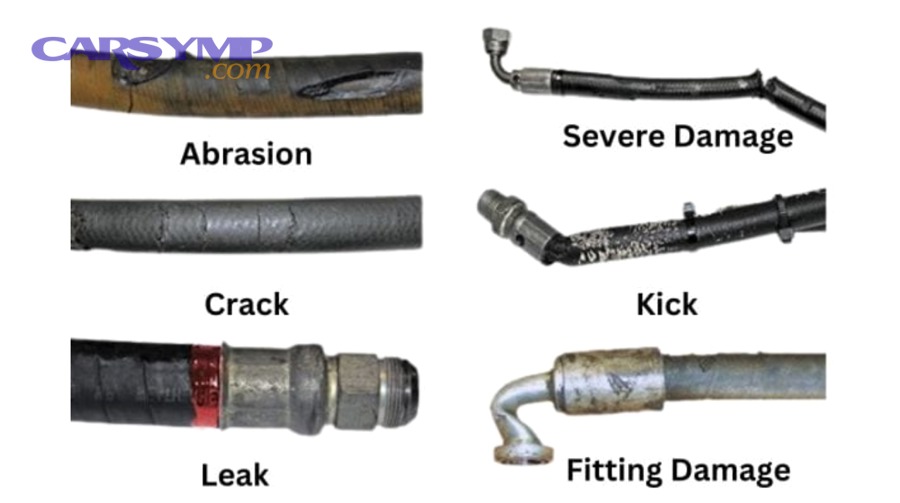
A hydraulic hose assembly fails when the system can no longer safely contain fluid at the required pressure and flow. In practical maintenance terms, “failure” is not only a catastrophic burst. A slow weep at a crimp, a blistered cover, or reinforcement braid showing through abrasion are also failures in progress—because they predict the next unplanned outage.
Most teams prevent failures by controlling:
- Mechanical stress (bend radius, twist, pulling at fittings, vibration)
- External damage (abrasion, pinch points, impacts, UV exposure outdoors)
- Thermal stress (age and heat accelerating rubber hardening and cracking)
- Hydraulic stress (pressure spikes, impulse cycling, cavitation events)
- Chemical stress (fluid incompatibility, ozone exposure, solvents, washdown chemicals)
What are the main hydraulic hose failure modes (leaks vs bursts vs fitting failures)?
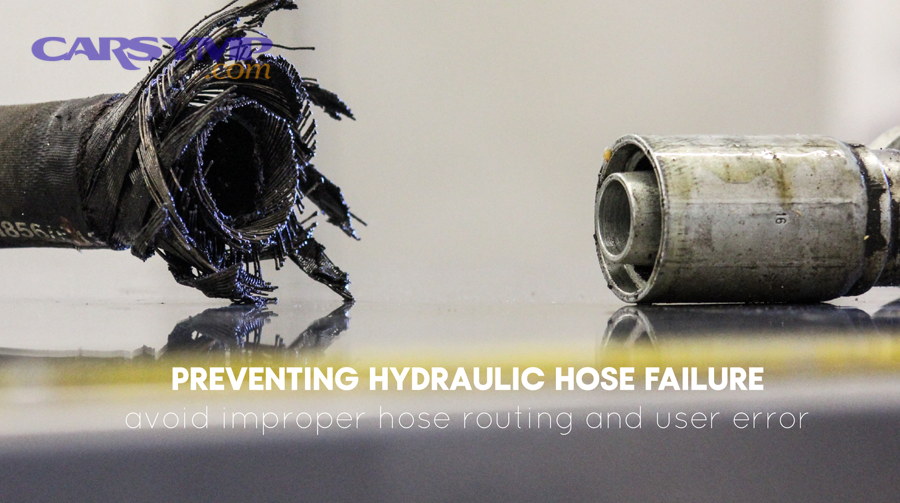
There are five main types of hydraulic hose failure: (1) weeping/leakage, (2) fitting blow-off or end separation, (3) rupture/burst, (4) cover damage leading to reinforcement exposure, and (5) internal tube damage/delamination—based on where the breakdown starts (end connection, hose body, or internal tube). Then, you can match each type to its most likely causes.
- Weeping / Leakage (often at ends)
- Early-stage seepage at crimp, thread, or sealing surface
- Typical drivers: wrong fitting seat, damaged O-ring, under/over-torque, minor tube damage, improper crimp spec
- Fitting blow-off / end separation
- The hose pulls away from the fitting, often under a surge or high impulse load
- Typical drivers: incorrect crimp diameter, mismatched hose/fitting series, contaminated or oily skive area, severe pull load due to short hose length
- Rupture / Burst
- Catastrophic failure of reinforcement or tube; high-risk safety event
- Typical drivers: pressure spikes above rating, reinforcement fatigue from impulse cycling, severe abrasion that weakens reinforcement, wrong pressure class
- Cover damage → reinforcement exposure
- Cover worn through, braid visible, moisture ingress begins
- Typical drivers: continuous rubbing, clamp misplacement, hoses dragging on structure, missing abrasion sleeves
- Internal tube damage / delamination
- Tube blisters, soft spots, swelling, or collapsed inner liner
- Typical drivers: fluid incompatibility, excessive heat, contamination, vacuum/return-line misuse, improper flushing practices
According to a study by Purdue University from the engineering technology research team (reported in 2016), hydraulic hoses degrade under real-world conditions due to abrasion, cycling fatigue, pressure spikes, UV radiation, and incompatible fluids.
Does most hose failure start at the hose body or at the fittings?
Fittings win as the most common starting point for failure in many plants, while hose bodies dominate in harsh abrasion zones; the “winner” depends on whether your main stress is assembly quality or routing damage. However, ends are disproportionately risky because they combine sealing surfaces, crimp quality, bending moments, and movement.
Here’s the practical rule:
- If you see repeated end leaks, blow-offs, or weeping, you likely have assembly/spec mismatch or strain at the fitting.
- If you see repeated cover wear, reinforcement exposure, or pinched sections, you likely have routing/support problems.
To make this decision easier, the table below groups visible symptoms by the most likely origin so your inspection time targets the right prevention action.
| Symptom you see | Most likely origin | What it usually means | Prevention lever |
|---|---|---|---|
| Weeping at crimp | End connection | Crimp spec mismatch or movement stress | Verify crimp, reduce bending moment |
| Oil film near fitting threads | Seal surface | O-ring/seat issue, torque issue | Correct seal type and torque |
| Braid exposed mid-span | Hose body | Abrasion at rub point | Add sleeve, reroute, clamp |
| Blister / bubble | Tube/cover | Heat or incompatibility | Confirm fluid/temperature rating |
| Kinked curve near joint | Routing | Bend radius violation | Add length, change angle, add elbow |
According to a study by Purdue University associated with LifeSense hose development research (published as a 2015 dissertation in an engineering field), many test samples failed by fittings blowing off the end during impulse-style testing—highlighting how end connections can dominate failure outcomes.
What causes hydraulic hose failures in maintenance environments?
There are six major causes of hydraulic hose failures—abrasion, bend radius violations, twisting/pulling, pressure spikes/impulse fatigue, temperature exposure, and fluid incompatibility/contamination—based on how they damage the hose tube, reinforcement, and seals. Next, you can treat each cause as a controllable variable, not a mystery event.
A useful way to think about causes is “what changes first”:
- If the cover fails first, think abrasion, pinch, UV, or chemical attack.
- If the reinforcement fails first, think impulse fatigue, overpressure, or bend radius/twist.
- If the tube fails first, think heat, incompatibility, or contamination.
- If the sealing interface fails first, think torque/seat mismatch, O-ring damage, or vibration loosening.
What are the top preventable causes (abrasion, heat, pressure spikes, twist, tight bends)?
The top preventable causes are abrasion, age and heat, pressure spikes, twist, and tight bends because they are created by routing and operating choices—not by bad luck. Then, you can prevent them by building simple controls into routing reviews and routine inspections.
1) Abrasion (most common in the field)
- What it looks like: shiny spots, worn cover, flat sides, braid showing
- Why it happens: contact with frames, guards, other hoses, vibrating components
- How to prevent: sleeves/guards, standoffs, clamp spacing, reroute away from moving edges
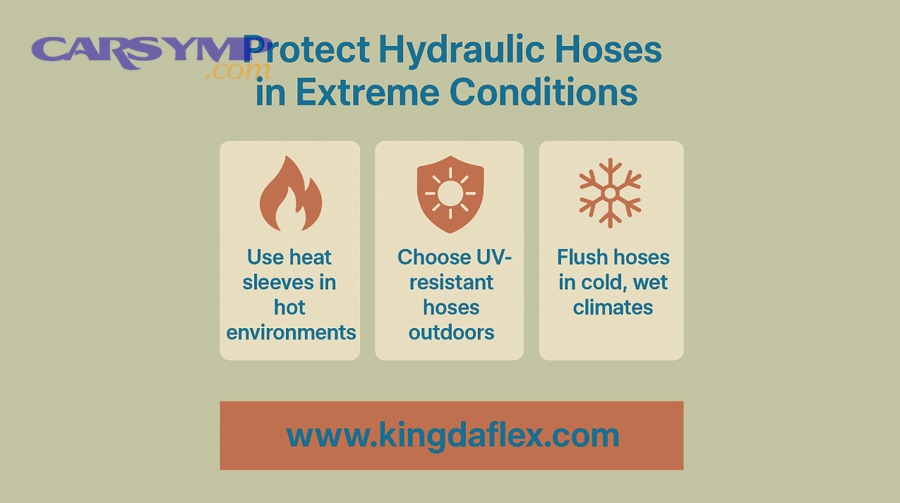
2) Heat exposure (fluid + ambient)
- What it looks like: hardened cover, cracks, brittleness, oil seepage, blisters
- Why it happens: hot manifolds, turbo/exhaust proximity, high fluid temps, poor shielding
- How to prevent: heat shields, reroute, upgrade temp rating, manage fluid temperature
3) Pressure spikes and impulse fatigue
- What it looks like: sudden burst or reinforcement fatigue signs over time
- Why it happens: rapid valve closures, load shocks, pump compensation transients
- How to prevent: accumulators, pressure relief tuning, soft-start strategies, correct hose class
4) Twist / torsion
- What it looks like: spiral marks, end leaks, early fatigue near fittings
- Why it happens: wrong orientation during install, forced alignment, joint rotation
- How to prevent: alignment marks, correct fitting selection, add swivel/angle fittings where appropriate
5) Tight bends / kink risk
- What it looks like: flattened curve, kinks, flow restriction, hot spots
- Why it happens: hose too short, wrong routing path, no space allowance in full travel
- How to prevent: add length, change routing, use 45°/90° adapters correctly, respect bend radius spec
According to a study by Linköping University from the Department of Management and Engineering (published 2020), hydraulic hose systems can experience damaging vibration dynamics that lead to hose connection failures, making support stiffness, pre-tension, and routing stability important prevention factors.
Is “pressure spikes” more dangerous than steady high pressure?
Yes—pressure spikes are more dangerous than steady high pressure for preventing hose failures because they (1) accelerate impulse fatigue in reinforcement, (2) exceed sealing stability at fittings, and (3) create unpredictable peak stress even when gauges look “normal.” However, steady high pressure still matters because it reduces safety margin and increases heat generation.
Reason 1: Impulse fatigue happens at cycles, not just peaks
A hose can survive a steady operating pressure close to its rating for a long time, but repeated spikes can chew through its fatigue life.
Reason 2: Spikes attack the end connection
A surge can momentarily load the fitting/crimp interface harder than the hose body, especially if the hose is short, kinked, or pulling at the end.
Reason 3: Spikes are often “invisible”
Many systems sample pressure too slowly or at the wrong location, so the worst transient never shows up in routine readings.
Practical spike controls include: accumulator placement, snubbers, valve timing changes, relief setting verification, and reviewing hose selection for impulse performance—not only nominal working pressure.
According to a study by Purdue University from an engineering research program reported in 2016, hydraulic hoses are exposed to degradation drivers including pressure spikes and cycling fatigue, reinforcing why transient events should be treated as primary risk.
Can the wrong hydraulic fluid or contamination cause hose failure?
Yes—the wrong hydraulic fluid or contamination can cause hose failure because (1) incompatible fluid can swell or soften the tube, (2) heat plus chemical mismatch accelerates aging, and (3) particles erode internal surfaces and stress sealing interfaces. Moreover, fluid problems often create “hidden” damage that looks like random leaks later.
Compatibility failures often show up as:
- Tube swelling or softening
- Blisters or delamination
- Persistent weeping despite “good” torque
- Premature cracking (especially when combined with age and heat)
Contamination-driven failures often show up as:
- Valve sticking → pressure spikes → hose stress
- Abrasive wear in components that increases system heat
- Seal wear that causes leaks that look like hose problems
According to a study by Linköping University from the Department of Management and Engineering (2020), hose system behavior becomes increasingly sensitive to excitation as operating conditions change—supporting the idea that system-level conditions (flow dynamics and stability) can indirectly elevate failure risk.
What inspection checklist helps catch hose problems before they fail?
A prevention-focused inspection checklist combines fast daily checks with deeper weekly/monthly checks so you detect abrasion, looseness, and early leak signals before they become bursts or blow-offs. Next, you should separate observations into “monitor,” “schedule,” and “remove from service” categories.
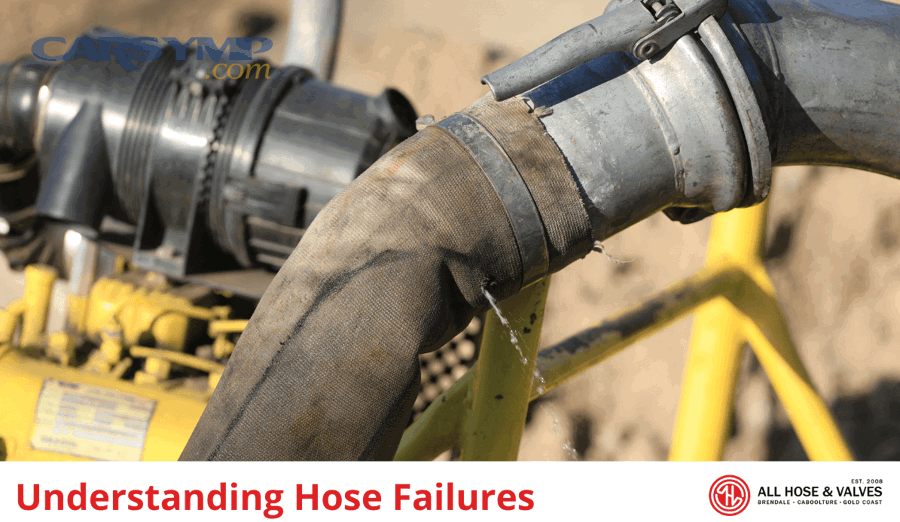
The biggest inspection mistake is treating all issues as equal. A light oil film might be monitor-worthy today, while exposed reinforcement is a remove-now condition. A good checklist makes those decisions consistent across the team.
What should a daily/shift walk-around hose inspection include?
A daily/shift inspection should include 8 quick checks: leaks, rubbing, clamp integrity, kinks, twist marks, heat exposure, fitting movement, and abnormal vibration—based on what changes fastest during normal operation. Then, you can catch early damage while it’s still cheap to fix.
Daily/shift checklist (2–5 minutes per machine zone):
- Leak scan: look for wetness or oil mist at ends and rub points
- Rubbing scan: identify shiny/worn cover spots where hoses touch structure
- Clamp/support scan: confirm clamps exist where planned and aren’t broken/loose
- Bend scan: check for tight bends at full steering/travel positions
- Twist scan: look for spiral distortion or misaligned layline/marking
- Heat scan: verify hoses aren’t touching hot surfaces; check shielding
- Fitting scan: check for visible movement, loosening, or rotated fittings
- Vibration scan: observe abnormal whip or resonance at operating RPM/flow
When you find a problem daily, your best move is to document it immediately—photo + location—because repeat failures often happen at the exact same rub point.
What should a weekly/monthly inspection include that daily checks miss?
Weekly/monthly inspections win in root-cause prevention, while daily checks win in early detection; weekly/monthly work adds measurement and verification steps that daily walk-arounds cannot. However, the goal is still simple: confirm the hose is operating inside design limits.
Weekly (focused verification):
- Confirm clamp spacing and whether added movement has changed contact points
- Inspect sleeves/guards for wear-through and replace if compromised
- Verify that hose length allows full articulation without tension at ends
- Check routing for new pinch points after other maintenance work
Monthly (deeper reliability checks):
- Review history: which hoses were replaced, where, and why
- Look for system changes: pump settings, relief adjustments, new loads
- Spot-check fittings for correct series, thread type, and sealing method
- Confirm temperature conditions in hot zones (near manifolds, coolers, engines)
This is also where your Hose replacement cost estimate becomes realistic: you’re not estimating only the part price, but the labor, downtime risk, cleanup, and safety exposure avoided by proactive action. Purdue’s published example notes replacement can be far cheaper than a failure event; as a real-world planning rule, many teams budget “replace during planned downtime” versus “replace after failure” as two different cost categories.
According to a study by Purdue University reported in 2016, the relative cost to replace a hose before it fails can be dramatically lower than the cost of a single failure occurrence, supporting planned inspection-based replacement.
Should you replace a hose immediately if you see weeping, blistering, or exposed reinforcement?
Yes—you should replace a hose immediately when you see exposed reinforcement, blistering, or active weeping because (1) reinforcement exposure signals structural weakening, (2) blisters often indicate heat/compatibility damage inside the hose, and (3) active leakage can escalate quickly into a safety incident. Moreover, these signs usually mean the hose has already lost its design margin.
Use this simple decision logic:
Remove from service now
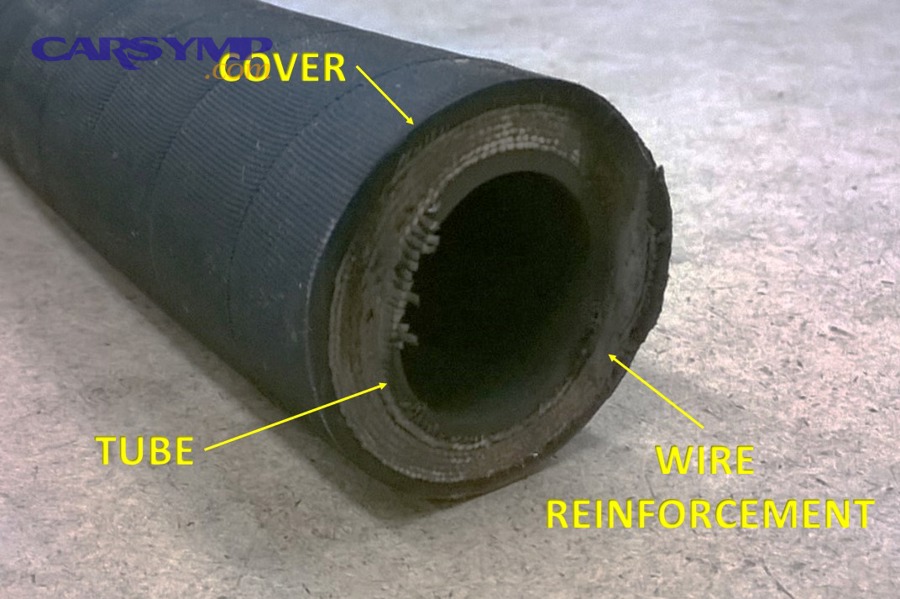
- Reinforcement braid/spiral visible
- Bulging/blistering anywhere on the hose
- Fitting movement, pulled-back cover, or signs of imminent blow-off
- A kink that does not relax when repositioned
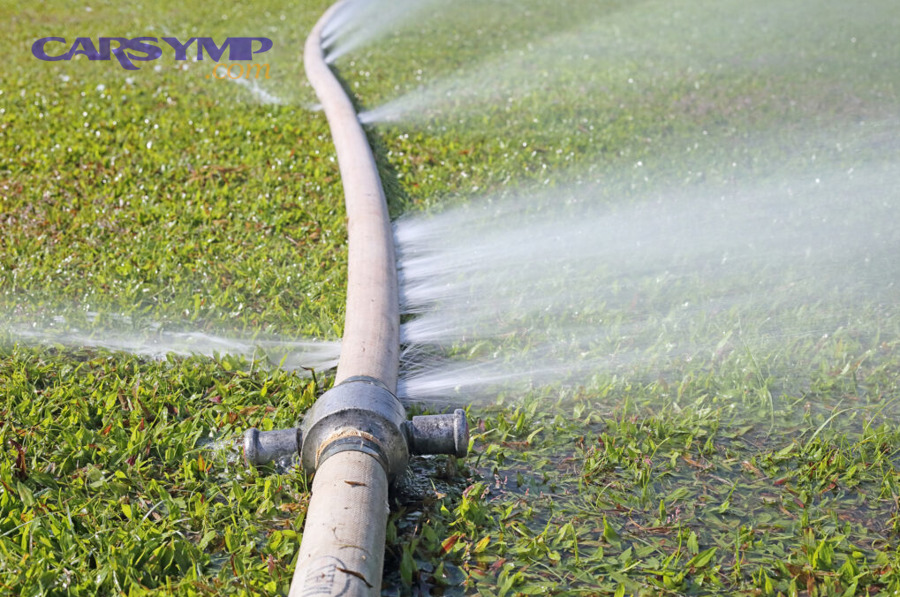
- Any leak spraying or misting (injection hazard)
Schedule replacement soon
- Minor cover cracking (especially in hot zones)
- Persistent weeping at a crimp after cleaning and rechecking conditions
- Chafing that has not yet exposed reinforcement
Monitor
- Dust/oil residue that is not active leaking after cleaning
- Cosmetic scuffs with no cover loss
According to a study by Linköping University from the Department of Management and Engineering (2020), vibration-induced behavior can lead to connection failures—supporting immediate action when movement and instability are observed near ends.
How do routing and installation prevent repeat hose failures?
Routing and installation prevent repeat hose failures by controlling geometry and motion—especially bend radius, twist, clamp support, and abrasion protection—so stress does not concentrate at the same spot every cycle. Next, you should treat routing as a design task with validation at full travel, not as an afterthought.
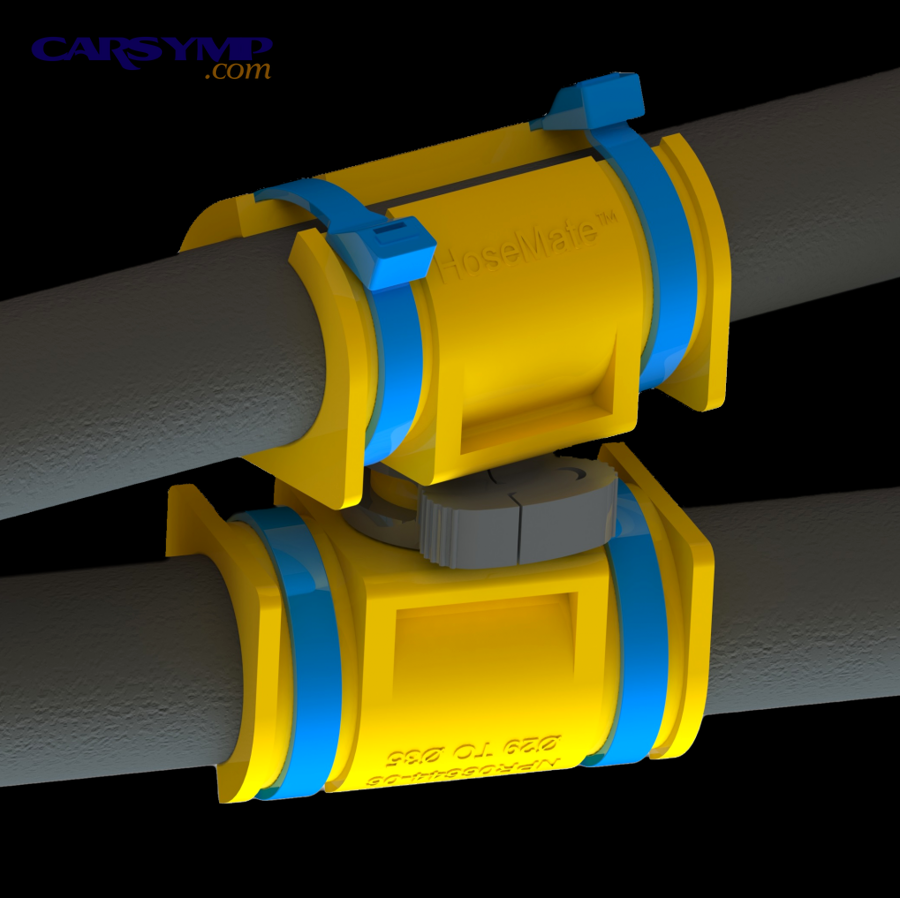
A hose rarely “fails in isolation.” It fails at a location where the system forces it to bend, rub, twist, or pull repeatedly. Fixing the hose without fixing the route usually recreates the same damage.
How do you route a hose to avoid tight bend radius and kinking?
You route a hose to avoid tight bend radius and kinking by following four steps—plan the path, size the length for full travel, protect contact points, and validate bend radius under motion—so the hose stays round and unstressed. Then, routing becomes repeatable across machines.
Step 1: Plan the path around movement, not around convenience
- Identify pivot points, swing arcs, steering travel, cylinder movement, and engine vibration zones.
Step 2: Choose length for full range of motion
- A hose that looks “neat” when stationary often becomes tight at full travel.
- Add length where needed, but avoid excessive slack that creates whipping.
Step 3: Control bend radius at the fitting
- Tight bends right at the fitting are common failure triggers.
- Use proper angled adapters (45°/90°) when they reduce bending moment, not when they create side load.
Step 4: Validate under operation
- Cycle the machine through full travel and observe hose behavior.
- Confirm the hose does not rub, pinch, kink, or pull at the ends.
This is also a good place to clarify terminology: “Routing” is the path; “Installation” is the method; “Support” is how you control motion. All three must work together to prevent repeat failures.
According to a study by Linköping University from the Department of Management and Engineering (2020), support stiffness and pre-tension can meaningfully influence hose stability and behavior, reinforcing the need for controlled support and validated routing.
Does twisting a hose during installation really shorten hose life?
Yes—twisting a hose during installation shortens hose life because (1) torsion stresses reinforcement, (2) it increases strain at the end connection, and (3) it encourages loosening and micro-movement at sealing surfaces. Moreover, twist usually stays hidden until leakage or fatigue appears.
To prevent twist:
- Use the hose layline (printed line) as a twist indicator
- Mark alignment points before tightening
- Avoid forcing a hose to “reach” a fitting that isn’t aligned
- Choose fittings that match the geometry rather than fighting it
A twisted hose is also more likely to rub or kink because it does not relax into a stable curve, especially when the machine cycles.
According to a study by Purdue University reported in 2016, cycling fatigue and pressure spikes are major degradation drivers—twist increases stress and accelerates fatigue effects under cycling.
What abrasion and heat protections reduce failures the most (sleeves, guards, standoffs, shielding)?
There are four main protection types—abrasion sleeves, guards, standoffs, and heat shielding—based on whether you are preventing rubbing, impacts, pinch contact, or thermal exposure. Then, you can select protection by the dominant damage mechanism.
Abrasion sleeves
- Best for: constant rubbing risk, hose-on-hose contact
- Use when: the hose touches anything during full travel
Guards / spiral wrap
- Best for: impact and general cover protection
- Use when: hoses run through congested zones
Standoffs / routing brackets
- Best for: eliminating contact entirely
- Use when: repeated failures happen at the same rub point
Heat shielding
- Best for: manifolds, exhaust/turbo proximity, hot engine zones
- Use when: cover hardens, cracks, or blisters in the same area
Because the secondary keyword “age and heat” often shows up as brittle cracking, heat protection is not optional in hot zones. Rubber aging accelerates when temperature is consistently high, and that aging reduces flexibility—making bend radius and vibration damage worse.
According to a study by Linköping University from the Department of Management and Engineering (2020), hose dynamics become increasingly sensitive with changing conditions, so reducing external excitation (contact and thermal stress) helps reduce stability-driven failures.
Hose clamps vs zip ties vs brackets: which supports are safest?
Hose clamps win for controlled support, brackets are best for routing structure, and zip ties should be limited to temporary management—because safety depends on load control, heat tolerance, and long-term vibration behavior. However, the “best” choice is usually a combination.
This is where Hose clamp types and best practices matter:
- Cushioned loop clamps (rubber-lined): best for vibration damping and cover protection
- Metal P-clamps (with proper liner): strong support for heavier hoses
- Routing brackets with grommets: best when you need fixed standoff from structure
- Zip ties: acceptable for light bundling in low-heat, low-vibration zones, but risky as primary support
Best practices:
- Clamp near bends to prevent whip, but don’t clamp so tight you crush the cover
- Avoid clamping at the exact point where the hose must flex each cycle
- Use two-point support when vibration is severe
- Confirm clamps do not create a new abrasion edge
According to a study by Linköping University (2020), support stiffness has a large impact on stability and dynamic behavior, which aligns with choosing support methods designed to control motion rather than improvised restraint.
How do you choose the right hose and fittings to prevent failure in the first place?
You choose the right hose and fittings by matching pressure, temperature, compatibility, and motion requirements—then verifying fitting series and assembly method—so the hose assembly is correct as a system, not just as a part number. Next, selection becomes prevention because the wrong spec creates failure even with perfect routing.
Selection mistakes usually fall into three traps:
- Choosing by working pressure only
- Ignoring temperature and movement
- Mixing fitting series or sealing types
Is a higher pressure-rated hose always better than the correct-rated hose?
Higher pressure wins in safety margin, correct-rated wins in flexibility and routing reliability, and the optimal choice depends on your dominant constraint (spikes vs bend radius vs space). However, “over-spec” can backfire if stiffness forces tighter routing or creates pulling at ends.
Higher pressure-rated hose advantages
- More burst margin for spike-prone circuits
- Potentially better impulse capability (depending on class)
Higher pressure-rated hose drawbacks
- Stiffer hose may violate bend radius in tight spaces
- Stiffness can increase strain at fittings during motion
- May require different clamps/space allowances
The better decision is to:
- Understand your real pressure profile (including spikes)
- Choose a hose designed for your impulse needs
- Confirm bend radius can be respected in the installed path
According to a study by Purdue University reported in 2016, hoses are subject to pressure spikes and cycling fatigue, supporting selection decisions that consider transients and fatigue—not only nominal working pressure.
What fitting and connection mistakes most often cause leaks or blow-offs?
There are six common fitting mistakes—wrong thread/seat type, mismatched hose and fitting series, incorrect crimp spec, damaged sealing surfaces, mis-torque, and side loading—based on how they compromise sealing and retention. Then, prevention becomes a repeatable quality gate.
Common mistakes:
- Thread mismatch: NPT vs BSPP vs metric; “it fits” is not “it seals”
- Seat mismatch: 37° flare vs ORFS vs flat-face; wrong seat equals micro-leaks
- Wrong crimp diameter: too loose = blow-off risk; too tight = tube damage
- Poor hose prep: contamination, incorrect skive, damaged reinforcement during prep
- Torque errors: over-torque cracks seats; under-torque leaks; both invite vibration loosening
- Side loading: fitting forced into alignment instead of using correct angle adapter
This section is where you can safely discuss cost without pretending one number fits all. A Hose replacement cost estimate depends on hose size, pressure class, fitting type, and access labor. The smarter estimate model is: parts + labor + downtime risk + cleanup + safety exposure. Purdue’s example underscores that the avoided cost of failure can dwarf the part cost.
According to a study by Purdue University (2015 dissertation related to LifeSense hose development), impulse-style testing saw many failures associated with fittings blowing off, illustrating how connection integrity can dominate outcomes.
Should maintenance teams build hoses in-house or buy pre-assembled hoses?
In-house building wins for speed and control, pre-assembled wins for standardized quality and reduced assembly risk, and the optimal approach depends on criticality and your quality system maturity. However, either approach fails if you don’t control specs, crimp verification, and routing.
In-house building is best when:
- You need fast turnaround and have trained technicians
- You maintain calibrated crimp equipment and verified charts
- You standardize hose/fitting families to reduce mix-ups
Pre-assembled is best when:
- You want consistent manufacturer assembly
- You operate in high-liability environments
- You lack crimp verification tools or training bandwidth
A blended model often works best: keep common assemblies in inventory while buying critical or specialized assemblies pre-made.
Practical note (without changing the article’s hydraulic focus): some maintenance teams also handle coolant hoses. If your shop is cross-functional, keep procedures distinct—hydraulic hose failures are pressure-impulse dominated, while Radiator hose replacement steps are typically thermal/aging dominated. In coolant work, common steps include depressurize/cool, drain safely, remove clamps, replace hose, refill and bleed air, and verify leaks—similar in workflow discipline but not in pressure hazard profile.
According to a study by Purdue University (2016), planned replacement and detection strategies can reduce downtime and risk, supporting investment in either robust in-house quality gates or standardized assemblies.
What operating and maintenance habits reduce downtime from hose failures?
The best operating and maintenance habits reduce downtime by preventing “surprise stress” on hoses—especially spike events, overheating, vibration instability, and undocumented changes—so hoses stay predictable across cycles. Next, these habits turn prevention into culture rather than heroics.
The habits that matter most are the ones that reduce variability:
- Avoiding harsh valve slams and shock loads where possible
- Managing fluid temperature and keeping cooling effective
- Fixing vibration sources rather than letting hoses “deal with it”
- Replacing hoses before they fail in critical circuits
- Documenting changes so repeated failures aren’t treated as mysteries
Can a hose replacement schedule reduce failures better than “run to failure”?
Yes—a hose replacement schedule reduces failures better than run-to-failure because (1) it replaces assemblies before fatigue margin collapses, (2) it allows replacement during planned downtime, and (3) it prevents secondary damage from leaks, cleanup, and unsafe bursts. Moreover, scheduling improves inventory planning and reduces emergency work.
A practical scheduling approach is criticality-based:
- High-criticality circuits: replace on schedule (hours, cycles, or time-in-service)
- Medium-criticality circuits: replace when condition indicators appear
- Low-criticality circuits: monitor closely, but still prevent known hazards
Scheduling should also account for environment:
- Hot zones accelerate aging (age and heat)
- Outdoor UV exposure accelerates cover degradation
- High vibration zones reduce life through fatigue and end loosening
According to a study by Purdue University reported in 2016, replacing a hose before failure can be substantially less costly than a failure occurrence, supporting scheduled preventive replacement for critical circuits.
What should you document after every hose replacement to prevent repeat issues?
After every hose replacement, you should document seven items—location, spec, failure mode, suspected cause, routing notes, photos, and date/cycles—because documentation (1) prevents repeat failures at the same point, (2) improves selection accuracy, and (3) turns tribal knowledge into a system. Moreover, documentation makes your next inspection smarter.
Document this minimum set:
- Equipment + location (exact hose run identification)
- Hose spec (size, pressure class, temperature rating, manufacturer series)
- Fitting spec (type, seal method, angles, series match)
- Failure mode (weeping, blow-off, abrasion exposure, burst, etc.)
- Suspected cause (abrasion, spike, heat, twist, compatibility)
- Routing notes (clamps, sleeves, changes made)
- Evidence (photos, measurements, replaced clamp condition)
When you collect this consistently, you can spot patterns like “every burst happens after a valve retrofit” or “every end leak happens on hoses installed too short.”
According to a study by Linköping University (2020), system dynamics and support conditions can influence connection failures; documenting routing and support changes helps prevent recurrence.
How can you build a hose reliability program that prevents failures long-term (beyond basic checks)?
A hose reliability program prevents failures long-term by standardizing selection, routing rules, inspection cadence, and quality verification—so reliability is engineered into everyday work. Next, you’ll expand beyond basic checks into standards, traceability, and specialized edge cases.
A program approach usually includes:
- A standard hose library (approved series and fitting families)
- Routing standards (clamp spacing guidance, abrasion protection rules)
- Training (installation, torque, twist prevention)
- Records and tagging (so you can learn from failures)
- Quality gates for assembly (especially if building in-house)
Which standards or performance ratings (SAE/ISO) help you select hoses more reliably?
SAE and ISO hose performance ratings help you select more reliably by defining pressure classes, test expectations, and construction categories—so you can match the right hose to your duty cycle rather than guessing. Then, procurement decisions become defensible and consistent.
What to do in practice:
- Use standards as a screening tool (is this hose built for constant pressure? for impulse-heavy duty?)
- Confirm the supplier’s hose series is appropriate for your application (pressure spikes, temperature, motion)
- Standardize a short list of approved series to reduce mix-ups
According to a study by Purdue University (2015 dissertation related to high-pressure LifeSense hose development), impulse-style testing and monitoring were central to understanding hose behavior, reinforcing the value of selecting hoses with known performance characteristics under cycling.
How do hose tagging and maintenance logs (ID/QR) reduce repeat failures?
Hose tagging and logs reduce repeat failures by enabling traceability—so you can connect location, duty cycle, installation method, and time-to-failure without relying on memory. Moreover, tagging turns scattered events into actionable trends.
A simple tagging/log system supports:
- Identifying “problem locations” that need rerouting or shielding
- Confirming whether failures cluster around certain hose series or fittings
- Tracking time-in-service to improve replacement planning
- Training feedback (which installation errors appear repeatedly)
If you start small, start with critical circuits and expand once the data becomes useful.
According to a study by Purdue University reported in 2016, early detection and planned replacement strategies can mitigate downtime and risk—tagging supports these strategies by making condition and history visible.
What crimp verification steps (go/no-go, crimp charts) improve assembly quality?
Crimp verification improves assembly quality through four checks—correct hose/fitting match, correct crimp target, go/no-go measurement, and post-assembly inspection—so end failures and blow-offs become rare. Then, in-house assembly becomes safer and more consistent.
Four verification steps:
- Match verification: confirm hose and fitting series are compatible
- Crimp chart verification: follow manufacturer specs (not “close enough”)
- Measurement verification: use go/no-go gauges or calibrated measurement tools
- Inspection verification: check hose insertion depth, orientation, and cleanliness
This is also where you prevent “silent defects” that only show up under impulse loads.
According to a study by Purdue University (2015 dissertation), fitting blow-off failures during testing were common, highlighting why end-connection verification is a high-leverage quality gate.
When do rare requirements matter (antistatic hose, specialty fluids, cold-start surge control)?
Rare requirements matter when your environment introduces nonstandard risks—static discharge hazards, specialty fluid chemistry, or cold-start viscosity spikes—because standard hose choices may fail even when routing looks perfect. Moreover, these edge cases often show up as “mysterious” early failures.
Use these decision cues:
- Antistatic / conductive requirements: dusty plants, explosive atmospheres, sensitive electronics zones
- Specialty fluids: biodegradable fluids, unusual additives, aggressive washdown chemicals—verify compatibility
- Cold-start surge control: winter operations where cold fluid increases pressure spikes and stiffness; review surge mitigation and routing flexibility
- Microbore sensitivity: small-diameter hoses that are more routing-sensitive and can overheat locally under restriction
According to a study by Linköping University (2020), hose dynamics and stability can become sensitive under changing conditions; rare environmental or operating shifts can amplify failure risk if not accounted for.
Evidence (if any)
According to a study by Purdue University from an engineering technology research team, in 2016, researchers noted that hydraulic hoses are subject to wear and degradation due to abrasion, cycling fatigue, pressure spikes, UV radiation, and incompatible fluids, and they highlighted the economic advantage of replacing a hose before failure.
According to a study by Linköping University from the Department of Management and Engineering, in 2020, researchers described how vibration-related dynamics can contribute to hydraulic hose connection failures and emphasized the influence of support conditions on hose stability.