


You can prevent most repair scams and upsells by controlling three things: proof, permission, and paperwork—asking for evidence of the problem, approving work in writing, and verifying the final invoice matches what you authorized. That simple system is what separates “I hope this is fair” from “I can prove what’s fair.”
Next, you’ll learn the most common ways shops turn normal maintenance into costly add-ons, plus the fastest ways to verify whether a recommendation is real—using measurements, service intervals, and clear “show me” questions that don’t require you to be a car expert.
Then, you’ll get the exact requests that reduce surprise charges: what a written estimate must include, how to set a “not-to-exceed” limit, and the Questions to ask about warranty and parts so you know what you’re paying for and what protection you actually have.
Introduce a new idea: once you understand what honest repairs look like, you can spot the red flags in real time—before you approve extra work—and you’ll know what to do if you suspect you were pushed into a rip-off.
What does “repair scam” or “upsell” mean at a mechanic?
A repair scam or upsell is a recommendation or charge that increases your bill by exaggerating urgency, hiding options, or billing for work you didn’t need or didn’t approve—often by blurring the line between “helpful maintenance” and “must-do repair.” More importantly, the moment a shop avoids evidence, skips approval, or won’t document costs, the risk of a rip-off rises fast.

Specifically, it helps to separate three categories of shop recommendations so you can react correctly:
- Legitimate repair (fixing a confirmed fault): There’s a symptom, a test result, and a clear reason the part failed.
- Legitimate maintenance (scheduled or condition-based): There’s an interval (miles/time) or a measurement (wear thickness, tread depth, battery test).
- Profit-driven upsell (optional, unverified, or bundled): The recommendation relies on fear (“unsafe”), vague language (“needs service”), or bundle pricing that hides what you’re actually buying.
Is every recommended service an upsell?
No—not every recommendation is an upsell because (1) cars genuinely need wear items replaced, (2) manufacturers publish service intervals that prevent failures, and (3) a shop can identify real risk with measurements and tests. To better understand what you’re hearing at the counter, treat every recommendation as a claim that needs one of three forms of support: an interval, a measurement, or a test result.
Here’s a practical way to decide in under a minute:
- If it’s scheduled: Ask, “Which interval are you using—miles or time—and where does my car sit on that schedule?”
- If it’s condition-based: Ask, “What’s the measurement right now (mm, %, volts, psi), and what’s the threshold?”
- If it’s a repair: Ask, “What test confirmed the fault, and what would you see if the part were healthy?”
If the shop can’t answer those questions clearly, you’re likely looking at an upsell—or at least a recommendation that isn’t ready to be approved.
What’s the difference between a rip-off repair and an honest repair?
A rip-off repair typically wins with pressure, while an honest repair wins with proof—and that contrast (“rip-off vs honest repair”) is the fastest mental filter you can use at the counter. However, the difference becomes obvious when you compare how each one handles evidence, options, and authorization.
To make it concrete, use this comparison checklist:
| Criterion | Honest repair | Rip-off pattern |
|---|---|---|
| Evidence | Shows tests, measurements, photos, or the failed part | Uses vague claims (“it’s bad”) without proof |
| Options | Explains OEM vs aftermarket choices and trade-offs | Pushes one expensive option without explaining |
| Authorization | Gets clear approval before extra work | “We already did it” or “you have to” pressure |
| Pricing | Itemized parts/labor, clear hours and rates | Bundled fees, mystery charges, or inflated labor |
| Risk framing | Prioritizes: safety now vs plan soon vs monitor | Labels everything urgent to force yes |
Evidence sentence: According to a study led by Northwestern University’s Kellogg School of Management in 2013, women were quoted prices about 6% higher on average than men for the same repair inquiry, but asking for a price reduction improved outcomes—showing that preparation and assertive questions can reduce unfair pricing.
Can you avoid most repair scams with a simple pre-visit checklist?
Yes—you can avoid most repair scams and upsells because (1) you reduce information gaps that invite “mystery diagnosis,” (2) you pre-commit to approval limits that stop surprise charges, and (3) you choose a shop with transparent processes instead of relying on luck. Next, the goal is to walk into the appointment with enough structure that the shop has less room to steer the story.
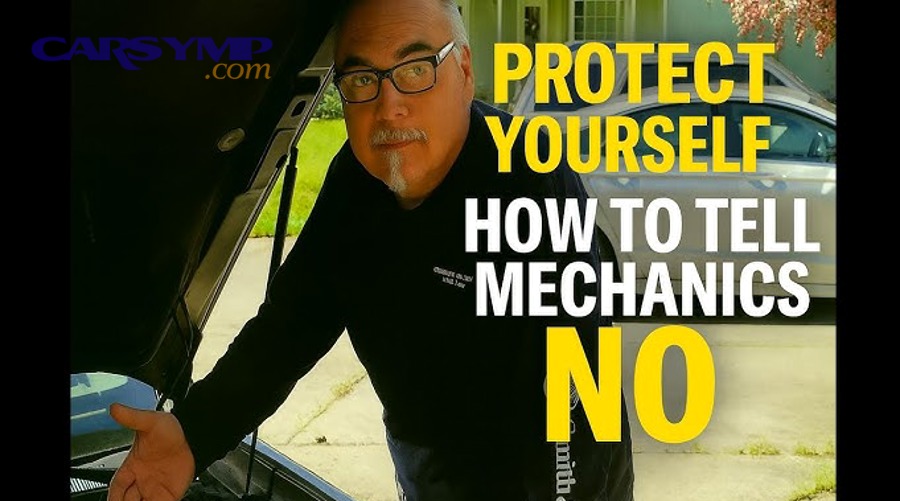
A pre-visit checklist doesn’t need to be complicated. It needs to prevent three common traps:
- The vague symptom trap: “It’s making a noise” becomes a blank check for exploratory labor.
- The urgency trap: “We can’t let you leave” pushes you into same-day approvals.
- The authority trap: “Trust me” replaces documentation.
Use this checklist before you book:
- Write the symptom in one sentence (when it happens, speed, temperature, turning/braking).
- Note the timeline (sudden vs gradual, after a pothole, after another repair).
- Gather proof (a short phone video of the noise, photos of warning lights).
- Pull your maintenance history (last oil change, brakes, tires, battery, major services).
- Set your approval rule (diagnosis-only first, plus a not-to-exceed amount).
How do you choose a trustworthy shop without overpaying?
A dealership often wins in brand-specific tools and recalls, an independent mechanic often wins in value and flexibility, and a well-run chain can be best for standardized routine services—so the “best” choice depends on your car, your problem, and your need for documentation. On the other hand, price alone is a weak signal; process transparency is a strong one.
Here’s how to choose without guessing:
- Match the shop to the job:
- Complex electronics, recalls, warranty work → dealer or specialist
- General repairs, brakes, suspension, cooling → strong independent mechanic
- Basic maintenance (oil, tires) → any shop with clear documentation
- Look for visible process cues: online estimates, digital inspections, itemized invoices, clear warranty language.
- Ask one test question: “Do you document recommendations with photos or measurements?” A trustworthy shop answers quickly.
Also, if you want long-term protection against scams, focus on Building a relationship with a mechanic. Repeat business encourages honesty because the shop values lifetime revenue more than a one-time upsell.
What information should you bring to prevent “mystery diagnosis” pricing?
There are 5 main types of information to bring—symptoms, evidence, history, constraints, and goals—because those five items reduce ambiguity and force the diagnosis to become specific. To illustrate how this blocks upsells, each item narrows the shop’s “interpretation space.”
Bring:
- Symptom description: when it occurs, how often, what makes it better/worse
- Evidence: video/audio, photos of leaks, dashboard lights
- Recent work and parts: last repair invoice, what was replaced and when
- Constraints: “I need the car today,” “I’m okay leaving it,” “budget cap for diagnosis”
- Goal: “Fix the cause,” “confirm safety,” or “help me plan repairs over 3 months”
If you hand the shop this information up front, you shift the conversation from “sell me something” to “prove what’s true.”
Evidence sentence: According to a study led by Northwestern University’s Kellogg School of Management in 2013, consumers who signaled better price knowledge and asked for concessions often received better quotes—supporting the idea that entering a repair visit prepared changes outcomes.
What should you ask for to stop surprise charges and scope creep?
There are 4 core asks that stop surprise charges: a written estimate, a “not-to-exceed” authorization, a call-before-additional-work rule, and an itemized invoice—because those documents define the scope before money changes hands. Besides, shops that run clean operations are usually comfortable putting everything in writing.
This section is where you install your “guardrails.” The most expensive scams don’t start with a fake part; they start with unclear permission.
Use this exact script:
- “Please provide a written estimate with parts and labor broken out.”
- “I authorize diagnosis up to $___.”
- “Do not proceed with repairs beyond that without my approval.”
- “If you find additional issues, call/text me with an updated estimate first.”
What should a written estimate include to protect you?
A written estimate should include the condition to be repaired, the parts needed, and the anticipated labor charge, plus clear rules for approvals and fees—because those details are what you compare against the final invoice. More specifically, estimates protect you only when they’re detailed enough to eliminate “interpretation.”
A strong estimate includes:
- Your complaint in writing (“vibration at 60–70 mph,” not “check car”)
- Parts line items (part name + quantity + part type if possible)
- Labor hours and labor rate (hours × rate = labor total)
- Fees and supplies (shop supplies, disposal, diagnostic fee)
- Taxes and total “out-the-door” estimate
- Validity period
- Approval policy (no additional work without permission)
If you want an extra layer of protection, ask the shop to add:
- “Customer must approve any work above $___.”
- “Customer requests return of replaced parts.”
Should you authorize “diagnosis only” first?
Yes—authorizing “diagnosis only” first is usually smart because (1) it limits your spend before the problem is confirmed, (2) it forces test-based reasoning instead of parts guessing, and (3) it gives you a clean checkpoint to seek a second opinion. Then, once you have a confirmed fault, you can approve the repair with better confidence.
Use a two-step approval:
- Step 1: Diagnosis authorization (set a cap; request findings in writing)
- Step 2: Repair authorization (approve only after you see the estimate and options)
This approach is especially useful when a shop recommends multiple repairs at once, because it prevents “parts cannon” behavior—replacing parts in hopes the symptom goes away.
What phrases help you decline upsells without sounding confrontational?
There are 6 reliable phrases that decline upsells politely—because they shift the conversation from opinion to proof and prioritize safety without agreeing to everything. Moreover, these phrases help you stay calm under pressure, which is where most people lose control.
Use these:
- “Is this required for safety today, or can it be scheduled?”
- “What measurement shows it’s needed (mm, %, volts, psi)?”
- “What’s the risk if I wait two weeks?”
- “Can you show me the worn part or a photo?”
- “What are my options for parts—OEM vs aftermarket—and price difference?”
- “Please list must-do vs nice-to-do separately.”
These are also great Questions to ask about warranty and parts, because they naturally lead to: “What warranty covers this part and labor, and for how long?”
Evidence sentence: According to a study led by Northwestern University’s Kellogg School of Management in 2013, asking for a concession (like a discount) changed quote outcomes for many callers, suggesting that direct, structured questions can reduce inflated pricing.
Which upsells are most commonly unnecessary—and how do you verify them?
There are 3 main categories of commonly unnecessary upsells—bundled flush packages, vague “service” add-ons, and premature replacement claims—based on whether they lack a manufacturer interval, a measurement, or a confirmed test result. Especially when a shop frames everything as urgent, verification is what protects your wallet.
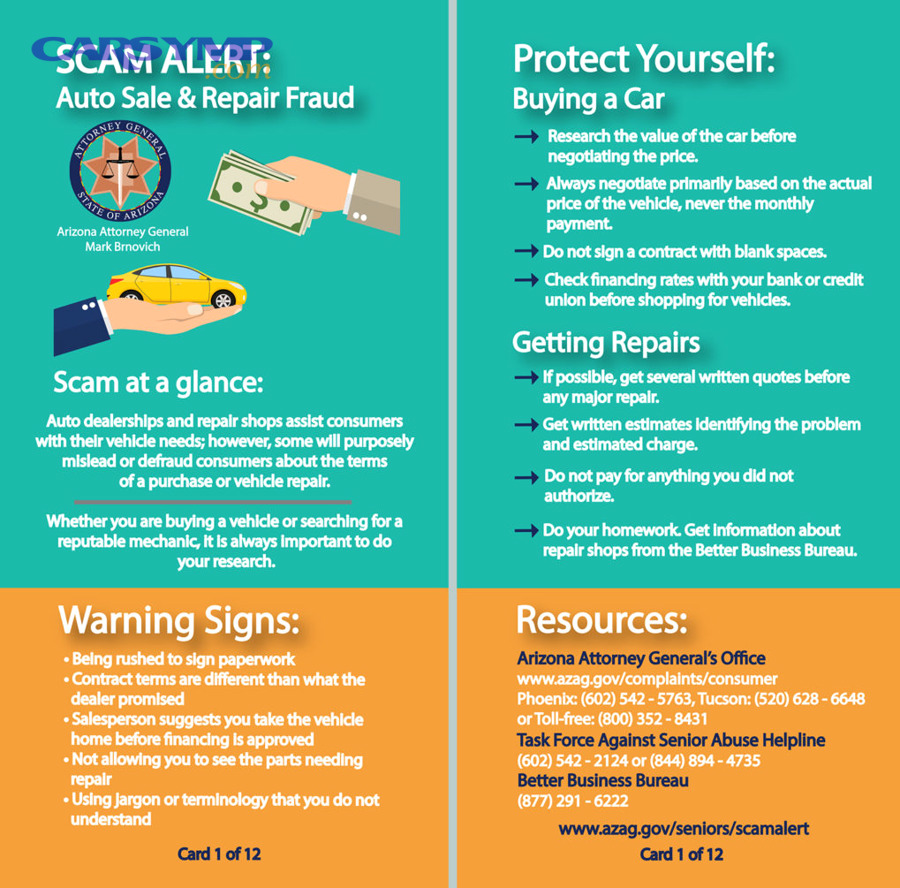
The strategy here is not “say no to everything.” It’s “say yes when the shop proves it.”
Which services are most often pushed as urgent but aren’t?
There are 7 common services that are often pushed as urgent—based on how frequently they’re sold without measurements or a clear interval. For example, these are routinely bundled into expensive “packages” that hide what you’re paying for.
Common “urgent” upsells to verify before approving:
- Fuel injector cleaning (unless there’s a drivability issue and testing supports it)
- Transmission flush packages (interval varies; condition-based decisions matter)
- Coolant flush packages (often sold early without evidence)
- Power steering flush (frequently unnecessary on many vehicles)
- Additive treatments (“restores performance”)
- Cabin/engine air filters (cheap and visible—ask to see them)
- “Brake service” add-ons beyond pad/rotor needs (ask for pad thickness)
A practical rule: if a service doesn’t come with a measurable threshold or a published interval, treat it as optional until proven.
How can you verify wear items like brakes, tires, battery, and fluids?
You can verify wear items by using 4 simple checks—measurement, visual confirmation, test printouts, and trend tracking—because those checks turn a sales claim into a factual statement. To better understand how easy this is, start with the two wear items most often upsold: brakes and tires.
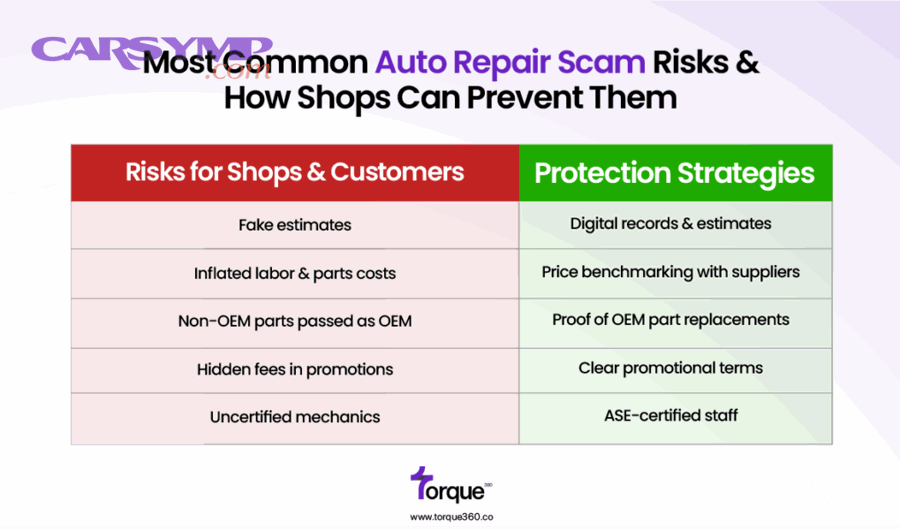
Verification checklist:
- Brakes: Ask for pad thickness in millimeters and rotor condition; request a photo.
- Tires: Ask for tread depth measurement and compare to legal/safety thresholds; ask to see uneven wear patterns.
- Battery: Ask for a battery test printout (CCA/health) and charging system check.
- Fluids: Ask for condition evidence (color/contamination) and interval relevance (miles/time).
Here’s a simple table you can use to anchor decisions:
| Item | What to ask for | What “proof” looks like |
|---|---|---|
| Brakes | “Pad thickness (mm)?” | Measurement + photo |
| Tires | “Tread depth (32nds or mm)?” | Measured values + wear pattern |
| Battery | “Test printout?” | CCA/voltage/health report |
| Fluids | “Interval + condition evidence?” | Interval match + contamination signs |
What’s the difference between preventive maintenance and unnecessary “package” work?
Preventive maintenance wins when it matches manufacturer intervals and real conditions, while unnecessary package work wins when it bundles vague services to inflate price—so the difference is whether the recommendation is anchored to your vehicle’s needs. Meanwhile, packages often remove your ability to choose, which is why they’re profitable.
Use this quick comparison:
- Preventive maintenance: “Your coolant interval is X years; you’re at X+1; fluid test shows degradation.”
- Package work: “We recommend our platinum flush bundle today,” with no interval, no test, and no measurement.
If you want to keep the benefits of maintenance without the package trap, ask the shop to unbundle recommendations into itemized lines with evidence and timing: “Do now,” “plan soon,” “monitor.”
Evidence sentence: According to a study led by Northwestern University’s Kellogg School of Management in 2013, quote outcomes changed when consumers signaled preparation, supporting the idea that verification and specificity reduce the chance of unnecessary upsells.
What are the biggest red flags of a scam while you’re at the shop?
There are 6 major red flags of a scam—pressure, vagueness, refusal to document, surprise work, bundled pricing, and “no options”—because each red flag reduces your ability to verify and consent. More importantly, scams often show up in communication style before they show up on the invoice.

Use these red flags as “stop signs.” When you see one, slow down, ask for proof, and refuse new approvals until you get documentation.
Is “You need this right now or it’s unsafe” always a red flag?
No—it’s not always a red flag because (1) some failures are genuinely dangerous (brakes, steering, severe tire damage), (2) shops have liability concerns, and (3) immediate repair can prevent catastrophic breakdowns. However, when urgency is real, the shop can explain it with evidence and a clear risk timeline.
How to test whether “unsafe” is real:
- Ask: “What exactly could fail, and what would I experience if it fails?”
- Ask: “Can you show me the measurement or damage?”
- Ask: “Is it safe to drive home or do I need a tow?”
A trustworthy shop gives a calm answer, shows proof, and discusses options (tow, temporary fix, or staged repair).
What are the telltale signs of bait-and-switch estimates?
Bait-and-switch estimates are defined by a low initial quote that escalates sharply after the car is disassembled or the work begins—often without documented approval—so the “switch” happens when you feel trapped. In addition, bait-and-switch frequently uses verbal ambiguity (“about,” “should be,” “probably”) instead of written scope.
Watch for:
- The estimate lacks parts/labor breakdown.
- The shop starts work before you approve.
- The shop calls with a much higher number but can’t provide itemization.
- The shop says, “We already installed it,” before you consent.
- The final invoice includes extra line items you never discussed.
Countermove: “Please pause work and email/text the updated estimate with parts and labor before proceeding.”
Should you ask to see old parts or photos of the problem?
Yes—you should ask to see old parts or photos because (1) it discourages billing for parts not used, (2) it creates a record for warranty and disputes, and (3) it helps you learn what normal wear looks like over time. Besides, this habit supports Building a relationship with a mechanic because it signals you care about transparency, not confrontation.
How to ask in a cooperative tone:
- “Can you keep the replaced parts for me?”
- “Can you take a photo before you replace it?”
- “Can you label the part on the invoice so I know what warranty applies?”
Evidence sentence: According to a study led by Northwestern University’s Kellogg School of Management in 2013, outcomes improved when consumers asked directly for better terms, reinforcing that clear requests—like proof and documentation—can reduce unfair practices.
How do you handle the invoice so you don’t pay for “rip-off” work?
You handle the invoice by using a 4-step invoice audit—match to estimate, verify authorizations, confirm parts/warranty details, and keep records—so you pay only for what was proven and approved. Thus, the invoice becomes your final defense against hidden charges and scope creep.
What line items on an invoice should trigger questions?
There are 8 line items that should trigger questions—because they often hide duplication, inflated time, or vague services. To better understand why these matter, remember that invoices are where “small” add-ons become a big total.
Ask for clarification when you see:
- Vague services (“system service,” “maintenance package”)
- Duplicated labor (same operation billed twice)
- Shop supplies fees that seem unusually high
- Disposal/environmental fees without explanation
- Unexpected diagnostic charges beyond what you authorized
- Labor hours that don’t align with the described work
- Parts with no part type (OEM/aftermarket/used/reman) when cost is high
- Warranty lines missing (no mention of coverage or duration)
A simple question works: “Can you show me how this line item relates to the estimate and my approval?”
Should you pay by credit card for protection?
Yes—paying by credit card can add protection because (1) it creates a clear transaction record, (2) it may give you dispute options if services were misrepresented, and (3) it helps you separate “payment” from “agreement” while you gather documentation. Then, if something feels wrong, you have a paper trail that’s easier to organize.
That said, don’t treat payment method as a substitute for prevention. Your strongest protection still comes from:
- Written estimate and authorizations
- Photos/old parts when relevant
- Clear notes on warranty and part type
This is also the best moment to ask your Questions to ask about warranty and parts:
- “Is the warranty parts-only or parts-and-labor?”
- “How long is coverage, and is it nationwide or only here?”
- “Are these OEM, aftermarket, or remanufactured parts?”
- “If this fails again, what does the warranty process look like?”
Finally, file your documents the same day (estimate, invoice, photos). That habit reduces stress and strengthens your position if a dispute arises later.
Evidence sentence: According to a study led by Northwestern University’s Kellogg School of Management in 2013, quote outcomes were influenced by consumers signaling preparedness and negotiating—supporting the broader point that documentation and assertive questions can reduce the risk of paying for rip-off work.
What should you do if you suspect you were scammed or pressured into upsells?
If you suspect a scam, you should follow a 3-part response plan—document, dispute, and de-risk—because those steps protect your money, preserve evidence, and prevent the situation from escalating into bigger mechanical or legal problems. In short, the goal is not to “win an argument,” but to build a clear factual record and seek a fair resolution.

What evidence should you gather before disputing a repair charge?
There are 6 key evidence items to gather—because disputes succeed when you can show what was promised, what was approved, and what was delivered. Specifically, you want to prove discrepancies, not emotions.
Collect:
- Written estimate (or the shop’s text/email quote)
- Final invoice (itemized)
- Authorization records (signed forms, texts, call logs, timestamps)
- Photos/video (digital inspection, damaged parts, dash warnings)
- Returned old parts (if you requested them)
- Timeline summary (what happened and when, in 6–10 bullets)
Pro tip: write a calm, one-page summary that compares estimate vs invoice line-by-line. That document often gets faster results than a long phone call.
When should you get a second opinion—and how do you do it fast?
Yes—you should get a second opinion when (1) the cost jump is large, (2) the shop can’t show evidence, or (3) the recommendation includes multiple major components—because a second opinion breaks the “pressure bubble” that makes scams work. Then, you can move quickly without making things worse.
Fast second-opinion process:
- Pause additional work: “Please stop work until I approve the updated estimate.”
- Request documentation immediately: photos, test results, measurements, codes.
- Ask about reassembly: if parts are disassembled, ask what it takes to reassemble safely for transport.
- Choose a specialist when needed: a brake/suspension specialist can confirm faster than a generalist for certain issues.
If you’re dealing with complex electronics, ask for printouts and codes; if you’re dealing with wear items, ask for measurements and photos.
Which escalation options work best: manager, corporate, card dispute, regulator, small claims?
The shop manager often wins for speed, a corporate escalation can win for policy enforcement, a card dispute can help with billing leverage, and small claims can be optimal for clear, documented damages—so the best route depends on how strong your documentation is and how much money is involved. Meanwhile, you should choose escalation based on facts, not frustration.
Comparison guide:
- Manager resolution: best first step when you have a clear invoice discrepancy.
- Corporate escalation (chains): best when the location won’t follow documented policy.
- Credit card dispute: best when you have evidence of unauthorized charges or misrepresentation.
- Regulator/consumer protection complaint: best when there’s a pattern (requires clear documentation).
- Small claims: best when damages are measurable and you can show proof of misconduct.
Start with the simplest step that can solve it: a manager conversation with your documents ready.
How can you prevent repeat issues next time (documentation + repeatable checklist)?
You prevent repeat issues by creating a repeatable “proof + permission + paperwork” checklist and using it consistently—because consistency trains both you and the shop to operate with clarity. More importantly, repeating good process is how you stop being treated like an easy target.
Your repeatable checklist:
- Choose a shop that documents recommendations (photos/measurements).
- Authorize diagnosis with a cap.
- Require approval for added work.
- Unbundle packages into itemized lines.
- Always ask for part type and warranty details.
- Store estimate/invoice in one folder.
If you want the strongest long-term defense, focus on Building a relationship with a mechanic you trust—especially a skilled independent mechanic—and ask upfront: What certifications matter for independents? Look for shop or technician credentials that show training and professionalism (and just as importantly, look for a shop that welcomes your questions without getting defensive).
Evidence sentence: According to a study led by Northwestern University’s Kellogg School of Management in 2013, consumers who asked directly for better terms often received improved outcomes, reinforcing that a repeatable habit of prepared questions reduces the chance of being overcharged.