Choose the Right Independent (Local) Mechanic vs Dealership: A Trust & Cost Checklist for Car Owners
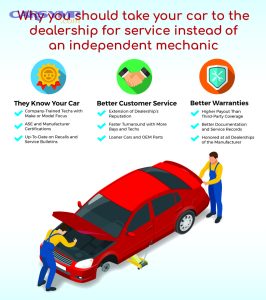
If you’re trying to decide where to service your car, the best choice is the one that matches your situation: an independent mechanic often wins for value, flexibility, and personalized care, while a dealership often wins for warranty work, recalls, and certain brand-specific software procedures.
If you lean toward an independent option, you still need a reliable way to judge quality, because “independent” can mean anything from an excellent specialist to a rushed, upsell-heavy shop—so the right checklist focuses on proof, process, and transparency.
If you want to compare costs correctly, you need to compare the same job with the same assumptions (labor hours, labor rate, parts type, and warranty), not just the final number on a quote.
Introduce a new idea: the sections below turn that decision into a practical, step-by-step framework you can use the next time your car needs maintenance, diagnosis, or repairs.
Should you choose an independent mechanic over a dealership for your car?
Yes—most drivers should consider an independent mechanic first because independents often deliver better value, more flexible parts options, and a more personal, accountable service experience—while the dealership remains the smarter choice for warranty/recall work and certain brand-locked procedures.
More importantly, the “right” answer depends on your car’s age, the type of problem, and the evidence a shop can show you.
To better understand the decision, start with the three most common reasons independents win—then look for the situations where the dealer is clearly the safer bet.
Is an independent mechanic usually cheaper than a dealership?
Yes—an independent mechanic is usually cheaper because overhead is often lower, parts sourcing is more flexible, and labor pricing can be more competitive; however, the cheapest quote is not always the best value.
However, you only benefit from lower pricing if the diagnosis is correct and the repair is done to spec the first time.
Here’s how to think about cost like a pro, using Understanding labor rate and flat-rate billing as your lens:
- Labor rate vs. labor time are separate levers. A shop can charge a lower hourly rate but book more hours, or charge a higher rate but solve the issue faster with better tooling and experience. AAA notes that mechanic labor rates commonly fall in a broad range and vary widely by location and shop type. (aaa.com)
- Flat-rate time guides many quotes. Many repair estimates use standardized labor times (flat-rate) rather than a stopwatch. That can protect you from inefficiency—but it can also hide shortcuts if a shop rushes steps that matter.
- Parts choice changes the final number dramatically. Dealers generally default to OEM parts, while independents may offer OEM, aftermarket, or remanufactured parts. A lower price can be legitimate (good aftermarket) or risky (unknown brand, poor fitment, no warranty clarity).
A practical takeaway: treat “cheaper” as a hypothesis until you compare what the quote includes (parts brand/type, warranty, labor hours, diagnostic steps).
Is dealership service always “better” for reliability and quality?
No—dealership service is not automatically better because repair quality depends on diagnostic discipline, technician skill, and documentation; many independent shops outperform dealers on satisfaction and perceived value.
On the other hand, dealerships do have real advantages for brand-specific service information, recalls, and some factory procedures.
To make the Independent mechanic vs dealership comparison fair, separate “capability” from “execution”:
- Capability advantages at dealers: factory scan tools, access to technical service bulletins (TSBs), software updates, recall campaigns, and brand training pipelines.
- Execution advantages often found at strong independents: direct communication with the person diagnosing the car, more flexibility in repair strategies, and more willingness to explain the “why” behind a recommendation.
Consumer Reports survey reporting has found independent shops tend to score higher on satisfaction with price, while dealerships often score lower on that dimension. (consumerreports.org)
That doesn’t mean every independent is better; it means you should evaluate the shop’s process rather than assume the logo guarantees quality.
Is it safe to use an independent mechanic for newer cars under warranty?
Yes—it is generally safe to use an independent mechanic for maintenance on a newer car because federal warranty rules prevent manufacturers from requiring dealer-only service unless they provide it for free; the key is documenting maintenance and using correct parts/fluids.
Moreover, the practical risk usually comes from poor documentation or wrong-spec parts, not from “independent” itself.
Two guardrails make it safe:
- Use correct specifications. Use the correct oil grade, fluid spec, and maintenance schedule; request documentation on invoices.
- Keep records. Save itemized invoices and note mileage/date for each service.
The Auto Care Association summarizes the Magnuson–Moss Warranty Act principle that manufacturers generally can’t require OEM parts or dealer service to keep a warranty valid and must show causation to deny coverage. (autocare.org)
A state consumer guidance page similarly explains you are not required to use the dealership for non-warranty service and highlights recordkeeping. (myfloridacfo.com)
If a shop won’t give you a proper, itemized invoice, that’s not just annoying—it can create warranty friction later.
What is an independent mechanic, and how are they different from a dealership service department?
An independent mechanic is a non-dealer automotive repair professional or shop that services vehicles without being tied to a specific manufacturer, typically offering flexible parts choices, varied vehicle coverage, and a relationship-driven service model.
Specifically, the difference from a dealership service department usually comes down to manufacturer affiliation, access pathways (software/recalls), and pricing structure.
Below, you’ll see how “independent” can mean several business models—and why that matters when you’re choosing where to go.

What does “independent (local) mechanic” mean in practice?
“Independent (local) mechanic” typically means a privately owned technician or auto repair shop that serves a community without a factory badge—ranging from a one-person operation to a multi-bay shop with specialized staff and equipment.
For example, one independent shop might be a generalist doing brakes and maintenance, while another is a make-specific specialist with advanced diagnostics.
Common independent formats include:
- Single-tech or small team shop: often high accountability and direct communication.
- Multi-tech general repair shop: broader capacity, faster scheduling, more systems coverage.
- Specialist independent: the “best of both worlds” when you need expertise, such as European-only, hybrid/EV-focused, or diesel specialists.
- Mobile mechanic: convenient for certain jobs, but may be limited for complex diagnostics, alignments, or procedures needing large equipment.
This is where Finding specialists for your car make becomes a real advantage: a brand-focused independent can deliver dealer-level familiarity without dealer pricing—if they have the tooling and information access.
How do independent shops and dealerships differ in parts, tools, and software access?
Independent shops win in parts flexibility and repair strategy, while dealerships often win in factory software access, recall workflows, and certain brand-locked programming procedures.
Meanwhile, modern cars are increasingly “software-defined,” so the tool gap matters more than it used to.
Key differences to understand:
- Parts sourcing:
- Dealerships typically use OEM parts by default.
- Independents can offer OEM, aftermarket, or remanufactured alternatives—sometimes saving money, sometimes improving availability.
- Scan tools and diagnostics:
- Dealerships have factory-level scan tools and direct access pipelines for many functions.
- Independents vary: top-tier shops invest heavily and can match many dealer capabilities; others are limited to basic code reading.
- Software updates and programming:
- Some procedures require manufacturer authorization or secure access.
- A strong independent may still perform “pass-through” programming or use authorized platforms, but capability varies by brand and model year.
The takeaway: you’re not choosing “independent vs dealer” in the abstract—you’re choosing the shop’s capability for your specific job.
How do warranties and service records differ between independents and dealerships?
Independents can protect your warranty just as well as dealers if they document maintenance properly and use correct parts/specs, while dealerships can be smoother for warranty claims because they live inside the manufacturer’s process.
In addition, service records aren’t only for warranty—they support resale value and help the next technician diagnose faster.
What to request (this will help later under Questions to ask about warranty and parts):
- Itemized invoice with parts, labor, shop supplies, and VIN/mileage.
- Parts details (brand, part number where possible, and whether OEM/aftermarket/reman).
- Warranty terms on both parts and labor, in writing.
- Maintenance schedule reference for routine service (e.g., “performed per manufacturer schedule at 60,000 miles”).
If a shop refuses to document clearly, you lose leverage and clarity—two things that matter most when the next problem appears.
How do you choose a trustworthy independent mechanic?
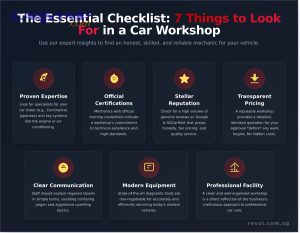
There are 4 main ways to choose a trustworthy independent mechanic—process transparency, credibility signals, communication quality, and proof on paper—because these factors predict whether the shop can diagnose correctly and stand behind the repair.
More importantly, you’re not just picking a place to fix today’s issue; you’re selecting a long-term partner for your car’s health.
This is the core of How to evaluate a local mechanic shop without guessing—use observable signals that correlate with competence and honesty.
Which trust signals matter most when evaluating an independent mechanic?
There are 6 high-signal indicators of a trustworthy independent mechanic: clear explanations, written estimates, consistent reviews, willingness to show evidence, realistic scheduling, and transparent warranty policies.
Specifically, these indicators reveal whether the shop relies on competence rather than pressure tactics.
Use this checklist:
- Clear explanation in plain language. The shop explains the cause, not just the symptom, and describes what they tested.
- Written, itemized estimate before work begins. Labor hours, labor rate, parts, fees, and taxes are visible.
- Evidence-based recommendations. Photos, measurements, scan data, or a demonstrated fault—especially for expensive jobs.
- Reviews and referrals that describe outcomes. This is where Using reviews and referrals effectively matters: look for patterns like “fixed it right the first time,” “showed me the old parts,” and “explained options.”
- Warranty offered and explained. The shop can tell you what’s covered and for how long without hedging.
- Professionalism in the basics. Clean paperwork, secure payment options, and a consistent intake process.
Consumer Reports emphasizes the value of word-of-mouth and credible recommendations when choosing a quality repair shop.
What questions should you ask before approving a repair?
There are 8 essential questions to ask before approving a repair because they force clarity on diagnosis, cost, risk, and accountability—areas where scams and misunderstandings thrive.
Moreover, these questions protect you from “parts cannon” repairs where shops replace components without confirming the root cause.
Ask these, in this order:
- What are my Car Symptoms telling you, and what’s the most likely root cause?
- What tests did you run to confirm it? (Not “we scanned it”; ask what the scan data means.)
- What would you do next if the first repair doesn’t solve it?
- Can you show me the evidence? (photos, readings, old parts, leak traces, worn measurements)
- What are my options? (OEM vs aftermarket parts, repair vs replace, urgent vs can-wait)
- What is the full out-the-door estimate? (parts, labor, fees, taxes)
- What warranty applies to parts and labor? (Get it in writing.)
- When will it be ready, and what could delay it? (Parts availability, additional findings)
These questions also operationalize How to avoid repair scams and upsells because honest shops can answer directly, while questionable ones tend to deflect or pressure you to “just approve it.”
How can you spot red flags that suggest you should avoid a shop?
There are 7 common red flags to avoid because they correlate with misdiagnosis, upselling, and disputes: vague pricing, no written estimate, pressure tactics, refusal to explain, inconsistent stories, hidden fees, and unwillingness to stand behind work.
However, one red flag doesn’t always mean “run”—it means “verify.”
- “We’ll know the price when we’re done.” A legitimate shop can give a range and a diagnostic plan first.
- No estimate, only a verbal number. Disputes start here.
- They won’t define diagnostics. If “diagnosis” means only reading codes, you can get misled quickly.
- They jump to expensive replacements without evidence.
- They won’t return calls or give updates.
- They refuse to show old parts (when appropriate). Not always possible, but a flat refusal is suspicious.
- Warranty is unclear or “case by case.” You want written terms.
A practical rule: if you feel rushed, slow the process down—good shops prefer informed customers because it reduces conflict later.
How do you compare cost fairly: independent mechanic vs dealership?
Independent shops often win on total value, dealerships can win on warranty-covered cost, and specialists (independent or dealer) are optimal for complex brand-specific issues—because cost fairness depends on what’s included, not just the final number.
In addition, comparing costs correctly prevents you from overpaying or choosing a cheap repair that fails early.
This section turns pricing into a transparent comparison model, anchored in Understanding labor rate and flat-rate billing.
What should a written estimate include so you can compare shops accurately?
There are 9 must-have items in a written estimate because they define scope, prevent surprises, and let you compare quotes line-by-line across any auto repair shop.
Specifically, this is how you avoid “cheap quote, expensive final bill.”
A complete estimate should include:
- Customer/vehicle info: VIN, mileage, year/make/model.
- Customer concern: the symptoms in your words (“Car Symptoms: intermittent misfire at idle,” etc.).
- Diagnostic line item: what diagnostics includes and its cost (or credit toward repair).
- Labor rate and labor hours (or flat-rate time).
- Parts list: brand/type (OEM/aftermarket/reman), quantity, and price.
- Shop supplies/fees: clearly labeled.
- Taxes: parts tax and any applicable labor tax (varies by state).
- Warranty terms: parts and labor duration.
- Assumptions and exclusions: what could change the estimate (additional damage, seized bolts, add-on calibrations).
AAA’s consumer-facing guidance on labor rates highlights that labor charges vary and depend on shop cost structure and region. (aaa.com)
So the “right” quote is the one that shows its math.
When is paying a diagnostic fee worth it—and what should diagnostics include?
A diagnostic fee is worth paying when it buys you a structured test plan that confirms root cause, prevents unnecessary parts replacement, and produces a clear repair recommendation you can verify—especially for intermittent or complex faults.
More importantly, diagnosis is not the same as pulling codes; codes are clues, not conclusions.
Diagnostics should include (for most drivability/electrical concerns):
- Interview + symptom replication: when it happens, conditions, recent repairs, fuel type, etc.
- Scan data beyond codes: freeze-frame data, live sensor readings, readiness monitors.
- Basic electrical checks when relevant: power, ground, voltage drop, connector integrity.
- Mechanical verification when relevant: compression/leak-down (if misfire), smoke test (if vacuum leak), fuel pressure test (if lean condition).
- Clear conclusion: the “why,” not just the “what.”
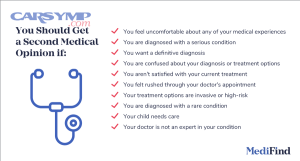
If a shop can’t describe their diagnostic steps, that’s a signal you may need When to seek a second opinion—especially if the estimate is expensive and the evidence is thin.
How do OEM parts, aftermarket parts, and remanufactured parts change total cost and value?
OEM parts usually win for exact fit and predictable performance, aftermarket parts often win for price and availability, and remanufactured parts can be optimal for high-cost assemblies when quality is verified—because each option trades cost against risk.
However, “aftermarket” is not one quality level; it ranges from excellent to questionable.
Use this decision frame:
- Choose OEM when:
- The part is safety-critical (brakes hydraulic components, steering components)
- The part is highly integrated (sensors, modules) and failure creates cascading issues
- Your vehicle is under warranty and documentation clarity matters
- Choose high-quality aftermarket when:
- The aftermarket part is a reputable brand with strong warranty support
- The OEM part is backordered or disproportionately expensive
- The part is common wear-and-tear with many proven alternatives (filters, many suspension components)
- Choose remanufactured when:
- The new OEM part cost is extreme
- The reman supplier has strong QA and warranty (alternators, starters, some driveline components)
This is why the most important pricing question isn’t “How much?”—it’s “What part exactly are you installing, and what warranty backs it?” (again: Questions to ask about warranty and parts).
Which repairs are better at a dealership, and which are better at an independent mechanic?
Dealerships are best for recalls, warranty repairs, and some brand-locked software procedures, while independent mechanics are often best for routine maintenance, common mechanical repairs, and value-optimized options—because the “best shop” depends on the job’s access needs and complexity.
Especially with newer cars, the dividing line often comes down to authorization, software, and calibration requirements.
This section gives you a job-based map so you don’t default to the wrong place.
Which situations strongly favor the dealership?
There are 6 situations that strongly favor the dealership: recalls, factory warranty claims, service campaigns, certain programming updates, persistent brand-specific faults with known TSB paths, and specialized tools required for factory procedures.
In addition, dealers can streamline warranty authorization because they operate within the manufacturer’s system.
Go to the dealer when:
- Recall work is involved. Recalls are managed by the manufacturer, and the dealer is usually the smoothest path.
- You need warranty-covered repairs. You can still diagnose elsewhere, but warranty approval may require dealer involvement.
- A manufacturer service campaign applies. These are often time- or VIN-specific.
- Software updates are required to fix drivability issues. Some updates are easiest at the dealer.
- Certain security or module replacements require factory authorization. Capability varies by brand.
- Brand-locked procedures or proprietary tools are required. This is more common than it used to be.
If you’re unsure whether your issue is recall/campaign-related, call the dealer with your VIN first—then decide.
Which situations strongly favor an independent mechanic?
There are 7 situations that strongly favor an independent mechanic: routine maintenance, brakes and suspension work, older vehicles, out-of-warranty repairs, cost-sensitive jobs with safe parts options, straightforward mechanical failures, and long-term preventive care.
Moreover, independent shops often excel at individualized attention and long-term maintenance planning.
Choose a strong independent when:
- Routine maintenance: oil service, filters, fluids, belts, spark plugs (done to spec and documented).
- Common repairs: brakes, suspension, wheel bearings, exhaust repairs.
- Out-of-warranty repairs: when you want options and value.
- Older vehicles: where dealer pricing can exceed the car’s value.
- Preventive planning: catching issues early and prioritizing repairs over time.
- You want direct communication: speaking to the diagnosing technician can reduce miscommunication.
- You want to build long-term service history with one team. This supports Building a relationship with a mechanic that pays off when problems get complicated.
A strong independent becomes your “home base” because they learn your car’s history and your preferences—OEM-only, value-focused, or performance-oriented.
What should you do when you’re not sure who’s better for the job?
Yes—you should slow down and choose by evidence when you’re unsure: get a diagnostic plan, request an itemized estimate, verify capability for your exact procedure, and seek a second opinion if the recommendation isn’t clearly supported.
Thus, uncertainty becomes a structured decision instead of a gamble.
Use this 5-step path:
- Define the problem clearly: write down symptoms, when they happen, and any recent work.
- Start with diagnosis quality, not price: choose the shop that can explain testing.
- Verify capability: ask whether they have done this exact repair on your make/model before.
- Compare written estimates line-by-line: same parts tier, same scope, clear warranty.
- Use “second opinion” strategically: If the job is expensive, safety-related, or diagnosis is vague, apply When to seek a second opinion and compare conclusions—not just prices.
(Contextual border: You now have the decision framework and checklist to choose between an independent mechanic and a dealership for most service needs. Next, we’ll cover specialized situations—software, calibration, EV/hybrid work, and warranty networks—that can change the smartest choice.)
What special situations can make an independent mechanic or dealership the smarter choice?
There are 4 special situation categories that can override the usual “independent vs dealership” decision: ADAS calibrations, programming/security procedures, EV/hybrid high-voltage service needs, and third-party warranty or claim rules—because these issues add access requirements and documentation constraints.
Besides, these are the scenarios where being “mostly right” is expensive; you want the shop that can prove capability.
To better understand, treat these as “capability gates” rather than preferences.
Do ADAS calibrations and windshield/suspension repairs change where you should go?
Yes—ADAS calibrations can change where you should go because many modern cars require camera/radar recalibration after windshield replacement, alignment, or suspension work, and the shop must have the correct targets, space, and procedures to validate results.
Specifically, ADAS (Advanced Driver Assistance Systems) includes features like lane-keeping assist, adaptive cruise control, and automatic emergency braking that depend on calibrated sensors.
What to ask the shop:
- Do you perform static and/or dynamic calibration for my model?
- Will you provide a before/after calibration report?
- Is calibration included in the estimate, or billed separately?
- If a windshield replacement is involved, do you coordinate calibration, or do I?
If the shop is vague here, it’s a sign you should choose a specialist—or go dealer—because miscalibration can reduce safety feature accuracy.
Can independent shops handle programming, keys, and module replacements on newer cars?
Yes—some independent shops can handle programming, keys, and module replacements because they invest in authorized tools, pass-through programming, and secure access; however, capability varies widely, so verification matters more than price.
More importantly, this is where “independent” ranges from fully capable to completely unprepared.
Ask capability-verifying questions:
- Have you done this exact procedure on my year/make/model?
- Do you have the required authorization for secure gateway access (if applicable)?
- Will you provide documentation of programming steps and final configuration?
- What happens if the new module arrives defective or fails to program?
This is also a place where Finding specialists for your car make is not a nice-to-have—it’s risk reduction.
Are EVs and hybrids better serviced at a dealership or an independent specialist?
Dealerships often win for factory battery warranty workflows and certain proprietary procedures, while independent EV/hybrid specialists can be optimal for out-of-warranty service, maintenance, and many repairs—because high-voltage safety training and correct tooling matter more than the badge.
Meanwhile, general repair shops without EV readiness can be a poor fit for anything beyond basic maintenance.
Use this map:
- Dealer advantage: warranty claims, battery warranty decisions, brand campaigns, some proprietary diagnostics.
- Independent specialist advantage: out-of-warranty repairs, pragmatic repair strategies, potentially better scheduling and communication.
- Avoid: shops that treat EV/hybrid systems like conventional systems without demonstrating safety protocols.
If a shop can’t explain their high-voltage safety approach, you’re better off choosing a proven EV/hybrid-capable provider—even if it costs more.
How do extended warranties, leases, and insurance claims affect your shop choice?
Extended warranties and leases often favor dealerships or network-approved shops for smoother authorization, while insurance claims may favor partner shops—but an independent mechanic can still be the smartest choice if they can document properly and work with the claims process.
In addition, paperwork quality becomes as important as wrench skills.
What changes in these scenarios:
- Extended warranty:
- You may need pre-approval, tear-down authorization, and documentation photos.
- Some plans restrict where you can go; others reimburse only at certain labor rates.
- Lease returns:
- You may prioritize OEM parts, dealer documentation, and maintenance history to avoid end-of-lease charges.
- Insurance claims:
- The insurer may steer you toward certain shops; you can still ask about your options and request itemized documentation.
This is where a disciplined shop shines: the best independent shops handle documentation cleanly and communicate proactively, making the process smoother for you.
Evidence (if any)
According to a study by AAA, from its automotive repair consumer guidance, in 2026, most mechanics charge between $120 and $159 per hour, highlighting how labor rates vary by market and why comparing estimates line-by-line matters. (aaa.com)
According to a study by Consumer Reports, from its car repair shop survey reporting, in 2024, independent shops received the highest scores for satisfaction with price while dealerships tended to score lowest, supporting the idea that many drivers perceive stronger value from independents when quality is verified. (consumerreports.org)
According to a study by the Federal Trade Commission (FTC) business guidance on federal warranty law, in 2015 (publication timeframe of the guide), the Magnuson–Moss Warranty Act framework explains restrictions on tying warranties to specific services/parts, reinforcing why documented, spec-correct maintenance outside the dealer can still protect consumers. (ftc.gov)