


A labor estimate becomes readable the moment you treat it like a receipt made of “operations”: each line item describes a specific task, assigns labor time, applies a rate, and turns that into a labor charge you can verify. This guide shows you exactly how to decode every row so you know what you’re paying for and why.
Next, you’ll learn how labor pricing really works—how labor time is measured, where the labor rate comes from, and why one estimate can show multiple rates for different work types. That clarity is what stops confusion and prevents approval mistakes.
Then, you’ll see which fees are normal and which ones deserve a follow-up, so you can identify surprises before you sign. Many “extras” are legitimate, but they should still be explained and consistently calculated.
Introduce a new idea: once you can read the estimate itself, you can use that same line-by-line understanding to ask sharper questions, set approval boundaries, and avoid paying twice for the same work.
What is an auto repair labor estimate, and what does “line-by-line” really mean?
An auto repair labor estimate is a pre-service cost breakdown that lists each repair operation as a separate line item—with a description, labor time, rate, and extended cost—so you can understand, verify, and approve work before it starts.
To better understand why “line-by-line” matters, think of the estimate as a map: if one line is vague, duplicated, or missing key details, the final bill can drift away from your expectations. A line-by-line read forces clarity in scope, pricing, and assumptions.
At a high level, most repair estimates have three pricing buckets:
- Labor: the technician time billed for diagnostic and repair operations
- Parts: components replaced or installed
- Fees/materials: supplies, disposal, shop charges, and sometimes sublet work
“Line-by-line” means you don’t accept a single total without knowing what created it. Instead, you confirm the building blocks:
- Operation name (what is being done)
- Labor time
- Labor rate (what you pay per billed hour)
- Extended labor (time × rate)
- Notes/assumptions (what’s included, what’s excluded)

Where do you start when reading a labor estimate line by line?
There are 3 main places to start when reading a labor estimate line-by-line: the header details, the section structure, and the “scope labels” that separate must-do work from optional work.
Below, you’ll use a quick scan to catch errors early—because if the estimate is tied to the wrong vehicle, the wrong complaint, or the wrong scope, the rest of the lines won’t help you.
Before you zoom into individual labor rows, do this 60-second scan:
- Confirm vehicle identity (VIN/plate, year/make/model, mileage)
- Confirm your complaint is written clearly (symptom + condition)
- Find labor section(s) and check if rates/hours are visible
- Identify required vs recommended work groupings
- Look for authorization language
Is the estimate tied to the right vehicle and repair request?
Yes—the estimate must match the right vehicle and repair request, because (1) labor operations depend on the exact model/engine/options, (2) diagnostics depend on the specific symptom description, and (3) parts/labor times can change with trim level and equipment.
Next, verify the “identity block” like you would on a medical prescription: one wrong number can make everything else unreliable.
Check these items:
- VIN (preferred): most precise match for parts catalog and labor operations
- Mileage: impacts recommended services and sometimes diagnostic direction
- Concern statement: should reflect what you experienced (noise, leak, warning light)
- Date/time + estimate number: useful if revisions or supplements happen later
If the concern statement is vague—like “check engine light” with no context—ask the shop to add details (“light flashes under acceleration,” “loss of power,” “happens after refueling”). This improves diagnostic accuracy and prevents open-ended labor time.
What sections should a complete estimate include?
There are 6 main sections a complete estimate should include: vehicle/customer details, complaint/inspection notes, labor line items, parts line items, fees/materials/taxes, and totals/terms—based on the criterion of “what you need to verify before approving.”
Then, you can use the section structure to compare shops consistently, because you’re comparing the same categories instead of comparing totals that may hide different assumptions.
Here’s what to look for:
- Header: customer, vehicle, VIN/mileage, RO/estimate #
- Complaint + findings: why the car is in the shop, what was observed
- Labor lines: operations, hours, rate type, category (diag/mechanical/body)
- Parts lines: part numbers/descriptions, quantity, unit price, source type
- Fees/materials: shop supplies, disposal, paint/materials (if body work), taxes
- Totals + terms: subtotal, tax, grand total, warranty, authorization rules
If a shop provides only a single total and a vague description (“replace brakes”), you’re missing the line items that allow you to validate time and pricing.
Does the estimate clearly separate “required now” vs “recommended later”?
Yes—the estimate should clearly separate “required now” vs “recommended later,” because (1) safety/driveability issues need priority, (2) maintenance can often be scheduled, and (3) bundling optional items into one approval inflates the decision pressure.
More specifically, separation protects you from accidental approvals and makes Negotiating and comparing repair quotes far easier because each shop is pricing the same scope.
A clean estimate often labels categories like:
- Required (safety/driveability): brakes unsafe, steering play, leaking coolant
- Required (to resolve complaint): the diagnosis-backed repair for the symptom
- Recommended: maintenance or “while you’re here” items
- Deferred: not urgent, monitor condition
If the estimate mixes everything into one “recommended repairs” list, request a split quote so you can approve in stages.

How do you read each labor line item (the “operation row”) correctly?
You read each labor line item correctly by decoding 4 fields—operation description, labor type, labor time, and labor cost—so you can verify what the shop intends to do and how the charge was calculated.
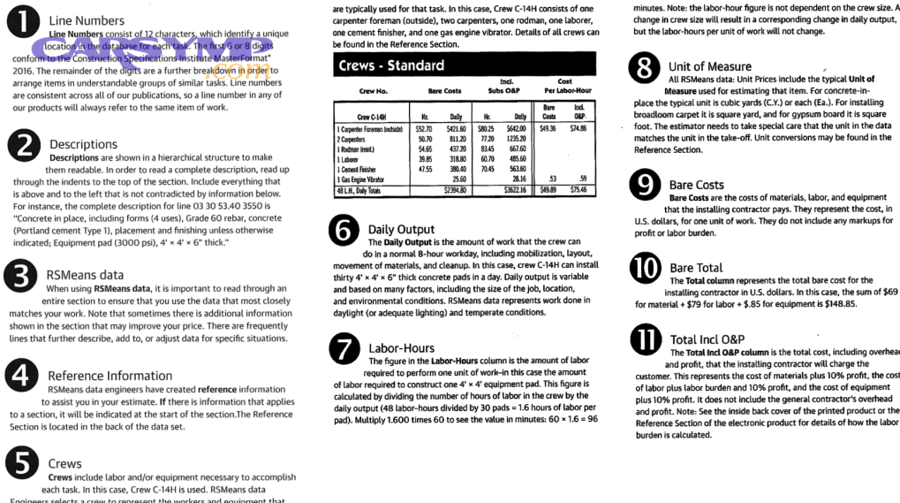
Specifically, treat every row like an equation: (billed time) × (labor rate) = extended labor, and the description tells you what that time is supposed to cover.
A typical labor row may include:
- Operation (“Replace front brake pads and rotors”)
- Labor category (“Mechanical,” “Body,” “Paint,” “Diagnostic”)
- Labor time (e.g., 1.5 hours or 1.5 “hrs”)
- Labor rate (could be a single rate or category-specific rate)
- Extended labor total
What does the operation description tell you (and what can it hide)?
The operation description tells you the scope of work, but it can hide missing steps because many estimates use shorthand (R&R, diag, inspect) that doesn’t automatically include every subtask you assume is included.
For example, “R&R alternator” may or may not include belt replacement, battery testing, charging system verification, or resetting learned values—so you need the scope stated when it affects time or parts.
Common shorthand and what it usually implies:
- R&R (Remove & Replace): remove the old part and install a replacement
- Repair: fix the original component (often more variable time)
- Diag: testing/troubleshooting time to identify the cause
- Inspect: brief check; should not be open-ended
What to request for clarity:
- “Is the line item parts only, labor only, or both?”
- “Does this include post-repair verification?”
- “Is there a separate line for diagnostic time?”
- “Are required calibrations/scans included or separate?”
A strong estimate uses descriptions that specify boundaries like “includes road test,” “includes bleed procedure,” or “does not include additional seized hardware.”
What do labor hours mean, including tenths, and why can they differ from time spent?
Labor hours are billed time units—often in tenths of an hour—that represent either a standardized “flat-rate” time or a shop’s hourly billing estimate, which can differ from clock time due to book times, setup overlap, diagnostic uncertainty, and shop policy.
To illustrate, a job billed at 2.0 hours does not guarantee the technician spent exactly 120 minutes—it means the shop billed 2.0 hours of labor value for that operation.
Tenths-of-an-hour quick decode:
- 0.1 = 6 minutes
- 0.5 = 30 minutes
- 1.0 = 60 minutes
- 1.5 = 90 minutes
- 2.0 = 120 minutes
Why billed hours can differ from clock time:
- Flat-rate guide times: standardized times assigned to common operations
- Efficiency/experience: a skilled tech may complete faster than billed time
- Complexity factors: corrosion, access difficulty, aftermarket modifications
- Diagnostics: intermittent issues can require extended testing steps
- Overlap rules: some steps are “included operations” and not billed twice
If you want predictability, ask whether labor time is flat-rate (fixed billed time) or actual time (time-and-materials), and whether additional time requires approval.
Where is the labor rate per hour shown, and can there be more than one rate?
Yes—the labor rate per hour is usually shown near the labor section or on each line, and there can be more than one rate because (1) different work types require different skills/tools, (2) shops price diagnostics differently from mechanical work, and (3) body/paint operations often have their own rate structures.
Moreover, multiple rates can be normal, but they must be transparent, consistent, and applied correctly to the right lines.
Where you’ll commonly find the rate:
- At the top of the labor section (“Labor Rate: $___/hr”)
- On each labor row (“Rate: $___”)
- In a summary block by category (“Mechanical $___, Diagnostic $___”)
Why rates differ:
- Diagnostic labor may be priced higher due to tooling, training, time uncertainty
- Electrical work can be specialized and time-consuming to trace
- Body/paint uses different estimating conventions and material charges
- Dealer vs independent labor rate comparison often shows different overhead and brand-specific tooling costs, especially for late-model vehicles
If rates are missing, ask for an itemized estimate that shows both hours and rate per line so you can verify the math and compare like-for-like.
Flat-rate vs hourly billing explained: which one is your estimate using?
Flat-rate wins in predictability, hourly billing is best for uncertain diagnostics, and a hybrid approach is optimal for many modern repairs where diagnosis is billed hourly but common replacements follow book time—based on the criterion of “how the shop converts time into charges.”

Next, you’ll learn to identify which model your estimate uses so you know what can change and what should not.
How flat-rate appears:
- Fixed labor time for a defined operation (e.g., “Replace starter: 1.8 hrs”)
- Often paired with standardized operation descriptions
- Changes usually occur only if additional operations are added
How hourly billing appears:
- Language like “T&M,” “actual time,” “as needed,” or “diagnose up to ___ hours”
- More frequent progress calls and approvals
- Should include caps or checkpoints to avoid runaway costs
Does a flat-rate estimate always mean the final bill is fixed?
No—a flat-rate estimate does not always mean the final bill is fixed, because (1) additional problems can be discovered during disassembly, (2) corrosion/seized hardware can add operations not included in the base line, and (3) modern vehicles may require scanning/calibration steps that weren’t visible at first glance.
However, flat-rate does limit variability for the specific operation that is clearly defined—so the best protection is making sure each operation is defined correctly.
What you can do as a car owner:
- Ask which items are fixed-price operations vs conditional add-ons
- Request “call before adding labor” approval language
- Ask for an updated estimate if new operations are discovered
In collision-style repairs, these changes are often documented as a “supplement,” but even mechanical jobs can have legitimate additions if conditions differ from assumptions.
When is hourly billing more common (and what should be documented)?
Hourly billing is more common for diagnostics and variable-condition work, and it should be documented with the symptom description, test plan, time cap, and what deliverable you receive (codes, measurements, results, next steps).
Especially, documentation protects you from paying for time that doesn’t produce clarity.
Common hourly-billing scenarios:
- Intermittent electrical faults
- Parasitic battery drain testing
- Noise/vibration diagnosis
- Water leaks and wind noise tracing
- Rust/corrosion complications
- Custom or modified vehicle issues
What to request on the estimate:
- “Diagnostic time: up to X hours without additional approval”
- “Deliverable: report of findings + recommended repair path”
- “If repair is approved, will diagnostic time be credited?” (policy varies)
Evidence: According to a study by Northwestern University from the Kellogg School of Management, in 2012, consumers who referenced a benchmark price received meaningfully different quote outcomes in auto-repair price quote experiments, showing why clear pricing expectations and documentation affect final costs. (kellogg.northwestern.edu)
What are the most common labor categories and what do they include?
There are 4 main types of labor categories on estimates—diagnostic, mechanical, electrical, and body/paint—based on the criterion of “what skill set and workflow the operation requires.”
Next, mapping categories to real-world work helps you understand why different lines may use different labor times and rates even within the same estimate.
Here’s what each category typically covers:
- Diagnostic labor: testing to identify the root cause (scans, measurements, road tests)
- Mechanical labor: replacing/servicing physical components (brakes, suspension, cooling)
- Electrical labor: wiring, sensors, modules, circuit tracing, communication issues
- Body/paint labor: structural and cosmetic repair operations plus refinish steps
What’s the difference between diagnostic labor and repair labor?
Diagnostic labor wins in problem identification, repair labor is best for execution, and a combined approach is optimal when diagnosis is required to confirm the fix before replacing parts—based on the criterion of “purpose and deliverable.”
Specifically, diagnostic labor should end with a finding (what failed and why) while repair labor ends with a result (the fix completed and verified).
Diagnostic labor may include:
- Scan tool checks and live data review
- Physical testing (pressure tests, compression tests, leak-down tests)
- Road test replication and verification
- Electrical measurements (voltage drop, resistance checks)
Repair labor may include:
- Removing and replacing components
- Adjustments and alignments
- Fluid fills/bleeds
- Post-repair verification
If your estimate has a repair line with no diagnosis but the symptom is uncertain, ask whether the shop is “guessing parts” or whether diagnosis was already performed.
What’s the difference between mechanical, electrical, and body/paint labor lines?
Mechanical labor wins for component swaps and service routines, electrical is best for fault isolation and module communication issues, and body/paint is optimal for structural/cosmetic restoration with refinish steps—based on the criterion of “workflow and tooling.”
Meanwhile, these categories often use different estimating conventions and can include different add-ons (like paint/materials or calibration).
A quick comparison table helps you interpret why estimates look different across categories. The table below explains what you’re typically paying for in each labor type.
| Labor category | What it usually includes | Why the estimate lines look different |
|---|---|---|
| Mechanical | R&R parts, service steps, adjustments | Often straightforward hours × rate |
| Electrical | Testing, tracing, programming, network checks | More diagnostic time and documentation |
| Body/Paint | Panel repair, removal, masking, refinish steps | More line items + materials/fees conventions |
If you’re comparing a dealership estimate to an independent shop estimate, focus on whether they are pricing the same labor category mix—because a Dealer vs independent labor rate comparison only makes sense when the scope and category assignments match.

How do you verify the math and spot errors in a labor estimate?
You verify the math by checking 3 things—hours, rate, and extended totals—then scanning for duplicated operations, because simple arithmetic errors and overlap issues are common sources of distrust and overpayment risk.
Next, you’ll use a repeatable method that takes minutes and makes every estimate easier to compare.
Do the line totals match the hours and rate shown?
Yes—you should confirm that line totals match the hours and rate shown, because (1) billing is built on a simple multiplication rule, (2) rounding can silently increase totals, and (3) a wrong category rate can inflate a line even if the hours are correct.
More specifically, you can validate most estimates with a calculator and a highlighter.
Use this 4-step check:
- Circle each labor line’s hours (e.g., 1.7)
- Circle the rate applied to that line (e.g., $140/hr)
- Multiply: 1.7 × 140 = 238.00
- Compare your result to the line’s extended labor charge
If the estimate uses tenths, rounding should still be consistent. If a line looks off, ask which rate was used and whether shop management software applied a matrix rate.
Are you being charged twice for overlapping steps?
Yes—you can be charged twice for overlapping steps if the estimate duplicates operations, because (1) some tasks include shared setup work, (2) some procedures should be bundled, and (3) line item descriptions can overlap if the estimate was built from templates.
However, overlap is also where good shops add clarity by noting “included operations” or reducing time when two operations share disassembly steps.
Examples of potential duplication:
- Charging diagnostic time twice (once as “scan” and again as “diagnose”)
- Charging remove/install labor on multiple lines when disassembly overlaps
- Charging for the same fluid service in multiple operations
- Billing “road test” separately when it’s already included
What to ask:
- “Which steps are included in this operation?”
- “Is the overlap accounted for in the hours?”
- “Can you show which procedures require separate labor?”
Evidence: According to a study by Northwestern University from the Kellogg School of Management, in 2017, researchers found that signaling being uninformed could affect quoted prices in auto repair markets, highlighting why verifying line math and scope details improves outcomes for consumers. (dash.harvard.edu)
Hidden fees to watch for: which add-ons are normal and which need an explanation?
There are 2 main categories of add-ons—standard shop-wide fees and job-specific charges—based on the criterion of “whether the fee applies to most repairs or only certain repairs,” and you should question any fee that is not clearly defined or consistently calculated.
Next, you’ll separate routine charges from charges that require documentation, so you can approve confidently without feeling ambushed later.
Which fees are typically reasonable (shop supplies, disposal, environmental)?
Shop supplies, disposal, and environmental fees are typically reasonable when they cover consumables used across repairs (rags, cleaners, lubricants) and regulated waste handling, and when they are disclosed and calculated consistently rather than appearing as random “mystery” charges.
For example, many shops use a small percentage with a cap or a flat fee per repair order, but the key is consistency and transparency.
What these fees often cover:
- Shop supplies: gloves, rags, cleaners, lubricants, minor hardware
- Disposal/environmental: used fluids, filters, hazardous waste handling
- Materials (sometimes separate): sealants, solvents, adhesives used in repair
What to check:
- Is the fee described (not just “misc”)?
- Is there a cap or policy stated?
- Does the fee scale logically with the job size?
A small brake job should not carry the same disposal/misc charge as a major repair unless the shop uses a flat policy—and even then, it should be stated.
Which charges should trigger questions (diagnostic add-ons, scan/calibration, sublet)?
Yes—diagnostic add-ons, scan/calibration, and sublet charges should trigger questions, because (1) they can be necessary but poorly explained, (2) they can be duplicated across lines, and (3) sublet work changes who performs the work and how warranty responsibility works.
More importantly, modern vehicles have increased scan and calibration needs, so you want documentation, not vague labels.
Ask for documentation when you see:
- “Pre-scan” / “Post-scan” with no reason stated
- “Calibration” with no system referenced
- “Programming” with no module specified
- “Sublet alignment” or “sublet glass” without an itemized invoice reference
- “Diagnostic fee” added to a line that already includes diagnostics
If calibrations appear, ask: “Which system requires calibration and what standard are you following?” A good shop can explain it in plain language and show it as a distinct operation when required.
What questions should a car owner ask before approving a labor estimate?
There are 6 key questions a car owner should ask before approving a labor estimate—scope, rates, caps, verification, warranty, and update rules—based on the criterion of “what prevents unexpected labor increases and misunderstandings.”

Next, you’ll get a practical script you can use even if you don’t know car terminology.
Use these questions to turn a confusing estimate into a controlled agreement:
- “What exactly is included in each labor line item?”
- “What labor rate per hour is being used for this category?”
- “Is the labor time flat-rate or hourly, and what changes it?”
- “Will you call me before adding labor or parts?”
- “What warranty applies to labor and parts?”
- “Can you show me the old parts or provide notes/photos if relevant?”
Can you ask for a not-to-exceed cap or approval step for additional labor?
Yes—you can ask for a not-to-exceed cap or an approval step for additional labor, because (1) it prevents runaway diagnostic time, (2) it forces communication at checkpoints, and (3) it gives you time to request alternatives or decline optional work.
In addition, caps are common in professional repair environments because they reduce disputes and align expectations.
Example phrasing:
- “Approve diagnosis up to 1.0 hour, then call with findings and next-step estimate.”
- “Do not exceed $___ without my authorization.”
- “If additional labor is needed due to seized hardware, confirm before proceeding.”
Caps work best when paired with clear deliverables: “tell me what you found” and “tell me the options.”
Is the warranty stated, and does it cover labor, parts, or both?
Yes—the warranty should be stated, and you should confirm whether it covers labor, parts, or both, because (1) warranty defines your protection if the same issue returns, (2) parts warranties can differ by brand/source, and (3) labor coverage often has time/mileage limits.
Moreover, warranty clarity is a quality signal: shops that explain it upfront usually have tighter documentation.
Ask these specifics:
- “What is the warranty period (time and mileage)?”
- “Does it cover labor if the part fails?”
- “Are there exclusions (abuse, overheating, contaminated fluids)?”
- “Is there a difference between customer-supplied parts vs shop-supplied parts?”
If you’re doing Negotiating and comparing repair quotes, warranty terms can be the deciding factor even if totals are similar.
Should you request an itemized estimate if you only got a total?
Yes—you should request an itemized estimate if you only got a total, because (1) you can’t verify labor hours and rates, (2) you can’t compare scope across shops, and (3) you can’t identify duplications or hidden fees before approval.
Thus, itemization is not “being difficult”—it’s the minimum information needed for informed consent.
An itemized estimate should show:
- Each labor operation with billed time and applied rate
- Parts line items with quantity and unit price
- Fees and taxes clearly labeled
- Notes about what may change (diagnostics, hidden damage, additional testing)
If a shop refuses to provide itemization, it becomes much harder to judge value or protect yourself from misunderstandings.
At this point, you can read the estimate itself: you understand line item structure, you can validate hours × rate math, and you know which fees deserve questions. Next, the focus shifts from “how to read” to “how special cases change line items,” especially with insurance estimates and modern technology repairs.
How do collision/insurance estimates and modern tech repairs change labor line items?
Collision/insurance estimates change labor line items by introducing negotiated constraints, supplement workflows, and specialized operations like scans and calibrations, while modern tech repairs add more documentation-driven labor categories that can legitimately appear as separate lines.

Next, you’ll learn what’s different so you don’t mistake “newer-looking line items” for padding—while still knowing what to verify.
What’s different between a shop estimate and an insurance damage estimate?
A shop estimate wins in repair completeness, an insurance estimate is best for claim-scoped authorization, and a combined approach is optimal when the shop writes a complete repair plan but the insurer approves and adjusts the payable scope—based on the criterion of “who controls the scope and rate assumptions.”
Specifically, insurance documents may cap labor rates, define what’s considered included, and require supplements for newly discovered damage.
Common differences you’ll see:
- Labor rate constraints: insurer “prevailing rate” vs shop posted rate
- Included operations rules: insurers may consider some steps non-billable
- Supplements: added operations after teardown or damage discovery
- Documentation requirements: photos, measurements, OEM procedure references
This is where a Dealer vs independent labor rate comparison can get complicated: an insurer may approve one rate while the shop’s posted rate differs, and the estimate format may reflect that negotiation.
Why do ADAS calibrations and pre/post scans appear as separate labor lines?
ADAS calibrations and pre/post scans appear as separate labor lines because they are distinct verification and safety steps that require specialized tools, controlled conditions, and documentation, and they are not automatically included in every mechanical operation even when repairs affect sensors or vehicle geometry.
More importantly, separating them as line items creates a paper trail for what was checked and how the vehicle was returned to spec.
When you might see these lines:
- After collision repairs that affect alignment or sensor mounting
- After windshield replacement on vehicles with camera-based systems
- After suspension/steering work that changes angles
- After module replacement or programming
What to ask for:
- Which system is being calibrated (camera, radar, lane keep assist)?
- What procedure or standard is being followed?
- What documentation will you receive (printout, scan report)?
Evidence: According to a study by Northwestern University from the Kellogg School of Management, in 2012, researchers demonstrated that consumers’ price expectations can influence auto-repair quote outcomes, which is why documenting advanced operations like scans/calibrations as separate line items helps customers evaluate scope and cost more accurately. (kellogg.northwestern.edu)
What is “sublet” labor (alignment, glass, machining) and how is it priced?
Sublet labor is outsourced work performed by a third party (like alignment, glass replacement, or machining) that the primary shop coordinates and bills, often with an itemized charge that may include administrative handling or markup depending on shop policy and local norms.
Besides cost, the key issue is accountability: you want to know who performed the work and who warranties it.
How it’s usually shown:
- “Sublet alignment” with a single price
- “Sublet glass” line with parts + labor bundled
- “Machine shop services” as a flat amount
What you should request:
- Confirmation the shop is responsible for warranty coordination
- A clear description of what the sublet includes (e.g., “4-wheel alignment to spec”)
- Any reports (alignment printout) when appropriate
What does a “supplement” mean, and is it a red flag?
No—a supplement is not automatically a red flag, because (1) additional damage or required steps are often invisible until disassembly, (2) estimates are built from visible symptoms and standard procedures, and (3) insurers and shops frequently require updated documentation mid-repair to authorize added operations.
However, frequent or unexplained supplements can signal weak initial inspection or poor communication.
Healthy supplement behavior looks like:
- The shop explains why the new line item is required
- Photos/notes support the discovery
- You receive a revised estimate before approval
- Added labor is specific and not open-ended
If supplements feel constant, ask how the shop is improving the repair plan and whether teardown/blueprinting should happen earlier to reduce midstream changes.
Evidence (if any)

- According to a study by Northwestern University from the Kellogg School of Management, in 2012, researchers showed that consumers’ price expectations can influence negotiated auto-repair price quotes, supporting the value of itemized, benchmarkable estimates when you’re comparing scope and pricing. (kellogg.northwestern.edu)
- According to a study by Northwestern University from the Kellogg School of Management, in 2017, researchers reported that signaling being uninformed could affect quoted prices in auto repair markets, reinforcing why line-by-line verification and clear questions improve outcomes for car owners. (dash.harvard.edu)