


A mobile mechanic warranty and parts policy tells you, in plain terms, what the provider promises to fix again if the same repair fails—usually separating workmanship (labor) from the parts installed, and spelling out how long that promise lasts. This guide explains what coverage typically includes, what it usually does not include, and how to read the policy without guessing.
Many drivers get stuck on one confusing point: the difference between parts coverage and labor coverage when the repair happens in a driveway. We’ll break down who is responsible when a component fails, what “workmanship” actually means, and how the claim process usually works so you can avoid paying twice for the same issue.
You’ll also see where policies get strict: exclusions, void conditions, documentation requirements, and the special rules around customer-supplied parts. These details decide whether your claim becomes a quick revisit—or a frustrating “not covered.”
Introduce a new idea: once you understand the mobile repair warranty basics, you can also make better decisions about when a shop is the smarter option, and how service contracts (often called “extended warranties”) differ from a repair provider’s warranty.
What is a mobile mechanic warranty and parts policy?
A mobile mechanic warranty and parts policy is a written promise that covers specific repair outcomes—typically a workmanship (labor) guarantee and rules for parts installed—starting from the service date and lasting for a stated time, mileage, or both.
To better understand why this matters, start by viewing the policy as a “scope contract” rather than a blanket guarantee for your whole car.
A mobile repair policy usually answers four questions you should never have to guess:
- What repair is covered? Coverage is tied to the specific line item on the invoice (for example: “replace front brake pads and rotors,” not “fix braking” forever).
- What counts as success or failure? A policy should define what a failure looks like (leak returns, part breaks, symptom persists) and whether re-diagnosis is required.
- Who supplies the parts? Policies often treat shop-supplied parts differently from customer-supplied parts.
- How do you claim coverage? The process (call/text, inspection, proof, scheduling, and outcome options) should be described up front.
A strong mobile mechanic warranty also clarifies boundaries that are unique to on-site repairs: access to the vehicle, safe working conditions, whether towing is required for certain failures, and whether the provider can only warranty what they can safely verify on location.
According to a study by the University of South Carolina’s Darla Moore School of Business from the Management Science area, in 2022, researchers analyzed U.S. automotive industry data from 2008–2013 and found a non-linear (U-shaped) relationship between reliability indicators and warranty length offerings, showing warranty length can reflect strategy—not just product quality.
Does a mobile mechanic warranty cover labor/workmanship?
Yes, a mobile mechanic warranty usually covers labor/workmanship because (1) workmanship is within the mechanic’s control, (2) it’s the clearest way to prove service value, and (3) rework is often cheaper than disputes when the same repair outcome fails.

More specifically, workmanship coverage is the backbone of most mobile repair warranties because it targets the exact risk you’re trying to avoid: paying again for the same repair being performed incorrectly.
What does “workmanship” mean in mobile repairs?
Workmanship means the quality of the mechanic’s installation, adjustment, and verification steps on the specific repair performed, including whether procedures were followed and whether fasteners, seals, and connections were secured to proper spec.
Next, connect this definition to real examples—because most disputes happen when a symptom returns and people argue whether it’s “the same problem.”
Common workmanship examples that a warranty revisit may address:
- Leaks after a replacement: A valve cover gasket replaced, but oil leaks again because a sealing surface wasn’t cleaned properly or bolts weren’t torqued evenly.
- Loose or misrouted components: A hose clamp not tightened, a wiring connector not fully seated, or a vacuum line routed incorrectly.
- Improper fitment steps: A battery installed without properly tightening terminals or securing a hold-down clamp.
- Calibration/adjustment failures: A parking brake not adjusted after rear brake service (when adjustment is part of the repair spec).
Workmanship does not mean the mechanic guarantees unrelated parts won’t fail later. It also does not mean a single symptom (like “rough idle”) automatically ties back to the same repair unless the mechanic can validate the root cause.
What proof is usually needed to validate a workmanship claim?
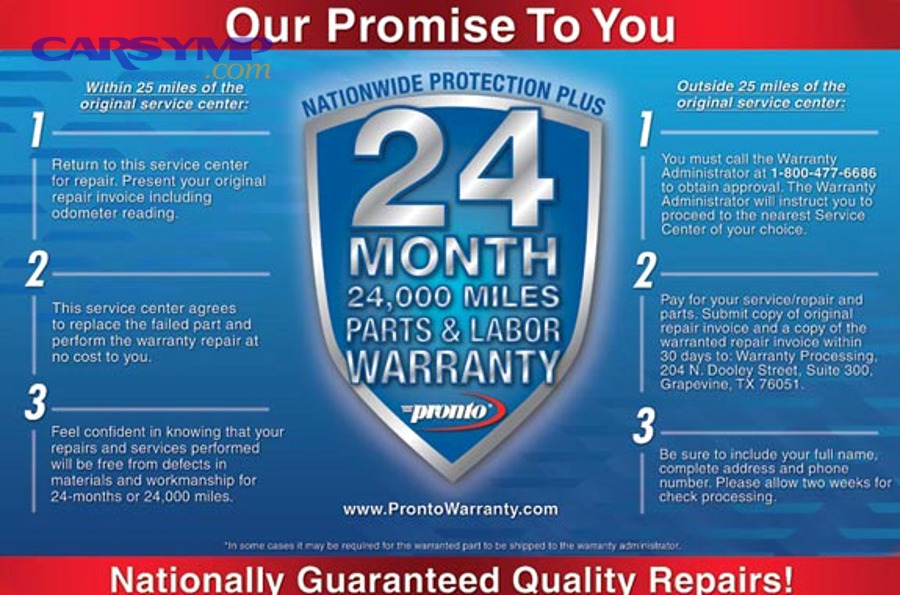
There are 6 practical proof items most providers use to confirm a workmanship claim: the original invoice, the exact symptom description, time/mileage since repair, photos/video, any dashboard warnings/codes, and access for inspection based on the policy.
Then, treat proof as your fastest route to approval, not as “paperwork drama.”
Here’s what to prepare before you call:
- Invoice/receipt showing the repair line item and date
- Mileage at the time of repair and current mileage (a simple photo of the odometer helps)
- Clear symptom notes
- Photos/video of leaks, noises, warning messages, or the part area if safe
- OBD codes if a check-engine light is on (code screenshots are ideal)
- Vehicle access details (where the car is, whether it starts, driveway space, safety concerns)
If you present these items clearly, most providers can decide quickly whether they need an on-site inspection, a re-diagnosis, or an immediate correction.
Does the warranty cover parts, and who provides the parts coverage?
Yes, parts are often covered, but parts coverage depends on who supplied the part because (1) provider-supplied parts may include a bundled guarantee, (2) manufacturer warranties apply to the part itself, and (3) customer-supplied parts usually shift risk to the buyer.
However, the key is separating “the part failed” from “the installation caused the failure,” because those are treated differently in real policies.
In practice, parts coverage typically falls into one of these buckets:
- Provider-supplied part + provider-installed: Often the smoothest coverage path because the provider can vouch for sourcing and installation.
- Manufacturer warranty on the part: Covers defects in materials or manufacturing, but may require proof, returns, or inspection.
- Customer-supplied part: Usually not covered by the mechanic for the part itself, and sometimes limits workmanship warranty too.
Which parts are commonly covered vs commonly excluded?
There are 3 main groups of parts outcomes: (A) parts installed for the covered repair, (B) wear-and-tear consumables, and (C) unrelated components that share symptoms, based on whether the item is directly tied to the invoice line and whether it naturally wears down.
Next, use this grouping to avoid a common mistake: assuming “warranty” equals “everything attached to that system.”
Commonly covered (when provider-supplied and installed):
- Alternators, starters, water pumps (when replaced as a repair line item)
- Sensors and solenoids (when diagnosis supports replacement and it’s on the invoice)
- Gaskets/seals used in the repair (when part of the repair kit)
- Hoses, belts, tensioners (if included in the approved repair scope)
Commonly excluded or limited:
- Fluids unless specifically included (oil, coolant, refrigerant recharge)
- Normal wear items (wiper blades, bulbs, filters)
- Brake pad wear over time (pads may be installed correctly yet wear normally)
- Tires and alignments (often require shop equipment)
- Pre-existing damage or unrelated failures
The simplest rule: coverage is strongest when the part is on the invoice and the failure is directly tied to that part’s function.
How does OEM vs aftermarket vs remanufactured affect coverage?
OEM is best for fit consistency, aftermarket is best for price flexibility, and remanufactured is optimal for value in big-ticket assemblies—because each category changes defect risk, warranty terms, and the likelihood of “labor reimbursement” being included.
Meanwhile, the category also influences how a claim is handled when a part fails quickly.
A practical comparison:
- OEM parts
- Pros: predictable fitment, stable quality control, fewer “compatibility” disputes
- Cons: higher cost; availability can slow mobile repairs
- Aftermarket parts
- Pros: wide availability; multiple price tiers; faster sourcing for mobile jobs
- Cons: quality variance; fitment differences can create noise/leaks and trigger disputes
- Remanufactured parts (reman)
- Pros: can cut costs significantly on alternators, starters, some steering components
- Cons: quality depends heavily on the remanufacturer; defect rates can vary
The right question to ask is not “OEM or aftermarket?” but “What warranty terms come with this exact brand/part number—and does it cover labor if it fails?”
How long does a mobile repair warranty last (time, mileage, or both)?
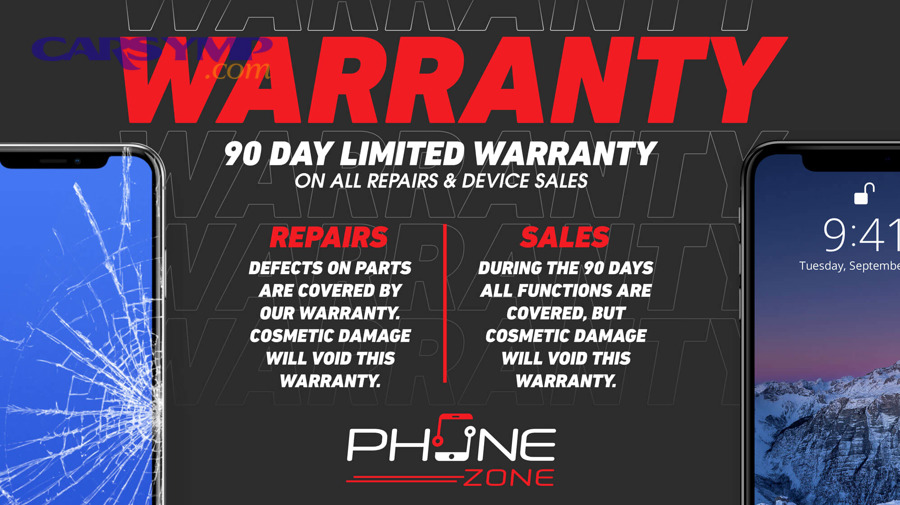
A mobile repair warranty lasts for a stated time period, mileage limit, or “whichever comes first,” starting from the service completion date—because providers need a clear eligibility window to separate immediate repair failures from normal aging and unrelated breakdowns.
Next, treat duration as a measurement tool: the longer and clearer the term, the easier it is to predict your risk.
Mobile repair warranties vary widely (for example: 30 days, 90 days, 6 months, 12 months, or mileage-based limits). The important part is not the number, but whether the policy explains:
- what is covered during that period
- how claims are reported
- what events void coverage (misuse, unrelated repair by third parties, etc.)
When does the warranty period start for a mobile repair?
The warranty period usually starts when the repair is completed and documented on your invoice, because that timestamp defines the moment the provider delivered the promised outcome and can reasonably validate the condition of the repaired system.
Then, confirm the start point the same way you’d confirm pricing: in writing.
If your invoice shows a service date and completion notes, use that date. If the provider’s policy states the warranty begins at payment, pickup, or completion, follow the policy wording. For mobile repairs, “pickup” doesn’t apply, so completion/invoice date is most common.
What happens if the car is not driven much or is driven heavily?
Time-based warranties protect low-mileage drivers, while mileage-based warranties protect high-frequency drivers, because each model assumes a different pattern of risk exposure after the repair.
However, most policies choose “whichever comes first” to prevent edge cases where a car is driven 20,000 miles in a month or barely driven for a year.
Practical implications:
- If you drive a lot, track your odometer and report symptoms early.
- If you drive very little, don’t assume “it’s still like new”; time limits can expire before problems show up.
- If you store a vehicle, follow maintenance basics (battery health, fluids) so a claim isn’t denied for neglect.
What’s the difference between parts vs labor coverage in a mobile mechanic policy?
Parts coverage wins in defect replacement, labor coverage is best for installation errors, and bundled coverage is optimal for reducing repeat out-of-pocket costs—because each category decides who pays when something fails and what proof is required.
To illustrate, the same symptom (like a coolant leak) can fall under parts coverage (defective hose), labor coverage (clamp installed poorly), or neither (new leak from a different aging hose).
Here’s a clear breakdown:
This table shows how parts coverage, labor/workmanship coverage, and bundled coverage typically differ in what they target, what proof is needed, and the most common outcomes.
| Coverage type | What it targets | Typical proof | Common outcome |
|---|---|---|---|
| Labor/workmanship | Installation quality and procedures | inspection + invoice + symptom match | rework/adjustment |
| Parts (provider/manufacturer) | Component defects | part ID + return/inspection | replace part; labor may vary |
| Bundled parts + labor | Both defect and install risk | simpler claim path | fastest resolution |
This table matters because it explains why some claims get approved quickly while others require re-diagnosis.
If a part fails, is labor to replace it covered?
Yes sometimes, but not always, because labor coverage depends on whether the policy bundles labor with parts, whether the failure is clearly a defect, and whether the provider’s parts supplier reimburses labor for defective parts.
However, assume labor is not automatically included unless the policy states it.
A realistic scenario:
- A new alternator fails after two weeks.
- The alternator may be replaced under parts warranty.
- The labor to swap it again may be covered, discounted, or fully charged depending on the policy.
To protect yourself, ask for a simple written line on the estimate: “If this part fails in the warranty window, is the labor covered?”
If the issue returns, how do you know it’s the same problem?
You know it’s the same problem when the root cause matches the original diagnosis and the failed item is within the original repair scope, because symptoms can repeat even when the underlying failure is different.
Next, treat “same symptom” as a clue, not a verdict.
Example:
- Symptom: “car won’t start.”
- Original repair: new battery installed.
- Two weeks later: no start returns.
- Root causes could include a failing starter, parasitic drain, corroded ground cable, or a charging issue—not automatically a battery defect.
A good policy (and a good mechanic) uses a short verification checklist:
- confirm voltage/charging
- inspect connections
- test the component related to the original repair
- then decide if it’s warranty rework or a new repair
Are customer-supplied parts covered under a mobile repair warranty?
No, customer-supplied parts are usually not covered for the part itself because (1) the mechanic can’t control part quality or authenticity, (2) fitment errors are common, and (3) returns/defects often require the buyer to handle the vendor process.
More importantly, customer-supplied parts can complicate workmanship coverage because the mechanic may be asked to guarantee an outcome using unknown materials.
This is where many “mobile mechanic near me” searches end in frustration: the cheapest online part looks attractive, but the warranty headache can cost more than you saved.
What risks come with customer-supplied parts?
There are 5 common risks with customer-supplied parts: wrong fitment, low-quality manufacturing, counterfeit items, missing hardware, and unclear return/warranty rules, based on how frequently parts mismatch real vehicle trims and how variable online sellers can be.
Then, link those risks to cost—not just inconvenience.
What those risks look like in real repairs:
- Wrong part number for your trim: Same model year, different engine option; the part “almost fits” but fails early or causes noise/leaks.
- Counterfeit or mislabeled parts: Packaging looks real; internal materials are inferior.
- Missing clips/bolts/gaskets: Installation requires extra trips or improvisation that increases failure risk.
- No labor reimbursement: Even if the seller replaces the part, you still pay for labor again.
- Return delays: You lose days waiting, and the vehicle stays down.
What should you ask before approving customer-supplied parts?
There are 7 questions you should ask before you approve customer-supplied parts: fitment confirmation, brand tier, warranty terms, labor responsibility, hardware completeness, return timeline, and documentation requirements, based on how claims are approved and how quickly the car must be back on the road.
Next, use this checklist to prevent arguments after the repair:
- “Can you confirm this part number matches my VIN/engine?”
- “If the part is defective, do I pay labor again?”
- “If the part doesn’t fit, is there a trip/diagnosis fee?”
- “Do you require OEM for this system?”
- “Does the repair require one-time-use bolts or gaskets?”
- “What proof do you need if it fails—photos, codes, receipts?”
- “Will you install this brand, or do you refuse certain sellers?”
A professional answer to these questions is a sign you’re dealing with a provider who runs a real policy—rather than making it up as they go.
What exclusions and void conditions are most common in mobile repair warranties?
There are 6 common exclusions and void conditions in mobile repair warranties—wear-and-tear, unrelated failures, misuse/overheating, pre-existing damage, third-party interference, and unsafe access conditions—based on what a mobile provider can control and what they can safely verify.
Especially with mobile repairs, exclusions often exist to prevent “scope creep” where a repaired system is blamed for failures caused elsewhere.
Which “wear items” and maintenance services are usually excluded?
There are 4 broad categories of wear items often excluded: friction components, consumables, cosmetic bulbs/wipers, and routine fluids, based on the fact that normal usage degrades them even when installation is perfect.
More specifically, these are common examples:
- Friction/wear components: brake pads wearing down, clutch wear, wiper blade wear
- Consumables: filters, certain gaskets not replaced, fuses, small clips
- Fluids: oil changes, top-offs, “leaks not tied to the repaired seal”
- Alignment-related outcomes: tire wear patterns after suspension work (often needs shop equipment)
Some mobile providers warranty the workmanship of installing wear items (for example, fixing a brake squeal caused by incorrect lubrication), but they won’t warranty the wear rate itself.
Can modifications or neglect void a warranty claim?
Yes, modifications or neglect can void a warranty claim when they plausibly cause the failure, because a provider can refuse coverage if the repaired system was damaged by unrelated changes, misuse, or missing maintenance records.
However, the key is relevance: a stereo upgrade shouldn’t void a suspension repair, but an engine tune might complicate engine-related claims.
Common “void” triggers include:
- driving with severe overheating after a cooling repair
- ignoring warning lights for extended periods
- installing incorrect fluids
- tampering with repaired components
- allowing another shop to alter the same repaired area without documentation
According to the Federal Trade Commission’s consumer guidance updated in 2024, a warranty company may ask for maintenance records, and while aftermarket or recycled parts do not automatically void coverage, a manufacturer or dealer must be able to show the aftermarket/recycled part caused the damage before denying warranty coverage for the affected component.
How do you make a warranty claim with a mobile mechanic step-by-step?
A warranty claim with a mobile mechanic follows a simple method—document first, contact fast, inspect safely, then approve a fix—typically in 5 steps that aim to confirm the same repair outcome failed and to schedule a corrective visit without duplicating costs.
Then, treat speed as part of eligibility: many policies require you to report issues promptly.
What should you document before calling (to speed up approval)?
There are 8 key items to document before calling: invoice, mileage, symptom timeline, photos/video, warning messages, OBD codes, environmental conditions, and whether the vehicle is drivable, based on what the mechanic needs to verify coverage quickly.
To begin, gather what you can safely capture without risking injury:
- Invoice screenshot or PDF
- Odometer photo
- Video of the symptom (noise, misfire shake, leak drip)
- Photos of the affected area (only if safe and accessible)
- Dashboard light photo and any messages
- OBD code capture (a basic scan tool or parts store readout)
- Notes on when it started and whether it’s constant or intermittent
- Vehicle status (starts/doesn’t start; safe to drive or not)
A clean documentation package also reduces misunderstandings like “it wasn’t doing that when I left.”
What are typical claim outcomes: repair, replacement, refund, or credit?
There are 4 typical warranty outcomes—rework (labor fix), part replacement, partial refund/credit, or a re-diagnosis leading to a new estimate—based on whether the failure is workmanship, part defect, or an unrelated issue presenting similar symptoms.
In addition, the policy may define a “first response” step where the mechanic must inspect before committing to an outcome.
Common outcomes explained:
- Rework (workmanship correction)
- Example: tighten/replace a clamp, reseat a connector, correct torque, re-bleed brakes if procedure was incomplete.
- Parts replacement
- Example: replace a defective new component under the part’s warranty pathway.
- Credit or partial refund
- Example: the provider can’t reproduce the failure but offers credit toward further diagnostic work.
- Re-diagnosis → new repair
- Example: the symptom returns but points to a different component outside the original invoice scope.
If a provider adds fees, they should explain whether the visit is warranty-covered or a new diagnostic event—and why.
When is towing to a shop better than a mobile warranty revisit?
Towing to a shop is better when (1) the repair requires a lift or specialized equipment, (2) safety risks are high in a driveway setting, or (3) the problem demands advanced diagnostics or programming that mobile service cannot reliably perform on-site.
More importantly, “When towing to a shop is better” is not a failure of mobile service—it’s a smart escalation when the job exceeds safe constraints.
Mobile repairs excel for convenience and many common jobs, but shops have advantages in:
- alignments and suspension geometry
- transmission internal work
- complex electrical diagnosis requiring stable power supplies
- advanced ADAS calibration and certain programming tasks
- jobs needing extensive undercar access
Which repairs are hard to warranty on a driveway (and why)?
There are 5 driveway-hard repair categories—alignment-dependent work, deep undercar jobs, programming-heavy systems, noise/vibration diagnosis, and safety-critical corrosion issues—based on access limits and the need for fixed equipment.
Specifically, here’s why they’re challenging:
- Alignment after suspension work: Without an alignment rack, you can’t fully verify tire geometry.
- Transmission internals: Requires a clean environment, fluid management, and often a lift.
- Intermittent electrical faults: May need long monitoring, specialized tools, and controlled testing.
- Noise/vibration diagnosis: Road test conditions and lift inspection are easier at a shop.
- Rust-seized fasteners or structural issues: Risk of breaking components; requires heavier tools and controlled support.
A mobile mechanic can still do some of these tasks, but warranties become harder to enforce when verification is limited.
How should you coordinate the shop and mobile mechanic to avoid duplicate charges?
You should coordinate by setting a single “diagnosis owner,” sharing written notes and codes, and authorizing only one party to disassemble or replace the same components, because overlapping work makes it impossible to prove cause and responsibility later.
Next, use a simple communication plan:
- Ask the mobile mechanic to provide a short written summary of diagnosis and repair scope.
- If towing, show the shop that summary and ask them to confirm whether they agree before doing new work.
- Avoid authorizing teardown on the same component twice unless you need a second opinion.
- Keep every invoice and photo in one folder so warranty disputes don’t become memory contests.
Also, if you’re comparing providers, this is a good moment to apply How to verify a mobile mechanic’s credentials: confirm business identity, written estimate practices, insurance coverage if relevant, and whether they provide an itemized invoice with part numbers and warranty terms.
How do mobile repair warranties differ from extended warranties and service contracts?
A mobile repair warranty covers the specific repair you just purchased, while an extended warranty or service contract is a separate product that pays for certain future repairs—because one is a provider promise tied to an invoice, and the other is a contracted coverage plan with its own rules, deductibles, and approval steps.
However, confusion is common because service contracts are often marketed as “extended warranties,” even though they operate differently.
Here’s the clean distinction you can rely on:
- Mobile repair warranty
- Covers the workmanship/parts terms for the specific repair performed
- Usually simpler: direct contact with the provider
- Focuses on “did that repair hold?”
- Service contract / extended coverage
- Covers certain failures listed in the contract, often with exclusions and deductibles
- Requires pre-authorization, approved labor rates, and documentation
- Focuses on “is this failure covered under the plan?”
Can you use a mobile mechanic for extended warranty/service contract claims?
Yes, sometimes you can use a mobile mechanic for service contract claims because some contracts allow you to choose repair facilities, but you must confirm pre-authorization rules, documentation requirements, and labor rate limits before any work begins.
Meanwhile, many denials happen simply because the repair started before approval.
Practical steps:
- Call the contract administrator first and ask if mobile service is allowed.
- Ask what documentation they require before authorizing repair.
- Confirm whether they pay mobile trip/diagnostic fees.
- Get the approval number in writing (email/text) if possible.
What documents do extended warranty companies typically require?
There are 7 document types commonly required—VIN/mileage proof, diagnosis notes, failure codes, photos, itemized estimate, part numbers, and maintenance records—based on how administrators validate a “covered failure” and prevent fraud.
To begin, keep your paperwork “claim-ready”:
- VIN and current mileage
- itemized estimate with labor time, rate, and parts list
- diagnostic notes explaining why the failure is covered
- OBD codes and freeze-frame data if relevant
- photos of the failed component (when possible)
- maintenance records (oil changes, major services)
- a timeline of symptoms and prior repairs
If you want fewer headaches, ask your mechanic to write diagnosis notes in plain, coverage-friendly terms that match the contract language.
Does using aftermarket parts void a manufacturer warranty?
No, aftermarket parts do not automatically void a manufacturer warranty because federal consumer guidance states the manufacturer must show the aftermarket or recycled part caused the damage before denying warranty coverage for the affected component.
However, you still need documentation, because a dispute is easiest to win when you can show proper installation and maintenance records.
This is why keeping receipts and service records matters even when you’re using a mobile mechanic: proof turns “maybe” into “approved.”
What policy red flags should make you choose a different mobile mechanic?
There are 6 policy red flags—no written warranty terms, vague exclusions, no itemized invoice, refusal to list part brands, no claim process, and pressure tactics—based on how often unclear terms lead to denied claims and repeated payments.
More importantly, red flags are about predictability: a professional warranty policy is clear before anything breaks.
Watch for:
- “We warranty everything” with no written terms
- “No refunds ever” without explaining rework options
- no part numbers or brands on the invoice
- refusal to explain customer-supplied parts responsibility
- unclear language about re-diagnosis fees
- no safety policy for driveway work (a sign of poor risk management)
If you see these issues, the cheapest quote can become the most expensive repair—because warranty protection is only real when it’s written, specific, and enforceable.