


A mobile mechanic for a no-start situation is the fastest way to get a real diagnosis where your car is parked, because the technician can test the starting, charging, fuel, and ignition systems on-site and then quote the repair you actually need.
Next, you’ll also want to recognize the main no-start patterns (no-crank vs crank-but-won’t-start vs starts-then-stalls) so you can describe symptoms clearly and avoid wasted time, repeat visits, or “guess-and-replace” parts.
Then, it helps to know what a proper no-start diagnosis includes—battery and cable checks, scan data, starter circuit testing, and fuel/ignition verification—so you can judge whether the estimate is complete and fair.
Introduce a new idea: the decision isn’t always “mobile mechanic or nothing”—sometimes a tow is the safer, smarter move, and this guide shows exactly when.
Is a mobile mechanic the right choice for a no-start situation?
Yes—calling a mobile mechanic for a no-start situation is usually the right choice because it (1) gets you a diagnosis at your location, (2) avoids tow delays and costs in many cases, and (3) reduces guesswork by testing the real failure point before replacing parts.
Next, the key is matching your situation to what can be safely tested and repaired where the car sits.
A no-start can happen in a driveway, a parking garage, outside your workplace, or on the roadside. In those scenarios, the “best” solution is the one that restores reliable starting without creating new risks (traffic exposure, electrical hazards, or unsafe lifting). A competent mobile mechanic arrives with diagnostic tools—multimeter, scan tool, basic test equipment—and can immediately answer the most important question: is the problem electrical power delivery, cranking, fuel/ignition, or something else?
To keep your decision practical, think in three layers:
- Safety first: Can you and the mechanic work around the car without danger?
- Access second: Can the mechanic reach the battery, starter connections, fuses/relays, and basic test points?
- Feasibility third: Is the likely fix a common mobile-friendly repair (battery/terminals/relay) or a shop-level issue (complex wiring, programming)?
You’ll also see people search “mobile mechanic near me” in a panic. That’s normal—but the quality of the diagnosis matters more than the speed of the click. The goal is not just to start the car once; it’s to start it repeatedly over the next week without surprise failures.
Can a mobile mechanic fix a car that won’t start on-site the same day?
Yes—many no-start fixes can be completed on-site the same day because the most common causes (weak battery, poor connections, starter circuit issues, failed relays, and some alternator/starter replacements) can be diagnosed quickly and repaired with readily available parts.
Then, same-day success depends on parts access, vehicle design, and whether the fix requires special programming.
Here’s what usually makes same-day repair realistic:
- Parts availability: batteries, terminals, common relays/fuses, and many starters/alternators are widely stocked.
- Clear symptom pattern: “single click/no crank” with low battery voltage is faster to confirm than an intermittent hot-soak problem.
- Good physical access: some cars place the battery in the trunk or under seats; some place starters deep under intake manifolds, which slows mobile work.
Here’s what often prevents same-day completion:
- Security/immobilizer faults that require dealer-level coding or specialized locksmith tools.
- Complex electrical faults (e.g., CAN communication, module wake/sleep issues, repeated fuse blowing) that require extended testing time.
- Unsafe conditions (tight shoulders, fast traffic, steep inclines, heavy rain, poor lighting).
A useful “booking mindset” is this: same-day starts with same-day diagnosis. Even if the repair can’t be finished immediately, you should walk away knowing the confirmed cause, the repair path, and whether the car needs towing.
Should you tow instead of calling a mobile mechanic for a no-start?
A mobile mechanic wins in convenience and often total cost, towing is best for safety and complex repairs, and a shop becomes optimal when the job requires heavy equipment, advanced programming, or extended electrical troubleshooting.
However, the “When towing to a shop is better” decision often comes down to safety and access—not just money.
Use this comparison checklist:
Choose a mobile mechanic when:
- The car is in a safe, accessible spot (driveway, parking lot, wide shoulder).
- You suspect battery/connection/starter issues or you’re not sure and want a diagnosis.
- You want to avoid paying for a tow just to learn what’s wrong.
Tow to a shop when:
- The car is in dangerous traffic exposure or cannot be worked on safely.
- The vehicle needs significant disassembly or must be lifted in a way that is unsafe on the ground.
- You likely need dealer-level programming (some security/key/module issues).
Roadside safety is not optional. If you’re stopped near traffic, follow move-over and slow-down requirements where applicable and prioritize getting yourself out of harm’s way. NHTSA highlights move-over laws and the need to move over for vehicles with flashing lights in many states. (nhtsa.gov)
What does “no-start diagnosis” mean for a mobile mechanic?
No-start diagnosis is a structured troubleshooting service where a mobile mechanic tests the starting, power, and engine-run systems to identify the root cause of a car that won’t crank or won’t fire—then produces a repair plan and estimate based on measured results.
Specifically, diagnosis is about proof, not guesses, and that proof should show up in the way the mechanic explains the fault.
A strong no-start diagnosis typically includes:
- Symptom classification: no-crank, crank/no start, starts-then-stalls, intermittent.
- Power integrity testing: battery state, terminal condition, ground integrity, voltage drop under load.
- Starter circuit evaluation: command signal, relay behavior, solenoid engagement, current draw patterns.
- Engine run verification (if it cranks): fuel pressure/command, spark presence, scan data, key sensor plausibility.
- Outcome: a clear “this failed because…” plus the repair steps required to restore reliable starting.
If you want a quick “quality filter,” listen for language like: “measured,” “tested under load,” “confirmed,” and “verified.” Be cautious with: “probably,” “could be,” and “let’s try replacing.” Sometimes parts do fail commonly—but your money should follow confirmation.
What information should you share when you book a mobile no-start diagnosis?
There are 8 main types of information to share when booking a mobile no-start diagnosis: vehicle identity, symptom type, dash indicators, sound/behavior, recent history, environment, attempts made, and location constraints—because these details guide what tests the mechanic prioritizes.
To begin, the more accurate your description, the faster the diagnosis becomes.
Use this booking checklist (copy/paste style):
- Year/Make/Model/Engine (and trim if you know it)
- Symptom type:
- No crank (silence/clicking)
- Cranks but won’t start
- Starts then stalls
- Intermittent no-start
- Dash lights: security/immobilizer indicator, check engine light, battery light
- Sounds/behavior: rapid clicking, single click, slow crank, fuel pump hum, starter whine
- Recent history: battery age, recent alternator/starter work, jump-starts, corrosion issues
- Environment: cold snap, heavy rain, heat soak after driving
- Attempts made: jump-start, charger used, key fob battery replaced, fuel added
- Location constraints: garage clearance, parking rules, roadside shoulder width, whether wheels are turned, etc.
This is also where you can set expectations about Safety and driveway work considerations: is the car on a slope, is there enough space for jack stands if needed, and is there safe lighting?
What should a written estimate include after a no-start inspection?
A written estimate after a no-start inspection is a scope document that lists the confirmed fault, the specific repair steps, parts/labor pricing, and warranty terms—so you can approve work confidently and compare options without hidden costs.
More specifically, the estimate should translate diagnosis into a clear “repair contract.”
A complete estimate should include:
- Diagnosis summary: what was tested, what failed, and what evidence supports it
- Line items: parts (brand/grade), labor hours, diagnostic fee, travel fee if any, taxes/shop supplies if any
- Repair scope: exactly what will be replaced or repaired (and what will not)
- Approval checkpoints: “diagnosis only” vs “diagnosis + repair today”
- Warranty policy: labor warranty duration and parts warranty details
- Contingency notes: what changes the price (e.g., seized bolts, discovered wiring damage)
When you compare providers, do it on “apples to apples.” A cheaper price with vague scope can become expensive if it triggers repeat visits.
What are the most common reasons a car won’t start?
There are 4 main types of reasons a car won’t start—battery/power delivery, starter/cranking circuit, fuel/ignition/engine-run faults, and security/safety interlocks—based on whether the engine can crank and whether it can sustain combustion.
Next, matching your symptoms to the right bucket helps a mobile mechanic test faster and prevents random parts swapping.
It’s tempting to label every no-start as a “dead battery,” but a battery can be low because the alternator isn’t charging, because cables are corroded, or because something is draining power while parked. Meanwhile, a crank/no-start can be fuel delivery, spark control, or even immobilizer behavior.
A widely cited snapshot of roadside trends shows batteries and electrical issues remain a major reason people get stranded. AAA has reported high volumes of roadside rescues tied to battery-related troubles in its roadside assistance reporting. (newsroom.aaa.com)
What causes a no-crank (clicking or nothing) condition?
There are 6 main causes of no-crank: weak battery, poor terminal contact, failed starter/solenoid, relay/fuse/control failure, high-resistance cables/grounds, and safety interlock faults—grouped by whether power is available and whether the starter is being commanded.
Then, the fastest wins usually come from power delivery checks.
Common patterns and what they often imply:
- Rapid clicking: battery too weak under load or poor terminal connection
- Single click: solenoid engages but starter motor can’t spin (or power can’t flow)
- Total silence: no command signal, dead battery, failed ignition switch, failed relay, blown fuse, or safety switch issue
- Lights dim hard when you try: high current draw with low battery or shorted starter
- Lights stay bright, nothing happens: command/control issue more likely
A competent mobile mechanic will do more than measure “12 volts at rest.” They’ll test under load and often use voltage-drop testing to find hidden resistance in cables and grounds.
What causes crank-but-won’t-start?
There are 5 main causes of crank-but-won’t-start: no fuel delivery, no spark/ignition output, incorrect air/mixture input, missing timing signals (crank/cam), or immobilizer intervention—grouped by what the engine needs to fire and what the ECU allows.
However, you cannot reliably guess the right one without checking fuel, spark, and scan data.
Typical telltales:
- No fuel: no fuel pump prime sound (not always audible), low pressure, injector pulse missing
- No spark: coil power missing, crank signal absent, ignition module failure
- Sensor/timing signal issues: crank/cam sensor faults can kill spark and injection simultaneously
- Immobilizer: security light behavior, key recognition failure, starts then immediately dies
Crank/no-start is where “parts cannon” behavior becomes expensive. The right path is: verify fuel pressure/command, verify spark, verify key sensor plausibility, then repair.
What causes starts-then-stalls or intermittent no-start?
There are 5 main causes of starts-then-stalls or intermittent no-start: charging problems, heat-soak electrical faults, fuel pressure bleed-down, sensor intermittency, and parasitic drain—grouped by whether the failure is time/temperature dependent or load dependent.
In addition, intermittent issues demand good documentation: when it happens, how long it sits, and whether it’s hot or cold.
Common examples:
- Battery/charging weakness: starts fine after charging, dies after short trips
- Hot-soak starter issue: won’t crank when hot, cranks when cooled
- Fuel bleed-down: long crank after sitting, then runs normally
- Crank/cam sensor intermittency: random stall then no restart until it cools
- Parasitic drain: battery dies overnight or after a few days parked
Intermittent faults are exactly why mobile diagnosis can be valuable: the car is often stuck at the moment it fails, which is the best time to test.
How does a mobile mechanic diagnose a no-start problem step by step?
A mobile mechanic diagnoses a no-start problem by classifying the symptom, verifying battery power under load, confirming starter command and voltage drop, scanning for faults, and then verifying fuel and ignition delivery—so the repair targets the measured failure point.
Let’s explore how that step-by-step flow prevents wrong parts.
A practical field workflow often looks like this:
- Confirm symptom (no crank vs crank/no-start)
- Check battery state (resting voltage, but more importantly voltage during crank attempt)
- Inspect terminals and grounds (corrosion, looseness, damaged cables)
- Check for starter command (relay click, solenoid signal, neutral safety)
- Voltage drop test (positive cable drop and ground path drop under load)
- Scan data (codes, immobilizer clues, RPM signal during crank)
- If cranking: verify fuel and ignition, then escalate to compression/timing if needed
This isn’t “overkill.” High-current circuits can look fine at rest and fail under load. That’s why voltage drop testing exists, and SAE publishes guidance on recommended voltage drop limits in starter circuits. (sae.org)
How do they test the battery, starter, and charging system on-site?
On-site battery, starter, and charging tests combine load behavior, voltage-drop checks, and starter circuit verification to prove whether power can flow correctly—because starting requires high current, not just a normal voltage reading.
Specifically, the mechanic is trying to answer: “Can the battery deliver, and can the cables carry?”
Typical on-site checks include:
- Battery voltage at rest and under load: a battery may show ~12.4V at rest yet collapse during crank attempt
- Terminal condition: corrosion creates resistance; loose clamps create intermittent contact
- Voltage drop testing: measure drop across the positive cable and the ground path while attempting to crank
- Starter current behavior: if equipment allows, current draw patterns can indicate a failing starter or mechanical drag
- Charging output (when it runs): alternator output at idle with electrical loads
If the car starts after a jump, the mechanic should still verify charging. Otherwise, you can get stranded again the next day.
How do they confirm fuel and ignition problems on-site?
On-site fuel and ignition confirmation uses scan data, fuel pressure/command checks, and spark verification to prove whether the engine is receiving fuel and spark at the right time—because crank/no-start can share symptoms across multiple systems.
Meanwhile, immobilizer behaviors can mimic fuel/ignition failure, so scan indicators matter.
A mobile mechanic may use:
- Scan tool checks: RPM during crank (crank sensor plausibility), stored and pending codes, immobilizer status on some platforms
- Fuel system checks: fuel pressure measurement or command verification (when tools allow), listening for pump operation (not definitive)
- Ignition checks: verifying spark at a plug/coil using proper tools, checking coil power and ground, checking crank signal
- Basic intake/air checks: obvious blockage, severe vacuum leaks, disconnected hoses
A good diagnostic conclusion will sound like: “Fuel pressure is below spec,” or “No RPM signal during crank,” not “It feels like fuel.”
What repairs can a mobile mechanic do on-site for a no-start?
There are 2 main types of no-start repairs a mobile mechanic can do on-site—mobile-friendly component/service fixes and limited-access electrical/control fixes—based on whether the repair is physically accessible and does not require heavy shop equipment or advanced programming.
Next, knowing these boundaries helps you book the right solution the first time.
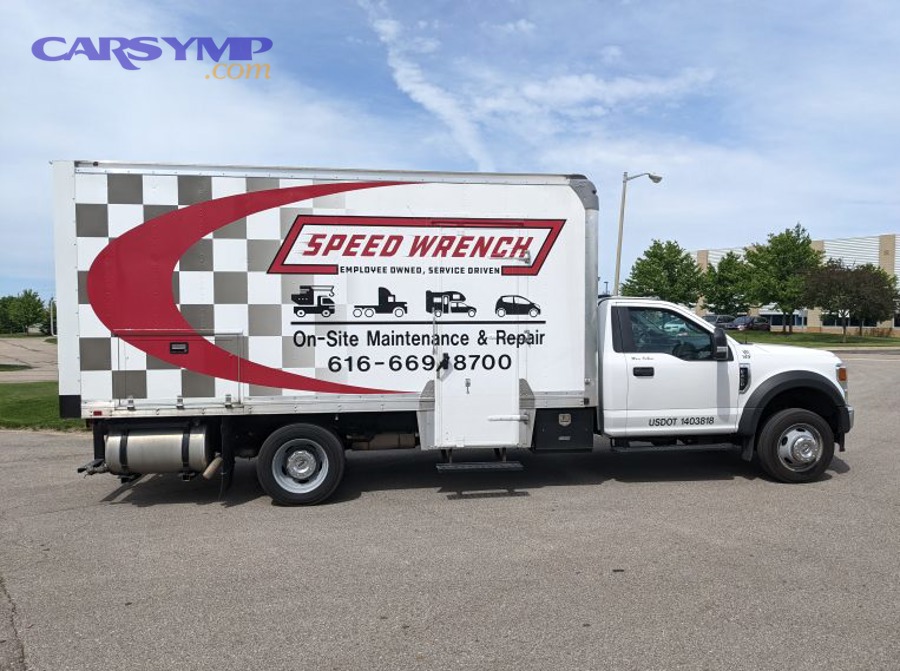
Mobile work is powerful, but not magical. A reliable provider will state what can be done safely where the car sits, and what must be escalated to a shop environment.
Which common no-start repairs are usually mobile-friendly?
There are 7 mobile-friendly no-start repairs that are usually feasible on-site: battery replacement, terminal cleaning/repair, cable/ground repair, relay/fuse replacement, starter replacement (many vehicles), alternator replacement (many vehicles), and basic sensor replacement when accessible.
To illustrate, these repairs share one trait: they’re often accessible with standard tools and don’t require major lifts or programming.
Typical mobile-friendly repairs include:
- Battery replacement and proper terminal service (cleaning, tightening, protective spray)
- Terminal end replacement (when clamps are damaged)
- Ground strap repair/cleaning (high resistance grounds cause weird symptoms)
- Starter relay/fuse replacement (after confirming fault)
- Starter replacement on vehicles with accessible starter placement
- Alternator replacement if belt access is straightforward
- Sensor swaps like crank sensors on accessible layouts (after confirmation)
If you publish content on this topic for your audience, a practical “what to expect” section can also link to a diagnostic explainer on carsymp.com to keep users oriented and reduce panic-driven decisions.
Which no-start issues usually require towing to a shop?
There are 6 types of no-start issues that usually require towing to a shop: complex immobilizer/key programming, major wiring harness faults, repeated fuse blowing/short tracing, internal engine mechanical failure, inaccessible component locations requiring heavy disassembly, and module/network communication faults needing extended tool time.
More importantly, these cases can’t be rushed without risking misdiagnosis.
Common shop-required scenarios:
- Immobilizer/key programming beyond mobile capability
- Deep wiring faults (rodent damage, chafing inside looms, intermittent CAN faults)
- Electrical short diagnosis that requires time and controlled conditions
- Timing/compression issues (jumped timing, mechanical damage)
- Unsafe access (starter buried under intake manifold, subframe drop requirements)
- Module communication faults where you need manufacturer tooling or extended diagnostic sessions
This is where “When towing to a shop is better” becomes a customer-safety and accuracy decision—not a sales tactic.
How much does a mobile mechanic for a no-start typically cost—and what changes the price?
Mobile no-start cost is the sum of diagnosis fees, travel/dispatch costs (if any), parts and labor for the confirmed repair, and any complexity add-ons—because no-start pricing is driven by access, time, and parts availability more than by the symptom itself.
Then, the best way to control cost is to control uncertainty: confirm the cause before approving parts.
This section also addresses the common comparison people want: Mobile mechanic pricing vs shop pricing. Instead of guessing a single number (which varies by city, vehicle, and time), focus on what moves the number.
A simple way to frame cost is:
- Base: diagnostic + travel (sometimes bundled)
- Repair: parts + labor for the confirmed fix
- Modifiers: after-hours, distance, rust/access difficulty, programming needs, re-test time
To make decisions easier, you can present a small comparison table that shows what you’re actually paying for—not just the total.
What the table contains: It compares typical cost components between a mobile mechanic visit and towing to a shop so readers can see where “hidden” costs appear.
| Cost Component | Mobile Mechanic (Typical) | Tow + Shop (Typical) |
|---|---|---|
| Diagnosis cost | Paid on-site | Paid at shop (after tow) |
| Tow cost | Often avoided | Usually required |
| Time to first test | Faster (comes to you) | Slower (transport + queue) |
| Repair scope | Often common repairs | Full shop capability |
| Convenience cost | Lower disruption | Higher disruption |
AAA also notes that older vehicles are more likely to experience breakdowns serious enough to require a tow, which can influence the “mobile vs tow” cost decision if your car is 10+ years old. (newsroom.aaa.com)
What factors raise or lower a mobile no-start repair bill?
There are 8 main factors that raise or lower a mobile no-start repair bill: vehicle access, part type/availability, labor hours, corrosion/rust, time-of-day, distance, diagnostic complexity, and whether programming is required—because each factor changes time and risk.
Below are the most common cost drivers you can actually control or anticipate:
- Access difficulty (battery in trunk, starter buried, tight garage)
- Parts grade (economy vs OEM-equivalent)
- Labor time variability (rusted bolts, seized fasteners)
- After-hours service (nights, weekends, holidays)
- Travel distance (service area boundaries)
- Diagnostic depth (simple battery vs intermittent network fault)
- Repeat visit risk (if parts must be ordered)
- Programming requirement (key/module coding pushes toward shop)
The biggest “pricing mistake” is approving a major part replacement before anyone proves the failure with load testing and circuit checks.
Mobile mechanic vs shop for no-start: which is cheaper overall?
Mobile service is often cheaper overall when it prevents towing and resolves common failures on-site, a shop is cheaper when you already need a tow for safety or complexity, and a dealership becomes optimal when manufacturer-level programming is required.
On the other hand, price alone should never override safety and feasibility.
Use three decision criteria:
- Total cost, not line-item cost: tow + shop diag + lost time can exceed mobile.
- Accuracy risk: intermittent faults can be diagnosed better where the failure occurs.
- Capability match: if the job needs lifts, programming, or deep electrical tracing, shop wins.
The best buyer behavior is: pay for solid diagnosis, approve only confirmed repairs, and demand a clear scope in writing.
What should you do immediately when your car won’t start while waiting for help?
There are 7 immediate steps you should take when your car won’t start: secure the scene, make yourself visible, avoid repeated cranking, document symptoms, protect the battery, decide jump-start vs wait, and prepare access for the mechanic—because safety and information quality directly affect outcome.
Next, these steps reduce both roadside risk and diagnostic confusion.

Here’s the practical sequence:
- Move to a safer location if possible (parking lot, shoulder away from curves)
- Turn on hazard lights and make the vehicle visible
- Stay aware of traffic and avoid standing between cars
- Try one normal start attempt and then stop (don’t grind the starter)
- Note symptoms: sounds, dash lights, whether it cranks, whether lights dim
- Call for service with the checklist info from earlier
- Prepare access: pop hood if safe, clear space, locate wheel lock key if needed
If you’re on a highway shoulder, the best “repair” is reducing exposure. Follow local move-over expectations where relevant, and prioritize safety over troubleshooting.
Is it safe to jump-start a no-start car?
Yes—jump-starting can be safe for a no-start situation if you follow correct connection order, avoid sparks near the battery, and stop if you see swelling, leaking, strong sulfur smell, or violent arcing, because lead-acid batteries can vent flammable gas and misuse can cause injury.
However, a jump-start is a test tool—not a cure—unless the battery is truly the only problem.
Safe jump-start guardrails:
- Inspect first: don’t jump a visibly damaged or leaking battery
- Ventilation matters: avoid sparks right over the battery area
- Correct connection order: connect positives first; final ground connection away from the battery when possible (reduces spark near vents)
- Stop on warning signs: heat, swelling, hissing, strong rotten-egg smell
Battery explosions are uncommon but real, and safety guidance exists because hydrogen/oxygen gas can be present during charging or jump-start scenarios. A University of Minnesota safety alert explains how hydrogen gas accumulation can present a fire/explosion hazard in certain battery contexts. (hsrm.umn.edu)
According to a study by Tehran University of Medical Sciences from the International Journal of Occupational Hygiene, in 2022, researchers analyzed causal factors in automotive battery explosions and emphasized that improper handling and ignition sources around vented gases can contribute to incidents. (ijoh.tums.ac.ir)
What should you avoid doing to prevent damage and extra cost?
There are 6 things you should avoid in a no-start situation: repeated long cranking, random parts swapping, forcing jump-start attempts despite warning signs, ignoring security/immobilizer clues, letting unqualified towing hook points be used, and allowing unsafe lifting—because these actions create mechanical damage, misdiagnosis, or safety hazards.
Besides, avoiding the wrong actions is often the cheapest “repair” you can make.
Avoid these common mistakes:
- Cranking for 10–20 seconds repeatedly (overheats starter, drains battery, floods engine in some cases)
- Replacing parts based on internet guesses (starter/alternator/battery roulette)
- Ignoring the immobilizer/security light (it may not be fuel or battery)
- Using poor ground points for jump-start (sparks near battery vents)
- Allowing unsafe roadside repairs (no proper wheel chocks, unstable jack positioning)
- Approving a vague estimate without proof of the failed component
A good mobile mechanic will respect boundaries, emphasize safety, and show you the measured reason behind the repair—especially when the temptation is to “just swap the battery and hope.”
Why do some no-start problems come and go—and how can you prevent the next one?
Intermittent no-start problems come and go because heat, vibration, and time-dependent electrical loads can temporarily change resistance, sensor output, or battery state—so prevention focuses on verifying the real trigger and reducing avoidable drains and weak connections.
To better understand intermittent failures, focus on “conditions” (hot/cold, after sitting, after rain) as much as “parts.”

Intermittent no-start is where owners lose the most money: one shop visit when the car behaves, then another when it fails again. The fix is usually not more guesswork—it’s better evidence.
A prevention plan has three levels:
- Level 1 (easy wins): battery health check, clean/tight terminals, replace failing key fob battery, address slow crank early
- Level 2 (behavior changes): avoid repeated short trips that never recharge the battery, don’t leave accessories plugged in, track how long the car sits
- Level 3 (targeted diagnostics): parasitic draw testing, heat-soak testing, immobilizer and network checks when indicated
Can an immobilizer or key fob cause a no-start even with a good battery?
Yes—an immobilizer or key fob issue can cause a no-start even with a good battery because the system may block fuel injection or ignition authorization, the vehicle may crank but not fire, and the security logic can be intermittent if key recognition is weak.
Meanwhile, this is one of the fastest “pattern recognition” wins if you know what to look for.
What to watch:
- Security light behavior (flashing or abnormal)
- “Key not detected” messages
- Crank/no-start that resolves with a spare key
- Starts then immediately stalls in some platforms
A mobile mechanic can often confirm whether the symptom matches immobilizer behavior and advise whether a shop or locksmith with the right programming tools is required.
What is “parasitic drain,” and can it cause overnight no-starts?
Parasitic drain is an abnormal electrical draw that continues after the car is off, usually from a module staying awake or a faulty circuit, and yes it can cause overnight no-starts because it depletes the battery faster than normal standby loads.
Specifically, parasitic drain turns a healthy battery into a “dead battery symptom” without the battery being the root cause.
Common causes include:
- Trunk/glovebox lights stuck on
- Aftermarket accessories wired incorrectly
- Modules that fail to go to sleep
- Relays sticking closed
- Water intrusion causing electrical leakage paths
A real parasitic draw test requires time (waiting for modules to sleep) and careful measurement. If your battery repeatedly dies after sitting, ask for that test rather than another battery.
What is a hot-soak no-start, and how is it diagnosed?
A hot-soak no-start is a temperature-related starting failure that appears after the engine is warmed up and then shut off, and it’s diagnosed by reproducing the hot condition and testing starter command, voltage drop, and sensor signals while the fault is active.
More specifically, heat can change resistance and sensor output enough to cross failure thresholds.
Common hot-soak culprits:
- Starter/solenoid internal wear that fails when hot
- Relays that stick or open when warm
- Crank sensors that fail under heat then recover when cooled
- Heat-soaked wiring/connectors with marginal contact
The best tip for owners: write down exactly when it happens (after driving 30 minutes, after a 10-minute stop, only above 85°F, etc.). That detail is diagnostic gold.
How can you reduce the chance of another no-start without overpaying?
There are 4 main ways to reduce future no-start risk without overpaying: maintain battery and connections, verify charging health, prevent avoidable drains, and act early on slow-crank symptoms—because these steps target root causes rather than repeating the same symptom fix.
In short, prevention is cheaper when it’s evidence-based.
Use this practical checklist:
- Battery & terminals: test battery health seasonally; clean/tighten terminals; address corrosion early
- Charging system: verify alternator output if the battery was low; don’t assume a new battery solves charging
- Drain control: remove questionable accessories; investigate repeated overnight drain with a proper draw test
- Early symptom action: treat slow crank as a warning; don’t wait for total failure
If you follow these steps, you’ll not only reduce breakdown risk—you’ll also make future diagnosis faster because your baseline health is known.
Evidence (if any)
- According to a study by Tehran University of Medical Sciences from the International Journal of Occupational Hygiene, in 2022, researchers examined contributing factors to automotive battery explosion incidents and emphasized that unsafe handling and ignition sources around vented gases can play a role. (ijoh.tums.ac.ir)
- According to guidance published by SAE International in its recommended practice on voltage drop for starting motor circuits, acceptable voltage-drop limits help identify excessive resistance in starter circuits, supporting voltage-drop testing as a practical diagnostic method. (sae.org)
- According to reporting from AAA’s newsroom on roadside assistance trends, battery-related issues are a frequent reason drivers require help, reinforcing why power delivery testing is a priority in no-start diagnosis. (newsroom.aaa.com)