Book a Mobile Mechanic Near You: Find On-Site Auto Repair for Busy Drivers (Same-Day vs Shop Visit)
If you’re searching “mobile mechanic near me,” your primary goal is usually simple: book a qualified mechanic who comes to your location—home, work, or a safe parking spot—so you can get your car fixed without losing your day. The fastest path is to choose a provider with clear service coverage, transparent estimates, and the ability to handle your specific problem on-site.
Next, once you’re ready to book, you also need a reliable way to evaluate who’s actually trustworthy. Ratings help, but you’ll make better decisions when you know exactly how to verify experience, insurance, and the quality of parts and warranties behind the promise of convenience.
Then, because cost anxiety is real, you’ll want to understand what you’re paying for: labor, parts, diagnostics, travel fees, and how Mobile mechanic pricing vs shop pricing changes depending on the repair. That clarity helps you compare quotes without falling into “cheap now, expensive later” traps.
Introduce a new idea: Finally, the best choice isn’t always “mobile”—sometimes When towing to a shop is better, it’s the safer and cheaper move. The guide below shows you What mobile mechanics can and can’t do, How to prepare your car for a mobile visit, and how to decide between same-day service and an auto repair shop.
What is a mobile mechanic (on-site auto repair), and how does it work?
A mobile mechanic is an on-demand automotive technician who performs on-site auto repair and diagnostics at your chosen location, using professional tools and parts sourcing—so you can book service “near you” without visiting an auto repair shop.
To better understand how this works in real life, it helps to picture the process as a simple chain: book → diagnose → approve → repair → verify → warranty paperwork.

Do mobile mechanics come to your home, workplace, or roadside location?
Yes—mobile mechanics near you can come to your home, workplace, or a safe parking area, because the entire point of mobile service is to bring tools and know-how to the vehicle; however, they may refuse roadside repairs when the location is unsafe, illegal to work in, or lacks enough space.
Next, the safest and most efficient mobile appointment starts with choosing a location that allows controlled work conditions.
Home driveway:
A driveway is often the best option because it’s stable, private, and predictable. It also supports the Safety and driveway work considerations that professionals prefer—flat ground, good lighting, and enough space to lift the vehicle safely.
Workplace parking lot:
This is ideal when you can’t be without the car later. A mobile mechanic can handle Common services: brakes, battery replacement, diagnostics, and smaller mechanical repairs while you work—assuming your employer allows it and the space is safe.
Roadside:
Roadside service is sometimes possible for low-risk tasks like a battery jump, battery replacement, or a quick no-start assessment. However, many mobile technicians avoid roadside repairs because traffic hazards and limited space can turn a simple job into a dangerous one.
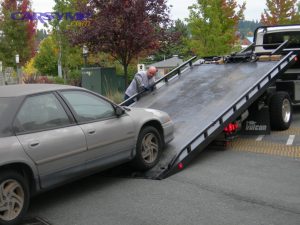
Practical rule: If the car is on a shoulder, on a hill, in a high-traffic zone, or blocking traffic, a reputable technician is likely to recommend moving it or arranging a tow.
What information should you provide to book faster and avoid delays?
There are 7 essential details you should provide when booking a mobile mechanic near you: vehicle identity, symptoms, warning lights, drivability, location constraints, preferred window, and part preferences—because missing facts are the #1 cause of reschedules and “surprise” quote increases.
Then, once you share the right details, you reduce the diagnostic time and help the mechanic bring the correct parts and tools on the first trip.
Use this booking checklist:
- Vehicle basics: year, make, model, engine (and trim if relevant)
- Current issue described clearly: what happened, when it started, and what changed
- Car Symptoms you can observe: noises, vibration, odor, smoke, leaks, warning lights
- Drivability status: “starts and idles,” “starts but won’t move,” or “won’t start”
- Exact location and constraints: gate codes, parking rules, slope/space concerns
- Time window + urgency: same-day vs scheduled, and how long you can wait
- Parts preference: OEM vs aftermarket vs mechanic-supplied parts
If your issue is Mobile mechanic for no-start situations, include these extra details:
- Do dash lights come on?
- Do you hear a click, a crank, or nothing?
- Was the battery recently replaced?
- Any recent repairs or jump-start attempts?
This information lets the technician arrive with the right test equipment and likely replacement parts instead of “guessing” on your driveway.
What repairs can a mobile mechanic usually do on-site vs not?
Mobile mechanics can do most light-to-medium repairs on-site, while jobs requiring specialty equipment, heavy lifts, alignment racks, or advanced calibration are usually better handled at an auto repair shop.
More importantly, knowing what mobile mechanics can and can’t do helps you avoid paying for an appointment that ends in “we need to tow it anyway.”
Common on-site jobs (usually feasible):
- Battery testing and replacement
- Diagnostics (scan tool + electrical testing)
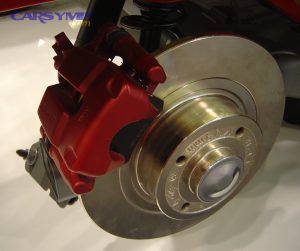
- Brake pad/rotor replacement (Common services: brakes)
- Alternator and starter replacement (space permitting)
- Serpentine belt and tensioner replacement
- Spark plugs/ignition coils on accessible engines
- Minor coolant hose replacements and leak checks
- Oil change and basic fluid services (where allowed)
Often not suitable for mobile (usually shop/tow):
- Wheel alignment and tire mounting/balancing
- Transmission internal repairs
- Major engine internal repairs (timing chain deep work, head gaskets)
- Rusted suspension jobs needing heat, press tools, or a lift
- Advanced ADAS camera/radar calibration after repairs
- Some EV high-voltage work (varies by technician capability)
Decision shortcut: If the job needs a lift, alignment rack, press, or calibration equipment, mobile service is often not the best match.
How do you find the best mobile mechanic near you quickly and safely?
There are 5 reliable ways to find the best mobile mechanic near you—verify credentials, confirm insurance, demand written estimates, evaluate warranty terms, and check consistency of reviews—because reputable mobile service looks transparent before the wrench ever turns.
Next, once you apply a consistent screening method, you stop choosing based on convenience alone and start choosing based on outcomes.

Is a licensed/insured/ASE-certified mobile mechanic always better?
Yes, a properly insured and credentialed mobile mechanic is usually the safer choice, because insurance protects you from liability, recognized certifications signal baseline competence, and professional documentation reduces disputes—although real-world skill still varies from person to person.
However, the best way to make that “yes” meaningful is to know exactly what you’re verifying and why it matters.
Here’s How to verify a mobile mechanic’s credentials without turning it into a confrontation:
- Ask for proof of insurance (general liability at minimum).
- Insurance matters more than a flashy logo because driveway work includes real risks: jacking, fluids, and moving heavy components.
- Ask what certification or training they have (ASE, manufacturer training, or equivalent experience).
- ASE is a recognized industry credential; it doesn’t guarantee perfection, but it reduces the odds of basic mistakes.
- Confirm business details (real address, service area, invoice system).
- Legit businesses provide written invoices and warranty terms without hesitation.
Bottom line: Credential signals are not “everything,” but they are strong predictors of professionalism and accountability.
What red flags suggest you should NOT book that “near me” mobile mechanic?
There are 9 common red flags that suggest you should not book a mobile mechanic near you: no written estimate, vague parts, pressure tactics, cash-only demands, refusal to explain diagnosis, no warranty policy, inconsistent reviews, unrealistic promises, and unclear business identity.
Then, once you recognize these patterns, Red flags and scam avoidance becomes a practical skill instead of a stressful guessing game.
Use this quick “stop-sign” list:
- No written estimate or refusal to itemize labor vs parts
- “Trust me” pricing that changes after arrival without clear reason
- Cash-only pressure or refusal to provide a proper receipt
- No Warranty and parts policy for mobile repairs stated in writing
- Won’t explain the diagnosis or show test results (especially for electrical issues)
- Upselling without evidence (recommending major work based on “feels like”)
- Unrealistic promises (“I can fix anything in 10 minutes”)
- No consistent business footprint (no address, no invoice, no service policy)
- Review patterns that look manufactured (same phrases repeated, no details)
A trustworthy technician will explain what they know, what they need to test, and what they can’t guarantee until diagnostics are completed.
Should you choose an independent mobile mechanic or a mobile-service platform?
An independent mobile mechanic wins in personal continuity, a mobile-service platform is best for fast scheduling and customer support, and dealership-style mobile service is optimal for brand-aligned procedures and certain warranty workflows—depending on your priority.
Meanwhile, because “near me” searches tend to surface all three models, comparing them side-by-side keeps you from choosing blindly.
Here’s a practical comparison table that explains what each option usually optimizes:
| Option | Best for | Potential downside | What to ask before booking |
|---|---|---|---|
| Independent mobile mechanic | Direct relationship, custom solutions, flexible jobs | Quality varies widely | Proof of insurance, written estimate, parts grade |
| Mobile-service platform | Scheduling speed, standardized pricing, customer support | Less control over which tech arrives | Warranty handling, parts policy, cancellation rules |
| Dealership mobile service | Brand procedures, OEM parts, warranty tie-in | May cost more, limited job scope | What they do on-site vs require shop visit |
If you have a no-start or diagnostics problem, platforms can be useful because they often dispatch quickly. If you have a nuanced recurring issue, an independent tech may be better because continuity helps.
How much does a mobile mechanic cost near you, and what affects the price?
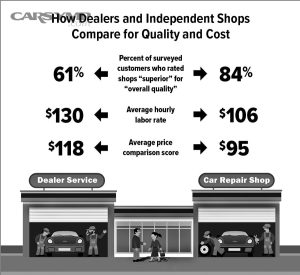
Mobile mechanic pricing near you is driven by labor time, parts quality, diagnostic complexity, and travel or convenience fees, so the same repair can cost less than a shop in some cases and more in others—depending on what you need done and where you live.
Specifically, to compare mobile mechanic pricing vs shop pricing fairly, you need to break the quote into components instead of comparing only the total.

What’s included in a mobile mechanic quote (labor, parts, travel, diagnostics)?
A mobile mechanic quote usually includes four line items—diagnostics, labor, parts, and fees/taxes—because on-site repairs combine the cost of expertise with the cost of bringing a workshop to you.
Next, once you can read the quote like a pro, you’ll avoid the two common traps: “low labor, high parts markup” and “cheap estimate, expensive add-ons.”
1) Diagnostics
Diagnostics is the process of testing, scanning, and verifying the root cause—not just reading a code. A code points to a system; diagnostics confirms the failure.
2) Labor
Labor is typically priced by time (flat-rate style or hourly). Complex access, rust, and disassembly can increase labor.
3) Parts
Parts cost depends on grade:
- OEM (original equipment manufacturer)
- Aftermarket (various quality tiers)
- Remanufactured (common for starters/alternators)
4) Travel/convenience fees and taxes
Some businesses include travel in labor; others list it separately. Neither approach is “wrong,” but it must be disclosed.
If you want fewer surprises, request a written estimate that states:
- Scope of work
- Parts grade
- Warranty duration
- What happens if diagnostics finds a different root cause
How can you compare quotes fairly without getting tricked?
You can compare quotes fairly by matching the same scope, the same parts grade, and the same warranty terms, because price only means something when the inputs are equivalent.
However, many people compare totals while unknowingly comparing different jobs.
Use this quote comparison checklist:
- Confirm identical scope: Are both quotes replacing the same component(s)?
- Match parts grade: OEM vs aftermarket vs remanufactured must be explicit.
- Check warranty terms: labor warranty and parts warranty can differ.
- Ask if diagnostics is included: especially for electrical and intermittent faults.
- Look for hidden fees: travel, disposal, shop supplies, taxes.
- Ask about contingencies: what triggers a price change?
If one quote is dramatically cheaper, it often means:
- Lower-quality parts
- Reduced scope (skipping associated components)
- No warranty support
- Or a plan to upsell after arrival
Can you save money with a mobile mechanic vs a shop?
Yes, you can save money with a mobile mechanic vs a shop because you may avoid towing costs, reduce downtime, and pay for fewer shop overhead expenses; but no, you won’t always save when the repair needs specialized equipment, long labor hours, or calibration.
In addition, the “true cost” includes time and disruption, not just the invoice total.
When mobile is often cheaper:
- Battery replacement and charging system checks
- Many brake pad/rotor jobs
- Starter/alternator swaps on accessible vehicles
- Straightforward diagnostics with clear symptoms
- Minor repairs where towing would add a large extra cost
When a shop may be cheaper or smarter:
- Deep suspension work with seized bolts
- Alignments and tire work
- Complex drivability issues requiring repeated testing
- Repairs that require lifts, presses, or calibration equipment
The best mindset is not “mobile is always cheaper,” but “mobile is cheaper when it prevents a tow and fits the job scope.”
When should you book same-day mobile repair vs visit a shop?
Same-day mobile service wins when you need fast convenience for a repair that’s safe and feasible on-site, while an auto repair shop is the better option when the problem is unsafe to drive, requires specialty equipment, or demands extended teardown time.
More specifically, the smartest choice comes from a quick triage: Is it safe? Is it mobile-feasible? Is it time-critical?

Is it safe to drive while waiting for a mobile mechanic?
No, it is not safe to drive while waiting for a mobile mechanic near you when you have brake, steering, overheating, fuel leak, or severe electrical symptoms, because these failures can escalate quickly, reduce control, or create fire risk; yes, it can be acceptable for mild issues when the car remains stable and predictable.
Then, once you treat safety as the first filter, you prevent the most expensive outcome: turning a repair into an accident.
Use this safety triage:
Do NOT drive (book mobile where it sits or arrange tow):
- Grinding brakes, brake pedal sinking, or brake warning lights
- Steering that feels loose, binding, or clunks loudly
- Overheating, steam, or coolant smell
- Fuel smell or visible fuel leak
- Heavy smoke, burning smell, or wiring odor
- Major fluid leak puddles forming quickly
Usually OK to drive short distances cautiously (still book soon):
- Minor squeal from brakes (not grinding)
- Battery weak but car starts reliably
- Check engine light without severe misfire or flashing light
- Small seepage not rapidly losing fluids
If your symptoms are unclear, describe the Car Symptoms in your booking message so the technician can advise whether to move the vehicle.
What situations usually require a tow or a shop lift instead of mobile service?
There are 6 common situations where towing to a shop is better: repairs needing a lift, alignments, heavy rust/seized fasteners, internal engine/transmission issues, advanced calibrations, and jobs requiring repeated test cycles or specialized equipment.
However, knowing these categories helps you avoid paying for convenience when convenience cannot deliver a correct outcome.
1) Alignment and tire mounting/balancing
These require shop machines.
2) Extensive suspension repairs
Rusty hardware, press-fit bushings, and seized bolts often demand shop-level tools and heat equipment.
3) Internal engine/transmission work
Deep mechanical repairs are rarely efficient on a driveway.
4) Advanced ADAS calibration
Modern safety systems may need controlled calibration settings.
5) Major electrical intermittent faults
Some faults require extended monitoring and repeated testing, which shops can handle more efficiently.
6) Unsafe environment for work
If the car is on a slope, cramped area, or illegal to service in that location, towing becomes the safer plan.
To make the “tow vs mobile” decision less abstract, here’s a simple principle: If the repair requires precision equipment or prolonged disassembly, the shop environment usually wins.
How do you minimize downtime on the day of service?
You can minimize downtime by preparing 8 key things—space, access, documentation, battery state, communication, parts approval, safety conditions, and payment readiness—so the technician can diagnose and repair without interruption.
Next, because mobile work depends on the environment you provide, preparation directly increases speed.
Use this How to prepare your car for a mobile visit checklist:
- Park on flat ground with room to work and open doors/hood
- Provide keys, wheel lock key, and access instructions (gate codes)
- Ensure good lighting or plan daylight service
- Keep pets and children away from the work area
- Share prior repair notes, recent parts changes, and scan results
- Confirm part preferences and approve the estimate quickly
- Make sure your phone is available for questions during diagnostics
- Have payment method ready and request a written invoice
If your job involves brakes or electrical diagnostics, ask the mechanic whether a short test drive is needed and where it can be done safely.
What should you know before a mobile mechanic arrives to avoid surprises and protect your vehicle?
You should confirm the Warranty and parts policy for mobile repairs, ensure the location meets Safety and driveway work considerations, and clarify parts sourcing and documentation—because most negative experiences come from misunderstandings, not the repair itself.
Below, micro-level choices—OEM vs aftermarket, driveway rules, EV limitations—help you avoid edge cases that derail otherwise good appointments.

Should you supply your own parts (OEM vs aftermarket) or let the mechanic bring them?
Supplying your own parts wins in control and brand choice, letting the mechanic bring parts is best for speed and warranty simplicity, and a mixed approach is optimal for hard-to-source items—because parts logistics strongly shape both cost and accountability.
However, the “right” choice depends on how you value time, warranty protection, and the risk of wrong parts.
If you supply your own parts:
- You control OEM vs aftermarket quality
- You may reduce markup
- But you assume responsibility if the part is wrong or fails early
- Some mechanics won’t warranty labor if customer-supplied parts fail
If the mechanic supplies parts:
- Faster turnaround and fewer wrong-part risks
- Clearer warranty chain (one invoice, one accountable party)
- But the total may be higher depending on part sourcing
Best practice: Ask how parts affect warranty before the appointment so the policy is clear in writing.
Do weather, parking rules, or HOA/condo policies affect on-site repairs?
Yes—weather, parking rules, and HOA/condo policies can affect on-site repairs, because they change safety conditions, spill-control requirements, and whether the technician is legally allowed to work in that spot; ignoring them often causes cancellations or rushed work.
Then, because mobile service depends on the environment, these constraints are not “small details”—they are part of the repair plan.
Examples of real constraints:
- Condo rules banning car repairs in shared lots
- HOA rules limiting jacking or fluid services
- Severe rain, snow, or extreme heat affecting tool safety and part handling
- Poor lighting or sloped surfaces increasing jack risk
- Tight spaces blocking door/hood access
If your location is restrictive, consider a neutral location such as a private driveway, a friend’s place, or—when towing to a shop is better—an auto repair shop that can handle the repair safely indoors.
How do warranties work for mobile repairs, and what proof should you keep?
A mobile repair warranty is usually documented through your invoice and parts documentation, and it typically covers labor for a stated period plus parts warranties according to the part supplier—so keeping clear proof protects you if a symptom returns.
In addition, warranties are only useful when you can show what was done and what parts were used.
Keep this documentation:
- Itemized invoice with labor and parts listed
- Parts grade (OEM/aftermarket/remanufactured)
- Warranty terms and duration in writing
- Photos of the repair area if provided
- Diagnostic notes and any scan tool summary
This is the practical backbone of a strong Warranty and parts policy for mobile repairs: one clear paper trail that matches the scope of work.
Can a mobile mechanic service hybrids/EVs, and what limitations are common?
Yes, many mobile mechanics can service hybrids and EVs, but limitations are common because high-voltage systems require special training, safety procedures, and sometimes brand-specific tools; the best match depends on the exact job you need.
More importantly, EV and hybrid service is not “one category”—it ranges from simple to highly specialized.
Often feasible on-site:
- 12V battery service
- Tire rotation if equipment allows (but not mounting/balancing)
- Brake service (depending on model and access)
- Basic diagnostics related to non-high-voltage systems
Often limited or shop-required:
- High-voltage battery diagnostics/repair
- Some cooling system work related to battery thermal management
- Brand-specific calibrations and software procedures
Evidence: According to a study by the University of Michigan Transportation Research Institute from the Department of Sustainable Systems, in 2018, the average annual fuel cost to operate an electric car was about $485, compared with about $1,117 for a gasoline vehicle, highlighting why many owners prioritize efficient service and predictable operating costs. (nrdc.org)
Evidence (if any)
According to a study using crash data developed through the University of Alabama Center for Advanced Public Safety, in 2024, brake-related defects accounted for about 42% of vehicle-defect-associated crashes in the study’s dataset—supporting why timely brake inspections and repairs (including mobile brake service when appropriate) are safety-critical. (pmc.ncbi.nlm.nih.gov)