


Deciding whether to tow or drive comes down to one thing: can the car be operated safely without multiplying damage? If you have any sign that control, cooling, braking, or structural integrity is compromised, towing to a repair shop is usually the safer and cheaper outcome. (riunet.upv.es)
Next, you’ll want a clear set of red-flag symptoms you can trust in the moment—because “it still runs” is not the same as “it’s safe to drive.” The fastest way to decide is to look for a short list of high-risk signs such as overheating, active misfires, major leaks, steering/braking issues, or accident damage. (mwg.aaa.com)
In addition, the “tow vs drive” choice isn’t the only fork in the road. Sometimes the best next step is roadside assistance or a mobile mechanic, and other times only a properly equipped shop can do the job safely and correctly. (vtti.vt.edu)
Introduce a new idea: once you understand the meaning of “driveable,” you can use a simple rule—then confirm it with nine concrete signs—to choose towing with confidence and avoid the expensive mistake of forcing a damaged car to limp to the shop.
What does “tow vs drive” really mean when your goal is a safe repair-shop visit?
“Tow vs drive” is a safety-and-damage decision category: driving means the vehicle can maintain braking, steering, cooling, and power safely for the distance; towing means any of those systems may fail or worsen damage before you reach the shop. (riunet.upv.es)
To reconnect to the real-world problem here, the goal is not to “make the car move,” but to arrive without creating a second failure, so let’s anchor the decision in what “driveable” truly includes.
The “driveable” standard is about control, not confidence
Many drivers decide by gut feel: “It sounds okay” or “I’ll take side streets.” In practice, driveability is more strict:
- Control systems must be reliable: brakes, steering assist, stable handling, predictable acceleration.
- Cooling must be stable: temperature must stay in the safe operating range, with no steam or overheating behavior.
- No catastrophic warning conditions: active misfires, severe leaks, smoke, or burning odors.
- No structural or wheel/tire compromise: especially after impacts, curb strikes, or blowouts.
This framing matters because a car can “run” with serious issues—like a failing cooling system or a flashing check engine light—and the next 2 miles can convert a fixable problem into engine replacement or a roadside hazard. (mwg.aaa.com)
“Limp mode” is a signal, not a solution
Modern vehicles may limit power to protect components when the computer detects faults. Limp mode can feel like the car is “still drivable,” but it often means the vehicle is actively preventing normal operation due to a condition that could worsen quickly (overheating, turbo/boost issues, transmission faults, sensor failures affecting fueling).
Treat limp mode as: drive only if you can do it safely for a very short distance and conditions are stable; otherwise tow—especially if limp mode repeats, power drops suddenly, or warning lights stack up.
Should you tow your car instead of driving it to the shop?
Yes—tow your car instead of driving it when safety or damage risk is unclear, because towing prevents (1) loss of control, (2) cascading mechanical damage, and (3) getting stranded in a dangerous spot. (riunet.upv.es)
To better understand this decision, the key is to recognize that towing is not “overreacting”—it’s often the lowest-risk path when you can’t guarantee braking, steering, cooling, or structural integrity.

Is it ever okay to “just drive it slowly” to the shop?
Yes, sometimes—but only when the problem is clearly minor and stable, and you can confirm control systems are normal. A cautious, short drive can make sense when:
- The car starts normally, idles smoothly, and accelerates predictably.
- Steering and braking feel normal (no pulling, grinding, fade, or soft pedal).
- Temperature stays normal and there is no steam, no coolant smell, and no rising gauge.
- Warning lights are non-critical and you have no new severe symptoms.
However, “drive it slowly” becomes unsafe when the issue involves heat, fluids, or control. Overheating, brake fluid leaks, steering problems, or tire/wheel damage are not “slow-drive” situations. Guidance from auto service providers consistently emphasizes shutting down and avoiding driving when overheating or severe risk indicators appear. (mwg.aaa.com)
Does “the car still runs” guarantee it’s safe to drive?
No. A running engine only proves combustion is happening—it does not confirm the car can stop, steer, or cool itself safely.
Common “it runs, but don’t drive it” examples include:
- Overheating or steam: a running engine can still be in a damage zone.
- Active misfire or flashing CEL: the engine can run while damaging the catalytic converter.
- Brake/steering issues: power steering can fail intermittently; brakes can fade.
- Post-impact damage: suspension or wheel integrity can be compromised while the engine runs.
If you’ve ever felt the car suddenly pull, shake, or lose braking confidence, you’ve already experienced why “running” is the wrong standard.
What are the 9 signs towing to a repair shop is the better choice?
There are 9 main signs towing to a repair shop is the better choice—overheating/steam, major leaks/burning smells, braking/steering/handling problems, accident or hard-impact damage, flat/blown tire or wheel damage, stalling/power loss/knocking, flashing check engine light, no-start/repeated limp mode, and control-system alerts paired with symptoms—based on the criterion of safety risk or risk of compounding damage before arrival. (riunet.upv.es)
To begin connecting symptoms to action, use the pattern “what you notice → why it’s risky → what to do next.” That hook makes the decision fast and repeatable.
Is your engine overheating, steaming, or the temperature warning on?
Yes—tow. Overheating can quickly damage cylinder heads, head gaskets, and other components, and safe guidance typically emphasizes pulling over and shutting off rather than continuing to drive. (mwg.aaa.com)
More specifically, overheating creates a time-pressure trap:
- The gauge climbs past normal and doesn’t come back down.
- Steam appears, or you smell sweet coolant.
- Performance drops as the engine protects itself.
What to do next: pull over safely, shut off the engine, and arrange towing. Do not open the cooling system while hot.
Do you have a fluid leak (oil/coolant/brake fluid) or a burning smell?
Yes—tow if the leak is significant or the smell is burning. Fluids are the car’s “life support,” and losing them can cause catastrophic failure or unsafe braking.
Use quick cues:
- Oil leak + warning light = risk of engine damage.
- Coolant leak + rising temp = overheating risk.
- Brake fluid leak = braking risk (towing is the smart move).
- Burning smell / smoke = stop driving and reassess immediately.
What to do next: shut down, look for visible puddles, and tow if you can’t clearly confirm the leak is minor and stable.
Are braking, steering, or handling symptoms present (pulling, grinding, soft pedal, shaking)?
Yes—tow, because you’re describing loss of control risk. If the car can’t stop or steer predictably, the drive to the shop becomes a safety event rather than a commute.
Key danger signals:
- Soft/long brake pedal, brake warning indicators, or fading braking
- Grinding, metal-on-metal noises
- Steering that feels heavy, jerky, or inconsistent
- Severe vibration or wobble that changes with speed
This is also where people get tempted to search “mobile mechanic near me,” but the correct next step is to first confirm the car is safe to remain where it is and decide whether it must be transported to a shop. Many Common services: brakes can be handled by a mobile provider in some cases, yet braking symptoms that affect control are a strong indicator for towing and full inspection.
Did you have an accident or hit something hard (curb/pothole) causing visible damage?
Yes—tow when damage affects steering, suspension, leaks, or wheel alignment. Post-impact problems can be invisible from the driver seat until a failure escalates.
After a collision, even reputable repair guidance emphasizes deciding between driving and towing based on safety-critical damage indicators (steering/suspension, leaks, compromised drivability).
What to do next: if there’s any doubt—especially if the wheel is not centered, the car pulls hard, a tire rubs, or fluids leak—tow to a shop that can inspect suspension and underbody properly.
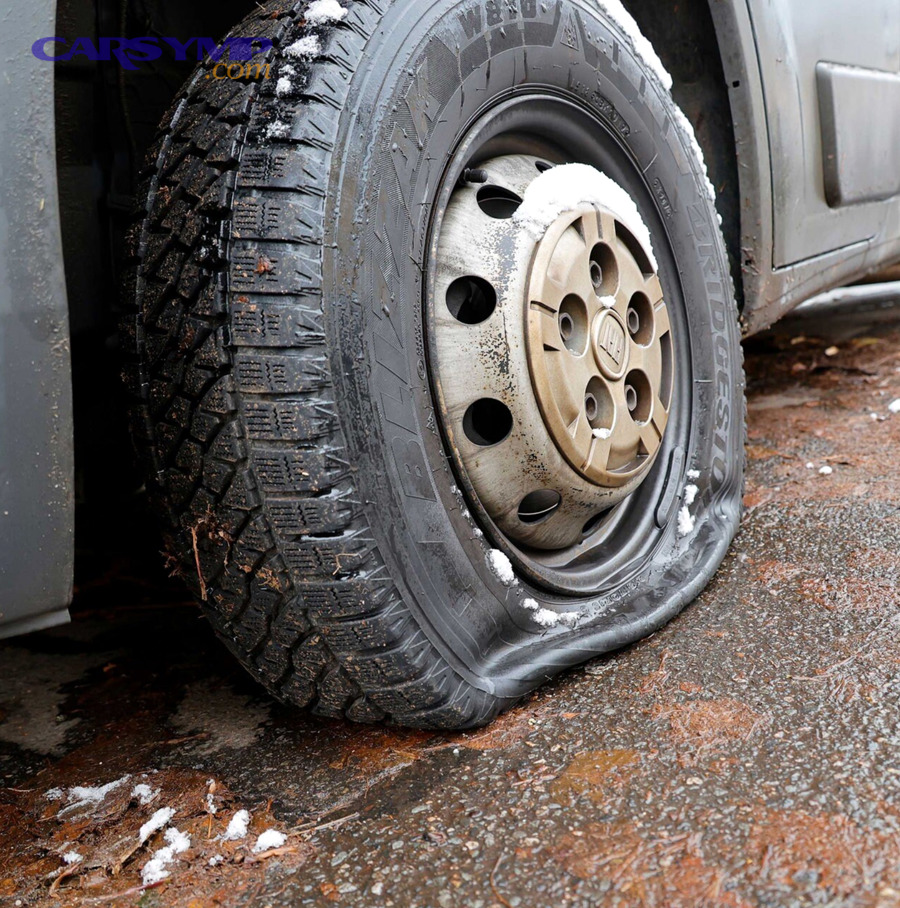
Is a tire flat/blown, wheel cracked, or lug nuts compromised?
Yes—tow unless a proper spare is installed and the car drives normally for a short distance. Driving on a flat can destroy the tire, wheel, and suspension components.
If you’re on the roadside:
- A temporary spare may have speed/distance limits
- A damaged wheel or missing lugs is not a drive-it problem
What to do next: if you can’t safely change the tire, or if the wheel/tire hardware is compromised, tow.
Is the car stalling, losing power, misfiring badly, or making loud knocking noises?
Yes—tow, because the car is signaling unstable operation that can damage expensive components. Severe misfires can overheat the catalytic converter, and loud knocking can indicate internal engine issues that should not be “tested” by continuing to drive. (rohnertparktransmission.com)
This is where professional diagnostics matters: a shop can pull codes, view live data, and confirm whether the problem is ignition, fueling, air, or mechanical. If you drive while the engine is unstable, you may turn a manageable repair into a major rebuild.
Is the check engine light flashing (not steady)?
Yes—tow, because a flashing check engine light commonly indicates an active misfire condition and continued driving can cause additional damage. (rohnertparktransmission.com)
What to do next: reduce load, pull over safely, shut down, and arrange towing. Even if the engine feels “okay,” the light is telling you the condition is urgent.
Is the vehicle stuck, won’t start, or goes into limp mode repeatedly?
There are two main “can’t proceed” types here—no-start and unstable-start/limp—based on the criterion of whether the vehicle can operate reliably long enough to reach a safe repair environment.
- No-start: engine won’t crank, or cranks but won’t fire.
- Unstable-start/limp: starts then stalls, repeatedly goes into limp mode, or loses power unpredictably.
Often the immediate culprit is a weak battery, starter, charging issue, or an electrical fault—but you don’t want to “guess-drive” it. If the car can’t reliably idle and move without cutting out, towing becomes the safer choice.
Are there dashboard safety alerts that affect control (ABS, ESC, power steering warnings) plus symptoms?
There are three common alert groups—braking stability (ABS/ESC), steering assist, and drivetrain/traction systems—and they become tow-worthy when paired with real symptoms like pulling, heavy steering, or unpredictable stopping.
If you have:
- A warning light and
- A noticeable change in behavior
…then treat it as a control-risk scenario and tow, especially in poor weather or heavy traffic.
Tow vs drive: how do you compare cost, risk, and convenience?
Towing wins on risk reduction, driving wins on immediate cost when the issue is minor and stable, and a “limited drive” is optimal only when you can confirm safe control and stable temperature for a short distance. (riunet.upv.es)
To illustrate the trade-off clearly, use a simple model: “Cost Today vs Cost of the Mistake.” If the mistake cost is high (engine damage, crash risk, being stranded), towing becomes the better value.

What typically makes towing “worth it” even if it costs more today?
Towing is usually “worth it” when it prevents one of these outcomes:
- Catastrophic mechanical escalation
Overheating is the classic example: a tow fee can be small compared to the cost of engine repair if you continue driving while hot. AAA’s consumer guidance emphasizes pulling over and shutting off when overheating signs appear, because continuing can worsen damage. (mwg.aaa.com) - Loss-of-control exposure
Brakes, steering, and tire integrity are safety multipliers. If those are compromised, the risk isn’t just breakdown—it’s a crash. - Compounding inconvenience
A forced drive can become a breakdown in a worse location—on a bridge, in a fast lane, or far from safe pull-offs—adding stress, time, and sometimes additional towing complexity.
When is towing to the shop better than towing home first?
Towing directly to the shop is often better when:
- The car is clearly undriveable and will need professional assessment anyway.
- You want to avoid paying for two tows (home, then shop).
- You’re trying to reduce time-to-diagnosis and get on the schedule sooner.
This is a quiet cost-saver: towing “somewhere convenient” first can feel comforting, but it often creates extra steps and delays.
Towing vs roadside assistance vs mobile mechanic: which option fits your situation?
Towing is best for unsafe or undriveable conditions, roadside assistance is best for quick on-the-spot fixes, and a mobile mechanic is optimal for stable, driveway-safe repairs that don’t require a lift or specialized shop equipment. (vtti.vt.edu)
To guide the choice, focus on what each option can reliably deliver—because the wrong choice wastes time and can increase risk.

When is roadside assistance enough (and towing unnecessary)?
Roadside assistance is usually enough for:
- Jump starts (when the issue is simply a drained battery)
- Lockouts
- Fuel delivery (out of gas/charge misjudgment, where applicable)
- Tire change when you have a usable spare and safe conditions
The core test is: can the car return to safe operation immediately after a simple intervention? If yes, roadside assistance may be the fastest path.
When is a mobile mechanic the better choice than towing?
A mobile mechanic is often best when:
- The car is parked safely (home, driveway, parking lot) and stable.
- The repair is straightforward without a lift or specialized equipment: batteries, some starters, some sensors, basic maintenance.
- You want quick service without towing logistics.
This is the moment many people type “mobile mechanic near me.” That can be a smart move—but only after you confirm there are no red-flag conditions like overheating, active misfires, major leaks, or unsafe braking/steering symptoms.
When is a repair shop the only sensible option?
A repair shop is the better choice when you need:
- A lift for undercarriage inspection or suspension work
- Alignments and tire mounting/balancing
- Advanced diagnostics (scan tools, smoke tests, scope work, calibration)
- Major repairs (engine internal, transmission, complex electrical)
Even if a mobile tech can perform many tasks, the shop becomes essential when the repair requires controlled conditions, heavy equipment, or specialized procedures.
If you decide to tow, what should you do next to avoid delays and extra fees?
The best towing plan is a short checklist—choose the right destination, share accurate symptoms, confirm towing method, and stay safe while waiting—so you reduce downtime, prevent damage during transport, and avoid repeat tows. (riunet.upv.es)
Below is the practical bridge from “decision” to “execution,” because a good tow decision can still go wrong if the logistics are sloppy.
What information should you give the tow operator and the shop?
Give information that prevents the wrong equipment or wrong assumptions:
To the tow operator (dispatch):
- Vehicle type and drivetrain (FWD/RWD/AWD/4WD; EV/hybrid if applicable)
- Location and whether the car is in a garage, tight lot, or roadside shoulder
- Condition: no-start, accident damage, flat tire, overheating, etc.
- Whether wheels roll and steering works (important for loading)
To the shop:
- Symptoms timeline (what happened first, what changed)
- Warning lights (steady vs flashing)
- Smells (burning, coolant sweet smell), smoke/steam
- Any recent work (battery replaced, brakes serviced, jump started)
This improves first-visit accuracy and speeds up diagnostics, which is often the biggest time sink in a breakdown scenario.
What can you do immediately to stay safe while waiting for a tow?
Safety while waiting matters because the roadside is unpredictable.
- Pull as far off the travel lane as safely possible
- Turn on hazard lights
- Stay visible (reflective triangle/flares if you have them)
- Stay aware of traffic; avoid standing between vehicles or near the lane
- If you must use your phone, do it deliberately—don’t multitask around moving traffic
Evidence: According to a study by Virginia Tech Transportation Institute from its naturalistic driving research program, in 2016, texting while driving was associated with a 23× higher crash risk—a reminder that roadside environments punish distraction and deserve strict attention. (vtti.vt.edu)
What towing method should you request to protect your vehicle—and does it change for AWD, EVs, or hybrids?
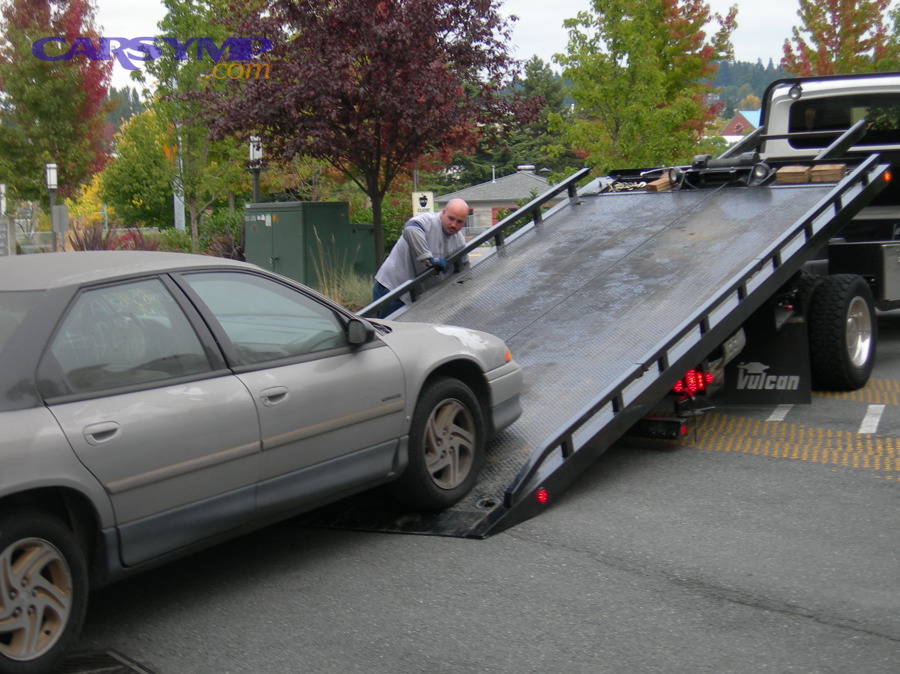
The right towing method is a protection choice: flatbed towing is often the safest general option, wheel-lift towing can be appropriate in some cases, and AWD/4WD and many EV/hybrid scenarios typically benefit from extra caution to avoid drivetrain or system issues. (commons.wikimedia.org)
Next, this matters because “getting to the shop” is not enough—how you get there can affect the vehicle, especially when drivetrain layouts and modern systems are involved.
Is a flatbed tow truck better than a wheel-lift for most breakdowns?
Flatbed towing is often better for many breakdowns because the vehicle is fully supported off the ground, which reduces the chance of tire, wheel, or drivetrain-related complications during transport. It also simplifies loading for damaged or low-clearance vehicles. (commons.wikimedia.org)
If you’re unsure—or if the car has accident damage, a flat tire, or unknown drivetrain risk—flatbed is the conservative choice.
Do AWD/4WD vehicles need special towing to avoid drivetrain damage?
Yes, AWD/4WD vehicles can require special care depending on the vehicle and the type of tow, because improper towing can stress drivetrain components if the wheels are forced to rotate in ways the system doesn’t expect.
Practically, the safe play is:
- Tell dispatch it’s AWD/4WD
- Prefer a flatbed when uncertain
- Follow manufacturer guidance when available (owner’s manual is the authority)
Do EVs and hybrids require different towing precautions?
Yes, EVs and hybrids can have towing precautions based on how their drivetrains and systems are designed, and many owners and tow operators prefer flatbed transport for simplicity and reduced risk.
What to do as a driver:
- Tell dispatch it’s an EV/hybrid
- Mention if it won’t shift into neutral or has a dead 12V condition
- Avoid improvising “pull” solutions without guidance
Can towing impact ADAS sensors or require recalibration after an accident?
Yes—after an accident, repairs and sensor alignment can become part of the process, and that reality can influence your “shop vs mobile” decision. If the vehicle has advanced driver assistance features, the safer assumption after impact is: a shop with the right equipment may be required.
Evidence (if any)
According to a study by Virginia Tech Transportation Institute from its naturalistic driving research program, in 2016, texting while driving was associated with a 23× higher crash risk, reinforcing why distraction control is critical during breakdown and towing situations. (vtti.vt.edu)