


UV dye testing for power steering leaks is a fluorescent detection method that uses specially formulated dye and ultraviolet light to pinpoint the exact source of power steering fluid leaks, making it up to 10 times more accurate than visual inspection alone. This professional-grade diagnostic technique involves adding UV-reactive dye to your power steering system, allowing it to circulate, then using a UV lamp to scan for bright yellow-green fluorescence that reveals even the smallest leaks in hoses, seals, pumps, and rack-and-pinion assemblies. Unlike guesswork or temporary fixes, UV dye testing gives DIY mechanics the same diagnostic precision that professional shops use to identify leaks before they cause complete system failure or expensive component damage.
To successfully perform UV dye testing on your steering system, you’ll need the right equipment including compatible UV fluorescent dye designed for power steering fluid, a powerful UV lamp with 365nm wavelength output, and safety glasses with yellow-tinted lenses. The complete process takes between 30 minutes to one hour from start to finish, including preparation time, dye application, vehicle operation to circulate the fluid, and thorough inspection under UV light in darkened conditions. Most automotive parts stores like AutoZone, O’Reilly, and Harbor Freight carry complete UV leak detection kits specifically formulated for power steering systems, transmission fluid, and engine oil applications.
Understanding where power steering leaks commonly occur helps you conduct a more efficient inspection and reduces diagnostic time significantly. The most frequent leak locations include deteriorating rubber hoses, worn pump shaft seals, aging rack-and-pinion seals, corroded metal lines, loose hose clamps, and damaged O-rings at connection points. According to automotive repair data compiled by carsymp.com, approximately 60% of power steering fluid leaks originate from high-pressure hose connections and pump seals, while 30% come from rack-and-pinion assemblies, and the remaining 10% from reservoir cracks or return line failures.
Beyond the basic detection process, knowing the advantages and limitations of UV dye testing compared to alternative methods will help you choose the most effective diagnostic approach for your specific situation. Next, let’s explore exactly what UV dye testing is and how this fluorescent detection technology works to reveal hidden power steering leaks that are invisible to the naked eye.
What is UV Dye Testing for Power Steering Leaks?
UV dye testing for power steering leaks is a diagnostic method that uses fluorescent dye and ultraviolet light to detect fluid leaks by making them glow bright yellow-green, allowing mechanics to pinpoint leak sources with precision.
To better understand this detection technology, let’s examine how the fluorescent dye interacts with your power steering system and why ultraviolet light makes hidden leaks visible.
How Does UV Dye Work to Reveal Steering Fluid Leaks?
UV fluorescent dye works through a photochemical process called fluorescence, where dye molecules absorb invisible ultraviolet light energy and re-emit it as visible yellow-green light that human eyes can easily see. When you add this specialized dye to your power steering fluid, it mixes completely with the fluid and circulates throughout the entire hydraulic system, including the pump, hoses, steering rack, and all connection points. As the pressurized fluid flows through the system during normal steering operation, any breach in seals, gaskets, hoses, or fittings allows the dye-infused fluid to escape and deposit on surrounding components.
The dye remains fluorescent for months after application, which means even slow seeping leaks that only drip occasionally will create detectable fluorescent traces over time. Modern UV dyes designed for automotive applications use chemical compounds like fluorescein derivatives that are specifically engineered to remain stable in petroleum-based fluids at temperatures ranging from -40°F to 300°F. This thermal stability ensures the dye maintains its fluorescent properties whether you’re diagnosing leaks in freezing winter conditions or immediately after hard driving that heats the steering fluid.
The detection process relies on the fact that ultraviolet light at 365nm wavelength excites the dye molecules, causing them to emit visible light in the 510-530nm range, which appears as bright yellow-green to human vision. This fluorescent emission is so bright that even microscopic amounts of leaked fluid containing the dye will glow visibly when exposed to UV light, making it possible to detect leaks that release less than one drop per day—leaks that would be virtually impossible to find through visual inspection alone.
Is UV Dye Testing Safe for Your Power Steering System?
Yes, UV dye testing is completely safe for your power steering system because the dye is chemically formulated to be fully compatible with power steering fluid and automatic transmission fluid without altering fluid properties or damaging system components.
Specifically, professional-grade UV dyes like those manufactured by Tracer Products, A/C Pro, and other reputable brands are petroleum-based compounds that dissolve completely in hydraulic fluids without changing viscosity, lubrication properties, or thermal characteristics. These dyes undergo rigorous compatibility testing with rubber seals, O-rings, metal components, and various fluid formulations to ensure they won’t cause swelling, deterioration, or chemical reactions that could damage your steering system.
The concentration ratio is deliberately kept low—typically one ounce of dye per six quarts of system fluid—which means the dye comprises less than 3% of the total fluid volume. At this concentration level, the dye has zero measurable impact on the fluid’s hydraulic performance, pressure transmission capability, or anti-wear additives that protect pump components. Additionally, UV dyes are designed to remain permanently in the system without breaking down or losing effectiveness over time, which eliminates the need for removal and prevents any potential issues from dye degradation products.
The safety profile extends to the detection process itself, as the UV light used to reveal leaks is a non-contact, non-invasive inspection method that doesn’t require disassembly or system pressurization beyond normal operating levels. However, it’s important to use UV dyes specifically labeled for power steering and transmission applications rather than dyes formulated for air conditioning systems, as AC dyes may contain different chemical bases designed for refrigerant oils rather than petroleum-based hydraulic fluids.
What Equipment Do You Need for UV Dye Leak Detection?
You need three essential items for UV dye leak detection: UV fluorescent dye compatible with power steering fluid, a UV lamp with 365nm wavelength output, and safety glasses with yellow-tinted lenses to enhance fluorescence visibility.
Below, let’s examine the specific products and tools that will ensure accurate leak detection results.
Which UV Dye Products Work Best for Power Steering Systems?
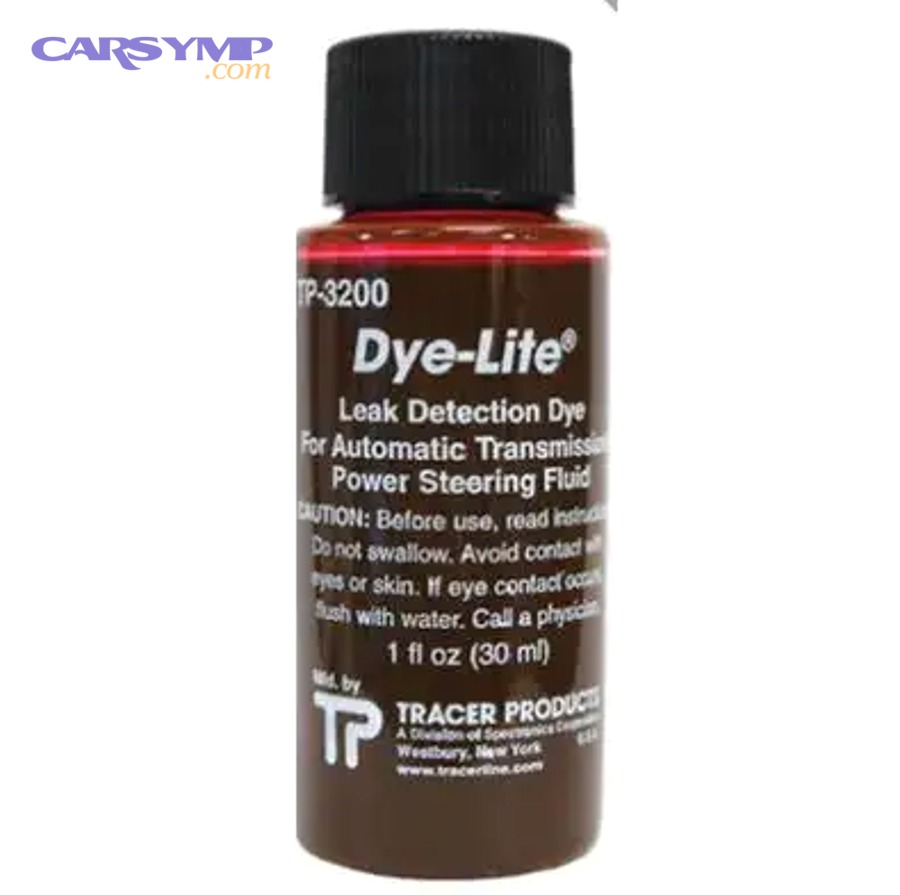
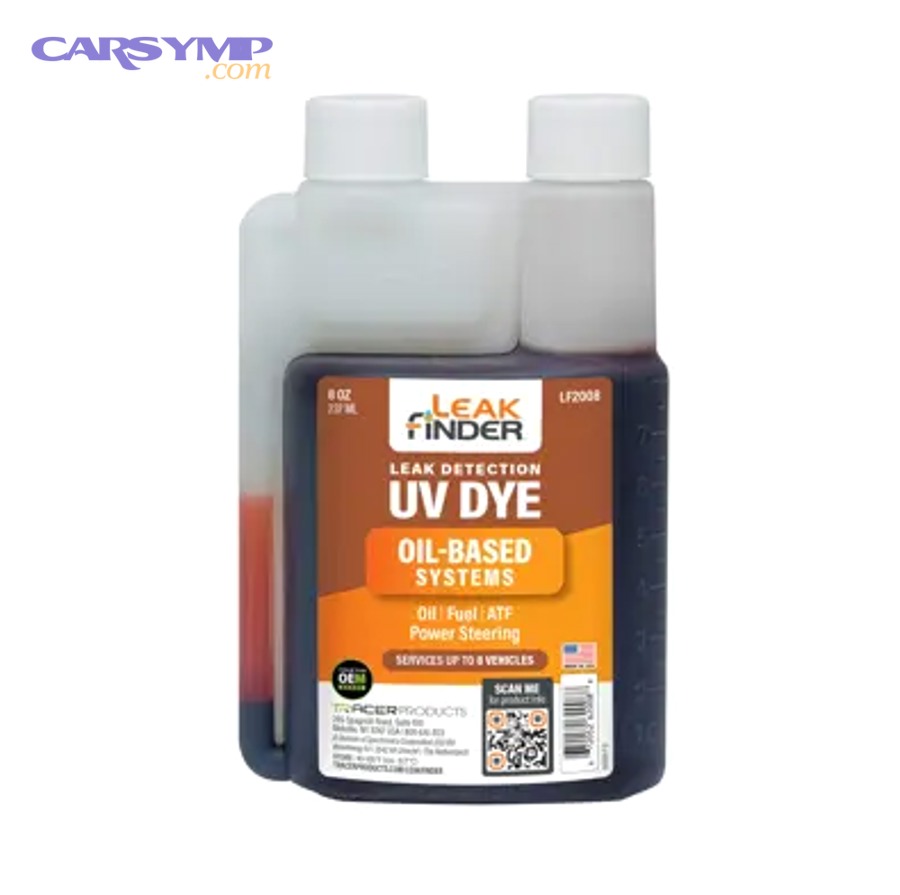
The best UV dye products for power steering systems include DYE-LITE by Tracer Products, A/C Pro Certified Auto Pro Oil and Fuel Systems UV Dye, and TracerLine application-specific dyes, all formulated for automatic transmission fluid and power steering fluid compatibility. These products share several critical specifications that make them effective: they use petroleum-soluble fluorescent compounds that produce bright yellow-green fluorescence under UV light, they’re packaged in pre-measured bottles (typically 1 oz or 30ml) that treat 5-6 quarts of fluid, and they contain proprietary chemical stabilizers that prevent dye degradation at high operating temperatures.
DYE-LITE TP-3200 is specifically marketed for both ATF and power steering applications, with a formulation that glows bright yellow-green and remains stable in fluid temperatures up to 300°F. This product costs approximately $15-20 per bottle at automotive retailers and is available at most professional parts suppliers. A/C Pro’s multi-purpose oil and fuel system dye (model 374CS) works across multiple fluid types including engine oil, transmission fluid, power steering fluid, and diesel fuel, making it a versatile option for mechanics who want one dye for multiple diagnostic applications. This universal compatibility comes from using a petroleum base that dissolves in all oil-based automotive fluids.
When selecting a UV dye product, verify the dosage ratio matches your system capacity—most power steering systems hold between 1-2 quarts of fluid, which means a single 1-oz bottle will provide more than enough dye for effective detection. Some products come as part of complete leak detection kits that include both the dye and a UV flashlight, which can be cost-effective for first-time users. Avoid using multi-vehicle dye bottles without measuring, as overdosing won’t improve detection but may make it harder to distinguish leak sources from general fluorescence.
The chemical composition matters: look for dyes that specifically state compatibility with “petroleum-based lubricants” or “ATF/power steering fluid” on the label. Some cheaper alternatives use water-soluble dyes designed for coolant systems, which won’t mix properly with oil-based power steering fluid and will separate, rendering them useless for hydraulic leak detection. Professional mechanics often prefer concentrated dyes that come in measuring bottles with graduated markings, allowing precise dosing for systems of different capacities.
What Type of UV Light Should You Use to Find Leaks?
You should use a UV flashlight or lamp that emits ultraviolet light at 365nm wavelength with a minimum output of 10 LED bulbs or equivalent intensity, as this specific wavelength excites fluorescent dyes most effectively while being safe for brief skin and eye exposure. The 365nm wavelength falls in the UVA spectrum, which penetrates less deeply into biological tissues than shorter UVB or UVC wavelengths, making it safer for automotive diagnostic applications where you’ll be holding the light close to your face while inspecting tight engine compartment spaces.
LED-based UV flashlights have become the standard for automotive leak detection because they produce concentrated, focused beams that can illuminate specific components without lighting up the entire engine bay. A professional-grade UV flashlight like those sold by Tracer Products, Spectroline, or even Harbor Freight’s budget-friendly options typically feature between 12-128 individual UV LEDs arranged in an array that produces a flood pattern covering several square feet at arm’s length. These lights run on rechargeable lithium-ion batteries or standard AA/AAA batteries, with runtime ranging from 2-6 hours depending on LED count and battery capacity.
The light’s power output significantly impacts detection capability—more powerful lights reveal fainter fluorescent traces and work better in partially lit conditions. Professional UV inspection lamps can produce 4,000-10,000 μW/cm² of UV intensity at the standard inspection distance of 6-12 inches from the target surface. Budget UV flashlights in the $15-30 range typically produce 1,000-3,000 μW/cm², which is sufficient for detecting active leaks but may miss very faint traces from slow seepers.
Beyond the flashlight itself, UV safety glasses with yellow-tinted lenses serve two purposes: they protect your eyes from prolonged UV exposure during extended inspection sessions, and the yellow tint filters out blue and violet visible light while enhancing the yellow-green fluorescence of the dye, making leak traces appear even brighter against dark engine backgrounds. These glasses cost $5-15 and are highly recommended by professional technicians who perform UV leak detection regularly. Some complete UV leak detection kits available at AutoZone, O’Reilly Auto Parts, and online retailers bundle the dye, UV flashlight, and safety glasses together for $30-50, providing everything needed to start diagnosing power steering fluid leaks immediately.
How Do You Perform a UV Dye Test on Your Steering System?
You perform a UV dye test on your steering system by adding the proper amount of fluorescent dye to the power steering reservoir, operating the vehicle for 15-30 minutes to circulate the dye, then inspecting all steering components with a UV light in dark conditions to identify fluorescent traces at leak points. This four-step process provides systematic leak detection with professional-level accuracy.
More specifically, the procedure requires careful preparation and methodical execution to ensure you don’t miss slow leaks or misidentify leak sources.
Step 1: How Do You Prepare the Power Steering System?
Preparing the power steering system involves cleaning the engine bay around all steering components, checking the current fluid level, and identifying the power steering reservoir location before adding any dye. Start by using an automotive degreaser or brake cleaner to thoroughly wash all visible power steering components including the pump, hoses, reservoir, steering rack, and connection points, removing any accumulated oil, dirt, or old fluid residue that could create false fluorescent signals when you perform the UV inspection later.
After cleaning, allow everything to dry completely—moisture can dilute dye traces and make detection more difficult. While components are drying, locate your vehicle’s power steering fluid reservoir, which is typically a translucent plastic or metal tank mounted on or near the power steering pump, usually on the driver’s side of the engine bay. The reservoir cap will be labeled with a steering wheel icon or the words “Power Steering” embossed on the top.
Check the current fluid level using the dipstick attached to the reservoir cap or by observing the “MIN” and “MAX” level marks on the side of a translucent reservoir. If the level is below the “MIN” mark, this confirms you have an active leak that’s depleting fluid. In this case, you’ll need to add clean power steering fluid first to bring the level up to the “MIN” mark before adding UV dye—never add dye to a nearly empty system, as it won’t circulate properly and you’ll waste the dye without effective leak detection.
For systems that are severely low or empty due to rapid leaking, consider whether UV dye testing is the right approach or if the leak is already obvious enough to diagnose visually. UV dye works best for finding slow, hidden, or intermittent leaks where the source isn’t immediately apparent from external observation. Document the starting fluid level and condition—noting color, clarity, and any contamination—as this baseline helps you assess leak severity after testing.
Step 2: How Much UV Dye Should You Add?
You should add UV dye at a ratio of 1 ounce (30ml) per 6 quarts of system fluid, which for most passenger vehicles with 1-2 quart power steering systems means using approximately 1/4 to 1/2 ounce of dye for optimal fluorescence without oversaturation. To measure accurately, use the graduated markings on the dye bottle if available, or use a small measuring cup or syringe to extract the precise amount needed based on your vehicle’s power steering system capacity.
Power steering system capacity varies by vehicle type and steering configuration. Compact cars with electric power steering may have no hydraulic system at all, while vehicles with hydraulic power steering typically hold:
- Small cars: 0.75-1.0 quarts
- Midsize sedans: 1.0-1.5 quarts
- Full-size trucks and SUVs: 1.5-2.0 quarts
- Vehicles with rack-and-pinion plus steering coolers: 2.0-2.5 quarts
You can find your vehicle’s exact power steering fluid capacity in the owner’s manual, in the vehicle service manual, or on automotive specification websites like carsymp.com which maintains detailed fluid capacity databases for thousands of vehicle makes and models. When in doubt, using slightly less dye is better than overdosing—1/4 ounce will still produce detectable fluorescence in a 1-quart system, while using too much dye can cause excessive fluorescence that makes it harder to pinpoint the exact leak source.
The addition process is straightforward: remove the power steering reservoir cap, slowly pour the measured dye amount directly into the reservoir opening, then replace the cap securely. The dye will initially sit on top of the power steering fluid due to slight density differences, but it will mix completely once the pump starts circulating fluid. Some mechanics prefer to add the dye while the engine is running at idle (with the vehicle in Park and the parking brake engaged), as this creates immediate mixing and circulation, but this approach carries a risk of spilling dye if you’re not careful with the pour.
For power steering systems that have a filter or screen in the reservoir, make sure the dye goes into the reservoir rather than being poured directly onto the filter, as this could cause temporarily restricted flow until the dye dissolves completely. After adding dye, gently rock the vehicle side to side a few times or turn the steering wheel lock-to-lock once or twice while the engine is off to help the dye begin mixing with the fluid before you start the circulation phase.
Step 3: How Long Should You Run the Vehicle?
You should run the vehicle for 15-30 minutes while performing normal driving or steering wheel movements to ensure complete dye circulation throughout the power steering system and allow enough time for the dye-marked fluid to leak out at any breach points. The circulation time depends on leak severity and system design—fast leaks may show fluorescent traces within 10-15 minutes, while slow seeping leaks might require 30-45 minutes of operation to deposit enough dye-marked fluid for visible detection.
During this circulation period, the goal is to exercise all steering components and pressurize all system connections, which means driving the vehicle normally with a variety of turning maneuvers rather than just letting it idle. If road testing isn’t possible or practical, you can accomplish adequate circulation by starting the engine and repeatedly turning the steering wheel fully from lock-to-lock (maximum left to maximum right) while the vehicle is stationary. Perform at least 10-15 full lock-to-lock cycles, pausing briefly at full lock in each direction to maximize pressure at all system components.
The power steering pump operates at pressures between 1,000-1,500 PSI during normal operation and can spike to over 2,000 PSI when the steering wheel is held at full lock, which forces fluid through every seal, gasket, and connection point in the system. This high-pressure cycling is what pushes dye-marked fluid out through even tiny breaches in seals or pinhole leaks in hoses. For intermittent leaks that only occur under specific conditions—such as cold starts, high-speed driving, or extreme steering angles—you may need to recreate those conditions during the circulation phase to make the leak active.
Monitor the power steering fluid level during and after circulation, especially if you already know you have a significant leak. If the fluid level drops below the “MIN” mark during testing, add more clean power steering fluid to maintain proper system operation—running the pump dry even briefly can cause permanent damage. The fluid you add will dilute the dye concentration slightly, but enough dye will remain in the system for effective leak detection. After completing the circulation period, allow the engine to cool for 5-10 minutes before beginning UV inspection, as hot components can cause minor burns during hands-on inspection work in tight engine compartment spaces.
Step 4: How Do You Inspect for Leaks with UV Light?
You inspect for leaks with UV light by working in complete darkness or very low light conditions, systematically scanning all power steering components with the UV flashlight held 6-12 inches from surfaces while wearing yellow-tinted safety glasses to enhance fluorescence visibility. Begin inspection at the power steering reservoir and pump, moving methodically through all hoses, connections, the steering rack or gearbox, and hydraulic lines, looking for bright yellow-green fluorescent traces that indicate leaked fluid containing the UV dye.
The inspection environment critically affects detection success. UV fluorescence is far more visible in darkness—what appears as a faint glow in ambient light becomes a brilliant yellow-green beacon in total darkness. If you’re working in a garage, turn off all overhead lights and close doors to eliminate natural light. If working outdoors, wait until after sunset when ambient light levels drop below 10 lux. Some professional mechanics use portable black tarps or inspection tents to create darkness around the vehicle’s front end during daytime inspections.
Your scanning technique should follow a systematic pattern to ensure complete coverage without missing components. Start at the highest point in the system (the reservoir) and work downward, as leaked fluid tends to drip and run down following gravity. Focus the UV beam directly onto each component:
Power steering reservoir and cap: Look for fluorescent residue around the cap seal, at the reservoir-to-pump connection, and on the reservoir body itself, which could indicate cracks or deteriorated seals.
Power steering pump: Examine the pump shaft seal where the drive pulley connects—this is a common leak point that will show fluorescent buildup around the shaft opening. Check all pump body seams and mounting points.
High-pressure hose: Trace the entire length of the high-pressure line from the pump to the steering rack, paying special attention to both crimped end fittings, any intermediate connections, and sections where the hose passes near hot engine components that can cause deterioration.
Steering rack or gearbox: Inspect both inner tie rod boots (the rubber covers where the steering rack connects to the tie rods), the input shaft seal where the steering column enters the rack, and the rack housing itself for any fluorescent streaks or accumulation.
Return line: Follow the low-pressure return hose from the steering rack back to the reservoir, checking all connections and the hose body for fluorescent traces.
Power steering cooler (if equipped): Some vehicles have a separate steering fluid cooler, usually mounted in front of the radiator—inspect all cooler connections and the cooler body for leaks.
When you find fluorescent traces, distinguish between active leak sources and secondary contamination. An active leak point will show concentrated fluorescence directly at the breach location (a fitting, seal, or crack) with fluorescent fluid spreading outward from that point. Secondary contamination appears as scattered fluorescent droplets or spray patterns on surrounding components caused by fluid that leaked elsewhere and was blown around by engine cooling fans or road wind. Trace any scattered patterns back to their highest point of origin to find the actual leak source.
Use paper towels to carefully wipe suspected leak areas, then immediately re-inspect with the UV light—if fluorescence reappears quickly (within 2-3 minutes of engine operation), you’ve confirmed an active leak. Take photos with your phone’s camera while illuminating components with the UV light, as modern phone cameras can often capture the fluorescence well enough to document leak locations for reference during repair. Mark confirmed leak locations with chalk or masking tape so you can easily relocate them when working in normal lighting during the repair phase.
Where Are the Most Common Power Steering Leak Locations?
The most common power steering leak locations are high-pressure hose connections (35% of leaks), pump shaft seals (25%), rack-and-pinion seals (20%), reservoir connections (10%), and metal line fittings (10%), based on automotive repair frequency data.
To better understand how to identify these leak sources during UV inspection, let’s examine what they look like under ultraviolet light and how to pinpoint exact failure points.
What Do Power Steering Leaks Look Like Under UV Light?
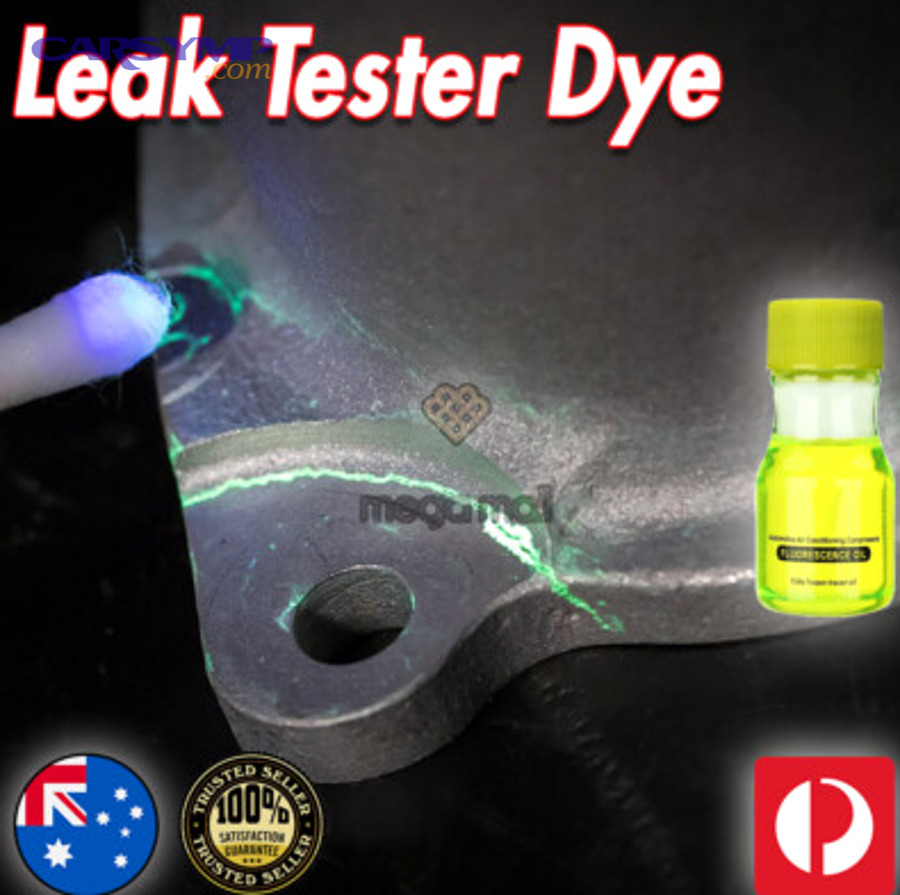
Power steering leaks appear as bright yellow-green fluorescent traces under UV light, ranging from concentrated glowing spots at active leak points to streaked fluorescent trails showing where leaked fluid has run down components following gravity. The fluorescence intensity indicates leak severity—bright, concentrated glow signals active, fast leaking, while faint, scattered fluorescence suggests slow seeping or old residue from previous leaks that have since sealed temporarily.
Fresh, active leaks produce wet-looking fluorescent areas where dye-marked fluid is actively weeping or dripping from compromised seals, cracked hoses, or loose fittings. These active leak zones will show the brightest fluorescence and may have fluorescent droplets forming at the breach point, similar to how water beads at a faucet leak. The fluid typically follows the path of least resistance downward, creating fluorescent trails along component surfaces, suspension parts, or the engine subframe.
Old or residual leaks from previous fluid loss appear as dried fluorescent stains or crusty deposits where power steering fluid has leaked previously but may have slowed or temporarily stopped. These old traces help identify chronic problem areas even if they’re not actively leaking during your current inspection. Professional mechanics look for both fresh wet fluorescence and old dry fluorescence to build a complete picture of system leak history.
Spray patterns indicate pressurized leaks from pinhole failures in high-pressure hoses or blown seal failures that eject fluid forcefully during steering operation. These appear as scattered fluorescent speckling across multiple nearby components, sometimes extending 12-18 inches from the actual leak source. Spray patterns are most common when high-pressure hoses develop pinhole leaks or when pump shaft seals fail catastrophically, allowing pressurized fluid to escape with significant force.
Environmental factors affect fluorescence appearance: dust, dirt, and oil contamination can partially mask or dilute the fluorescent signal, which is why pre-cleaning is essential. In extremely dirty engine bays, you might see generalized faint background fluorescence from road spray and engine oil mixing with small amounts of leaked power steering fluid over time—this background glow shouldn’t be confused with actual leak sources, which will always show distinctly brighter, more concentrated fluorescence.
How Do You Pinpoint the Exact Leak Source?
You pinpoint the exact leak source by tracing fluorescent trails upward against gravity to find the highest point of concentrated fluorescence, which indicates where fluid is actually escaping the pressurized system. This upward tracing method works because power steering fluid always leaks from a breach point and then flows downward, meaning the brightest, most concentrated fluorescence closest to a pressurized component marks the actual failure location.
Start by identifying the general area showing fluorescence, then use the UV light to closely examine each component in that zone, working systematically from bottom to top. For example, if you see fluorescent fluid on the engine subframe below the steering rack, move the UV light upward examining the rack boots, rack housing, and hydraulic line connections until you find the brightest concentration point. That concentrated bright spot is your leak source.
Common leak source characteristics help with identification:
Hose connection leaks appear as bright fluorescent rings or crescents around the crimp fitting where the hose attaches to the pump, rack, or reservoir. The fluorescence is usually heaviest at the bottom of the fitting where gravity collects the leaking fluid before it drips off.
Pump shaft seal leaks create fluorescent buildup around the pump pulley and shaft area, often with fluorescent spattering on the pump body itself from centrifugal force as the pulley spins and throws leaked fluid outward.
Rack-and-pinion seal leaks show fluorescence seeping from inside the rubber boots that cover the inner tie rod connections. You’ll often need to squeeze or manipulate the boot to see if fluorescent fluid pools inside or leaks out when the boot is compressed.
Hose body failures display fluorescent seepage along a section of hose rather than at connections, indicating the rubber has cracked, developed porosity, or been damaged by heat or abrasion. These failures often occur where hoses contact hot engine components or vibrate against brackets.
Reservoir cracks appear as fluorescent lines or areas on the reservoir body itself, sometimes with fluid actively weeping from the crack. These failures are more common on older plastic reservoirs that have become brittle from heat cycling.
Use the wipe-and-recheck method to confirm active leaking: carefully wipe away all fluorescent traces from the suspected leak point using a clean cloth or paper towel, then operate the steering (turn the wheel lock-to-lock several times with the engine running) and immediately re-inspect with the UV light. Active leaks will show fresh fluorescence within 30-60 seconds, while inactive areas will remain dark. This confirmation step prevents wasting time and money replacing components that have old residue but aren’t currently leaking.
For multiple leak scenarios where several components show fluorescence, prioritize repairs based on leak severity—fix the fastest, most active leaks first (those showing wet, bright fluorescence) before addressing slow seepers. Sometimes fixing a major leak will reduce system pressure variations enough that minor seeping stops on its own as seals reseat properly once pressure stabilizes.
Document each confirmed leak location by taking photos with UV illumination, noting the component name, and estimating leak severity (fast drip, slow seep, spray pattern). This documentation helps when ordering parts and planning repairs, ensuring you get all necessary components in a single parts order rather than making multiple trips to the auto parts store.
What Should You Do After Finding the Leak?
After finding the leak, you should assess whether the repair is within DIY capability, obtain the correct replacement parts, perform the repair following proper procedures, then verify the fix by cleaning the repair area and re-inspecting with UV light to confirm no fluorescence reappears. This systematic approach ensures permanent leak elimination rather than temporary fixes.
However, the repair complexity and cost vary significantly based on the leak location and component type.
Can You Fix Common Power Steering Leaks Yourself?
Yes, you can fix common power steering leaks yourself if they involve replaceable hoses, tightening loose fittings, or replacing external seals, but rack-and-pinion seal replacement and pump rebuilds typically require specialized tools and professional expertise. DIY-repairable leaks account for approximately 45-50% of common power steering problems, while the remaining failures require professional repair or component replacement.
Hose clamp tightening represents the easiest DIY fix—if UV inspection reveals fluorescence at a hose connection where a spring clamp or worm-drive clamp secures the hose to a metal fitting, simply tightening or replacing the clamp often stops the leak immediately. Use proper automotive hose clamps rated for power steering system pressure (minimum 100 PSI burst pressure), and tighten to manufacturer specifications to avoid crushing the hose or creating stress points that cause new leaks.
High-pressure hose replacement is moderately difficult but achievable for DIYers with basic mechanical skills. These hoses typically attach with threaded fittings at both ends—one at the pump and one at the steering rack. The replacement procedure involves: releasing system pressure by turning the steering wheel several times with the engine off, using the correct flare-nut wrench or crow’s-foot wrench to loosen fittings without rounding off the hex nuts, removing the old hose, installing the new hose with new O-rings at both connections, tightening to proper torque specifications (typically 20-25 ft-lbs for most fittings), and refilling/bleeding the system. High-pressure hoses cost $30-80 depending on vehicle make and model, and replacement takes 30-60 minutes for someone with moderate mechanical experience.
Return line hose replacement is even simpler, as these low-pressure hoses typically use push-on connections or hose clamps rather than threaded fittings. You can purchase generic power steering return line hose by the foot at auto parts stores ($3-5 per foot) and cut it to length, or buy vehicle-specific pre-formed return lines ($15-40) that match factory routing exactly.
Reservoir replacement works for cracked or leaking reservoirs and usually requires disconnecting hoses, removing mounting bolts, transferring fluid to a clean container, installing the new reservoir, reconnecting hoses with new clamps, and refilling the system. Aftermarket reservoirs cost $20-60, and replacement typically takes 20-30 minutes.
Power steering pump replacement becomes necessary when pump shaft seals fail or the pump body develops leaks. While physically replacing the pump isn’t extremely difficult—it usually involves removing the drive belt, disconnecting hoses, removing mounting bolts, and reversing the process with a new or remanufactured pump—the cost ($150-300 for the pump) and the need for proper system bleeding make this a borderline DIY repair. Improper bleeding can leave air in the system causing noise, reduced assist, and potential damage.
Rack-and-pinion replacement or seal repair exceeds most DIYers’ capabilities because it requires disconnecting steering linkage, potentially removing suspension components for access, dealing with power steering fluid disposal, and performing precise front-end alignment afterward. Professional rack replacement costs $400-900 including parts and labor, while seal-only repairs (rebuilding the existing rack) cost $300-600 but require specialized seals and tools that aren’t cost-effective for one-time use.
Power steering fluid type and compatibility matter significantly during any repair work. Most vehicles use ATF (Automatic Transmission Fluid) Dexron III or Dexron VI in their power steering systems, but some European manufacturers specify proprietary fluids, and some systems require specific power steering fluid formulations. Using the wrong fluid can damage seals, cause leaks, and void warranties on new components. Always check your owner’s manual or the reservoir cap label to verify the correct fluid specification before adding any fluid to the system.
After completing any repair, the bleeding procedure removes air that entered the system during component replacement. The standard bleeding process involves: filling the reservoir to the MAX line, starting the engine and immediately turning the steering wheel slowly from lock to lock 10-15 times while checking fluid level (add fluid as needed), looking for foam or bubbles in the reservoir (which indicate remaining air), and repeating until the fluid level stabilizes and no foam appears. Some vehicles require additional bleeding procedures using vacuum pumps or specific steering wheel turning patterns—consult a repair manual for your specific vehicle.
How Do You Verify the Leak is Fixed?
You verify the leak is fixed by thoroughly cleaning the previously leaking area with brake cleaner or degreaser, running the vehicle for 15-20 minutes with full steering wheel exercises, then re-inspecting with the UV light to confirm no new fluorescence appears at the repair location. This verification process confirms the repair succeeded and ensures you haven’t overlooked additional leak sources or caused new leaks during the repair work.
The cleaning step is critical because old fluorescent traces from the original leak will remain on component surfaces and surrounding areas even after you’ve replaced the failed part. If you don’t clean away these old traces before verification, you won’t be able to distinguish new leaking from old residue. Use brake cleaner or automotive degreaser on a clean cloth to wipe down the repaired component, all surrounding surfaces that showed fluorescence during the original diagnosis, and any areas below the repair where leaked fluid may have dripped.
After cleaning and allowing surfaces to dry, operate the vehicle under the same conditions that revealed the original leak—if the leak only appeared during cold starts, verify during a cold start; if it required high-speed driving or aggressive steering, recreate those conditions during verification. Turn the steering wheel lock-to-lock at least 10-15 times with the engine running to pressurize the system fully and stress all seals and connections.
Perform the UV inspection in darkness using the same technique as the original diagnosis, focusing carefully on the repair area and all surrounding components. A successful repair shows completely dark surfaces with no fluorescence at the repair location. If you see any new bright yellow-green glow, the repair either failed (the new part is defective or improperly installed) or you missed an additional leak source during the original diagnosis.
Monitor the power steering fluid level over the next few days and weeks—check it every 2-3 days for the first week, then weekly for a month. Temporary top-off guidance and risks apply here: if the fluid level drops between checks, you still have an active leak that either wasn’t repaired or represents a secondary leak you missed during UV inspection. However, a very slow decline (less than 1/4 inch over a month) might represent normal consumption from seal micro-weepage rather than a true leak requiring immediate attention.
Some professional mechanics perform a pressure test after repairs by installing a pressure gauge in the system and measuring operating pressure while turning the steering wheel—proper pressure (typically 1,000-1,500 PSI depending on vehicle) with no pressure drop over 5 minutes confirms the system is sealed. This test requires specialized equipment not typically available to DIY mechanics, but it provides definitive confirmation that repairs succeeded.
The UV dye remains in your power steering system indefinitely after testing and repair, which provides ongoing leak monitoring capability. If a new leak develops in the future—from a different component or from the same component failing again—you can immediately perform UV inspection without adding new dye, making ongoing system monitoring convenient and cost-free.
Power steering leak repair cost estimates vary widely based on the failed component and labor complexity. Simple hose or clamp repairs cost $50-150 including parts and DIY labor, while professional pump replacement runs $300-600 (parts and labor), and rack-and-pinion replacement can exceed $800-1,200 for complex vehicles with difficult access. These cost ranges highlight why accurate leak detection is valuable—spending $30-40 on a UV dye kit prevents wasting hundreds of dollars replacing components through guesswork when the actual leak source is elsewhere in the system.
What Are the Advantages and Limitations of UV Dye Testing?
UV dye testing advantages include pinpoint accuracy for finding leak sources (95%+ success rate), ability to detect multiple simultaneous leaks, non-destructive testing that doesn’t require disassembly, and permanent dye presence enabling future monitoring, while limitations include requiring darkness for best results, inability to detect leaks in completely empty systems, and potential difficulty with severely contaminated engine bays.
In addition, understanding how UV dye testing compares to alternative diagnostic methods helps you choose the most effective approach for your specific leak situation.
How Does UV Dye Testing Compare to Other Leak Detection Methods?
UV dye testing outperforms visual inspection alone by revealing leaks invisible to the naked eye, surpasses pressure testing for pinpointing exact leak locations within complex systems, and provides more permanent diagnostic capability than powder developer methods. Each detection method has specific strengths for different diagnostic scenarios.
Visual inspection relies on seeing wet spots, drips, or fluid accumulation on components without any diagnostic aids beyond adequate lighting and perhaps a mirror for hard-to-see areas. This method works for major leaks producing obvious dripping or pooling but fails completely for slow seeps, intermittent leaks, and any leak source in hard-to-access areas behind other components. Visual inspection also struggles to distinguish between different fluid types—power steering fluid, engine oil, transmission fluid, and coolant can all appear similar as dark liquid drips, making it difficult to confirm what’s actually leaking. UV dye testing solves this problem because each fluid system can use a different color dye (yellow-green for power steering/oil, red for transmission, blue for coolant), allowing instant identification even when multiple fluids are leaking simultaneously.
Pressure testing involves pressurizing a system above normal operating pressure using specialized equipment, then monitoring pressure decay over time to determine if leaks exist. This method works well for confirming that a system has a leak and quantifying leak severity (rapid pressure drop indicates major leaks, slow decay suggests minor seeping), but it doesn’t tell you where the leak is located. Pressure testing also requires special equipment (pressure gauges, adapters, pressurization pumps) that most DIY mechanics don’t own. UV dye testing provides leak location information that pressure testing cannot, making them complementary rather than competing methods—professional shops often use pressure testing to confirm leak presence, then UV dye to find the exact source.
Powder developer methods use fine white powder (baby powder, talcum powder, or specialized leak detection powder) sprayed onto suspected leak areas after thorough cleaning. The powder adheres to dry surfaces, and when fluid leaks, it creates visible wet spots or trails in the powder coating that reveal leak locations. This method works reasonably well for active, fast leaks but requires the leak to occur during the relatively short time the powder coating remains clean (usually only 5-10 minutes before engine dirt and debris contaminate the powder). Powder methods also require component cleaning before and after testing, and they provide no permanent diagnostic marker—once you wipe away the powder, the diagnostic capability disappears. UV dye testing overcomes these limitations by remaining active in the system for months, allowing detection of intermittent leaks that only occur under specific conditions you might not immediately recreate during testing.
Fluid tracer dyes (non-UV) are colored dyes that make fluid visible without requiring UV light—they simply make the fluid bright red, blue, or green so leaked fluid is obvious against dark engine components. These dyes work for major, fast leaks but lack the sensitivity of UV fluorescent dyes for detecting small amounts of leaked fluid. A single drop of UV dye-marked fluid glowing bright yellow-green under UV light is far more visible than a single drop of red-dyed fluid on a dark engine component. Fluorescent UV dyes provide roughly 10-100 times greater detection sensitivity compared to visible-spectrum tracer dyes.
The comparison table below summarizes key performance factors across leak detection methods:
| Method | Leak Detection Sensitivity | Pinpoint Accuracy | Equipment Cost | Ease of Use | Permanence |
|---|---|---|---|---|---|
| UV Dye Testing | Very High (detects <1 drop) | Excellent (within 1 inch) | Low ($30-50) | Easy | Months/Permanent |
| Visual Inspection | Low (only obvious leaks) | Poor (general area only) | None ($0) | Very Easy | None |
| Pressure Testing | Medium (confirms leak exists) | None (doesn’t locate) | High ($200+) | Moderate | None |
| Powder Developer | Medium (active leaks only) | Good (within 2-3 inches) | Very Low ($5-10) | Moderate | Minutes only |
| Visible Tracer Dye | Low-Medium (larger leaks) | Fair (within 3-4 inches) | Low ($10-20) | Easy | Weeks |
According to automotive diagnostic research published in professional technician training materials, UV fluorescent dye testing achieves leak source identification success rates exceeding 95% when performed correctly with proper equipment, compared to 60-70% success rates for visual inspection methods and 40-50% success rates for powder developer techniques when dealing with slow or intermittent leaks.
When Should You NOT Use UV Dye for Leak Detection?
You should not use UV dye for leak detection when the power steering system is completely empty (contains no fluid to carry the dye), when working in unavoidably bright environments where darkness cannot be achieved, or when contamination is so severe that old fluorescent residue from previous testing makes new leak identification impossible. These specific scenarios render UV dye testing ineffective or impractical.
Empty or severely depleted systems present the primary limitation because UV dye requires fluid circulation to reach all system components and deposit at leak points. If your power steering system has leaked completely dry or contains less than 25% of normal fluid capacity, adding dye without first refilling with clean fluid results in inadequate dye distribution. The pump will cavitate (run dry), potentially causing damage, and insufficient fluid volume means dye won’t reach all system areas. In these cases, you must first add enough clean power steering fluid to bring the level to at least the “MIN” mark on the reservoir, then add the appropriate amount of dye proportional to the total fluid in the system.
Bright daylight outdoor conditions severely limit UV fluorescence visibility even with powerful UV lights. While professional-grade UV lamps with very high intensity can reveal fluorescence in partial daylight, consumer-level UV flashlights lack sufficient power to overcome ambient light. If you must diagnose a leak but cannot create darkness (working in a parking lot during daytime, for example), consider alternative methods like powder developers or wait until evening when natural light fades. Some mobile mechanics use portable black tarps or pop-up inspection tents to create localized darkness around specific components, but this approach requires additional equipment and time.
Previously tested systems with old dye residue can confuse diagnosis when you’re trying to distinguish new leaks from old fluorescent stains. If a vehicle has had multiple UV dye tests over its lifetime without thorough cleaning between tests, the engine bay may show widespread background fluorescence making it difficult to identify fresh leak traces. In these situations, aggressive cleaning with brake cleaner or degreaser becomes necessary before adding new dye. Alternatively, some professional shops perform complete power steering fluid flushes to remove all old dye before adding fresh dye for clean diagnostic results.
Systems with active seal swell additives can interfere with UV dye testing because these chemical additives (products like Lucas Power Steering Stop Leak or ATP AT-205 Re-Seal) work by causing rubber seals to expand slightly, potentially sealing small leaks temporarily. If someone recently added a stop-leak product and it temporarily sealed the leak, UV dye testing might not reveal the leak source even though the underlying seal degradation persists. The seal may leak again once the stop-leak additive wears off (typically 2,000-3,000 miles), making diagnosis difficult. In these cases, waiting 30-60 days for stop-leak effects to diminish before UV dye testing provides more reliable results.
Warranty concerns on new vehicles represent an administrative rather than technical limitation. Some vehicle manufacturers void power steering component warranties if non-OEM fluids or additives (including UV dye) are added to the system. Before using UV dye on a vehicle still covered under factory warranty, verify whether the warranty allows diagnostic dye use, or have the dealership perform UV dye testing using their approved procedures and products.
What Are Common Mistakes When Using UV Dye Tests?
Common mistakes when using UV dye tests include using incorrect UV wavelength lights that don’t excite the fluorescent dye properly, insufficient dye circulation time that prevents the dye from reaching leak points, testing in excessively bright conditions that wash out fluorescence visibility, and adding improper dye quantities that either waste product or create confusing over-fluorescence.
Incorrect UV wavelength selection ranks as the most frequent technical error. Not all “UV lights” produce the 365nm wavelength that optimally excites automotive fluorescent dyes. Some purple-tinted LED flashlights marketed as “UV lights” actually emit violet visible light around 395-405nm, which produces weak fluorescence or no fluorescence at all from leak detection dyes. These lights might reveal some fluorescence from very concentrated dye but will miss faint traces from slow leaks. Always verify the UV light specifies 365nm wavelength, and test it on the dye bottle itself before use—the dye in the bottle should glow brilliantly yellow-green when the light shines on it. If you see only faint glow or no glow, the light won’t work effectively for leak detection.
Rushing the circulation phase leads to false negative results where leaks exist but don’t show fluorescence because insufficient time passed for dye-marked fluid to leak out and deposit on external surfaces. Impatient diagnosticians who add dye then immediately inspect with UV light frequently conclude “no leak found” when actually the leak hasn’t had time to deposit detectable dye traces yet. The minimum circulation time is 15 minutes of actual vehicle operation with steering movement, but slow seeping leaks may require 30-45 minutes or even overnight driving before fluorescent traces become visible. When initial UV inspection reveals no fluorescence but you know fluid is disappearing, extend circulation time and re-inspect rather than concluding UV dye testing failed.
Inadequate engine bay cleaning before adding dye creates confusion between old oil residue and new leak traces. If you skip the pre-cleaning step, you might see fluorescence from old leaked power steering fluid contamination mixed with engine oil rather than fresh leaks from your current problem. This leads to replacing components that aren’t actually leaking while missing the real leak source. The pre-cleaning step only takes 10-15 minutes but dramatically improves diagnostic accuracy by ensuring any fluorescence you see after dye addition represents new leaking rather than old contamination.
Over-dosing dye concentration happens when someone adds an entire 1-ounce bottle to a small power steering system that only holds 1 quart of fluid, creating a dye concentration 3-4 times higher than recommended. Excessive dye makes the entire system glow brightly under UV light including areas that aren’t leaking, which makes it nearly impossible to distinguish actual leak sources from general fluorescence. This particularly affects areas around the pump where fluid naturally splashes slightly during normal operation—with proper dye concentration, splashing doesn’t create visible fluorescence, but with overdosed dye, splash patterns glow brightly and mislead diagnosis. Always measure dye carefully using the 1 ounce per 6 quarts ratio, or follow the specific dosing instructions on your dye product label.
Failing to use safety glasses during UV inspection exposes your eyes to prolonged UV radiation that can cause temporary eye strain, headaches, or in extreme cases, corneal damage similar to welder’s flash. While 365nm UVA radiation is less dangerous than shorter-wavelength UVB or UVC, extended exposure (more than 30 minutes) can still harm eye tissues. Yellow-tinted UV safety glasses cost less than $10 and provide dual benefits: eye protection and enhanced fluorescence visibility through optical filtering. Professional technicians always use eye protection during UV inspection work.
Confusing splash patterns with leak sources occurs when someone identifies bright fluorescence on a component and immediately concludes that component is leaking, without tracing the fluorescent trail back to its origin point. Power steering fluid leaked from a pump seal can be thrown outward by the spinning pulley, creating fluorescent spray patterns on the alternator, A/C compressor, and nearby hoses—none of which are actually leaking. Proper technique requires tracing all fluorescent trails upward against gravity to find the highest concentration point, which indicates the true leak source.
How Do You Remove UV Dye from the Power Steering System?
You remove UV dye from the power steering system by performing a complete fluid flush and replacement procedure that drains all old fluid, refills with clean fluid, circulates briefly, then repeats the drain-and-refill cycle 2-3 times to eliminate residual dye completely. This multi-cycle flushing process ensures dye concentration drops below visible detection limits.
The basic flushing procedure involves these steps: First, use a fluid transfer pump or turkey baster to remove as much fluid as possible from the power steering reservoir, then disconnect the low-pressure return line from the reservoir and place its end into a catch container. Start the engine briefly (5-10 seconds maximum to avoid pump damage) while turning the steering wheel, which pumps fluid out through the disconnected return line into the catch container. This active pumping removes fluid from throughout the entire system including the steering rack, hoses, and pump internals.
After draining, reconnect the return line and refill the reservoir with fresh, clean power steering fluid matching your vehicle’s specification. Start the engine and turn the steering wheel lock-to-lock several times while monitoring the reservoir fluid level, adding more fluid as needed to maintain the MAX level as the system purges air. Run the engine for 3-5 minutes with periodic steering movement to circulate the new fluid through all components. Stop the engine and repeat the entire drain-and-refill cycle—each cycle reduces residual dye concentration by approximately 85-90%, so three complete cycles typically reduce dye to undetectable levels.
Some vehicles require vacuum-assisted bleeding procedures to ensure complete fluid evacuation from the steering rack and other low points where fluid can collect. These procedures use a vacuum pump connected to the reservoir to pull fluid through the system rather than relying solely on pump action. Consult your vehicle’s service manual for specific bleeding procedures that apply to your steering system design.
For external cleanup of fluorescent dye residue on component surfaces, use specialized oil-soluble cleaners, brake cleaner, or automotive degreaser. Spray the cleaner onto fluorescent-stained surfaces, allow 30-60 seconds of dwell time for the solvent to dissolve the dye, then wipe clean with shop towels. Multiple cleaning applications may be necessary for heavily contaminated areas. Verify cleaning effectiveness by inspecting with UV light—properly cleaned surfaces should show no fluorescence when dry.
The removed dye-contaminated fluid must be disposed of properly according to local environmental regulations. Power steering fluid is classified as waste petroleum product and cannot be poured down drains, dumped on the ground, or disposed of in regular trash. Most automotive retailers (AutoZone, O’Reilly, Advance Auto Parts) accept used power steering fluid and other automotive fluids for recycling at no charge. Collect the drained fluid in sealed containers and transport it to a collection facility rather than disposing of it improperly.
Complete dye removal typically only becomes necessary if you’re selling the vehicle and want to ensure the new owner doesn’t see residual fluorescence that might suggest ongoing leak problems, or if you’re performing warranty work where manufacturer specifications prohibit any additives or dyes in the fluid. For most situations, leaving UV dye in the system permanently provides ongoing leak monitoring capability without any performance penalties, making removal unnecessary unless specifically required for administrative or warranty reasons.
This comprehensive guide has covered the complete process of UV dye testing for power steering leak detection, from understanding the technology and gathering equipment through performing the test, interpreting results, completing repairs, and verifying success. By following these systematic procedures and avoiding common mistakes, DIY mechanics can achieve professional-level diagnostic accuracy while saving significant money compared to shop diagnostic fees that typically range from $100-200 for leak detection services.