How to Fix a Power Steering Fluid Leak: Causes, Symptoms & Repair Solutions for Car Owners
A power steering fluid leak occurs when hydraulic fluid escapes from the power steering system due to worn seals, damaged hoses, or failing pump components, requiring immediate diagnosis and repair to maintain safe vehicle control. The average Power steering leak repair cost estimate ranges from $500 to $650 for professional service, though simple fixes like stop leak additives or hose replacements may cost significantly less. Identifying Car Symptoms early—such as Whining noise and low fluid connection issues, puddles of reddish-brown fluid, or difficulty turning the steering wheel—helps prevent expensive component damage and maintains your vehicle’s safety on the road.
Understanding what causes these leaks involves examining the entire hydraulic system, from the reservoir and pump to the high-pressure hoses and steering rack. Rack vs pump vs hose leak diagnosis requires systematic inspection, as each component shows distinct failure patterns and repair requirements. Power steering fluid type and compatibility also plays a crucial role, since using incorrect fluid can accelerate seal deterioration and create new leak points throughout the system.
Many drivers wonder, “Can you drive with a steering fluid leak?” while weighing their options between immediate repair and temporary solutions. The answer involves understanding both safety risks and potential system damage that worsens with continued operation. Temporary top-off guidance and risks must be carefully considered, as simply adding fluid without addressing the underlying problem can lead to catastrophic steering failure or costly secondary damage to pumps and racks.
Preventing future steering leaks through proper maintenance, regular inspections, and timely component replacement saves money and ensures reliable vehicle operation. This comprehensive guide covers everything from Power steering leak symptoms and locations to Replacing steering hoses basics, UV dye test for steering leaks, and professional oil leak repair strategies. Below, we’ll explore the complete diagnostic and repair process to help you make informed decisions about fixing your power steering fluid leak.
What Is a Power Steering Fluid Leak?
A power steering fluid leak is a condition where hydraulic fluid escapes from the pressurized power steering system through damaged seals, cracked hoses, or failing components, reducing the system’s ability to assist steering operations. This leak represents a breach in the closed hydraulic circuit that normally circulates fluid between the reservoir, pump, steering gear, and connecting lines.
To better understand this problem, we need to examine how the power steering system functions and why maintaining proper fluid levels is critical. The system relies on continuous fluid pressure to operate effectively.
How Does the Power Steering System Work?
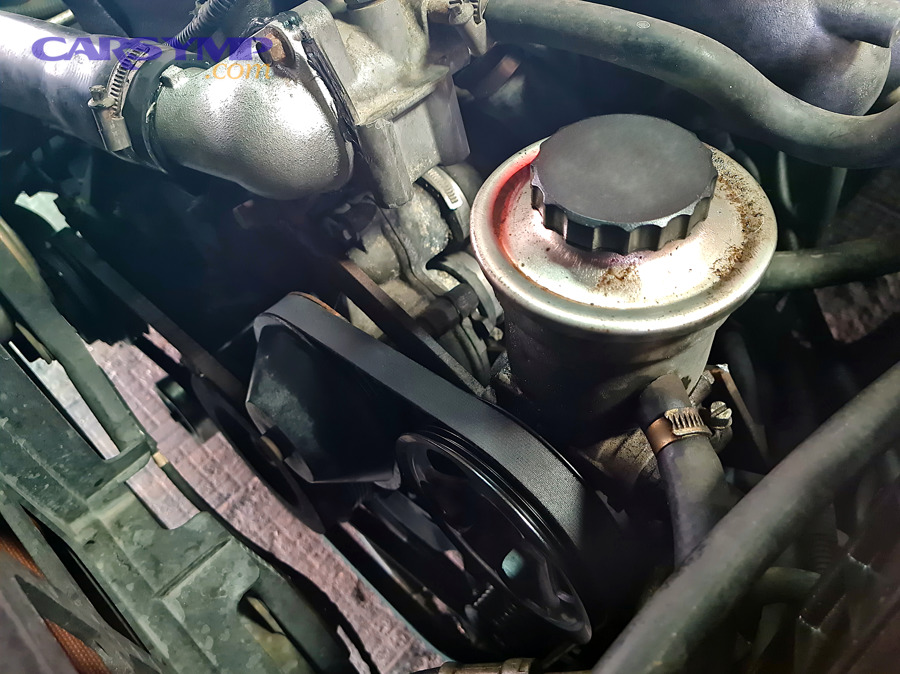
The power steering system operates as a hydraulic assist mechanism that reduces the physical effort required to turn your vehicle’s wheels. When you turn the steering wheel, the power steering pump—driven by the engine’s serpentine belt—pressurizes fluid and sends it through high-pressure hoses to the steering gear or rack and pinion assembly. This pressurized fluid creates hydraulic force that assists your steering input, making even heavy vehicles easy to maneuver at low speeds.
The fluid then returns to the reservoir through low-pressure return lines, completing the circulation cycle. Modern hydraulic power steering systems maintain pressures between 1,000 and 1,500 PSI during operation, which explains why even small seal failures can create significant leaks. The constant pressure cycling, combined with heat generated during operation, gradually degrades rubber components and creates potential leak points throughout the system.
Electric power-assist steering (EPAS) systems, found in many newer vehicles, use electric motors instead of hydraulic pressure and therefore don’t experience fluid leaks. However, the majority of vehicles on the road still use traditional hydraulic systems that remain vulnerable to fluid loss.
What Does Power Steering Fluid Look Like?
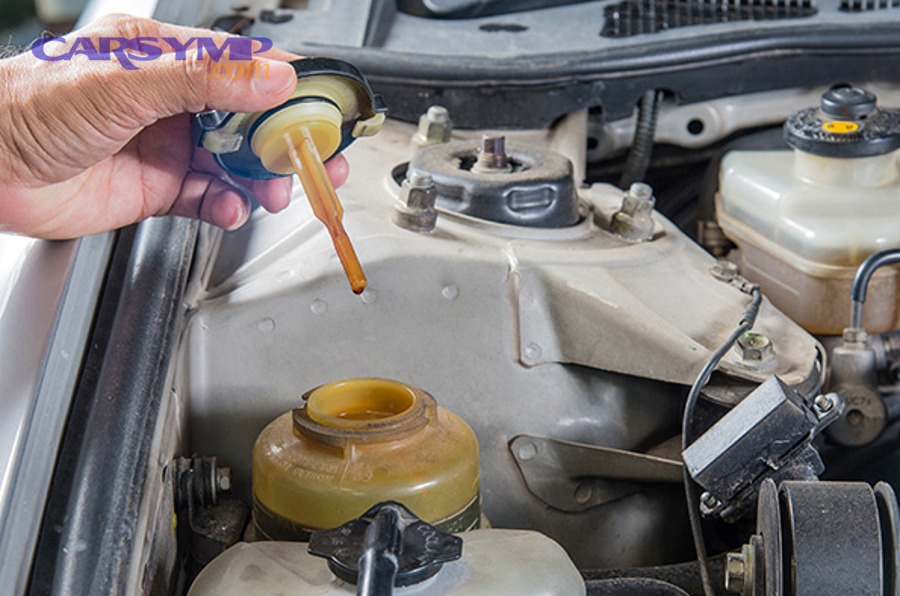
Power steering fluid typically appears as a clear to light amber or reddish-brown liquid with a slightly oily consistency, though color varies by manufacturer and fluid type. Fresh fluid ranges from transparent to light red, similar to automatic transmission fluid (ATF), since many vehicles actually use ATF as power steering fluid. As the fluid ages and accumulates contaminants, it darkens to a brown or even black color, indicating oxidation and possible system contamination.
The texture feels slippery and oily between your fingers, distinguishing it from water-based coolant. When examining a suspected leak, power steering fluid leaves characteristic stains on concrete or asphalt with a reddish or brown tint, often appearing in a small puddle or spray pattern near the front wheels or engine compartment. The fluid’s specific appearance helps differentiate it from other automotive fluids: engine oil appears darker and thicker, brake fluid looks clear to light yellow, transmission fluid varies from red to brown, and coolant comes in bright colors like green, orange, or pink.

What Are the Symptoms of a Power Steering Fluid Leak?
The primary symptoms of a power steering fluid leak include visible reddish-brown fluid puddles under the front of your vehicle, increasingly difficult or stiff steering wheel operation, and unusual whining or squealing noises when turning. These car symptoms typically appear gradually as the leak worsens and fluid levels drop below the system’s operational minimum.
Recognizing these warning signs early allows you to address the problem before it causes complete steering failure or damages expensive components. Let’s examine each symptom category in detail.
What Visual Signs Indicate a Power Steering Leak?
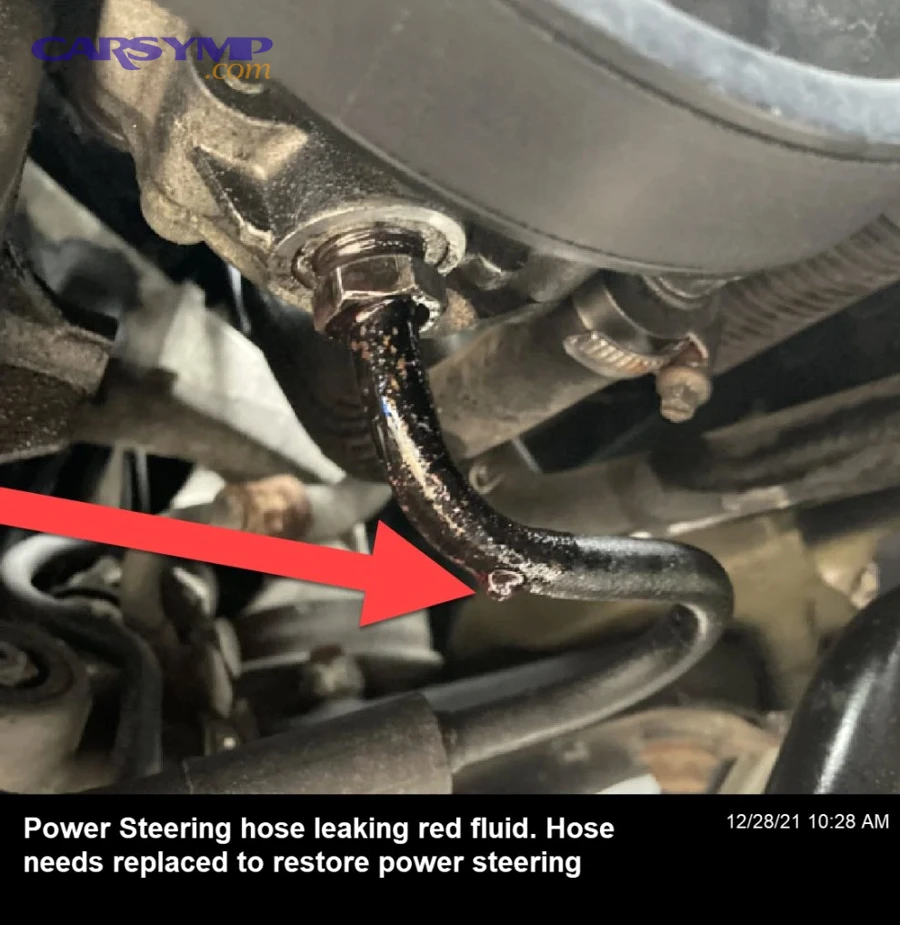
The most obvious visual indicator is fluid pooling beneath your vehicle after it has been parked for several hours, typically appearing as reddish-brown spots or puddles positioned toward the front and slightly off-center. The leak location often corresponds to the driver’s side where the steering rack connects, though leaks can occur anywhere along the system’s routing. Fresh leaks produce wet, shiny spots on components, while older leaks leave dark, crusty residue on hoses, fittings, and the power steering pump housing.
Checking the power steering fluid reservoir reveals critically low levels, with the dipstick reading below the minimum mark or the transparent reservoir showing fluid well below the “MIN” line. You might notice fluid spray patterns on the inner fender wells or underside of the hood, indicating a pressurized leak from a high-pressure line rather than simple seepage from a gasket. The engine bay may show fluid coating on surrounding components near the power steering pump, creating a greasy, dirt-attracting film that spreads from the leak source.
Regular visual inspections during oil changes or routine maintenance help catch leaks before they become severe. Many mechanics use UV dye test for steering leaks, adding fluorescent dye to the system and using a black light to pinpoint the exact leak location—a technique particularly useful for finding small, hard-to-locate leaks.
How Does a Leak Affect Steering Performance?
As power steering fluid levels drop, the most noticeable performance change is dramatically increased steering effort, particularly at low speeds and when parking. Your steering wheel becomes progressively harder to turn, requiring more physical force to execute the same maneuvers that previously felt effortless. This increased resistance occurs because the hydraulic assist diminishes as air enters the system and fluid pressure drops below operational thresholds.
The steering response may feel inconsistent or “notchy,” with some positions requiring more effort than others as the pump struggles to maintain pressure with insufficient fluid. You might experience delayed steering response where the wheels don’t immediately react to steering input, creating a disconnected feeling between the wheel and the road. At highway speeds, the vehicle may wander or require constant correction to maintain a straight line, though this symptom can also indicate alignment or tire problems.
In severe cases with critically low fluid, the steering wheel may become extremely difficult to turn when stationary, though it loosens somewhat once the vehicle moves. This condition poses serious safety risks, especially in emergency situations requiring quick steering maneuvers. The physical strain of operating the steering without proper assist can cause driver fatigue, particularly affecting individuals with limited upper body strength or mobility issues.
What Noises Does a Leaking Power Steering System Make?
A failing power steering system produces distinctive auditory warnings, with the most common being a high-pitched whining or squealing sound that increases in intensity when turning the steering wheel. This whining noise and low fluid connection creates a characteristic sound as the pump cavitates—drawing in air instead of fluid—causing the pump vanes to spin without proper lubrication and hydraulic cushioning. The noise typically becomes louder during tight, low-speed turns when the system demands maximum pressure.
You may hear a groaning or moaning sound emanating from the front of the vehicle when making slow parking lot maneuvers, indicating the pump is struggling to generate sufficient pressure. Some vehicles produce a squealing noise immediately upon starting the engine, suggesting the fluid level has dropped so low that the pump runs nearly dry until circulation distributes the remaining fluid. A grinding or rattling sound from the power steering pump area indicates severe internal damage from prolonged operation with insufficient fluid, often meaning the pump requires complete replacement.
The noises serve as your vehicle’s warning system, alerting you to address the problem before complete steering failure occurs. Ignoring these sounds allows progressive damage that transforms an inexpensive seal replacement into a costly pump or rack rebuild.

What Causes Power Steering Fluid Leaks?
Power steering fluid leaks develop primarily from four causes: deteriorated seals and O-rings, cracked or damaged hoses, failing power steering pumps, and compromised steering rack components. These failures result from normal wear, age-related degradation, and the constant pressure cycling that hydraulic systems endure throughout their operational life.

Understanding the specific failure mechanisms helps you identify which components require attention and estimate appropriate repair costs. Each leak source presents distinct symptoms and diagnostic indicators.
Why Do Power Steering Seals and O-Rings Fail?
Rubber seals and O-rings throughout the power steering system gradually lose their flexibility and sealing capability due to heat exposure, chemical breakdown, and mechanical stress from constant pressure fluctuations. The high temperatures in the engine bay—often exceeding 200°F—accelerate rubber deterioration, causing seals to harden, crack, and shrink away from their sealing surfaces. This process, called “heat set,” permanently deforms the rubber and creates leak paths for pressurized fluid.
Chemical incompatibility between the power steering fluid and seal materials accelerates degradation, particularly when owners use incorrect fluid types or mix different formulations. Modern synthetic fluids contain detergents and additives that can swell or deteriorate seals designed for conventional mineral-based fluids, while using ATF in systems designed for specific power steering fluid can cause similar problems. The constant pressure cycling—from idle pressure around 100 PSI to maximum turning pressure exceeding 1,500 PSI—flexes the seals thousands of times during normal operation, eventually fatiguing the material.
Age represents the most significant factor, with most seals beginning to show leakage after 7-10 years of service regardless of mileage. Vehicles driven infrequently often experience accelerated seal failure as the rubber dries out without regular fluid contact, while daily drivers benefit from continuous lubrication. Over-pressurization from an overfilled reservoir can blow out seals instantly, while under-filled systems cause cavitation that erodes seal surfaces from the inside.
How Do Power Steering Hoses Develop Leaks?
Power steering hoses fail through several mechanisms, with the most common being crack formation in the rubber layer from constant flexing and pressure pulsation. High-pressure hoses endure particularly severe conditions, experiencing pressure spikes up to 1,500 PSI during sharp turns while also flexing as the engine moves on its mounts. This combination of pressure stress and mechanical movement creates fatigue cracks, typically starting at bend points or near connection fittings where stress concentrates.
The rubber compounds deteriorate from heat exposure and chemical attack by both the power steering fluid and external contaminants like road salt, oil, and gasoline. You’ll often see surface cracking or checking on older hoses, indicating the rubber has become brittle and lost its elastic properties. The reinforcement layer beneath the rubber—usually braided steel or textile—can corrode through moisture penetration, weakening the hose structure and creating bulges or ruptures.
Connection point failures occur when hose clamps loosen over time or when crimped fittings separate from the hose body. The low-pressure return hose experiences less dramatic pressure but still degrades from age and chemical exposure, often developing leaks at connection points rather than along the hose length. Replacing steering hoses basics involves ensuring proper routing without kinks, using correct clamp torque, and verifying the replacement hose meets or exceeds OEM pressure ratings.
What Causes Power Steering Pump Leaks?
The power steering pump develops leaks most commonly at the shaft seal, where the drive pulley connects to the internal pump mechanism. This dynamic seal must prevent fluid escape while allowing the shaft to rotate at engine speed, creating a challenging sealing environment. The constant rotation, combined with side loads from belt tension and internal fluid pressure, gradually wears the seal and allows fluid to weep down the pump body.
Internal pump seals fail when the pump vanes wear out or scoring develops on the internal cylinder walls, allowing pressurized fluid to bypass into non-pressurized areas and escape through the shaft seal. This internal damage typically results from running the pump with low fluid levels, which removes the lubricating and cooling properties of the hydraulic fluid. The resulting metal-to-metal contact creates heat and wear that quickly destroys the pump internals.
Reservoir connection points on the pump body use O-rings to seal the fluid inlet, and these O-rings harden and crack over time, creating visible leaks at the connection junction. Pump body cracks occasionally develop in high-mileage pumps, particularly if the pump has been subjected to overpressure conditions or mounting stress. Rack vs pump vs hose leak diagnosis often reveals pump leaks by the characteristic fluid accumulation on the bottom of the pump housing and the pulley area, with fluid sometimes being flung outward by the rotating pulley.
Can the Steering Rack Cause Fluid Leaks?
Yes, the steering rack or steering gearbox represents a major source of power steering fluid leaks, particularly in vehicles with rack-and-pinion steering systems. The rack develops leaks at the input shaft seal where the steering column connects, at the inner tie rod boots covering the rack ends, and through the main rack seals that isolate the hydraulic chamber from the mechanical components. These seals work in an extremely challenging environment with constant reciprocating motion, side loads from the steering linkage, and full system pressure.
Input shaft seal leaks appear as fluid dripping from the steering column boot or accumulating on the firewall area, often noticed as spots on the garage floor directly under the driver’s seat area. The rack end seals fail more frequently, allowing hydraulic fluid to fill the rubber protective boots that cover the inner tie rod connections. When these boots become fluid-filled and greasy, it indicates internal rack seal failure requiring rack replacement or rebuild.
Internal rack seal deterioration allows fluid to migrate between pressure and return sides of the rack, reducing steering assist effectiveness before creating external leaks. The scoring or corrosion of the internal rack bore accelerates seal wear, particularly in regions with road salt exposure. Power steering leak symptoms and locations from rack failures include fluid visible along the rack body, wet or greasy tie rod boots, and sometimes steering wandering or inconsistent assist levels.
Rack failures typically require complete rack replacement rather than seal replacement alone, as accessing the internal seals requires complete disassembly and specialized equipment beyond typical DIY capabilities. The replacement cost ranges from $1,000 to $2,500 depending on vehicle type, making rack leaks among the most expensive power steering repairs.
How Do You Diagnose a Power Steering Fluid Leak?
Diagnosing a power steering fluid leak requires systematic inspection starting with fluid level verification, followed by visual examination of components, and potentially advanced techniques like UV dye testing to pinpoint elusive leak sources. The diagnostic process typically takes 30-60 minutes for DIY enthusiasts or 0.5-1.0 hours of shop labor for professional mechanics.
Accurate diagnosis determines appropriate repair strategies and prevents unnecessary parts replacement. Let’s explore each diagnostic method in detail.
How to Check Your Power Steering Fluid Level?
Checking your power steering fluid level begins with locating the reservoir under the hood, typically positioned on the driver’s side near the firewall or mounted directly on the power steering pump. The reservoir cap features a distinctive steering wheel icon and may incorporate a dipstick or utilize a transparent container with “MIN” and “MAX” level markings molded into the side. Before checking, ensure the engine is completely cool, as hot fluid expands and gives false readings that can lead to overfilling.
For dipstick-type reservoirs, remove the cap and wipe the dipstick clean with a lint-free cloth, then reinsert it fully and remove it again to read the fluid level against the marked indicators. The fluid should register between the “MIN” and “MAX” marks, with some manufacturers specifying “COLD” and “HOT” ranges for different operating temperatures. Transparent reservoirs require simply looking at the fluid level against the external markings without removing the cap, making level checks even simpler.
Dark or contaminated fluid indicates age and possible internal system wear, suggesting a fluid flush may be necessary even if levels appear adequate. A sudden drop in fluid level between checks—particularly if you’re checking weekly or monthly—confirms an active leak requiring immediate attention. Some vehicles require running the engine and turning the steering wheel lock-to-lock several times to purge air and equalize fluid levels before taking an accurate reading, so consult your owner’s manual for specific procedures.
Regular fluid level monitoring represents the simplest preventive maintenance practice, allowing you to catch developing leaks before they cause steering problems or component damage. Establishing a monthly checking routine takes less than five minutes and provides early warning of potential issues.
How to Perform a Visual Inspection for Leaks?
A thorough visual inspection begins with cleaning the power steering components using degreaser and a brush to remove accumulated grime, dirt, and old fluid residue that obscures leak sources. This cleaning step proves critical because old leaks create misleading stains that don’t indicate current leak locations. After cleaning, dry all components thoroughly and, if possible, let the vehicle sit overnight to allow residual cleaning solution to evaporate.
Start your inspection at the power steering reservoir, examining the cap seal, reservoir body, and all connection points for fresh fluid seepage. Move to the power steering pump, checking the shaft seal area at the pulley, the reservoir connection, and pressure line fittings for wet spots or fresh fluid accumulation. Trace both high-pressure and low-pressure hoses along their entire length, paying particular attention to connection points, bends, and areas where hoses contact other components or the vehicle frame.
Examine the steering rack thoroughly, looking for fluid along the rack body, at the input shaft boot, and especially at the inner tie rod boots which should feel dry and flexible rather than fluid-filled and greasy. Use a flashlight and mirror to inspect hard-to-see areas underneath the vehicle, as many rack leaks only become visible from below. Check the ground beneath the vehicle’s front end for fresh fluid spots, noting their position to correlate with components above.
Fresh leaks appear as wet, shiny spots while older leaks show as dried residue with accumulated dirt. Pressurized leaks from high-pressure lines often create spray patterns rather than simple drips, coating surrounding components with a fine mist of fluid. Take photos of suspected leak areas for reference when discussing repairs with mechanics or ordering parts.
Should You Use UV Dye to Find Power Steering Leaks?
Yes, UV dye leak detection provides the most reliable method for identifying elusive power steering leaks that don’t show obvious visual evidence, particularly slow seepage that evaporates before creating visible puddles. This diagnostic technique involves adding fluorescent dye to the power steering fluid reservoir, operating the vehicle for 50-100 miles to allow the dye to circulate through the system, and then using a UV black light to illuminate leak sources that glow bright yellow-green.
The UV dye test for steering leaks works exceptionally well for finding multiple small leaks, intermittent leaks that only appear under specific conditions, and leaks hidden by other components or the vehicle’s design. The dye remains visible for thousands of miles, making it useful for monitoring repairs and detecting new leaks as they develop. Professional-quality UV dye kits cost $20-$40 and include the fluorescent dye cartridge, UV flashlight, and protective glasses that filter out ambient light for better leak visualization.
Application requires adding the specified dye amount—usually 1/4 to 1 ounce—to the power steering reservoir when the system is cold, then starting the engine and turning the steering wheel lock-to-lock several times to distribute the dye throughout the system. Drive the vehicle normally for at least 50 miles to allow the dye to reach all system components and migrate to leak points. For inspection, park in a dark area like a garage with lights off, put on the UV protective glasses, and use the black light to scan all power steering components from multiple angles.
Active leaks appear as bright fluorescent trails or puddles that stand out dramatically against non-contaminated surfaces. The dye reveals leak paths showing where fluid travels after escaping, helping trace the actual source even when fluid drips from a lower component. This technique proves particularly valuable when components like the rack are hidden behind crossmembers or when leaks only occur during specific steering positions or temperature conditions.

How Much Does It Cost to Fix a Power Steering Leak?
The average cost to repair a power steering fluid leak ranges from $500 to $650 for professional service, though actual expenses vary significantly based on the leak source, component accessibility, vehicle make and model, and whether you choose OEM or aftermarket parts. Simple repairs like hose replacement or adding stop leak additives may cost $50-$200, while complex rack and pinion replacement can exceed $2,000.
Understanding cost variables helps you budget appropriately and make informed decisions about repair timing and service provider selection. Let’s break down specific cost scenarios.
What Is the Average Cost to Repair a Power Steering Leak?
Professional power steering leak repair typically costs between $500 and $650 when accounting for diagnostic time, parts, fluid, and labor, representing the most common repair scenario where mechanics replace failed seals or hoses. This estimate assumes a moderate repair like replacing power steering hoses, pump seals, or reservoir connections on a standard passenger vehicle. The cost breakdown typically allocates $150-$200 for parts including hoses, seals, and 1-2 quarts of power steering fluid, with the remaining $300-$450 covering 2-3 hours of labor at average shop rates of $100-$150 per hour.
Labor represents the largest cost component because accessing power steering components often requires removing other parts like the serpentine belt, engine covers, or even dismounting the engine slightly to reach tight spaces. Some vehicles feature power steering components buried deep in the engine bay, with the rack located behind the subframe or the pump positioned beneath intake manifolds, dramatically increasing labor time. Luxury vehicles and European imports typically incur higher costs due to complex designs and expensive OEM parts requirements.
Diagnostic fees add $100-$150 to the total if the shop needs extensive time locating the leak source, though many shops waive diagnostic charges if you proceed with recommended repairs. The power steering leak repair cost estimate should include fluid flush and fill service to ensure the system operates properly after component replacement, preventing premature failure of new parts from contaminated fluid. Some shops offer package pricing that bundles diagnosis, repair, flush, and warranty for a flat rate, potentially saving money compared to itemized billing.
Geographic location significantly affects labor rates, with urban areas and dealerships charging premium prices while independent shops in rural areas offer more competitive rates. Mobile mechanics may reduce costs by eliminating shop overhead, though they might lack specialized equipment for complex diagnostics.
How Do Repair Costs Vary by Component?
Component-specific repair costs vary dramatically based on part complexity, accessibility, and labor requirements, making accurate estimates essential for budget planning. Hose replacement represents the most economical repair, costing $100-$300 for both parts and labor when the leak originates from deteriorated high-pressure or low-pressure hoses. The parts themselves cost $30-$80 for quality aftermarket hoses or $60-$150 for OEM replacements, with labor adding $70-$150 for straightforward installations requiring 0.5-1.0 hours.
Seal and O-ring replacement falls in the $150-$400 range depending on location and accessibility, with reservoir O-rings representing the simplest and least expensive option at the low end while pump shaft seal replacement requires more extensive disassembly and costs toward the high end. These repairs include new seals costing $10-$40, power steering fluid for $15-$30, and labor charges reflecting the complexity of access. Some vehicles allow seal replacement without complete component removal, reducing labor costs significantly.
Power steering pump replacement costs $400-$800 for complete pump assembly installation, including $200-$500 for a remanufactured pump, $20-$30 for fluid, and $180-$270 for 1.5-2.0 hours of labor. New OEM pumps cost substantially more—often $400-$700 for the pump alone—while rebuilt aftermarket units offer reliable service at lower prices. The replacement process requires draining the system, removing the serpentine belt, disconnecting pressure lines, and properly bleeding air from the system after installation.
Rack and pinion replacement represents the most expensive repair at $1,000-$2,500, with the steering rack itself costing $500-$1,500 and labor adding $500-$1,000 for the 3-6 hours required to remove the old rack, install the replacement, align the front end, and bleed the system. This repair often necessitates wheel alignment service afterward, adding $80-$150 to the total cost. Some vehicles allow rack seal replacement without complete rack removal, reducing costs to $300-$600, though this option isn’t available for all makes and models.
The table below summarizes typical component replacement costs:
| Component | Parts Cost | Labor Cost | Total Cost Range | Labor Hours |
|---|---|---|---|---|
| High-pressure hose | $30-$150 | $70-$150 | $100-$300 | 0.5-1.0 |
| Low-pressure hose | $20-$80 | $50-$120 | $70-$200 | 0.5-1.0 |
| Reservoir O-ring | $10-$25 | $75-$150 | $85-$175 | 0.5-1.0 |
| Pump shaft seal | $15-$40 | $135-$250 | $150-$290 | 1.0-1.5 |
| Power steering pump | $200-$700 | $180-$400 | $380-$1,100 | 1.5-3.0 |
| Steering rack seals | $100-$300 | $200-$500 | $300-$800 | 2.0-4.0 |
| Complete rack/pinion | $500-$1,500 | $500-$1,200 | $1,000-$2,700 | 3.0-6.0 |
This table provides typical cost ranges for power steering component repairs, helping you understand the financial implications of different leak sources and plan your repair budget accordingly.
What Are the Repair Solutions for Power Steering Fluid Leaks?
Power steering leak repair solutions include three primary approaches: professional component replacement for permanent fixes, DIY repairs for accessible components, and stop leak additives for minor seepage, each offering different cost-benefit tradeoffs and success rates. The optimal solution depends on leak severity, component accessibility, your mechanical skill level, and budget constraints.
Selecting the appropriate repair strategy requires understanding each option’s capabilities and limitations. Let’s examine each approach comprehensively.
When Should You Use Power Steering Stop Leak Additives?
Power steering stop leak additives work best for minor seepage from aging seals and O-rings, providing a cost-effective temporary solution costing $10-$30 that can extend system life for 1-3 years before permanent repairs become necessary. These chemical formulations contain seal conditioners that soften and swell hardened rubber components, helping them re-establish effective sealing contact with metal surfaces. Products like Lucas Power Steering Stop Leak and ATP AT-205 Re-Seal have demonstrated success in stopping minor leaks without requiring mechanical repairs.
The additives work by penetrating into rubber seals over several days of operation, gradually restoring flexibility and elasticity lost through heat exposure and age. For best results, add the product when the system is cold, run the engine and turn the steering wheel lock-to-lock several times to circulate the additive, then drive normally for 100-200 miles while monitoring for improvement. Many users report that minor drips and seepage stop completely within a week, though larger leaks from cracked hoses or damaged pump bodies won’t respond to chemical treatment.
Stop leak additives excel in scenarios where the leak source isn’t easily accessible, when budgets don’t allow immediate professional repair, or as preventive maintenance for older vehicles with original seals showing early signs of weepage. They represent an ideal solution for vehicles worth less than $3,000 where investing $500 in repairs doesn’t make economic sense. The products also work well as oil leak repair for engine seals, transmission seals, and differential seals, making them versatile additions to your automotive maintenance supplies.
However, these additives have limitations and shouldn’t be considered permanent solutions for significant leaks. They can’t repair cracked hoses, damaged pumps, or severely degraded seals with visible damage. Some mechanics caution that seal swelling additives may cause problems in systems with already-swollen seals or in vehicles with tight clearances. Never exceed recommended dosages, as over-treatment can cause seals to swell excessively and create new leak points or restrict fluid flow.
The best practice involves using stop leak products as a temporary measure while saving for proper repairs, or as a long-term solution only when leaks remain minor and don’t worsen over time. Monitor fluid levels weekly after application and proceed with mechanical repairs if the leak continues or accelerates.
What DIY Repairs Can You Perform?
DIY power steering repairs offer significant cost savings for mechanically inclined vehicle owners, with successful hose replacement, O-ring replacement, and connection tightening projects reducing repair costs by 50-70% compared to professional service. Replacing steering hoses basics represents the most accessible DIY project, requiring basic hand tools including wrenches, pliers, drain pan, and safety glasses, plus about 1-2 hours of time for straightforward installations.
Hose replacement begins with draining the power steering reservoir using a turkey baster or fluid pump to minimize spillage, then safely raising and supporting the vehicle to access hoses from below. Locate the failed hose, noting its routing before removal to ensure correct installation of the replacement. Loosen hose clamps or fittings at both ends, remove the old hose, and inspect connection points for damage or corrosion that might compromise the new hose seal. Install the new hose following the original routing path, ensuring no kinks or contact with hot exhaust components or sharp edges.
Torque specifications matter for threaded fittings—typically 15-25 ft-lbs for pressure line fittings—while hose clamps should be tight enough to prevent leaks without crushing the hose or damaging the reservoir nipple. After installation, refill the system with manufacturer-specified power steering fluid, start the engine, and turn the steering wheel slowly lock-to-lock 10-15 times to purge air bubbles. Check for leaks, top off the reservoir, and monitor fluid levels daily for a week to ensure successful repair.
O-ring replacement for reservoir connections follows similar procedures but requires careful attention to O-ring size and material compatibility. Always purchase exact replacement O-rings rather than generic hardware store versions, as power steering systems require specific rubber compounds resistant to petroleum-based fluids and high temperatures. Clean all sealing surfaces thoroughly before installation, lightly lubricate the new O-ring with power steering fluid to prevent installation damage, and avoid over-tightening connections which can deform O-rings and create new leaks.
Safety precautions for DIY power steering work include wearing safety glasses to protect against fluid spray when disconnecting pressurized lines, using proper jack stands rather than relying on jacks alone, and allowing the engine to cool completely before beginning work. Power steering fluid is slippery and creates extreme slip hazards on garage floors, so immediately clean any spills. Dispose of old fluid properly at recycling centers or auto parts stores that accept used automotive fluids.
DIY repairs work best for accessible components with clear failure points, while buried components, rack repairs, or pump internal work should be left to professionals with specialized tools and experience.
When Do You Need Professional Repair?
Professional power steering repair becomes necessary when leaks involve complex components like the steering rack, pump internals, or any situation where diagnosis remains uncertain after preliminary inspection. Rack and pinion leaks require professional attention because the repair involves specialized tools, precise alignment procedures, and often complete rack replacement rather than simple seal changes. The rack removal process requires disconnecting steering linkages, separating the rack from the steering column, and properly torquing all connections upon reassembly—procedures that risk steering system damage if performed incorrectly.
Power steering pump internal failures similarly demand professional repair because pump rebuilding requires specialized knowledge of pump design, access to rebuild kits, and precision measurement tools to verify proper clearances. Attempting pump rebuilds without experience often results in recurring leaks or pump failure shortly after reassembly. Professionals also possess hydraulic pressure testing equipment that verifies system pressure and identifies pump performance issues not apparent through visual inspection alone.
Seek professional help immediately if you experience sudden steering loss, cannot identify the leak source after thorough inspection, or notice symptoms that suggest multiple component failures requiring comprehensive system evaluation. Warning signs demanding professional attention include steering that becomes progressively worse over days rather than weeks, grinding noises from the pump or rack, or visible metal contamination in the fluid indicating internal component damage.
Professional shops provide warranties on parts and labor—typically 12 months or 12,000 miles—offering financial protection if repairs fail prematurely. They also handle fluid disposal, system bleeding, and post-repair testing to ensure the steering operates correctly before returning the vehicle. Dealerships offer OEM parts and factory-trained technicians familiar with model-specific issues, while independent shops often provide comparable service at lower labor rates using quality aftermarket components.
The decision between DIY and professional repair should consider your mechanical skill level, tool availability, component accessibility on your specific vehicle, and the value of your time versus labor costs. Complex repairs performed incorrectly can create safety hazards and may cost more to rectify than the original professional repair would have cost.
Is It Safe to Drive with a Power Steering Fluid Leak?
No, driving with a power steering fluid leak is not safe because it progressively reduces steering assist, increases accident risk through impaired vehicle control, and causes expensive secondary damage to pumps and racks that operate without proper lubrication. While vehicles can technically operate with depleted power steering fluid, the safety hazards and potential for catastrophic component failure make continued driving inadvisable.
Understanding the specific risks helps you make informed decisions about repair urgency and temporary operation guidelines. Let’s examine the safety implications in detail.
What Are the Risks of Driving with Low Power Steering Fluid?
Operating a vehicle with low power steering fluid creates serious safety hazards, with the primary risk being substantially reduced maneuverability that compromises your ability to avoid accidents or execute emergency maneuvers. As fluid levels drop below the pump’s pickup point, air enters the hydraulic system and creates inconsistent assist levels that make steering feel unpredictable and unreliable. The steering wheel may feel normal during straight-line driving but suddenly become extremely stiff when attempting turns, catching drivers off-guard and potentially causing loss of vehicle control.
Low-speed parking lot maneuvers become particularly dangerous because these situations demand maximum steering effort, and depleted fluid provides minimal assist when you need it most. Drivers with physical limitations, reduced upper body strength, or mobility issues may find themselves unable to complete necessary steering inputs, potentially causing accidents in parking structures or creating hazardous situations in traffic. The increased physical effort required to turn the wheel causes rapid arm and shoulder fatigue, reducing driver alertness and reaction time during extended driving periods.
Emergency avoidance maneuvers—such as swerving to miss a pedestrian, avoiding a road hazard, or responding to another vehicle’s sudden movement—require immediate, forceful steering inputs that become difficult or impossible with failed power steering assist. The split-second delay while you overcome steering resistance could mean the difference between avoiding an accident and suffering a collision. According to traffic safety research, power steering failures contribute to numerous single-vehicle accidents annually, particularly among drivers who don’t recognize the symptoms until steering becomes dangerously compromised.
The reduced vehicle control extends beyond steering difficulty to include wandering at highway speeds, where the vehicle may drift unpredictably and require constant correction to maintain lane position. This wandering creates risks when traveling at high speeds, especially in heavy traffic or adverse weather conditions where precise control is essential for safety. Can you drive with a steering fluid leak? Technically yes, but the safety risks make it inadvisable for anything beyond short-distance, low-speed operation to reach a repair facility.
How Does a Leak Damage Your Power Steering System?
Power steering fluid serves dual purposes as both the hydraulic medium providing steering assist and the lubricant protecting internal pump components from wear and heat damage. When leaks deplete fluid levels, the pump begins cavitating—drawing air instead of fluid—which removes the cooling and lubricating properties that protect the pump vanes, bearings, and internal surfaces. The metal-to-metal contact generates excessive heat and friction that rapidly destroys pump internals, often causing complete pump failure within hours of operation with critically low fluid.
The cavitation process creates pressure fluctuations and hammering effects inside the pump that accelerate wear on all internal components while generating the characteristic whining noise that warns of impending failure. Once pump damage begins, contamination from worn metal particles circulates through the entire system, spreading damage to the steering rack, control valve, and hoses. This contaminated fluid acts like liquid sandpaper, eroding seals and scoring precision-machined surfaces throughout the hydraulic circuit.
Heat generation increases exponentially as fluid levels drop and system pressure decreases, because the pump works harder attempting to generate normal operating pressure with insufficient fluid. Temperatures inside a failing pump can exceed 300°F, well above the thermal limits of rubber seals and hoses, causing secondary failures throughout the system. The rack and pinion assembly suffers similar damage, with internal seals degrading from heat and the precision-ground rack surface scoring from inadequate lubrication.
The cascading failure pattern means that ignoring a simple $200 hose leak can result in $1,500 in damage requiring pump and rack replacement within weeks of continued operation. Temporary top-off guidance and risks must be balanced carefully—while adding fluid temporarily maintains operation, it doesn’t address the underlying leak and may encourage delayed repairs that ultimately cost far more. The financial impact of delayed repairs typically doubles or triples repair costs as initial component failures spread damage throughout the system.
Time significantly affects damage progression, with catastrophic failures possible within hours if the leak is severe and fluid levels drop to the pump pickup point. Minor leaks that maintain some fluid circulation may allow weeks or months of operation before failure, though component wear accelerates throughout this period. The prudent approach involves immediate repair scheduling and minimal driving until the leak is properly addressed.
How Can You Prevent Power Steering Fluid Leaks?
Preventing future steering leaks requires proactive maintenance including monthly fluid level checks, using manufacturer-specified fluids, addressing minor seepage immediately, and avoiding common mistakes like overfilling or using incorrect fluid types. Regular inspection and proper system care extends component life by 50-100%, delaying expensive repairs and maintaining safe vehicle operation.
Implementing preventive strategies costs minimal time and money compared to reactive repairs after component failure. Let’s explore specific prevention techniques.
What Maintenance Extends Power Steering System Life?
Regular power steering maintenance begins with monthly fluid level checks that identify developing leaks before they cause component damage, taking less than five minutes during routine oil checks or refueling stops. Establish a consistent schedule for inspections, checking fluid when the engine is cold for accurate level readings and noting any color changes that indicate contamination or age. Fresh power steering fluid appears clear to light amber or red, while dark brown or black fluid signals oxidation and possible internal wear that warrants fluid replacement.
Fluid quality assessment involves examining the fluid’s appearance, smell, and texture beyond simple level verification. Normal power steering fluid has minimal odor and smooth, oily texture, while burned fluid smells acrid and may feel gritty from suspended metal particles. Any metallic particles visible in the fluid indicate serious internal wear requiring immediate professional inspection. The reservoir itself should appear clean inside without sludge deposits or debris that could circulate through the system.
Power steering fluid flush and replacement at manufacturer-recommended intervals—typically 50,000-75,000 miles—prevents contamination buildup and removes moisture that accelerates component corrosion. Some manufacturers specify “lifetime” fluid, but best practices suggest replacement at 100,000 miles maximum even for these systems. The flush process removes old fluid along with accumulated contaminants, then refills with fresh fluid meeting current specifications. Professional flush services cost $100-$150 and use specialized equipment that exchanges fluid under pressure for thorough cleaning.
System bleeding after any component replacement or if you’ve allowed the reservoir to run dry ensures proper fluid circulation and eliminates air pockets that cause cavitation and noise. The bleeding process involves filling the reservoir, starting the engine, and slowly turning the steering wheel lock-to-lock 10-15 times while maintaining proper fluid levels. Some vehicles require specific bleeding procedures outlined in the service manual, particularly those with complex hydraulic circuits or remote reservoir locations.
Visual component inspection during oil changes allows early detection of hose deterioration, connection seepage, or seal weepage before they become major leaks. Look for signs of fluid spray, wet components, or dried residue indicating historical leaks. Address any seepage immediately rather than waiting for leaks to worsen, as small repairs cost substantially less than extensive component replacement.
How Does Power Steering Fluid Type Affect Leak Risk?
Power steering fluid type and compatibility directly impacts seal life and leak prevention, with incorrect fluid causing rapid seal deterioration, swelling, or shrinkage that creates leak paths throughout the system. Modern vehicles specify particular fluid formulations—including conventional mineral-based power steering fluid, synthetic variants, automatic transmission fluid (ATF), or proprietary blends like Honda’s PSF-S or GM’s Dexron VI—each formulated with specific additive packages matched to seal materials and system operating conditions.
Using the wrong fluid type introduces incompatible detergents, friction modifiers, and viscosity characteristics that attack rubber seals and cause swelling or hardening. For example, adding conventional ATF to a system designed for synthetic power steering fluid may cause seal swelling that creates immediate leaks, while using power steering fluid in ATF-designed systems may lead to seal shrinkage and loss of sealing pressure. The chemical incompatibility damages seals within weeks, creating expensive repairs from what seemed like a simple fluid top-off.
Manufacturer specifications appear in the owner’s manual and on reservoir caps, clearly indicating acceptable fluid types. Common specifications include:
- ATF Dexron III/VI: Used in many GM vehicles, compatible with automatic transmission fluid specifications
- Mercon V: Ford’s ATF specification used in power steering systems
- Pentosin CHF 11S: Synthetic fluid for many European vehicles (VW, Audi, BMW, Mercedes)
- Honda PSF or PSF-S: Honda-specific formulation, incompatible with ATF
- Toyota Type T-IV or WS: Toyota power steering fluid specifications
- Universal Power Steering Fluid: Generic formulations suitable for systems without specific requirements
Synthetic power steering fluids offer superior performance compared to conventional mineral-based formulations, providing better temperature stability, longer service life, and enhanced seal conditioning properties. The synthetic formulations resist oxidation and breakdown at high temperatures, maintaining viscosity across wider temperature ranges for consistent performance. While synthetic fluids cost $12-$20 per quart versus $6-$10 for conventional fluids, the extended service intervals and superior protection justify the additional expense.
Mixing different fluid types or brands should be avoided except in emergency situations, and the system should be flushed and refilled with correct fluid as soon as possible after contamination. Even fluids that appear compatible may contain different additive packages that interact poorly, creating foam, reducing lubrication effectiveness, or attacking seals. When topping off fluid, always use the exact specification indicated by the manufacturer rather than generic “universal” formulations unless your system specifically allows universal fluid.

What Are Common Mistakes That Cause Power Steering Leaks?
Overfilling the power steering reservoir represents one of the most common mistakes that creates rather than prevents leaks, as excess fluid expands when heated and over-pressurizes the system, blowing out seals and gaskets designed for normal operating pressure. The “MAX” marking on the reservoir or dipstick indicates the safe fill level for hot fluid—filling above this line when the system is cold causes overfilling once the fluid heats and expands during operation. Always fill to the “COLD” mark when the engine is cold, or to the “HOT” mark only after the engine has reached operating temperature.
Using incorrect fluid type based on color similarity rather than specification creates seal compatibility issues that cause rapid deterioration and leaking. Many drivers assume that all red fluids are interchangeable or that power steering systems universally accept ATF, leading to expensive seal damage when they use transmission fluid in systems designed for specific power steering formulations. Always verify the correct specification before adding fluid, even if the color matches what you see in the reservoir.
Ignoring early warning signs like minor seepage, slight steering stiffness, or occasional whining noises allows small problems to escalate into major failures requiring expensive component replacement. A small seal weepage that costs $150 to repair today may progress to a $1,500 pump and rack replacement within months if ignored. The most cost-effective maintenance strategy addresses minor issues immediately before they cause secondary damage.
Delaying hose replacement when visual inspection reveals cracking, checking, or bulging allows catastrophic hose failure that sprays fluid throughout the engine bay, potentially coating hot exhaust components or creating severe fire hazards. Proactive hose replacement every 7-10 years or when visual deterioration appears costs $100-$300 but prevents the expensive emergency repairs, towing fees, and safety hazards associated with sudden hose rupture during operation.
Running the system with low fluid levels—even temporarily—causes cavitation damage to pump internals that may not produce immediate symptoms but significantly reduces pump life. Each operation cycle with insufficient fluid wear pump components slightly, accumulating damage until pump failure occurs. The temporary convenience of delaying fluid top-off or repair creates long-term costs that far exceed the minimal effort of maintaining proper fluid levels.
Improper installation of aftermarket parts including hoses, pumps, or racks without following torque specifications or proper bleeding procedures creates leak points at connections and introduces air that causes system damage. Professional installation ensures correct torque values, proper hose routing without kinks or sharp bends, and complete air purging that protects components and prevents premature failure. DIY installations require careful adherence to service manual procedures and proper tool usage to achieve reliable, leak-free results.
How Is a Power Steering Fluid Leak Different from Other Fluid Leaks?
Power steering fluid leaks differ from other automotive fluid leaks in color, location, symptoms, and urgency, making accurate identification essential for appropriate diagnosis and repair prioritization. Understanding these differences helps you recognize which system requires attention and assess relative urgency when multiple leaks exist.
Visual appearance and color: Power steering fluid appears reddish-brown to amber when fresh, darkening to brown or black with age, closely resembling automatic transmission fluid (ATF) in both color and consistency. Engine oil appears darker amber to black with a distinctly oily, thick consistency and leaves dark brown stains. Brake fluid looks clear to light yellow and feels thinner than power steering fluid with less oily texture. Coolant comes in bright colors including green, orange, pink, or yellow with a sweet smell and watery consistency that evaporates quickly compared to oil-based fluids.
Location differences: Power steering leaks typically appear under the front of the vehicle, concentrated toward the driver’s side where the steering rack and pump are located, often appearing as spots directly under the engine bay front corners. Transmission leaks center under the middle of the vehicle where the transmission sits, usually between the front wheels. Engine oil leaks appear throughout the engine bay depending on the source but commonly show under the engine center. Brake fluid leaks occur near wheels where brake calipers mount or near the master cylinder at the firewall. Coolant leaks appear near the radiator at the front, water pump on the engine, or heater core connections at the firewall.
Symptom differences: Power steering leaks create distinctive steering symptoms including increased steering effort, whining noises during turns, and progressive difficulty maneuvering at low speeds—symptoms absent from other leak types. Transmission leaks cause shifting problems, slipping gears, and delayed engagement without affecting steering. Engine oil leaks produce no driving symptoms initially but may cause smoke if oil contacts hot exhaust. Brake fluid leaks create soft or spongy brake pedal feel and decreased stopping power, representing immediate safety hazards. Coolant leaks cause engine overheating and temperature gauge increases without affecting steering or braking.
Safety urgency comparison: Brake fluid leaks demand immediate attention as they directly impact stopping ability and represent critical safety hazards requiring towing to repair facilities. Power steering leaks rank as moderate urgency—the vehicle remains operable but with significantly compromised maneuverability and increasing component damage risk. Engine oil leaks vary from low urgency for minor seepage to moderate urgency for significant leaks that could cause engine damage. Transmission leaks typically represent moderate urgency as they affect drivability but don’t create immediate safety hazards. Coolant leaks require prompt attention to prevent engine overheating but allow limited operation if monitored carefully.
Fluid identification chart:
| Fluid Type | Color When Fresh | Typical Leak Location | Consistency | Primary Symptoms |
|---|---|---|---|---|
| Power steering | Reddish-brown, amber | Front, driver’s side | Oily, medium viscosity | Stiff steering, whining noise |
| Transmission | Red to brown | Center, between wheels | Oily, medium viscosity | Shifting problems, slipping |
| Engine oil | Amber to black | Throughout engine area | Very oily, thick | Smoke, oil smell, engine noise |
| Brake fluid | Clear to yellow | Near wheels or firewall | Thin, slightly oily | Soft pedal, poor braking |
| Coolant | Green, orange, pink, yellow | Front (radiator) or firewall | Watery, sweet smell | Overheating, sweet odor |
This comparison table helps you identify fluid leaks by their distinctive characteristics, enabling accurate diagnosis and appropriate urgency assessment when planning repairs.
When multiple leaks exist simultaneously, prioritize repairs based on safety impact (brakes first), followed by fluids that prevent immediate driving (coolant to avoid overheating), then addressing power steering and transmission leaks that affect control and drivability. Engine oil leaks without active dripping can typically wait longest, though monitoring levels between repairs remains essential.
This comprehensive guide has covered all aspects of power steering fluid leak diagnosis, repair, and prevention. Remember that early detection and prompt repair saves money, prevents secondary damage, and maintains the safety and control essential for confident vehicle operation. Whether you choose DIY repairs, stop leak additives, or professional service, addressing power steering leaks promptly protects both your safety and your investment in your vehicle.