


The average cost to repair a power steering leak in 2025 ranges from $150 to $670, with most repairs falling between $500 and $650 depending on the leak location and component requiring replacement. This comprehensive price guide helps car owners understand what they’ll pay for inspection, diagnosis, parts, and labor when addressing power steering fluid leaks. Whether you’re dealing with a minor hose leak or a complete system replacement, knowing the cost breakdown enables you to budget appropriately and evaluate whether mechanic quotes are fair.
Several critical factors influence your final repair bill beyond the basic service costs. Your vehicle type plays a significant role—luxury cars like BMW or Mercedes-Benz typically require more expensive parts and specialized labor compared to economy vehicles like Honda or Toyota. The leak location matters substantially, as accessible hose replacements cost far less than repairs involving the steering rack or pump that require extensive disassembly. Labor rates vary dramatically depending on whether you choose an independent mechanic, dealership service center, or mobile repair service.
Understanding the cost breakdown helps you make informed decisions about repairs and budget planning. Professional inspection and diagnosis typically costs $61 to $92, providing essential information about the leak source before committing to repairs. Different repair types carry distinct price points: simple hose replacements might cost $150 to $450, while steering pump replacements range from $200 to $650, and rack and pinion seal repairs can reach $400 to $800. Complete power steering system replacements represent the upper end at $500 to $650 for most vehicles.
Beyond knowing what repairs cost, car owners need guidance on getting accurate estimates and determining whether repairs are worthwhile investments. Obtaining multiple quotes from different shop types helps ensure competitive pricing while revealing which facilities offer the best value and service quality. Below, this guide provides detailed information on every aspect of power steering leak repair costs to help you navigate this common automotive issue with confidence.
What Is the Average Cost to Repair a Power Steering Leak in 2025?
The average power steering leak repair costs between $500 and $650 for most vehicles in 2025, though the complete range spans from $150 for simple fixes to $670 for extensive repairs. This pricing reflects the typical scenarios car owners encounter when addressing power steering fluid leaks.
To better understand what you’ll actually pay, these costs break down into distinct components that vary based on your specific situation. The inspection and diagnosis phase alone costs $61 to $92 on average, representing the essential first step before any repair work begins. This diagnostic process identifies the exact leak source—whether it’s coming from hoses, the pump, steering rack seals, or the reservoir—which determines the subsequent repair approach and associated costs.
What Does the Total Repair Cost Include?
The total repair cost encompasses several distinct elements beyond just the replacement part. Parts costs typically represent 30-40% of the total bill, with the remaining 60-70% going toward labor charges. For example, a power steering hose might cost $60 to $150 as a part, but when combined with 1-2 hours of labor at $80 to $150 per hour, the total reaches $200 to $450.
Labor charges cover the time mechanics spend draining the old power steering fluid, removing damaged components, installing new parts, refilling the system with fresh fluid according to manufacturer specifications, and bleeding air from the system. This process requires specialized knowledge and tools to ensure proper system function and prevent future leaks. Most repairs require between 1 and 3 hours of labor depending on the component being replaced and your vehicle’s design.
Additional fees typically add $20 to $50 to your final bill. These include environmental disposal fees for the old power steering fluid, which must be handled as hazardous waste, shop supplies charges covering miscellaneous items like rags and cleaning solvents, and applicable sales taxes on parts and services. Some repair facilities charge diagnostic fees separately even when you proceed with repairs, while others waive the diagnostic fee if you approve the recommended work.
Fluid replacement represents a relatively minor but necessary expense within the total cost. Power steering fluid itself costs $8 to $25 per quart, with most systems requiring 1-2 quarts for a complete refill. High-performance or synthetic power steering fluids command premium prices, while some vehicles require specific automatic transmission fluid (ATF) formulations that may cost more than standard power steering fluid.
How Much Do Different Power Steering Repairs Cost?
Different power steering repairs carry distinct price points based on the component requiring replacement and labor complexity involved. Hose replacement represents the most affordable repair option, typically costing $150 to $450 depending on which hose needs replacement and its accessibility. High-pressure hoses cost more than return hoses due to their reinforced construction, with parts running $100 to $200 and labor adding another $50 to $250.
Power steering pump replacement ranks among the more expensive repairs, ranging from $200 to $650 for most vehicles. The pump itself costs $150 to $400 depending on whether you choose a remanufactured or new unit, with labor adding $100 to $250. Luxury vehicles and high-performance cars often require specialized pumps that push costs toward the upper range, while common economy cars remain at the lower end.
Rack and pinion seal repair costs $400 to $800 in most cases, representing one of the more complex and expensive power steering repairs. This procedure requires removing the steering rack, replacing internal seals, and reinstalling the assembly—a labor-intensive process requiring 3-5 hours of mechanic time. Some vehicles require complete rack replacement rather than seal replacement, which can exceed $1,000 when parts and labor combine.
Complete power steering system replacement costs $500 to $650 for comprehensive repairs addressing multiple failing components simultaneously. This approach makes economic sense when several parts show wear or damage, as replacing everything at once eliminates the need for multiple repair visits and reduces overall labor costs compared to addressing each component separately over time.
Pressure valve replacement typically costs $100 to $300 depending on the valve location and accessibility. Some pressure valves integrate into the pump assembly requiring pump replacement, while others mount externally as separate components that mechanics can replace independently. The labor involved varies significantly based on this design difference.
What Factors Affect Power Steering Leak Repair Costs?
Three primary factors determine your final power steering leak repair cost: vehicle type, leak location, and labor rates at different repair shop types. Understanding these variables helps you anticipate costs and make informed decisions about where to have repairs completed.
Each factor contributes differently to the total expense, with some adding 20-30% to baseline costs while others potentially double or triple the price. Vehicle manufacturers design power steering systems with varying levels of accessibility and complexity, directly impacting how much time mechanics need to complete repairs. Geographic location also plays a role, as labor rates in major metropolitan areas typically exceed those in rural communities by 30-50%.
How Does Your Vehicle Type Impact Repair Costs?
Luxury vehicles like Mercedes-Benz, BMW, Audi, and Lexus typically require 40-60% more expensive repairs than economy cars due to premium parts pricing and specialized labor requirements. A power steering hose that costs $80 for a Honda Civic might cost $200 for a BMW 5 Series, while labor rates at dealerships specializing in luxury brands often exceed $150 per hour compared to $80-$100 for general repair shops.
Import versus domestic vehicle distinctions affect parts availability and pricing, though this gap has narrowed considerably in recent decades. Japanese imports like Toyota, Honda, and Nissan benefit from widespread parts availability and competitive pricing, keeping repair costs reasonable. European imports often require specialized tools and knowledge, increasing labor time and costs even at independent shops.
Vehicle age significantly impacts repair costs through parts availability and system design considerations. Newer vehicles (less than 5 years old) typically feature readily available parts at moderate prices and may carry warranty coverage that eliminates owner costs entirely. Vehicles between 5-15 years old represent the sweet spot for repair affordability, with mature parts availability and competitive aftermarket options. Vehicles older than 15 years may require expensive dealer-only parts that are no longer mass-produced, potentially doubling costs for obscure components.
High-performance vehicles including sports cars and performance sedans require reinforced power steering components engineered to withstand greater stress and heat. These specialized parts command premium prices—a performance-oriented steering pump might cost $400-$600 compared to $150-$250 for a standard pump. The labor intensity often increases as well, since high-performance vehicles pack components more tightly for weight distribution and handling optimization.
Does the Leak Location Change the Repair Cost?
The leak location dramatically affects repair costs, with accessible components requiring minimal labor while hard-to-reach areas necessitate extensive disassembly. Hose leaks represent the most affordable scenario when hoses run in easily accessible areas—mechanics can often complete these repairs in under an hour. However, hoses routed behind engines or under intake manifolds might require 3-4 hours of labor just to access, transforming a simple $150 repair into a $400-$500 job.
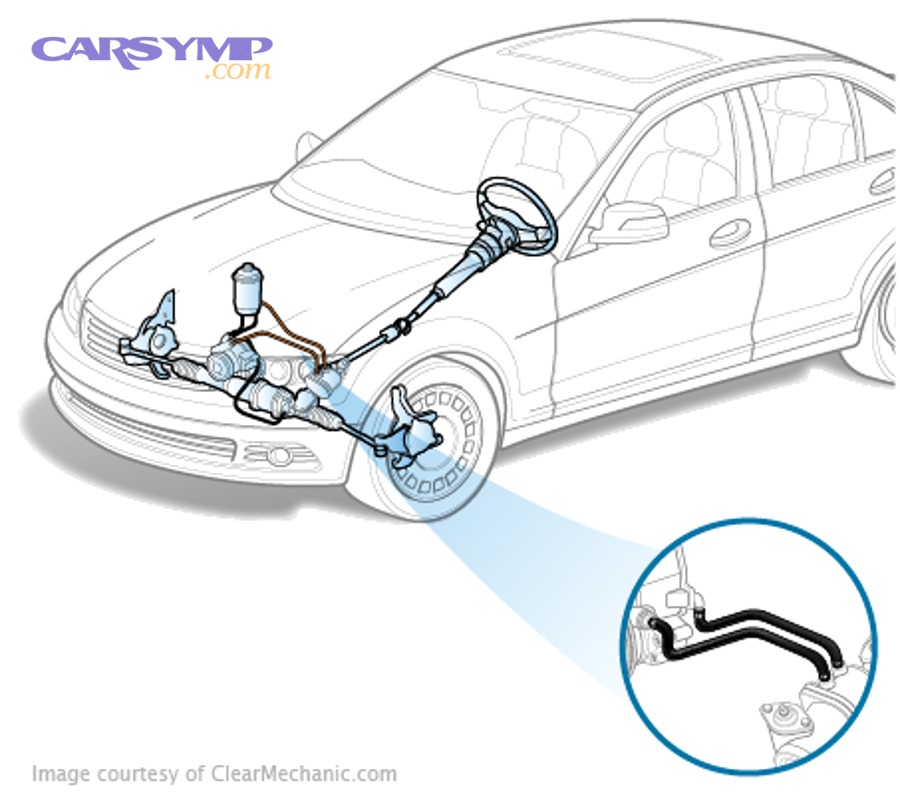
Rack seal leaks rank among the most expensive repairs due to the steering rack’s location and the labor-intensive seal replacement process. The steering rack mounts low in the vehicle’s front end, requiring mechanics to raise the car, remove wheels, disconnect tie rods, and extract the entire rack assembly. This process consumes 3-5 hours even for experienced technicians, with labor costs reaching $300-$500 before parts.
Power steering pump accessibility varies wildly across vehicle designs, directly impacting labor costs. Some vehicles position the pump prominently at the front of the engine with easy belt access, allowing replacement in 1-2 hours. Other designs bury the pump behind alternators, air conditioning compressors, or engine mounts, requiring removal of multiple components to access the pump and extending labor to 3-4 hours.
Reservoir leaks typically represent the simplest and cheapest repairs, often requiring just 30 minutes to 1 hour of labor. The reservoir mounts in accessible locations on most vehicles, and replacement involves disconnecting hoses, removing mounting bolts, and installing the new reservoir. Total costs rarely exceed $150-$200 for reservoir repairs.
Pressure line leaks fall into a middle cost category, typically requiring $200-$400 to repair depending on the specific line and routing. High-pressure lines carry specialized fittings and reinforced construction, with parts costs ranging from $100-$200. Labor time varies from 1-3 hours based on routing complexity and whether lines cross major components requiring removal for access.
How Do Labor Rates Vary by Repair Shop Type?
Independent mechanics charge the lowest labor rates, typically $40 to $100 per hour depending on geographic location and shop specialization. These shops operate with lower overhead than dealerships and pass savings to customers while maintaining quality work. Many independent mechanics specialize in specific vehicle brands, developing expertise that rivals or exceeds dealership technicians at fraction of the cost.
Dealership service departments charge premium labor rates ranging from $100 to $200 per hour, with luxury brand dealerships at the upper end. These higher rates reflect specialized training, manufacturer-approved tools and equipment, and access to technical service bulletins and factory support. Dealerships make economic sense for warranty work, recalls, and complex electrical issues requiring manufacturer diagnostic systems, but often represent the most expensive option for routine mechanical repairs like power steering leaks.
Chain repair shops including Jiffy Lube, Midas, and Firestone occupy the middle ground with labor rates between $70 and $130 per hour. These franchises offer standardized pricing across locations, frequent promotional discounts, and convenient hours including evenings and weekends. Quality varies by location and individual technician skill, making research and reviews essential before selecting a chain shop for repairs.
Mobile mechanics represent a growing segment offering competitive rates of $60 to $120 per hour while providing the convenience of on-site service at your home or workplace. This eliminates towing costs and saves time, though mobile mechanics may charge additional trip fees of $25-$50 for travel. Mobile services work best for straightforward repairs not requiring specialized lifts or extensive diagnostic equipment.
Geographic location creates substantial variation in labor rates across regions. Major metropolitan areas like New York, Los Angeles, and San Francisco see average rates 40-60% higher than rural or suburban communities. A repair costing $400 in a small Midwestern town might cost $600-$700 in a major coastal city, purely due to labor rate differences driven by higher cost of living and operating expenses.
Is Power Steering Leak Repair Worth the Cost?
Yes, power steering leak repair is absolutely worth the cost because delaying or avoiding repairs creates serious safety risks, causes progressive damage to expensive components, and ultimately costs significantly more than addressing leaks promptly. The investment in timely repairs protects your safety and prevents minor issues from escalating into major system failures.
The financial justification for repair becomes clear when considering the alternative scenarios. A $500 repair completed today prevents a $1,500 steering rack replacement next month after low fluid levels destroy the internal components. It also eliminates the risk of sudden steering loss while driving—a catastrophic failure that could result in accidents, injuries, and far greater expenses than any preventive repair.
What Happens If You Don’t Repair a Power Steering Leak?
Ignoring a power steering fluid leak leads to progressive system damage as fluid levels drop below the minimum required for proper operation. The power steering pump requires adequate fluid for lubrication and cooling—running dry causes the pump to overheat and seize, transforming a $200 hose repair into a $600 pump replacement plus hose repair. This cascading failure pattern makes delayed repairs exponentially more expensive.
Safety risks escalate dramatically as power steering fluid depletes. Modern drivers lack the upper body strength many older drivers developed when manual steering was standard, making sudden steering assist loss genuinely dangerous. You might be unable to turn the wheel quickly enough to avoid obstacles or make necessary evasive maneuvers, especially at low speeds during parking or in emergency situations requiring quick directional changes.
Steering performance deteriorates gradually as fluid levels drop, creating a false sense that the problem isn’t urgent. You might initially notice slightly increased steering effort, which progressively worsens over days or weeks. This gradual decline allows you to unconsciously adapt to the degraded performance until the system fails completely, leaving you unprepared for the sudden loss of power assist.
Environmental damage occurs as power steering fluid leaks onto driveways, parking lots, and roadways. Power steering fluid contains petroleum-based compounds that contaminate soil and water supplies when washed into storm drains. Most municipalities classify power steering fluid as hazardous waste, making vehicle owners potentially liable for environmental cleanup costs if leaks create significant contamination.
Secondary component damage extends beyond the immediate steering system. Leaking fluid often contacts rubber components including engine mounts, hoses, and belts, causing premature deterioration of these parts. Power steering fluid on serpentine belts reduces friction and causes slippage, potentially affecting alternator and water pump operation and creating additional repair needs.
Can You Drive With a Power Steering Leak?
You can drive short distances with a minor power steering leak if you maintain adequate fluid levels, but this is not recommended for regular operation or extended trips. The severity of the leak determines how safely you can operate the vehicle and for how long before damage occurs.
Minor weeping leaks that lose only a few drops per day allow continued driving for days or weeks if you check fluid levels weekly and top off as needed. These slow leaks typically originate from aging seals or loose fittings and create minimal immediate risk. However, even minor leaks warrant prompt repair since they invariably worsen over time as seals continue deteriorating.
Active leaks that create puddles underneath the vehicle or lose fluid at a rate requiring daily top-offs demand immediate attention and should preclude anything beyond absolutely essential driving. These leaks can drain the system within hours, leaving you stranded with no power steering assist. Driving with active leaks risks sudden assist loss while operating the vehicle, creating dangerous situations particularly at low speeds when maximum steering effort is required.
Complete steering assist loss requires towing rather than driving to a repair facility. When the system runs completely dry, the power steering pump can seize within minutes of operation, transforming a repairable leak into a major system failure requiring pump replacement. The steering wheel becomes extremely difficult to turn, requiring both hands and significant force even for minor directional corrections—a genuinely dangerous condition.
Temporary fluid top-ups provide a short-term solution for emergencies but should never substitute for proper repairs. Keeping a bottle of power steering fluid in your vehicle allows you to maintain system function long enough to reach a repair facility, but repeated top-ups prove expensive and environmentally irresponsible compared to addressing the root cause. Each quart of fluid costs $8-$25, meaning frequent top-ups for an active leak can cost $50-$100 monthly while the leak continues damaging other components.
How Can You Get an Accurate Cost Estimate for Your Vehicle?
Getting an accurate cost estimate requires providing detailed vehicle information and leak symptoms to repair shops while obtaining multiple quotes for comparison. Most shops offer free estimates based on the information you provide, though some charge diagnostic fees of $61-$92 that may be waived if you proceed with recommended repairs.
The estimation process works most effectively when you prepare comprehensive information before contacting shops. Mechanics need specific details to provide accurate quotes rather than broad ranges that may prove meaningless when actual diagnosis reveals different problems than initially suspected. The more precise information you provide upfront, the closer the initial estimate will match the final repair bill.
What Information Do You Need to Provide for an Accurate Quote?
Vehicle identification details form the foundation of accurate estimates, starting with the exact year, make, model, and trim level. A 2018 Honda Accord LX has different power steering components than a 2018 Honda Accord EX-L, affecting parts prices and availability. Provide the Vehicle Identification Number (VIN) when possible, as shops can use this to look up exact parts specifications and pricing for your specific vehicle configuration.
Current mileage helps mechanics assess which components are most likely to fail based on typical service life expectations. A vehicle with 150,000 miles faces higher probability of multiple worn components requiring simultaneous replacement compared to a 50,000-mile vehicle likely experiencing a single part failure. This context allows mechanics to provide more comprehensive recommendations rather than addressing only the immediate leak source.
Detailed symptom descriptions enable mechanics to narrow diagnostic focus and provide more accurate estimates. Rather than simply stating “power steering leak,” describe exactly what you’ve observed: “Red fluid puddle forming under the front passenger side after the car sits overnight” or “Steering wheel whines during turns and I see fluid spraying onto the engine when turning.” These specific observations point toward particular components and help mechanics estimate repair costs more precisely.
Leak severity information indicates whether you’re facing a minor repair or major system failure. Explain whether you’ve noticed occasional drops, small puddles, or large pools of fluid, and how frequently you need to add fluid to maintain proper levels. A leak requiring weekly top-ups suggests a different problem than one needing daily attention, affecting both urgency and likely repair costs.
Recent service history provides valuable context for mechanics assessing your situation. If you recently had engine work, transmission service, or other major repairs, mention these since mechanics may have disturbed power steering components during that work. Previous power steering repairs also matter—a recurring leak at the same location might indicate improper repair or a persistent problem requiring a different approach.
Should You Get Multiple Estimates Before Repairing?
Yes, obtaining three to five estimates from different shop types provides the price comparison data needed to identify fair market rates and avoid overpriced repairs. This process reveals the typical price range for your specific repair while highlighting unusually high or suspiciously low quotes that warrant additional scrutiny.
Price comparison alone shouldn’t drive your decision since the lowest quote doesn’t always represent the best value. A shop quoting $400 for a repair while competitors quote $550-$600 might be cutting corners with inferior parts, inexperienced technicians, or incomplete repairs that require additional work later. Conversely, the highest quote may include extra services or premium parts not strictly necessary for reliable repairs.
Warranty and guarantee terms vary significantly across repair shops and dramatically affect long-term value. A shop charging $500 with a 24-month/24,000-mile warranty provides better value than a shop charging $450 with no warranty coverage. National chains typically offer standardized warranties of 12-24 months, while independent shops may provide 30-90 day guarantees or no warranty at all. Dealerships often provide the longest warranties but at premium prices.
Parts quality represents a critical comparison point often hidden in simple price quotes. Ask whether estimates include OEM (Original Equipment Manufacturer) parts, aftermarket parts from reputable brands, or budget aftermarket parts. OEM parts cost 20-40% more than quality aftermarket alternatives but guarantee exact fit and manufacturer specifications. Budget aftermarket parts save 30-50% compared to OEM but may fail prematurely or fit improperly.
Red flags in estimates include vague descriptions like “power steering repairs” without specifying exact components being replaced, quotes significantly higher or lower than market averages without clear justification, and shops unwilling to provide written estimates or detailed breakdowns. Legitimate shops provide itemized estimates listing each part being replaced, labor time required, and applicable fees before starting work.
Shop credibility evaluation extends beyond pricing to reputation and qualifications. Check online reviews on Google, Yelp, and specialized automotive forums, focusing on patterns rather than individual complaints. Look for ASE (Automotive Service Excellence) certification among technicians, Better Business Bureau accreditation, and membership in professional associations like AAA Approved Auto Repair. These credentials indicate shops maintain professional standards and accountability.
What Are Alternative Ways to Address Power Steering Leak Costs?
Several cost-reduction strategies exist beyond accepting the first repair quote, including DIY repairs, stop-leak additives, warranty coverage, and preventive maintenance. Each alternative suits different situations and skill levels, offering potential savings ranging from 30% to 100% of professional repair costs.
The viability of these alternatives depends on your mechanical aptitude, the severity and location of the leak, and your vehicle’s warranty status. Simple repairs like hose replacement might save you $200-$300 through DIY work, while attempting complex rack seal replacement without proper tools and experience could result in damage costing more than professional service. Understanding when each alternative makes sense helps you choose the most cost-effective approach.
How Much Does DIY Power Steering Leak Repair Cost Compared to Professional Service?
DIY power steering leak repairs cost 50-70% less than professional service when you limit expenses to parts and fluids, typically ranging from $50 to $200 for common repairs versus $200 to $650 for professional service. These savings come entirely from eliminating labor charges, which represent 60-70% of professional repair bills.
Hose replacement represents the most DIY-friendly power steering repair, requiring basic tools most home mechanics already own including wrenches, drain pans, and screwdrivers. Replacement hoses cost $60-$150 depending on whether you need high-pressure or return hoses, plus $10-$20 for fresh power steering fluid. The process involves draining the old fluid, removing clamps, pulling off the damaged hose, installing the new hose, and refilling the system—tasks most people with basic mechanical aptitude can complete in 1-2 hours.
Pump replacement falls into intermediate DIY difficulty, doable for mechanically inclined owners with proper tools but challenging for beginners. The pump itself costs $150-$400 for a quality remanufactured unit, plus $10-$20 for fluid and potentially $20-$40 for a new serpentine belt if the old one shows wear. You’ll need a serpentine belt tool for removal, various wrenches for line disconnection, and a pulley puller for some designs. Total DIY costs reach $180-$460 compared to $200-$650 for professional service, saving $20-$190 but requiring 2-4 hours of your time.
Rack seal replacement requires advanced skills and specialized tools, making it unsuitable for most DIY mechanics despite the potential $300-$400 savings on labor. You need a seal kit costing $50-$150, rack seal installation tools ($100-$200 if you don’t own them), and the ability to completely remove, disassemble, seal, and reinstall the steering rack. The process takes experienced home mechanics 4-6 hours, with high risk of improper installation leading to continued leaks or steering problems.
Tool requirements beyond basic mechanics tools vary by repair complexity. Simple hose replacements need only standard wrenches and screwdrivers you likely already own. Pump replacement might require a serpentine belt tool ($15-$30) and potentially a pulley puller ($25-$50). Complex repairs like rack seal replacement demand specialized tools costing $100-$300 total, erasing most financial advantages unless you’ll use these tools for multiple future repairs.
Time investment for DIY repairs ranges from 1-2 hours for simple hose replacement to 4-6 hours for pump or rack work, and potentially 6-10 hours for complete system overhauls. Consider whether your time carries value that offsets labor savings—if you earn $30 per hour and spend 4 hours on a repair saving $200 in labor costs, your effective savings are only $80 after accounting for your time value. However, if you enjoy the learning experience or have free time available, DIY work provides both savings and skill development.
Risk assessment must factor in the potential costs of mistakes. Improperly installed components can leak immediately, requiring repeat repairs and additional parts purchases. Stripped bolts or damaged fittings can create new problems costing hundreds to repair. Most critically, improper repairs affecting steering system function create serious safety risks. Professional repairs include warranties covering faulty work, while DIY mistakes leave you liable for all correction costs.
Do Power Steering Stop Leak Additives Work and What Do They Cost?
Power steering stop leak additives cost $10 to $25 per bottle and work effectively for minor seal leaks but prove ineffective for mechanical failures like cracked hoses or damaged pumps. These chemical solutions contain seal conditioners and mild sealants that soften and swell aging seals, potentially stopping or reducing small leaks from worn but not broken seals.
Effectiveness varies dramatically based on leak type and severity. Additives show best results for slow seeps from rack seals or pump shaft seals that have hardened with age but remain intact. Success rates reach 60-70% for these minor seal leaks according to user reports and product testing. However, additives fail completely for torn hoses, cracked fittings, or damaged pumps where physical damage requires actual component replacement.
Potential risks accompany stop leak additive use, particularly with cheaper products containing aggressive sealants. These products cure into contaminants inside the power steering system, potentially clogging narrow passages in the steering rack or pump. The buildup can cause new leaks or even complete component failure, transforming a minor leak into major damage. Professional mechanics generally advise against these products for this reason, though some premium formulations from reputable brands prove safer.
Application timing matters significantly—additives work best when applied as soon as you notice minor leaking rather than after the system has lost significant fluid or sustained damage. Pour the additive into the power steering fluid reservoir according to package directions, then operate the vehicle normally for 100-200 miles while the chemicals work. Some leaks stop within hours while others require several days of driving for the seals to fully recondition.
Brand comparisons reveal significant quality differences affecting both effectiveness and safety. Premium products from Lucas, BlueDevil, and ATP cost $15-$25 and use gentler seal conditioning formulations less likely to cause system contamination. Budget products at $8-$12 often contain aggressive sealants that pose higher risk to system components. Research specific product reviews before purchasing, as individual products even from the same brand vary in quality and suitability for power steering systems.
When additives are appropriate versus when they’re not depends entirely on leak characteristics. Use additives only for minor seepage from apparently intact seals where you’re willing to risk $15-$25 on a potential solution before committing to $300-$500 in repairs. Never use additives for moderate to severe leaks, visible component damage, or when you’ve already decided on mechanical repairs—adding chemicals right before repairs can complicate the mechanic’s work and potentially void warranties on new components.
Does Vehicle Warranty or Insurance Cover Power Steering Leak Repairs?
Bumper-to-bumper warranties typically cover power steering leak repairs during the coverage period, which usually extends 3 years or 36,000 miles for most manufacturers, while powertrain warranties generally exclude power steering components despite common misconception. Coverage depends entirely on whether the warranty remains active and the manufacturer determines the failure resulted from defects rather than normal wear or damage.
Manufacturer warranty coverage varies by specific terms and vehicle age. New vehicles under factory warranty receive comprehensive coverage for power steering failures caused by defects, with the manufacturer paying all parts and labor costs at authorized dealerships. You pay nothing out of pocket for covered repairs beyond potentially a small deductible. However, warranties explicitly exclude damage from accidents, improper maintenance, or modifications, meaning a leak caused by impact damage or neglected fluid changes won’t receive coverage.
Extended warranty considerations become relevant for vehicles beyond factory coverage. Third-party extended warranties range from comprehensive plans covering most repairs to limited powertrain-only plans excluding steering components. Read your specific extended warranty contract carefully—power steering coverage is not standard and often requires premium plans costing $2,000-$4,000 over 3-5 years. Compare the extended warranty cost against likely repair expenses to determine if coverage makes financial sense.
Insurance claim scenarios rarely apply to power steering leaks since standard auto insurance policies cover collision damage and comprehensive losses like theft or weather damage, not mechanical failures from wear and tear. However, if a power steering leak results from a covered accident—such as front-end collision damage severing a power steering line—your collision coverage would pay for repairs minus your deductible. Document all accident-related damage and submit claims promptly to maximize coverage.
Manufacturer recalls or technical service bulletins sometimes address power steering leak problems affecting specific vehicle models. When manufacturers identify systemic issues causing leaks across many vehicles, they issue recalls providing free repairs regardless of mileage or warranty status. Check the NHTSA website and your vehicle manufacturer’s recall page using your VIN to determine if recalls apply to your vehicle. Technical service bulletins don’t mandate free repairs but inform dealers about known issues and repair procedures, potentially helping you negotiate warranty coverage for problems other owners experienced.
How Can You Prevent Future Power Steering Leaks and Avoid Repair Costs?
Regular maintenance prevents most power steering leaks by addressing wear before failures occur, primarily through scheduled fluid changes every 50,000-75,000 miles and annual system inspections. This preventive approach costs $80-$150 per fluid service but extends power steering component life by 30-50% compared to neglected systems.
Fluid quality and replacement intervals directly impact leak development. Power steering fluid degrades over time through heat exposure, moisture contamination, and particle accumulation from component wear. Old fluid loses its lubricating properties and chemical stability, accelerating seal deterioration and increasing leak risk. Changing fluid according to manufacturer recommendations—typically every 50,000-75,000 miles or 3-5 years—maintains system health and prevents premature seal failure. The service costs $80-$150 including parts and labor, far less than the $500+ for leak repairs.
Early warning sign detection allows you to address minor issues before they become major leaks. Check your power steering fluid level monthly by locating the reservoir (usually labeled with a steering wheel icon), ensuring the engine is cold, and verifying fluid reaches the “full” mark. Look for fluid color changes—fresh power steering fluid appears red, amber, or clear depending on type, while contaminated fluid turns dark brown or black. Listen for whining noises when turning the steering wheel, which indicate low fluid levels or pump problems requiring immediate attention.
Component inspection during routine maintenance catches developing problems early. Have mechanics check power steering hoses for bulging, cracking, or seepage during oil changes and other service visits. Inspect belt condition and tension since loose or worn belts cause power steering pump problems. Look under your vehicle weekly for signs of fluid leakage—fresh puddles indicate active leaks requiring immediate repair rather than waiting until the system fails.
Protective measures extend component life and reduce leak risk. Avoid turning the steering wheel fully left or right and holding it at the stop for extended periods—this creates maximum pressure in the system and strains seals unnecessarily. Don’t operate the vehicle with low power steering fluid, as running the pump dry causes rapid damage. In cold weather, allow the engine to warm briefly before aggressive steering movements since cold fluid flows less easily and creates higher system pressure.
Long-term cost savings through prevention typically reach 60-70% compared to reactive repair approaches. A vehicle owner spending $150 every 60,000 miles on fluid changes ($450 over 180,000 miles) while performing monthly inspections likely avoids the major leaks requiring $500-$800 repairs. Even if one repair becomes necessary despite preventive maintenance, the total preventive cost plus single repair ($950) costs less than two or three reactive repairs ($1,000-$2,400) that neglectful owners typically face.
According to automotive maintenance research conducted by AAA’s automotive engineering team, vehicles receiving scheduled power steering maintenance experience 65% fewer steering system failures compared to vehicles with irregular or no preventive maintenance over equivalent mileage periods.