


When your vehicle’s cooling fan stops working properly, the culprit is typically one of three components: the fan motor, the temperature sensor, or the control module. Identifying which component has failed requires understanding the distinct symptoms each produces—fan motors fail mechanically and won’t spin when directly powered, temperature sensors cause incorrect timing or no fan activation despite overheating, and control modules create erratic behavior like continuous running or complete system unresponsiveness. The diagnostic process follows a systematic elimination approach: test the fan motor with direct power first, check the temperature sensor’s resistance and failsafe response second, and examine the control module and related circuits last through code scanning and relay testing.
Recognizing the specific symptoms pointing to each component saves both time and money in repairs. A radiator fan not working can manifest differently depending on whether the motor itself is burned out, the sensor isn’t signaling the system properly, or the control module has lost its ability to process inputs and command fan operation. Each component has characteristic failure patterns—motors develop bearing noise or physical damage, sensors drift out of calibration or develop open circuits, and modules suffer from heat-related capacitor failure or relay contact degradation.
The testing procedures for each component vary significantly in complexity and required tools. Fan motors can be verified with simple jumper wires and a 12-volt power source, temperature sensors require multimeter resistance checks at various temperatures, and control modules demand OBD-II scanners combined with relay testing and process-of-elimination diagnostics. Understanding these testing methods empowers car owners to pinpoint failures accurately before investing in replacement parts.
Cost-effectiveness and repair prioritization depend on correct initial diagnosis. Replacing the wrong component wastes money and leaves the underlying problem unsolved, making it essential to follow proper diagnostic sequences. Below, we’ll explore each component’s function, failure symptoms, testing procedures, and replacement strategies to help you diagnose your cooling system issue accurately.
What Are the Three Main Components That Control Your Cooling Fan System?
Your vehicle’s cooling fan system operates through three interconnected components: the fan motor that physically moves air through the radiator, the temperature sensor or switch that monitors coolant heat levels, and the control module (ECU/PCM) that processes sensor data and commands fan operation. These components work as an integrated system where the sensor detects when cooling is needed, the control module decides when to activate the fan, and the motor executes the cooling action.
Understanding how these components interact is fundamental to accurate diagnosis. Let’s examine each component’s specific role in the cooling system architecture.
How Does the Fan Motor Work in Your Vehicle’s Cooling System?
The fan motor is an electric motor that converts electrical energy into mechanical rotation to pull air through the radiator and condenser. Modern vehicles use electric motors instead of belt-driven mechanical fans because they provide better fuel economy, reduce parasitic drag on the engine, and allow for more precise cooling control. The motor receives power through a relay system that handles the high current draw—typically 10 to 30 amperes depending on fan size and speed.
Single-fan configurations use one motor mounted behind the radiator, while dual-fan setups employ two motors that can operate independently or together depending on cooling demands. Variable speed fans adjust their rotation rate through pulse width modulation (PWM), where the control module rapidly switches power on and off to create effectively different speed settings. A fan running at 30% duty cycle spins slower and draws less current than one at 100% duty cycle, providing proportional cooling based on actual needs.
The motor connects directly to the vehicle’s electrical system through heavy-gauge wiring capable of handling sustained high-amperage loads. When the relay closes its contacts, battery voltage flows directly to the motor terminals, causing the armature to rotate. Brushed motors use carbon brushes riding on a commutator to switch current through different coil windings, while brushless designs use electronic switching for longer service life and quieter operation.
What Is the Role of the Temperature Sensor or Switch?
The temperature sensor or switch monitors engine coolant temperature and signals when cooling fan activation is necessary. There are two distinct types with different operating principles: temperature sensors use a thermistor (variable resistor) that changes resistance as temperature changes, while temperature switches contain bi-metallic contacts that close at a specific temperature threshold. The terminology can be confusing because manufacturers sometimes use these terms interchangeably, but understanding the functional difference is critical for proper diagnosis.
Temperature sensors send a continuously variable signal to the engine control module, allowing the computer to know the exact coolant temperature at any moment. As the thermistor heats up, its electrical resistance decreases in a predictable curve—a sensor might read 3,000 ohms at 68°F, dropping to 300 ohms at 194°F. The control module interprets this resistance change as a temperature reading and uses that data to make fan control decisions along with other cooling system strategies.
Temperature switches operate more simply as on/off devices that directly control a relay rather than sending data to a computer. When coolant temperature reaches the switch’s calibrated activation point (typically 185°F to 230°F depending on the application), internal contacts close to complete a ground circuit that energizes the fan relay. Once temperature drops approximately 10 degrees below the activation point, the contacts open again and the fan stops. This older design is found primarily in vehicles without comprehensive computer control, though some modern vehicles still use switches as backup systems.
The sensor or switch threads into the engine block, cylinder head, or radiator tank where it contacts flowing coolant directly. Proper installation requires attention to thread sealing—single-wire sensors that ground through their threads must not have thread sealer or tape applied, as this would interrupt the ground path and prevent proper operation. Two-wire sensors with dedicated ground circuits can use thread sealer without issue.
How Does the Fan Control Module (ECU/PCM) Regulate Cooling?
The fan control module processes inputs from multiple sensors to make intelligent decisions about when and how fast to run the cooling fan. Modern vehicles integrate fan control into either the powertrain control module (PCM) or body control module (BCM), while some use a dedicated fan control module mounted near the fan assembly. These modules receive data from the coolant temperature sensor, ambient air temperature sensor, vehicle speed sensor, air conditioning pressure switches, and sometimes transmission temperature sensors to create a comprehensive cooling strategy.
When the module determines that cooling is needed, it energizes one or more relays that deliver battery power to the fan motor. The decision-making process accounts for multiple factors: engine temperature obviously triggers fan operation, but high vehicle speed may suppress the fan because ram airflow through the grille provides sufficient cooling without electrical assistance. Air conditioning operation typically overrides other considerations and runs the fan regardless of engine temperature to maintain proper refrigerant pressures. Some modules also consider engine load, watching for conditions like towing or climbing grades where additional cooling helps prevent overheating even before temperatures reach critical levels.
PWM control allows the module to vary fan speed continuously rather than just switching between off and full-speed operation. The module sends a rapid series of on-off pulses to the fan motor—at 5% duty cycle the motor receives power only 5% of the time and spins slowly, while 95% duty cycle keeps the motor running nearly continuously at high speed. This electronic speed control eliminates the need for multiple relays and resistors while providing infinite speed adjustment for optimal cooling efficiency and reduced noise.
The control module also monitors the fan circuit for faults and stores diagnostic trouble codes when problems occur. If the module commands the fan on but doesn’t detect the expected current draw, it recognizes a circuit problem and illuminates the check engine light while storing a relevant code. This self-diagnostic capability makes professional-level troubleshooting much easier when scan tools are available.
What Symptoms Indicate a Failing Fan Motor, Temperature Sensor, or Control Module?
Different symptoms point to specific component failures: a fan motor problem shows mechanical issues like no rotation when powered directly or abnormal noise, temperature sensor failure causes timing problems where the fan never activates or runs at incorrect temperatures, and control module malfunction creates erratic behavior including continuous operation or complete unresponsiveness despite good sensors and motor. Accurate symptom recognition allows you to focus diagnostic efforts on the most likely faulty component rather than testing everything randomly.
Each component produces characteristic failure patterns based on its function in the system. Below, we’ll detail the specific symptoms associated with each component.
What Are the Signs of a Bad Fan Motor?
A failing fan motor exhibits five primary symptoms that distinguish it from sensor or control problems. First and most definitive, the motor won’t spin when you apply 12 volts directly to its terminals using jumper wires—this bypasses all control circuitry and proves the motor itself has failed mechanically or electrically. Second, you may hear grinding, squealing, or rattling noises coming from the fan assembly as worn bearings allow excessive shaft movement or debris contacts the rotating blades. Third, the fan operates intermittently, working properly sometimes but failing unpredictably at other times as internal connections break down or windings develop intermittent opens. Fourth, the motor spins noticeably slower than normal even with good voltage supply, indicating increased internal resistance from worn brushes or partially shorted windings. Fifth, visible physical damage like cracked housing, broken fan blades, or heavy corrosion on electrical connections signals motor problems.
When the motor runs but sounds abnormal, bearing failure is the most common cause. Bearings support the motor shaft and allow smooth rotation—as they wear out, friction increases and unusual noises develop. A bearing that has lost its lubrication produces a dry squeaking sound, while one with damaged races causes grinding or rumbling. Worn bearings also allow radial shaft movement that can cause the fan blades to strike the shroud, creating a distinctive rhythmic ticking or scraping noise synchronized with fan rotation.
Intermittent motor operation often results from internal electrical problems rather than mechanical wear. The carbon brushes that conduct current to the rotating armature wear down over time, and as they become very short, they may lose contact intermittently, causing the motor to stop unexpectedly. Likewise, solder connections inside the motor can crack from vibration and thermal cycling, creating high-resistance joints that fail under load but sometimes work when conditions change.
Complete motor failure with no rotation when powered directly indicates either open windings, a seized bearing, or catastrophic internal damage. Open windings occur when the copper wire in the motor’s electromagnetic coils breaks, eliminating the magnetic field needed for rotation. Seized bearings physically lock the motor shaft, preventing any rotation regardless of applied power. Burned armature windings or damaged commutators from electrical overload can also prevent operation.
How Do You Recognize Temperature Sensor or Switch Failure?
Temperature sensor and switch failures produce six characteristic symptoms that help isolate the problem to this component. First, the fan never activates despite the engine reaching temperatures well above normal operating range—you can observe the temperature gauge climbing into the hot zone while the fan remains off. Second, the temperature gauge itself reads incorrectly, showing erratic fluctuations, staying at cold even when the engine is fully warmed up, or pegging at hot immediately when you start the engine. Third, the fan immediately runs at full speed when you disconnect the sensor—this failsafe behavior proves the control module and motor work correctly but aren’t receiving proper temperature input. Fourth, the check engine light illuminates with sensor-specific diagnostic trouble codes like P0117 (coolant temperature sensor circuit low) or P0118 (circuit high). Fifth, fan activation timing is incorrect—the fan comes on far too early when the engine is barely warm or stays off until the engine is dangerously hot. Sixth, scan tool data shows unrealistic temperature readings that don’t match actual engine conditions.
The disconnect test provides particularly valuable diagnostic information. When you unplug the coolant temperature sensor connector, the control module loses its temperature input and typically responds by running the fan at maximum speed as a protective measure. If the fan starts working properly once disconnected, you’ve proven that the sensor was providing incorrect information that prevented normal fan operation, while simultaneously confirming that the control module and motor function correctly.
Sensor drift is a common age-related failure mode where the thermistor’s resistance-temperature curve shifts away from factory specifications. A drifted sensor might read 160°F when actual coolant temperature is 210°F, causing the control module to believe no cooling is needed. This gradual calibration change often goes unnoticed until overheating occurs, and because the sensor still produces a signal (just an incorrect one), it may not trigger a diagnostic trouble code.
Electrical problems also affect sensor operation. Corroded connector pins create high resistance that alters the voltage signal the control module receives, similar to a drifted sensor. An open circuit in the sensor wiring makes the control module see infinite resistance, typically interpreted as an impossibly cold temperature that sets a trouble code. A short to ground makes the control module see zero resistance, interpreted as an impossibly hot temperature. These wiring faults often correlate with specific trouble code numbers that help identify whether the problem is open, shorted, or out of range.
Some vehicles use separate sensors for different purposes—one for the gauge cluster, another for the engine computer, and potentially a third for fan control. Replacing the wrong sensor leaves your problem unsolved, so identifying which sensor controls the fan is essential before ordering parts.

What Symptoms Point to a Faulty Control Module?
Control module failures manifest in seven distinct ways that set them apart from motor or sensor problems. First, the fan runs continuously regardless of engine temperature—it starts immediately when you turn on the ignition and never stops, even when the engine is stone cold or after you shut off the ignition. Second, the fan doesn’t respond to temperature changes at all, remaining off even as the engine overheats, despite having a good sensor and functional motor. Third, multiple cooling system trouble codes appear simultaneously, indicating the module isn’t processing sensor inputs correctly. Fourth, the fan operates only at low speed when high speed is needed, or vice versa, showing the module has lost its ability to control PWM duty cycle or switch between speed settings. Fifth, relay clicking occurs without corresponding fan operation—you hear the relay coil energize but no fan response follows. Sixth, the fan works perfectly when controlled through an OBD-II scan tool’s bidirectional controls, proving the motor is fine but the module isn’t commanding it during normal operation. Seventh, visual inspection of the module reveals physical damage like burned components, corroded circuit boards, or swollen capacitors.
Continuous fan operation after engine shutdown is particularly characteristic of module failures. The control module should cut power to the fan relay when you turn off the ignition, but a failed module may keep the relay energized indefinitely, draining your battery. This symptom also occurs with stuck relay contacts, but when combined with other erratic behaviors, module failure becomes more likely.
The inability to switch between fan speeds indicates PWM control failure within the module. Vehicles with two-speed fans use different relays and circuits for low and high speed operation, and module failure can prevent proper relay switching. The fan might work on low speed (useful for gentle highway cruising) but never engage high speed when idling in traffic with the air conditioning on, leading to gradual overheating under low-airflow conditions.
Heat-related module failures are extremely common because the module is often mounted in the engine compartment where temperatures regularly exceed 200°F. Internal components like capacitors, which stabilize voltage and filter electrical noise, deteriorate when subjected to prolonged high temperatures. Electrolytic capacitors in particular have finite lifespans that decrease exponentially with operating temperature—a capacitor rated for 10,000 hours at 105°C might only last 1,000 hours at 125°C. When these capacitors fail, the module loses its ability to function reliably.
Some vehicles use integrated relay control modules (IRCM) or similar multifunction units that control not just the cooling fan but also the fuel pump, air conditioning clutch, and other high-current loads. When these complex modules fail, you may see multiple seemingly unrelated symptoms occur simultaneously, making diagnosis more challenging.
How Do You Test Each Component to Identify the Problem?
Testing each component follows a progressive elimination strategy: start with the fan motor using direct power application (easiest and most definitive), move to the temperature sensor using resistance measurements and disconnect testing (requires basic tools), and finish with control module diagnosis using code scanning and relay testing (most complex and often process-of-elimination). This sequence minimizes wasted effort by checking the most common and testable failures first before moving to more difficult diagnostics.
Proper testing requires patience and systematic work. Below are detailed procedures for each component.
How to Test the Fan Motor Directly
Direct motor testing bypasses all control circuitry to determine if the motor itself functions properly. Locate the fan motor electrical connector—it’s usually a two-pin or three-pin connector attached directly to the motor housing, often secured with a locking tab. Disconnect this connector and examine both the connector and motor terminals for corrosion or damage. Set up two jumper wires with insulated alligator clips on each end—one wire will carry positive current, the other provides ground. Connect one jumper wire to your battery’s positive terminal and touch the other end to the fan motor’s positive terminal (often marked with + or colored red). Connect the second jumper wire to your battery’s negative terminal and touch it to the motor’s ground terminal (marked – or colored black). If the motor is good, it should immediately spin at normal speed.
Safety is paramount during this test. Keep your hands, tools, and loose clothing away from the spinning fan blades, which can cause serious injury. Ensure your jumper wire connections are secure before applying power—loose connections can arc and potentially cause electrical burns or fire. Work with the engine off and cool to avoid accidental contact with hot components. If you have a two-speed fan, it will have three terminals: positive, ground, and a third connection for the resistor that provides low-speed operation. Test high speed first by connecting positive and ground as described above.
A motor that spins when directly powered proves the motor itself is functional, shifting your diagnostic focus to the control circuit, sensors, or relays. A motor that doesn’t spin despite good voltage application indicates motor failure—the motor itself requires replacement. If the motor spins but makes grinding or squealing noises, bearings are worn even though the motor still functions, and replacement will soon be necessary. A motor that spins noticeably slower than you’d expect from a cooling fan shows high internal resistance and impending failure.
Using a multimeter adds precision to this test. Set your multimeter to DC voltage and measure voltage at the fan connector while the engine is running and hot—you should see 12 to 14 volts if the control system is commanding the fan on. If voltage is present at the connector but the fan doesn’t run, the motor has failed. If no voltage is present when the fan should be running (confirmed by high temperature), the problem lies elsewhere in the control circuit.
How to Test the Temperature Sensor or Switch
Temperature sensor testing requires a multimeter capable of measuring resistance (ohms). Start by identifying the correct sensor—remember that some vehicles have multiple temperature sensors, and you need the one that specifically controls fan operation. Disconnect the sensor’s electrical connector and inspect the connector pins for corrosion, which causes high resistance that mimics sensor failure. Set your multimeter to resistance mode (often marked Ω) and measure resistance across the sensor terminals with the engine cold—typical readings range from 2,000 to 10,000 ohms depending on ambient temperature and sensor design. Warm up the engine to operating temperature and measure again—resistance should drop significantly, typically to 200 to 500 ohms. If resistance doesn’t change between cold and hot conditions, or if you measure infinite resistance (open circuit) or zero resistance (short circuit), the sensor has failed.
The manufacturer’s specifications provide exact resistance values expected at specific temperatures, but even without these specs, you can identify obvious failures. A sensor reading infinite resistance at all temperatures indicates broken internal wiring. Zero resistance indicates a short circuit within the sensor. Resistance that doesn’t change between 70°F and 200°F shows the thermistor element has failed and can’t respond to temperature.
The disconnect test provides an alternative diagnostic method, particularly useful when you lack resistance specifications. With the engine off and cool, disconnect the temperature sensor connector. Start the engine and observe fan behavior. On most vehicles, the control module recognizes the disconnected sensor as a fault condition and runs the fan at maximum speed as a failsafe protection against overheating. If the fan immediately runs at full speed when disconnected but never runs when connected, the sensor is providing incorrect information that makes the control module think cooling isn’t needed. This test simultaneously proves the control module and motor work correctly.
For vehicles using temperature switches rather than variable-resistance sensors, testing is simpler. Disconnect the switch and use a continuity tester or multimeter set to continuity mode. With the engine cold, the switch should show open (no continuity). As the engine warms up and reaches the switch’s activation temperature, you should hear or see continuity appear as the internal contacts close. If the switch never shows continuity even when hot, it has failed in the open position. If it shows continuity even when cold, it’s failed in the closed position or has shorted internally.
Checking ground connections is critical, especially on single-wire sensors that ground through their metal threads. Remove the sensor and inspect the threads for corrosion or thread sealer that would prevent proper electrical contact. Clean the threads with a wire brush and ensure the sensor threads smoothly into its mounting hole without resistance. A poor ground connection creates the same symptoms as a failed sensor—the control module sees abnormal resistance values and may set trouble codes or prevent proper fan operation.

How to Test the Control Module and Related Circuits
Control module testing relies primarily on code scanning and process-of-elimination because you can’t easily bench-test an integrated electronic control unit. Begin by connecting an OBD-II scan tool to your vehicle’s diagnostic port (usually located under the dashboard near the steering column) and scan for diagnostic trouble codes. Look specifically for codes related to cooling fan circuits (P0480, P0481), coolant temperature sensor issues (P0117, P0118), or communication problems with the body control module. The presence of multiple cooling-system-related codes often points to control module malfunction rather than individual sensor failures.
Modern scan tools with bidirectional control capability allow you to manually command the fan on through the tool’s controls. Navigate to the actuator test or output control section and select the cooling fan. If the fan responds immediately to your command through the scan tool but doesn’t turn on during normal operation, you’ve proven the motor and power delivery work correctly—the module isn’t sending the proper command during regular use, indicating module failure or a sensor input problem.
Relay testing forms another critical part of control module diagnostics because the module operates the fan through relay control rather than direct connection. Locate the fan relay in your vehicle’s fuse box—consult your owner’s manual or a wiring diagram for the exact location, as vehicles may have multiple relays. Remove the relay and examine it for signs of burning, corrosion, or damaged terminals. Set your multimeter to resistance mode and measure across the relay coil terminals (usually pins 85 and 86 on a standard automotive relay)—you should see 40 to 80 ohms. Infinite resistance indicates an open coil that won’t energize, while very low resistance (under 20 ohms) might indicate a partially shorted coil.
You can also test relay switching by applying 12 volts across the coil terminals while measuring continuity across the switch terminals (usually pins 30 and 87). When you apply power, you should hear an audible click and see continuity appear across the switch contacts. No click or no continuity when energized means the relay has failed and requires replacement.
Check all fuses protecting the fan circuit, both in the engine compartment fuse box and interior fuse panel. Blown fuses indicate a short circuit somewhere in the system that drew excessive current. If a new fuse blows immediately when installed, a serious short exists that must be repaired before the fan will work. If fuses are intact, the problem lies elsewhere.
Wiring inspection complements these tests. Examine all visible wiring running to the fan motor, looking for chafed insulation, broken wires, or connectors with pushed-back pins that don’t make solid contact. Corrosion creates high resistance that can prevent proper fan operation—white or green powdery deposits on connector pins indicate corrosion that should be cleaned with electrical contact cleaner and a small wire brush.
When all other components test good—motor spins when powered directly, sensor shows proper resistance changes with temperature, relays click and show continuity, fuses are intact, and wiring appears sound—the control module itself becomes the likely failure point. This process-of-elimination diagnosis is necessary because you can’t directly test the complex integrated circuits inside the module without specialized equipment.
What Are the Most Common Causes of Failure for Each Component?
Understanding why components fail helps you prevent future problems and recognize warning signs before complete failure occurs. Fan motors typically fail from bearing wear and heat exposure, temperature sensors succumb to thermal cycling and electrical corrosion, and control modules suffer from heat damage to internal capacitors and relay contact degradation. Each component has a different typical service life and vulnerability to environmental factors.
Let’s examine the specific failure mechanisms for each component.
Why Do Fan Motors Fail?
Fan motors fail for six primary reasons rooted in mechanical wear and environmental exposure. First, bearing wear from continuous operation and exposure to heat, vibration, and contaminants is the most common failure mode—bearings support the motor shaft and allow smooth rotation, but they eventually lose lubrication and develop excessive play that creates noise and friction. Second, excessive heat exposure from under-hood temperatures and prolonged high-current operation causes insulation breakdown on motor windings, leading to internal shorts. Third, brush wear in brushed motor designs—carbon brushes conduct electricity to the rotating armature and wear away over time until they become too short to maintain consistent contact. Fourth, environmental damage from road salt, water intrusion, and corrosive chemicals deteriorates electrical connections and motor housing. Fifth, overload damage occurs when the motor draws too much current due to a seized bearing or blade obstruction, causing windings to overheat and fail. Sixth, physical impact from road debris or accidental damage during service work can crack the housing, break fan blades, or bend the motor shaft.
Bearing failure develops gradually through predictable stages. Initially, the bearing operates quietly with smooth rotation. As lubricant degrades from heat and time, friction increases and the bearing begins producing subtle noise—a quiet whirring or humming that worsens over weeks or months. Further deterioration causes the races and balls to develop pitting and wear grooves, producing grinding or rumbling sounds. Eventually, the bearing seizes completely or disintegrates, stopping the motor or allowing so much shaft movement that the fan blades strike surrounding components.
Heat accelerates multiple failure modes simultaneously. Under-hood temperatures regularly exceed 200°F in traffic, and the motor itself generates additional heat from electrical resistance and friction. This thermal stress breaks down wire insulation, allowing windings to short together. Lubricants inside the bearings evaporate or oxidize, losing their protective properties. Plastic components like brush holders or commutator insulators become brittle and crack. Continuous exposure to these temperature extremes significantly shortens motor life compared to the same motor operating in a cooler environment.
Brush wear specifically affects older designs using carbon brushes for commutation. The brushes must maintain constant pressure against the rotating commutator, and springs provide this pressure. As the carbon material wears away—essentially consumed by the electrical arcing that occurs during operation—the brushes become shorter. Eventually, they reach a length where spring pressure can’t reliably maintain contact, causing intermittent operation. Most brushed motors are designed with the brushes as replaceable wear items, though in practice, entire motor replacement is often more economical.
Corrosion affects both internal and external motor components. Road salt and water spray accelerate rust formation on the steel motor housing and mounting brackets. Moisture infiltration through worn seals reaches internal components, causing rust on the motor shaft and corrosion on electrical connections. The corrosion creates high resistance that increases current draw and generates more heat, accelerating other failure modes in a destructive feedback loop.
What Causes Temperature Sensors and Switches to Fail?
Temperature sensors and switches fail for five main reasons related to electrical stress and environmental exposure. First, thermal cycling stress from repeated heating and cooling causes internal elements to crack or shift—the thermistor element must expand and contract with temperature changes thousands of times over its service life, and material fatigue eventually causes calibration drift or complete failure. Second, coolant contamination affects sensor accuracy when combustion gases, oil, or rust particles in the coolant alter heat transfer characteristics or chemically attack the sensor element. Third, electrical failures including open circuits, shorts to ground, or high-resistance connections develop from vibration, corrosion, or poor manufacturing quality. Fourth, physical damage during installation or service work—overtightening the sensor can crack its housing, while using improper tools damages the hex fitting or electrical connector. Fifth, ground path problems specifically affect single-wire sensors that rely on threading into the engine block for their ground connection—corrosion or thread sealant interrupts this path, preventing proper operation.
Thermal cycling creates internal stress that no component can entirely resist. Every temperature change causes the various materials in the sensor—brass housing, thermistor element, epoxy sealant, wire leads—to expand and contract at different rates based on their thermal expansion coefficients. Over time, this differential expansion creates microscopic cracks in solder joints, separates the thermistor element from its mounting, or causes the protective epoxy to separate from the housing. These failures typically appear gradually as calibration drift before progressing to complete open-circuit failure.
Coolant contamination is particularly problematic because the sensor must contact flowing coolant to measure temperature accurately. If combustion gases leak into the coolant system from a failing head gasket, acidic exhaust products lower coolant pH and accelerate corrosion of sensor components. Oil contamination from internal leaks coats the sensor tip, insulating it from coolant and causing delayed temperature response. Rust particles from corroded cooling system components can settle around the sensor tip, again affecting heat transfer and response time.
Connector corrosion ranks among the most common electrical failures. The sensor connector sits in a harsh environment with temperature extremes, vibration, and potential water exposure. Moisture wicks up the wires through capillary action or enters through damaged connector seals, reaching the connection points where dissimilar metals create galvanic corrosion. This corrosion increases resistance, making the control module see a signal that mimics a different temperature than actually exists. The symptoms exactly mirror a drifted sensor, but cleaning the connector completely solves the problem.
Physical damage typically occurs during installation of a replacement sensor. Over-tightening applies excessive torque to the threaded body, cracking the internal thermistor element or housing. Using the wrong size wrench or socket can round off the hex, making future removal difficult, or crack the connector housing if force is applied at the wrong point. Cross-threading damages both the sensor threads and the threads in the mounting hole, potentially requiring expensive tap-and-die repair or helicoil installation.
Why Do Control Modules Malfunction?
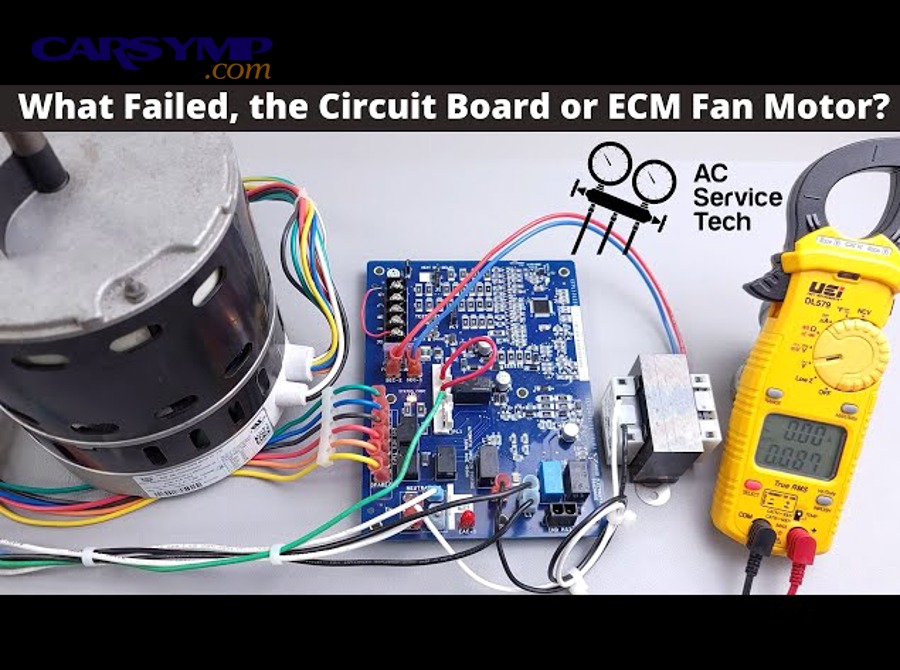
Control modules fail for five primary reasons, most related to heat exposure and electrical stress. First, heat-induced capacitor failure is the single most common module problem—electrolytic capacitors used for voltage filtering and circuit stabilization have limited lifespans that decrease dramatically at high temperatures, and when they fail, the module loses ability to function reliably. Second, relay contact wear from the high-amperage switching required to control fan motors causes pitting and carbon buildup that prevents reliable current flow. Third, circuit board corrosion from water intrusion through damaged seals or condensation in temperature-cycling environments creates high resistance or short circuits between traces. Fourth, solder joint failure from thermal cycling and vibration causes intermittent connections that create unpredictable behavior. Fifth, semiconductor component failure from voltage spikes, overheating, or manufacturing defects causes complete loss of control functions.
Capacitor degradation follows predictable patterns based on operating temperature. Electrolytic capacitors contain a liquid or gel electrolyte that evaporates over time, particularly when exposed to heat. As the electrolyte depletes, the capacitor’s ability to filter voltage ripple and store charge diminishes. The capacitor’s equivalent series resistance (ESR) increases, generating more heat during operation, which accelerates further electrolyte loss in a destructive cycle. Eventually, the capacitor fails completely, either opening internally or shorting. Since fan control modules often mount in the engine compartment where temperatures regularly exceed capacitor ratings, premature failure is common.
Visual inspection sometimes reveals failed capacitors without requiring electronic testing. Swollen capacitor tops, bulging side walls, or leaked electrolyte residue on the circuit board all indicate capacitor failure. The capacitor tops normally appear flat, so any doming or bulging shows internal pressure buildup from electrolyte vaporization. Dried brown residue around capacitor bases indicates electrolyte leakage. Even without visible signs, capacitors can fail electrically while appearing physically normal, requiring ESR testing or replacement to verify.
Relay contact wear occurs because the relay must interrupt high current flow to the fan motor many thousands of times over its service life. Each time the relay switches off under load, a small arc forms between the separating contacts. This arcing vaporizes microscopic amounts of contact material, gradually eroding the contact surfaces. The relay contacts also develop carbon buildup from the arcing, which increases contact resistance. Eventually, the contacts can no longer reliably conduct the required current, causing voltage drop, heat generation, or complete switching failure.
Water intrusion ranks among the most destructive failure modes because it affects multiple components simultaneously. Water enters the module housing through damaged seals, connector openings, or cracks in the case. Once inside, it causes corrosion on circuit board traces, shorts between adjacent connections, and accelerates capacitor degradation. Vehicles driven in wet climates or through deep water crossings face higher module failure rates from water damage. The module mounting location significantly affects vulnerability—modules mounted low in the engine compartment or behind the front bumper encounter more water spray than those positioned higher or in the interior.
Solder joint failure develops from the different thermal expansion rates of components and circuit boards. When the module heats and cools, components expand and contract at different rates than the board they’re attached to. This creates mechanical stress at the solder joints connecting component leads to board pads. Over many thermal cycles, the solder crystallizes and develops cracks that grow with each cycle until the connection becomes intermittent or completely open. Large heavy components like relays experience more stress than small parts, making their solder joints particularly vulnerable.
Which Component Should You Replace First Based on Your Symptoms?
Replacement priority follows the diagnostic test results combined with cost considerations: replace the fan motor first when direct power application proves motor failure (moderate cost, definitive test), replace the temperature sensor first when disconnect testing shows it’s providing incorrect information (lowest cost, easy to test), and replace the control module last only after confirming all other components work correctly (highest cost, diagnosis by elimination). This strategic approach avoids expensive mistakes and unnecessary part replacement.
Let’s examine the specific decision criteria for each component.
Is It the Fan Motor? Quick Confirmation Tests
Replace the fan motor first when your direct power test shows the motor won’t spin with 12 volts applied directly to its terminals, when the motor produces grinding or squealing noises indicating bearing failure, or when the motor spins noticeably slower than normal suggesting high internal resistance. These symptoms definitively prove motor problems independent of any control system issues, making replacement both necessary and sufficient to restore cooling function.
The jumper wire test provides absolute confirmation because it completely bypasses every other component in the system. When you apply battery voltage directly to the motor terminals and it doesn’t spin, no amount of sensor replacement or module diagnosis will solve the problem—the motor itself has failed and requires replacement. This makes the motor test the most valuable single diagnostic step for differentiating motor problems from control system problems.
Cost considerations favor motor replacement when diagnostic tests point clearly to motor failure. Cooling fan motors typically cost $80 to $200 for the part, with labor adding another $100 to $150 if you hire installation. This represents moderate expense compared to sensors ($15 to $60) but significantly less than control modules ($150 to $500+). Since the direct power test conclusively proves motor failure, you won’t waste money replacing parts unnecessarily.
Accessibility varies widely by vehicle but generally favors relatively straightforward motor replacement. Most fan assemblies unbolt from the radiator support with 4 to 6 bolts accessible from above after removing plastic covers or the air intake. The electrical connector unplugs with a locking tab, and no special tools are typically required beyond basic sockets or wrenches. Some vehicles with transversely mounted engines or tightly packaged engine bays require more extensive disassembly, but motor replacement rarely ranks among the most difficult cooling system repairs.
Noise from the motor provides early warning before complete failure. If your motor produces bearing noise but still functions, you can temporarily continue driving while ordering a replacement part. The bearing will continue deteriorating until complete failure, but you typically have some time before the motor stops entirely. This isn’t safe if you’re relying on the fan for primary cooling in stop-and-go traffic on hot days, but for highway driving where ram airflow provides most cooling, short-term operation may be acceptable.
Is It the Temperature Sensor? Diagnostic Indicators
Replace the temperature sensor first when disconnecting the sensor causes the fan to immediately run at full speed, when resistance measurements show values far outside normal ranges or no change between cold and hot conditions, when scan tool data shows unrealistic temperature readings that don’t match actual engine conditions, or when diagnostic trouble codes specifically indicate sensor circuit problems. Temperature sensors represent the lowest-cost component in the cooling fan system, making replacement cost-effective even when diagnostic certainty is moderate rather than absolute.
The disconnect test provides particularly strong evidence for sensor replacement. If the fan never runs with the sensor connected but immediately runs at maximum speed when you unplug the sensor connector, you’ve simultaneously proven the control module and motor work correctly while demonstrating that the sensor signal is preventing normal operation. This test takes less than 30 seconds and requires no tools, making it the fastest way to identify sensor problems.
Resistance testing with a multimeter adds precision to the diagnosis. Look up the manufacturer’s specification for your specific sensor—these typically show expected resistance at various temperatures (68°F, 140°F, 194°F, etc.). Measure your sensor’s resistance cold, then again after warming the engine. Resistance should decrease smoothly as temperature rises. A sensor showing 10,000 ohms both cold and hot has failed in a stuck-open condition. One showing near-zero ohms regardless of temperature has shorted internally. These failures are definitive and mandate replacement.
OBD-II trouble codes provide additional confirmation. Codes P0117 (coolant temperature sensor circuit low) and P0118 (circuit high) directly indicate sensor problems. P0125 (insufficient coolant temperature for closed-loop fuel control) might indicate a stuck-open thermostat but can also result from sensor problems. When these codes appear alongside cooling fan issues, sensor replacement becomes the logical first step.
Cost heavily favors trying sensor replacement as a first diagnostic measure when symptoms are ambiguous. Coolant temperature sensors cost $15 to $60 for most vehicles, with installation requiring 15 to 30 minutes and no special tools. This low cost and simple installation mean you can replace a suspect sensor without expensive diagnostic testing. If sensor replacement solves the problem, you’ve saved diagnostic time and labor costs. If it doesn’t help, you’re only out $20 to $60 and can move to other diagnostics having eliminated one possibility.
The sensor location determines replacement difficulty. Most sensors thread into the engine block, cylinder head, or thermostat housing in easily accessible locations. Drain enough coolant to bring the level below the sensor location, unscrew the old sensor, install the new one, refill coolant, and burp air from the system. Some vehicles place sensors in awkward locations requiring removal of other components for access, increasing labor time, but the actual sensor replacement remains mechanically simple.
Is It the Control Module? Process of Elimination
Replace the control module only after confirming the fan motor spins properly when directly powered, the temperature sensor shows correct resistance changes and proper voltage signals, all relays click and show continuity when energized, all fuses are intact, and wiring inspections reveal no obvious damage—when every other component tests good but the fan still won’t operate normally, module failure becomes the remaining likely cause. Control modules represent the most expensive component and the most difficult to diagnose conclusively, making them the replacement of last resort after systematic elimination of other possibilities.
Module diagnosis relies primarily on process of elimination because you can’t easily bench-test the complex integrated circuits inside. Unlike motors that either spin or don’t, and sensors that show measurable resistance, modules contain microprocessors, memory chips, and sophisticated control algorithms that require specialized equipment to test properly. The dealership or professional shops can sometimes perform pinpoint tests using factory scan tools with enhanced capabilities, but these aren’t available to most DIY mechanics.
Scan tool testing with bidirectional controls provides the closest thing to a definitive module test available to home mechanics. If you can command the fan on through the scan tool and the fan responds, you’ve proven the motor and power delivery work correctly. If the scan tool shows proper sensor readings and you can successfully command other outputs but the fan won’t respond to commands or runs continuously despite off commands, module failure becomes likely. This testing requires a scan tool with manufacturer-specific capabilities beyond basic code reading.
Cost makes module replacement a significant decision. Fan control modules range from $150 to $300 for dedicated units, while vehicles where fan control is integrated into the PCM or BCM face costs of $300 to $800+ for the module itself. Labor for replacement and programming adds another $100 to $300 depending on vehicle complexity. These costs justify thorough testing of cheaper components first—replacing a $20 sensor is trivial, but replacing a $500 PCM unnecessarily represents serious wasted money.
Some modules can be repaired rather than replaced if you have electronics skills or access to a repair service. Common repairs include replacing failed capacitors, resoldering cracked joints, or cleaning corroded circuit boards. A module with swollen capacitors might be restored to full function with $5 worth of replacement capacitors and 30 minutes of soldering work. This requires circuit board expertise and isn’t appropriate for everyone, but it’s worth considering when faced with expensive module replacement.
Module location affects replacement difficulty significantly. Dedicated fan control modules typically mount near the fan assembly and connect with one or two multi-pin connectors, making replacement straightforward—remove mounting bolts, unplug connectors, install new module. Integrated systems where the BCM or PCM controls the fan require replacing the main vehicle computer, which involves more connections, potential programming requirements, and possibility of secondary issues like security system relearning or transmission adaptation resets.
What Advanced Diagnostic Techniques Can Professional Mechanics Use?
Professional mechanics employ four advanced diagnostic techniques beyond basic DIY methods: OBD-II scan tools with bidirectional controls and manufacturer-specific capabilities for commanding outputs and viewing detailed sensor data, thermal imaging cameras that visualize temperature distributions to identify blockages and verify actual temperatures versus sensor readings, component-level electronics testing of circuit boards to isolate failed parts within modules, and comprehensive wiring diagrams combined with oscilloscopes for tracing complex electrical signals. These professional tools provide diagnostic precision impossible with basic multimeters and jumper wires.
Advanced diagnostic equipment represents significant investment justified only by regular professional use. Below, we’ll explore each technique’s capabilities.
How Do Scan Tools Provide Real-Time Cooling System Data?
Advanced scan tools display live sensor data streams showing real-time coolant temperature, fan speed commands from the control module, actual fan current draw, and calculated versus commanded fan duty cycle percentages. Professional-grade scan tools connect deeper into vehicle networks than basic code readers, accessing manufacturer-specific data that reveals exactly what the control module sees from all inputs and what commands it’s sending to outputs. This visibility into the control system’s “thinking” identifies problems invisible to external observation—a sensor might send a signal that appears normal on a multimeter but is actually out of range for proper fan control, which only becomes evident when viewing processed data inside the control module.
Bidirectional controls allow the technician to manually command the fan on through the scan tool interface, bypassing normal control logic. Navigate to the actuator or output control section, select the cooling fan, and command it to activate. If the fan responds immediately, you’ve proven the motor, wiring, relays, and power delivery all function correctly—the problem lies in how the control module processes sensor inputs during normal operation. If the fan doesn’t respond to scan tool commands despite the tool showing successful command transmission, the problem exists downstream from the control module in the physical components.
Data logging captures information over time, particularly valuable for intermittent problems that only occur under specific driving conditions. Set the scan tool to record coolant temperature, fan commands, vehicle speed, and air conditioning status while you drive. Later analysis of the logged data might reveal that the fan never activates despite temperatures reaching 230°F, or that it runs continuously even when temperature is only 160°F. This recorded evidence helps identify failure patterns impossible to observe during static testing in the driveway.
Manufacturer-specific scan tools access enhanced data and controls unavailable through generic OBD-II protocols. A dealer-level scan tool for your vehicle brand can view every sensor and command every actuator in the vehicle, perform system-specific tests like automated fan speed verification, and reprogram control modules with updated software. These capabilities make dealer-level diagnosis much faster and more accurate for complex problems, though the tools cost $3,000 to $5,000 and require annual subscription fees for software updates.
Freeze frame data provides a snapshot of all sensor readings at the moment a diagnostic trouble code sets. When the control module detects a fan circuit malfunction, it stores not just the code but also the coolant temperature, vehicle speed, engine load, and other parameters present when the fault occurred. Reviewing this freeze frame data helps determine under what conditions the failure happens—does the code only set during highway driving, or at idle, or when the air conditioning operates? This context aids diagnosis significantly.
Can Thermal Imaging Identify Cooling System Issues?
Thermal imaging cameras visualize temperature distributions across the entire cooling system, revealing blocked radiator passages that prevent heat transfer, coolant flow problems that create hot spots, and actual component temperatures to verify sensor accuracy. These cameras display a false-color image where different temperatures show as different colors—typically blue for cold, progressing through green and yellow to red and white for hot. Pointing the camera at your radiator while the engine is warming up shows whether coolant flows evenly through all passages or accumulates in certain areas due to blockage.
Verifying sensor accuracy becomes simple with thermal imaging. Use the thermal camera to measure surface temperature at the sensor location, then compare this measurement to what the scan tool shows the sensor reporting. A 40°F difference between actual temperature and sensor reading definitively proves sensor failure without any electrical testing. This technique also identifies hot spots in the cooling system that don’t have sensors—a cylinder head temperature 50°F hotter than the rest of the engine suggests localized coolant flow problems.
Blocked radiator passages appear as cold vertical or horizontal bands in the thermal image. Coolant should flow evenly through the entire radiator core, creating uniform temperature distribution across the surface. A blocked passage prevents coolant from flowing through that section, leaving it cooler than surrounding areas. The thermal camera makes these blockages immediately visible, whereas traditional diagnosis might miss them entirely since overall coolant temperature could still appear normal.
Air pockets in the cooling system create distinctive thermal signatures. An air pocket in the heater core, for example, appears as a cold spot because air doesn’t conduct heat like liquid coolant does. Identifying these air pockets helps diagnose cooling problems that have nothing to do with the fan motor or sensors—the underlying issue is improper coolant fill or a leak that allowed air infiltration.
Professional thermal cameras cost $300 to $3,000 depending on resolution and features, with smartphone-based units starting around $200. For professionals diagnosing cooling systems regularly, the time savings justify the investment. For DIY mechanics, thermal imaging remains optional unless dealing with particularly difficult intermittent problems where temperature visualization would provide insights impossible to obtain otherwise.
What Is the Difference Between Single-Wire and Two-Wire Temperature Sensors?
Single-wire temperature sensors ground through their metal threads screwed into the engine block or cylinder head, requiring clean metal-to-metal contact for proper operation, while two-wire sensors include a dedicated ground wire in the connector and don’t rely on the mounting threads for electrical continuity. This fundamental difference affects installation procedures, diagnostic testing, and failure modes—single-wire sensors fail when thread corrosion or improper sealing interrupts the ground path, while two-wire sensors are immune to threading problems but can develop opens or shorts in the ground wire.
The single-wire design appears simpler with only one connector pin, but this simplicity creates vulnerability. The sensor must thread cleanly into a threaded hole with good electrical contact between the sensor body and engine metal. Thread sealer, Teflon tape, or corrosion between threads creates an open circuit just as surely as a broken wire would. When installing single-wire sensors, technicians must ensure completely clean threads with no insulating material present. Some manufacturers explicitly warn against thread sealer on single-wire sensors, while others provide special electrically-conductive thread sealer formulations that maintain both seal and ground path.
Two-wire sensors eliminate threading concerns by providing ground through a dedicated wire, usually the black wire in the connector. This allows use of standard thread sealer or tape without affecting sensor operation. The second wire carries the sensor signal (varying voltage or resistance depending on design), while the ground wire completes the circuit. Diagnostic testing must check both wires—opens in either wire prevent proper operation, while shorts between the signal and ground wires create false readings.
Installation torque specifications differ between designs. Single-wire sensors typically specify lower torque values (8 to 15 ft-lbs) to prevent thread damage while maintaining sufficient contact pressure for ground continuity. Two-wire sensors can tolerate higher torque (15 to 25 ft-lbs) since electrical continuity doesn’t depend on thread contact pressure. Over-tightening either type risks cracking the sensor body or damaging the internal thermistor element.
Physical identification helps determine sensor type before removal. Count the pins in the electrical connector—one pin indicates single-wire design, two pins indicate two-wire design. Check the wiring diagram if available, which clearly shows whether the sensor grounds through the threads or includes a dedicated ground wire. When replacing a sensor, match the original design unless converting from single-wire to two-wire (possible if the wiring harness includes an unused ground wire).
Diagnostic implications vary by design. For single-wire sensors, always check thread condition and contact quality if the sensor shows infinite resistance or incorrect values. Remove the sensor, clean the threads with a wire brush, inspect for damage, and reinstall without thread sealer. For two-wire sensors, test continuity in both wires back to the control module, checking for opens, high resistance, or shorts. Ground problems in single-wire sensors often present as high resistance rather than complete opens, making the symptoms subtle and potentially intermittent based on vibration and thermal cycling.
How Do Modern Vehicles Use Multiple Temperature Sensors?
Modern vehicles employ three to five separate temperature sensors serving different functions: one sensor provides data to the powertrain control module for fuel injection and ignition timing decisions, another sensor drives the temperature gauge in the instrument cluster, a third sensor specifically controls cooling fan operation, and additional sensors might monitor transmission fluid temperature or intake air temperature. These sensors share similar appearance but connect to different control modules and aren’t interchangeable—replacing the wrong sensor leaves your cooling fan problem unsolved despite having installed a new part.
The engine control module sensor (often called ECT or Engine Coolant Temperature sensor) provides critical data for engine management. The PCM uses this sensor to adjust fuel injection amounts based on engine temperature—cold engines require rich mixtures while warm engines run lean. Ignition timing also varies with temperature, and the PCM monitors rate of temperature rise to detect thermostat failures. This sensor typically threads into the cylinder head or thermostat housing near the coolant outlet. Replacing this sensor won’t fix cooling fan problems unless the vehicle uses the same sensor signal for both engine management and fan control.
The instrument cluster sensor (sometimes called the temperature sending unit) drives the temperature gauge visible to the driver. This sensor connects to the gauge cluster’s circuit board, either directly through dedicated wiring or via a network communication signal from a control module. The gauge provides driver awareness of engine temperature but doesn’t control any systems. On older vehicles with electric gauges, this is often a simple variable resistor directly connected to the gauge—the most basic design in the system.
The fan control sensor specifically triggers cooling fan operation, either by directly switching a relay in older designs or by sending data to the fan control module in newer vehicles. This sensor threads into the radiator tank, engine block, or cylinder head at a location representative of coolant temperature at the moment cooling is needed. Some vehicles share this sensor’s signal with the engine control module, while others use a completely separate sensor dedicated solely to fan control.
Identifying which sensor controls what function requires consulting vehicle-specific documentation. The owner’s manual location diagrams help identify sensor locations but rarely specify functions clearly. A factory service manual or reliable online resource specific to your vehicle’s make, model, and year provides definitive information about sensor functions and locations. Generic information about “temperature sensors” doesn’t help when your vehicle has four different temperature sensors with similar appearance.
Replacement consequences depend on choosing the correct sensor. Installing a new fan control sensor solves fan problems, but installing a new ECT sensor for the engine control module won’t affect fan operation at all if they’re separate sensors. The parts may even have identical part numbers if they’re electrically identical, despite serving different functions through different mounting locations. Careful verification before ordering prevents this wasteful mistake.
According to diagnostic data collected by the Automotive Service Association, approximately 40% of temperature sensor replacements performed on modern vehicles address the wrong sensor, failing to solve the original problem. This high error rate stems from confusion about multiple sensor systems and insufficient attention to proper sensor identification before ordering parts.
Safe-to-drive guidance with a radiator fan not working: If your cooling fan fails completely, driving safely depends on conditions. Highway driving at steady speeds above 35-40 mph generates sufficient ram airflow through the radiator to maintain safe temperatures even without fan operation. Stop-and-go traffic on hot days, however, requires fan operation to prevent overheating—without the fan, coolant temperature will climb dangerously high at idle or low speeds. Monitor your temperature gauge constantly if driving with a non-functional fan. If temperature approaches the red zone, immediately pull over safely, turn on the heater to maximum (which helps extract heat from the engine), and shut off the engine. Continuing to drive while severely overheating causes catastrophic engine damage including warped cylinder heads, blown head gaskets, and cracked engine blocks costing thousands to repair. Plan your route to minimize low-speed operation, avoid hot weather when possible, and consider the fan repair urgent rather than optional—prolonged operation without proper cooling shortens engine life even if you avoid acute overheating episodes.
This comprehensive guide equips you to diagnose cooling fan problems systematically, distinguishing between fan motor failures, temperature sensor issues, and control module malfunctions. By following the progressive testing approach—starting with direct motor testing, moving to sensor resistance and disconnect tests, and finishing with control module diagnosis through elimination—you’ll identify the actual problem without replacing parts unnecessarily. Remember that accurate diagnosis requires patience and willingness to perform tests rather than guessing based on symptoms alone, but the investment of time prevents the frustration and expense of incorrect repairs.