Diagnose & Fix Car Overheating for Drivers: Engine Overheating Causes
Car overheating usually comes from one simple reality: the cooling system can’t move heat out of the engine fast enough, so temperature climbs past the safe operating range and keeps rising.
To solve engine overheating reliably, you need a process that separates “loss of cooling capacity” (coolant, airflow, pressure, circulation) from “false signals” (gauge/sensor issues) and from “internal heat load” (combustion-gas intrusion).
You’ll also want a quick decision rule for when to stop driving and when a short, controlled drive is acceptable—because overheating is one of the fastest ways to turn a small fault into a major repair.
To connect those ideas into action, you’ll start with what to do right now, then work through a structured diagnosis from the most common causes to the more expensive ones.
What should you do immediately when your engine temperature starts rising?
Yes—treat a rising temperature gauge as urgent, because a few minutes of continued heat can warp components, boil coolant, and trigger cascading failures.
To begin, lower heat production and increase heat rejection: turn off A/C, turn on cabin heat to full hot, and reduce engine load by easing off the throttle and avoiding hard acceleration.
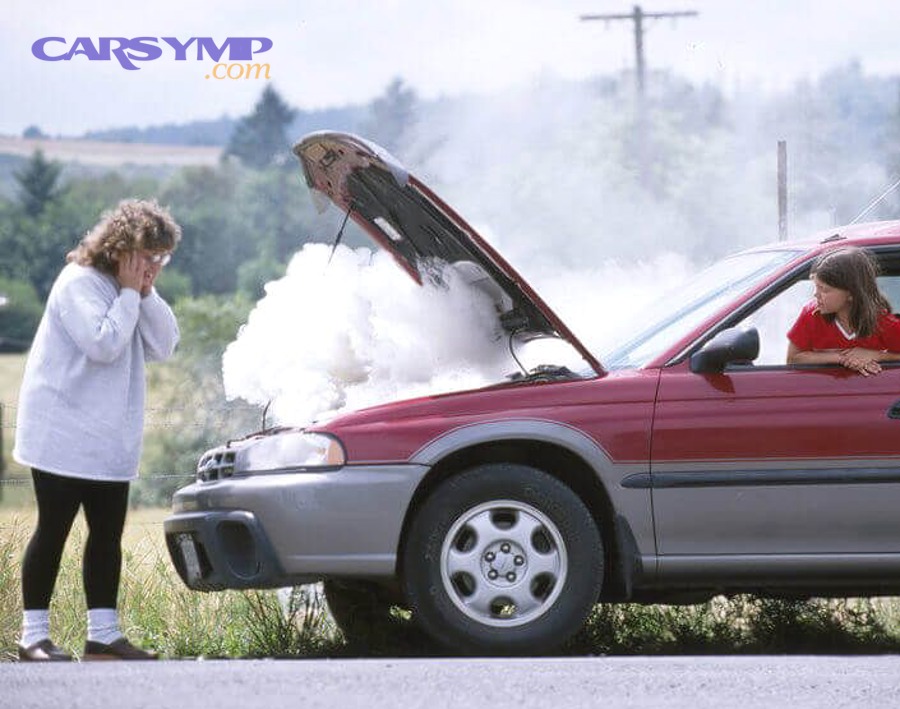
Next, watch the trend for 30–60 seconds: if the needle keeps climbing, or you see steam, warning lights, or a burning smell, signal and pull over safely as soon as possible.
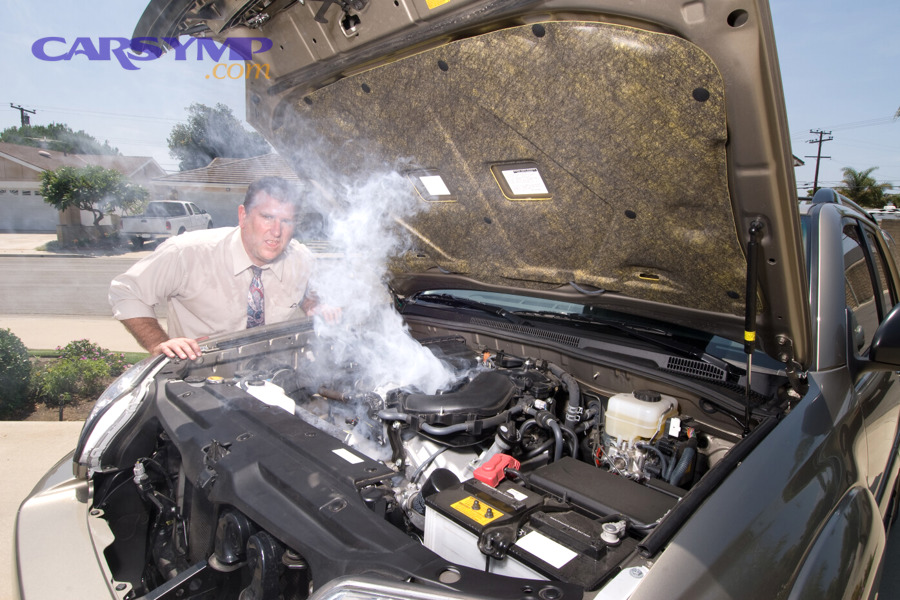
After you stop, keep the engine running only if the temperature is barely above normal and falling; otherwise, shut the engine off to stop heat generation, pop the hood (carefully), and let heat vent.
Do not open the radiator cap or coolant reservoir cap while hot—pressurized coolant can flash-boil and cause severe burns. Let the system cool until hoses are not hard and you can touch nearby metal without pain.
Once you’ve stabilized the situation, the next step is deciding whether you’re dealing with a simple cooling-capacity issue or a deeper fault.
What are the most common causes of car overheating?
There are 5 main causes of car overheating: low coolant, coolant not circulating, airflow/fan problems, radiator heat-transfer restrictions, and loss of system pressure.
After that, less-common causes include incorrect coolant mix, trapped air, blocked passages, a slipping drive belt, or internal engine issues that push hot gases into the cooling system.
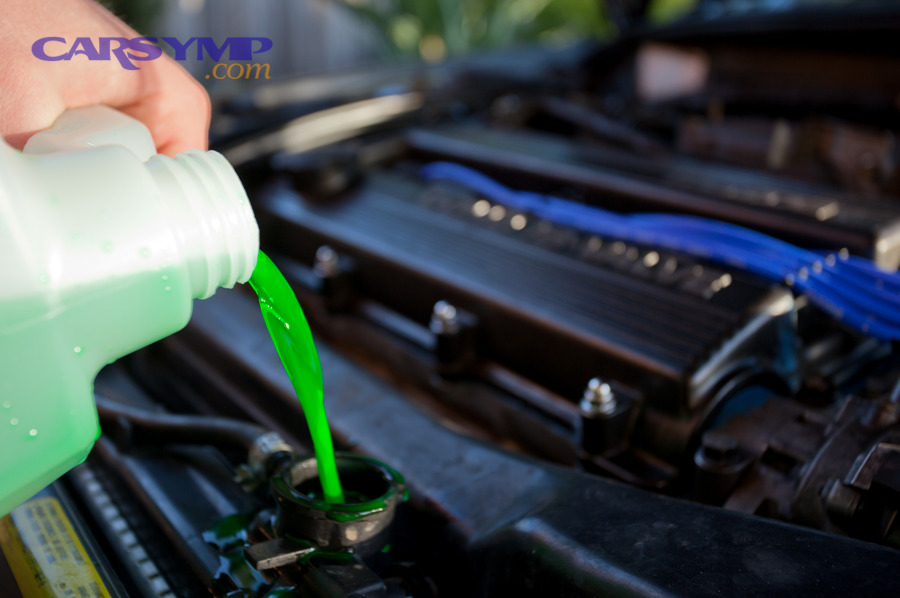
To keep diagnosis efficient, start with the failures that are both common and easy to confirm: coolant level, obvious leaks, and fan operation.
Then move to “circulation” checks (thermostat, water pump), followed by “heat exchange” checks (radiator condition, airflow paths), and finally “pressure integrity” checks (cap and pressure test).
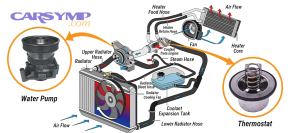
The key connection is this: the cooling system works as a loop—if any one link breaks, the entire loop can lose control of temperature.
To make that loop visible, a quick symptom-to-cause map helps before you grab tools.
This table helps you match your observations to the most likely subsystem so you can test in the right order instead of replacing parts at random.
| What you notice | Most likely subsystem | Fastest confirmation test |
|---|---|---|
| Temp rises quickly, heater blows cold | Low coolant / trapped air / circulation | Check coolant level in radiator (cold); bleed air if required |
| Overheats mostly in traffic, improves at speed | Airflow / fan control | Verify fan(s) run when hot; check fan relay/fuse |
| Overheats at speed, not just at idle | Radiator restriction / pressure loss / circulation | Scan for cold spots on radiator; pressure test cap/system |
| Coolant pushed out, bubbles in reservoir | Pressure integrity / combustion-gas intrusion | Block test (CO₂), pressure test, inspect for mixing |
| Intermittent spikes, then drops | Thermostat sticking / air pocket / sensor | Monitor live coolant temp; compare with gauge behavior |
How can you check coolant level and spot a coolant leak safely?
You can check coolant level safely only when the system is cold, because opening a hot cap can release pressurized boiling coolant.
To start, wait until the engine is fully cool, then check the overflow reservoir level against the “MIN/MAX” marks and also verify the radiator is full (if your vehicle has a radiator cap).
Next, look for visible leakage paths: wet hose ends, crusty white/green residue at clamps, staining around the radiator tanks, or drips at the water pump weep hole area.
For a more confident diagnosis, do a pressure test: pressurize the cooling system to cap rating and inspect for seepage—small leaks often appear only under pressure.
In real-world driving, coolant leak symptoms can be subtle: a sweet smell after shutdown, fogging on the inside of windows (heater core), or a reservoir level that slowly drops over days.
And because leaks can be intermittent, check after a full warm-up cycle, then again after cooldown—some leaks show only as the system contracts.
To connect this to overheating behavior, low coolant creates two problems at once: less heat capacity and trapped air, which can prevent the thermostat or sensor from seeing true coolant flow.
Can a stuck thermostat cause overheating—and how do you confirm it?
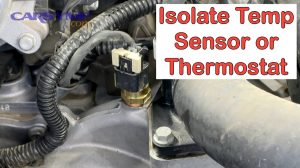
Yes—a thermostat stuck closed (or only partially opening) can cause rapid overheating because coolant can’t flow to the radiator to shed heat.
To begin testing, warm the engine from cold and feel the upper radiator hose: it should stay cooler at first, then suddenly get hot when the thermostat opens.
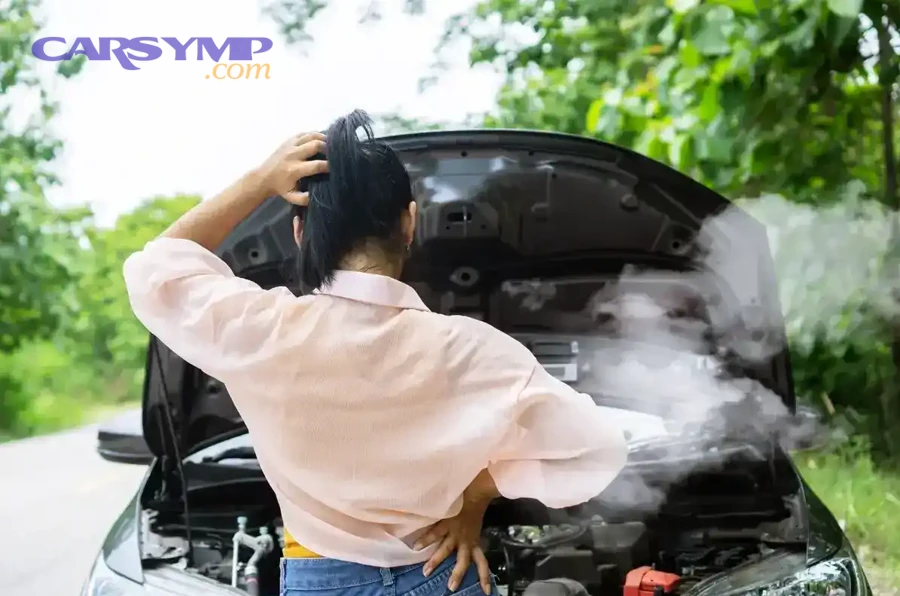
If the gauge climbs toward hot while the upper hose stays relatively cool, that’s a strong clue the thermostat isn’t opening or coolant isn’t circulating.
However, don’t stop there—low coolant and air pockets can mimic thermostat stuck symptoms by preventing hot coolant from reaching the thermostat or the hose.
A stronger method is to read live data with an OBD scanner (if available): compare coolant temperature (ECT) to the dash gauge and to hose temperature behavior.
When replacement is needed, use the correct temperature rating for your vehicle and install the jiggle valve or bleed hole oriented correctly if specified, because improper bleeding can recreate overheating.
The next link in the chain is airflow: even with good circulation, you can still overheat if the radiator can’t reject heat to the air.
Is a cooling fan failure a common trigger for overheating in slow traffic?
Yes—if the radiator fan doesn’t run when coolant temperature rises, the car can overheat at low speeds because there’s not enough airflow through the radiator.
To start, let the engine warm until the fan should command on; verify the fan spins strongly, not weakly or intermittently, and confirm it cycles appropriately.
If the fan never turns on, check the simplest electrical items first: fuses, relays, fan connectors, and obvious wiring damage.
If the fan turns on only with A/C, that suggests the fan motor may be okay but the temperature-based control path (coolant temp sensor, fan module, relay control) may be failing.
In many vehicles, overheating at idle is the classic pattern for fan or airflow control issues, especially when ambient temperature is high or the condenser is heat-soaked.
Also watch for “silent airflow blockers”: debris between the A/C condenser and radiator, bent fins, or aftermarket lights/plates obstructing the grille.
Once the fan system checks out, the next step is ensuring the radiator itself can transfer heat and the system can hold pressure.
How do radiator restrictions and pressure loss lead to overheating?
Radiator restrictions and pressure loss cause overheating by reducing heat transfer and lowering the coolant’s effective boiling margin, which can create localized boiling and steam pockets.
To begin, inspect external fins for blockage (bugs, dirt, leaves), then check internal flow by scanning the radiator surface for cold spots after warm-up.
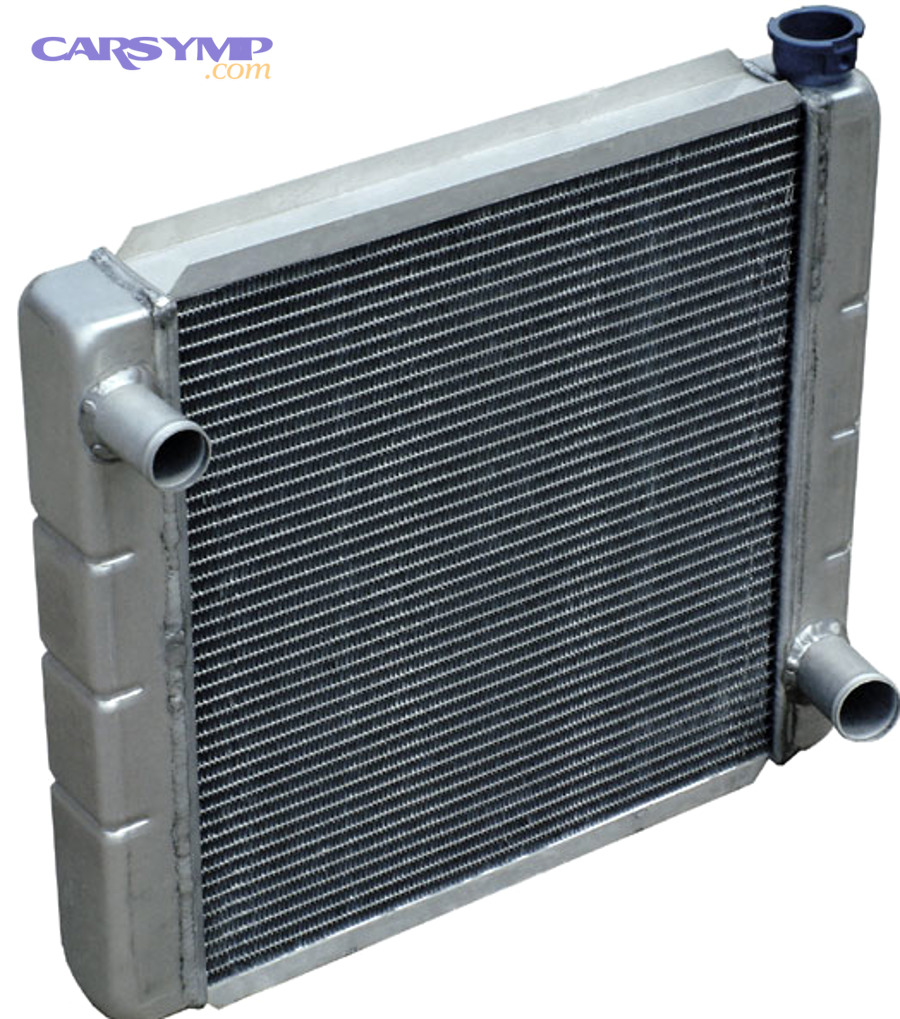
A radiator with internal clogging may feel uneven—some areas hot, others cool—because coolant can’t flow evenly through the core.
Pressure matters just as much as flow: the radiator cap is a calibrated valve that raises system pressure, which raises boiling temperature and helps prevent boil-over.
According to radiator problems symptoms, you may notice repeated coolant loss from the overflow, a soft cap seal, or coolant smell without obvious dripping—often pointing toward a cap that can’t hold pressure.
The cap itself is easy to overlook, so include it in any pressure test routine; a failing cap can mimic more expensive faults by letting coolant boil earlier and vent out.
The pressure principle is well-established in automotive engineering: Theo nghiên cứu của SAE International từ SAE Technical Papers, vào 03/1943, sealed pressure cooling was documented as a method that increases boiling temperature as system pressure increases.
Once you’ve confirmed airflow and pressure integrity, you move to circulation hardware—especially the pump that physically moves coolant.
What water pump and belt clues suggest circulation is failing?
Water pump or belt problems can cause overheating because coolant flow drops, so heat stays trapped in the engine instead of reaching the radiator.
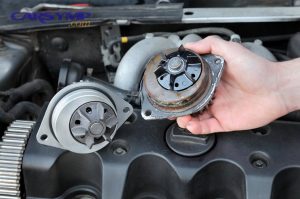
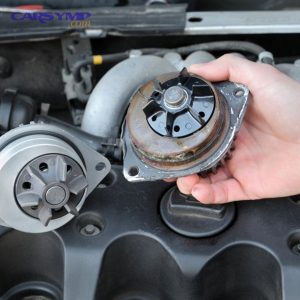
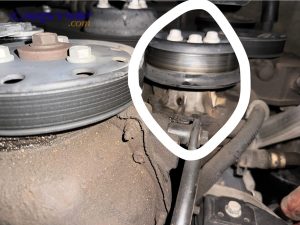
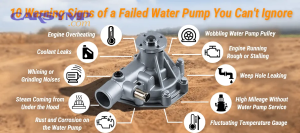
To start, listen for bearing noise, inspect for wobble at the pulley, and look for coolant traces near the pump area that suggest seepage from the weep hole.
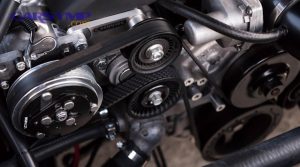
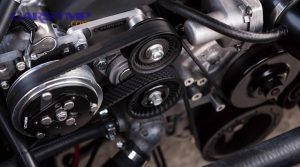
Next, check the drive belt condition and tension (if belt-driven): glazing, cracking, contamination from oil/coolant, or looseness can reduce pump speed under load.
In many designs, the impeller can corrode or loosen, so the pump may spin but not move enough coolant—this is why symptoms can be worse at higher load or sustained speeds.
water pump failure symptoms often include a temperature that rises under acceleration, heater performance that fluctuates, or coolant movement in the neck that looks weak even after the thermostat opens.
To confirm flow, some vehicles allow visual inspection at the radiator neck (cap off, cold start, then warm until thermostat opens) where you should see a clear increase in coolant movement.
If flow and pressure look normal but overheating persists, it’s time to consider the “gas intrusion” scenarios that can push coolant out and create bubbles.
When do bubbles, coolant push-out, or sweet exhaust point to internal engine issues?
Bubbles and repeated coolant push-out can indicate combustion gases entering the cooling system, which over-pressurizes the system and drives coolant out before normal boiling happens.
To begin, look for continuous bubbling in the reservoir during warm idle, unexplained coolant loss with no external leak, or a hard upper hose shortly after startup.

bubbling coolant reservoir behavior matters most when it appears early and continuously, not just as a few small bubbles right after a refill (which can be normal air purging).
Also check oil and coolant condition: milky oil, oily sheen in coolant, or sludge under the cap are warning signs—but note that not all head gasket problems mix fluids; some leak only gas.
A chemical block test (CO₂ test) is a strong confirmation step; combine it with a pressure test and a look for coolant in cylinders if misfires occur after overnight parking.
heater not working alongside overheating can also appear here, because gas pockets or low coolant can prevent heater core flow—so don’t treat “no heat” as only a cabin comfort issue.
Even if internal issues aren’t confirmed, there’s one more pattern to interpret: overheating that appears only in certain driving conditions.
Why can overheating show up only in certain driving conditions?
Overheating that happens only in specific conditions usually means one subsystem is barely meeting demand until a particular load profile exposes the weakness.
To start, separate the two classic patterns: overheating on highway often points to flow, restriction, or pressure issues, while overheating at idle commonly points to fan/airflow control.

On the highway, engine heat production is high and sustained, so a partially clogged radiator, slipping belt, weak pump, or cap that can’t hold pressure may finally show itself.
At idle, the radiator depends heavily on fans; if the fan relay, resistor/module, or temperature command fails, temperature creeps up while sitting, then recovers once the car moves and airflow increases.
Also consider heat stacking: A/C use adds heat in front of the radiator via the condenser, so borderline systems can tip into overheating sooner.
Finally, interpret warning indicators carefully: the low coolant warning light may arrive late in some vehicles, so a “no warning” situation does not guarantee coolant level is safe.
Once you can match your pattern to a subsystem, you’re ready to move from diagnosis to prevention—so the same overheating problem doesn’t return next week.
How do you prevent repeat overheating and protect the engine long-term?
You prevent repeat overheating by maintaining coolant quality, preserving system pressure, keeping airflow paths clear, and eliminating trapped air after any service.
To begin, use the correct coolant type and mixture for your vehicle, replace weak caps and aging hoses proactively, and follow service intervals that include flushing only when recommended.
How do you choose the right coolant mix without guessing?
The safest approach is to use the manufacturer-specified coolant type and a measured mix, because incorrect chemistry can accelerate corrosion while incorrect concentration can reduce heat transfer.
To connect this to real outcomes, verify freeze/boil protection with a tester rather than assuming a “good color” means a good mixture.
Also remember that pressure and mixture work together: a healthy cap plus a proper mix creates a wider safety margin before boiling and steam pockets begin.
How do you bleed air properly after refilling coolant?
Bleeding air is critical because air pockets can stop circulation, cause false temperature readings, and recreate the same overheating you were trying to fix.
To begin, follow the vehicle-specific bleed procedure (bleeder screws, funnel tool, heater on full hot), then confirm stable temperature and consistent heater output during a complete warm-up cycle.
After that, recheck the level the next morning when fully cold; a small drop can be normal as the last trapped air escapes into the reservoir.
What simple maintenance habits keep airflow and heat exchange efficient?
Airflow efficiency comes from clean fins, clear ducts, and unobstructed grille openings, so even small habits can make a meaningful difference in hot climates.
To begin, gently clean debris from the radiator/condenser face, avoid bending fins, and ensure any aftermarket accessories don’t block the front-end airflow path.
Additionally, watch for “hidden blockage” between condenser and radiator—this trapped layer can behave like insulation and reduce cooling capacity significantly.
What signs mean you should stop driving immediately next time?
You should stop driving immediately if you see steam, smell burning coolant, notice the gauge pegged hot, or the temperature rises rapidly despite turning off A/C and turning on heat.
To connect that back to engine protection, continuing to drive in these conditions can quickly escalate damage beyond the original fault, turning a small leak into warped components or seal failure.
Car Symptoms to treat as “stop now” also include repeated coolant venting from the reservoir and sudden loss of cabin heat during a temperature spike.
FAQ: Common questions drivers ask about engine overheating
Can you drive a short distance with a mildly overheating engine?
Sometimes, but only if temperature is barely above normal and falling after reducing load—otherwise, driving risks rapid escalation because the underlying cooling failure is still active.
To be safer, use the “trend rule”: if the gauge continues climbing, pull over; if it stabilizes and drops, you may limp to a safe stop, not a long trip.
Why does turning on the heater help when a car overheats?
Turning on the heater helps because the heater core acts like a small radiator, pulling heat from coolant and dumping it into the cabin air stream.
To connect this to diagnosis, if the heater stays cold during overheating, that often suggests low coolant, trapped air, or circulation problems.
Does adding coolant fix overheating permanently?
No—adding coolant can temporarily restore heat capacity, but if coolant was low, the root cause is usually a leak, pressure loss, or improper bleeding that must be corrected.
To avoid repeat overheating, verify level again after a full heat cycle and perform a pressure test if the level drops.
What’s the single most common root cause to check first?
Low coolant is the most common starting point because it can come from slow leaks, cap venting, or poor bleeding, and it quickly creates air pockets that break circulation.
To begin, confirm radiator-full (cold), reservoir level, and visible leak traces before replacing expensive parts.