


radiator fan repair labor time typically ranges from 1 to 2.5 hours for most vehicles, though some models require up to 3 or even 4 hours when additional components must be removed for access. Understanding this labor time estimate is essential because it directly determines how much a shop will charge you — and whether the total bill lands closer to $150 or $500 in labor alone.
Beyond the raw hour count, the labor cost in dollars depends on your shop’s hourly rate. Independent mechanics generally charge between $80 and $150 per hour, while dealerships often bill $150 to $200 or more. A job booked at 2 hours of labor at a $120/hour shop produces a very different invoice than the same 2 hours at a $200/hour dealership.
Several variables push radiator fan repair labor time higher or lower. Vehicle make and model, the type of fan system (electric vs. mechanical), whether the car has a single fan or dual fans, and the need to remove surrounding components all play a role. Even two sedans from the same manufacturer can have noticeably different labor estimates depending on engine bay layout.
Besides professional shop labor, many car owners weigh the option of tackling the replacement themselves. A DIY approach eliminates labor fees entirely but introduces its own time commitment and risks. Below, this guide breaks down every factor that affects radiator fan repair labor time so you can budget accurately and make the right decision for your situation.
What Is Radiator Fan Repair Labor Time?
Radiator fan repair labor time is the number of billable hours a mechanic or shop charges to diagnose and replace a faulty cooling fan assembly, motor, or related component. This figure originates from industry-standard flat-rate labor guides and serves as the foundation for calculating your total labor bill.
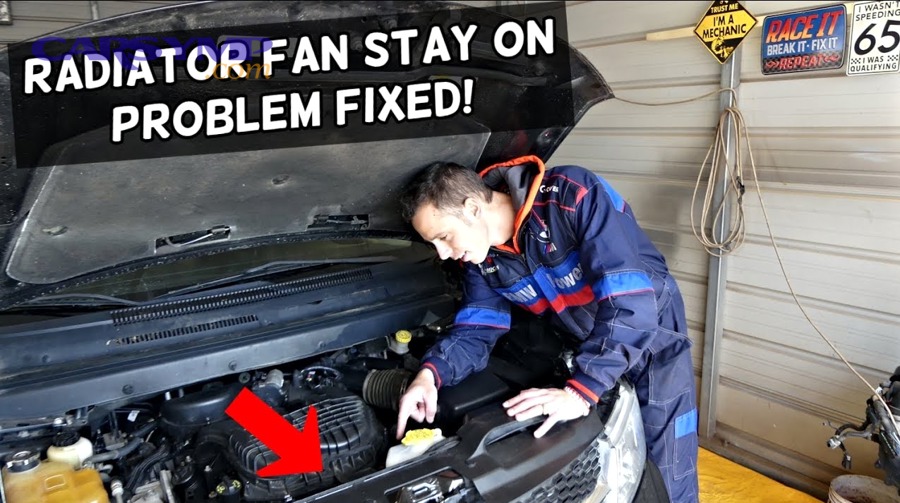
To better understand how this number affects your wallet, it helps to know where these estimates come from and what they actually include.
How Is Radiator Fan Labor Time Calculated by Mechanics?
Shops do not typically charge you for the exact minutes a technician spends under the hood. Instead, they rely on flat-rate labor guides published by companies such as Mitchell, AllData, and Chilton. These guides assign a specific number of hours to every repair procedure for every vehicle year, make, and model. When a shop looks up “radiator fan assembly replacement” for a 2018 Honda Accord, for example, the guide might return a value of 1.5 hours. That is the number the shop bills — regardless of whether the technician finishes in 50 minutes or takes the full 90.
This flat-rate system benefits experienced technicians who work efficiently, but it also protects consumers from being billed for slow or inefficient work. The published “book time” reflects the average time a competent professional needs to complete the job under normal conditions. If complications arise — corroded bolts, broken clips, or wiring issues — a shop may add diagnostic or supplemental time, but the base labor quote starts with these guide values.
Does Labor Time Include Diagnosis or Only the Replacement?
No, standard labor time for radiator fan replacement typically does not include diagnostic time. Diagnosis and replacement are billed as separate line items in most shops. A diagnostic fee usually covers 0.5 to 1.5 hours of a technician’s time to pinpoint the exact cause of the cooling fan failure — whether it is a burned-out motor, a blown relay, a faulty temperature sensor, or a wiring fault.
Specifically, the diagnostic process involves testing the fan motor with external power, checking fuses and relays, inspecting wiring harnesses, and verifying that temperature sensors are sending the correct signal. Once the technician confirms which component has failed, the actual replacement labor begins. Some shops will waive or credit the diagnostic fee toward the repair if you authorize the work, but this practice varies. Always ask whether the quoted labor hours include or exclude diagnostic time before approving a repair order.
How Many Labor Hours Does Radiator Fan Replacement Take?
There are three general labor time brackets for radiator fan replacement: quick jobs under 1.5 hours, average jobs in the 1.5 to 2.5 hour range, and complex jobs exceeding 2.5 hours, based on vehicle design and accessibility.
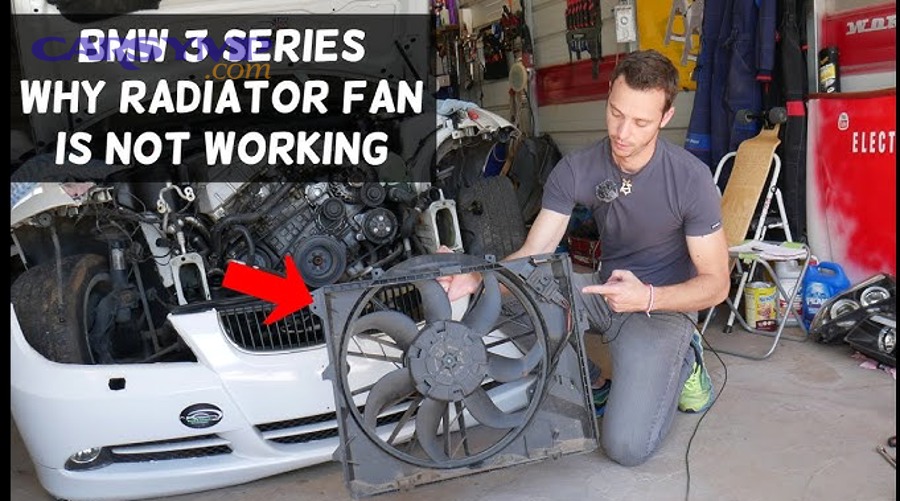
However, these numbers shift meaningfully depending on the specific vehicle. Let’s explore the estimated labor hours for some of the most common cars on the road.
What Is the Average Labor Time for Common Vehicle Models?
The following table shows estimated flat-rate labor hours for radiator fan assembly replacement across several popular vehicle models. These figures are drawn from repair industry sources and represent the book time most shops use when quoting the job.
| Vehicle Model | Estimated Labor Time (Hours) | Complexity Notes |
|---|---|---|
| 2005 Toyota Camry (2.4L) | 1.8 | Good engine bay access; straightforward removal |
| 2009 Chrysler PT Cruiser | 2.2 | Tighter engine compartment; slightly more involved |
| 2015 Honda Civic | 1.5 – 2.0 | Electric fan with accessible mounting bolts |
| 2018 Ford F-150 (mechanical fan) | 1.0 – 1.5 | Belt-driven fan clutch; simpler removal with correct tools |
| 2016 Hyundai Elantra | 1.0 – 1.5 | Compact electric fan; relatively easy access |
| 2013 BMW X5 | 2.5 – 3.5 | May require partial front-end disassembly; integrated shroud |
| 2017 Chevrolet Equinox | 2.0 – 2.5 | Dual-fan setup; additional disconnections needed |
As the table illustrates, labor time can differ by more than double between a straightforward truck fan clutch replacement and a European luxury vehicle with an integrated fan shroud assembly. According to data published by RepairPal, labor costs for a radiator fan assembly replacement average between $251 and $368 nationally, which reflects approximately 1.5 to 2.5 hours at typical shop rates.
Does Replacing a Fan Motor Take Less Time Than a Full Fan Assembly?
Yes, replacing only the fan motor generally takes less labor time than swapping the entire fan assembly — but not always by a significant margin. In many modern vehicles, the fan motor is integrated into the assembly (motor, blades, shroud, and mounting frame sold as one unit), which means the removal process is essentially the same either way.
On the other hand, when the motor can be separated from the assembly, a technician removes the entire unit, disassembles it on the bench, swaps the motor, and reinstalls. This bench work adds a small amount of time but avoids the cost of a full assembly. RepairPal estimates labor for a motor-only replacement at $198 to $291, compared to $251 to $368 for a full assembly replacement. The difference reflects roughly 0.5 fewer labor hours in some cases. More importantly, the decision between motor-only and full assembly replacement often depends on parts availability and whether the shroud or blades show wear. When to replace fan shroud assembly is a judgment call your mechanic should explain — if the shroud is cracked or warped from heat, replacing only the motor risks a repeat failure.
How Much Does Radiator Fan Repair Labor Cost?
Radiator fan repair labor cost ranges from approximately $80 to $440, calculated by multiplying the flat-rate labor hours (1 to 2.5 hours on average) by your shop’s hourly rate ($80 to $200 per hour).
To illustrate how these numbers work in practice, let’s break down the shop rates and compare different service environments.
What Is the Typical Shop Labor Rate for Radiator Fan Repair?
Shop labor rates for automotive cooling system work vary widely depending on geography, shop type, and specialization. Independent general repair shops in smaller markets may charge as little as $80 per hour, while shops in major metropolitan areas frequently bill $130 to $160 per hour. Dealerships and European-vehicle specialists often set rates between $150 and $200 or even higher.
For example, a radiator fan repair that takes 2 hours at an independent shop charging $100/hour produces a $200 labor bill. The same 2-hour job at a dealership charging $180/hour results in $360 — an 80% increase for identical work. Additionally, many chain shops like Midas or Pep Boys apply a “shop fee” or “environmental fee” of 5% to 20% on top of the labor total, which can add another $10 to $50 to your invoice. Always request an itemized estimate that separates parts, labor hours, labor rate, and any additional fees before authorizing the repair.
Is the Labor Cost Different at a Dealership vs. an Independent Shop?
Yes, dealership labor costs for radiator fan replacement are typically 30% to 60% higher than independent shop rates for the same job. Dealerships justify higher rates through factory-trained technicians, OEM parts access, and warranty-backed repairs. Independent shops counter with lower overhead, competitive hourly rates, and willingness to install quality aftermarket parts.
Meanwhile, mobile mechanics represent a third option. Services that send technicians to your home or workplace often charge rates comparable to independent shops ($80 to $130/hour) while saving you the inconvenience of dropping off the car. The trade-off is that mobile mechanics may have limited access to specialized diagnostic equipment. For a radiator fan repair, which rarely requires advanced diagnostics beyond multimeter testing, a mobile mechanic can be a practical and cost-effective choice.
What Factors Affect Radiator Fan Repair Labor Time?
There are five primary factors that affect radiator fan repair labor time: vehicle make and model, fan type (electric vs. mechanical), single vs. dual fan configuration, component accessibility, and whether additional parts must be removed for access.
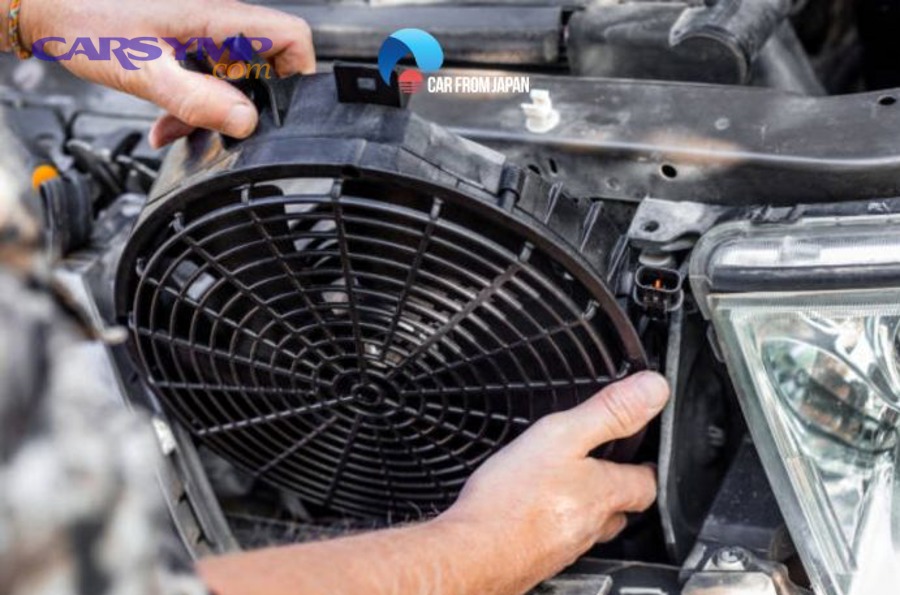
Let’s explore each of these factors to understand why two seemingly similar vehicles can produce very different labor estimates.
Does Vehicle Make and Model Change the Labor Time?
Yes, vehicle make and model is the single largest variable in radiator fan repair labor time. The design of the engine bay — how much space exists around the radiator, where surrounding components are positioned, and how the fan assembly is mounted — determines whether the job is a 45-minute swap or a 3-hour project.
For instance, many full-size pickup trucks with longitudinally mounted engines offer generous clearance around the radiator, allowing a technician to unbolt the fan shroud and pull the assembly straight up. Compact cars with transversely mounted engines and tightly packed engine bays often require removing air intake ducting, coolant overflow reservoirs, or upper radiator supports to create enough space. European luxury vehicles like BMW, Mercedes-Benz, and Audi frequently integrate the fan assembly with additional sensors and electronic modules, adding complexity and time. Some models even require partial removal of the front bumper or grille to access the fan mounting hardware.
Is Labor Time Longer for Mechanical Fan Clutch vs. Electric Fan Replacement?
No, mechanical fan clutch replacement generally takes less labor time than electric fan replacement in most applications. A mechanical fan is bolted directly to the water pump pulley and driven by the serpentine belt. With the correct fan clutch wrench and belt tensioner tool, a technician can remove the old clutch and install the new one in under an hour on most trucks and older rear-wheel-drive vehicles.
On the other hand, electric fan replacement involves disconnecting wiring harnesses, unbolting the fan assembly from the radiator frame, and carefully maneuvering the unit out of a potentially cramped engine bay. If the vehicle has a fan shroud that wraps around the radiator, the technician may need to remove or reposition coolant hoses to extract the assembly. The electrical connections also require testing to confirm the new fan operates correctly with the vehicle’s temperature sensors and relay circuits. This additional verification step adds to the total labor time.
Does Replacing Dual Fans Take More Labor Hours Than a Single Fan?
Yes, vehicles equipped with dual cooling fans — one for the radiator and one for the air conditioning condenser — typically require additional labor time compared to single-fan systems. In some configurations, both fans share a common shroud and are sold as a single assembly, which means the removal process is similar to a single-fan setup but the assembly itself is larger and heavier.
In other designs, the two fans are independently mounted and have separate electrical connectors. Replacing both fans in this configuration essentially doubles the disconnection and reinstallation work. Even when only one of the two fans has failed, the technician may still need to remove or reposition the functioning fan to access the faulty one. This is particularly relevant for AC performance impact of fan repairs — if the condenser fan fails, the air conditioning system loses its ability to shed heat at low speeds, causing high-side pressures to spike and cooling capacity to drop dramatically.
Is It Worth Paying a Mechanic or Should You DIY Radiator Fan Replacement?
Yes, paying a professional mechanic is worth it for most vehicle owners, but experienced DIYers with basic tools can save $150 to $400 in labor costs by performing the replacement themselves.
To better understand which path makes sense for your situation, consider the time commitment, tools required, and potential risks involved in each approach.
How Long Does a DIY Radiator Fan Replacement Take?
A DIY radiator fan replacement typically takes between 1.5 and 4 hours for someone with moderate mechanical experience. The wide range reflects differences in vehicle accessibility, prior experience with the specific car, and whether complications arise during the job.
The basic procedure involves disconnecting the battery, unplugging the fan’s electrical connector, removing the mounting bolts or clips that secure the fan assembly to the radiator, lifting the old assembly out, and installing the new one in reverse order. Essential tools include a socket and ratchet set (metric for most imports, SAE for many domestic vehicles), pliers for hose clamps if coolant hoses are in the way, and a basic multimeter to verify electrical connections. First-timers should add extra time for referencing repair manuals or video tutorials. The job itself is classified as an intermediate-level DIY repair — more involved than changing spark plugs but simpler than replacing a timing belt.
What Are the Risks of Replacing a Radiator Fan Yourself?
There are four main risks associated with a DIY radiator fan replacement: personal injury from a hot engine or moving parts, misdiagnosis of the actual failed component, improper installation that causes a repeat failure, and potential damage to surrounding components.
More specifically, the cooling system retains dangerous levels of heat for an extended period after the engine is shut off. Attempting radiator fan repair before the engine has fully cooled risks burns from hot coolant, radiator surfaces, and exhaust components. Beyond safety, the most costly DIY mistake is misdiagnosis. A fan that does not turn on could be caused by a $15 blown fuse, a $60 faulty relay, a wiring fault, or a failed temperature sensor — none of which require replacing the fan itself. Installing a new $200 fan assembly when the actual problem is a $15 relay wastes both money and time. If you are not comfortable testing relays, fuses, and wiring with a multimeter, the diagnostic portion of the job is best left to a professional, even if you plan to perform the physical replacement yourself.
How Can You Reduce Total Radiator Fan Repair Cost Beyond Labor Time?
You can reduce total radiator fan repair cost through three primary strategies: choosing the right parts, bundling related cooling system work, and understanding how diagnostic time affects your final bill.
Besides labor hours, the parts you select and the way you schedule the repair create meaningful opportunities to save money without compromising quality.
Does Choosing Aftermarket Parts Over OEM Reduce Overall Repair Cost?
Yes, selecting a quality aftermarket fan assembly over an OEM unit can reduce parts cost by 50% to 80% in many cases. An OEM radiator fan assembly typically costs between $400 and $775 depending on the vehicle, while reputable aftermarket alternatives range from $60 to $200 for the same application.
For example, an OEM fan assembly for a Chrysler PT Cruiser is priced around $440, while an aftermarket replacement from a reputable brand through suppliers like RockAuto can cost as little as $66. The key distinction is between “direct-fit aftermarket” parts — which match the OEM bolt pattern, connector, and specifications — and “universal” fans that require modification to install. Universal fans may lack proper mounting holes and can add labor time for fabrication. Always confirm with your mechanic that the aftermarket part is a direct-fit replacement before approving it. One important consideration: some shops offer labor warranties only when they source the parts. If you supply your own aftermarket fan, the shop may warranty the labor but not the part, leaving you responsible for a second labor charge if the fan fails prematurely.
Can You Save on Labor by Bundling Radiator Fan Repair With Other Cooling System Work?
Yes, bundling overlapping repairs can eliminate duplicated labor and reduce your total bill. If your vehicle already needs a thermostat replacement, coolant flush, radiator hose replacement, or radiator service, combining these jobs with the fan replacement means the technician only needs to access the engine bay and cooling system once.
Specifically, many cooling system repairs require draining the coolant and removing components that are in the same area as the fan assembly. If the radiator fan is already out, replacing aging coolant hoses or a thermostat adds minimal extra time — often just 15 to 30 minutes on top of the existing labor. Without bundling, each of those jobs individually includes its own setup, drainage, and reassembly time. This is especially valuable on vehicles where accessing the fan requires removing the upper radiator support or front-end components, as these removal steps overlap with radiator and hose replacement procedures.
How Much Extra Labor Time Does Diagnosing an Intermittent Fan Failure Add?
Diagnosing an intermittent radiator fan failure typically adds 0.5 to 1.5 hours of labor time to the overall repair bill, billed separately from the replacement labor.
Intermittent failures are among the most frustrating cooling system problems because the fan may work correctly during initial testing, only to fail unpredictably in traffic. The technician needs to test the fan relay, check for voltage drops in the wiring harness, verify the coolant temperature sensor output, and in some cases monitor the fan control module with a scan tool. Each of these tests takes time, and the intermittent nature of the problem may require extended monitoring. On modern vehicles with electronically controlled fan speeds, the powertrain control module (PCM) or a dedicated fan control module governs when the fan runs and at what speed. A faulty module can cause symptoms that mimic a bad fan motor, and replacing the wrong component wastes both parts and labor. Insisting on a thorough diagnosis before authorizing a fan motor or assembly replacement is the most cost-effective approach — even if the diagnostic fee feels like an added expense.
Is Warranty Labor Time Different From Customer-Pay Labor Time for Radiator Fan Repair?
Yes, warranty labor time is often lower than customer-pay labor time for the same radiator fan replacement procedure. Manufacturers negotiate flat-rate labor times with their dealer networks for warranty-covered repairs, and these negotiated times are frequently 10% to 25% shorter than the times published in aftermarket labor guides used for customer-pay work.
For vehicle owners, this distinction matters in two scenarios. First, if your car is still under the manufacturer’s powertrain warranty or an extended warranty, the cooling fan replacement may be covered at no cost to you. Second, if you are comparing a dealer’s warranty-covered labor quote to an independent shop’s customer-pay quote, the dealer’s lower hour count does not necessarily mean the job is faster — it reflects a different billing structure. Always check your warranty coverage before paying out of pocket for radiator fan repair. Some extended warranties and third-party vehicle service contracts cover the cooling fan as part of the electrical system, even if the basic powertrain warranty has expired.