


Your fan shroud assembly is one of the most overlooked components in your vehicle’s cooling system — yet it is responsible for directing up to half of the airflow that keeps your engine from overheating. When this part cracks, warps, or breaks, the warning signs are unmistakable if you know what to look for. The five most common indicators include unusual rattling or flapping noises under the hood, visible cracks or physical damage on the shroud, engine overheating at idle or in slow traffic, reduced air conditioning performance, and fan blades visibly making contact with the shroud housing.
Ignoring these symptoms creates a dangerous chain reaction. A failing fan shroud assembly allows air to disperse in every direction under the hood instead of flowing efficiently through the radiator and A/C condenser. Over time, this reduced cooling capacity can escalate into sustained overheating, which in turn risks catastrophic engine damage — including a blown head gasket that costs far more to repair than a simple shroud replacement. Beyond mechanical consequences, a broken or missing shroud also exposes anyone working under the hood to the danger of spinning fan blades that can activate even with the ignition turned off.
For vehicle owners who want to handle this job themselves, replacing a fan shroud assembly is a moderately straightforward DIY task. The exact process depends on your vehicle’s make and model, but it generally involves disconnecting the fan, unbolting the shroud from the radiator, and lifting it out. With basic hand tools and a free afternoon, most drivers can complete the job in one to three hours.
However, replacement is not always the only path forward. In some situations — especially with classic or rare vehicles where OEM parts are no longer manufactured — repairing a damaged shroud through plastic welding techniques may be the smarter and more cost-effective choice. Below, let’s explore each warning sign in detail, understand the full consequences of inaction, walk through the replacement process, and examine when repair might be a better option than buying a new assembly.
What Is a Fan Shroud Assembly and Why Does It Matter for Engine Cooling?
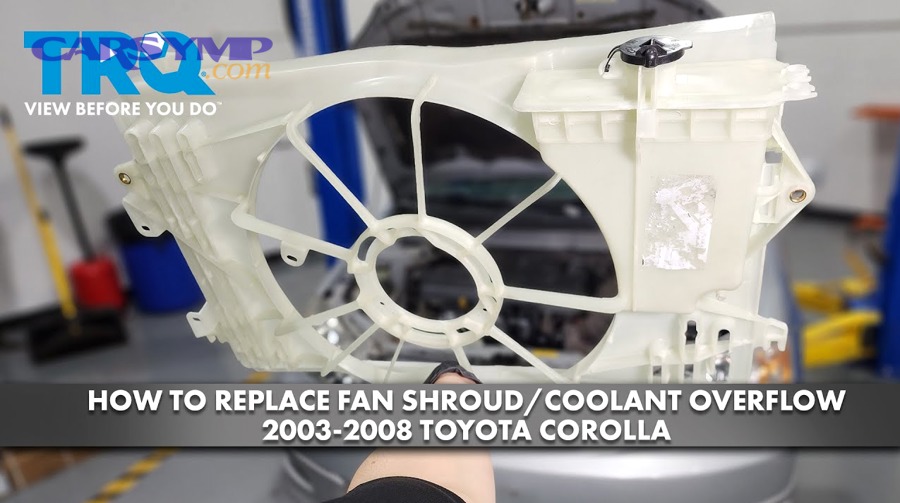
A fan shroud assembly is a plastic or composite housing mounted between the radiator and the engine cooling fan that channels airflow directly through the radiator core and A/C condenser. Originating as a standard component in virtually all modern vehicles, it stands out because it transforms scattered, inefficient airflow into concentrated cooling power — and without it, your engine loses roughly half its cooling effectiveness at idle.
To better understand why this single component matters so much, consider how the broader cooling system functions as an interconnected unit.
What Does a Fan Shroud Assembly Do in Your Vehicle’s Cooling System?
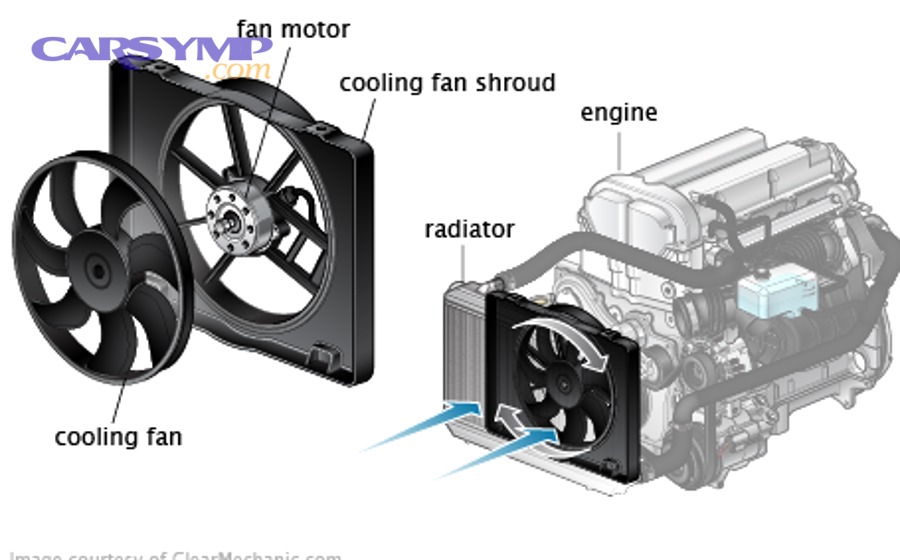
The fan shroud assembly acts as an aerodynamic funnel. When the cooling fan spins — whether driven mechanically by the engine or electrically by a dedicated motor — it pulls ambient air through the radiator fins. The shroud ensures that this air travels in one focused direction: straight through the radiator core and across the A/C condenser.
Without a shroud in place, the fan still spins, but the air it moves disperses in all directions under the hood. This scattered airflow dramatically reduces the radiator’s ability to shed heat from the engine coolant. The same principle applies to the air conditioning system: the condenser relies on directed airflow to release heat from the refrigerant passing through the condenser coils, and a missing or damaged shroud undermines this process. In this way, the fan shroud assembly serves as the critical link between the cooling fan, the radiator, and the A/C condenser — three components that form the heart of your vehicle’s thermal management system.
Specifically, the shroud creates a sealed channel so that every rotation of the fan blade translates into maximum heat exchange. This is the core meronymy relationship at play: the fan shroud assembly is one part of the larger cooling system whole, and when it fails, the entire system’s performance degrades.
Can Your Engine Overheat Because of a Damaged Fan Shroud?
Yes, a damaged fan shroud can directly cause your engine to overheat, primarily for three interconnected reasons. First, a cracked or broken shroud allows air to bypass the radiator entirely, reducing the volume of cool air passing through the radiator core. Second, without concentrated airflow, the coolant temperature climbs steadily during low-speed driving or idling — situations where the vehicle has no natural ram air from forward motion. Third, as coolant temperatures rise beyond the thermostat’s operating range, the engine enters a sustained overheating cycle that the compromised cooling system cannot correct on its own.
According to the service information provided by YourMechanic, a professional automotive repair network, the cooling fan is responsible for up to 50 percent of the engine’s cooling capacity. When the fan shroud is removed or damaged, that cooling capacity is effectively cut in half. For any driver concerned about radiator fan repair and Preventing fan failures before they escalate, understanding this relationship between the shroud and engine temperature is essential.
What Are the 5 Warning Signs That Your Fan Shroud Assembly Needs Replacement?
There are five main warning signs that indicate your fan shroud assembly needs replacement: audible rattling or flapping noises, visible cracks or physical damage, engine overheating at idle, reduced A/C performance, and fan blades contacting the shroud. These signs are based on the progressive stages of shroud deterioration — from early cosmetic damage to imminent mechanical failure.
Let’s explore each warning sign in detail so you can identify the problem early and act before costly engine damage occurs.
Is a Rattling or Flapping Noise from Under the Hood a Sign of Shroud Failure?
Yes, a rattling or flapping noise from under the hood is one of the earliest and most recognizable signs of fan shroud failure, for three key reasons. First, when the shroud develops cracks, loose sections vibrate against the fan blades or radiator frame as the engine runs. Second, this vibration often intensifies when the air conditioning kicks on because the cooling fan increases its speed. Third, the noise tends to worsen over time as the crack propagates and the loose piece moves more freely.
Many vehicle owners first notice this sound as a rhythmic tapping or intermittent flapping that comes and goes with fan speed. On forum discussions from real-world owners — such as those on ClubLexus — drivers report that what initially seemed like a minor A/C compressor rattle turned out to be a deteriorating fan shroud assembly. The noise occurs because a cracked shroud piece enters the fan blade’s rotational path, and the fan repeatedly clips the loose plastic with each revolution. While the sound alone may not seem urgent, it signals that physical contact is already occurring, which accelerates damage to both the shroud and the fan blades.
For example, one Lexus GS owner documented hearing a subtle rattling noise starting around 180,000 miles. The sound grew progressively louder over the following months until the fan assembly began shaking violently — a clear sign that the shroud had degraded well past the point of safe operation. This real-world experience illustrates why an unexplained noise under the hood should always prompt a visual inspection of the fan shroud assembly.
Does Visible Cracking or Physical Damage Mean the Shroud Must Be Replaced?
Yes, visible cracking or physical damage to the fan shroud means replacement is necessary, for three important reasons. First, cracks compromise the shroud’s structural integrity, meaning it can no longer create a proper seal around the fan and radiator. Second, broken pieces of plastic can break free and fall into the spinning fan blades, causing further mechanical damage. Third, cracks only grow larger over time due to engine vibration and thermal cycling — they never heal on their own.
Specifically, when inspecting your fan shroud, look for hairline cracks along the mounting points, holes caused by previous fan blade contact, warped or melted sections near heat sources, and any missing chunks of plastic. The mounting tabs that secure the shroud to the radiator are particularly vulnerable to cracking because they bear the load of the entire assembly while absorbing constant engine vibration.
A comprehensive Radiator fan replacement overview should always begin with a thorough visual inspection. Even a small crack that seems insignificant today will expand under the stress of daily driving, and once a piece breaks free and contacts the fan, the resulting damage can extend to the fan motor, the radiator fins, and even nearby coolant hoses.
Is Engine Overheating at Idle or in Traffic a Symptom of Fan Shroud Failure?
Yes, engine overheating specifically at idle or in slow-moving traffic is a hallmark symptom of fan shroud failure, and here are three reasons why. First, when your vehicle is stationary, there is no natural airflow from forward motion — the cooling fan and shroud are entirely responsible for pulling air through the radiator. Second, a damaged shroud allows the fan to move air inefficiently, so coolant temperatures rise faster than the system can dissipate heat. Third, this symptom often appears before highway overheating because higher speeds provide supplemental ram air that partially compensates for a broken shroud.
However, it is important to distinguish shroud-related overheating from other potential causes. A stuck thermostat, low coolant levels, or a failed water pump can produce similar symptoms. The key differentiator is the pattern: if your engine temperature climbs steadily when stopped at traffic lights or idling in a parking lot but returns to normal once you begin driving at speed, the fan shroud assembly — along with the cooling fan itself — should be among the first components you inspect.
More importantly, this symptom represents a more advanced stage of failure compared to noise alone. By the time the engine is overheating at idle, the shroud’s ability to direct airflow has already been significantly compromised. Continuing to drive under these conditions risks warping the cylinder head, damaging head gaskets, or cracking the engine block.
Can Reduced Air Conditioning Performance Indicate a Bad Fan Shroud?
Yes, reduced air conditioning performance can indicate a bad fan shroud, and there are three reasons this connection exists. First, the A/C condenser sits directly in front of the radiator, and it depends on the same directed airflow that the fan shroud provides. Second, when the shroud is damaged, dispersed airflow fails to adequately cool the refrigerant passing through the condenser coils. Third, this reduction in cooling efficiency is most noticeable during idle or low-speed driving — the same conditions where the fan shroud is most critical.
For example, you might notice that your air conditioning blows cold when cruising on the highway but gradually warms up when you sit in traffic or at a drive-through. This pattern mirrors the overheating symptom described above, and for the same reason: without forward vehicle motion, the damaged shroud cannot maintain sufficient airflow across both the condenser and the radiator.
This is a frequently overlooked warning sign because most drivers attribute weak A/C performance to refrigerant levels or compressor issues. In reality, the fan shroud assembly plays a direct role in A/C system efficiency, and a cracked or warped shroud can silently degrade cabin cooling performance long before it causes visible engine overheating.
Should You Replace the Shroud if Fan Blades Are Visibly Contacting It?
Yes, you should replace the fan shroud immediately if fan blades are visibly contacting it, and here are three critical reasons. First, blade-to-shroud contact means the shroud has either shifted out of alignment, warped from heat exposure, or cracked inward toward the fan’s rotational path. Second, continued contact will progressively chip and weaken the fan blades themselves, which can lead to an unbalanced fan that vibrates excessively and damages the fan motor bearings. Third, if a large piece of the shroud breaks free during operation, it can jam the fan entirely, potentially snapping the blades and sending debris into the radiator core.
This warning sign represents the most urgent of the five because mechanical contact is already occurring. Unlike a hairline crack or a subtle noise, blade contact means active damage is happening with every engine cycle. The longer you wait, the more components you will need to replace — transforming a simple shroud swap into a full cooling fan assembly replacement that includes the motor, blades, and shroud together.
To illustrate, the DIY guide on DoItYourself.com emphasizes that one of the biggest problems with a cracked shroud is the fan repeatedly tapping the damaged section. While it may start as an annoyance, this contact inevitably escalates until the shroud fragment either breaks off or destroys the fan blades.
What Happens if You Don’t Replace a Failing Fan Shroud Assembly?
The consequences of ignoring a failing fan shroud assembly range from gradual engine overheating to catastrophic mechanical failure and personal safety hazards. This component may seem minor relative to the engine or transmission, but its failure triggers a cascade of increasingly expensive problems.
More specifically, understanding the downstream risks helps explain why preventing fan failures through timely shroud replacement is one of the most cost-effective maintenance decisions a vehicle owner can make.
Can a Broken Fan Shroud Cause a Blown Head Gasket?
Yes, a broken fan shroud can ultimately lead to a blown head gasket, and three factors explain why. First, a failed shroud reduces cooling efficiency by up to 50 percent at idle, causing the engine to run consistently hotter than designed. Second, sustained overheating warps the cylinder head — a precision-machined surface that must remain perfectly flat to maintain the head gasket seal. Third, once the head gasket fails, coolant leaks into the combustion chambers or oil passages, compounding the damage exponentially.
The cost comparison makes the case for timely action compelling. A fan shroud assembly typically costs between $50 and $350 for parts, with labor adding another $100 to $200 if you hire a professional. A head gasket repair, by contrast, frequently runs between $1,500 and $3,000 or more depending on the vehicle. When viewed in this light, replacing a $100 shroud to prevent a $2,000 engine repair is among the highest-return maintenance investments you can make.
Is a Missing Fan Shroud a Safety Hazard?
Yes, a missing fan shroud is a direct safety hazard for two primary reasons. First, the shroud acts as a physical barrier between the spinning fan blades and anyone reaching under the hood — without it, hands, loose clothing, or tools can contact the fan and cause severe injury. Second, and critically, many modern electric cooling fans can activate automatically even when the ignition is turned off, based on residual engine heat detected by the coolant temperature sensor.
Besides the personal safety risk, a missing shroud also creates the possibility of debris ingestion. Without the housing to shield the fan, loose items in the engine bay — zip ties, wiring harness clips, stray leaves — can be drawn into the unprotected blades and flung into the radiator core, potentially puncturing the thin aluminum fins and causing a coolant leak.
How Do You Replace a Fan Shroud Assembly Step by Step?
Replacing a fan shroud assembly requires basic hand tools, one to three hours of time, and a methodical approach that yields a properly sealed cooling system as the end result. The process varies by vehicle configuration, but the core steps remain consistent across most makes and models.
To begin, gather your tools and materials before opening the hood, and always work on a cold engine to avoid burns from hot coolant or exhaust components.
What Tools Do You Need to Replace a Fan Shroud Assembly?
There are several categories of tools needed for a fan shroud replacement, grouped by function. Socket wrenches (typically 10mm and 12mm) handle the mounting bolts that secure the shroud to the radiator. Screwdrivers (Phillips and flathead) help release plastic clips and wire harness connectors. Pliers assist with hose clamps if you need to move coolant lines out of the way. Finally, keep rags and a drain container nearby in case coolant spills when disconnecting hoses.
The table below summarizes the basic toolkit for most vehicles:
| Tool Category | Specific Items | Purpose |
|---|---|---|
| Socket wrenches | 10mm, 12mm, T30 Torx (some models) | Shroud mounting bolts, fan bolts |
| Screwdrivers | Phillips, flathead | Clips, connectors, plastic tabs |
| Pliers | Standard, needle-nose | Hose clamps, zip ties |
| Containment | Rags, drain pan, plug cloths | Coolant spill management |
| Safety | Gloves, safety glasses | Personal protection |
Specifically, the exact tool requirements depend on your vehicle. Some vehicles use Torx fasteners (such as the T30 and T20 screws found on Audi A4 models), while others rely entirely on standard metric bolts. Consult your vehicle’s service manual or an online guide specific to your make and model before starting.
What Are the General Steps to Remove and Install a New Fan Shroud?
The general method involves disconnecting the fan assembly, unbolting the shroud from the radiator, removing the old shroud, and installing the new one in reverse order — a process that typically takes five to eight main steps depending on your vehicle’s configuration.
However, vehicles fall into three broad categories when it comes to shroud removal, and understanding which type you have is essential before starting:
Configuration 1 — Fan Removable Separately. This is the simplest setup. Remove the four bolts on the rear of the fan shaft, set the fan aside, then unbolt the shroud from the radiator and lift it straight up. This configuration is common on older trucks and rear-wheel-drive vehicles with engine-driven mechanical fans.
Configuration 2 — Radiator Must Be Removed First. On some vehicles, the fan cannot be separated from the shroud while the radiator is in place. In these cases, you must drain the coolant, disconnect the radiator hoses, unbolt the radiator, and carefully lift it out before you can access and remove the shroud assembly. This adds time and complexity but follows the same fundamental principle.
Configuration 3 — Fan and Shroud Come Out as One Unit. Many modern vehicles with electric cooling fans use this design. The fan motor is permanently mounted to the shroud, and the entire assembly is replaced as a single unit. Disconnect the electrical connector, remove the mounting bolts (usually two to four), and lift the complete fan-and-shroud assembly out of the engine bay. This is the most common configuration for radiator fan repair on late-model cars and crossovers.
Regardless of configuration, always follow these safety precautions: work on a completely cold engine, disconnect the battery’s negative terminal before touching any electrical connectors, and have rags ready to catch coolant that may spill when you shift hoses. After installing the new shroud, start the engine and verify that the fan spins freely without contacting the shroud at any point. Allow the engine to reach operating temperature and confirm that the cooling fan activates normally and that engine temperatures remain within the normal range.
Should You Repair or Replace a Damaged Fan Shroud Assembly?
Repairing wins on cost when parts are unavailable or prohibitively expensive, while replacing wins on reliability and long-term performance — and the right choice depends on your vehicle’s age, the availability of OEM parts, and the severity of the damage. For most modern daily-driven vehicles, replacement is the faster and more dependable path. For classic, rare, or vintage vehicles, repair through plastic welding is often the only viable option.
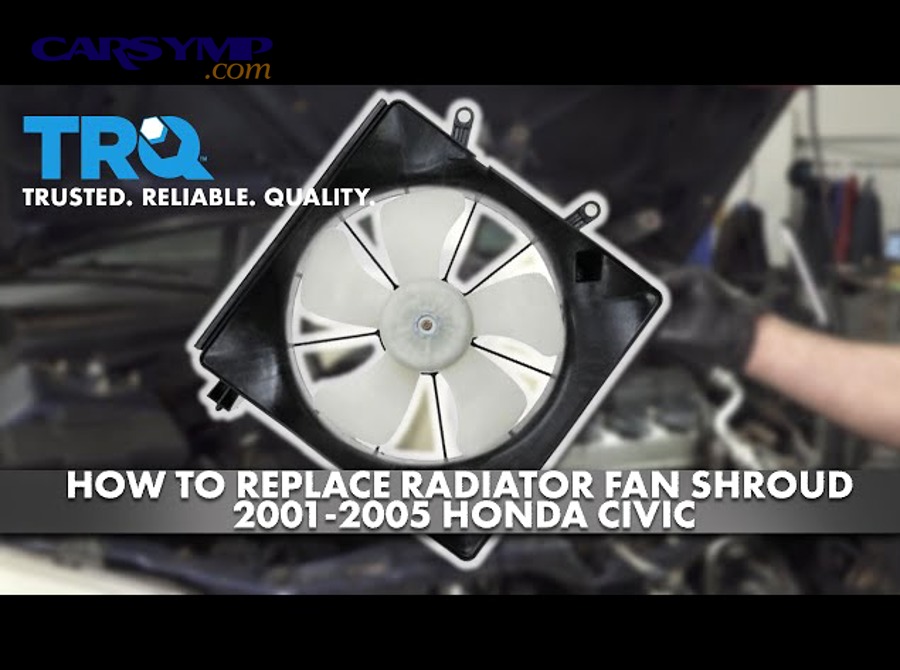
On the other hand, understanding the nuances of each approach helps you make a decision that balances cost, durability, and practicality for your specific situation.
When Is Repairing a Fan Shroud a Better Option Than Replacing It?
Repairing a fan shroud is the better option in specific scenarios where replacement parts are either unavailable, extremely expensive, or incompatible with the vehicle. Classic and vintage vehicles are the primary candidates for repair. A 1971 Oldsmobile Vista Cruiser, for example, may no longer have an OEM shroud in production, and aftermarket options may not exist for such a niche application.
The repair technique most commonly used is hot-air plastic welding, which involves identifying the shroud’s plastic type (typically polypropylene or ABS), then applying matching plastic filler strips over cracks and holes using a specialized heat gun. Once welded, the repair is sanded, contoured to match the original profile, and painted. The result restores both the structural integrity and the aerodynamic sealing function of the shroud.
However, this approach requires specific tools and skills that most general DIYers do not have. Additionally, repaired shrouds may not match the durability of a new OEM or quality aftermarket part, particularly if the vehicle operates in extreme heat or high-vibration conditions. For daily drivers where a replacement part is readily available for under $200, purchasing a new shroud is almost always the more practical choice.
What Is the Difference Between OEM and Aftermarket Fan Shroud Assemblies?
OEM shrouds win on guaranteed fitment and material quality, while aftermarket shrouds are best for budget-conscious buyers who prioritize value over brand-name precision. The comparison breaks down across four key criteria: fit, material quality, price, and warranty coverage.
OEM (Original Equipment Manufacturer) shrouds are produced by or for the vehicle’s manufacturer and are engineered to exact factory specifications. They fit perfectly, use the same plastic compounds and mounting configurations as the original part, and typically carry a manufacturer warranty. The trade-off is price — OEM shrouds often cost two to four times more than aftermarket alternatives.
Aftermarket shrouds are produced by third-party manufacturers and vary widely in quality. Reputable aftermarket brands use comparable materials and tooling to produce shrouds that fit well and perform reliably. Lower-cost aftermarket options, however, may use thinner plastic, have slightly imprecise mounting holes, or lack the exact aerodynamic shaping of the OEM design — all of which can affect long-term durability and cooling efficiency. When choosing an aftermarket part, prioritize suppliers that offer vehicle-specific fitment guarantees and read reviews from other owners of your make and model.
How Much Does It Cost to Replace a Fan Shroud Assembly?
The cost of replacing a fan shroud assembly falls into three main ranges based on whether you do it yourself or hire a professional, and whether you choose OEM or aftermarket parts.
| Cost Component | Low Range | Mid Range | High Range |
|---|---|---|---|
| Aftermarket shroud (part only) | $50 – $100 | $100 – $200 | $200 – $350+ |
| OEM shroud (part only) | $150 – $250 | $250 – $400 | $400 – $600+ |
| Professional labor | $80 – $150 | $150 – $250 | $250 – $400 |
| Total (DIY + aftermarket) | $50 – $100 | — | — |
| Total (professional + OEM) | — | $300 – $500 | $600 – $1,000+ |
For a DIY owner using an aftermarket part, the total out-of-pocket cost can be as low as $50 to $100 — making it one of the most affordable cooling system repairs available. Professional replacement with an OEM part on a complex vehicle (such as one requiring radiator removal or lock carrier repositioning) will naturally sit at the higher end of the range.
Should You Replace Just the Fan Motor or the Entire Shroud Assembly?
Replacing just the fan motor wins on cost when the shroud itself is in good condition, while replacing the entire assembly is optimal when the shroud is damaged or when both the motor and shroud show signs of wear.
On many modern vehicles, the fan motor and shroud are sold as a single integrated assembly and cannot be easily separated. In these cases, the decision is made for you — you replace the entire unit. However, on vehicles where the motor can be unbolted from the shroud independently, it makes sense to evaluate each component separately.
If the fan motor has failed (the fan does not spin or spins weakly) but the shroud is structurally intact with no cracks, warping, or broken mounting tabs, replacing only the motor saves money. Conversely, if the shroud is cracked but the motor still functions, you might be tempted to replace only the shroud — but consider the motor’s age and mileage. If both components have similar wear, replacing them together as a complete assembly avoids the hassle of a second repair a few months down the road.
A related component to evaluate is the fan controller module, particularly on vehicles with variable-speed electric fans. In some cases, what appears to be a fan motor failure is actually a faulty controller. Before committing to a full assembly replacement, testing the controller (or bypassing it temporarily) can save you from replacing parts unnecessarily — a diagnostic step that applies broadly to preventing fan failures through accurate troubleshooting rather than part-swapping.