


Yes, you should replace radiator hoses and clamps during a radiator job because these components experience the same wear as the radiator, replacing them prevents future failures, and doing so while the cooling system is already drained saves time and labor costs. Professional mechanics and automotive manufacturers recommend this preventive approach to avoid roadside breakdowns and expensive emergency repairs. The cooling system operates as an integrated unit, meaning that old hoses and clamps compromise the reliability of your new radiator investment.
Understanding when replacement is absolutely necessary versus optional helps you make informed maintenance decisions. Several factors determine whether you must replace these components immediately or can postpone the work, including component age, visible damage, mileage thresholds, and your driving conditions. Automotive professionals provide clear guidelines based on industry standards and real-world failure data.
Radiator hoses and clamps serve critical functions in maintaining proper engine temperature and preventing catastrophic overheating. The upper radiator hose carries hot coolant from the engine to the radiator for cooling, while the lower radiator hose returns cooled fluid back to the engine. Clamps secure these connections under pressure and extreme temperature cycling. When any component fails, the entire cooling system loses effectiveness, putting your engine at serious risk.
Proper replacement procedures and understanding material differences between hose types ensure long-lasting repairs. Modern EPDM rubber hoses last significantly longer than older compounds, but all hoses eventually succumb to heat degradation, chemical breakdown, and physical stress. Below, we’ll explore the technical details, cost considerations, and step-by-step guidance you need to handle this essential maintenance task correctly.
Should You Replace Radiator Hoses and Clamps When Replacing a Radiator?
Yes, you should replace radiator hoses and clamps when replacing a radiator because the components have endured identical operating conditions, the cooling system is already drained which eliminates duplicate labor, and new hoses and clamps ensure the replacement radiator functions reliably without premature failures. This preventive strategy follows manufacturer service recommendations and professional mechanic best practices.
More specifically, consider that when your radiator fails, the hoses and clamps connected to it have experienced the same years of heat cycling, pressure fluctuations, and coolant exposure. The radiator rarely fails in isolation—its failure often signals that the entire cooling system has reached the end of its service life. Installing a new radiator while leaving aging hoses and clamps in place creates a weak link scenario where these older components become the most likely failure points.
What Do Automotive Professionals Recommend?
Automotive professionals overwhelmingly recommend replacing hoses and clamps during radiator replacement based on OEM service intervals and practical experience. Most manufacturer service manuals specify radiator hose replacement every four to five years or 60,000 miles, whichever comes first. These intervals acknowledge that rubber compounds degrade predictably under thermal stress regardless of visible damage.
Professional mechanics report that vehicles requiring radiator replacement typically exceed these recommended intervals, meaning the hoses have already surpassed their design life. The labor cost to drain the cooling system represents the most expensive part of hose replacement—when you’re replacing the radiator, this work is already included. Adding hoses and clamps to the job costs only the parts price plus minimal additional labor.
Major automotive parts retailers including NAPA, AutoZone, and O’Reilly Auto Parts publish maintenance guides that consistently recommend simultaneous replacement. Their technical advisors note that hose failure rates increase dramatically after the five-year mark, with failure incidents creating significantly higher total costs than preventive replacement.
When Is It Absolutely Necessary vs. Optional?
Replacement becomes absolutely necessary when hoses show visible cracks, feel spongy or excessively hard, display surface checking, leak coolant, or have bulging sections that indicate internal reinforcement failure. Age beyond seven years or mileage exceeding 100,000 miles also triggers mandatory replacement regardless of appearance, as rubber degradation occurs internally before external symptoms appear.
The replacement is optional but strongly recommended when hoses appear superficially intact but fall within the four to five year service interval, when you’re performing radiator replacement as preventive maintenance rather than emergency repair, or when you plan to keep the vehicle for several more years and want maximum reliability. Optional replacement becomes prudent when considering the total cost equation: new hoses and clamps cost $30 to $80, while emergency roadside hose failure can result in towing fees ($100-$300), emergency shop rates, and potential engine damage from overheating ($1,500-$5,000 for head gasket replacement).
Risk assessment should factor in your driving patterns and vehicle usage. Daily commuters facing long highway drives, drivers in extreme climates, and those who regularly tow heavy loads should lean toward replacement even when hoses appear acceptable. Weekend drivers with short local trips might safely postpone replacement if visual inspection reveals no damage and the hoses remain pliable.
What Are Radiator Hoses and Clamps and Why Do They Matter?
Radiator hoses are flexible rubber conduits that transport coolant between the engine and radiator, while clamps are adjustable metal bands that secure these hoses to connection points and maintain pressure-tight seals under extreme temperature and pressure conditions. These components form the critical circulation pathway that prevents engine overheating and catastrophic mechanical failure.
To better understand their importance, consider that modern engines operate between 190°F and 225°F, with coolant temperatures often exceeding 200°F under load. The cooling system maintains 15-18 PSI of pressure to raise the coolant’s boiling point and improve heat transfer efficiency. Radiator hoses must withstand this combination of heat and pressure while remaining flexible enough to accommodate engine movement and vibration.
What Are the Different Types of Radiator Hoses?
The upper radiator hose connects to the thermostat housing or cylinder head outlet and carries hot coolant from the engine to the radiator’s inlet tank. This hose experiences the highest temperatures in the cooling system, typically seeing 200°F to 230°F during normal operation. Upper hoses are usually molded to specific shapes to route around engine components and maintain proper clearances.
The lower radiator hose connects the radiator’s outlet tank to the water pump inlet, returning cooled fluid to the engine. Lower hoses operate at slightly lower temperatures (180°F to 200°F) but often include a coiled wire spring inside to prevent collapse under the suction created by the water pump. This anti-collapse spring maintains the hose’s round cross-section even when the pump creates negative pressure.
Material composition varies significantly between hose types and quality levels. Standard rubber hoses use EPDM (Ethylene Propylene Diene Monomer) compounds that resist heat and coolant chemicals better than older natural rubber formulations. Premium silicone hoses offer superior heat resistance and longer service life but cost two to three times more than EPDM alternatives. Original equipment manufacturer (OEM) hoses are molded to exact specifications for each vehicle application, while universal aftermarket hoses require cutting and fitting.
What Types of Hose Clamps Are Used in Radiators?
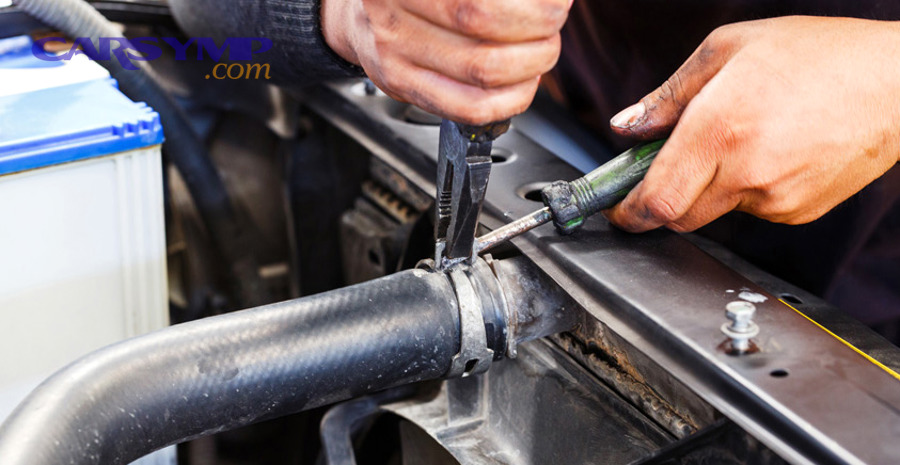
Worm-gear clamps, also called screw-type clamps, feature a metal band with a screw mechanism that tightens the band around the hose. These clamps provide reliable, adjustable clamping force and are the most common type used in modern vehicles. Quality worm-gear clamps use stainless steel construction to resist corrosion and maintain consistent tension over time.
Spring clamps use formed spring steel to provide constant tension that automatically compensates for hose expansion and contraction during temperature cycling. Original equipment manufacturers favor spring clamps because they maintain more consistent pressure than manually-tightened screw clamps. However, spring clamps require special pliers for installation and removal, making them less convenient for DIY mechanics.
T-bolt clamps provide the highest clamping force and most uniform pressure distribution, making them popular in high-performance and heavy-duty applications. These clamps use a bolt and nut to tighten a solid band around the hose, creating a stronger seal than worm-gear designs. Wire clamps, the oldest design still in use, consist of a formed wire that pinches the hose using plier-like tension—these should always be replaced with modern screw-type or spring clamps during any service work.
What Are the Signs That Radiator Hoses and Clamps Need Replacement?
Radiator hoses and clamps need replacement when they show visible cracks or checking, feel either spongy and soft or excessively hard and brittle, leak coolant at connection points, display bulging or collapsed sections, or exceed manufacturer-recommended service intervals of four to five years regardless of visual condition. These signs indicate material degradation that will lead to failure.
Specifically, understanding how to identify these warning signs through systematic inspection prevents unexpected failures and costly emergency repairs. The cooling system operates under enough pressure and temperature stress that component failure rarely provides advance warning—by the time you notice a problem during normal driving, the hose has often progressed from “worn” to “failing immediately.”
How Do You Inspect Radiator Hoses for Damage?
Perform the squeeze test by firmly pressing the hose between your thumb and fingers along its entire length while the engine is completely cold. Healthy hoses feel firm but pliable, returning to their original shape immediately after you release pressure. Hoses that feel spongy and remain indented indicate internal degradation of the reinforcement layers, while hoses that feel rock-hard and don’t compress have lost their elasticity due to heat damage.
Visual inspection requires examining the entire hose surface in good lighting, looking for surface cracks, checking (fine cracks in the surface pattern), soft spots, hardened areas, bulges, or collapsed sections. Pay particular attention to areas near clamps and connection points where stress concentrates, and to hose bends where flexing accelerates wear. Use a clean rag to wipe away dirt and oil that can hide damage—oil contamination itself indicates a problem since oil deteriorates rubber rapidly.
Check for coolant leaks by examining the hose surfaces and connection points for dried coolant residue, which appears as white, green, orange, or pink crusty deposits depending on coolant type. Small seepage that hasn’t progressed to active dripping still indicates failing seals or hose degradation. Look underneath the vehicle after it has been parked overnight—coolant puddles indicate active leaks that require immediate attention.
Age assessment matters even when hoses pass visual inspection. Write the installation date on new hoses using a permanent marker or keep service records documenting the radiator replacement date. Hoses older than five years should be replaced preventively, while hoses approaching seven to ten years represent serious failure risks regardless of appearance because internal degradation precedes external symptoms.
How Do You Know When Clamps Have Failed?
Examine clamps for rust, corrosion, or pitting that weakens the metal band and reduces clamping force. Stainless steel clamps resist corrosion better than standard steel, but even stainless clamps can develop stress cracks after years of thermal cycling. Look for discoloration, scaling, or white crusty deposits that indicate galvanic corrosion from dissimilar metals in contact.
Test spring clamps by removing them with hose clamp pliers and checking whether the spring still provides strong tension. Weakened springs fail to maintain adequate pressure as hoses expand and contract with temperature changes. Spring clamps that feel loose or slip easily by hand have lost their clamping force and must be replaced.
Coolant seepage around clamp locations definitively indicates clamp failure, improper installation, or hose degradation. Even minor weeping that creates damp spots rather than drips shows that the seal has been compromised. Tighten screw-type clamps to determine whether additional tension stops the leak—if the leak continues despite tightening, either the clamp has failed or the hose has degraded to the point where it can’t form a proper seal.
Visible deformation of the hose at clamp locations suggests either overtightening that has damaged the hose or hose material that has become too soft to resist clamp pressure. The hose should maintain its round cross-section under the clamp without excessive compression or bulging. Clamps positioned incorrectly (not over the raised bead on the connection fitting) will never seal properly regardless of tightness.
What Are the Risks of Not Replacing Hoses and Clamps During a Radiator Job?
The primary risks of not replacing hoses and clamps during radiator replacement include immediate or near-term component failure requiring duplicate cooling system service, potential engine damage from overheating if failure occurs during operation, being stranded with roadside breakdown costs, and false economy where avoiding $50-$100 in preventive parts leads to $500-$5,000 in emergency repairs. These risks far outweigh the minimal additional cost of replacement.
Moreover, consider that mechanical failures follow predictable patterns based on component life cycles and stress exposure. When your radiator fails, it signals that the entire cooling system has accumulated significant service time and thermal stress. The hoses and clamps have endured identical operating conditions—high temperatures, pressure cycling, and chemical exposure—making them equally likely to fail in the near future.
How Much Does Hose and Clamp Failure Cost Compared to Preventive Replacement?
Preventive replacement during radiator service costs $30 to $100 for parts (upper and lower radiator hoses plus clamps) and adds approximately 30 minutes to the job, which translates to $40 to $80 in additional labor at typical shop rates of $80-$160 per hour. The total preventive cost ranges from $70 to $180 depending on vehicle make, hose quality, and labor rates in your area.
Emergency hose replacement after roadside failure starts with towing fees of $100 to $300 depending on distance and location. Emergency shop rates often exceed regular rates by 25% to 50%, and you lose negotiating power when the vehicle is already disabled. The emergency hose replacement itself costs $150 to $300 including parts and labor, bringing the total emergency cost to $250 to $600—or two to four times the preventive replacement cost.
Engine damage from overheating escalates costs exponentially. Minor overheating can warp the cylinder head, requiring machining services ($200-$400) or head replacement ($800-$1,500 plus labor). Severe overheating causes head gasket failure ($1,500-$2,500 for parts and labor), cracked cylinder heads ($2,000-$3,500), or complete engine damage requiring replacement ($3,000-$8,000 depending on vehicle). Even brief overheating that doesn’t cause immediate failure accelerates wear and shortens engine life.
Opportunity costs include missed work, cancelled appointments, vacation disruption, or family inconvenience when your vehicle fails unexpectedly. These intangible costs often exceed the direct financial costs, especially for single-vehicle households or rural residents without convenient alternatives.
What Can Happen If a Radiator Hose Fails While Driving?
Sudden coolant loss occurs when a hose ruptures or separates from its connection, dumping the entire cooling system capacity (typically 1.5 to 3 gallons) onto the road within seconds. The temperature gauge rises rapidly as the engine loses its primary cooling mechanism. Most modern vehicles enter limp mode and may shut down automatically to prevent damage, but older vehicles without these protections can overheat catastrophically before you notice the problem.
Steam venting from the engine compartment creates visibility hazards and potential panic situations, especially in traffic or highway speeds. Hot coolant spraying onto engine components, belts, or exhaust manifolds creates fire risks. Coolant pooling on the road creates slippery conditions that endanger following traffic.
Engine overheating begins within minutes of coolant loss. Aluminum cylinder heads warp when temperatures exceed approximately 260°F, which happens quickly without coolant circulation. Continued operation after the temperature warning light activates causes progressive damage: head gasket failure, cylinder scoring, piston seizure, and potentially catastrophic engine destruction.
Cascading cooling system failures often result from initial hose rupture. The sudden pressure loss can damage the radiator cap seal, blow out heater hoses, or rupture the heater core. Debris from a disintegrated hose can clog the cooling passages or damage the water pump impeller. What begins as a $30 hose failure becomes a $500+ repair addressing multiple failed components.
Being stranded presents safety concerns beyond mechanical costs. Highway breakdowns expose you to traffic hazards while waiting for assistance. Remote area failures may leave you without cell service or quick access to help. Extreme weather—either heat or cold—makes waiting for a tow truck dangerous and uncomfortable.
How Do You Properly Replace Radiator Hoses and Clamps?
Proper radiator hose and clamp replacement requires draining the cooling system completely, removing old components without damaging connection fittings, cleaning all mating surfaces thoroughly, installing new hoses with correctly positioned and properly tightened clamps, refilling with appropriate coolant mixture, and bleeding air from the system to ensure proper circulation. This process takes one to two hours for experienced DIY mechanics.
To better understand the complete procedure, recognize that cooling system work demands careful attention to detail and proper technique. Rushing through the installation or skipping steps like surface cleaning and air bleeding creates problems ranging from persistent leaks to trapped air pockets that cause overheating. Following the systematic approach outlined below ensures reliable, long-lasting results.
What Tools and Materials Do You Need?
Essential tools include a coolant drain pan with at least four-gallon capacity to catch all system fluid, a set of screwdrivers (flathead and Phillips) for removing screw-type clamps, adjustable pliers or dedicated hose clamp pliers for spring clamps, and a utility knife for cutting stuck hoses if necessary. Socket sets or wrenches may be required to remove components blocking hose access.
Required materials start with replacement hoses matched exactly to your vehicle’s year, make, and model—universal hoses rarely fit correctly and should be avoided. Purchase new clamps even if the old ones appear serviceable, as clamps are inexpensive insurance against leaks. OEM clamps cost $2 to $5 each, while quality aftermarket clamps cost $1 to $3. Choose stainless steel worm-gear clamps for reliability and corrosion resistance.
Coolant requirements vary by vehicle—consult your owner’s manual for the specified type (conventional green, extended-life orange/gold, or modern OAT formulations). Purchase premixed 50/50 coolant to eliminate mixing errors, needing approximately two gallons for most vehicles. Distilled water is essential if mixing concentrated coolant, as tap water contains minerals that promote corrosion and scaling.
Optional but highly recommended tools include a cooling system pressure tester ($30-$80) to verify leak-free installation before driving, a vacuum-type cooling system filler ($80-$150) that eliminates air pockets during refill, and a digital infrared thermometer ($20-$40) to confirm proper operating temperature after repair. Clean rags, safety glasses, and nitrile gloves round out the equipment list.
What Is the Correct Installation Procedure?
Begin with a completely cold engine—never work on hot cooling systems. Park on level ground, engage the parking brake, and place wheel chocks for safety. Open the radiator cap slowly to release any residual pressure. Locate the radiator drain valve (petcock) at the bottom of the radiator and position your drain pan underneath. Open the valve and allow the coolant to drain completely into the pan for proper disposal.
Remove old hoses by loosening all clamps first. For screw-type clamps, turn the screw counterclockwise until the band loosens completely. For spring clamps, compress the tangs with pliers and slide the clamp away from the connection point. If hoses have bonded to the fittings from age, twist them gently while pulling to break the seal. Cut stubborn hoses with a utility knife if necessary, being extremely careful not to score the metal fittings—any scratches or gouges create leak paths.
Clean all connection fittings thoroughly using a dedicated green scrubber pad (not steel wool, which can scratch) and clean rags. Remove all traces of old gasket material, coolant residue, and corrosion without scratching the metal surfaces. Blow away debris with compressed air rather than rinsing with water, which can leave mineral deposits.
Install new clamps over the new hoses before fitting the hoses onto connection points. Slide the clamps several inches away from the hose ends to keep them out of the way during installation. Apply a thin film of coolant or approved gasket sealant to the inside of each hose end and the outside of each fitting to ease installation—some mechanics prefer dry installation, but light lubrication prevents hose tearing during installation.
Push each hose firmly onto its fitting, ensuring it slides over the raised bead that provides the sealing surface. The hose should extend at least 1.5 inches beyond the bead to provide adequate clamping area. Position the hose carefully to avoid kinks, contact with moving parts (belts, pulleys), or interference with hot engine components.
Slide clamps into position directly in front of (not on top of) the raised bead on each fitting. This position allows the clamp to compress the hose against the sealing surface without sitting on the bead itself, which can create leak paths. Tighten screw-type clamps until snug but not overtight—the goal is firm compression without crushing the hose or causing rubber to bulge through the clamp slots.
Close the radiator drain valve and begin refilling through the radiator fill neck or coolant reservoir, depending on vehicle design. Pour coolant slowly to minimize air entrapment. If using a vacuum filler, follow the tool’s instructions to evacuate air before filling. For manual filling, leave the radiator cap off and start the engine, allowing it to idle while monitoring coolant level.
As the engine warms and the thermostat opens, coolant will begin circulating and the level will drop. Continue adding coolant until the system maintains proper level. Run the heater at maximum temperature to ensure the heater core fills with coolant. Watch for any leaks at hose connections, tightening clamps if necessary.
Allow the engine to reach full operating temperature, then rev it gently to 2,000-2,500 RPM several times to help purge air pockets. Turn off the engine and allow it to cool completely. Recheck coolant level when cold and top off as needed. Install the radiator cap securely.
Test drive the vehicle while monitoring the temperature gauge. Confirm that the temperature remains in the normal range and that the heater produces hot air. After the test drive, inspect all connections for leaks and recheck coolant level. Monitor the system for several days, checking level and inspecting for leaks before each drive until you’re confident the system is sealed and properly bled.
How Long Do Modern Radiator Hoses Actually Last?
Modern radiator hoses manufactured with EPDM rubber compounds typically last seven to ten years or 100,000 to 150,000 miles under normal operating conditions, significantly exceeding the four to five year lifespan of older natural rubber formulations, though actual longevity varies based on driving conditions, climate extremes, maintenance practices, and hose quality. This extended service life reflects substantial improvements in rubber technology and manufacturing processes.
Nevertheless, understanding the factors that affect hose lifespan helps you predict when replacement becomes necessary and recognize conditions that accelerate wear. Modern hoses resist degradation better than earlier designs, but they’re not immune to the cumulative effects of thermal cycling, chemical exposure, and mechanical stress.
What Is the Difference Between EPDM and Traditional Rubber Hoses?
EPDM (Ethylene Propylene Diene Monomer) synthetic rubber resists heat degradation, ozone exposure, and chemical attack far better than the natural rubber compounds used in hoses manufactured before the 1990s. EPDM maintains its flexibility and structural integrity across a wider temperature range (-40°F to 250°F) compared to natural rubber’s narrower tolerance band.
Traditional natural rubber hoses typically hardened and cracked after four to five years of service as the rubber molecules cross-linked excessively under heat exposure and lost their elastic properties. These hoses developed visible surface checking and internal degradation that made regular replacement necessary. Automotive parts professionals from the 1970s and 1980s routinely recommended hose replacement at every major service interval because failure rates were high and predictable.
Modern EPDM formulations incorporate reinforcement layers using aramid fibers (Kevlar) or polyester rather than the cotton or rayon used in older hoses. These synthetic reinforcement materials resist breakdown from coolant chemicals and maintain their tensile strength longer. The reinforcement layer prevents the hose from ballooning under pressure or collapsing under vacuum, maintaining consistent internal diameter throughout its service life.
Chemical resistance differences prove particularly important with modern extended-life coolants (OAT and HOAT formulations) that remain in service for five years or longer. EPDM hoses withstand these aggressive coolant chemistries without swelling, softening, or internal degradation. Traditional rubber hoses often failed prematurely when exposed to extended-life coolants because the coolant additives attacked the rubber compounds.
How Do Driving Conditions Affect Hose Lifespan?
Stop-and-go city driving accelerates hose degradation more than highway driving because the constant heating and cooling cycles stress the rubber compounds through repeated thermal expansion and contraction. Each heat cycle weakens the molecular bonds in the rubber slightly, with cumulative damage occurring faster when cycles happen frequently. Vehicles used primarily for short trips where the engine never fully warms also experience more condensation in the cooling system, promoting internal corrosion that can damage hoses from the inside out.
Extreme climate conditions at both ends of the temperature spectrum reduce hose life expectancy. High ambient temperatures in desert or tropical climates keep engine compartments hot even when the vehicle sits idle, maintaining the hoses in an elevated temperature state that accelerates degradation. Heat damage manifests as hardening and loss of flexibility, with hoses eventually becoming brittle and crack-prone.
Extreme cold presents different challenges. Repeated freeze-thaw cycling can crack hose surfaces, especially if coolant concentration drops below the recommended 50/50 mixture and allows ice formation. Hoses must flex when cold-soaked to negative temperatures, and rubber loses flexibility when very cold. This cold-state flexing can crack already-aged hoses or accelerate wear in otherwise serviceable hoses.
Oil contamination from engine leaks dramatically shortens hose life. Engine oil, transmission fluid, or power steering fluid that contacts rubber hoses causes swelling and softening as petroleum products attack the rubber compounds. Hoses exposed to oil contamination may fail in months rather than years. Always repair oil leaks promptly and clean contaminated hoses immediately, though contaminated hoses should be replaced even if they appear serviceable since internal damage isn’t visible.
Heavy towing or consistent high-load operation increases cooling system temperatures and pressures beyond normal passenger car levels. Hoses in trucks and SUVs used for towing operate at their design limits more frequently, accelerating wear. These applications benefit from premium silicone hoses that handle elevated temperatures better than standard EPDM compounds.
Should You Use Hose Sealant or Install Dry?
The debate between dry installation and using hose sealant has persisted for decades, with valid arguments supporting both approaches. Dry installation without any sealant allows easier hose removal during future service and prevents potential coolant passage clogging from excess sealant. When properly sized hoses are installed with correctly tightened clamps on undamaged fittings, dry installation provides reliable sealing through mechanical compression alone.
Thin application of coolant-compatible gasket sealant or the lubricating film from coolant itself can ease installation by reducing friction as you slide hoses onto fittings. This approach proves particularly helpful with tight-fitting hoses or when working in cramped engine compartments where you can’t easily apply the force needed for dry installation. The key is using minimal sealant—just enough to reduce friction without creating excess that can squeeze into coolant passages.
Some technicians apply RTV silicone sealant sparingly to the outside of fittings before installing hoses, arguing that this provides additional leak insurance. However, excessive sealant can clog coolant passages, thermostat housing ports, or radiator tubes if it squeezes out during installation. If using sealant, apply a very thin film only to the raised bead area and allow it to tack up slightly before installing the hose.
Manufacturer recommendations vary by vehicle and hose type. Some OEM service manuals specify dry installation explicitly, while others recommend specific sealant products. Always consult your vehicle’s service manual for the manufacturer’s position. When in doubt, try dry installation first—if leaks develop despite proper technique and correctly tightened clamps, you can always drain the system partially and add sealant.
The quality and condition of connection fittings determines whether sealant becomes necessary. Smooth, uncorroded metal fittings with intact raised beads seal reliably without sealant. Fittings showing corrosion, pitting, or damage may require sealant to compensate for imperfect sealing surfaces, though replacing damaged fittings represents the proper repair rather than masking the problem with sealant.
How Do You Choose Between OEM and Aftermarket Hoses?
Original Equipment Manufacturer (OEM) hoses are manufactured to the exact specifications provided by the vehicle manufacturer, matching the original hoses in dimensions, materials, and performance characteristics. OEM hoses fit perfectly without modification, meet all original engineering requirements, and typically carry the vehicle manufacturer’s warranty when installed by authorized dealers. Prices run 20% to 50% higher than quality aftermarket equivalents, with OEM upper and lower radiator hoses ranging from $30 to $80 each depending on vehicle complexity.
Quality aftermarket hoses from established brands like Gates, Dayco, Continental, and Goodyear meet or exceed OEM specifications while costing less. These manufacturers supply hoses to vehicle manufacturers for factory installation, then sell the same or equivalent hoses through the aftermarket. Name-brand aftermarket hoses undergo the same testing and quality control as OEM products, providing reliable performance at better prices—typically $15 to $40 per hose.
Budget aftermarket hoses from unknown manufacturers represent false economy. These products use inferior rubber compounds, inadequate reinforcement, and questionable quality control. While prices may be 30% to 50% below name-brand options, budget hoses often fail prematurely and may not fit correctly. The $10 saved on a cheap hose becomes meaningless when it fails after 18 months instead of lasting eight to ten years.
Premium silicone hoses offer superior performance for enthusiast and performance applications. Silicone withstands higher temperatures than EPDM (up to 350°F continuous versus 250°F for EPDM) and resists degradation from oils and chemicals better. Silicone hoses maintain flexibility longer and resist hardening even after prolonged heat exposure. The downsides include three to four times higher cost than EPDM hoses ($60-$120 each) and slightly lower burst strength that makes them less suitable for extreme pressure applications.
Consider vehicle value and planned ownership duration when choosing hose quality. Vehicles you plan to keep for many years justify OEM or premium aftermarket hoses. Vehicles near the end of their service life or those you plan to sell soon can accept quality aftermarket hoses without paying OEM premiums. Regardless of choice, avoid universal hoses that require cutting and fitting—the minor savings don’t justify the installation difficulty and potential fitment problems.
For collectors, show cars, or vehicles where originality matters, OEM hoses maintain authenticity and may preserve resale value. For daily drivers, work trucks, and practical transportation, quality aftermarket hoses from Gates, Dayco, or similar brands deliver equivalent performance at better value. Performance vehicles, track cars, or heavily modified engines benefit from silicone upgrade hoses that handle increased temperatures and pressures.
Bleeding air from the cooling system after radiator replacement prevents overheating and ensures proper coolant circulation. Air pockets trapped in the system create hot spots that damage engine components, reduce heater effectiveness, and cause temperature gauge fluctuations. Modern cooling systems with complex routing and multiple high points require careful bleeding procedures to purge all trapped air.
The radiator replacement process itself introduces air into the previously sealed system, making thorough bleeding essential rather than optional. Each vehicle design presents unique challenges based on cooling passage routing, thermostat location, and heater core positioning. Consulting resources like carsymp.com provides vehicle-specific bleeding procedures that account for these design variations.
Cooling system flush with new radiator removes old coolant contamination, rust particles, and scale deposits that accumulated in the original system. Flushing before installing the new radiator prevents transferring contaminants into fresh components. The Radiator replacement steps overview should always include system flushing as a mandatory preparation step for maximum longevity.
Professional mechanics recognize that comprehensive cooling system service produces better long-term results than simple component replacement. When you invest in a new radiator, maximize that investment’s lifespan by addressing all related components simultaneously. The additional cost remains modest compared to the value of reliable operation and extended service intervals between future repairs.
Quality radiator hoses and clamps cost minimal amounts relative to the engine damage they prevent. A complete set of upper and lower hoses with new clamps typically costs less than $100, while the peace of mind from knowing your cooling system components match in age and condition proves invaluable. Stranded on the roadside wondering whether saving $50 during your radiator job was worth the inconvenience provides stark clarity about penny-wise, pound-foolish decision making.
The technical evidence overwhelmingly supports simultaneous replacement of hoses and clamps during radiator service. Component life cycles, material science, failure statistics, and cost analysis all point to the same conclusion: replacing the complete cooling system as a unit makes practical and economic sense. DIY mechanics who follow this comprehensive approach enjoy reliable vehicles and avoid the frustration of recurring cooling system repairs from sequential component failures.