


Installing an electric fan and shroud system requires careful attention to seven critical factors: fan-to-radiator spacing (1/2″ to 2″ minimum), proper coverage calculations (70% rule), puller versus pusher configuration selection, correct blade positioning (50% in/out of shroud), appropriate shroud depth and design, secure mounting methods, and core stack-up management. These considerations directly impact cooling efficiency, engine temperature regulation, and long-term system reliability.
Understanding whether your electric fan setup actually needs a shroud depends on the relationship between fan diameter and radiator core surface area. When a 16-inch fan covers less than 70% of your radiator’s core, a shroud becomes essential to maximize airflow through the entire cooling surface. Without proper shrouding, significant portions of your radiator remain ineffective, creating hot spots that compromise engine cooling during idle and low-speed operation.
The configuration choice between puller and pusher fan arrangements fundamentally affects cooling system performance. Puller fans positioned behind the radiator deliver superior efficiency by drawing air through the entire core surface, while pusher fans mounted in front face inherent airflow restrictions. Each configuration serves specific applications based on available space, engine accessories positioning, and cooling demands.
Common installation mistakes—such as mounting fans directly against radiator cores, positioning blades incorrectly within shrouds, or using inadequate attachment methods—create cooling deficiencies that lead to overheating. Below, we’ll examine each critical consideration in detail, providing the technical specifications and practical guidance needed to optimize your electric fan and shroud transfer.
Does Your Electric Fan Setup Actually Need a Shroud?
Yes, your electric fan setup needs a shroud when the fan diameter covers less than 70% of your radiator’s core surface area, when experiencing overheating at idle or low speeds, or when maximum cooling efficiency is required for high-performance applications. Specifically, shroud necessity is determined by calculating the coverage ratio between fan surface area and radiator core dimensions.
The fundamental purpose of a shroud extends beyond simple fan mounting—it transforms airflow dynamics across the entire radiator surface. To better understand when shrouds become essential, let’s examine the mathematical relationship between fan coverage and cooling efficiency.
How Does Fan Size Relative to Radiator Core Determine Shroud Necessity?
The relationship between fan diameter and radiator core size follows a precise mathematical formula that determines shroud necessity. A radiator core measuring 21 inches wide by 16 inches tall has 336 square inches of surface area, while a 16-inch diameter fan covers only 201 square inches—representing just 60% coverage. This falls below the critical 70% threshold where shrouds become necessary for optimal cooling performance.
Calculate your specific coverage ratio using these formulas:
Radiator Core Surface Area = Width × Height
Example: 21″ × 16″ = 336 square inches
Fan Surface Area = π × (Diameter/2)²
Example: 3.14159 × (16/2)² = 201 square inches
Coverage Percentage = (Fan Area ÷ Core Area) × 100
Example: (201 ÷ 336) × 100 = 59.8%
When coverage falls below 70%, large portions of your radiator core experience minimal airflow during stationary or low-speed conditions. The fan creates a pressure differential only in the area directly behind its blades, leaving peripheral core sections essentially inactive. A properly designed shroud solves this inefficiency by creating a sealed chamber that forces airflow through 100% of the core surface area.
Consider a typical 1968-1972 GM A-body radiator with core dimensions of 28 inches wide by 17 inches tall, providing 476 square inches of cooling surface. Installing a single 16-inch fan without a shroud leaves 276 square inches of unused core area—less than 50% efficiency when the vehicle isn’t moving at highway speeds. Even adding a 12-inch secondary fan (113 square inches) only achieves 66% coverage, still falling short of the 70% rule.
The table below illustrates coverage percentages for common fan and radiator combinations:
| Radiator Core Size | Single 12″ Fan | Single 14″ Fan | Single 16″ Fan | Dual 12″ Fans | Shroud Required? |
|---|---|---|---|---|---|
| 17″ × 18″ (306 sq in) | 37% | 50% | 66% | 74% | Yes for singles, No for dual |
| 21″ × 16″ (336 sq in) | 34% | 46% | 60% | 68% | Yes for all configurations |
| 22″ × 18″ (396 sq in) | 29% | 39% | 51% | 57% | Yes for all configurations |
| 27″ × 17″ (459 sq in) | 25% | 34% | 44% | 49% | Yes for all configurations |
| 28″ × 19″ (532 sq in) | 21% | 29% | 38% | 42% | Yes for all configurations |
What Happens When You Run an Electric Fan Without a Shroud?
Running an electric fan without a shroud creates localized cooling that affects only the radiator area directly in front of the fan blades, leaving peripheral core sections with minimal airflow and creating temperature hot spots that reduce overall cooling capacity by 40-50%. The physics of this inefficiency centers on air pressure dynamics and the path of least resistance.
An unshrouded fan generates a low-pressure zone immediately behind the fan blades, pulling air through the radiator core within that limited diameter. Air naturally follows the path of least resistance—in this case, the air surrounding the fan’s perimeter flows around the sides of the fan housing rather than being forced through the radiator fins. This bypass effect becomes particularly problematic during idle and low-speed driving when natural airflow from vehicle movement doesn’t compensate for the fan’s limited effective area.
Temperature measurements reveal the practical impact of this inefficiency. A vehicle idling in 95°F ambient conditions with an unshrouded 16-inch fan on a 22″ × 18″ radiator may show coolant temperatures reaching 220-230°F, while the same system with a properly installed shroud maintains temperatures at 195-205°F. The 20-30 degree difference directly correlates to the unused radiator core area—essentially wasted cooling capacity.
The problem intensifies with automatic transmissions and air conditioning systems, which add significant heat load to the cooling system. During stop-and-go traffic on hot days, unshrouded fan configurations often trigger temperature gauge warnings, forcing drivers to run heaters at maximum to dissipate excess heat. This scenario occurs because the effective cooling capacity drops below the engine’s heat generation rate when only 50-60% of the radiator actively transfers heat to the atmosphere.
Secondary issues emerge from unshrouded installations beyond pure cooling efficiency. The fan motor works harder to move the required air volume, drawing more electrical current and generating additional heat. The lack of directional airflow guidance can create turbulent air patterns around engine accessories, potentially affecting alternator cooling and causing dust accumulation in electrical components.
According to research conducted by US Radiator in September 2024, integrated shroud systems increase effective airflow through radiator cores by 40-50% compared to direct-mounted fans without shrouds, particularly during stationary engine operation when ambient airflow cannot assist cooling.
What Are the 7 Critical Transfer Considerations for Electric Fan and Shroud Systems?
The seven critical transfer considerations for electric fan and shroud systems are proper spacing between fan and radiator core, configuration selection between puller and pusher designs, blade positioning within the shroud housing, shroud depth specifications, mounting method selection, coverage calculations for single versus dual fans, and core stack-up interference management. Each consideration directly impacts cooling efficiency, installation reliability, and long-term performance.
Understanding these considerations requires examining both individual factors and their interconnected relationships. To help organize this complex information, let’s break down each consideration with specific technical requirements and practical implementation guidelines.
Consideration #1 – Proper Fan-to-Radiator Spacing and Clearance Requirements
Proper fan-to-radiator spacing requires maintaining a minimum 1/2-inch clearance between the fan housing and radiator core surface, with optimal performance achieved at 1-2 inches of separation to allow unrestricted airflow through the core while preventing physical contact during engine vibration. This spacing creates a critical buffer zone that balances cooling efficiency with mechanical reliability.
The physics behind optimal spacing involves understanding how air moves through radiator cores at different vehicle speeds. When stationary or moving slowly, the electric fan creates all cooling airflow by generating negative pressure behind the radiator core. The fan pulls air through the fins and expels it toward the engine compartment. However, at speeds above 40 mph, ram air pressure from vehicle movement forces air through the radiator faster than the fan can pull it—effectively making the fan redundant at highway speeds.
This dual-mode operation explains why spacing matters. If the shroud sits too close to the core (less than 1/2 inch), it becomes a restriction during highway driving. The forced air from vehicle movement cannot efficiently pass through the tight gap between core and shroud, creating back-pressure that reduces cooling capacity precisely when additional airflow should improve performance. The radiator effectively “suffocates” despite high-speed air availability.
Conversely, excessive spacing (more than 3-4 inches) reduces fan effectiveness during idle and low-speed operation. The larger air volume between fan and core requires the fan motor to work harder to establish the necessary pressure differential. The fan’s efficiency decreases as distance increases because air can more easily escape around the shroud edges rather than being pulled through the radiator core.
Practical measurement requires checking three critical clearances:
Minimum clearances:
- Fan housing to radiator core: 1/2 inch minimum, 1-2 inches optimal
- Fan housing to engine accessories (pulleys, water pump): 3/8 inch minimum
- Fan blade tips to shroud opening: 1 inch circumferential clearance
- Fan blades to any stationary object: 1 inch minimum for vibration tolerance
These specifications account for normal engine movement on motor mounts, radiator shifting within mounting brackets, and fan blade flex at maximum RPM. Engine vibration can cause components to move several millimeters, and high-RPM operation creates centrifugal forces that slightly expand fan blade diameter.
Verification methods include using feeler gauges for precise measurements, spinning the fan by hand while checking for contact points, and observing the fan during engine start-up when motor mounts experience maximum deflection. Some installers place small zip ties at critical clearance points, then start the engine and check for cut or damaged zip ties indicating contact occurred.
Consideration #2 – Puller vs Pusher Fan Configuration Selection
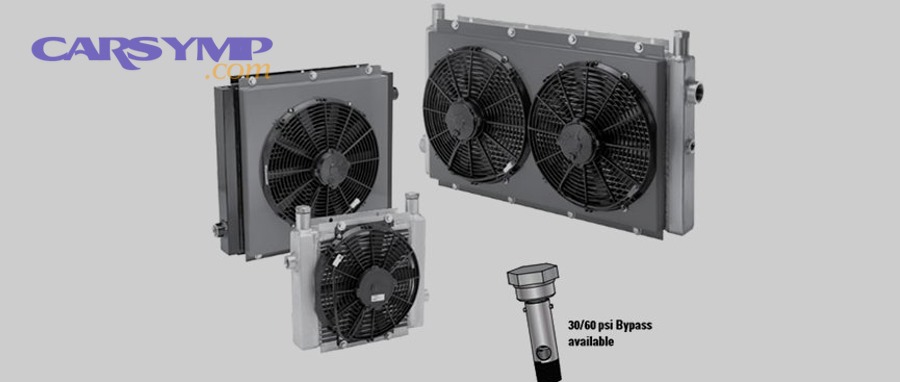
Puller fans mounted on the engine side of the radiator deliver 15-20% greater cooling efficiency than pusher fans because they draw air through an unobstructed core surface and function optimally with shrouding, while pusher fans work best for applications with limited rear clearance or when cooling auxiliary components like intercoolers and AC condensers. Configuration selection depends primarily on available installation space and cooling system architecture.
The efficiency advantage of puller configurations stems from airflow path optimization. A puller fan creates negative pressure on the engine side of the radiator, drawing fresh ambient air through the entire core surface from front to back. The air path remains clear and direct—through the radiator fins, across the coolant tubes, and into the fan intake. This arrangement maximizes heat transfer because the coolest available air contacts the radiator fins first.
Pusher fans face inherent limitations because they position the fan motor, housing, and blade structure between ambient air and the radiator core. This creates three disadvantages: first, the fan components themselves partially block airflow even when not running; second, the fan disperses air in a cone pattern that doesn’t uniformly cover the core; third, the turbulent air pattern created by spinning blades reduces cooling efficiency compared to smooth, directional flow.
However, pusher configurations become necessary in specific scenarios. Vehicles with minimal space between radiator and engine accessories cannot physically fit a puller fan and shroud assembly. Some factory setups position water pumps, alternators, or power steering pumps within 2-3 inches of the radiator, leaving insufficient clearance for even the thinnest electric fans (typically 2.5-3.5 inches thick including shroud).
Pusher fans excel at cooling components stacked in front of the radiator—particularly intercoolers for turbocharged or supercharged engines and air conditioning condensers. In these applications, the pusher fan addresses the specific component it’s mounted against, while a secondary puller fan handles the radiator itself. This dual-fan approach, with fans on opposite sides of the core stack, creates complementary airflow rather than competing air movements.
Installation space determines configuration in most cases:
- Available rear clearance ≥ 4 inches: Puller fan with full shroud (optimal)
- Available rear clearance 2-3 inches: Puller fan with fan ring or slim profile
- Available rear clearance < 2 inches: Pusher fan configuration required
- Multiple cores (intercooler + condenser + radiator): Pusher + puller combination
The pushback against shrouding pusher fans relates to highway driving efficiency. A shroud behind a pusher fan creates an enclosed box that traps air during high-speed driving, restricting the natural ram-air flow that should assist cooling. At 60+ mph, ram air pressure significantly exceeds pusher fan pressure, but the enclosed shroud prevents this beneficial airflow from reaching the radiator core.
Some manufacturers address this limitation with flapper designs—spring-loaded vanes in the shroud that close during fan operation (creating a sealed chamber) but open during highway speeds (allowing ram air to pass through). These automated systems optimize both idle cooling and highway performance, though they add complexity and potential failure points.
According to data from Speedway Motors published in August 2021, puller fan configurations achieve approximately 15-20% better cooling efficiency than pusher setups when all other variables remain constant, primarily due to unrestricted airflow paths and superior shroud compatibility.
Consideration #3 – Fan Blade Positioning Within the Shroud
Fan blades must position with approximately 50% of their depth inside the shroud housing and 50% extending beyond it toward the radiator to optimize airflow efficiency, as improper positioning creates turbulence when too deep or allows air bypass when too shallow. This “half-in, half-out” rule maximizes the pressure differential that pulls air through the entire radiator core.
The physics of optimal blade positioning involves the transition between air intake and air expulsion. When fan blades spin, they create a low-pressure zone on the intake side (facing the radiator) and a high-pressure zone on the exhaust side (facing the engine). The shroud serves as the transition chamber between these pressure zones, and blade position within this chamber determines how efficiently the pressure differential translates into airflow through the radiator.
Blades positioned too deep inside the shroud (more than 50% insertion) create a different problem—internal turbulence. The fan essentially churns air within the shroud housing rather than pulling it through the radiator and expelling it efficiently. Think of it as spinning a spoon in a jar versus spinning it in an open container—the confined space creates circular motion rather than directional flow. This reduces effective airflow through the radiator core while increasing fan motor current draw because it’s working against self-created turbulence.
Blades positioned too shallow in the shroud (less than 50% insertion) allow air to bypass the intended flow path. The low-pressure zone created by the fan draws air from the path of least resistance. If the blades sit mostly outside the shroud, air flows around the shroud edges and through gaps between the fan housing and shroud opening rather than being pulled through the radiator fins. The fan spins vigorously, creating noise and consuming electrical power, but moves minimal air through the actual cooling core.
Achieving proper positioning requires measuring blade depth from the mounting surface and comparing it to shroud thickness. Most automotive electric fans have blade depths ranging from 1.5 to 3 inches from the mounting flange. Shrouds typically measure 1/2 inch to 4 inches deep, depending on design and application. The key measurement involves the distance from the radiator-facing surface of the shroud to the fan blade tips.
Verification process:
- Mount the fan to the shroud using the provided hardware
- Measure from the radiator-side shroud surface to the blade tips
- Measure from the shroud surface to the blade mounting hub
- Calculate the percentage: (distance to tips ÷ total blade depth) × 100
- Target result: approximately 50% ± 10%
Fan spacers provide the adjustment mechanism when initial positioning falls outside the optimal range. These precisely machined aluminum or steel rings fit between the fan mounting flange and the shroud, moving the fan forward (reducing insertion depth) or backward (increasing insertion depth) in 1/4-inch, 1/2-inch, or 1-inch increments. Quality fan manufacturers like Flex-a-lite produce matched spacer kits specifically designed for their fan models, ensuring proper bolt lengths and maintaining structural integrity.
Using universal or mismatched spacers creates problems. Bolt length becomes critical—too short and the bolts don’t engage enough threads for secure mounting; too long and they bottom out before properly clamping the assembly. Some installers stack multiple thin spacers to achieve desired positioning, but this practice increases vibration risk and potential loosening over time. Purpose-built spacers in single-piece construction provide superior reliability.
Visual verification provides a quick assessment method. Looking at the shroud from the side, you should clearly see approximately half the fan blade depth extending beyond the shroud toward the radiator. If you see only blade tips or the entire blade structure, positioning needs adjustment. Some experienced installers mark the desired position on the shroud edge, then verify blade alignment against the mark during test fitting before final installation.
Consideration #4 – Shroud Depth and Design Specifications
Shroud depth specifications range from 1/2 inch for ultra-slim applications to 4 inches for mechanical fan conversions, with optimal depth determined by balancing fan blade positioning requirements (50% rule), available installation space, and airflow efficiency at both idle and highway speeds. Design selection involves choosing between full shrouds that enclose the entire radiator core, partial shrouds that cover only the fan opening area, or fan rings that provide minimal enclosure.
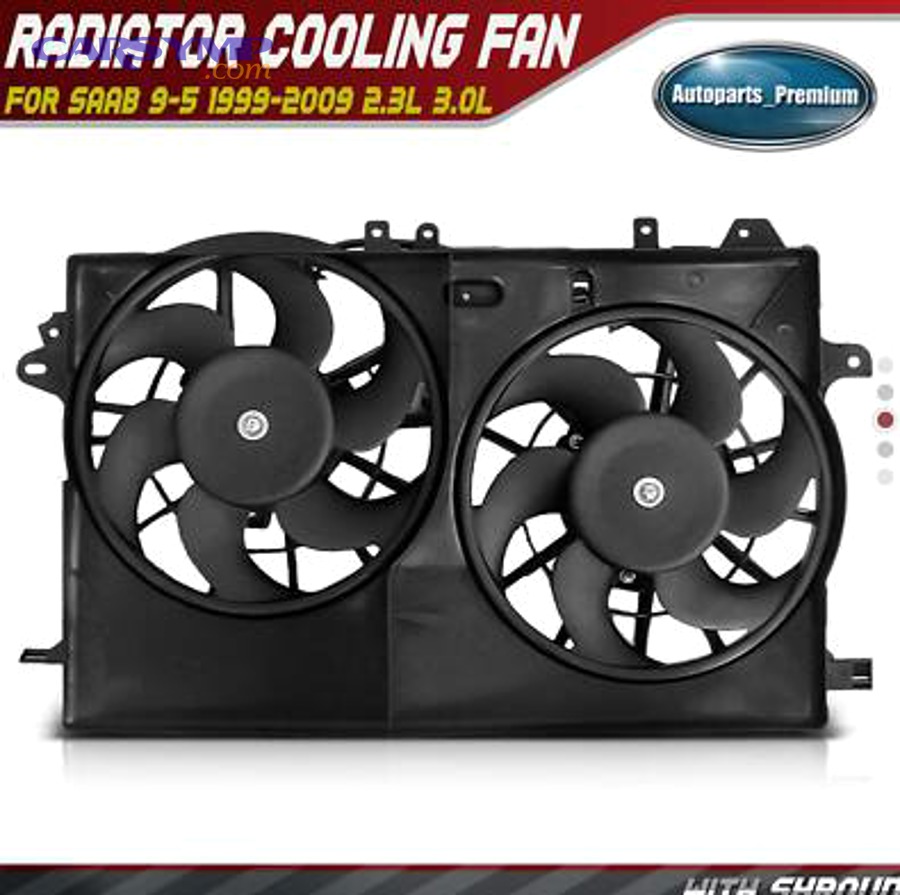
Full shrouds represent the gold standard for cooling efficiency because they create a sealed air chamber encompassing the entire radiator core perimeter. These shrouds typically measure 1-2 inches deep for electric fan applications, forming a box-like structure that attaches to the radiator’s edge or core support framework. The enclosed design ensures that when the fan operates, the entire low-pressure zone exists behind the full radiator surface, pulling air uniformly through all cooling fins rather than just the area directly in front of the fan blades.
Material selection affects shroud performance, durability, and weight. Aluminum shrouds offer excellent heat dissipation, corrosion resistance, and lightweight construction—critical for racing applications where every pound matters. The material’s natural heat conductivity helps dissipate engine bay heat, and aluminum doesn’t warp under high temperatures like some plastics. However, aluminum shrouds cost more and require careful fabrication to avoid sharp edges that might damage radiator fins or hoses.
Plastic shrouds, typically molded from high-temperature ABS or fiberglass-reinforced composites, dominate OEM applications due to lower manufacturing costs and integrated mounting features. Modern plastic formulations withstand engine bay temperatures exceeding 250°F without warping or becoming brittle. The material’s flexibility provides some vibration absorption, reducing stress on radiator mounting points. Disadvantages include potential cracking with age and UV degradation on exposed surfaces.
Custom fabricated shrouds suit unique applications where universal or application-specific products don’t fit properly. Sheet aluminum (typically 0.040-0.060 inch thickness) allows skilled fabricators to create precisely fitted shrouds for modified vehicles, engine swaps, or custom radiator installations. Fabrication requires measuring the radiator core perimeter, creating a template, cutting and forming the metal, and adding mounting provisions. Sealing becomes critical—foam weatherstripping around the radiator core edge ensures no air bypass between the core and shroud.
Partial shrouds cover only the fan opening area, creating a localized low-pressure chamber directly behind the fan. These designs work adequately when fan coverage exceeds 70% of the radiator core area—for example, a 16-inch fan on a 17-inch square radiator. The partial shroud guides airflow through the fan opening while leaving peripheral core areas exposed for ram-air flow during highway driving. Installation simplicity makes partial shrouds attractive for tight-space applications, though they sacrifice some idle cooling efficiency compared to full enclosures.
Fan rings represent the minimalist shrouding approach, providing four main functions: spacing the fan correctly from the radiator core (typically 1/2 inch), creating mounting points for fan attachment, sealing the fan perimeter to prevent air bypass, and protecting the radiator core from fan contact. These shallow devices (usually 1/2 to 1 inch deep) suit applications where full shrouds physically won’t fit due to engine accessories proximity or where maximum ram-air flow at highway speeds takes priority over idle cooling.
The depth measurement process requires careful attention:
- Measure from the radiator core support mounting surface to the fan motor housing back
- Subtract minimum clearance to engine accessories (3/8 inch minimum)
- Calculate available depth for shroud installation
- Select shroud depth that positions fan blades at 50% insertion
Some applications require creative solutions. A vehicle with only 2.5 inches from radiator to water pump pulley might use an ultra-slim fan (1.5 inches thick) with a 1/2-inch fan ring (2 inches total), leaving 1/2 inch safety clearance. This configuration sacrifices some cooling efficiency but remains superior to no shrouding at all.
OEM shrouds from similar vehicle models sometimes provide excellent fit and function after minor modifications. For instance, a factory shroud designed for a mechanical fan can be cut down and adapted for an electric fan installation, maintaining the precise perimeter fit around the radiator core while accommodating the different fan mounting requirements. This approach preserves the engineered sealing and mounting provisions while reducing cost compared to purchasing a new aftermarket shroud.
Consideration #5 – Mounting Methods and Structural Integrity
Secure electric fan and shroud mounting requires bolted connections to the radiator core support or perimeter using rivnuts, machine screws, or sheet metal screws rather than zip-tie straps, as proper mounting prevents vibration-induced damage, maintains critical clearances, and ensures long-term reliability under engine bay heat and mechanical stress. The mounting system must support the fan’s weight, resist operating torque, and absorb vibration without loosening or causing radiator core damage.
The fundamental problem with zip-tie mounting stems from material properties and stress concentration. Nylon zip ties threading through radiator fins create several failure points: the serrated surface can cut through thin aluminum tubes during vibration; the mounting creates point loads rather than distributed forces; and the ties gradually loosen from heat cycling and UV exposure. While zip ties might seem convenient for temporary repairs, they lack the mechanical properties needed for permanent installations.
The damage mechanism occurs progressively. Engine vibration causes the fan assembly to move in small oscillating motions—typically only a few millimeters, but repeated thousands of times during each drive cycle. The zip tie acts as a saw blade, working back and forth across radiator tubes that measure only 0.010-0.015 inches in wall thickness. Within weeks or months, depending on vibration severity, the zip tie cuts through the tube wall, causing coolant leaks that require radiator replacement or professional repair.
Professional mounting methods distribute loads across stronger structural components. The radiator’s edge typically features a U-channel frame measuring 1/4 to 1/2 inch in lip width—substantially stronger than the thin tube walls. Shrouds designed for proper installation include mounting flanges that align with this perimeter channel, creating a mechanically sound attachment point.
Rivnut installation provides threaded mounting holes in thin-walled metal without requiring welding. The process involves drilling precisely sized holes in the radiator frame or core support, inserting the rivnut, and using a special tool to compress the rivnut’s backside, creating an expanded collar that grips the material. The resulting threaded hole accepts machine screws with the same load capacity as traditional tapped holes in thicker metal. Rivnuts work excellently in aluminum radiator frames and steel core supports, providing professional-grade mounting points for shroud attachment.
Sheet metal screw mounting offers a simpler alternative for aluminum or plastic shrouds. Self-tapping screws cut their own threads in pre-drilled pilot holes, creating secure attachment without specialized tools. The critical factors involve correct pilot hole sizing (slightly smaller than the screw thread diameter) and avoiding over-tightening, which can strip the threads or crack plastic shrouds. Stainless steel screws resist corrosion in the engine bay’s harsh environment.
Bolt-through mounting applies when the radiator core support provides access to both sides of the mounting surface. Bolts pass through the shroud, through the support, and secure with nuts and washers on the backside. This creates the strongest possible connection, distributing loads evenly and allowing precise torque specifications. The method requires adequate rear-side clearance for nut installation and potential loosening during future service.
Some installations combine mounting methods. The shroud attaches to the radiator perimeter using rivnuts or sheet metal screws, while the fan mounts to the shroud using machine bolts. This two-stage mounting isolates vibration—the fan’s operational vibration transfers to the shroud, which absorbs it through the mounting hardware’s slight flexibility, reducing vibration transmission to the radiator core.
Vibration dampening techniques enhance mounting reliability. Rubber grommets between the fan and shroud prevent metal-to-metal contact that would transmit every motor vibration and blade imbalance. Some high-performance fans include built-in rubber isolation mounts specifically designed to absorb vibration while maintaining structural rigidity. These isolation systems become particularly important for powerful fans (3000+ CFM) spinning at high RPMs, which generate significant vibration forces.
Mounting hardware specifications matter for long-term reliability:
- Screws/bolts: Stainless steel or grade 8 steel with corrosion-resistant coating
- Washers: Use both flat and lock washers to prevent loosening
- Thread locker: Medium-strength (blue) Loctite on all threaded connections
- Torque specifications: Follow manufacturer guidelines; typically 3-5 ft-lbs for aluminum shrouds
Regular inspection schedules identify mounting problems before they cause damage. Check all mounting hardware at the first oil change after installation (approximately 500-1000 miles), then annually or every 10,000 miles. Look for loosened screws, cracked shroud material around mounting holes, elongated holes indicating movement, or signs of rubbing between the fan and any nearby components.
Consideration #6 – Single vs Dual Fan Coverage Calculations
Single fan systems work effectively when one fan covers at least 70% of the radiator core surface area, while dual fan configurations become necessary for larger radiators (typically 22+ inches wide), high-heat engines (supercharged, turbocharged, or 400+ horsepower), or when a single fan cannot meet the 70% coverage threshold. The decision requires calculating coverage percentages and assessing total cooling demands against electrical system capacity.
The mathematics of dual fan sizing follows the same coverage principles as single fans but introduces complexity in fan arrangement and combined surface area calculations. Two 12-inch fans provide 226 square inches of coverage (113 square inches each), while a single 16-inch fan provides 201 square inches. However, the dual fan configuration distributes cooling across two zones, potentially providing better overall core coverage depending on fan positioning.
Practical dual fan arrangements depend on radiator core dimensions:
- 28-30 inches wide: Two 14-inch fans positioned side-by-side
- 32+ inches wide: Two 16-inch fans or three 12-inch fans
- Square radiators (18″ × 18″): Four 9-inch fans for maximum coverage
- Vertical oriented cores: Stack fans vertically rather than horizontally
Electrical system considerations become critical with dual fan installations. Two 16-inch high-performance fans drawing 15 amps each create a 30-amp total load—exceeding many factory alternator spare capacities, especially with air conditioning, lighting, and sound systems operating simultaneously. The charging system must provide adequate amperage to run the fans continuously without depleting the battery or dimming lights.
Wiring dual fans requires careful relay selection and circuit protection. Each fan should have its own dedicated fused circuit, though both can trigger from a single temperature switch or engine control module signal. Some installers wire fans for sequential operation—the first fan activates at 195°F, the second joins at 205°F—reducing simultaneous electrical load while providing graduated cooling response.
The fan staging strategy offers significant benefits. During normal driving with moderate ambient temperatures, a single fan provides adequate cooling, consuming minimal electrical power and reducing engine bay noise. When conditions demand maximum cooling (stop-and-go traffic, towing, high ambient temperatures), both fans operate together, providing the full cooling capacity needed to maintain safe operating temperatures.
Dual fan shrouds require precise engineering to prevent airflow interference between fans. The shroud design must isolate each fan’s airflow path, preventing the fans from fighting each other or creating turbulent air patterns that reduce efficiency. Some factory and aftermarket shrouds include a divider panel between dual fans, ensuring each fan pulls air through its dedicated radiator core section.
Coverage calculation example for a 28″ × 19″ radiator (532 square inches):
- Single 16″ fan: 201 sq in = 38% coverage (inadequate, shroud required)
- Dual 12″ fans: 226 sq in = 42% coverage (inadequate even with shroud)
- Dual 14″ fans: 308 sq in = 58% coverage (acceptable with shroud)
- Dual 16″ fans: 402 sq in = 76% coverage (optimal)
The table below compares single versus dual fan configurations for different radiator sizes:
| Core Size | Single 16″ Coverage | Dual 12″ Coverage | Dual 14″ Coverage | Dual 16″ Coverage | Recommended Setup |
|---|---|---|---|---|---|
| 17″ × 18″ (306 sq in) | 66% | 74% | 100%+ | 100%+ | Single 16″ + shroud |
| 21″ × 16″ (336 sq in) | 60% | 67% | 92% | 100%+ | Single 16″ + shroud |
| 22″ × 18″ (396 sq in) | 51% | 57% | 78% | 100%+ | Dual 14″ + shroud |
| 28″ × 17″ (476 sq in) | 42% | 47% | 65% | 84% | Dual 16″ + shroud |
| 28″ × 19″ (532 sq in) | 38% | 42% | 58% | 76% | Dual 16″ + shroud |
Weight considerations affect mounting strength requirements. A single 16-inch fan typically weighs 4-6 pounds, while dual fan setups can reach 10-12 pounds total. The shroud assembly adds another 2-4 pounds. This combined weight creates static load on radiator mounting points and dynamic loads during acceleration, braking, and rough road impacts. Ensure mounting hardware can support at least 3 times the total assembly weight to provide adequate safety margin.
According to technical specifications published by US Radiator in April 2025, dual electric fan systems with proper shrouding can move 5,000-6,000 CFM of air through radiator cores, compared to 2,500-3,000 CFM from single fan systems, making dual configurations essential for engines producing 400+ horsepower or vehicles operating in extreme conditions.
Consideration #7 – Core Stack-Up and Interference Management
Core stack-up interference management requires measuring the total depth of all components positioned between the front grille and engine accessories, including air conditioning condensers (typically 1-2 inches thick), transmission oil coolers (0.5-1 inch), intercoolers (2-4 inches), and radiators (2-3 inches), to ensure adequate clearance for electric fan installation while maintaining cooling efficiency across all stacked components. Modern vehicles often stack 8-12 inches of cooling components in the available space.
The physics of airflow through multiple stacked cores creates efficiency challenges. Each core presents resistance to airflow—measured as pressure drop across the core surface. When stacking an AC condenser (relatively high resistance), a transmission cooler (medium resistance), and a radiator (medium-high resistance), the total airflow resistance multiplies rather than simply adding together. A puller fan positioned behind all three cores must overcome the combined resistance, requiring significantly more CFM capacity than cooling a standalone radiator.
Real-world stack-up scenarios in modern performance vehicles:
- Turbocharged engine: Intercooler (front) + AC condenser + radiator + fan = 10-12 inches
- Supercharged with AC: Supercharger intercooler + AC condenser + radiator + fan = 9-11 inches
- Standard V8 with AC: AC condenser + transmission cooler + radiator + fan = 6-8 inches
- Racing application: Oil cooler + radiator + fan = 4-6 inches (no AC)
Measuring available envelope space requires working from both ends of the stack. From the front, measure rearward from the grille mounting surface to identify how much depth is available before encountering the radiator. From the rear, measure forward from the water pump pulley, alternator, or power steering pump—whichever component sits closest to the radiator—to identify the rearward boundary. The difference between these measurements defines your available installation envelope.
Front-to-rear measurement process:
- Measure from grille mounting surface to radiator mounting position
- Add all component thicknesses: condenser + cooler + radiator
- Measure from radiator rear surface to closest engine accessory
- Calculate remaining space for fan and shroud assembly
- Verify minimum 3/8 inch safety clearance remains
Space limitations often require creative solutions. Some installations rotate the AC condenser slightly forward or mount it in a different location entirely. Universal slim-line condensers measuring only 3/4 inch thick replace OEM units measuring 1.5 inches, recovering valuable installation depth. Aftermarket oil coolers and transmission coolers can mount in front of or beside the radiator rather than directly in the airflow stack.
Pusher fan combinations address severe stack-up scenarios. Mounting a pusher fan in front of the AC condenser or intercooler helps force air through those components, while a puller fan behind the radiator handles primary engine cooling. This dual-fan approach (one pusher, one puller) creates complementary airflow through the entire stack rather than asking a single fan to overcome all resistance.
However, the combined fan approach increases electrical load significantly. Two fans running simultaneously might draw 25-35 amps total—requiring alternator capacity verification and upgraded wiring. Some systems wire the pusher fan to activate only when AC operates, limiting simultaneous fan operation time and reducing average electrical load.
Interference checking requires methodical verification at multiple positions:
- Full steering lock left: Check fan clearance to steering components
- Full steering lock right: Verify no contact with power steering hoses or rack
- Engine at operating temperature: Hot engine components expand; check all clearances
- Engine revving to redline: Check for component flex or movement under load
- Suspension fully compressed: Verify radiator doesn’t shift closer to fan
Hood clearance presents another interference point often overlooked during test fitting. The fan and shroud assembly adds height to the radiator core support assembly. Some vehicles with low hood profiles show adequate clearance with the hood open but contact the fan housing when closing the hood. This becomes particularly problematic with aftermarket hood designs or modified suspension that alters vehicle ride height.
Solutions for inadequate clearance:
- Select slimmer fan profile: Reduce from 3.5 inch thick fan to 2.5 inch thickness
- Use fan ring instead of full shroud: Saves 1-2 inches of depth
- Relocate engine accessories: Move alternator or power steering reservoir
- Install smaller diameter fan: Trade coverage for depth savings
- Fabricate custom shroud: Optimize depth for specific application
Verification at installation completion prevents future problems. Start the engine and observe all components through several heat cycles, watching for thermal expansion effects. Rev the engine to operating RPM while watching for belt flutter or accessory pulley wobble that might indicate insufficient clearance. Take the vehicle for a test drive over rough roads to verify no vibration-induced contact occurs.
How Do You Calculate Proper Fan and Shroud Coverage for Your Radiator?
Calculating proper fan and shroud coverage for your radiator requires measuring radiator core dimensions (width × height in inches), calculating core surface area, determining fan diameter surface area using the formula π × (diameter/2)², then dividing fan area by core area and multiplying by 100 to get the coverage percentage, with the goal of achieving at least 70% coverage or using a shroud to maximize efficiency. This calculation determines whether your fan size adequately serves your radiator or requires shrouding assistance.
The mathematical approach to coverage calculations provides objective data for decision-making rather than relying on guesswork or assumptions. To properly execute these calculations, you need three measurements and two formulas that work together to reveal your cooling system’s efficiency potential.
What Is the Formula for Determining Radiator Core Surface Area?
The formula for determining radiator core surface area is Width (in inches) × Height (in inches) = Surface Area (in square inches), where measurements must exclude the radiator’s tanks and measure only the finned core section that performs actual heat transfer. Accurate measurement requires identifying the visible fin area that air passes through during operation.
Radiator construction typically includes two tanks (one on each side for cross-flow designs or top and bottom for down-flow designs) connected by the core section filled with cooling tubes and fins. Only the core section contributes to cooling—the tanks simply hold and distribute coolant. Measuring the entire radiator width including tanks would inflate the surface area calculation, making your fan appear to provide less coverage than it actually does.
Measurement procedure for cross-flow radiators:
- Locate where the finned core section begins on one side (where the smooth tank surface transitions to visible cooling fins)
- Measure horizontally across to where the fins end on the opposite side
- Record this as the core width
- Locate where the fins begin at the top
- Measure vertically down to where the fins end at the bottom
- Record this as the core height
- Multiply width × height = core surface area
Measurement procedure for down-flow radiators:
- Measure between the tank edges (top and bottom tanks)
- Record the width of the finned core section
- Measure the height from where the top tank ends to where the bottom tank begins
- Multiply width × height = core surface area
Common measurement errors include measuring the entire radiator assembly rather than just the core, measuring diagonally instead of straight across, or including mounting tabs in the measurements. Use a steel tape measure for accuracy, and verify measurements twice to eliminate errors that would cascade through subsequent calculations.
Example calculation for a typical 1965 Ford Mustang radiator:
- Core width: 21 inches
- Core height: 16 inches
- Surface area: 21 × 16 = 336 square inches
Example calculation for a 1968-1972 GM A-body radiator:
- Core width: 28 inches
- Core height: 17 inches
- Surface area: 28 × 17 = 476 square inches
The surface area number represents the total available space for heat transfer from hot coolant to ambient air. Every square inch of this surface contains numerous thin aluminum or copper fins (typically 10-16 fins per inch) that maximize the metal surface area exposed to airflow. When airflow doesn’t reach certain portions of the core, those square inches contribute nothing to cooling despite being physically present.
What Is the 70% Coverage Rule and Why Does It Matter?
The 70% coverage rule states that electric fans must directly cover at least 70% of the radiator core surface area to provide adequate cooling without requiring a shroud, as coverage below this threshold leaves excessive core area inactive during idle and low-speed operation when only fan-generated airflow provides cooling. This empirically-derived standard separates adequate configurations from inadequate ones based on real-world cooling performance testing.
The rule emerged from automotive cooling system engineering and aftermarket testing that measured temperature performance across various fan-to-radiator size combinations. Engineers found a clear performance threshold: configurations providing less than 70% coverage showed significantly elevated coolant temperatures during idle and low-speed conditions, while configurations above 70% maintained acceptable temperatures. The threshold isn’t arbitrary—it represents the point where passive airflow around the fan’s perimeter can no longer compensate for the uncovered core area.
Understanding why the threshold exists requires examining airflow patterns during stationary engine operation. The fan creates a low-pressure zone directly behind its blade diameter, pulling air through that specific radiator area. Air naturally follows the path of least resistance. In uncovered core areas (outside the fan diameter), the resistance to airflow is significantly higher because there’s no fan-created pressure differential pulling air through those fins. Some airflow occurs through simple convection and minor turbulence from nearby fan activity, but it’s minimal compared to direct fan coverage.
Performance differences by coverage percentage:
- 50% coverage, no shroud: Coolant temperatures 20-30°F above optimal during idle
- 60% coverage, no shroud: Coolant temperatures 15-20°F above optimal during idle
- 70% coverage, no shroud: Coolant temperatures 5-10°F above optimal during idle
- 50% coverage, with shroud: Coolant temperatures within optimal range
- 70% coverage, with shroud: Maximum cooling efficiency achieved
The 70% threshold provides a decision point for shroud necessity. If your coverage calculation yields 72% or higher, you can potentially operate without a shroud—though adding one still improves efficiency. If your calculation shows 68% or lower, a shroud becomes essential rather than optional. The gray zone between 68-72% depends on specific application factors like engine heat output, climate conditions, and typical driving patterns.
High-performance applications demand more conservative thresholds. An engine producing 400+ horsepower generates significantly more heat than a stock 200-horsepower engine, requiring more aggressive cooling even if the radiator size remains similar. Racing applications, heavy towing, or operation in hot climates (desert Southwest United States, for example) benefit from targeting 80-90% coverage or accepting that shrouding becomes mandatory regardless of coverage percentage.
The mathematical relationship between fan diameter and coverage percentage reveals why shrouding matters so critically. Consider the progression of fan sizes on a fixed radiator:
For a 22″ × 18″ radiator (396 square inches):
- 12-inch fan: 113 sq in coverage = 29% (grossly inadequate without shroud)
- 14-inch fan: 154 sq in coverage = 39% (inadequate without shroud)
- 16-inch fan: 201 sq in coverage = 51% (marginal even with shroud)
- Dual 12-inch fans: 226 sq in coverage = 57% (acceptable with shroud)
- Dual 14-inch fans: 308 sq in coverage = 78% (good even without shroud)
The progression shows why larger radiators (common in trucks, SUVs, and high-performance applications) almost universally require either multiple fans or shrouded single-fan installations. A 28″ × 19″ radiator (532 square inches) cannot possibly achieve 70% coverage with any single automotive electric fan—even a massive 18-inch fan provides only 254 square inches or 48% coverage.
Shrouding bypasses the coverage percentage limitation entirely by transforming the effective coverage from “fan diameter only” to “entire core surface.” A properly designed and installed shroud creates a sealed chamber where the fan’s low-pressure zone affects the entire radiator core regardless of the fan’s physical diameter. This explains why a 16-inch fan covering only 51% of a radiator can cool just as effectively as dual fans when proper shrouding is applied.
The rule’s practical application guides purchasing decisions and system design. Before buying an electric fan for radiator replacement or an engine swap project, measure your radiator core dimensions, calculate the surface area, determine what coverage percentage different fan sizes would provide, and make an informed decision about whether you need a shroud, a larger fan, dual fans, or an OEM vs aftermarket radiator quality comparison for your specific application.
Should You Choose a Puller Fan or Pusher Fan Configuration?
Choose a puller fan configuration for optimal cooling efficiency when at least 3-4 inches of clearance exists between the radiator and engine accessories, as pullers draw air through an unobstructed core and work effectively with shrouding, while pusher fans become necessary when rear clearance is insufficient (less than 3 inches) or when cooling front-mounted components like intercoolers and AC condensers. The configuration decision primarily depends on available installation space and cooling system architecture.
Both configurations move air through radiators using different physical positioning and airflow mechanics, creating distinct advantages and limitations that suit different applications. To make the optimal choice for your specific vehicle and cooling needs, let’s examine each configuration’s technical characteristics and practical performance.
What Are the Advantages and Disadvantages of Puller Fans?
Puller fans deliver 15-20% superior cooling efficiency compared to pusher configurations because they create clean, directional airflow paths through the radiator core from front to back, position the fan motor and housing where they don’t obstruct incoming airflow, and achieve maximum effectiveness when combined with full shrouding that distributes airflow across 100% of core surface area. However, puller installation requires adequate rear clearance (minimum 3-4 inches) that may not exist in vehicles with engine accessories positioned close to the radiator.
The efficiency advantage stems from fundamental airflow physics. Ambient air enters the radiator front surface at atmospheric pressure, passes through the cooling fins and tubes without obstruction, and encounters the fan on the exit side. The fan creates negative pressure that pulls this air through cleanly and directionally, maintaining laminar flow characteristics that maximize heat transfer efficiency. The air path contains no obstructions—no fan motor, no blade structure, no housing—just clear fins and tubes designed specifically for optimal heat exchange.
Temperature performance data demonstrates the practical impact. In controlled testing with identical radiators, engines, and operating conditions, puller fan installations maintained coolant temperatures 8-12°F lower during idle compared to pusher configurations. During low-speed driving (10-25 mph), pullers showed 5-8°F cooler operation. At highway speeds (60+ mph), the difference narrowed to 2-3°F because ram air pressure dominated over fan performance regardless of configuration.
Shroud compatibility represents another major advantage for puller fans. The shroud mounts to the radiator’s rear surface, creating an enclosed chamber between the core and fan. When the fan operates, it pulls air through the entire core surface uniformly because the shroud prevents air from bypassing around the fan’s perimeter. This shrouded puller combination achieves near-perfect cooling efficiency, utilizing 100% of available radiator surface area.
Installation advantages:
- Positions fan motor and electronics away from direct splash/debris impact
- Allows access to radiator drain plugs and hose connections without fan removal
- Simplifies wiring because electrical connections locate near battery and relays
- Provides cleaner engine bay appearance (fan hides behind radiator)
- Enables easy fan service or replacement without disturbing radiator
Installation disadvantages:
- Requires sufficient clearance between radiator and engine accessories (3-4 inches minimum)
- More complex installation in vehicles with original mechanical fan provisions
- May interfere with upper radiator hose routing in tight applications
- Complicates radiator removal because fan assembly mounts to radiator
- Can block access to engine components positioned immediately behind radiator
The clearance requirement creates the primary limitation for puller fan adoption. Modern engine bays pack components tightly to maximize crash protection zones and meet fuel economy standards through reduced vehicle weight. Water pumps, alternators, power steering pumps, and AC compressors often position within 2-3 inches of the radiator rear surface. Adding a 2.5-inch thick fan housing plus a 1-inch shroud exceeds available space, making puller installation physically impossible without relocating expensive engine accessories.
Verification requires precise measurement from the radiator’s rear-most surface (where the tanks end) forward to the closest engine component. Include belt thickness in calculations if the accessory pulley is the limiting component. A 3-inch clearance accommodates a slim-profile fan (2 inches) plus minimal shroud (0.5 inch) with 0.5 inch safety margin. A 4-inch clearance allows a standard fan (2.5-3 inches) plus proper shroud (1-1.5 inches) with adequate safety margin.
Some installers compromise shroud depth to fit puller fans in marginal clearance situations. Using a 0.5-inch fan ring instead of a 1.5-inch full shroud saves valuable space while providing basic fan sealing and positioning benefits. This compromise sacrifices some cooling efficiency but still delivers better performance than pusher alternatives.
What Are the Advantages and Disadvantages of Pusher Fans?
Pusher fans work effectively when installed in vehicles with limited rear clearance (less than 3 inches between radiator and engine), when cooling components positioned in front of the radiator (intercoolers, AC condensers, oil coolers), or when original equipment electric fans used pusher configuration, but they sacrifice 15-20% cooling efficiency compared to pullers because fan components obstruct incoming airflow and pusher fans cannot effectively utilize shrouding for improved core coverage. The primary advantage is installation feasibility in space-constrained applications.
The physical reality of pusher mounting creates inherent inefficiencies. The fan motor, blade structure, and housing sit between ambient air and the radiator core surface. Even when not operating, these components partially block airflow—creating a permanent restriction that reduces ram-air cooling during highway driving. When operating, the fan blades create a turbulent air pattern that disperses in a cone shape rather than maintaining the smooth, directional flow that optimizes heat transfer.
Turbulence reduces cooling efficiency because it prevents air from maintaining uniform contact with radiator fin surfaces. Smooth airflow allows each air molecule to absorb maximum heat from the fin metal through sustained contact. Turbulent airflow creates eddies, vortices, and random motion that reduce effective contact time and leave portions of the fin surface with minimal air exposure.
The fan dispersion pattern creates non-uniform core coverage. Pusher fans push air in a cone that spreads outward from the blade diameter. The center area (directly behind the fan hub) receives minimal airflow. The peripheral areas (outside the blade diameter) receive dispersed, turbulent air. Only the area aligned with the blade sweep receives relatively direct airflow, but even this air has already encountered the turbulence created by blade rotation.
Shrouding limitation explanation:
A shroud behind a pusher fan (between the fan and radiator) creates an enclosed box that traps air during highway driving. At 60 mph, ram air pressure tries to flow through the radiator, but the shroud creates a back-pressure chamber that restricts this natural airflow. The result: reduced highway cooling precisely when high-speed air should enhance cooling performance. This is why aftermarket pusher fan kits rarely include shrouds, and installers should not add shrouds to pusher configurations.
Some manufacturers addressed this limitation through spring-loaded flapper designs built into the shroud. The flappers close during fan operation (creating a sealed chamber for the fan to push air through) but open during highway speeds when ram air pressure exceeds fan pressure. These automated systems optimize both idle and highway cooling, though they add mechanical complexity and introduce potential failure points (stuck flappers, broken springs, worn hinges).
Installation advantages:
- Fits in vehicles with minimal rear clearance (as little as 1 inch)
- Allows radiator removal without disconnecting fan assembly
- Enables fan service without radiator disturbance
- Positions fan motor away from hot engine components
- Simplifies some custom installation and engine swap scenarios
Installation disadvantages:
- Reduces cooling efficiency by 15-20% compared to pullers
- Obstructs ram airflow even when not operating
- Cannot effectively utilize shrouding for improved coverage
- Positions fan and wiring in direct splash/debris impact zone
- Creates cluttered appearance at front of radiator
Best-case pusher applications:
- Supplementary cooling: Pusher fan on AC condenser + puller fan on radiator
- Intercooler cooling: Pusher fan on front-mount intercooler for forced induction
- Space-constrained swaps: LS engine swap in vehicle with minimal rear clearance
- Original pusher replacement: Replacing failed OEM pusher fan with equivalent
The dual-fan approach (pusher on condenser + puller on radiator) creates complementary rather than competing airflow. The pusher handles the condenser positioned at the front of the core stack, while the puller handles the radiator at the rear. Each fan operates independently without interference, and the combined effect improves cooling across all stacked components.
Multiple smaller pusher fans provide better coverage than a single large pusher fan. For example, three 10-inch pusher fans arranged across a wide radiator distribute airflow more uniformly than one 16-inch fan. The multiple-fan approach reduces the cone dispersion problem and creates overlapping coverage zones that minimize cold spots.
Electrical wiring for pusher fans requires extra protection. The fans mount in the direct splash zone where road debris, insects, and water impact the radiator front. Wire connections need proper sealing, and the fan motor should include ingress protection (IP) rating suitable for harsh environments. Some pusher fans feature sealed motors rated IP67 (waterproof up to 1 meter depth), while others use only basic IP54 rating (splash resistant).
What Are the Most Common Electric Fan and Shroud Installation Mistakes?
The most common electric fan and shroud installation mistakes are mounting fans directly against radiator cores without proper spacing (reducing highway cooling efficiency), positioning fan blades incorrectly within shrouds (creating turbulence or air bypass), using zip-tie attachment methods that damage radiator tubes, selecting inadequate fan coverage without shrouding compensation, and failing to verify clearances to engine accessories during operation. These errors create cooling deficiencies, mechanical failures, and potential radiator damage that require costly repairs.
These mistakes occur frequently because installers prioritize convenience over engineering principles, misunderstand airflow physics, or lack proper measurement tools and techniques. Understanding the specific mechanisms behind each common mistake helps avoid repeating these errors in your installation.
Why Does Mounting the Fan Directly Against the Radiator Reduce Cooling?
Mounting the fan directly against the radiator core surface without maintaining proper spacing (minimum 1/2 inch gap recommended) reduces cooling efficiency by 20-30% during highway driving because the close proximity creates airflow restriction that prevents ram air from passing freely through the core when vehicle speed exceeds 40 mph, effectively blocking the natural cooling that should enhance performance at higher speeds. The restriction effect occurs because the fan housing and shroud create a sealed chamber that traps air against the core face.
The dual-mode cooling concept explains why spacing matters critically. During stationary and low-speed operation (0-40 mph), the electric fan creates all meaningful airflow through the radiator. The fan spins, generating negative pressure that pulls air through the fins. In this mode, spacing has minimal impact on fan performance—the pressure differential created by the spinning blades dominates over subtle airflow path differences.
During highway operation (40+ mph), physics changes dramatically. Ram air pressure from vehicle movement forces air through the radiator at velocities far exceeding what the electric fan can generate. A vehicle traveling at 60 mph creates air pressure equivalent to what a 4,000+ CFM fan would generate. The electric fan essentially becomes irrelevant—the ram air does all the cooling work naturally without requiring any fan assistance.
Here’s where direct mounting creates problems. The fan housing and mounting hardware sit directly against the radiator core surface with zero gap. When high-pressure ram air hits the radiator front, it tries to flow through the fins and exit the rear surface. However, the sealed fan assembly blocks this exit path. Air accumulates in the fins with nowhere to go efficiently, creating back-pressure that reduces total airflow volume through the core.
Think of it like breathing through a straw—easy when you’re creating the suction yourself, but difficult when someone tries to force air through it from the other end. The restriction works in reverse during highway conditions, with the “push” (ram air) encountering resistance from the blocked exit (direct-mounted fan).
Temperature impact measurements:
- Proper spacing (1-2 inches): Highway cooling reduces temperatures 15-20°F below idle temps
- Direct mounting (0 inches): Highway cooling reduces temperatures only 8-12°F below idle temps
- Net effect: Direct mounting costs 7-8°F of cooling capacity at highway speeds
The temperature difference might seem modest, but it becomes critical in marginal cooling situations. An engine running at 205°F with proper spacing would climb to 212-213°F with direct mounting—approaching the boiling point of coolant under pressure. In hot climates or with high-performance engines, this difference determines whether the cooling system succeeds or fails.
Solutions for inadequate spacing:
- Fan rings with built-in spacers: Provide 1/2-inch spacing and mounting surface
- Shroud designs with depth: Use 1-2 inch deep shrouds that inherently create spacing
- Universal spacer kits: Add precisely machined spacers between fan ring and core
- Custom fabricated brackets: Create standoffs for specific applications
Verification after installation requires checking spacing at multiple points around the fan perimeter. Radiator cores aren’t always perfectly flat—manufacturing tolerances and thermal cycling can create slight variations. Measure at top, bottom, and both sides to ensure the minimum 1/2-inch spacing exists everywhere. Some installers insert dowel rods or drill blanks of known diameter (0.5 inch) around the fan perimeter to verify uniform spacing before final tightening.
How Does Incorrect Fan Blade Positioning Create Overheating Issues?
Incorrect fan blade positioning within the shroud housing—either too deep (more than 60% insertion) or too shallow (less than 40% insertion)—creates overheating issues by generating internal turbulence that reduces effective airflow by 30-40% when too deep, or allowing air bypass around the shroud perimeter that wastes 25-35% of fan capacity when too shallow. Optimal positioning maintains approximately 50% of blade depth inside the shroud with 50% extending toward the radiator.
The turbulence mechanism when blades sit too deep involves the relationship between the spinning blades and the shroud’s internal walls. Fan blades create airflow through two mechanisms: pushing air directly in front of the blade surface and pulling air behind the blade through pressure differential. When blades operate too deep inside a shroud, the expelled air (high-pressure side of the blade) impacts the shroud walls immediately, creating chaotic circular flow patterns inside the shroud chamber.
This circular flow reduces net airflow through the radiator because the fan essentially recirculates the same air within the shroud rather than continuously pulling fresh air through the radiator fins. The fan motor works hard (drawing full electrical current), the blades spin at full RPM, and noise levels remain high—but actual cooling airflow through the radiator decreases significantly.
Diagnostic indicators of too-deep positioning:
- Engine overheats during idle despite fan running continuously
- Fan noise seems excessive compared to cooling performance
- Fan draws higher-than-specified electrical current
- Coolant temperature barely drops even when fan activates
- Temperature improves dramatically at highway speeds (ram air compensates)
The air bypass problem when blades sit too shallow stems from pressure differential seeking the path of least resistance. The fan creates low pressure behind the blades (pulling air through the radiator). However, if blades barely enter the shroud, the low-pressure zone exists mostly outside the shroud’s enclosed chamber. Air naturally flows from high pressure to low pressure—in this case, air flows around the shroud edges and gaps rather than being pulled through the radiator fins.
The visual analogy: imagine using a vacuum cleaner with the hose end positioned 6 inches away from the carpet versus 1 inch away. The distant position creates suction you can feel with your hand, but it doesn’t effectively pick up dirt because air flows around your hand from all directions rather than being pulled forcefully from the carpet surface. The close position concentrates the suction, directing airflow specifically from the carpet through the vacuum nozzle.
Diagnostic indicators of too-shallow positioning:
- Fan appears to be working but provides inadequate cooling
- Air movement detectable around shroud edges and gaps
- Temperature improves somewhat when fan activates but not dramatically
- System requires higher fan speeds or dual fans to achieve adequate cooling
- Removing the shroud entirely shows little performance difference
Correction procedures:
- Measure current blade position: Distance from shroud radiator-side surface to blade tips
- Calculate insertion percentage: (Distance to blade tips ÷ total blade depth) × 100
- Target 50% ± 10%: Acceptable range is 40-60% insertion
- Add spacers if too deep: Move fan forward (less insertion)
- Remove spacers if too shallow: Move fan backward (more insertion)
- Verify final position: Re-measure after adjustment
Fan spacer kits from manufacturers like Flex-a-lite provide precise positioning adjustments in 1/4-inch increments. Using multiple spacers allows fine-tuning to achieve the optimal 50% insertion target. Some installers fabricate custom spacers from aluminum or steel stock when commercial spacers don’t provide exact dimensions needed for specific applications.
Thread engagement becomes critical when using spacers. Longer bolts may be required to maintain proper thread depth in the shroud mounting holes. The general rule: bolts should engage at least 1.5 times the bolt diameter in threads. A 6mm bolt needs minimum 9mm of thread engagement; an 8mm bolt requires 12mm minimum. Using bolts that are too short risks stripping threads or allowing the fan to vibrate loose during operation.
How Do Advanced Configurations Optimize Electric Fan and Shroud Performance?
Advanced electric fan and shroud configurations optimize performance through custom fabrication techniques that maximize cooling in tight spaces, application-specific shrouds engineered for precise vehicle fitment, fan ring technology for installations where full shrouds aren’t feasible, and dual fan systems with integrated shrouds that distribute airflow uniformly across large radiator cores. These specialized approaches address unique challenges in modified vehicles, engine swaps, high-performance applications, and space-constrained installations.
Moving beyond basic installation principles, advanced configurations employ engineering refinements and specialized components that extract maximum cooling efficiency from available space and resources. These techniques prove particularly valuable when standard approaches fall short of cooling requirements or physical constraints prevent conventional solutions.
What Custom Shroud Fabrication Techniques Maximize Cooling in Tight Spaces?
Custom shroud fabrication techniques maximize cooling in tight-space installations by creating precisely fitted enclosures from sheet aluminum (0.040-0.060 inch thickness) or fiberglass that conform to specific vehicle geometry, eliminate air gaps around radiator perimeters, and position fans at optimal distances despite unusual clearance constraints. Professional fabrication requires accurate templating, careful material forming, and strategic sealing to achieve factory-equivalent or superior cooling performance in challenging applications.
The custom fabrication process begins with detailed measurements and template creation. Cardboard templates capture the radiator core’s perimeter outline, mounting hole positions, and three-dimensional clearance constraints from surrounding components. Multiple templates at different depths (radiator face, mid-depth, shroud rear) document the complete installation envelope and reveal where the shroud must angle or step to clear obstacles.
Sheet aluminum provides the ideal material for custom automotive shrouds because it combines light weight, excellent formability, heat resistance, and corrosion resistance. The 0.040-0.060 inch thickness range balances structural rigidity (preventing vibration-induced flexing) with workability (allowing bends and forming with basic tools). Thinner material (0.032 inch or less) tends to flex excessively and may crack during forming. Thicker material (0.080 inch or more) requires specialized forming equipment and adds unnecessary weight.
Fabrication sequence:
- Create accurate cardboard template of radiator perimeter
- Transfer template to sheet aluminum using scribe or marker
- Cut aluminum 1/4 inch oversize using aviation snips or plasma cutter
- Form flanges for radiator mounting (typically 1/2-inch wide flange, 90-degree bend)
- Create fan opening using hole saw, jigsaw, or step drill
- Deburr all edges to prevent radiator damage or hand injuries
- Test-fit assembly and mark required trimming or adjustments
- Create mounting provisions (rivnuts, weld-nuts, or bolt holes)
- Apply sealing foam around radiator perimeter contact surfaces
- Install fan to shroud, then install complete assembly to radiator
The flange design critically affects sealing effectiveness. A properly formed flange contacts the radiator core’s edge channel uniformly around the entire perimeter, creating an air seal that prevents bypass. Some fabricators add a 1/4-inch lip that extends over the radiator face, creating a positive seal against the core surface rather than just the edge channel.
Forming techniques vary based on available tools and material thickness. Simple 90-degree bends for mounting flanges can be accomplished with a basic sheet metal brake or even carefully made bends over a straight edge using a rubber mallet. Complex curves to match radiator contours require more sophisticated methods—English wheel forming, sandbag hammering, or incremental bending over shaped mandrels.
Sealing represents the final critical element separating mediocre custom shrouds from professional-quality work. High-temperature foam weatherstripping (rated to 300°F+) adheres to the shroud’s radiator-contact surfaces, compressing when assembled to create an air-tight seal. The foam must seal completely around the perimeter—any gaps allow pressurized air to bypass the radiator rather than flowing through the cooling fins.
Sealing material options:
- EPDM foam tape: Excellent temperature resistance, UV stable, maintains compression
- Neoprene foam: Good sealing properties, moderate temperature rating
- Silicone foam: Superior temperature resistance, expensive, excellent durability
- Closed-cell polyethylene: Budget option, adequate for non-extreme applications
Fiberglass custom shrouds suit applications requiring complex three-dimensional shapes that would be difficult or impossible to achieve with sheet metal. The process involves creating a positive mold (often from foam, wood, or cardboard), applying mold release, laying up fiberglass mat or cloth with resin, allowing curing, and removing the finished shroud from the mold. Fiberglass enables shapes with compound curves, integrated ducting, and formed mounting provisions.
Weight considerations matter for racing applications where every pound affects performance. An aluminum custom shroud for a typical automotive radiator weighs 2-3 pounds, while an equivalent fiberglass shroud weighs 1.5-2 pounds. The weight difference becomes meaningful in dedicated race cars but remains negligible for street applications.
Professional fabricators often combine techniques—using aluminum for the main shroud body (durability and heat dissipation) while adding fiberglass ducts or transitions for specialized airflow management. This hybrid approach captures the benefits of both materials while minimizing their respective limitations.
How Do Universal vs Application-Specific Shrouds Compare in Real-World Performance?
Universal shrouds provide acceptable cooling performance at lower cost ($50-$150) and fit various radiator core sizes through adjustable mounting provisions, but they sacrifice 10-15% efficiency compared to application-specific shrouds ($200-$400) that match exact vehicle specifications with precise perimeter sealing, optimized fan positioning, and integrated mounting that eliminates air gaps. The performance difference stems from fitment precision and engineering optimization for specific vehicle cooling demands.
Universal shroud designs use standardized dimensions—typically width ranges like “fits 22-24 inch radiators” or “for 26-28 inch cores.” The shroud provides multiple mounting holes along adjustable brackets, allowing installation on radiators within the specified size range. However, the “one size fits many” approach creates compromises that reduce peak efficiency.
The primary compromise involves perimeter sealing. A universal shroud designed for 22-24 inch radiators must accommodate the full range, meaning it won’t perfectly match a 22.5-inch radiator or a 23.75-inch radiator. Gaps inevitably exist around portions of the perimeter where the shroud dimensions don’t precisely match the radiator dimensions. These gaps allow air bypass—pressurized air flowing around the shroud edges rather than through the radiator core.
Air bypass impact:
- 1/4-inch average gap around perimeter: Approximately 5-7% efficiency loss
- 1/2-inch average gap around perimeter: Approximately 10-12% efficiency loss
- 3/4-inch average gap around perimeter: Approximately 15-18% efficiency loss
Application-specific shrouds eliminate these gaps through precise engineering for exact vehicle models. For example, a shroud manufactured specifically for 1967-1969 Chevrolet Camaro with small-block V8 matches the radiator dimensions precisely (typically 21 inches wide × 16 inches tall for this application). The shroud’s perimeter outline traces the radiator edge exactly, creating complete sealing when proper foam weatherstripping is applied.
Beyond basic fitment, application-specific shrouds optimize fan positioning for the particular vehicle’s cooling demands. A Radiator replacement cost estimate for a Camaro might reveal that high-performance models with air conditioning and automatic transmission require different fan positioning than base models with manual transmission and no AC. The application-specific shroud accounts for these variations through different mounting hole positions, shroud depths, or integrated fan blade positioning.
Installation complexity comparison:
Universal shrouds:
- Require custom mounting bracket fabrication or adaptation
- Need manual positioning to center on radiator core
- Demand careful gap measurement and foam sealing selection
- May require trimming or modification for final fitment
- Installation time: 3-5 hours for experienced installers
Application-specific shrouds:
- Include mounting hardware designed for specific vehicle
- Drop into pre-determined mounting positions
- Feature pre-sized sealing provisions
- Require minimal or no modification
- Installation time: 1-2 hours for experienced installers
Cost-benefit analysis depends on application type and performance requirements. Daily drivers with stock or mildly modified engines typically perform adequately with quality universal shrouds properly installed. The 10-15% efficiency difference rarely manifests as overheating problems under normal driving conditions. High-performance builds, racing applications, vehicles operating in extreme climates, or those with marginal cooling capacity benefit significantly from application-specific shrouds where the efficiency gain ensures reliable operation.
Durability differences favor application-specific designs. Universal shrouds often use thinner materials (0.032-0.040 inch aluminum or lightweight plastic) to reduce manufacturing costs across high production volumes. Application-specific shrouds typically employ more robust materials (0.050-0.060 inch aluminum or reinforced composite plastics) because lower production volumes allow for higher per-unit material costs while maintaining acceptable retail pricing.
Long-term reliability shows notable differences. Universal shroud mounting provisions—adjustable brackets, multiple mounting holes, flexible positioning—create opportunities for loosening, vibration, and eventual failure. Application-specific shrouds with fixed mounting provisions matched to vehicle-specific attachment points show lower failure rates and longer service life.
According to comparative testing published by Novak Conversions, their application-specific FX3300 Series integrated fan and shroud assemblies demonstrated 40-50% improved airflow efficiency compared to universal shrouds retrofitted to similar radiator sizes, primarily due to precision fitment eliminating air bypass gaps and optimized fan blade positioning within the shroud housing.
What Role Does Fan Ring Technology Play When Full Shrouds Aren’t Feasible?
Fan ring technology provides essential sealing and spacing functions when full shrouds physically cannot fit due to clearance constraints, using shallow (0.5-1 inch deep) mounting rings that position the fan correctly from the radiator core, seal the fan perimeter to prevent air bypass, and create attachment points for secure mounting. Fan rings deliver approximately 60-70% of full shroud efficiency while requiring only 25-30% of the installation depth.
The fan ring serves four critical functions that directly improve cooling performance over direct-mounting approaches:
Function 1 – Spacing: The ring’s depth (typically 0.5-1 inch) automatically positions the fan at the minimum acceptable distance from the radiator core surface, preventing the restriction problems associated with zero-clearance mounting while requiring minimal space.
Function 2 – Sealing: The ring extends around the fan housing perimeter, creating a seal between the fan and radiator that prevents air from bypassing around the fan edges rather than being pulled through the radiator core.
Function 3 – Mounting: Integrated mounting tabs or flanges provide secure attachment points to the radiator perimeter or core support, eliminating dangerous zip-tie mounting methods that can damage radiator tubes.
Function 4 – Protection: The ring acts as a physical barrier preventing fan blades from contacting the radiator core during vibration or if mounting hardware loosens partially.
Construction materials for fan rings include aluminum (most common for aftermarket applications), molded plastic (typical for OEM designs), and occasionally steel (heavy-duty commercial vehicle applications). Aluminum rings offer optimal balance of strength, weight, corrosion resistance, and cost for automotive applications.
Efficiency comparison:
- No shroud or ring: Baseline efficiency = 100% (reference point)
- Fan ring only: Efficiency = 160-170% (60-70% improvement)
- Full shroud: Efficiency = 200-215% (100-115% improvement)
The percentage improvements reflect the relative increase in effective airflow through the radiator core during stationary and low-speed operation. A full shroud essentially doubles cooling effectiveness during idle conditions compared to an unshrouded fan. A fan ring provides roughly two-thirds of this benefit while consuming only one-quarter of the installation depth.
Fan rings excel in specific scenarios:
Scenario 1 – Extreme space constraints: When total available clearance measures only 2-3 inches (insufficient for full shroud installation), a fan ring allows acceptable cooling performance while a full shroud would be physically impossible.
Scenario 2 – High coverage percentage: When fan diameter already covers 65-75% of radiator core area (approaching the 70% threshold), a fan ring provides sufficient sealing to achieve adequate cooling without full shroud enclosure.
Scenario 3 – Pusher fan applications: Pusher fans cannot effectively use full shrouds (the shroud restricts highway ram-air flow), but fan rings provide beneficial sealing and spacing without creating highway cooling restrictions.
Scenario 4 – Budget-conscious builds: Fan rings typically cost $25-$50 compared to $75-$200 for quality full shrouds, making them attractive when budget constraints limit options.
Installation simplicity represents another fan ring advantage. Most rings feature universal mounting patterns compatible with common radiator perimeter dimensions and fan bolt patterns. The installation sequence involves: positioning the ring on the radiator core surface, marking mounting hole locations, drilling pilot holes (if necessary), installing rivnuts or directly threading screws, mounting the fan to the ring, and applying sealing foam around the ring perimeter.
The sealing foam application critically affects fan ring performance. Unlike full shrouds that create sealed chambers, fan rings rely entirely on perimeter sealing to prevent bypass. Premium automotive weatherstripping rated for high temperatures (300°F+) compresses between the ring and radiator surface, creating an air-tight seal that forces all fan-generated airflow through the radiator fins.
Fan ring limitations:
Limitation 1 – Reduced low-coverage effectiveness: When fan coverage falls below 60% of radiator core area, fan rings cannot compensate adequately. Full shrouds become necessary to achieve acceptable idle cooling.
Limitation 2 – No blade positioning optimization: Fan rings don’t provide depth adjustment for the 50% blade insertion rule. The fan mounts directly to the ring surface, resulting in essentially 100% insertion (too deep) that can create minor turbulence issues.
Limitation 3 – Limited high-performance applications: Racing engines, heavy towing, extreme climate operation, or engines producing 400+ horsepower typically require full shroud efficiency. Fan rings provide marginal performance in these demanding scenarios.
Limitation 4 – Incomplete peripheral sealing: Air can still escape around the radiator’s top, bottom, and side edges (outside the fan ring perimeter) rather than being pulled through the core. Full shrouds eliminate these escape paths.
Hybrid approaches combine fan rings with partial shrouding to capture advantages from both technologies. An installer might use a fan ring for primary mounting and sealing, then add aluminum sheet panels across the top and bottom of the radiator (outside the fan ring area) to block additional bypass paths. This custom hybrid provides 80-85% of full shroud performance while still fitting in constrained spaces.
How Do Dual Fan Systems With Integrated Shrouds Differ From Single Fan Setups?
Dual fan systems with integrated shrouds differ from single fan configurations by distributing airflow across two zones using fans positioned side-by-side or vertically stacked, increasing total CFM capacity to 5,000-6,000 compared to 2,500-3,000 for singles, providing redundancy if one fan fails, and enabling staged activation where fans operate individually or together based on cooling demands. The primary advantages include superior coverage for large radiators and graduated cooling response, while disadvantages involve doubled electrical load, increased cost, and added installation complexity.
Integrated dual fan shrouds feature precisely engineered divider panels between fans that prevent airflow interference and create dedicated cooling zones. This engineering prevents the fans from fighting each other—a problem that can occur when two fans operate in close proximity without proper separation. Each fan pulls air through its designated radiator core section, and the divider ensures clear boundaries between these zones.
Airflow distribution patterns:
Side-by-side configuration (most common for wide radiators):
- Left fan covers left 40-50% of core width
- Right fan covers right 40-50% of core width
- Center divider prevents cross-flow between zones
- Optimal for radiators 26+ inches wide
Vertical stack configuration (used for tall radiators):
- Top fan covers upper 40-50% of core height
- Bottom fan covers lower 40-50% of core height
- Horizontal divider separates zones
- Optimal for radiators 20+ inches tall
The divider panel serves multiple purposes beyond simply separating fans. It provides structural rigidity to the shroud assembly, creates mounting surfaces for both fans, and ensures that each fan’s low-pressure zone affects only its intended radiator section. Without the divider, the two fans’ pressure zones would interact chaotically, creating turbulent flow patterns that reduce overall efficiency despite the higher total CFM capacity.
CFM capacity comparison:
Single fan systems:
- 12-inch fan: 1,800-2,200 CFM
- 14-inch fan: 2,200-2,800 CFM
- 16-inch fan: 2,500-3,500 CFM
Dual fan systems:
- Dual 12-inch: 3,600-4,400 CFM
- Dual 14-inch: 4,400-5,600 CFM
- Dual 16-inch: 5,000-7,000 CFM
The CFM ranges reflect variations between different fan blade designs (straight vs curved), motor power ratings, and manufacturing quality. High-performance fans with aggressive blade angles and powerful motors achieve the upper CFM ranges, while budget fans with basic blade designs reach only the lower ranges.
Electrical load management becomes critical with dual fan installations. Two 16-inch fans drawing 12-15 amps each create 24-30 amp total load when operating simultaneously. This electrical demand approaches or exceeds the spare capacity on many factory alternators, particularly in vehicles with air conditioning, multiple accessories, and upgraded sound systems already consuming electrical capacity.
Staged activation strategy:
Temperature threshold 1 (195°F): Single fan activates
- Electrical load: 12-15 amps
- Cooling capacity: 2,500-3,500 CFM
- Adequate for normal driving conditions
Temperature threshold 2 (205°F): Second fan joins first
- Electrical load: 24-30 amps total
- Cooling capacity: 5,000-7,000 CFM
- Maximum cooling for extreme conditions
Temperature threshold 3 (200°F on descent): Second fan deactivates
- Returns to single-fan operation
- Reduces electrical load
- Maintains adequate cooling as temperature drops
The staged approach prevents unnecessary electrical load during normal operation while providing full cooling capacity when conditions demand it. This strategy also extends fan motor life by reducing total operating hours and allows the alternator to recover between high-load periods.
Wiring dual fan systems requires careful relay selection and circuit protection. Each fan needs dedicated fused wiring (typically 20-25 amp fuses for high-performance fans), though both can share a single temperature switch signal that triggers their respective relays. Some systems use a dual-output relay module that handles both fans through one control unit, simplifying wiring while providing individual circuit protection.
Redundancy advantage:
Single fan failure scenarios:
- Single fan system: Complete loss of electric cooling (vehicle must stop immediately)
- Dual fan system: 50% cooling capacity remains (limp-mode capability to reach service)
The redundancy proves particularly valuable for vehicles used in remote areas, long-distance touring, or commercial applications where breakdown consequences are severe. A dual fan system experiencing one fan failure still provides enough cooling for low-speed driving or idling, allowing the vehicle to reach service facilities rather than requiring immediate roadside repairs.
Installation complexity factors:
Mounting: Dual shrouds weigh 10-15 pounds total (compared to 4-6 pounds for singles), requiring robust mounting that can support the additional weight plus dynamic loads during vehicle operation.
Wiring: Doubled circuit count requires additional relays, fuses, wire runs, and temperature switch outputs. Some installers use aftermarket fan controllers that provide two independently controlled outputs specifically designed for dual fan management.
Clearance: Wider shroud assemblies may interfere with radiator hose routing, overflow tanks, or hood latches that easily cleared single fan installations. Careful test-fitting prevents discovering clearance issues after final installation.
Cost: Dual fan shroud assemblies typically cost $300-$600 compared to $150-$300 for comparable single fan systems, and the additional wiring components add another $50-$100 to total project cost.
Application suitability determines whether dual fans justify their additional complexity and expense. Vehicles with radiator cores exceeding 450-500 square inches generally require dual fans to achieve adequate coverage without full shrouding. High-performance engines producing 400+ horsepower benefit from dual fan cooling capacity even on smaller radiators. Vehicles used for towing, racing, or extreme climate operation gain reliability from dual fan redundancy and maximum cooling capacity.
According to engineering data from US Radiator published in April 2025, properly configured dual electric fan systems with integrated shrouds can maintain acceptable coolant temperatures (195-205°F) during sustained idle conditions in 100°F+ ambient temperatures while cooling engines producing 500+ horsepower—a cooling scenario that would overwhelm most single fan configurations.
This comprehensive analysis of electric fan and shroud transfer considerations provides the technical foundation, practical guidance, and real-world examples needed to make informed decisions about cooling system installations. Whether upgrading an existing setup, performing a radiator replacement, comparing OEM vs aftermarket radiator quality options, or executing a complete engine swap, understanding these seven critical factors ensures reliable cooling performance and long-term system durability.