


Your car’s radiator prevents engine failures by maintaining optimal cooling temperatures, and implementing seven essential prevention methods—including regular coolant maintenance, radiator flushing, hose inspections, quality coolant use, cap testing, temperature monitoring, and professional inspections—can extend your radiator’s lifespan to 8-10 years while avoiding costly repairs exceeding $1,000. These proactive strategies address the root causes of radiator failures: corrosion, leaks, and clogs that account for over 40% of engine overheating incidents.
Understanding what causes radiator failures empowers you to prevent them before catastrophic engine damage occurs. Corrosion and rust develop when coolant loses its protective properties, while leaks from deteriorating hoses and seals drain your system’s ability to regulate temperature. Mineral deposits and debris accumulate over time, restricting coolant flow and reducing cooling efficiency by up to 30%. Each of these failure modes has specific prevention strategies that, when applied consistently, dramatically reduce your risk of expensive radiator replacement.
Recognizing early warning signs separates minor maintenance from major repairs. Coolant puddles under your vehicle, discolored coolant turning brown or black, overheating at idle, and unusual sweet smells all signal developing problems that demand immediate attention. These symptoms typically appear months before complete failure, giving you a critical window to intervene. Car Symp detection through regular visual inspections takes less than five minutes but can save thousands in engine repairs.
The financial and safety implications of radiator failure extend far beyond the cooling system itself. A failing radiator can warp cylinder heads, crack engine blocks, and destroy head gaskets—repairs that often cost more than the vehicle’s value. Next, we’ll explore exactly why prevention matters and dive into the specific methods that keep your radiator functioning reliably for years to come.
Why Does Radiator Failure Prevention Matter for Your Engine?
Radiator failure prevention matters because your engine operates within a narrow temperature range of 195-220°F, and radiator failures cause overheating that warps metal components, cracks cylinder heads, and destroys head gaskets, resulting in repair costs between $1,500-$4,000 compared to prevention costs under $200 annually.
To better understand the critical nature of radiator maintenance, consider that your engine generates temperatures exceeding 2,000°F during combustion. The radiator serves as your engine’s primary defense against this extreme heat, circulating coolant that absorbs thermal energy and dissipates it through aluminum or copper fins. When this system fails, even briefly, the consequences cascade rapidly. Within minutes of losing cooling capacity, your engine temperature spikes beyond safe operating limits. Metal components expand at different rates, causing gaskets to fail and cylinder heads to warp. The engine block itself can crack under thermal stress, transforming a $150 radiator issue into a $5,000 engine replacement.
The economic impact of radiator failure prevention versus reactive repair reveals stark differences. Preventive coolant maintenance costs approximately $150-$200 annually when you factor in coolant flushes, hose inspections, and thermostat checks. By contrast, emergency radiator replacement averages $400-$700 for parts and labor. If the overheating damages your engine before you notice the problem, you’re facing head gasket replacement ($1,200-$2,000), cylinder head resurfacing ($800-$1,500), or complete engine replacement ($3,000-$6,000). The financial mathematics overwhelmingly favor prevention.
Beyond economics, safety concerns make radiator failure prevention essential. An overheating engine can leave you stranded in dangerous locations—busy highways, remote areas, or extreme weather conditions. Engine fires, though rare, do occur when coolant leaks contact hot exhaust components or when overheating ignites oil residues. These fires endanger occupants and can total your vehicle. Additionally, sudden loss of power steering and brake boost during overheating episodes compromises vehicle control. Modern engines integrate so many systems that a cooling failure affects far more than just temperature; it cascades into multiple safety-critical systems.
The environmental dimension of radiator failure deserves consideration as well. Coolant leaks contaminate groundwater and soil with ethylene glycol, a toxic substance harmful to wildlife and pets. A small leak dripping just one ounce daily releases over two gallons annually into the environment. Responsible radiator maintenance prevents these leaks before they occur, protecting ecosystems while preserving your vehicle. Furthermore, engines running at improper temperatures burn fuel inefficiently, increasing emissions and reducing fuel economy by 10-15%. Proper radiator function maintains optimal combustion temperatures, minimizing your environmental footprint.
What Are the Most Common Causes of Radiator Failures?
The three most common causes of radiator failures are corrosion and rust from degraded coolant (35%), coolant leaks from deteriorating hoses and seals (30%), and clogs from mineral deposits and debris accumulation (25%), with each cause accelerating the others in a destructive cycle.
Specifically, these failure modes rarely occur in isolation. Corrosion weakens radiator walls, making them susceptible to pressure-induced cracks. These cracks become leak points that reduce system pressure and coolant volume. Lower coolant levels concentrate minerals and contaminants, accelerating clog formation. The restricted flow from clogs increases pressure and temperature, expanding existing leaks and accelerating corrosion. Understanding this interconnected failure cascade helps you address problems at their earliest stages before they compound into expensive repairs requiring complete radiator replacement.
How Does Corrosion and Rust Lead to Radiator Failure?
Corrosion and rust lead to radiator failure by eating through the thin metal walls of radiator tubes and tanks, creating pinhole leaks and structural weakness that eventually cause catastrophic coolant loss and system pressure failure.
The corrosion process begins when coolant loses its protective additives through normal thermal cycling and time. Fresh coolant contains corrosion inhibitors—typically silicates, phosphates, or organic acid technology (OAT) compounds—that create a protective barrier on metal surfaces. These inhibitors deplete over 24-36 months, depending on coolant type and operating conditions. Once depleted, the coolant’s pH shifts toward acidic, and electrochemical reactions commence between dissimilar metals in your cooling system.
Aluminum radiators, now standard in most vehicles, prove particularly vulnerable to galvanic corrosion when coupled with brass fittings and steel components. The coolant acts as an electrolyte, facilitating electron transfer between metals with different electrochemical potentials. This electron flow literally dissolves aluminum atoms from the radiator, creating pitting and eventually perforation. You’ll recognize advanced corrosion by brownish or rust-colored coolant, white powdery deposits on aluminum components, or greenish corrosion on brass fittings. By the time these visual indicators appear, significant damage has already occurred internally.
The progression from minor surface corrosion to complete failure typically spans 6-18 months once protective inhibitors deplete. Initial pinhole leaks appear at stress points: tube joints, tank seams, and around mounting brackets. These microscopic leaks may drip only when the engine reaches operating temperature and pressure, making them difficult to detect. As corrosion advances, holes enlarge and multiply. The radiator’s structural integrity weakens until a sudden pressure surge—from highway acceleration or a stuck thermostat—causes catastrophic failure. Coolant hemorrhages from multiple rupture points, and engine overheating follows within minutes.
Temperature cycling accelerates corrosion dramatically. Each heat-up and cool-down cycle expands and contracts metal components at different rates, creating microcracks in protective oxide layers. These cracks expose fresh metal to corrosive attack. Vehicles experiencing frequent short trips with incomplete warm-up cycles suffer worse corrosion than highway-driven vehicles because condensation water accumulates in the cooling system without fully evaporating. This moisture dilutes coolant, reducing its protective capacity while increasing corrosive potential. Additionally, engines that routinely overheat—even mildly—subject coolant to temperatures that accelerate inhibitor depletion and intensify corrosion rates.
Can Coolant Leaks Cause Complete Radiator Failure?
Yes, coolant leaks can cause complete radiator failure because even small leaks progressively lower system pressure and coolant volume, triggering overheating that warps components, compounds leak severity, and creates a failure cascade ending in total cooling system breakdown.
However, the path from initial leak to complete failure varies significantly based on leak location, size, and how quickly you address it. Understanding this progression helps you intervene before minor leaks become major emergencies. Small leaks—those losing less than an ounce of coolant daily—often remain stable for weeks or months. You might notice occasional low coolant warnings or need to add coolant every few weeks. These slow leaks typically originate from aging hose connections, worn radiator cap seals, or minor radiator tube damage. While not immediately catastrophic, they signal developing problems that will worsen.
Moderate leaks losing several ounces to a cup of coolant daily represent a critical threshold. At this rate, your cooling system’s reserve capacity diminishes rapidly. The radiator overflow tank depletes between fill-ups, and air enters the system through the leak point. Air pockets create hot spots in the engine block where coolant no longer circulates. These hot spots generate localized overheating even when your temperature gauge reads normal. The thermal stress warps gasket surfaces, loosens hose clamps, and degrades remaining seals—accelerating the leak rate. What started as a manageable drip becomes a steady stream within days or weeks.
Catastrophic leaks—those losing a quart or more in minutes—constitute true emergencies. These sudden failures typically result from ruptured hoses, split radiator tanks, or pressure-induced tube ruptures in severely corroded radiators. The rapid coolant loss overwhelms your engine’s thermal mass. Temperature spikes within 2-5 minutes of leak initiation. Dashboard warning lights illuminate, steam erupts from under the hood, and the engine enters protection mode (if equipped). Continuing to drive even short distances risks permanent engine damage. Replacing hoses and clamps during radiator job prevents many catastrophic leaks before they occur, as these components often fail simultaneously when aged.
The relationship between leaks and system pressure magnifies failure risks. Your cooling system operates at 13-16 PSI when hot, raising coolant’s boiling point to approximately 265°F. This pressure margin prevents localized boiling in hot engine areas. Even small leaks reduce this pressure. As pressure drops, coolant boils at lower temperatures, creating steam pockets that further reduce cooling efficiency. These steam pockets increase pressure in other system areas, potentially causing additional leaks. A single failed hose connection can cascade into multiple failure points within hours of aggressive driving.
Leak detection timing critically influences repair costs. Catching leaks early—through regular visual inspections or coolant level monitoring—typically costs $50-$150 to repair by replacing a hose or tightening connections. Moderate leaks caught before engine damage costs $200-$400 for radiator repair or hose replacement. Catastrophic leaks discovered after engine overheating commonly exceed $1,500 when factoring in head gasket damage, warped cylinder heads, or cracked blocks. The economic incentive for early leak detection couldn’t be clearer.
What Role Do Clogs and Mineral Deposits Play in Radiator Problems?
Clogs and mineral deposits play a destructive role by restricting coolant flow through radiator tubes by 30-70%, reducing heat dissipation efficiency, causing localized overheating, and increasing system pressure that accelerates leaks and component failures.
More specifically, clogs form through multiple mechanisms that compound over time. Hard water used in cooling systems deposits calcium and magnesium minerals that precipitate out as temperature rises. These deposits bond to radiator tube walls, narrowing flow passages. Rust particles from corroding components circulate through the system until they lodge in radiator tubes, acting as nucleation sites for additional buildup. Degraded coolant forms sludge—a thick, gel-like substance—that coats internal surfaces and clogs narrow passages. External debris—insects, leaves, dirt, and road grime—blocks airflow through radiator fins, reducing cooling capacity even when internal passages remain clear.
The progressive nature of clog formation makes early detection difficult. Initial deposits reduce cooling capacity by 10-15%, well within your cooling system’s designed reserve margin. You won’t notice any symptoms. As deposits accumulate to 30-40% flow restriction, symptoms emerge during high-demand conditions: climbing steep grades, towing trailers, or driving in hot weather. The temperature gauge creeps toward the high-normal range but doesn’t quite overheat. Many drivers ignore these warning signs. When clogs reach 50-70% restriction, overheating becomes frequent and unavoidable. At this advanced stage, simple radiator flushing may not suffice—you might require professional cleaning or complete radiator replacement.
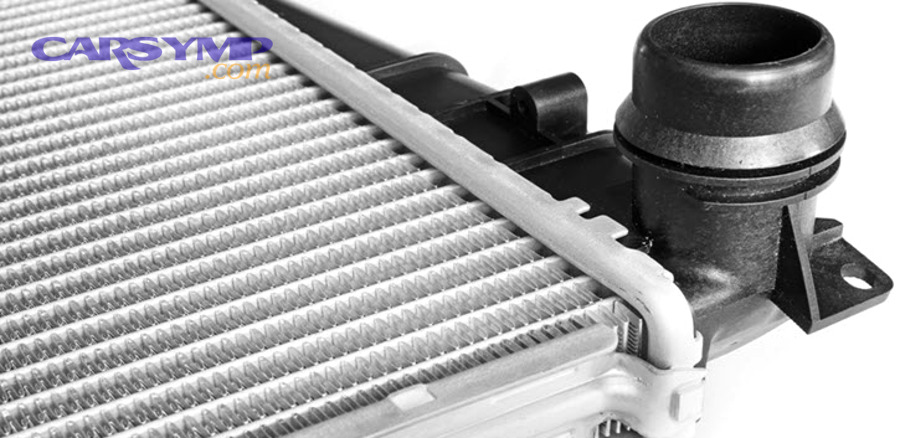
Clog distribution within the radiator affects symptom patterns. Clogs concentrated in the top radiator tank restrict coolant entry, causing engine overheating while the radiator remains relatively cool to touch. Clogs in radiator tube inlets create uneven cooling—some tubes carry full flow while others remain nearly blocked. This uneven distribution generates hot spots in the engine corresponding to poorly cooled cylinders. Clogs at the bottom radiator tank or outlet restrict coolant return to the engine, causing the radiator to run hot while the engine maintains near-normal temperature temporarily before eventually overheating as circulation fails.
The interaction between clogs and other failure modes multiplies your problems. Restricted flow increases pressure throughout the cooling system, stressing hoses, seals, and the radiator cap. This elevated pressure accelerates leak development at weak points. Simultaneously, reduced flow means coolant spends more time in the engine absorbing heat and less time in the radiator releasing it. The coolant reaches higher peak temperatures, accelerating corrosion and coolant degradation. The degrading coolant forms more sludge, worsening the clog. This vicious cycle explains why cooling system problems rarely present as isolated issues—one problem inevitably triggers others.
Preventive strategies specifically target clog formation at various stages. Using distilled or deionized water when mixing coolant eliminates mineral deposits from the source. This simple change prevents 70-80% of hard water-related clogs. Regular coolant flushes every 24-36 months remove accumulated particles before they form significant blockages. Bleeding air after radiator replacement ensures proper coolant circulation and prevents air pockets that can trap debris. External radiator cleaning—using compressed air or gentle water spray—removes debris from fins, maintaining airflow. Professional radiator backflushing, where coolant flows backward through the system under pressure, dislodges deposits that normal flushing misses.
What Are the 7 Essential Prevention Methods for Radiator Failures?
The 7 essential prevention methods for radiator failures are: checking coolant levels monthly, flushing the radiator every 24-36 months, inspecting hoses and connections biannually, using manufacturer-recommended coolant with proper 50/50 mixture, testing the radiator cap annually, monitoring temperature gauges during every drive, and scheduling professional cooling system inspections yearly—collectively reducing failure risk by up to 85%.
In addition, these prevention methods work synergistically rather than independently. Monthly coolant checks detect leaks early, preventing the pressure loss that stresses hoses. Regular flushes remove the corrosive particles that would otherwise clog tubes and damage seals. Hose inspections catch cracking before ruptures occur. Quality coolant maintains corrosion inhibitors that protect all system components simultaneously. Each prevention method reinforces the others, creating a comprehensive defense against radiator failure. Implementing all seven methods costs approximately $200-$300 annually—a fraction of repair costs—while extending radiator lifespan from the typical 5-6 years to 10-12 years.
#1 – How Often Should You Check and Maintain Coolant Levels?
You should check coolant levels monthly when the engine is cold, and maintain them between the minimum and maximum marks on the overflow reservoir, topping up with a 50/50 coolant-water mixture whenever levels drop below the minimum mark to prevent air entry and overheating.
Especially important is understanding that coolant level monitoring serves as your primary early warning system for leaks, consumption, and system integrity. The monthly inspection takes less than three minutes but catches problems worth thousands in repairs. Proper checking technique matters significantly. Always inspect when the engine has been off for at least three hours—hot coolant under pressure can spray from the radiator cap, causing severe burns. Locate the translucent overflow reservoir (usually near the radiator or firewall) marked with “MIN” and “MAX” lines. The coolant level should rest between these marks when cold, rising slightly toward maximum when hot due to thermal expansion.
Coolant level interpretation reveals specific problems. Steady, gradual decline over several weeks indicates a small leak—typically from hoses, gaskets, or the water pump weep hole. Rapid level drops between checks signal larger leaks requiring immediate attention. Coolant level that rises above the maximum mark suggests a blown head gasket introducing combustion gases into the cooling system, or a failing radiator cap unable to manage system pressure properly. Conversely, coolant that consistently reads at or below minimum even after refilling points to external leaks, internal consumption (burning coolant through a damaged head gasket), or insufficient coolant capacity for your engine’s needs.
The coolant maintenance procedure follows specific steps to avoid introducing air or contaminants. First, verify the coolant type—modern vehicles use long-life OAT coolants (often orange or pink) that shouldn’t mix with traditional green coolants. Mixing coolant types creates gel-like precipitates that clog narrow passages. Use only the manufacturer-specified coolant type, or a compatible universal coolant approved for your vehicle. Second, prepare the correct mixture: most climates require a 50/50 blend of concentrated coolant and distilled water. This ratio optimizes both freeze protection (to -34°F) and boil-over protection (to 265°F at 15 PSI). Third, add coolant slowly to the overflow reservoir, never exceeding the maximum mark. Overfilling pressurizes the system excessively, potentially blowing hoses or the radiator cap.
Coolant condition assessment extends beyond simple level checks. Inspect coolant color and clarity during each monthly check. Fresh coolant appears bright and translucent—green, orange, pink, or yellow depending on type. Coolant that turns brown, rust-colored, or murky indicates contamination with rust particles or oil. Oily films or droplets floating on coolant surfaces signal head gasket leaks allowing oil into the cooling system. Tiny metallic particles visible in the coolant suggest advanced corrosion or water pump bearing failure releasing metal shavings. Any of these conditions demands immediate professional diagnosis—they indicate problems beyond simple top-ups.
Seasonal considerations affect coolant maintenance schedules. Summer heat increases evaporation rates and thermal stress, potentially requiring more frequent checks—every 2-3 weeks during sustained high temperatures. Winter freezing risks demand verification that your coolant mixture provides adequate freeze protection. A simple hydrometer test (available at auto parts stores for $10) measures freeze point protection. Insert the hydrometer into the radiator or overflow tank, draw coolant into the tester, and read the freeze point indicator. If protection falls short of your area’s coldest expected temperature, drain some coolant and add concentrated antifreeze to strengthen the mixture.
Documentation practices enhance coolant maintenance effectiveness. Keep a simple log noting date, coolant level, and any top-ups added. This record reveals consumption patterns. For example, if you add one cup monthly consistently, you have a small stable leak worth investigating. If consumption suddenly doubles, something changed—perhaps a deteriorating hose finally failed, or a small leak expanded. Pattern recognition from logged data alerts you to developing problems before they become emergencies, giving you time to schedule convenient repairs rather than dealing with roadside breakdowns.
#2 – Why Is Regular Radiator Flushing Critical for Prevention?
Regular radiator flushing is critical because it removes corrosive rust particles, mineral deposits, and degraded coolant every 24-36 months, restoring heat transfer efficiency by 25-40%, preventing clogs that restrict coolant flow, and replenishing protective corrosion inhibitors that defend against internal radiator damage.
Let’s explore exactly how flushing prevents the specific failure modes we discussed earlier. Fresh coolant contains additives designed to perform multiple protective functions: corrosion inhibitors coat metal surfaces preventing oxidation, lubricants protect water pump seals and bearings, anti-foaming agents maintain liquid consistency under heat and pressure, and pH buffers prevent acidic conditions that accelerate metal degradation. These additives deplete through normal use. Heat cycles break down chemical bonds, contaminants neutralize protective compounds, and oxidation consumes inhibitors as they fulfill their protective function. By 30,000-40,000 miles or 36 months—whichever comes first—coolant loses 50-70% of its protective capacity even if it still looks clean.
The flushing process involves more than simply draining old coolant. Complete radiator flushing follows a systematic procedure. First, the system drains completely—not just from the radiator drain plug but also from engine block drain plugs that remove coolant trapped in the engine’s water jackets. Second, a radiator cleaning solution circulates through the system for 10-20 minutes while the engine runs, loosening deposits and neutralizing acids. Third, the cleaning solution drains and the system flushes with clean water until discharge runs clear. Fourth, new coolant fills the system to proper levels. Finally, air bleeding removes trapped air pockets that could create hot spots or reduce coolant capacity.
DIY flushing saves money but requires careful execution. The supplies cost $30-60: concentrated coolant ($20-30 for 1 gallon), distilled water ($5-10 for 2 gallons), radiator flush solution ($10-15), and a drain pan ($5-10). Permit 2-3 hours for the complete procedure. Critical steps include: working only on a cold engine to avoid burns, collecting all drained coolant for proper disposal (never pour it down drains—it’s toxic), using distilled water to prevent reintroducing minerals, and thoroughly bleeding air from the system after refilling. Online video tutorials specific to your vehicle model guide you through bleeding procedures, as techniques vary between vehicles.
Professional flushing offers advantages beyond DIY approaches. Technicians use specialized equipment including flush machines that reverse-flow the system under pressure, dislodging deposits unreachable by drain-and-fill methods. Pressure testing performed during professional service identifies weak points before they fail. Technicians inspect all cooling system components—hoses, belts, clamps, water pump—catching wear issues you might miss. Professional service costs $100-150 but includes inspection, testing, and proper disposal, making it worthwhile every 2-3 flushes even if you handle routine maintenance yourself.
Flush interval optimization depends on operating conditions. Standard recommendations prescribe flushing every 30,000 miles or 36 months for traditional green coolant, or 50,000 miles / 60 months for extended-life coolants. However, adjust intervals based on your driving environment. Vehicles in hot climates, those towing regularly, or engines that have previously overheated should flush every 24 months regardless of mileage. Short-trip commuters who never fully warm up their engines should flush every 30 months due to moisture contamination. Highway-driven vehicles in moderate climates can safely extend intervals to the longer recommended periods.
Coolant analysis services provide data-driven flush timing. For $20-40, laboratories test a small coolant sample measuring pH, inhibitor levels, contamination particles, and corrosion indicators. The analysis determines whether your coolant remains protective or needs replacement. This scientific approach eliminates guesswork, potentially extending flush intervals on vehicles with easy operating conditions or alerting you to premature coolant degradation requiring earlier service. Fleet operators commonly use coolant analysis to optimize maintenance schedules across hundreds of vehicles, and individual owners can apply the same technology.
#3 – How Can Inspecting Hoses and Connections Prevent Failures?
Inspecting hoses and connections prevents failures by identifying cracks, soft spots, bulges, and loose clamps before catastrophic ruptures occur, enabling proactive replacement of $20-40 hoses rather than emergency repairs costing $300-600 after overheating damages other components.
Moreover, hose failure patterns follow predictable progressions that visual inspection easily catches. Radiator hoses endure extreme conditions: temperatures cycling from ambient to 220°F, pressures reaching 15-16 PSI, continuous flexing from engine vibration, and chemical exposure from coolant and engine bay contaminants. These stresses degrade rubber compounds over time. The deterioration typically begins at connection points where hoses attach to the radiator, engine, or heater core. These high-stress areas experience the greatest flexing and temperature extremes.
The comprehensive hose inspection checklist covers multiple indicators. Visual checks examine the entire hose length looking for: surface cracks (especially near clamps), color changes indicating heat damage (blackening or chalky white deposits), shiny or glazed surfaces showing oil contamination, and external abrasion from rubbing against other components. Tactile checks squeeze hoses firmly feeling for: soft, mushy areas indicating internal deterioration, hard, inflexible sections showing heat hardening, bulges revealing internal separation, and flat, collapsed areas suggesting internal blockage or delamination. Connection checks inspect clamps and fittings for: rust or corrosion, looseness (clamps should be firmly snug), leaking stains around connection points, and proper clamp positioning (centered on the hose bead, not at ends).
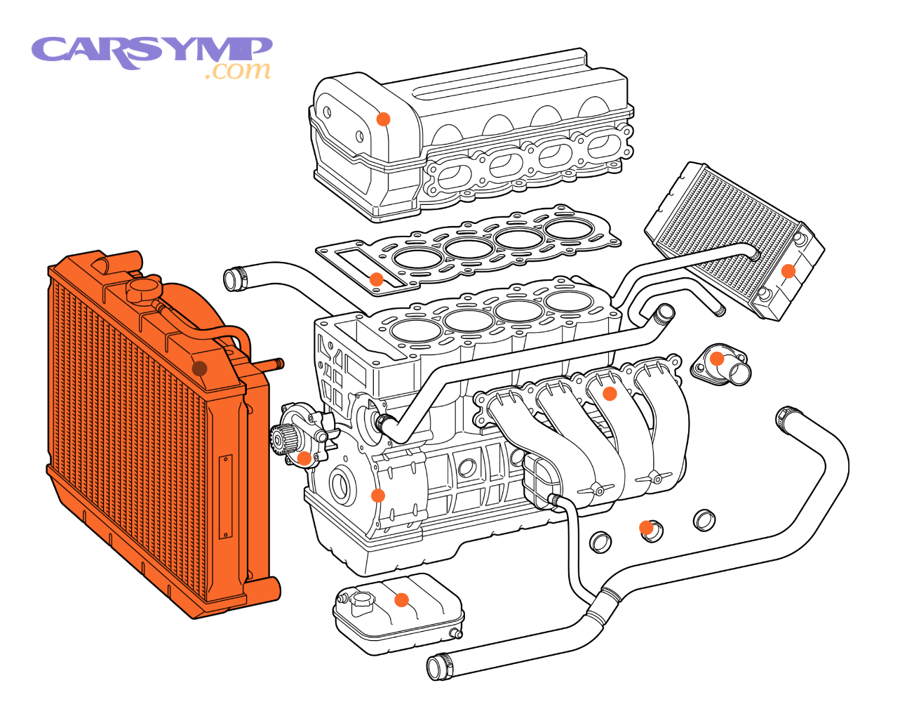
Specific hose types require focused attention. Upper radiator hoses connect the engine thermostat housing to the radiator’s top tank. They carry the hottest coolant and fail most frequently. Look for heat cracking at the engine connection where temperatures peak. Lower radiator hoses return cooler coolant to the engine but experience greater pressure surges as the water pump draws coolant. Check for suction collapse—when weak hoses cave inward under pump vacuum. Heater hoses run through the firewall carrying coolant to the cabin heater core. Their location makes leaks particularly problematic, potentially damaging interior components. Inspect where they pass through the firewall for abrasion damage. Bypass hoses allow coolant circulation when the thermostat is closed. These small-diameter hoses hide behind other components but crack from heat stress.
Clamp technology significantly affects connection reliability. Worm-drive clamps (adjustable screw-type) dominate automotive applications. Inspect for stripped threads, corrosion, and proper tightness—snug but not overtightened, which cuts into hoses. Spring clamps use spring tension and prove more tolerant of thermal cycling but weaken over time. Check that spring tension remains strong by feeling resistance when squeezing the clamp. OEM constant-tension clamps automatically adjust for thermal expansion but can’t be reused after removal—always replace with new clamps during hose changes. Plastic quick-disconnect fittings increasingly replace traditional clamped connections. Inspect O-rings for cracks and verify the locking mechanism engages fully.
Replacement timing follows both age and condition criteria. Replace hoses showing any cracks, bulges, soft spots, or leakage immediately regardless of age—these indicate imminent failure. Replace all hoses preventively at 60,000-80,000 miles or 6-8 years even if they appear serviceable. Rubber compounds degrade internally before external symptoms appear, and the modest cost of preventive replacement ($60-120 including labor) prevents catastrophic roadside failures. Consider replacing all hoses simultaneously rather than individually—if one hose reaches failure condition, others of similar age likely sit on the same degradation timeline. Replacing hoses and clamps during radiator job makes excellent economic sense, as labor costs drop significantly when hoses come off anyway for radiator removal.
The replacement procedure requires specific techniques. Use OEM-quality or better hoses—cheap aftermarket hoses use inferior rubber compounds that fail prematurely. Ensure the correct hose shape—modern engines use molded hoses with specific bends and lengths. Forcing universal straight hoses to fit creates stress points that fail quickly. Lubricate connections lightly with coolant (never oil or petroleum products that degrade rubber) before installation for easier fitting. Position clamps 1/4 inch from hose ends on the reinforced bead area—too close to ends provides insufficient grip; too far onto smooth hose allows slippage. Tighten clamps to manufacturer-specified torque (typically 20-30 inch-pounds)—overtightening cuts hoses while undertightening allows leaks.
#4 – What’s the Right Way to Use Quality Coolant and Additives?
The right way to use quality coolant is to choose only manufacturer-specified coolant types (OAT, HOAT, or IAT), mix concentrated coolant with distilled water at precisely 50/50 ratio, never mix different coolant chemistries, and avoid unnecessary additives that can destabilize the carefully balanced coolant formula.
Specifically, coolant chemistry has evolved dramatically, and understanding these differences prevents costly mistakes. Inorganic Additive Technology (IAT) represents traditional green coolant used in vehicles manufactured before 2000. It contains silicates and phosphates as corrosion inhibitors but requires replacement every 24-36 months as these additives deplete rapidly. Organic Acid Technology (OAT) describes extended-life coolants (typically orange or red) using organic acids for corrosion protection. These last 100,000-150,000 miles or 5 years because organic acids deplete more slowly. Hybrid Organic Acid Technology (HOAT) combines organic acids with reduced silicates, appearing yellow, orange, pink, or purple depending on manufacturer. These extended-life coolants serve as original equipment in many Asian and European vehicles.
The critical compatibility rule cannot be overstated: never mix coolant types. When OAT and IAT coolants mix, their incompatible additives react chemically, forming gel-like precipitates that clog radiator tubes, water pump passages, and heater cores. These gels don’t dissolve even with flushing—they require mechanical removal or component replacement. Similarly, mixing HOAT with other types creates imbalances in the additive package, reducing protection against corrosion and cavitation. Some “universal” coolants claim compatibility across types, but careful reading reveals they work only when fully replacing existing coolant, not when mixing.
Identifying your correct coolant type requires research. Check your owner’s manual first—it specifies the required coolant standard (often listed as “GM DEX-COOL,” “Honda Type 2,” “VW G12,” etc.). The radiator cap or overflow reservoir sometimes displays coolant type requirements. Original equipment coolant typically uses specific colors: GM vehicles use orange DEX-COOL (OAT), Asian manufacturers favor pink or blue HOAT, European brands specify yellow or purple HOAT. However, relying solely on color proves unreliable—aftermarket coolants use arbitrary colors. When uncertain, drain and flush completely, then refill with the confirmed-correct type rather than risking contamination.
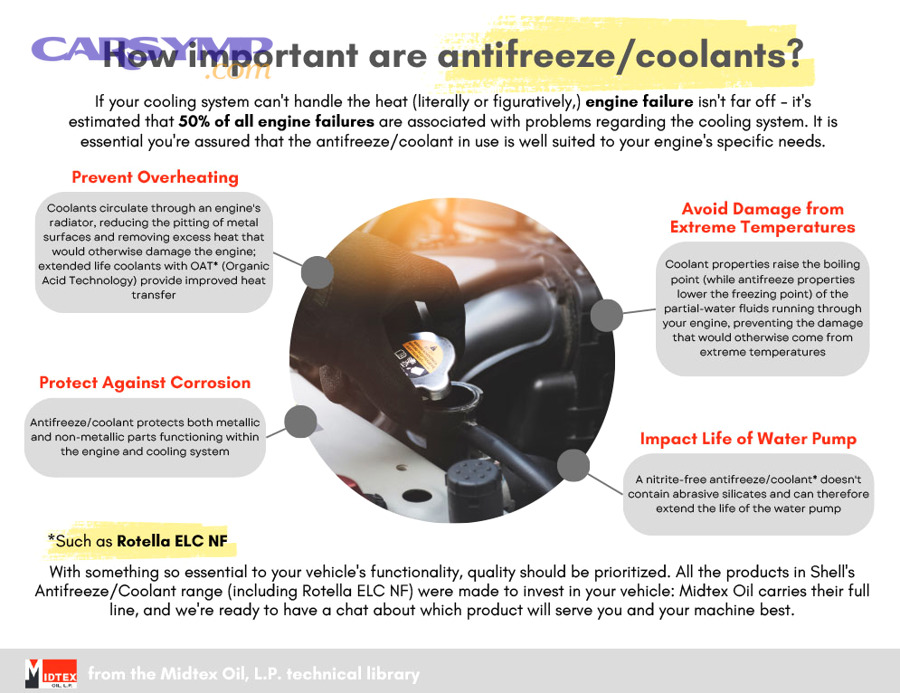
The 50/50 mixture ratio optimizes protection across multiple parameters. Pure coolant actually cools less effectively than water—the mixture combines water’s superior heat transfer with coolant’s freeze protection, boil-over elevation, and corrosion inhibition. A 50/50 blend provides: Freeze protection to -34°F adequate for most climates, Boil-over protection raising the boiling point to 265°F at 15 PSI system pressure, Optimal heat transfer balancing water’s thermal conductivity with coolant’s protective properties, and Corrosion inhibitor concentration at design levels for maximum component protection. Mixtures richer in coolant (60/40 or 70/30) offer enhanced freeze protection for extreme cold climates but sacrifice heat transfer efficiency. Mixtures weaker in coolant (40/60) improve cooling slightly but provide inadequate freeze and corrosion protection.
Water quality affects coolant performance as significantly as the coolant itself. Distilled water (99.9% pure) prevents mineral deposit formation entirely and costs just $1-2 per gallon at grocery stores. Deionized water undergoes ion-exchange treatment removing minerals and represents the gold standard, though it costs more. Tap water varies enormously by location—some municipalities provide relatively soft water while others deliver extremely hard water laden with calcium and magnesium. These minerals precipitate out of solution at cooling system temperatures, forming scale deposits that clog radiators and reduce heat transfer. Even softened tap water contains sodium that can accelerate certain corrosion modes. The modest investment in distilled water ($5-10 per coolant change) prevents hundreds in future repairs.
Coolant additives market themselves with impressive claims but rarely deliver benefits in properly maintained systems. Coolant supplemental additives promise enhanced corrosion protection, improved heat transfer, or seal conditioning. In reality, modern coolants already contain balanced additive packages optimized by engineers. Adding supplemental chemicals can destabilize this balance, causing the additives to fall out of solution or interfere with each other. Stop-leak additives discussed separately might temporarily seal minor leaks but introduce particles that can clog radiators. Water wetter surfactants claim to improve cooling but test results show minimal benefit (2-3°F at most) in systems using proper 50/50 coolant mixture. Save your money and trust the engineered coolant formula.
#5 – How Does Testing the Radiator Cap Prevent System Failures?
Testing the radiator cap prevents system failures because the cap maintains critical 13-16 PSI system pressure that elevates coolant’s boiling point to 265°F, and a failing cap causing just 3-5 PSI pressure loss drops the boiling point 15-20°F, triggering localized boiling, air pocket formation, and overheating even with adequate coolant levels.
However, the radiator cap performs multiple vital functions beyond simple pressure retention. Understanding these functions reveals why this humble $10-20 component dramatically affects cooling system reliability. Pressure regulation forms the primary function—the cap’s spring-loaded valve maintains design pressure as coolant expands during heating. When pressure exceeds the cap’s rating (stamped on top, typically 13-16 PSI), the valve opens, venting excess coolant into the overflow reservoir. Vacuum relief provides the secondary function—as the engine cools, contracting coolant creates vacuum. The cap’s secondary valve opens, drawing coolant back from the overflow reservoir, preventing vacuum that would collapse hoses or draw air into the system. Seal integrity prevents coolant loss through evaporation and seals the system from atmospheric contamination.
Cap failure modes manifest through specific symptoms. Loss of pressure retention occurs when the primary spring weakens or the valve seal deteriorates. You’ll notice coolant boiling at lower-than-normal temperatures, frequent overflow into the expansion tank, and overheating during high-load conditions (towing, climbing grades) that wouldn’t normally cause problems. The temperature gauge may fluctuate erratically as steam pockets form and collapse. Stuck closed caps unable to vent excess pressure create dangerous over-pressure conditions. Hoses bulge, seams strain, and sudden pressure release can blow hoses or crack radiator tanks. Stuck open caps fail to maintain system pressure at all, causing the same boiling issues as weak springs. Failed vacuum relief prevents coolant return from the overflow tank, gradually depleting coolant levels and introducing air.
The pressure testing procedure requires a simple tool available at auto parts stores for $20-40 or free as a loaner. The test takes five minutes and provides definitive cap evaluation. First, remove the cap from a cold engine (never attempt this on a hot engine—pressurized coolant can cause severe burns). Inspect the cap’s rubber seals for cracks, distortion, or hardening. Check the spring for corrosion or damage. Second, attach the cap to the pressure tester—a pump with pressure gauge that simulates system pressure. Third, pump the tester to the cap’s rated pressure (check the number stamped on the cap). The cap should hold this pressure steady for two minutes. Fourth, continue pumping to 2-3 PSI above rated pressure. The cap should release (you’ll hear coolant discharge into the tester’s reservoir), then reseal and hold pressure again. A cap that can’t reach rated pressure, releases early, or fails to reseal properly requires replacement.
Simultaneous system pressure testing leverages the same equipment. With the cap removed, attach the pressure tester’s adapter to the radiator or overflow tank opening. Pump to system pressure (typically 15 PSI) and observe for two minutes. The pressure should remain stable. Pressure dropping indicates leaks—the rate of pressure loss reveals leak severity. Slow drops (1-2 PSI over two minutes) suggest minor seepage from hoses or gaskets. Rapid drops (5+ PSI in 30 seconds) indicate significant leaks demanding immediate repair. While pressure testing, inspect visually for leak locations—look for coolant seeping from hoses, gaskets, water pump weep hole, or radiator seams. This combined cap and system test provides comprehensive cooling system health assessment.
Replacement timing follows both preventive and reactive criteria. Replace the radiator cap every 2-3 years regardless of test results—the modest $10-20 cost provides insurance against failures. Replace immediately if testing reveals any pressure loss, early pressure release, or failure to reseal. Replace whenever you observe coolant boiling below normal operating temperature, frequent overflow losses, or radiator hose collapse after shutdown. Replace whenever coolant service reveals damaged seals or spring corrosion. When installing a new cap, verify the pressure rating matches OEM specifications—higher-pressure caps stress older hoses and seals, while lower-pressure caps reduce boiling protection.
The cap selection process demands attention to specifications. Purchase OEM caps or quality aftermarket equivalents specifically designed for your vehicle. Generic “universal fit” caps rarely seal properly on modern radiators and may use incorrect pressure ratings. Some vehicles use pressure caps on the overflow reservoir rather than the radiator itself—ensure you purchase the correct configuration. Verify seal material compatibility with your coolant type—OAT coolants can degrade certain rubber compounds. Quality caps include both primary pressure and secondary vacuum relief valves—cheaper caps sometimes omit the vacuum relief function.
#6 – Why Should You Monitor Temperature Gauges and Warning Lights?
You should monitor temperature gauges and warning lights because they provide real-time overheating detection enabling shutdown within 30-60 seconds of problem onset, preventing the $2,000-4,000 in engine damage that occurs when overheating continues for 3-5 minutes unnoticed.
Especially during every drive, temperature monitoring should become automatic habit rather than occasional glance. The temperature gauge displays engine coolant temperature, typically scaled with a cold zone, normal operating range, and hot/danger zone. Normal operating temperature for most engines settles around 195-220°F, represented by the center or just past center of the gauge range. This temperature remains remarkably stable during normal driving—variations of more than 10-15°F indicate developing problems. Modern digital displays may show actual temperature numbers, while traditional analog gauges use positions between C (cold) and H (hot) without specific degree markings.
Understanding gauge behavior patterns reveals cooling system health. Normal patterns show gradual temperature rise from cold to operating range over 5-10 minutes of driving, stabilizing in the center area and remaining there regardless of driving conditions. Slight increases during idle or slow traffic are normal, with temperature dropping slightly during highway speeds as airflow increases. Abnormal patterns demand investigation: temperature creeping gradually toward hot over multiple drives suggests declining cooling capacity from partial clogs or low coolant. Temperature spiking suddenly toward hot indicates acute problems like thermostat failure, major leak, or fan malfunction. Temperature fluctuating wildly—rising and falling repeatedly—points to air pockets, failing thermostat, or low coolant creating intermittent circulation.
Warning light systems supplement or replace temperature gauges in many modern vehicles. These idiot lights use a simple on/off design: the light remains off during normal operation and illuminates only when coolant temperature exceeds a critical threshold (typically 240-250°F). Some vehicles employ multi-stage warnings: a yellow or orange light indicates elevated temperature demanding reduced load, while a red light signals critical overheating requiring immediate shutdown. The warning light advantage lies in unmistakable communication—you can’t miss an illuminated light. The disadvantage appears in delayed response—by the time the light illuminates, overheating has already begun.

Immediate response protocols minimize damage when gauges or lights signal overheating. First response when temperature approaches the hot zone or warning light illuminates: reduce engine load immediately by releasing the accelerator, shifting to neutral on downhill grades, and turning off air conditioning (which adds heat load). Second response if temperature continues rising: activate the cabin heater at maximum temperature and fan speed—this transfers engine heat into the cabin, acting as a supplemental radiator. Though uncomfortable, this measure can prevent critical overheating. Third response if temperature reaches the red zone or remains in the danger area for more than 1-2 minutes: pull safely off the road and shut down the engine. Do not attempt to continue driving—every additional minute risks exponentially increasing damage.
Post-shutdown procedures protect both you and the engine. After shutting down an overheated engine, wait at least 30-45 minutes before attempting to open the radiator cap or overflow tank. Pressurized coolant at 250°F+ can explosively vent, causing severe burns. While waiting, observe the engine for leaks, steam, or other obvious problems. Once cool, carefully check coolant level—if low, you’ve identified at least part of the problem. If coolant level appears adequate, the problem lies elsewhere: thermostat failure, fan malfunction, clogged radiator, or failed water pump. At this point, professional towing to a repair facility makes more sense than adding coolant and attempting to drive—the underlying cause will simply trigger overheating again.
Preventive monitoring extends beyond simple gauge watching. Pre-drive checks before long trips verify coolant level, absence of leaks, and fan operation (turn on A/C and verify the fan activates). Climb monitoring during sustained grades watch temperature more carefully—these high-load conditions stress the cooling system maximally. Idle monitoring during extended idling (traffic jams, drive-throughs) note temperature behavior—engines depend more on fan cooling when stationary. Post-drive observations after parking check for coolant smells, visible leaks, or steam. Pattern awareness over weeks and months notice gradual changes in normal operating temperature, idle temperature, or gauge responsiveness—these subtle shifts often precede failures by days or weeks.
Advanced monitoring technologies available in some vehicles provide enhanced protection. Digital temperature displays showing actual numerical temperature enable precise tracking of subtle changes. Coolant level sensors warn when level drops below minimum, catching leaks before overheating occurs. Electric fan monitoring systems display fan status, alerting to fan failures before they cause overheating. Engine protection modes in modern vehicles automatically reduce power or shut down when computers detect dangerous temperatures, protecting the engine even if you miss gauge warnings. While these technologies help, they can’t replace attentive monitoring—electronic sensors can fail, leaving traditional gauges as your primary defense.
#7 – Can Professional Inspections Catch Problems Before They Start?
Yes, professional inspections catch problems before they start because trained technicians using specialized diagnostic equipment detect subtle symptoms—weak hoses, micro-leaks, declining coolant pH, impeller cavitation, and incipient corrosion—that owners miss, enabling repairs costing $100-300 rather than emergency failures exceeding $1,500.
Let’s explore what professional inspections actually encompass and how they complement owner-performed maintenance. Annual professional cooling system inspections cost $80-150 typically and include comprehensive evaluations impossible at home. Pressure testing we discussed earlier forms the foundation—technicians pressure-test both the cap and entire system, revealing leaks too small to produce visible drips. Coolant analysis chemically tests pH levels, inhibitor concentrations, and contamination levels, quantifying coolant degradation invisible to visual inspection. Infrared temperature scanning reveals hot spots indicating localized clogs or circulation problems by mapping surface temperatures across the radiator and engine.
Component inspection examines parts inaccessible without special tools or vehicle lifting. Technicians inspect the water pump for bearing play and leaking weep holes—early indicators of impending failure. They check thermostat operation using scan tools that command thermostat opening while monitoring temperature response. They examine fan clutches (on mechanical fans) for proper engagement and slippage. They inspect heater core operation by measuring temperature differences between inlet and outlet hoses. They evaluate radiator fin condition using borescopes to view internal tubes. This comprehensive assessment catches the 40% of cooling system problems that produce no owner-visible symptoms until catastrophic failure.
Diagnostic equipment provides capabilities beyond DIY tools. Exhaust gas analyzers test for combustion gases in coolant, detecting head gasket leaks too small to produce obvious symptoms. Refractometers precisely measure coolant concentration and freeze protection—critical in extreme climates. Flow meters quantify coolant flow rate, revealing restrictions from partial clogs. pH meters determine coolant acidity levels that indicate corrosion risk. Scan tools access engine computers displaying coolant temperature sensor data, fan commands, and thermostat control—information revealing electronic cooling system problems.
The cost-benefit analysis strongly favors annual professional inspections. Consider the typical failure scenario without inspection: a gradually weakening hose finally ruptures during highway driving. You notice overheating too late to prevent damage. The towing bill runs $100-150. Emergency radiator replacement costs $500-700. Head gasket damage from even brief overheating adds $1,200-2,000. Total cost: $1,800-2,850. Now consider the preventive scenario: annual $100 inspection identifies the weakening hose. Replacement during routine service costs $150 including labor. You avoid the failure entirely. The $250 invested in inspection and preventive repair saves $1,600-2,600—a 6-10× return on investment.
Optimal inspection timing coordinates with other maintenance for efficiency. Schedule cooling system inspection during: Annual service visits when you already pay for vehicle lift and inspection time, adding cooling system evaluation costs minimally more. Pre-summer checks in April-May before heat stress increases failure risk. Pre-winter preparations verifying freeze protection and heater operation before cold weather. Pre-road-trip inspections before long-distance travel when failures would prove most problematic. Post-overheat evaluations after any overheating episode to assess potential damage even if the engine appears fine.
Red-flag indicators that demand immediate professional inspection rather than waiting for annual service include: any visible coolant leaks regardless of size, temperature gauge reading higher than historical normal, frequent need to add coolant, coolant changing color or developing particles, sweet smell in cabin or engine bay, white smoke from exhaust, oil appearing in coolant or vice versa, engine running rough when cold, and heater producing inadequate heat. Any single symptom justifies professional diagnosis; multiple symptoms demand immediate attention. Delaying inspection when symptoms appear inevitably transforms minor repairs into major expenses.
What Are the Early Warning Signs That Your Radiator Needs Attention?
The eight early warning signs that your radiator needs attention are: puddles of colored fluid under the vehicle, discolored or contaminated coolant, overheating temperature gauge readings, sweet coolant smell, white exhaust smoke, visible corrosion on radiator components, collapsed or swollen hoses, and steam from under the hood—each indicating specific failure modes requiring immediate diagnosis before catastrophic breakdown.
To illustrate, recognizing these symptoms early provides a critical intervention window. Most radiator failures progress through predictable stages over weeks or months rather than failing instantaneously. The early warning phase—when symptoms first appear—allows convenient scheduled repairs during normal business hours. Ignoring warnings enters the acute phase where problems intensify rapidly. Continuing past acute symptoms guarantees catastrophic failure, usually during the worst possible circumstances: highway speeds, extreme weather, or far from assistance. The difference between heeding early warnings and pushing through them often separates $200 repairs from $2,000+ disasters.
How Can You Identify Coolant Leaks Under Your Vehicle?
You can identify coolant leaks under your vehicle by looking for puddle colors (bright green, orange, pink, or yellow), checking consistency (slippery and slightly thick), smelling for sweet antifreeze odor, and locating puddles directly under the radiator, water pump, or hose areas after the vehicle sits for several hours.
In addition, leak identification requires systematic inspection because not all under-vehicle fluids indicate coolant problems. Color identification provides the primary diagnostic tool. Coolant appears in distinct bright colors: traditional coolant glows bright green, DEX-COOL shows orange or red, Asian coolants tend toward pink or blue, and some European coolants display yellow or purple. These colors remain vibrant and easily distinguished from other vehicle fluids. Compare this to: engine oil (brown to black, opaque), transmission fluid (red or brown, translucent), power steering fluid (red or clear), brake fluid (golden amber), and water condensate (completely clear). The vivid coolant colors make identification straightforward.
Texture and consistency confirm coolant identity when color alone proves insufficient. Fresh coolant feels slippery between fingers—distinctly more lubricous than water. It’s slightly viscous, flowing more slowly than water but not as thick as oil. Coolant doesn’t readily evaporate like water; puddles remain visible for hours or days. When coolant dries, it may leave crystalline residue or sticky film rather than disappearing entirely. These physical properties distinguish coolant from water condensation dripping from air conditioning systems—a common false alarm that concerns vehicle owners.
Smell identification adds another diagnostic layer. Ethylene glycol coolant produces a distinctly sweet smell reminiscent of candy or maple syrup. This characteristic odor permeates the area around coolant leaks. You’ll notice it when opening the hood of a warm engine with leaking coolant, when checking under the vehicle near leak locations, and sometimes even inside the cabin if the heater core leaks. The sweet smell serves as an olfactory warning system often detecting leaks before visible puddles form. Note that some newer propylene glycol coolants smell slightly less sweet, more chemical in nature, but still distinctly different from other automotive fluid smells.
Location analysis narrows the leak source. Coolant puddles under the front center of the vehicle typically indicate radiator leaks—from the radiator itself, hoses, or connection points. Coolant offset to one side points toward hose leaks on that side. Puddles further forward near the wheel well suggest water pump failure. Leaks under the dashboard (visible as stains or wet carpet) indicate heater core problems. Using the puddle location as a starting point, trace upward to components directly above—leaks run downward following gravity, but the actual source sits higher than the puddle.
Stain detection supplements fresh puddle observation. Even after puddles evaporate or get washed away, coolant leaves evidence. Look for: bright-colored stains on the driveway, garage floor, or parking space indicating chronic leaking; crusty white or colored deposits on radiator surfaces, hoses, or engine components where leaking coolant evaporates; and wet spots or dark staining on components even when no drips are actively falling. These residual markers guide inspection to specific components for closer examination.
Leak rate assessment determines urgency. Slow seepage producing quarter-sized puddles after overnight parking indicates minor leaks—typically from weeping hose connections or pinhole radiator tubes. Address within 1-2 weeks. Moderate leaks leaving dollar-bill-sized puddles after a few hours require repair within days. Rapid leaks pooling pint- or quart-sized quantities in minutes demand immediate attention—these catastrophic failures risk severe overheating if you attempt to drive. Intermittent leaks that appear only when the engine reaches operating temperature and pressure suggest leaks sealed by thermal expansion when cold but opening under heat and pressure—these deceptive leaks can be difficult to locate but are often more severe than they initially appear.
Detection techniques enhance leak identification. Paper or cardboard placed under the vehicle overnight creates a high-contrast surface showing leak location and color clearly. UV dye added to coolant (available at auto parts stores for $10-15) glows brightly under UV flashlight, making even tiny leaks visible—especially useful for finding slow seeps that don’t produce puddles. Tissue or paper towels wiped across suspected leak areas absorb small amounts of coolant, revealing leaks through color and texture even when components appear dry visually.
What Does Discolored or Contaminated Coolant Indicate?
Discolored or contaminated coolant indicates internal corrosion (brown/rust color), head gasket failure (milky or oily appearance), or long-overdue coolant service (murky or particulate-laden), with each contamination type requiring specific diagnostic procedures and repair strategies ranging from simple flushing to major engine work.
Specifically, coolant color changes communicate specific problems. Brown or rust-colored coolant signals iron oxide (rust) contamination from corroding engine block, cylinder heads, or radiator. This corrosion accelerates rapidly once protective inhibitors deplete, creating a vicious cycle: rust particles act as abrasives damaging water pump seals and scoring cylinder walls, while consuming remaining corrosion inhibitors. Rust contamination typically indicates coolant exceeding its service life by 12-24+ months, or use of tap water introducing oxygen that oxidizes metal. Treatment requires complete coolant flush, possibly with radiator cleaning chemicals, followed by refilling with proper coolant mixture using distilled water.
Black or dark brown coolant suggests oil contamination mixing with coolant. Oil enters the cooling system through cylinder head gasket failures, cracked cylinder heads, or transmission cooler failures (in radiators with integrated transmission coolers). The oil-coolant emulsion appears milky when fresh, darkening to brown or black over time. This contamination is serious—it indicates internal engine damage or failure requiring immediate professional diagnosis. Do not continue driving with oil-contaminated coolant; the mixture damages seals, accelerates corrosion, and reduces heat transfer dramatically. Diagnosis typically involves compression testing, leak-down testing, or pressure testing to locate the breach point.
Milky or foamy coolant results from oil mixing with coolant more recently. The appearance resembles chocolate milk or coffee with cream. This contamination proves even more problematic than oil-darkened coolant because the emulsion clogs radiator tubes and passages far more effectively than separated fluids. The usual cause is catastrophic head gasket failure allowing oil galleries and coolant passages to communicate. Secondary causes include intake manifold gasket failure on engines with coolant-heated intake manifolds, or cracked cylinder heads from extreme overheating or freezing damage. This condition demands immediate engine shutdown and professional diagnosis—continued operation risks complete engine destruction.
Murky or cloudy coolant without oil contamination indicates suspended particles from normal wear and corrosion. Fresh coolant appears translucent, almost glowing in bright colors. As coolant ages, microscopic particles accumulate: rubber particles from hoses, gasket material, metal particles from water pump impellers, and mineral deposits from incomplete flushing. This murkiness becomes pronounced after 40,000-50,000 miles or 4-5 years. While less urgent than oil contamination, murky coolant signals overdue service. The suspended particles act as abrasives, accelerating wear throughout the cooling system. Complete flush and replacement with fresh coolant restores clarity and protection.
Visible particles or sediment settling in the overflow reservoir or floating in coolant indicate advanced contamination. Metal flakes suggest severe corrosion or mechanical failure—possibly water pump impeller disintegration or catastrophic bearing failure releasing metal particles. White or tan sediment typically consists of mineral deposits from hard water use. Black or brown sludge indicates extremely degraded coolant forming gel-like compounds. Red or pink sediment in systems using red coolant might indicate transmission fluid contamination from a failed transmission cooler. Each particle type demands investigation to identify the source and extent of contamination.
The coolant condition testing procedure provides quantitative assessment beyond visual inspection. Purchase a coolant test strip kit ($5-10) that measures pH, inhibitor concentration, and contamination levels. Collect a small coolant sample from the overflow reservoir when cold. Dip the test strip per instructions and compare color changes to the reference chart. Normal coolant maintains pH between 7.0-11.0 depending on type, with adequate inhibitor reserves. Acidic coolant (pH below 7.0) indicates severe degradation demanding immediate replacement. Depleted inhibitors show even when coolant appears clean visually. Professional coolant analysis services provide more comprehensive testing including metallic particle analysis revealing which components are corroding.
Treatment protocols depend on contamination type and severity. Rust contamination requires complete coolant drain, radiator flush with cleaning solution, and refill with proper coolant using distilled water. Consider adding a rust inhibitor additive to the fresh coolant. Oil contamination demands diagnosis and repair of the oil entry point (head gasket, etc.) before addressing coolant. After mechanical repair, completely flush the system multiple times until all oil traces disappear—oil residue continues causing problems. Minor particle contamination responds to simple flush and replacement. Severe sludge accumulation may require professional back-flushing with specialized equipment, or even radiator removal for mechanical cleaning or replacement if flushing proves insufficient.
How Long Should a Well-Maintained Radiator Last?
A well-maintained radiator should last 8-12 years or 120,000-180,000 miles in optimal conditions, compared to 5-6 years for neglected radiators, with lifespan primarily determined by coolant maintenance quality, operating environment, and promptness of minor repair addressing.
Moreover, understanding the factors influencing longevity empowers you to maximize radiator lifespan. Radiators don’t expire on fixed schedules—they deteriorate based on cumulative stress exposure. Some vehicles reach 15+ years on original radiators while others need replacement at 4-5 years. This wide variation stems from controllable factors (maintenance practices, coolant quality, repair responsiveness) and external factors (climate, usage patterns, manufacturing quality).
What Factors Influence Radiator Longevity?
The six primary factors influencing radiator longevity are: coolant maintenance quality (40% impact), operating environment including climate and driving conditions (25%), material quality and manufacturing (15%), timely minor repair addressing (10%), coolant chemistry compatibility (5%), and mechanical stress from engine mounting and vibration (5%).
Coolant maintenance quality dominates longevity outcomes because it directly affects corrosion rates. Fresh coolant with active inhibitors reduces corrosion by 90-95% compared to unprotected water. As inhibitors deplete, corrosion accelerates exponentially. Consider two identical vehicles: Vehicle A receives coolant flushes every 30,000 miles with proper distilled water mixture. Vehicle B runs original factory coolant for 100,000 miles. Vehicle A’s radiator shows minimal internal corrosion at 150,000 miles. Vehicle B experiences radiator failure around 60,000-80,000 miles from severe corrosion. The difference? Consistent coolant maintenance investing perhaps $600 over a vehicle’s lifetime versus a $700 radiator replacement plus associated repairs.
Operating environment dramatically affects wear rates through multiple mechanisms. Hot climates stress cooling systems continuously, running radiators at design limits during summer months. Phoenix radiators average 6-8 year lifespans versus 10-12 years in Seattle due to sustained heat exposure. Cold climates risk freeze damage if coolant mixture provides insufficient protection. A single freeze event cracks radiator tanks or tubes, causing immediate failure. High-altitude operation reduces cooling efficiency because thinner air provides less heat dissipation per unit of airflow. Mountain vehicles may run 10-15°F hotter than sea-level equivalents, accelerating coolant degradation. Stop-and-go traffic increases heat cycling and reduces airflow, stressing radiators more than highway driving.
Material quality and manufacturing standards separate premium radiators from economy replacements. OEM radiators meet original design specifications for tube thickness, tank construction, and fin density. They typically last 8-12 years. Premium aftermarket radiators sometimes exceed OEM specifications, using thicker materials or improved designs. These can outlast OEM parts. Economy aftermarket radiators cut costs through thinner metals, fewer tubes, lower fin density, and cheaper tank materials (plastic instead of metal). These replacements commonly fail within 3-5 years. The initial $100-150 savings buying economy radiators costs far more when premature replacement becomes necessary.
Timely minor repair addressing prevents small problems from escalating. A slow leak caught early requires a $15 hose clamp tightening. Ignored, that leak loses coolant, introduces air, causes overheating that warps gaskets, expands the leak, and leads to $1,000+ repairs. A loose fan shroud vibrating against the radiator creates a wear spot. Tightened immediately—$0 cost. Allowed to continue until it punctures a tube—$700 radiator replacement. Small problems caught and fixed preserve radiator lifespan significantly.
Coolant chemistry compatibility affects longevity through corrosion mechanisms. Using the manufacturer-specified coolant type ensures corrosion inhibitors protect all metals in your specific cooling system. Asian engines with extensive aluminum use require different inhibitor packages than American engines with more iron content. Using incorrect coolant types accelerates corrosion of specific metals even when coolant levels and flush intervals remain proper. Mixing coolant types creates even worse problems, with incompatible additives precipitating out or interfering with each other’s protective function.
Mechanical stress from engine mounting and vibration contributes to fatigue failures, though less significantly than other factors. Broken or worn engine mounts allow excessive engine movement, flexing radiator hoses and stressing connection points. Over years, this repeated flexing creates metal fatigue in radiator tanks and tube connections. Vehicles with rough idling—from engine problems or aggressive engine mounts—transmit more vibration through the cooling system. These mechanical stresses accumulate slowly but eventually produce cracks and leaks, particularly at tube-to-tank joints and mounting bracket points.
The lifespan optimization strategy combines all protective factors. Practice excellent coolant maintenance with timely flushes using proper coolant types and distilled water. Minimize stress from operating environment through appropriate warm-up procedures, avoiding excessive idling, and maintaining working air conditioning (reducing cooling system load). Invest in quality parts—OEM or premium aftermarket only—when replacement becomes necessary. Address minor issues promptly rather than delaying repairs. Maintain the entire cooling system including water pump, thermostat, hoses, and cap—failures in supporting components stress the radiator. Check and maintain engine mounts reducing mechanical vibration. This comprehensive approach routinely delivers 10-15 year radiator service life.
What Advanced Maintenance Techniques Can Further Protect Your Radiator?
Advanced maintenance techniques that further protect your radiator include monitoring temperature sensor accuracy, maintaining radiator fan clutch systems, using stop-leak products judiciously for emergency situations, and adjusting maintenance intervals based on driving environment—collectively extending radiator lifespan by an additional 20-30% beyond standard maintenance practices.
Especially for enthusiasts and those seeking maximum longevity, these advanced techniques build on the seven essential prevention methods. While the core methods address universal needs, advanced techniques tailor maintenance to specific vehicle systems, environmental challenges, and individual use patterns. Professional technicians employ these methods as standard practice. Informed owners can implement many of them with modest additional effort and expense.
How Do Temperature Sensors and Thermostats Affect Radiator Performance?
Temperature sensors and thermostats affect radiator performance by controlling coolant flow timing and volume—thermostats regulate when coolant circulates (opening at 180-195°F), while sensors inform the engine computer to adjust fan speed, timing, and fuel mixture, with failures in either component causing overheating, overcooling, or erratic temperature control that stresses the radiator and reduces efficiency.
Specifically, understanding these control components reveals how electronic management systems protect or compromise radiator function. The thermostat serves as a mechanical valve controlling coolant flow between the engine and radiator. When cold, the thermostat remains closed, forcing coolant to circulate only within the engine block. This restriction allows rapid warm-up to optimal operating temperature, improving fuel economy and reducing emissions during the critical first minutes of operation. Once coolant reaches the thermostat’s rated temperature (typically stamped on the unit: 180°F, 192°F, or 195°F), a wax pellet inside expands, opening the valve. Coolant then flows through the radiator, beginning active cooling.
Thermostat failure manifests in two distinct modes. Stuck-closed thermostats remain shut even when coolant exceeds opening temperature. Coolant trapped in the engine overheats rapidly since it never reaches the radiator for cooling. The temperature gauge spikes toward hot within 5-10 minutes of driving. Meanwhile, the radiator stays cool to the touch—a diagnostic indicator distinguishing thermostat failure from other overheating causes. This failure mode causes severe engine damage if not caught immediately. Stuck-open thermostats never close, allowing coolant to circulate through the radiator continuously even when cold. The engine takes 15-20+ minutes to reach operating temperature. Fuel economy drops by 10-15%. In cold weather, the engine may never fully warm up. Heater output becomes inadequate. While less immediately dangerous than stuck-closed failure, stuck-open thermostats increase wear, reduce efficiency, and cause emissions control system problems.
Coolant temperature sensors (CTS) inform the engine control unit (ECU) of coolant temperature with precision. The ECU uses this data to adjust: fuel injection timing and volume (richer mixture when cold, leaner when warm), ignition timing (retarded when cold to reduce emissions, advanced when warm for efficiency), radiator fan operation (commanding electric fans on/off based on temperature), and transmission shift points (delayed upshifts when cold to promote warm-up). Accurate temperature sensing proves critical for optimal engine operation across all conditions.
Sensor failures create varied symptoms depending on failure mode. Sensor reading cold when actually warm causes the ECU to enrich fuel mixture and retard timing—rough idle, poor fuel economy, failed emissions tests, and inadequate fan activation leading to overheating. Sensor reading hot when actually cold causes lean mixture and advanced timing—hard starting, poor cold driveability, rough acceleration, and unnecessary fan activation. Erratic sensor readings produce unstable idle, surging acceleration, and inconsistent temperature gauge behavior. Complete sensor failure often triggers “failsafe” mode where the ECU assumes fixed temperature values, running poorly but preventing catastrophic damage.
The diagnostic process for temperature control components follows logical steps. First, verify temperature gauge behavior—does it stabilize at normal operating range, or read excessively high, low, or erratic? Second, check for diagnostic trouble codes using an OBD-II scanner ($20-50)—codes P0115-P0119 indicate temperature sensor problems, while P0128 suggests thermostat issues (coolant not reaching temperature). Third, feel radiator hose temperatures with the engine running—upper hose should heat gradually, becoming hot when thermostat opens. If the upper hose remains cold while the engine overheats, the thermostat stuck closed. If both hoses heat immediately at startup, the thermostat stuck open. Fourth, measure sensor resistance using a multimeter—resistance should decrease as temperature rises, following curves specified in repair manuals.
Replacement timing and procedures deserve attention. Replace thermostats every 60,000-80,000 miles preventively—the modest $15-40 part cost prevents overheating risk. Replace immediately if stuck-closed symptoms appear. Consider replacement when performing other cooling system work since labor costs dominate thermostat replacement—the part costs $15-40 while labor runs $75-150 for inaccessible installations. Replace temperature sensors when diagnostic codes appear, erratic temperature behavior occurs, or during major cooling system repairs. Sensor replacement costs $30-80 for the part plus 30-60 minutes labor for accessible locations.
Installation notes ensure proper function. Thermostats install with the spring mechanism facing the engine side. Orientation matters—installing backward prevents proper sealing. Most thermostats include rubber gaskets or O-rings requiring precise alignment. Some installations use RTV silicone gasket maker instead of formed gaskets—apply thin, continuous beads avoiding excess that could enter the cooling system. After installation, bleeding air after radiator replacement becomes critical—air pockets trapped near the thermostat prevent proper opening and closing. Follow manufacturer-specific bleeding procedures, which typically involve running the engine with the radiator cap open until the thermostat opens, refilling as coolant level drops, and repeating until no more air escapes.
What Is the Role of Radiator Fan Clutches in Preventing Overheating?
The radiator fan clutch plays a vital role by engaging the cooling fan at high speeds when engine temperature rises and disengaging at lower speeds during highway driving when ram air provides adequate cooling, reducing parasitic power loss by 3-5 horsepower while ensuring sufficient airflow during idle and low-speed conditions where overheating risk peaks.
However, fan clutch technology varies between mechanical and electronic systems, each with distinct failure modes and maintenance requirements. Mechanical fan clutches use a viscous fluid-filled coupling that responds to temperature. A bimetallic spring on the clutch face senses radiator air temperature. As temperature rises, the spring opens a valve releasing silicone fluid into the clutch mechanism. The fluid creates viscous coupling between the drive pulley and fan blade assembly, engaging the fan. When temperature drops, the valve closes and fluid drains back to the reservoir, disengaging the fan. These mechanical systems work independently of electrical systems, providing fail-safe cooling even during electrical failures.
Mechanical fan clutch failure typically manifests as failure to engage (most common) or failure to disengage (less common). Failed engagement presents as overheating during idle or slow-speed driving, while highway speeds maintain normal temperature due to ram air. You might notice the fan spinning freely—easy to stop with a rolled-up newspaper (engine off!)—rather than showing resistance. Diagnosis involves the “newspaper test”: with the engine cold and off, attempt to spin the fan by hand. It should spin but with noticeable resistance. Excessive free-spinning indicates clutch failure. Some clutches show visible fluid leaks around the clutch body—dripping silicone indicates internal seal failure. Failed disengagement presents as constant loud fan roar at all speeds, reduced fuel economy from increased engine load, and possible fan bearing noise from continuous high-speed operation.
Electric fan systems replace mechanical clutches entirely in most modern vehicles. An electric motor drives the fan, controlled by the ECU based on coolant temperature sensor data. Electric fans offer superior control—variable speed operation matching cooling needs precisely, independent operation allowing post-shutdown cooling, and elimination of mechanical complexity. Multiple diagnostic points exist: the fan motor itself, relay circuits, fuse protection, and ECU control logic. Failures present as non-operation (overheating during idle/low-speed) or continuous operation (reduced fuel economy, potential electrical system stress).
Electric fan diagnosis follows electrical troubleshooting principles. Verify fan motor operation by direct power application (briefly connect motor directly to battery with appropriate wiring)—if the fan runs, the motor is functional and the problem lies in control circuits. Check fuses and relays—these common failure points often cause complete fan failure. Monitor live data using a scan tool while the engine warms—verify the ECU sees rising coolant temperature and commands fan activation. If commands appear but the fan doesn’t run, suspect relay or wiring problems. If no command appears despite high temperature, suspect sensor or ECU logic problems.
Maintenance requirements differ substantially between systems. Mechanical clutches require no routine maintenance until failure, but benefit from periodic inspection (annual) for fluid leaks, bearing noise, and engagement testing. Replacement typically occurs at 80,000-120,000 miles or when failure symptoms appear. Quality replacement clutches cost $75-150 plus installation labor. Electric fans also require no routine maintenance but demand inspection of electrical connections, especially in corrosive environments where terminal corrosion causes resistance and voltage drops. Fan motor bearings eventually fail from continuous use—replacement typically occurs at 100,000-150,000 miles. Quality electric fan assemblies cost $100-250 plus installation labor.
Should You Use Radiator Stop-Leak Products for Prevention?
No, radiator stop-leak products should not be used preventively because they introduce particles that can clog radiator tubes, heater cores, and thermostat passages—instead, reserve them for emergency situations where small leaks threaten immediate breakdown and professional repair isn’t accessible within 24-48 hours.
On the other hand, understanding when stop-leak products provide legitimate benefit versus causing harm requires nuance. These products contain various sealing agents: ground walnut shells, aluminum particles, sodium silicate (liquid glass), or synthetic polymers. The sealing mechanism varies by product type. Particulate sealers work by circulating through the cooling system until particles lodge in leak points, building up until they physically block the leak. Chemical sealers work by reacting with air or temperature at the leak point, forming solid seals through polymerization or silicate crystallization.
The legitimate emergency use case justifies carrying a bottle in your vehicle for roadside emergencies. Imagine driving through remote areas when a hose springs a leak. The nearest repair facility sits 100 miles away. Coolant drains rapidly, threatening engine damage within minutes. In this scenario, stop-leak products provide temporary repair allowing you to reach safety. Add the product per instructions, idle the engine for 10-15 minutes allowing circulation, and monitor temperature during careful driving to the repair facility. The product may seal the leak adequately for temporary operation. Even partial sealing might maintain sufficient coolant levels for emergency operation.
However, the risks and limitations demand respect. Clogging hazards represent the primary concern. Particulate sealers don’t selectively block only leak points—they can lodge anywhere in the system. Radiator tubes with internal deposits provide perfect lodging points for particles, compounding existing restriction problems. Heater cores with narrow passages clog easily, blocking cabin heat. Thermostats can jam partially open or closed if particles wedge in the valve mechanism. Water pumps experience accelerated seal wear from abrasive particles. These secondary failures often cost more to repair than the original leak.
Incompatibility problems arise with certain coolant types. Some stop-leak products react poorly with long-life OAT coolants, forming precipitates or gel. Read product labels carefully, ensuring compatibility with your coolant type. Never mix different stop-leak products—the chemical interactions between products prove unpredictable. Some professional radiator shops refuse to service systems containing stop-leak products, requiring complete flush or replacement. The product complicates later repairs by clogging pressure test equipment, contaminating recycled coolant, and making leak location difficult.
Effectiveness limitations further constrain stop-leak utility. These products seal only very small leaks—pinhole leaks in radiators, minor seepage from gaskets, tiny cracks in plastic tanks. They cannot seal split hoses, major radiator tank cracks, failed water pump seals, or blown head gaskets. Attempting to seal these major leaks with stop-leak proves futile while potentially creating additional clogging problems. The products work best on leaks small enough that you might debate whether repair is even necessary—making their value questionable.
Best practices for emergency stop-leak use minimize risks. Choose products specifically designed for your engine type (aluminum engines require different products than iron blocks). Use the minimum effective amount—more product doesn’t seal better, just clogs more. Implement immediate follow-up—consider the stop-leak a temporary field repair allowing you to reach proper repair facilities. Complete system flush after emergency use, removing all stop-leak residue before professional repair. Never use stop-leak preventively on well-functioning systems—the risks far outweigh any potential benefits.
Alternative approaches provide better emergency preparedness. Carry spare hose clamps and duct tape capable of temporarily reinforcing failed hoses. Keep extra coolant for emergency top-ups. Maintain roadside assistance coverage providing towing when repairs prove impossible. These preparations address cooling system emergencies without introducing problematic substances into your cooling system.
How Does Your Driving Environment Impact Radiator Maintenance Needs?
Your driving environment impacts radiator maintenance needs significantly—hot climates demand 25% more frequent coolant maintenance, cold climates require verified freeze protection and block heater use, city driving increases cooling stress requiring biannual hose inspections versus annual for highway driving, and towing/hauling necessitates upgraded cooling systems beyond standard maintenance.
Specifically, environmental adaptation ensures maintenance schedules match actual stress levels rather than following generic recommendations. Consider the baseline maintenance schedule as designed for moderate climates, mixed driving conditions, and average loads. Your specific environment may impose substantially higher (or occasionally lower) stress, justifying schedule modifications.
Hot climate adaptations (regions with sustained summer temperatures exceeding 95°F) demand heightened attention to cooling system health. Heat accelerates coolant degradation—inhibitors deplete 25-40% faster in Phoenix versus Portland. Reduce coolant flush intervals from 36 months to 24 months. Inspect hoses more frequently—biannually instead of annually—because heat accelerates rubber degradation. Monitor coolant level monthly instead of seasonally, as evaporation increases dramatically. Consider using premium coolant formulations specifically designed for high-temperature operation—these contain enhanced inhibitor packages and higher boiling points. Verify radiator cleanliness quarterly—dust and debris accumulation blocks airflow more critically when ambient temperatures approach coolant temperatures. Premium considerations include auxiliary transmission coolers for automatic transmissions and oil coolers for hard-worked engines.
Cold climate adaptations (regions where winter temperatures drop below 0°F) focus on freeze protection and warm-up issues. Test freeze protection annually before winter using a hydrometer or refractometer. Coolant protecting to -34°F suffices for most areas, but regions with temperatures below -20°F should strengthen mixtures to -50°F protection using 60/40 or 70/30 coolant-water ratios. Consider block heaters for extreme cold—these ease starting and reduce cold-start wear while allowing quicker cabin heating. Inspect hoses carefully after winter—freeze-thaw cycling stresses rubber and can create cracks that don’t leak until warming weather returns. Address any coolant leaks immediately in cold climates—spilled coolant creates extremely slippery ice patches hazardous to pedestrians and pets, plus attracts animals to its sweet taste with fatal results.
City driving stress (frequent stops, extended idling, slow speeds) increases radiator work because engines depend heavily on fan cooling when stationary. Ram air provides little or no assistance during stop-and-go traffic. Increase hose inspection frequency to biannually and include fan operation testing—verify electric fans activate properly during extended idling. Monitor temperature gauges carefully during traffic jams where overheating risk peaks. Consider cleaning radiator fins annually since low-speed operation reduces self-cleaning from high-velocity airflow. Some city drivers benefit from auxiliary electric fans or upgraded fan clutches providing enhanced stationary cooling.
Highway driving benefits (sustained moderate speeds, minimal stopping) actually reduce radiator stress through excellent ram air cooling and consistent operating temperatures. These vehicles may safely extend hose inspection to annual intervals. Highway operation keeps radiator fins cleaner naturally. Temperature stability reduces thermal cycling stress on all components. However, highway drivers should verify proper thermostat operation—highway speeds can mask stuck-open thermostats that nevertheless waste fuel and cause premature engine wear.
Towing and hauling impacts (frequent trailer towing, heavy payload hauling, mountain driving) dramatically increase cooling system demands. Engine output increases 50-100% under heavy load, generating proportionally more heat. Standard cooling systems often prove marginal under these conditions. Recommendations include: installing transmission cooler bypassing the radiator’s integral cooler, upgrading to heavy-duty radiator with increased capacity, implementing engine oil cooler, reducing coolant flush intervals to 24 months, inspecting hoses biannually focusing on heat-damaged areas, and monitoring temperature gauges meticulously during towing. Many manufacturers offer towing packages with upgraded cooling components—retrofitting these becomes worthwhile for serious towers.
Environmental contamination affects radiator maintenance in specific locations. Coastal areas expose radiators to salt spray accelerating external corrosion—increase external inspection frequency, clean radiator exterior quarterly with low-pressure fresh water, and apply corrosion inhibitor coatings to vulnerable areas. Agricultural areas with airborne dust, chaff, and insects demand monthly radiator cleaning during growing seasons—compressed air or gentle water spray removes accumulated debris before it blocks critical airflow. Industrial areas with chemical air pollution may accelerate coolant degradation—consider reducing flush intervals and testing coolant pH annually.
The complete table below summarizes maintenance schedule adjustments by environment:
| Environment | Coolant Flush Interval | Hose Inspection | Radiator Cleaning | Special Considerations |
|---|---|---|---|---|
| Moderate Climate, Mixed Driving (Baseline) | 36 months | Annual | As needed | Standard schedule |
| Hot Climate (>95°F summer) | 24 months | Biannual | Quarterly | Premium coolant, level checks monthly |
| Cold Climate (<0°F winter) | 36 months | Annual + post-winter | Annual | Freeze protection testing, block heater |
| City Driving (stop-and-go) | 30 months | Biannual | Annual | Fan testing, temperature monitoring |
| Highway Driving (sustained speed) | 40 months | Annual | As needed | Thermostat verification |
| Towing/Hauling (heavy loads) | 24 months | Biannual | Quarterly | Upgrade components, transmission cooler |
| Coastal (salt exposure) | 36 months | Annual | Quarterly | External corrosion treatment |
| Agricultural/Dusty | 36 months | Annual | Monthly seasonal | Frequent external cleaning |
This table provides general guidelines requiring adjustment based on your specific conditions—severe combinations (hot climate + towing, for example) demand the most conservative maintenance approach from the relevant categories.
Implementing these seven essential prevention methods—monthly coolant checks, regular flushing, hose inspections, quality coolant use, cap testing, temperature monitoring, and professional inspections—alongside advanced techniques tailored to your operating environment transforms radiator maintenance from reactive repair to proactive protection, extending lifespan from average 5-6 years to exceptional 10-12+ years while avoiding the 85% of radiator failures caused by preventable corrosion, leaks, and clogs.