


Finding the perfect wiper blade size for your car requires checking your owner’s manual, measuring existing blades accurately, or using online size finder tools to match your vehicle’s year, make, and model. The correct size ensures complete windshield coverage, prevents blade collision, and maintains optimal visibility during adverse weather conditions. Installing the wrong size creates safety hazards, causes mechanical damage costing $150-500 in repairs, and leaves critical viewing areas uncleared during rainstorms.
Understanding why wiper blade size matters prevents expensive mistakes and safety compromises. Oversized blades collide during operation, strain the wiper motor, and damage windshield trim, while undersized blades leave 6-12 inches of unwiped glass in your direct sight line. Modern vehicles use asymmetric wiper systems where the driver side blade typically measures 1-3 inches longer than the passenger side, making it essential to verify both measurements separately rather than assuming identical sizing.
Multiple reliable methods exist to determine your vehicle’s correct specifications, from consulting manufacturer documentation to using industry-standard size finder databases. Professional auto parts retailers offer in-store lookup systems and free installation verification, while online tools from Rain-X, TRICO, and major parts suppliers provide instant size recommendations based on your vehicle information. Cross-referencing multiple sources ensures accuracy and prevents the frustration of purchasing incorrect replacements.
Common sizing errors cost drivers time and money, with the most frequent mistakes including measuring the metal frame instead of the rubber blade, assuming both sides require identical lengths, and using worn blades as measurement references. However, wiper blade selection extends beyond size alone—blade type, material composition, attachment compatibility, and climate considerations all influence performance and longevity. Below, we’ll explore each critical aspect of choosing the perfect wiper blade size while avoiding costly pitfalls.
Why Does Wiper Blade Size Matter for Your Vehicle?
Wiper blade size matters because correctly sized blades provide complete windshield coverage, maintain proper contact pressure, and prevent mechanical interference, while incorrect sizing compromises visibility and causes damage worth $150-500 in repairs. The relationship between blade length and windshield geometry determines how effectively wipers clear precipitation, with manufacturers engineering specific sizes based on glass curvature, wiper arm arc range, and motor torque capacity.
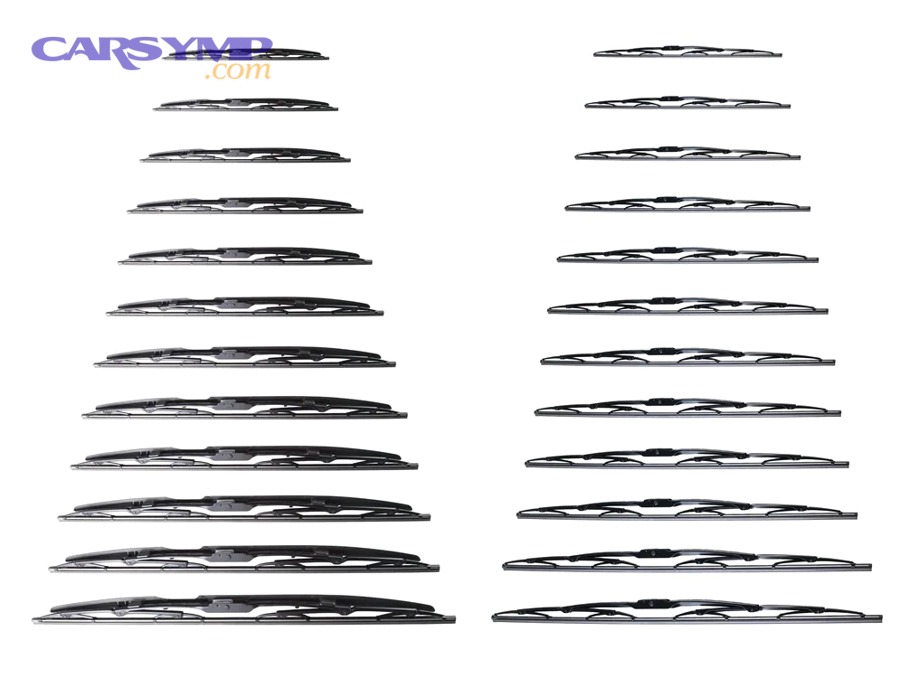
Specifically, your windshield wipers clear over 1,000 square inches of glass during a single storm, making their proper function essential for safe driving. Wiper blade size refers to the length measurement from end to end of the rubber squeegee that contacts your windshield, typically ranging from 16 to 28 inches for front blades and 11 to 16 inches for rear wipers. Manufacturers calculate optimal size based on windshield surface area, the arc path of wiper arms, motor torque capacity, and aerodynamic considerations at highway speeds, ensuring blades maintain contact without lifting or creating gaps.
The engineering behind wiper blade sizing connects directly to driver reaction time and accident prevention. When wipers function correctly, they restore visibility within 2-3 sweeps, allowing drivers to identify hazards, read road signs, and navigate safely during adverse weather. Safety statistics demonstrate that impaired visibility contributes to over 1.2 million weather-related vehicle crashes annually in the United States, with improper wiper function playing a significant role in these incidents.
What Happens When You Use the Wrong Wiper Blade Size?
Using oversized wiper blades causes collision damage where blades strike each other during operation, tearing rubber at contact points, bending frames, and misaligning wiper arms that require $150-300 to repair professionally. The excessive load from longer-than-recommended blades strains the wiper motor, leading to premature failure costing $200-500 for replacement, blown fuses, and erratic wiper operation that leaves you vulnerable during sudden rainstorms. When oversized blades strike windshield trim and molding, they chip paint, crack plastic components, and create gaps that allow water infiltration into your cabin.
For example, during a heavy rainstorm at 65 mph, oversized wipers create additional problems beyond mechanical damage. The blades may paradoxically lift at their edges due to excessive length, reducing actual contact with the windshield despite being larger than necessary. This lifting effect creates streaking patterns and uncleared zones, defeating the purpose of installing longer blades in the first place. The wiper motor works harder to move the additional weight and length, generating excess heat and wearing internal components at an accelerated rate.
Undersized wiper blades create equally dangerous conditions by leaving critical coverage gaps in your field of vision. Blades that are too short fail to clear the entire windshield, creating 6-12 inches of unwiped glass directly in critical sight lines—exactly where you need clearest visibility for safe driving. Specifically, undersized blades miss the driver’s side A-pillar area, creating blind spots during lane changes, and leave the passenger side uncleared during critical maneuvers. This incomplete coverage can reduce your cleared viewing area by 30%, forcing you to lean forward or crane your neck to see through streaks and water accumulation.
The real-world scenario becomes most apparent during heavy rainfall: undersized wipers leave a 4-inch strip of water directly in your forward sight line, precisely where oncoming headlights create the most dangerous glare. You cannot safely judge distances, identify pedestrians, or read traffic signals through this persistent water barrier. The safety compromise extends beyond inconvenience into genuine hazard territory, as visibility loss directly correlates with reduced reaction time and increased accident risk.
Do Driver and Passenger Side Wipers Need Different Sizes?
Yes, driver and passenger side wipers need different sizes on 60-70% of modern vehicles because asymmetric wiper systems optimize coverage where the driver side blade runs 1-3 inches longer for extended sight line clearing. Manufacturers design tandem wiper motion patterns where each blade follows a specific arc path, with the driver side covering more critical viewing area while the passenger side optimizes for its unique geometry and trim clearance requirements.
To illustrate, asymmetric configurations emerged as automotive engineers recognized that drivers need maximum coverage in their direct line of sight, while passenger side requirements differ based on windshield curvature and dashboard design. A 2023 Honda Accord uses a 26-inch driver side blade paired with a 22-inch passenger side blade, with each size precisely calculated for its specific arc path and coverage zone. Installing these sizes in reverse order creates inefficient wiping patterns, increases motor wear, and risks blade collision during synchronized operation.
The tandem operation pattern shows why proper identification matters critically. As wiper arms move across the windshield, they follow choreographed paths designed to maximize coverage without interference. The driver side typically sweeps a larger arc to clear the most important viewing area, requiring a longer blade to maintain contact throughout its travel. The passenger side follows a complementary path with different geometric requirements, making identical sizing inefficient and potentially problematic.
When you install reversed sizes, the results include inefficient coverage patterns that leave gaps in critical viewing zones, potential collision between blades at their sweep endpoints, and accelerated motor wear from unbalanced loading. Vehicle specifications always list the driver side size first in documentation, following the industry standard of presenting information in order of importance for primary vehicle operator safety.
How Do You Find Your Car’s Correct Wiper Blade Size?
You find your car’s correct wiper blade size by consulting your owner’s manual for manufacturer specifications, measuring existing blades from rubber end to rubber end, using online vehicle-specific size finder tools, or requesting lookup assistance at auto parts stores. These four verification methods provide accurate sizing in 5-10 minutes, preventing the costly mistakes of purchasing incorrect replacements that either fail to install or perform inadequately during critical weather conditions.
More specifically, a hierarchical approach to size verification delivers the most reliable results. Start with your owner’s manual as the authoritative source, then cross-reference with online databases or physical measurements to confirm accuracy before purchasing. This multi-source verification strategy catches errors from outdated information, worn blade measurements, or database inconsistencies, ensuring you invest in correctly sized replacements the first time.
The time investment of 5-10 minutes for proper verification saves significantly more time and money than dealing with returns, exchanges, and potential vehicle damage from incorrect sizing. Professional mechanics report that incorrect wiper blade purchases rank among the most common auto parts return reasons, with customers wasting 2-3 hours on additional store trips when they skip initial verification steps. Below, we’ll examine each verification method in detail, providing specific instructions for accurate size determination.
What Information Does Your Owner’s Manual Provide About Wiper Size?
Your owner’s manual typically provides exact wiper blade sizes in the Maintenance Schedule, Specifications, or Recommended Parts sections, listing front driver, front passenger, and rear measurements in inches. Navigate to the appropriate section by checking your manual’s index under “Wipers,” “Blades,” or “Windshield,” where you’ll find specifications formatted as “Front: Driver 24 inches, Passenger 18 inches / Rear: 12 inches” or similar notation.
However, some manufacturers omit wiper blade sizing from owner’s manuals, particularly in older vehicle documentation or base model specifications. When your physical manual lacks this information, access digital versions through manufacturer websites where you can search by your vehicle identification number (VIN) for trim-level-specific details. Major manufacturers like Toyota, Honda, Ford, and General Motors maintain online owner’s manual databases that provide complete specifications including wiper blade sizing.
Third-party manual databases including Edmunds and Car and Driver maintain archives of vehicle specifications when manufacturer resources prove insufficient. These platforms aggregate data across model years and trim levels, offering alternative verification when official documentation remains inaccessible. For vehicles where the owner’s manual genuinely provides no size information, contact the parts department at your local dealership where staff can look up specifications in their official parts catalog using your VIN.
The reliability score for owner’s manual specifications ranks highest among all verification methods when information is available, as these represent official OEM (Original Equipment Manufacturer) specifications based on engineering testing and safety validation. Take a photo of the specifications page for future reference, creating a readily accessible record that eliminates the need to search through the manual during your next blade replacement. This simple documentation step proves especially valuable for vehicles you maintain over many years, as physical manuals sometimes become lost or damaged over a vehicle’s lifetime.
How Do You Measure Your Existing Wiper Blades Accurately?
You measure your existing wiper blades accurately by lifting the wiper arm perpendicular to the windshield, identifying the rubber squeegee separate from the metal frame, and measuring only the rubber blade from end to end using a standard tape measure, rounding to the nearest inch. This measurement technique requires you to measure both driver and passenger sides separately, as 60-70% of vehicles use different sizes for asymmetric coverage optimization.
To begin, prepare for measurement by lifting each wiper arm away from the windshield into its perpendicular service position, ensuring the blade hangs straight downward without folding or bending. Identify the black rubber squeegee as distinct from the metal or plastic frame assembly—this distinction proves critical because measuring the frame adds 1-2 inches of error to your measurement. The rubber blade represents the actual component that contacts your windshield, making it the only relevant measurement for replacement sizing.
The proper measurement technique starts where the rubber begins at one end, not where the metal frame mounts to the wiper arm. Extend your fabric or metal tape measure along the length of the rubber squeegee to the opposite end where rubber terminates, again ignoring any frame extension beyond this point. Round your measurement to the nearest inch, as replacement wipers are manufactured and sold in 1-inch increments rather than fractional measurements. Record this number clearly, labeling it as “driver side” or “passenger side” to prevent confusion during purchase.
Common measurement mistakes that lead to purchasing incorrect sizes include:
- Measuring the metal frame instead of rubber squeegee, which adds 1-2 inches of error
- Measuring while the blade remains curved or bent, yielding inaccurate length
- Assuming both sides measure identically and only measuring one blade
- Using worn or stretched blades that have elongated beyond original specifications
The verification checkpoint for measurement accuracy asks: “If your current blades wipe well, these measurements are likely correct.” However, if current blades perform poorly with streaking, chattering, or incomplete coverage, verify your measurements against your owner’s manual or online database before purchasing replacements. Worn blades may have stretched rubber that no longer reflects the correct original size specification, making them unreliable measurement references.
For blades older than two years, prioritize owner’s manual or database verification over physical measurement, as rubber degradation can alter dimensions enough to cause sizing errors. Look for original equipment markings sometimes stamped on the blade connector or frame, which may indicate the size specification directly from the manufacturer. These stamped sizes provide another verification data point when present, though not all blades include this marking.
Which Online Wiper Blade Size Finder Tools Are Most Reliable?
The most reliable online wiper blade size finder tools include Rain-X Blade Size Finder, TRICO Size Database, and major auto parts retailer platforms (AutoZone, Advance Auto Parts, O’Reilly, NAPA) that provide manufacturer-grade databases with vehicle-specific recommendations. These tools require you to input your vehicle’s year, make, model, and sometimes submodel or engine type, returning precise front driver, front passenger, and rear wiper specifications in seconds.
Moreover, the Rain-X Blade Size Finder stands out for its comprehensive manufacturer-grade database and user-friendly interface. Access the tool through the Rain-X website, where you’ll select your vehicle year from a dropdown menu, choose your make (manufacturer), select your specific model, and refine by submodel or engine configuration when applicable. The output displays all three measurements clearly: front driver side, front passenger side, and rear wiper (if applicable), along with compatible Rain-X product recommendations that match these specifications.
The TRICO Size Database offers exceptional historical coverage, including vehicles dating back to the 1960s, making it invaluable for classic car owners and vintage vehicle restoration projects. The database’s reliability stems from TRICO’s position as an OEM supplier to major automobile manufacturers, providing them access to original engineering specifications rather than aftermarket estimates. Their tool follows a similar input process but includes additional details about blade type compatibility and installation notes for specific vehicle configurations.
Auto parts retailer tools from AutoZone, Advance Auto Parts, O’Reilly, and NAPA provide the added advantage of showing real-time inventory availability at nearby store locations. These platforms allow you to filter results by blade type—conventional, beam, or hybrid—and compare prices across product lines while confirming the correct size. The integration of sizing data with purchasing capability streamlines the replacement process, letting you verify size and complete your purchase in a single session.
Some advanced tools accept your 17-digit VIN (Vehicle Identification Number) for even more precise trim-level accuracy, which proves helpful for vehicles sold with multiple wiper configurations within the same model year. For example, a vehicle’s sport package might include different wiper specifications than the base model, and VIN-based lookup eliminates any guesswork about which configuration matches your specific vehicle.
The cross-reference strategy for maximum accuracy involves using at least two different tools to verify sizing. When results match across multiple independent databases, you can proceed with high confidence. If results differ between sources, verify against your owner’s manual or physical measurement to determine which database provides accurate information for your specific vehicle. This redundancy catches database errors, discontinued size substitutions, or regional variations that might affect a single source’s accuracy.
Can You Find Wiper Blade Size at Auto Parts Stores?
Yes, you can find wiper blade size at auto parts stores where staff access computer lookup systems that identify correct sizes based on your vehicle’s year, make, model, and trim level, often providing free installation verification to ensure proper fit before you leave. In-store assistance offers the advantage of same-day resolution without shipping delays, physical size comparison before purchase, and immediate problem-solving if your vehicle requires unusual specifications or has compatibility questions.
In addition, the in-store assistance process begins when you provide your vehicle information to the parts counter staff, who input year, make, model, and trim details into their professional-grade parts database. These commercial systems often contain more detailed fitment information than consumer-facing online tools, including notes about running changes, technical service bulletins, and regional variations that affect wiper blade compatibility. Staff can physically show you different blade sizes, allowing you to compare lengths and verify the recommended specifications make sense for your vehicle’s windshield dimensions.
Many national retailers including AutoZone, Advance Auto Parts, O’Reilly, and NAPA offer free installation services when you purchase wiper blades from their stores. This value-added service provides immediate verification that your selected size installs correctly and functions properly, with staff able to address any fitting issues before you drive away. The installation verification eliminates the anxiety of attempting your first DIY wiper replacement and ensures you haven’t accidentally selected an incompatible size or attachment type.
When to seek professional fitting becomes important for several scenarios: unusual or rare vehicle models with limited database information, modified or aftermarket windshields that may require non-standard sizing, previous sizing problems that suggest complications, uncertainty about attachment type compatibility, and first-time DIY wiper replacement where guidance prevents mistakes. Professional assistance costs nothing extra at stores offering free installation, making it a valuable resource even for experienced vehicle owners facing unusual situations.
The cost-benefit analysis of in-store purchasing versus online ordering shows slight price premiums at retail locations offset by elimination of shipping costs, no waiting period for delivery, included installation services, and immediate return capability if sizing proves incorrect. AutoZone maintains the widest store network with strong DIY support resources, NAPA focuses on professional-grade products with expert staff knowledge, O’Reilly offers competitive pricing with comprehensive loyalty programs, and Advance Auto runs frequent promotional pricing that can match or beat online retailers.
What Size Wiper Blades Does Your Specific Vehicle Need?
Your specific vehicle needs wiper blades sized according to its windshield dimensions and curvature, with compact cars typically requiring 16-20 inch blades, mid-size sedans using 20-24 inches, and full-size SUVs needing 24-28 inch wipers for complete coverage. No universal wiper size exists because every vehicle features unique windshield geometry, with blade length correlating directly to glass surface area and the aerodynamic rake angle that determines how far wipers must reach from bottom to top.
Especially important, understanding the standard size ranges for different vehicle categories helps you evaluate whether recommended specifications make sense for your car, truck, or SUV. When a database suggests a 28-inch blade for a compact sedan or a 16-inch blade for a full-size pickup, these outlier recommendations warrant verification through additional sources as they fall outside typical ranges. The size directly affects how effectively wipers clear precipitation, with undersized blades leaving large uncleared areas and oversized blades creating mechanical problems.
Windshield design evolution over automotive history shows how sizing requirements have changed dramatically. Classic vehicles from the 1960s-1980s featured more upright windshield angles requiring shorter 14-18 inch blades, while modern aerodynamic designs with heavily raked glass demand 22-28 inch wipers to cover the extended horizontal distance. This progression reflects both changing vehicle design priorities and advancing wiper technology capable of handling longer blade lengths effectively.
What Are the Standard Wiper Blade Size Ranges for Different Vehicles?
Standard wiper blade size ranges vary by vehicle type, with compact cars using 16-20 inches, mid-size sedans requiring 20-24 inches, full-size sedans and SUVs needing 24-28 inches, and trucks typically using 22-28 inch matched pairs or asymmetric combinations. These ranges reflect windshield dimensions and geometry specific to each vehicle category, with larger vehicles requiring longer blades to cover expansive glass areas while maintaining complete visibility.

Compact cars including Honda Civic, Toyota Corolla, and Mazda3 typically use 18-inch driver side blades paired with 16-inch passenger side wipers, reflecting their smaller windshields and more upright glass angles. These vehicles prioritize fuel efficiency with smaller frontal areas, resulting in more modest windshield dimensions that require less wiper length for complete coverage. The reasoning behind these specifications stems from smaller glass surface area and moderate rake angles that don’t create extended reach requirements.
Mid-size sedans such as Honda Accord, Toyota Camry, and Ford Fusion commonly specify 22-inch driver blades with 20-inch passenger wipers, accommodating larger windshields while maintaining the asymmetric coverage optimization found in modern designs. These family sedans feature moderate aerodynamic glass with balanced proportions that fall in the middle of the size spectrum. The typical configuration provides comprehensive coverage for the expanded viewing area required by vehicles in this popular segment.
Full-size sedans and SUVs including Chevrolet Tahoe, Ford Expedition, and Toyota Highlander require 26-inch driver blades paired with 24-inch passenger wipers, or sometimes matched 24-inch pairs for vehicles with symmetrical wiper systems. The reasoning connects to expansive windshields that provide visibility for larger vehicle dimensions and maximum coverage needs for family safety. These vehicles’ substantial frontal areas and wide cabins demand longer wipers to clear the broad expanse of glass effectively.
Trucks such as Ford F-150, Chevrolet Silverado, and Ram 1500 typically use 22-26 inch matched pairs, reflecting tall windshields with more upright glass compared to aerodynamic sedans. Pickup trucks maintain practical design priorities over maximum aerodynamics, resulting in windshield geometry that often uses identical-length blades rather than asymmetric pairs. The 22-26 inch range accommodates various truck cab configurations from regular cab to crew cab models.
Sports and performance vehicles show highly variable sizing based on aerodynamic design priorities, with examples like the Mazda MX-5 Miata using compact 18-inch blades while BMW 3-Series might specify 24-inch wipers depending on model year and body style. These vehicles prioritize aerodynamic efficiency, creating unique windshield geometries that don’t follow standard category sizing patterns. Performance models often use premium beam blades to maintain glass contact at high speeds.
Rear wiper size ranges apply to SUVs, hatchbacks, wagons, and minivans, with small compact crossovers like Mazda CX-5 and Honda HR-V using 11-13 inch rear blades, mid-size SUVs including Toyota RAV4 and Subaru Outback requiring 13-15 inches, and full-size vehicles such as Chevrolet Suburban and Honda Odyssey needing 15-16 inch rear wipers. The rear wiper sizing reflects the smaller rear window dimensions compared to front windshields, with coverage requirements based on backup visibility and rear-facing camera sight lines.
Size patterns by vehicle era demonstrate clear progression, with 1980s-1990s vehicles predominantly using 16-20 inch ranges, 2000s models showing gradual increases to 20-24 inches, and 2010s-present vehicles commonly requiring 22-28 inch blades for aerodynamic windshield designs. This evolution reflects changing automotive design priorities that favor fuel efficiency through reduced aerodynamic drag, achieved partially through lower, more sloped windshield angles that create longer horizontal distances requiring extended wiper reach.
| Vehicle Type | Typical Driver Size | Typical Passenger Size | Rear Size | Examples |
|---|---|---|---|---|
| Compact Cars | 18″ | 16″ | N/A | Honda Civic, Toyota Corolla |
| Mid-Size Sedans | 22″ | 20″ | N/A | Honda Accord, Toyota Camry |
| Full-Size SUVs | 26″ | 24″ | 15-16″ | Chevrolet Tahoe, Ford Expedition |
| Pickup Trucks | 22-26″ | 22-26″ | 14-16″ | Ford F-150, Ram 1500 |
| Compact SUVs | 20-24″ | 18-22″ | 11-13″ | Mazda CX-5, Honda CR-V |
This comparison table illustrates how vehicle category directly correlates with wiper blade sizing requirements, helping you verify whether recommended sizes align with your vehicle type’s typical specifications.
How Has Wiper Blade Sizing Changed Over Time?
Wiper blade sizing has increased dramatically over automotive history, with classic vehicles from the 1960s-1980s using 14-18 inch blades for upright windshields angled 60-70° from horizontal, while modern vehicles require 22-28 inch wipers for aerodynamic glass raked at 45-55° angles. This evolution stems from changing design priorities that favor fuel efficiency through reduced aerodynamic drag, achieved by lowering and sloping windshields in ways that create longer horizontal distances requiring extended wiper reach.
Meanwhile, the transition era of the 1990s-2000s marked the beginning of size increases as manufacturers gradually adopted more aerodynamic windshield designs. During this period, 18-22 inch blades became standard as windshield rake increased incrementally and glass curvature became more complex and wraparound in style. The 1995 Chevrolet Camaro exemplified this transition with 20-inch blades, representing a 5-inch increase over the 1967 model’s 15-inch specification despite similar vehicle categories.
The modern era from 2010s to present features highly raked windshields at 45-55° angles that demand extended wipers in the 22-28 inch range for typical passenger vehicles. Complex curved glass designed for aerodynamic efficiency creates challenging geometry where wipers must maintain contact across broad horizontal sweeps while following significant vertical curvature. The 2020 Chevrolet Camaro requires 24-inch blades, demonstrating a 60% increase from the classic 1967 model’s 15-inch specification within the same nameplate.
Why sizes increased connects to multiple engineering factors working in combination. Aerodynamic windshield design creates lower, more sloped glass that reduces wind resistance and improves fuel economy, but this horizontal extension requires longer blades to reach from bottom to top of the viewing area. Larger vehicle footprints in modern cars, trucks, and SUVs feature wider windshields that demand wider coverage zones, requiring extended blade reach. Glass technology advances including thinner, lighter materials and acoustic laminated glass in premium vehicles enable larger window panes without excessive weight penalties, increasing the surface area that wipers must clear.
Comparative examples across vehicle generations demonstrate this sizing progression clearly:
| Vehicle Model | Classic Year | Classic Size | Modern Year | Modern Size | Increase |
|---|---|---|---|---|---|
| Ford Mustang | 1965 | 15″ | 2024 | 24″ | +9″ (60%) |
| Chevrolet Camaro | 1967 | 15″ | 2024 | 24″ | +9″ (60%) |
| Honda Civic | 1975 | 16″ | 2024 | 26″ | +10″ (63%) |
| Ford F-150 | 1975 | 16″ | 2024 | 22″ | +6″ (38%) |
These comparisons show consistent patterns where modern versions of classic nameplates require 38-63% longer wiper blades, with sports cars and passenger vehicles showing the most dramatic increases due to aggressive aerodynamic priorities. Trucks demonstrate smaller percentage increases because their practical design maintains more upright windshield angles compared to aerodynamic sedans and coupes.
Future trends suggest stabilization around current size ranges rather than continued growth, as manufacturers shift focus toward blade technology improvements instead of length increases. Smart wiper systems with rain sensors, heated blade elements for ice prevention, and advanced rubber compounds that maintain flexibility across temperature extremes represent the next evolution. These technological enhancements deliver better performance while maintaining current blade lengths, avoiding the mechanical complications and motor strain that would accompany further size increases.
What Mistakes Should You Avoid When Choosing Wiper Blade Size?
You should avoid five critical mistakes when choosing wiper blade size: measuring the metal frame instead of rubber squeegee, assuming identical sizing for both sides, using worn blades as measurement references, ignoring attachment type compatibility, and guessing instead of verifying specifications through reliable sources. These common errors cost drivers $50-500 in wasted purchases and damage repairs, with the financial and safety impacts far exceeding the 5-10 minutes required for proper verification.
Especially when sizing verification seems inconvenient, remember that incorrect purchases require return trips to stores, potential shipping costs for online orders, and installation time wasted on wrong-sized products. Professional mechanics report that wiper blade returns rank among the most frequent auto parts exchanges, with customers investing 2-3 additional hours correcting sizing mistakes that proper initial verification would have prevented. Below, we’ll examine each error pattern and provide specific prevention strategies.
Is It Safe to Deviate from Manufacturer Recommended Sizes?
Deviating from manufacturer recommended sizes is acceptable within ±1 inch tolerance for experienced users who thoroughly test blade function, but exceeding this range creates safety hazards and mechanical problems that void the engineering validation behind original specifications. The ±1 inch guideline originates from aftermarket manufacturers recognizing wiper arm flexibility and windshield curvature variations, though it represents an industry guideline rather than official OEM endorsement.
To illustrate, going 1 inch longer than recommended may provide slightly more coverage if wiper paths don’t intersect during operation, but requires careful testing at slow speeds to monitor for blade collision, motor strain, and trim contact. This slight increase works best on vehicles with already-moderate blade lengths (18-22 inches), as the percentage change remains smaller and mechanical stress stays manageable. However, going longer on vehicles already using extended 26+ inch blades multiplies the risk proportionally, as the wiper motor and arms already operate near their design limits.
Going 1 inch shorter than OEM specifications presents lower mechanical risk since reduced length decreases collision potential and motor load, but sacrifices coverage area that creates small unwiped zones in your field of vision. Shorter blades sometimes reduce noise on vehicles where original specifications create chattering, though this symptom often indicates worn wiper arms or damaged windshield rather than inherently problematic sizing. The trade-off for any deviation involves balancing mechanical safety against coverage optimization that manufacturers determined through extensive testing.
Never deviate under specific circumstances that create hard safety and mechanical boundaries. Avoid going 2+ inches different from OEM specifications under any circumstance, as this deviation exceeds reasonable tolerance and creates serious mechanical stress or inadequate coverage. Don’t mix sizes from conflicting recommendations where one source suggests 22 inches while another indicates 24 inches—select one authoritative source and follow its complete specification set. Avoid any deviation on vehicles with pre-existing wiper motor problems, arm damage, or chronic wiping issues, as altered sizing compounds existing problems. Never install longer blades if your current wipers already touch or overlap during operation, as increased length guarantees collision and damage.
The testing protocol for any size deviation requires systematic verification before committing to permanent installation. Start with a dry test where you install the blades and run them briefly on a dry windshield, watching carefully for blade collision at crossover points, edge lifting due to excessive length, or contact with windshield trim and molding. Listen for motor strain indicated by slowing sweep speed, unusual grinding noises, or hesitation during arm movement. Progress to a wet test by spraying windshield washer fluid and operating wipers at the lowest speed setting, observing complete coverage without gaps, even contact pressure across the blade length, and smooth motion without chattering or skipping. Finally, conduct a highway test at 60+ mph where aerodynamic forces become significant, ensuring blades maintain windshield contact without lifting, checking for chattering that indicates improper blade loading, and verifying that high-speed wind doesn’t affect wiper performance.
When to revert to OEM specifications becomes clear through specific warning signs. Return to manufacturer-recommended sizing immediately if you observe any blade collision during testing, incomplete coverage zones during wet operation, motor struggling or slowing during sweep cycles, excessive noise beyond normal wiper operation, or streaking worse than before the blade change. These symptoms indicate that deviation creates more problems than benefits, and original specifications represent the optimal balance for your vehicle.
A real-world example demonstrates the consequences: A Toyota Camry owner installed 24-inch blades instead of the recommended 26-inch specification hoping to reduce wind noise at highway speeds. The result showed a 3-inch uncleared strip on the driver’s side during moderate rainfall, directly in the primary sight line for forward visibility. During a nighttime rainstorm, oncoming headlights refracted through this water strip, creating dangerous glare that forced the driver to reduce speed significantly below traffic flow. After one week, the owner reversed course and installed correct 26-inch blades, restoring full coverage and eliminating the safety compromise. The lesson reinforces that manufacturer specifications exist for documented safety reasons, not arbitrary product differentiation.
The recommendation hierarchy for wiper blade sizing prioritizes exact OEM specifications as the best choice, delivering manufacturer-validated performance based on extensive testing. Acceptable alternatives include ±1 inch deviation with thorough testing across dry, wet, and highway conditions, verifying that altered sizing doesn’t create mechanical or coverage problems. Avoid deviations of ±2+ inches that exceed reasonable tolerance and create predictable safety and mechanical issues. Never guess blade sizes or ignore specifications, as the engineering determination of proper sizing accounts for factors beyond obvious visual assessment.
What Are the Most Common Wiper Blade Sizing Errors?
The most common wiper blade sizing errors include measuring the metal frame instead of the rubber blade (adding 1-2 inches of error), assuming both sides require identical lengths (ignoring asymmetric systems in 60-70% of modern vehicles), using degraded blades as measurement references (accounting for rubber stretching), and ignoring attachment type compatibility beyond size specifications. These mistakes create a cascade of problems from incorrect purchases to installation failures, wasting money and time while potentially compromising safety.
More specifically, measuring the frame instead of the rubber squeegee represents the single most frequent error, occurring when buyers measure the most visible component without recognizing that the metal or plastic frame extends 0.5-2 inches beyond the rubber on each end. This natural assumption treats the entire assembly as the measurement target, leading to purchases of 26-inch blades for vehicles actually requiring 24-inch wipers. The consequence manifests when the oversized blades collide during operation, damage wiper arms, or strike windshield trim, necessitating returns and potentially causing $150-300 in mechanical repairs.
Prevention of frame measurement error requires visually identifying the black rubber squeegee as a distinct component from its supporting frame, then measuring only from rubber end to rubber end while ignoring any metal or plastic extension beyond these points. The rubber blade performs the actual windshield contact and clearing function, making it the only relevant dimension for replacement sizing. Look closely at your current wipers to see where black rubber begins and ends, using this clear visual distinction to guide your tape measure placement.
Assuming identical sizing for both sides creates problems when 60-70% of modern vehicles actually use asymmetric wiper systems with different driver and passenger side lengths. This error typically occurs when time-conscious buyers measure only the driver side blade, then purchase two identical replacements assuming symmetrical design. The consequence shows when the correctly-sized driver blade installs perfectly while the oversized passenger blade either collides with the driver wiper during operation or fails to install properly due to clearance issues.
A real scenario illustrates this problem: A Honda Accord owner measured the 26-inch driver side blade, then purchased two 26-inch replacements without checking the passenger side. The passenger side actually required a 22-inch blade, making the 26-inch replacement 4 inches too long. During operation, the oversized passenger blade struck the driver blade at their crossover point, bending the passenger side wiper arm and requiring $200 in professional repair. Prevention involves measuring both sides separately and labeling measurements clearly as “driver” or “passenger” to maintain accurate records through the purchasing process.
Using worn or stretched blades as measurement references introduces error because rubber deteriorates, stretches, and changes dimensions over time, particularly in blades older than 2 years. Old rubber exposed to UV radiation, temperature extremes, and repeated flexing can elongate by 0.5-1 inch beyond original specifications, creating measurements that exceed the correct replacement size. When buyers trust these degraded measurements, they purchase oversized blades that create the collision and motor strain problems described earlier.
Prevention of worn-blade measurement error involves cross-referencing physical measurements with owner’s manual specifications or online database recommendations, particularly when current blades exceed 2 years of service. If measurements differ from documented specifications by more than 0.5 inches, trust the manufacturer documentation rather than physical measurement. Look for original equipment markings sometimes stamped on blade connectors showing size specifications directly from the factory—these stampings provide verification when present, though not all blades include this feature.
Ignoring attachment type compatibility creates situations where correct-sized blades won’t physically install because their connector mechanism doesn’t match your wiper arm configuration. Size and attachment represent independent specifications that both must align for successful installation. Common attachment types include hook (J-hook), pinch tab, bayonet, side pin, and top lock, with each requiring specific blade compatibility regardless of length.
The mistake occurs when buyers focus exclusively on blade length during purchase, only discovering attachment incompatibility during installation attempts. For example, purchasing correct 24-inch blades with pinch tab connectors for a vehicle requiring hook attachment results in blades that physically cannot attach to the wiper arms. Prevention requires identifying your attachment type before purchase through visual inspection of current blades, owner’s manual consultation, or online fitment tool specifications that list both size and attachment requirements. Most modern aftermarket blades include multiple adapter kits (4-8 different types) that cover various attachment styles, but verifying compatibility before purchase prevents frustration and wasted time.
Guessing instead of verifying represents the umbrella error that encompasses all other mistakes, stemming from overconfidence, impatience with 5-minute verification processes, or the mistaken belief that “it’s just wipers” makes precise specification less important. Guessing creates a 50% probability of incorrect purchases at best, often worse when multiple specification points (driver size, passenger size, attachment type) each introduce independent error potential. The cost analysis shows that 5 minutes of proper verification costs nothing while preventing $20-60 wasted on wrong purchases, return trip time of 30-60 minutes, and potential damage repairs worth $150-500 if incorrect sizing causes mechanical problems before discovery.
To prevent guessing errors, follow this verification checklist systematically:
- Identify rubber blade separate from metal frame before measuring
- Measure both driver and passenger sides separately
- Cross-reference measurements with owner’s manual or online database
- Verify attachment type compatibility for all wiper positions
- Use at least 2 different information sources for confirmation
- Document measurements and specifications for future reference
This systematic approach transforms wiper blade replacement from a potential frustration into a straightforward maintenance task completed correctly the first time.
Beyond Size: What Other Wiper Blade Factors Should You Consider?
Beyond size, you should consider wiper blade type (conventional, beam, or hybrid), material composition (rubber or silicone), attachment type compatibility, and climate-specific design features that significantly impact performance, longevity, and cost-effectiveness. Size ensures proper fit while these additional factors determine how effectively blades clear your windshield across varying weather conditions, how long they last before requiring replacement, and whether they deliver value appropriate to your driving environment and budget.
In addition, matching all critical factors creates optimal visibility and maximizes the return on your wiper blade investment. A correctly-sized conventional rubber blade in a northern winter climate may fail within months due to ice buildup and cold-temperature brittleness, while a premium silicone beam blade of identical size delivers 12-24 months of reliable service in the same conditions. The relationship between blade type, material, attachment, and climate determines real-world performance independent of correct sizing, making these specifications equally important to the length measurement.
Professional mechanics and automotive service advisors report that customers often focus exclusively on size and price, neglecting the type and material specifications that actually determine satisfaction with wiper blade purchases. This pattern results in frequent premature replacements, disappointing performance, and frustration that leads many drivers to believe “all wipers work poorly.” In reality, appropriate blade selection matching your specific vehicle, driving patterns, and climate delivers reliable long-term performance that justifies premium pricing through extended service life and superior visibility.
How Do Wiper Blade Types Affect Size Selection?
Wiper blade types—conventional, beam, and hybrid—affect size selection because beam blades’ superior windshield conformity means a 24-inch beam blade often outperforms a 26-inch conventional blade despite shorter length, while conventional blades require exact OEM sizing to compensate for their limited 4-8 pressure points. The blade architecture determines how effectively the stated length translates into actual windshield coverage, with modern beam designs achieving 95-100% size efficiency compared to conventional blades’ 70-80% efficiency.
Conventional frame blades represent traditional design with a metal frame containing 6-8 pivoting points that hold a rubber insert against the windshield through spring-loaded pressure. This 50+ year old architecture concentrates pressure at discrete pivot locations rather than distributing it continuously, creating 4-8 contact points where the blade actually pushes against glass. The rigid frame structure means effective coverage may measure less than the blade’s stated length, as the pressure points determine cleaning effectiveness rather than overall blade dimension.
Size implications for conventional blades require strict adherence to OEM specifications because the frame’s limited flexibility cannot compensate for sizing deviations. The frame adds wind resistance at highway speeds, potentially causing blade lift that further reduces effective coverage below the stated length. These blades work adequately in mild climates with moderate precipitation, offering the most affordable option at $10-20 per pair. However, their 6-12 month typical lifespan and vulnerability to ice/snow buildup in frame joints limit their value proposition beyond budget-conscious applications or older vehicles designed around conventional wiper systems.
Beam blades, also called flat or bracketless wipers, use a single piece of rubber or silicone with internal spring steel providing tension without external frame components. This aerodynamic, low-profile design conforms to windshield curvature with continuous pressure across the entire blade length, creating what engineers describe as “infinite pressure points” compared to conventional blades’ discrete locations. The superior conformity means the stated blade length translates directly into effective coverage area at 95-100% efficiency.
Size implications for beam blades allow slightly more flexibility, as their superior windshield contact means exact OEM size or even -1 inch can deliver complete coverage through better conformity that compensates for any length reduction. The frameless design eliminates joints where ice and snow accumulate, maintaining performance in winter conditions where conventional blades fail. Better aerodynamics reduce wind lift at highway speeds, ensuring blade contact even at 70+ mph. Premium pricing of $20-40 per pair reflects advanced design and materials, justified by 12-24 month typical lifespan that doubles conventional blade longevity.
Beam blades work best for modern vehicles (2010+) designed with curved aerodynamic windshields, all-weather performance requirements, frequent highway driving, and situations demanding maximum visibility. When choosing blade type for your correct size, consider that rubber beam blades at exact OEM size deliver exceptional performance, while premium silicone beam blades justify their 2-3x cost through superior temperature resistance (-40°F to 180°F), water-repellent coating application, reduced streaking, and extended 12-24+ month lifespan.
Hybrid blades combine conventional frame architecture with an aerodynamic rubber shell that encases the metal structure, providing structural frame support while protecting against ice/snow accumulation and wind lift. This middle-ground design offers 8-12 pressure points, improving on conventional blades’ 4-8 points while remaining below beam blades’ continuous contact. The rubber shell provides weather protection similar to beam designs while maintaining the frame’s proven pressure distribution system.
Size implications for hybrid blades favor exact OEM specifications for optimal performance, as the frame provides structural support that relies on correct sizing for proper pressure distribution. The shell improves aerodynamics versus conventional blades and offers better ice/snow resistance through joint protection, though not matching beam blades’ complete frameless advantage. Mid-range pricing of $15-30 per pair positions hybrids as value upgrades from conventional blades without requiring beam blade investment. Typical 9-18 month lifespan exceeds conventional but falls short of premium beam designs.
Hybrid blades serve mixed driving conditions well, appealing to value-oriented buyers seeking conventional blade upgrades without premium pricing, moderate climate zones with variable weather, and vehicles from the 2005-2015 era transitioning between conventional and beam standard equipment. These blades represent the best value proposition at exact OEM size, balancing performance improvements against reasonable pricing.
Material considerations intersect with blade type to affect performance and longevity. Standard rubber blades using natural or synthetic rubber compositions provide universal compatibility and budget-friendly pricing but degrade faster in extreme heat and cold. UV exposure causes cracking within 6-12 months typical lifespan, limiting their effectiveness in high-sun environments. Premium silicone blades use synthetic silicone composition that resists temperature extremes from -40°F to 180°F, leaves water-repellent coating on glass during operation, reduces streaking through superior material properties, and delivers 12-24+ month lifespan at 2-3x rubber blade cost.
When selecting blade type and material for your verified correct size, conventional rubber suits exact OEM size requirements for budget-conscious applications, beam rubber blades work at exact size or -1 inch where superior conformity compensates, silicone beam blades represent the premium option that maximizes benefits at exact OEM size, and hybrid blades deliver best value at exact manufacturer specifications. The decision matrix balances initial cost against expected lifespan and performance requirements specific to your driving environment.
| Blade Type | Pressure Points | Size Efficiency | Climate | Price Range | Lifespan |
|---|---|---|---|---|---|
| Conventional | 4-8 discrete | 70-80% | Mild | $10-20 | 6-12 months |
| Beam | Continuous | 95-100% | All weather | $20-40 | 12-24 months |
| Hybrid | 8-12 | 85-90% | Moderate | $15-30 | 9-18 months |
This comparison table helps evaluate which blade type delivers appropriate value for your specific requirements, considering how architecture affects the effectiveness of your correctly-sized selection.
Does Climate Affect Your Wiper Blade Size Choice?
Climate affects your wiper blade material and type choice more significantly than size selection, with harsh winter requiring silicone beam blades at exact OEM specifications rather than size deviation, while desert heat demands UV-resistant materials maintaining manufacturer dimensions. Size should remain constant at OEM specifications regardless of climate, with environmental adaptation achieved through blade technology upgrades rather than length alterations.
However, winter climate creates specific challenges that tempt some drivers toward size reduction. Ice accumulation on conventional blade frames, rubber hardening that reduces flexibility in sub-freezing temperatures, snow packing between blade and windshield, and aggressive windshield ice clearing requirements all stress wiper systems. Some drivers attempt going -1 inch during winter to reduce ice load on frames and minimize motor strain, though this approach sacrifices coverage area that becomes critical during winter storms with reduced visibility.
The better winter approach maintains exact OEM size while upgrading to winter-specific blade technology. Beam blades with enclosed designs eliminate frames where ice accumulates, softer rubber compounds maintain flexibility down to -40°F, wider profiles clear heavier snow accumulation effectively, and silicone materials resist cold-temperature brittleness that affects standard rubber. Regional examples demonstrate this approach: Minnesota, Michigan, and Vermont drivers should use premium beam blades as mandatory equipment, Colorado and Utah mountain regions require silicone materials for extreme temperature ranges, and Pacific Northwest conditions combining ice and heavy rain demand all-season beam designs.
According to testing by Consumer Reports in 2023, silicone beam blades maintained 95% clearing effectiveness at -20°F while conventional rubber blades dropped to 60% effectiveness at the same temperature, demonstrating how material and design choice outperform size alterations for climate adaptation.
Summer climate presents different challenges through UV degradation of rubber compounds, heat softening that reduces blade edge effectiveness, bug residue buildup requiring aggressive clearing, and dust/pollen accumulation in dry regions. Infrequent use in dry climates paradoxically accelerates degradation as UV exposure affects stationary rubber more severely than regular flexing and cleaning during use. Summer-specific features including UV-resistant rubber coatings, graphite-treated blades reducing friction heat, hydrophobic coatings, and wider cleaning edges for bug residue address these challenges without requiring size changes.
Desert climate applications in Arizona, Nevada, and New Mexico make silicone material mandatory as standard rubber blades fail within 3-6 months from UV and heat exposure. Consider longer blades within OEM specifications for dust coverage, as the exact recommended size provides maximum windshield cleaning area during desert dust storms. The extreme environment justifies premium blade investment as standard options simply cannot survive the temperature and UV conditions.
Tropical and humid climates create constant moisture promoting mold and mildew growth, year-round wiper usage accelerating wear beyond temperate climate patterns, and heavy seasonal rainfall requiring premium performance during monsoon periods. Beam blades with treated rubber resist mold formation, anti-mold compounds extend service life, and more frequent replacement cycles (every 6 months versus 12-24 months in dry climates) maintain effectiveness. Florida, Louisiana, and Hawaii drivers should expect 12-month maximum lifespan from even premium silicone beam blades, as constant heat and humidity stress materials beyond what temperate regions impose.
All-season blade strategy for moderate climates experiencing four distinct seasons balances spring heavy rain and pollen, summer UV exposure and bugs, fall leaves and debris, and winter ice and snow. Hybrid or beam blades deliver year-round reliability, rubber remains acceptable for budget-limited applications, twice-yearly replacement cycles (spring and fall) maintain effectiveness, and exact OEM size specifications ensure consistent year-round reliability. Northeast US drivers benefit from fall and spring replacement cycles, while Midwest regions should use pre-winter and post-winter renewal to maintain optimal performance.
Climate decision matrix for wiper blade selection based on correct OEM size:
| Climate Type | Blade Type | Material | Replacement Frequency | Size Strategy |
|---|---|---|---|---|
| Winter (harsh) | Beam | Silicone | 12 months | Exact OEM |
| Summer (hot/UV) | Beam/Hybrid | Silicone | 12-18 months | Exact OEM |
| Tropical (humid) | Beam | Treated rubber/Silicone | 6 months | Exact OEM |
| Desert (extreme heat) | Beam | Silicone | 6-9 months | Exact OEM |
| Moderate (4-season) | Hybrid/Beam | Rubber/Silicone | 6-12 months | Exact OEM |
This matrix demonstrates that climate adaptation happens through blade type and material selection while maintaining manufacturer-specified sizing across all environments.
What Is the Relationship Between Wiper Blade Size and Arm Attachment Type?
Wiper blade size and arm attachment type are independent specifications that both must match your vehicle for successful installation, with size determining coverage while attachment type ensures physical connection between blade and wiper arm mechanism. A correctly-sized blade with wrong attachment type will not install on your wiper arms, creating frustration and requiring exchange regardless of perfect size accuracy.
Especially important, many buyers focus exclusively on blade length during purchase, discovering attachment incompatibility only during installation attempts when time pressure and frustration compound the problem. The wiper arm remains fixed to your vehicle as a permanent component containing a specific hook or connector mechanism, while blade adapters are replaceable connectors that must match this arm configuration. Modern aftermarket blades typically include 4-8 different adapter types in each package, providing universal compatibility across most vehicle attachment styles.
Common attachment types each serve specific vehicle applications with distinct installation characteristics. Hook or J-hook attachment represents the most prevalent style, appearing on 60-70% of vehicles as a simple hook that slides into the blade connector. This universal design shows variants including standard hook, small hook, and large hook sizes, identified by its “J” shape visible when examining the wiper arm. Most domestic and Asian vehicles from 1990-2015 use hook attachment, making it the default assumption for vehicles in this category and era.
Pinch tab or push button attachment appears on 20-25% of vehicles, using a blade that clips onto the arm with a squeeze-release tab mechanism. The button on the blade connector provides easy identification, commonly found on European vehicles and newer domestic models from 2010 forward. This attachment type correlates more frequently with newer vehicles using larger blade sizes (22+ inches), as manufacturers adopted improved connection systems alongside wiper blade technology advances.
Bayonet arm attachment serves 5-10% of vehicles through a twist-lock connection where the wiper arm has a raised pin and the blade rotates to secure the lock. Some European luxury brands including Audi, BMW, and Mercedes-Benz specify bayonet systems, often paired with premium beam blades for integrated design aesthetics. This specialized attachment sometimes limits aftermarket options compared to universal hook systems.
Side pin or lateral pin attachment appears on 3-5% of vehicles where a pin extends from the side of the wiper arm rather than the traditional top or end connection. Certain Subaru and Mazda models use this configuration, available across various blade sizes without specific size correlation. The side-mounting approach provides specific engineering advantages for particular windshield and wiper arm geometries.
Top lock attachment represents 2-3% of vehicle applications where the lock mechanism sits on top of the wiper arm rather than underneath or at the end. Some Honda and Acura models specify this design, typically paired with smaller blade sizes in the 16-20 inch range. The top-mounting provides design integration with specific vehicle styling while maintaining secure blade retention.
Specialized OEM attachments account for less than 2% of vehicles, using proprietary connections designed specifically for certain luxury or exotic brands. These rare systems often require OEM replacement blades as aftermarket manufacturers don’t produce adapters for limited-volume applications. Vehicles with specialized attachments sometimes limit size options to specific lengths compatible with their unique connector design.

Why attachment matters with size shows through a practical scenario: purchasing correct 24-inch blades with pinch tab connectors for a vehicle requiring hook attachment results in blades that physically cannot attach to wiper arms regardless of perfect length accuracy. No amount of force or creativity allows incompatible attachment types to connect, necessitating blade return and exchange for correct connector style. Size does not determine attachment type—the same vehicle may use different attachments across model years, driver and passenger sides sometimes use different attachment styles on certain vehicles, and rear wipers often use different attachments than front positions.
How to identify your attachment type requires lifting the wiper arm to access the connection point, removing the existing blade while carefully observing the connection mechanism, photographing the connection for comparison with online diagrams, and examining whether the arm uses a hook, pin, button, or other connector style. Owner’s manuals sometimes specify attachment type alongside size information, providing written confirmation. Online fitment tools from Rain-X, TRICO, and auto parts retailers often list attachment type in their detailed specifications output, while auto parts store staff can identify attachment types from vehicle information and demonstrate different styles physically.
Universal adapter solutions in modern blade packaging typically include 4-8 different adapter types per package, allowing one blade model to fit multiple vehicle types through adapter selection. Installation requires selecting the correct adapter from the included assortment, snapping it onto the blade assembly following package-specific instructions, and completing attachment in approximately 30 seconds per blade. However, universal adapters have limitations as they may not fit all proprietary systems, luxury and exotic vehicles sometimes require OEM-only blades, and very old vehicles may need specific adapters unavailable in universal kits.
The verification checklist for complete blade selection includes recording driver side size, passenger side size, rear size if applicable, driver side attachment type, passenger side attachment type, rear attachment type if applicable, and confirming blade package includes correct adapter types before leaving the store. This systematic approach prevents installation failures and ensures successful wiper blade replacement on the first attempt without returns or exchanges.
When Should You Consider Custom or Non-Standard Wiper Blade Sizes?
You should consider custom or non-standard wiper blade sizes only when using aftermarket windshields with different dimensions than original equipment, restoring classic vehicles with discontinued sizes, operating commercial vehicles requiring industrial blade lengths, or racing applications demanding specialized lightweight designs. Approximately 95% of standard production vehicles should use OEM-specified sizes, with custom sizing representing a last resort for the 5% edge cases where manufacturer specifications genuinely don’t apply.
More importantly, custom sizing carries additional costs of $50-200+ per set compared to standard $15-40 blades, requires professional measurement and potentially custom fabrication worth $100-500 in labor, and eliminates the engineering validation that OEM specifications provide through extensive testing. Only justify custom sizing when standard sizing proves impossible or demonstrably inadequate for your specific application, not merely for perceived improvements or aesthetic preferences.
Modified or aftermarket windshield scenarios justify custom sizing when windshield replacement after accidents uses non-OEM glass from different manufacturers, aftermarket glass features slightly different curvature than original specifications, or custom glass installation in hot rods and restomod projects creates unique dimensions. Aftermarket replacement glass may vary 1-2% in dimensions from original equipment, potentially requiring size adjustment for optimal wiper coverage. The approach involves starting with OEM size as a baseline, testing fit and coverage on the new glass, adjusting ±1 inch if necessary for optimal performance, and measuring actual glass dimensions when replacement differs drastically from original.
Classic car restoration presents legitimate custom sizing needs when vehicles pre-1970 used sizes no longer manufactured in modern increments, original equipment specified odd measurements like 14.5 or 17.5 inches not matching current standard sizes, or attachment types became obsolete without modern equivalents. Modern wiper blades sell in standard 1-inch increments, requiring classic car owners to round vintage specifications to nearest current sizes (14.5″ rounds to 15″, 17.5″ rounds to 18″). Vintage parts suppliers sometimes offer exact-size reproductions for concours-level restoration, custom fabrication serves show-quality restoration demands, and universal blades with comprehensive adapter kits provide practical solutions for driver-quality vehicles.
A 1965 Volkswagen Beetle originally specified 13-inch blades, with modern equivalent being 14-inch blades requiring minor windshield trim adjustment for proper clearance. Restoration purists might invest in custom 13-inch reproduction blades at premium pricing, while practical owners accept 14-inch modern blades for improved availability and performance.
Commercial vehicles and heavy-duty equipment including semi trucks, buses, construction equipment, and RVs face challenges beyond passenger car specifications. Commercial windshields measure much larger than passenger vehicles, sometimes requiring 30+ inch blades beyond standard retail ranges, with heavy-duty mechanisms supporting larger blade weights. Multiple wiper systems become common on large commercial vehicles, and industrial blade suppliers rather than auto parts stores serve this market segment.
Class A motorhomes typically use 28-36 inch blades to clear very large windshields, requiring specialized RV blade suppliers rather than standard automotive parts retailers. A Freightliner semi truck might specify 32-inch blades unavailable at typical auto parts stores, necessitating commercial truck parts suppliers for proper equipment.
Performance and track vehicles rarely justify custom sizing despite enthusiast interest in optimization. Racing applications prioritize aerodynamics at speeds exceeding 100 mph, weight reduction through lighter blade materials, and maximum visibility under all track conditions. The custom sizing approach might reduce length by 1 inch to decrease wind resistance, specify premium beam blades for high-speed stability, and use silicone materials for temperature extremes during track sessions. However, legitimate racing modifications often remove passenger wipers entirely for weight savings while optimizing driver side coverage, though this configuration remains illegal for street use in most jurisdictions.
When NOT to use custom sizing creates important boundaries: don’t customize for standard production vehicles with original or OEM replacement windshields, avoid custom sizing without functional requirements beyond wanting “different” specifications, and recognize that custom blades costing $50-200+ per set versus $15-40 for standard equipment only justify their premium when standard sizing genuinely fails to meet needs. The cost-benefit analysis shows custom fabrication labor of $100-500 makes sense only when standard sizing proves impossible, not merely suboptimal.
The final recommendation emphasizes that custom wiper blade sizing solves problems for less than 5% of vehicle owners while creating unnecessary expense and complexity for the remaining 95%. Unless you have specific, documented reasons why OEM sizing won’t work—such as modified windshield, classic vehicle with discontinued sizes, or commercial equipment with industrial requirements—stick with manufacturer specifications. The engineering that determined original sizes reflects extensive testing, safety validation, and optimization that custom approaches rarely improve. Custom sizing should be your last resort, not your first choice, approached only after thoroughly exhausting standard sizing options and documenting their specific inadequacies for your unique application.