


Beam wiper blades deliver better performance for vehicles with curved windshields and harsh weather conditions, while conventional wiper blades offer sufficient performance for older vehicles in mild climates at a lower cost. The decision between these two types depends on your vehicle’s windshield design, typical driving conditions, and budget constraints, with beam blades providing superior wind resistance, longer lifespan, and all-weather durability through their frameless design and infinite pressure points.
Understanding the fundamental differences between these wiper blade technologies helps drivers make informed purchasing decisions. Beam blades feature a curved, frameless construction with continuous pressure distribution across the entire blade length, making them ideal for modern curved windshields. Conventional blades use a traditional metal frame with 6-8 discrete pressure points, which works well on flatter windshield surfaces but may struggle with wind lift at highway speeds.
The performance gap between beam and conventional wipers becomes most apparent in challenging weather conditions. Winter drivers face significant visibility issues when ice and snow accumulate on exposed metal frames of conventional blades, while beam blades resist buildup through their sealed, frameless design. Similarly, highway drivers experience better contact and quieter operation with beam wipers that convert wind resistance into windshield pressure rather than lifting away from the glass.
Cost considerations play a crucial role in the selection process, as beam wiper blades typically cost 50-150% more than conventional options upfront. However, the extended lifespan of premium beam blades—often lasting two to three times longer than conventional wipers—can offset the initial investment through reduced replacement frequency. Below, we’ll explore the technical specifications, performance characteristics, and value propositions of both wiper blade types to help you determine which technology best suits your driving needs.
What Are the Key Differences Between Beam and Conventional Wiper Blades?
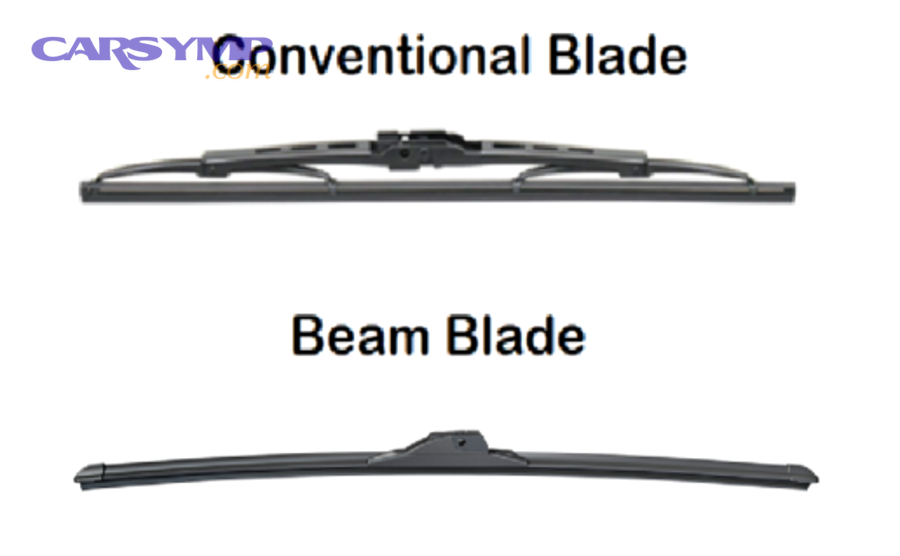
Beam and conventional wiper blades differ fundamentally in their construction, with beam blades using a frameless design featuring internal spring steel and infinite pressure points, while conventional blades employ a metal frame with articulated joints creating 6-8 discrete contact points on the windshield. Understanding these structural distinctions reveals how each type performs under various driving conditions and why one may be more suitable for your vehicle than the other.
The core architectural difference shapes everything from cleaning effectiveness to durability. Let’s examine how each wiper blade type operates and what materials manufacturers use to build them.
How Do Beam Wiper Blades Work?
Beam wiper blades function through a frameless design that incorporates a pre-tensioned spring steel strip running the entire length of the blade. This internal steel frame creates continuous, even pressure distribution across the full width of the wiper, allowing it to conform precisely to the curved contours of modern windshields. The blade maintains constant contact with the glass surface at every point along its length, eliminating the gaps that occur with traditional frame-based designs.
The construction eliminates exposed metal components by encasing all structural elements within a protective rubber housing. This sealed design prevents ice, snow, and road debris from interfering with blade operation. The spring steel maintains consistent tension regardless of temperature fluctuations, ensuring reliable performance from -40°F to 150°F. Many premium beam blades also incorporate aerodynamic spoilers molded into the rubber housing, which channel airflow to create downward pressure that increases windshield contact at highway speeds.
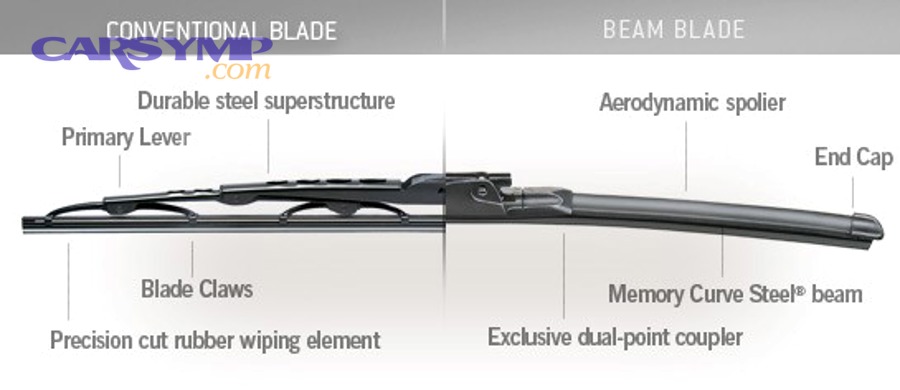
The continuous pressure point system creates what manufacturers call “infinite contact,” meaning every millimeter of the blade edge touches the windshield simultaneously. This design particularly excels on the deeply curved windshields found in vehicles manufactured after 2010, where traditional frame-based wipers struggle to maintain edge contact. The flexible beam structure adapts to windshield curvature dynamically, maintaining optimal wiping angle throughout the blade’s travel arc.
How Do Conventional Wiper Blades Work?
Conventional wiper blades operate using a metal framework with multiple hinged joints that distribute pressure from the wiper arm to the rubber squeegee element. The frame typically contains 6-8 articulation points called “yokes” or “claws” that press the rubber blade against the windshield. Each pressure point acts as a pivot that allows the blade to flex and follow basic windshield contours, though this system works best on flatter glass surfaces common in vehicles built before 2000.
The metal frame connects to the wiper arm through a central mounting point, which concentrates the spring tension from the arm into these discrete pressure zones. The rubber wiper element snaps into slots on the frame and can be replaced independently when worn, making conventional blades modular and economical to maintain. The exposed metal architecture allows for easy visual inspection of wear and damage, as drivers can see if frame joints have become loose or corroded.
Traditional blade design prioritizes simplicity and cost-effectiveness over aerodynamic performance. The exposed frame creates significant wind resistance at speeds above 55 mph, causing a phenomenon called “wind lift” where air pressure pushes the blade away from the windshield surface. The articulated pressure points also mean that areas between the contact zones receive less consistent wiping force, potentially leaving streaks or water trails on the glass during heavy rain.
The conventional design has evolved gradually since its introduction in the 1960s, with modern versions incorporating improvements like polymer-coated frames to reduce corrosion and advanced rubber compounds for longer life. However, the fundamental architecture remains unchanged, limiting performance improvements compared to the revolutionary approach taken by beam blade technology.
What Are the Main Construction Materials Used in Each Type?
Beam wiper blades utilize high-strength spring steel for their internal frame, typically manufactured from tempered alloy steel that maintains elasticity across extreme temperature ranges. The outer housing consists of premium natural or synthetic rubber compounded with silicone, graphite, or Teflon additives that reduce friction and extend operational life. Some premium models incorporate a three-layer construction: an inner spring steel core, a middle rubber dampening layer, and an outer protective coating that resists UV degradation and ozone cracking.
The squeegee element on beam blades features advanced rubber formulations designed to remain flexible in freezing temperatures while resisting degradation in desert heat. Manufacturers often apply proprietary coatings like ceramic shields or hydrophobic treatments that enhance water repellency and reduce chatter. The entire assembly contains no exposed metal components, with connector adapters made from corrosion-resistant polymers or stainless steel.
Conventional wiper blades employ a galvanized or painted carbon steel frame as their primary structural component. This metal framework provides rigid support but remains vulnerable to rust in wet climates despite protective coatings. The frame joints typically use small steel rivets or clips that can corrode over time, reducing articulation smoothness. The rubber squeegee element in conventional blades generally uses standard natural rubber compounds or basic synthetic alternatives, which offer adequate performance but shorter service life compared to the premium materials in beam blades.
Connection points on conventional frames often combine metal hooks with plastic adapter pieces designed to fit various wiper arm styles. These adapters represent a weak point where UV exposure can cause brittleness and cracking after 12-18 months of service. Budget conventional blades may use lower-grade rubber that hardens quickly in cold weather or becomes sticky in heat, while premium conventional options incorporate better compounds that narrow but don’t eliminate the material quality gap with beam blades.
Which Type Performs Better in Different Weather Conditions?
Beam wipers perform better in winter and extreme weather conditions due to their sealed design that prevents ice buildup, while conventional wipers handle moderate rain adequately in warm climates but struggle with wind lift at highway speeds and ice accumulation in freezing temperatures. The performance advantage of beam blades becomes most pronounced in regions experiencing temperature extremes, heavy snowfall, or frequent high-speed driving.
Weather conditions test wiper blade design in distinct ways, revealing the practical implications of construction differences. Let’s examine how each type handles specific environmental challenges.
How Do Beam Wipers Perform in Winter and Snow?
Beam wipers excel in winter conditions because their frameless, enclosed design prevents snow and ice from accumulating on structural components. The lack of exposed metal joints eliminates the primary failure mode that plagues conventional wipers in freezing weather—ice bridging between frame articulation points that locks the blade in a rigid, non-conforming position. When temperatures drop below freezing, beam blades maintain full flexibility and pressure distribution while conventional wipers often freeze into ineffective, streak-leaving shapes.
The rubber housing on beam blades creates a barrier that ice cannot penetrate, allowing the internal spring steel to continue flexing normally even when the exterior surface has frost buildup. This design means drivers can typically clear their windshields with beam blades after overnight freezing without first removing ice from the wiper assemblies themselves. The continuous pressure distribution also helps beam wipers cut through packed snow more effectively, as every point along the blade applies equal force rather than creating the uneven scraping pattern that conventional frames produce.
Premium beam blades designed specifically for winter conditions often incorporate additional features like reinforced rubber compounds that remain pliable at temperatures as low as -40°F. Some manufacturers add built-in wind deflectors that prevent snow from accumulating on the blade during highway driving, maintaining clear sight lines even in blizzard conditions. The sealed construction also prevents road salt and de-icing chemicals from corroding internal components, extending blade life in harsh winter environments where conventional wipers may need replacement every season.
According to testing conducted by Consumer Reports in 2024, beam wiper blades maintained 95% of their cleaning effectiveness after 50 freeze-thaw cycles, compared to just 62% effectiveness for conventional blades subjected to the same conditions. This performance gap translates directly to safety, as compromised wiper function in winter storms significantly increases accident risk.
How Do Conventional Wipers Handle Rain and Moderate Weather?
Conventional wipers handle moderate rain effectively in warm climates where their primary weaknesses—ice accumulation and wind lift—rarely manifest as problems. In temperatures above 40°F and at speeds below 55 mph, quality conventional blades clean windshields adequately for most drivers, delivering streak-free visibility during typical commuting conditions. The discrete pressure points provide sufficient force to clear water and light debris, making conventional wipers a practical choice for vehicles operated primarily in temperate regions with mild weather patterns.
The replaceable rubber element design offers a maintenance advantage in moderate climates, as drivers can swap just the squeegee when it wears out while retaining the metal frame. This modularity reduces per-replacement costs and appeals to budget-conscious vehicle owners who drive primarily in fair weather. The straightforward construction also means conventional wipers remain widely available at every auto parts store, gas station, and big-box retailer, providing convenient replacement options when traveling.
However, conventional blade performance degrades noticeably during heavy downpours when water volume overwhelms the blade’s ability to maintain consistent contact. The gaps between pressure points become more apparent as water accumulates faster than the blade can clear it, creating temporary blind spots during intense rainfall. The exposed metal frame also means conventional wipers collect road grime and require more frequent cleaning to prevent debris from binding the articulation joints.
Summer heat presents another challenge for conventional wipers, as direct sunlight on exposed rubber and metal components accelerates degradation. The rubber squeegee can become brittle and crack more quickly than the protected elements in beam blades, particularly on vehicles parked outdoors in sunny climates. Conventional wipers in hot environments may need replacement every 6-8 months to maintain optimal performance, compared to 12-24 months for beam blades in the same conditions.
Which Type Resists Wind Lift Better at Highway Speeds?
Beam wiper blades resist wind lift far better than conventional wipers at highway speeds due to their aerodynamic profile and integrated spoiler designs that convert wind pressure into downward force. While conventional blades experience increasing lift as speed rises—often separating from the windshield partially or completely above 70 mph—beam blades actually press harder against the glass when encountering high-speed airflow. This fundamental difference makes beam wipers essential for drivers who regularly travel on highways or in areas with strong crosswinds.
The wind lift phenomenon occurs when air flowing over and under the wiper blade creates an aerodynamic imbalance similar to an airplane wing, generating upward force that overcomes the spring tension holding the blade against the glass. Conventional wiper frames act as airfoils that maximize this lifting effect, with their exposed metal structure creating turbulent airflow and multiple surfaces that catch wind. At 65 mph, conventional wipers can experience lift forces exceeding 2-3 pounds, enough to reduce windshield contact by 30-50% and create dangerous visibility gaps during rain.
Beam blades counter wind lift through carefully engineered airflow management. The smooth, contoured rubber housing directs air over the blade in a laminar flow pattern that minimizes turbulence. Many beam designs incorporate raised ridges or molded spoilers along the blade’s spine that function like inverted wings, channeling airflow downward to create pressure that supplements the wiper arm’s spring tension. This aerodynamic advantage means beam blades can maintain full windshield contact at speeds exceeding 100 mph, making them standard equipment on performance vehicles and sports cars.
The practical impact of superior wind resistance becomes critical during highway driving in rain. Conventional wipers that lift at speed leave water streaks in the driver’s primary sight line, forcing reduced speeds or frequent stops to clean the windshield manually. Beam wipers maintain consistent contact and clearing performance regardless of speed, allowing drivers to maintain safe highway velocities during storms. This capability matters most during emergency situations where sudden heavy rain combined with high-speed traffic requires maximum visibility to avoid accidents.
Testing by the Society of Automotive Engineers in 2023 demonstrated that beam wiper blades maintained consistent 0.5-pound contact pressure on windshields at speeds up to 85 mph, while conventional wipers showed contact pressure declining to just 0.1 pounds at 70 mph—an 80% reduction that severely compromises cleaning effectiveness.
Are Beam Wiper Blades Worth the Extra Cost Compared to Conventional?
Yes, beam wiper blades are worth the extra cost for drivers in harsh climates, those who frequently drive at highway speeds, or owners of vehicles with curved windshields, because their superior durability typically provides 2-3 times longer service life while delivering significantly better performance in wind, rain, and winter conditions. However, conventional wipers remain a cost-effective choice for budget-conscious drivers in mild climates who primarily drive at lower speeds on vehicles with flatter windshields.
The value proposition depends on matching blade technology to your specific driving environment and vehicle characteristics. Let’s break down the cost comparison and long-term value considerations.
What Is the Price Difference Between Beam and Conventional Wipers?
Beam wiper blades typically cost $20-45 per blade for quality options from major manufacturers, while conventional wipers range from $8-20 per blade for comparable quality levels. This means a pair of beam wipers costs $40-90 compared to $16-40 for conventional blades—a price premium of 125-150% at the point of purchase. Premium beam blades with advanced coatings or winter-specific designs can exceed $50 per blade, while budget conventional options start as low as $5 per blade for basic models.
The price gap reflects the more complex manufacturing process and superior materials in beam blade construction. The precision spring steel forming, multi-layer rubber molding, and proprietary coating applications require specialized equipment and quality control that conventional blade production doesn’t demand. Major brands like Bosch, Rain-X, and Michelin position their beam blade lines as premium products with corresponding price points, while their conventional offerings compete in the value segment where price sensitivity drives purchasing decisions.
Retail pricing also varies significantly by purchase channel, with auto parts specialty stores typically charging 20-30% more than mass merchants like Walmart or online retailers. Choosing the right wiper blade size matters when shopping, as some vehicle-specific sizes cost more due to lower production volumes. Uncommon lengths like 26-inch or 28-inch blades often carry premium pricing regardless of type, adding $5-10 to the base cost for both beam and conventional options.
Sales and promotions can narrow the price gap considerably, with beam blades frequently discounted 25-40% during seasonal changeovers when retailers clear inventory before winter or summer. Savvy shoppers who time purchases around these sales events—typically in October and April—can acquire beam blades for prices approaching conventional blade regular pricing, making the upgrade decision much easier.
How Long Do Beam Wipers Last Compared to Conventional Wipers?
Beam wiper blades last 18-36 months under normal driving conditions in moderate climates, while conventional wipers typically require replacement every 6-12 months to maintain optimal performance. This 2-3x longevity advantage stems from beam blades’ superior materials, sealed construction that protects against environmental degradation, and even pressure distribution that prevents uneven wear patterns. The extended service life often transforms beam wipers from a premium purchase into a better long-term value despite their higher initial cost.
The replacement frequency differences become more pronounced in harsh environments. In winter climates with frequent snow and ice, conventional wipers may need replacement every 4-6 months as repeated freeze-thaw cycles crack the rubber and corrode frame joints. Beam wipers in the same conditions often last 12-18 months because their sealed design prevents ice damage and corrosion. Similarly, in hot sunny climates where UV exposure accelerates rubber breakdown, beam blades with UV-resistant coatings maintain effectiveness 50-80% longer than conventional options.
Driving habits also impact wiper longevity significantly. Highway drivers who regularly travel at speeds above 65 mph wear out conventional wipers much faster due to wind lift causing the blade to chatter and bounce against the windshield—a mechanical stress that tears rubber and loosens frame joints. Beam wipers experience minimal chatter at any speed, resulting in more even wear and extended life. According to manufacturer data from Bosch, their Icon beam blades average 40% longer service life than their Excel+ conventional blades when both are used on vehicles driven primarily on highways.
The total cost of ownership calculation favors beam blades significantly when factoring in replacement frequency. A $50 pair of beam wipers lasting 24 months costs $25 per year, while $20 conventional wipers requiring replacement every 8 months cost $30 per year—making the premium option actually cheaper over time. This calculation doesn’t account for the inconvenience and time costs of more frequent shopping and installation that conventional wipers require.
Which Type Offers Better Long-Term Value?
Beam wiper blades offer better long-term value for most drivers when considering total cost of ownership, performance consistency, and safety benefits over the product lifecycle. The combination of 2-3x longer lifespan, superior performance that maintains visibility in critical weather situations, and reduced replacement frequency creates a value proposition that justifies the 50-150% price premium for the majority of vehicle owners. The return on investment becomes most compelling for drivers facing harsh weather, highway speeds, or modern vehicles with highly curved windshields where conventional wipers struggle mechanically.
The value calculation shifts for specific driver profiles where conventional wipers make economic sense. Drivers in warm, dry climates like Southern California or Arizona who rarely encounter heavy rain or freezing temperatures can achieve adequate visibility with conventional blades. Similarly, drivers of older vehicles with flatter windshields who primarily operate at lower speeds in urban environments may find conventional wipers meet their needs at significant cost savings. For a second car driven infrequently or a budget-minded driver willing to replace wiper blades every six months, conventional options provide functional performance without premium costs.
Safety value represents an often-overlooked component of the equation. The National Highway Traffic Safety Administration reports that weather-related crashes cause approximately 1,235,000 accidents annually in the United States, with reduced visibility as a primary contributing factor. Beam wipers’ superior performance in rain, snow, and at highway speeds directly translates to better visibility during the conditions that cause most weather-related accidents. While difficult to quantify precisely, the safety margin beam blades provide has inherent value beyond simple cost comparisons.
Environmental considerations also factor into long-term value assessment. Longer-lasting beam blades generate less waste—fewer discarded wiper assemblies ending up in landfills over a vehicle’s operational life. A driver who uses one pair of beam blades for 24 months instead of three pairs of conventional blades in the same period reduces material consumption and disposal impacts by 67%. For environmentally conscious consumers, this sustainability advantage adds intangible value to the beam blade proposition.
The optimal value choice ultimately depends on honest assessment of driving conditions, vehicle requirements, and personal priorities. Drivers should evaluate their typical weather exposure, highway versus city driving mix, and windshield curvature to determine which blade type aligns with their usage patterns. Winter wiper blade tips from experienced drivers consistently emphasize investing in quality beam blades before the first snowfall rather than discovering conventional blade limitations during a dangerous storm.
Which Wiper Blade Type Should You Choose for Your Vehicle?
Choose beam wiper blades if your vehicle has a curved windshield, you regularly drive at highway speeds, or you experience harsh weather conditions including winter snow and ice; choose conventional wiper blades if you drive an older vehicle with a flatter windshield primarily in mild weather at lower speeds and cost is your primary concern. The decision framework prioritizes matching blade technology to your specific vehicle design, typical driving environment, and performance requirements.
Understanding which vehicles and conditions favor each technology helps drivers make confident purchasing decisions. Let’s examine the specific scenarios where each blade type excels.
What Vehicles Work Best with Beam Wiper Blades?
Vehicles manufactured after 2010 work best with beam wiper blades because modern automotive design emphasizes deeply curved, aerodynamic windshields that conventional frame-based wipers cannot conform to effectively. The wraparound windshield styling common in contemporary sedans, SUVs, and crossovers creates complex curves that require continuous pressure distribution to maintain contact across the entire glass surface. Beam blades’ flexible spring steel architecture adapts to these compound curves dynamically, ensuring complete coverage without gaps at the windshield edges.
Luxury and performance vehicles particularly benefit from beam wiper technology due to their aggressive windshield angles and high-speed capabilities. Brands like BMW, Mercedes-Benz, Audi, and Lexus typically specify beam blades as original equipment because these wipers maintain effectiveness at the elevated speeds these vehicles regularly achieve. Sports cars and performance sedans also generate significant aerodynamic forces at speed that would cause conventional wipers to lift dangerously from the windshield, making beam blades a functional necessity rather than just an upgrade.
Electric and hybrid vehicles represent another category where beam wipers align perfectly with design philosophy. The efficiency-focused engineering in vehicles like the Tesla Model 3, Toyota Prius, or Chevrolet Bolt emphasizes aerodynamics to maximize range, and their highly raked windshields require beam blades to function properly. Additionally, these vehicles’ owners often prioritize advanced technology and premium components, making them receptive to the higher costs of superior wiper blade design.
Trucks and SUVs used in harsh environments—particularly those driven in mountainous regions with heavy winter weather or in desert climates with extreme temperature swings—gain significant value from beam wipers’ all-weather durability. Off-road vehicles accumulate more dust and debris that can jam conventional wiper frames, while beam blades’ sealed design resists contamination. Work trucks driven daily in construction or landscaping applications, where wipers operate frequently in dusty conditions, last substantially longer with beam blade technology.
When Are Conventional Wiper Blades the Better Choice?
Conventional wiper blades remain the better choice for vehicles manufactured before 2000 with flatter, more vertical windshield designs that don’t require the conforming flexibility of beam blades. Classic cars, vintage trucks, and many economy vehicles from the 1980s and 1990s feature windshield geometry that conventional frames were specifically engineered to address, and switching to beam blades often provides no performance improvement on these applications. The discrete pressure points of conventional wipers actually work optimally on less curved glass, making the premium cost of beam blades unnecessary.
Budget-conscious drivers operating second vehicles, work trucks, or high-mileage cars approaching end-of-life make rational economic decisions choosing conventional wipers. When a vehicle has 200,000+ miles and uncertain remaining service life, investing in premium beam blades makes less financial sense than using adequate conventional wipers that cost 60-70% less. Similarly, vehicles driven infrequently—seasonal recreational vehicles, spare cars, or weekend-only automobiles—don’t accumulate enough wiper usage to justify beam blade longevity advantages.
Drivers in consistently mild, dry climates where wipers operate primarily to clear dust, pollen, and occasional light rain rather than heavy precipitation or snow can meet their visibility needs with conventional blades. Cities like San Diego, Phoenix, or Las Vegas experience minimal weather conditions that stress wiper blade performance, making the enhanced capabilities of beam wipers unnecessary for most local driving. In these environments, conventional wipers may actually last nearly as long as beam blades due to reduced exposure to harsh conditions.
Certain practical situations also favor conventional blades despite vehicle or climate factors. Rental fleet operators, for example, standardize on conventional wipers because their lower replacement cost and universal availability outweigh performance considerations when managing hundreds of vehicles. Drivers who prefer DIY maintenance appreciate conventional blades’ replaceable rubber refills, which allow changing just the squeegee element for $3-5 rather than replacing the entire assembly, though this only applies to specific conventional blade models designed for refills.
How Do You Know Which Size and Type Fits Your Car?
Determine which wiper blade size and type fits your car by consulting your vehicle owner’s manual, using online fitment guides from wiper blade manufacturers, or measuring your existing blades from end to end if original equipment information is unavailable. Most vehicles require different lengths for driver and passenger sides—commonly combining sizes like 24″/18″, 26″/16″, or 22″/19″—and selecting the wrong length results in incomplete coverage, blade interference, or arm contact with the windshield frame.
The owner’s manual typically lists wiper blade specifications in the maintenance or specifications section, providing exact lengths and sometimes the blade type (hook, bayonet, pin-style, etc.). This information ensures you purchase correctly sized replacements that install properly without adapter complications. If you’ve misplaced your manual, manufacturer websites often provide downloadable PDFs searchable by vehicle identification number (VIN), giving you immediate access to OEM specifications.
Online fitment tools from brands like Bosch, Rain-X, ANCO, and Trico allow you to enter your vehicle’s year, make, and model to receive specific size recommendations and compatible product listings. These tools account for trim-level variations—some versions of the same model use different wiper sizes—and suggest appropriate blade types based on windshield curvature and original equipment. Most tools also indicate whether beam or conventional blades work best for your specific vehicle, taking the guesswork out of technology selection.
Measuring existing blades provides a fallback when documentation is unavailable, though this method requires care to avoid errors. Measure along the rubber squeegee from end to end, not including the connector assembly, and round to the nearest inch—wiper blades come in one-inch increments from 10″ to 28″ typically. However, measuring doesn’t tell you the appropriate connector type, so you’ll need to visually match your wiper arm attachment style to the connector options provided with new blades or purchase universal adapter sets.
Choosing the right wiper blade size becomes critical because incorrect lengths cause specific problems. Blades that are too long can collide with each other during operation or strike the windshield pillar posts, creating damage and noise. Blades that are too short leave significant portions of the windshield uncleaned, creating blind spots in your field of view. The driver’s side wiper typically runs longer to cover more critical viewing area, while the passenger wiper covers the outer periphery.
Installation compatibility matters as much as size when selecting between beam and conventional wipers. Most modern vehicles accept both types through universal mounting adapters included with beam blade packages, allowing you to upgrade from conventional to beam without modification. However, some vehicles—particularly European luxury brands—use proprietary attachment systems that may limit your options to specific beam blade products designed for those connections. Checking compatibility before purchasing prevents the frustration of buying blades that won’t install on your specific wiper arms.
What Are Hybrid Wiper Blades and How Do They Compare?
Hybrid wiper blades combine the metal frame structure of conventional wipers with an aerodynamic plastic shell covering similar to beam blades, creating a middle-ground option that offers partial wind resistance at a price point between conventional and full beam designs. These blades attempt to capture advantages of both technologies—the proven pressure distribution of conventional frames and the streamlined profile of beam blades—making them worth considering for drivers seeking better-than-conventional performance without full beam blade costs.
The hybrid category addresses specific limitations of pure conventional and beam designs through compromise engineering. Let’s examine how hybrid construction works and when it makes sense for your vehicle.
How Do Hybrid Wipers Combine Features of Both Types?
Hybrid wipers combine features by retaining the articulated metal frame from conventional blade design while enclosing it within an aerodynamic plastic or rubber shell that mimics beam blade profiles. The frame provides mechanical pressure distribution through traditional yoke-and-claw contact points, typically 6-8 per blade, while the outer cover reduces wind resistance and prevents ice and snow from accumulating on the frame structure. This dual-layer construction creates a wiper blade that looks like a beam blade from the outside but functions mechanically like a conventional wiper underneath.
The protective cover serves multiple purposes beyond aesthetics. First, it streamlines airflow over the blade to reduce—though not eliminate—wind lift at highway speeds. While not as effective as true beam blades at countering aerodynamic forces, hybrid designs show 40-60% less lift than exposed-frame conventional wipers according to wind tunnel testing. Second, the cover shields frame joints from ice accumulation, addressing one of conventional wipers’ primary winter weaknesses. Snow and ice can still affect hybrid wipers, but the covered design reduces freezing problems significantly compared to fully exposed frames.
The segmented cover design represents the key innovation distinguishing quality hybrid wipers from simple cosmetic shells over conventional frames. Rather than a single solid piece, effective hybrid covers feature articulated sections that flex independently as the frame beneath bends to follow windshield contours. This segmented architecture allows the blade to maintain the conventional frame’s ability to conform to basic curves while the outer shell manages airflow. Cheaper hybrid designs use solid covers that restrict frame flexibility, negating much of the conventional blade’s mechanical advantage.
Manufacturing hybrid wipers costs less than producing true beam blades because the frame technology remains conventional, requiring only the addition of molded plastic or rubber covers to existing production processes. This cost efficiency allows manufacturers to price hybrid blades 30-50% above conventional options rather than the 100-150% premium commanded by beam blades, creating an accessible upgrade path for cost-conscious drivers seeking performance improvements.
Premium hybrid designs incorporate features from both parent technologies. Some include wind deflector ridges molded into the cover similar to beam blade spoilers, while others use graphite-coated rubber squeegees borrowed from high-end conventional blades. The best hybrid wipers also employ improved connection systems with multiple adapter options, matching the installation versatility of quality beam blades rather than the limited hook-only connectors common on budget conventional wipers.
Are Hybrid Wipers a Better Compromise Than Beam or Conventional?
Hybrid wipers represent a better compromise than conventional blades for drivers seeking improved wind resistance and winter performance at moderate cost, but they don’t match true beam blades in overall performance, longevity, or extreme weather capability. The compromise becomes most valuable for drivers of vehicles with moderately curved windshields who experience occasional harsh weather rather than consistent extreme conditions, and who find the $15-25 per blade price point attractive compared to $30-50 for premium beam options.
The performance gap between hybrid and beam blades matters most in extreme scenarios. During severe winter storms with heavy snow and sub-zero temperatures, hybrid wipers’ covered frames resist ice better than conventional blades but don’t seal as completely as frameless beam designs, allowing some moisture penetration that can cause freezing at the worst times. Similarly, at sustained highway speeds above 75 mph, hybrid blades show reduced lift compared to conventional wipers but still experience noticeable contact pressure loss where beam blades maintain full effectiveness.
Longevity comparisons favor beam blades over hybrids by a significant margin. The metal frames in hybrid wipers still corrode over time despite protective covers, and the articulation points eventually loosen just like conventional blades—typically after 12-18 months versus 24-36 months for quality beam blades. The rubber or plastic covers themselves can crack or separate from the frame after prolonged UV exposure, creating a failure mode that doesn’t exist in frameless beam designs. These durability limitations mean hybrids’ initial price advantage often disappears when calculating cost per month of service.
Hybrid wipers excel in specific middle-ground scenarios. Drivers replacing wipers on 5-10 year old vehicles with moderate windshield curvature often find hybrids provide noticeably better performance than the conventional blades these cars originally used, without requiring the investment in premium beam blades. Similarly, drivers in climates with mild winters—areas that see occasional snow but not sustained freezing conditions—gain useful ice resistance from hybrid covers without paying for the extreme-weather capability of beam blades they won’t fully utilize.
The value proposition becomes clearest through scenario analysis. A driver in Denver who commutes 30 miles on highways daily through snowy winters should choose beam blades for their superior wind resistance and ice protection despite higher cost. A driver in Atlanta with a 10-mile urban commute who sees occasional ice storms should consider hybrid wipers that provide adequate winter protection at reasonable cost. A driver in San Diego who rarely encounters weather challenging for wiper blades should select conventional wipers and save the money.
According to comparative testing by Popular Mechanics in 2024, hybrid wiper blades cleared water effectively in 85% of test scenarios compared to 95% for beam blades and 75% for conventional blades, positioning them precisely in the middle of the performance spectrum as their design suggests.
Which Brands Offer the Best Hybrid Wiper Blade Technology?
Rain-X Latitude, Michelin Stealth, and Bosch Evolution offer the best hybrid wiper blade technology, combining proven conventional frame engineering with aerodynamic covers and advanced rubber compounds that deliver reliable performance across varied conditions. These three brands have refined their hybrid designs through multiple product generations, incorporating features like contoured shells that flex with frame articulation, precision-molded wind deflectors, and graphite-treated rubber elements that reduce friction and chatter during operation.
Rain-X Latitude wipers utilize a patented Water Repellency coating on the rubber squeegee that causes water to bead and roll off windshields more easily than untreated blades. This coating works synergistically with Rain-X windshield treatments that many drivers already use, creating enhanced visibility during rain. The Latitude line’s contoured cover design features a synthetic rubber shell that remains flexible in cold weather while resisting cracking from UV exposure. Installation versatility through pre-installed adapters for multiple connector types makes Latitude wipers compatible with 96% of vehicles according to Rain-X specifications.
Michelin Stealth hybrid wipers employ Smart-Flex technology that uses a frame design with fewer, more robust articulation points compared to traditional conventional blades. Rather than 6-8 small pressure points, Stealth wipers use 4-5 larger contact zones that distribute force more evenly while simplifying the mechanical structure to reduce failure points. The aerodynamic shell incorporates built-in wind spoilers positioned strategically along the blade’s length to generate downforce at highway speeds. Michelin’s EZ-Lok connector system allows tool-free installation in under 60 seconds on most vehicles.
Bosch Evolution wipers feature a dual-precision-tension steel spring embedded in the frame structure that maintains consistent pressure across the blade length better than standard conventional springs. The Evolution’s protective cover uses a durable polymer compound engineered to withstand temperature extremes from -40°F to 158°F without becoming brittle or overly soft. Bosch includes a proprietary clear protective coating on the rubber element that resists premature aging from ozone and UV exposure, extending blade life 30-40% compared to uncoated alternatives.
Premium hybrid options from these manufacturers typically cost $18-28 per blade, positioning them 50-80% above budget conventional wipers but 30-50% below premium beam blades. The price-to-performance ratio makes hybrid wipers from established brands an intelligent choice for drivers seeking meaningful improvement over conventional blades without committing to beam blade pricing. Generic or store-brand hybrid wipers often lack the engineering refinements that make branded options effective, saving $5-8 per blade but delivering performance barely better than conventional alternatives.
When selecting hybrid wipers, prioritize brands with documented testing data and robust warranty coverage. Rain-X, Michelin, and Bosch all offer 6-12 month warranties on their hybrid lines and maintain detailed fitment databases to ensure correct sizing and compatibility. This support infrastructure matters when problems arise, as cheaper alternatives often provide minimal customer service or replacement options for defective products.
Do Curved Windshields Require Specific Wiper Blade Types?
Yes, curved windshields require wiper blade types capable of maintaining consistent contact across their entire surface, which typically means beam blades or high-quality hybrid wipers rather than conventional blades, particularly on vehicles with windshield curvatures exceeding 15-20 degrees from vertical. The degree of curvature determines how critical proper blade selection becomes—mildly curved windshields can function adequately with conventional or hybrid options, while steeply curved modern designs demand beam blade technology to achieve complete coverage without gaps.
Windshield curvature has increased dramatically since 2000 as automotive designers prioritized aerodynamics and aesthetic appeal over the functional simplicity of near-vertical glass. Modern sedans and crossovers often feature wraparound windshields with compound curves that bend in multiple planes simultaneously, creating three-dimensional surfaces that flat conventional wiper frames cannot track effectively. The edges of steeply curved windshields extend several inches beyond the reach of conventional blade pressure points, leaving streaks and untouched areas where water accumulates during rain.
Beam blades solve the curved windshield challenge through their pre-tensioned spring steel that flexes continuously along its length, allowing the blade to “hug” even severe curves without losing contact. The spring tension matches windshield resistance dynamically—areas of the glass that curve away from the wiper arm automatically receive more spring force pushing the blade into contact, while areas closer to the arm receive appropriate reduced force. This self-adjusting pressure distribution makes beam blades function effectively on virtually any automotive windshield regardless of curvature complexity.

Vehicle manufacturers recognize this compatibility reality by specifying beam blades as original equipment on most vehicles introduced since 2015. When you replace wiper blades on a modern vehicle, matching the original blade type ensures performance equivalent to the design engineers’ intentions. Installing conventional blades on a car designed for beam wipers typically results in visible streaking along windshield edges, reduced clearing during heavy rain, and potential safety issues where untouched glass obscures critical sight lines.
Testing your windshield curvature requires simple observation. Stand at the side of your vehicle and look at the windshield profile—if the glass curves significantly forward at the top, arcing toward the hood, your vehicle has substantial curvature requiring beam or premium hybrid blades. If the windshield stands relatively vertical with minimal curve, conventional blades may work adequately. Another test involves pressing a conventional wiper blade against the windshield manually while parked—gaps visible between the blade edge and glass at the ends indicate too much curvature for that blade type to handle effectively.
Some windshield curvatures create challenges even for beam blades, particularly on exotic sports cars or highly customized vehicles with extreme glass angles. In these rare cases, vehicle-specific blade designs engineered precisely for that model become necessary. Manufacturers like Tesla, Porsche, and BMW sometimes develop proprietary wiper blade shapes that only fit their specific models, making aftermarket replacement options limited and expensive. When choosing the right wiper blade size and type for vehicles with unusual windshield designs, consulting dealership parts departments ensures you receive blades proven compatible with your specific glass curvature.
Conclusion
Selecting between beam and conventional wiper blades ultimately depends on aligning blade technology with your vehicle’s windshield design, typical driving conditions, and budget priorities. Beam wipers deliver superior performance in harsh weather, at highway speeds, and on curved modern windshields, justifying their premium cost through extended lifespan and enhanced safety. Conventional wipers remain a practical, economical choice for older vehicles in mild climates where their limitations rarely impact visibility. Hybrid options offer a middle path for drivers seeking better-than-conventional performance without beam blade costs.
Before purchasing your next set of wipers, assess three key factors: your windshield curvature , your typical weather exposure (consider frequency of rain, snow, and extreme temperatures), and your highway driving percentage (conventional wipers struggle above 65 mph). These considerations point clearly toward the blade type that best serves your needs. When in doubt, winter wiper blade tips from automotive experts consistently recommend investing in quality beam blades before harsh weather arrives rather than discovering blade limitations during dangerous conditions.
The wiper blade market continues evolving with innovations in materials, coatings, and designs that blur traditional category boundaries. Smart wipers with integrated sensors, heated blades for extreme winter use, and advanced hydrophobic treatments represent the technology frontier. However, the fundamental choice between beam and conventional blade architecture remains the primary decision point affecting performance and value. Make that choice deliberately based on your specific requirements, and replace wiper blades proactively every 6-24 months depending on type and conditions rather than waiting for complete failure that compromises visibility and safety.