


Experiencing a bouncy ride, extended stopping distances, or unusual clunking noises while driving signals that your shock absorbers may be failing. Bad shock absorber symptoms include excessive bouncing after bumps, fluid leaks, uneven tire wear, longer braking distances, vehicle swaying during turns, knocking sounds, harsh ride quality, and unstable steering—all of which compromise your safety and vehicle performance. Recognizing these warning signs early prevents cascading damage to other suspension components and protects you from dangerous driving conditions.
Understanding what causes shock absorbers to deteriorate helps you anticipate when problems might arise. Age, mileage, driving conditions, and environmental factors all contribute to shock wear, with most units requiring attention between 50,000 and 100,000 miles. The hydraulic fluid inside each shock gradually loses its damping ability, seals deteriorate over time, and external damage from road debris accelerates component failure.
Performing simple at-home diagnostic tests empowers you to identify shock problems before they become safety hazards. The bounce test, visual inspection for leaks, and monitoring ride quality changes provide reliable indicators of shock condition without requiring professional tools. These straightforward methods help you make informed decisions about when to schedule shock absorber replacement with a qualified technician.
Knowing the difference between shocks and struts prevents confusion when diagnosing suspension issues and estimating repair costs. Below, we’ll explore each critical symptom in detail, teach you practical testing methods, and explain when immediate replacement becomes necessary for your safety and your vehicle’s longevity.
What Are Shock Absorbers and Why Do They Fail?
Shock absorbers are hydraulic damping devices that control spring oscillation and maintain tire contact with the road surface during vehicle movement. These cylindrical components contain pressurized hydraulic fluid and a piston that moves through the fluid to absorb and dissipate energy from road impacts, preventing your vehicle from bouncing uncontrollably after hitting bumps or dips.
To better understand their critical role, consider how shocks work within your suspension system. When your vehicle encounters a road irregularity, the springs compress and release energy, which would normally cause prolonged bouncing. Shock absorbers convert this kinetic energy into heat through hydraulic resistance, allowing springs to compress once and return to neutral position quickly. This damping action keeps all four tires firmly planted on the pavement, maximizing traction for steering, braking, and acceleration.
How Do Shock Absorbers Work in Your Vehicle?
The hydraulic damping mechanism inside each shock absorber relies on precision-engineered components working in harmony. A piston attached to a rod moves up and down through chambers filled with hydraulic oil, forcing the fluid through small valves and orifices. As the fluid passes through these restricted openings, resistance builds, creating the damping force that controls suspension movement.
This piston and fluid dynamics system operates on simple physics principles that any driver can understand. During compression (when the wheel moves upward), the piston forces fluid through compression valves, slowing the upward movement. During rebound (when the wheel moves downward), different valves control fluid flow to prevent the spring from extending too quickly. Modern shocks feature carefully calibrated valve settings that provide different resistance rates for compression versus rebound, optimizing ride comfort and handling performance.
The connection to springs and overall suspension architecture determines how effectively shocks perform their job. Coil springs, leaf springs, or torsion bars handle the vehicle’s weight, while shock absorbers exclusively manage motion control. This division of labor explains why worn shocks don’t cause your vehicle to sag noticeably—that’s a spring problem—but they do allow excessive bouncing and body movement.

What Causes Shock Absorbers to Go Bad?
Age and mileage factors represent the primary reasons shock absorbers eventually fail in every vehicle. The internal seals that contain hydraulic fluid gradually deteriorate from constant cycling, heat exposure, and material fatigue. After 50,000 to 100,000 miles of compressing and rebounding millions of times, microscopic seal degradation allows fluid to leak past the piston or escape externally, eliminating the damping ability.
Environmental conditions accelerate shock deterioration beyond normal wear patterns. Road salt in winter climates corrodes the chrome piston rod and external shock body, creating pitting that damages seals during piston movement. Extreme temperature variations cause seal materials to harden and crack, while moisture infiltration promotes internal corrosion. Vehicles operated in coastal regions experience faster corrosion rates due to salt air exposure, while desert vehicles face seal degradation from intense heat and UV radiation.
Driving conditions significantly influence shock absorber lifespan through mechanical stress. Rough roads, frequent pothole impacts, and regular off-road use subject shocks to higher forces than smooth highway driving. Heavy loads from towing or cargo carrying increase internal pressures and accelerate fluid breakdown. Aggressive driving with hard cornering and sudden braking cycles shocks more rapidly than gentle driving habits, potentially reducing service life by 30-40%.
Manufacturing defects and quality variations explain why some shocks fail prematurely while others exceed expected lifespans. Economy-grade aftermarket shocks may use inferior seals, lower-quality hydraulic fluid, or less precise manufacturing tolerances compared to original equipment manufacturer (OEM) parts. Conversely, premium performance shocks often feature upgraded materials and construction that extend durability. According to research by the Automotive Aftermarket Suppliers Association in 2023, OEM shocks demonstrate 15-25% longer average service life than economy aftermarket alternatives under identical conditions.
What Are the 8 Critical Symptoms of Bad Shock Absorbers?
There are eight primary symptoms of bad shock absorbers: excessive bouncing, fluid leaks, longer stopping distances, uneven tire wear, vehicle swaying, unusual noises, harsh ride quality, and unstable steering. Recognizing these warning signs early protects your safety and prevents expensive secondary damage to tires, brakes, and other suspension components.
These symptoms fall into three distinct categories that help drivers prioritize repair urgency. Visual indicators like fluid leaks provide immediate confirmation of failure, performance changes like excessive bouncing signal progressive deterioration, and safety-critical symptoms like extended braking distances demand immediate attention. Understanding each symptom’s characteristics enables you to accurately assess your shock condition and make informed replacement decisions.
Does Your Vehicle Bounce Excessively After Bumps?
Yes, vehicles with bad shock absorbers bounce excessively after hitting bumps because worn shocks cannot control spring oscillation effectively. The bounce test provides the most reliable DIY diagnostic method: push down firmly on one corner of your parked vehicle and release quickly while counting how many times the vehicle bounces before settling. A properly functioning shock allows one to two bounces maximum, while failed shocks permit three or more bounces with diminishing amplitude.
To perform this diagnostic accurately, apply your full body weight when pushing down on the vehicle corner, preferably over the wheel location where the shock mounts. Release suddenly rather than easing up gradually, which allows you to observe the natural damping response. Test all four corners individually since shocks rarely fail simultaneously, and compare the results. Front shocks typically show wear earlier than rear units due to additional steering and braking forces.
Normal spring rebound characteristics differ from shock-induced bouncing in important ways that prevent misdiagnosis. All vehicles will bounce once as the compressed spring releases its stored energy—this represents normal mechanical behavior. The second and subsequent bounces reveal shock condition: effective damping stops movement quickly, while worn shocks allow continued oscillation. Cold temperatures can temporarily stiffen shock fluid, potentially masking minor wear during winter testing, so conduct bounce tests when ambient temperatures exceed 50°F for accurate results.
Why this test proves most reliable stems from its direct measurement of the shock’s primary function. Unlike symptoms that might indicate multiple potential problems, excessive bouncing specifically identifies inadequate damping. This simplicity makes the bounce test accessible to any driver without mechanical knowledge or special tools, providing immediate confirmation when other symptoms create uncertainty about the failure source.
Is Fluid Leaking from Your Shocks?
Yes, fluid leaking from shock absorbers indicates complete failure because the hydraulic fluid provides all damping force. Hydraulic fluid appears as a dark, oily substance coating the shock body, typically accumulating dirt and road grime that creates a distinctive muddy appearance around the leak point. Even small seepage that appears as slight dampness rather than active dripping renders the shock ineffective, requiring immediate replacement.
Visual inspection requires knowing where to look on each shock assembly. Examine the area where the chrome piston rod enters the shock body at the top seal—this location experiences the most seal wear and represents the most common leak point. Also inspect the shock body itself for signs of external damage that might compromise the pressurized chamber. Use a clean cloth to wipe suspected areas, then check the cloth for oily residue if visual confirmation proves difficult.
Why even minor leaks indicate complete failure relates to the shock’s operating principle. The sealed chamber must maintain specific fluid volume and pressure to generate damping force. Once seals begin leaking, fluid loss accelerates rapidly under operating conditions, and the remaining fluid cannot generate adequate pressure. Manufacturers design shocks as sealed units without provisions for fluid refilling, making any leak a definitive end-of-life indicator.
Distinguishing shock fluid from other automotive leaks prevents unnecessary replacement of functional components. Shock fluid collects on the vertical shock body and piston rod, appearing brownish or dark amber when fresh but turning black after dirt contamination. Engine oil leaks typically appear under the vehicle and smell different, while brake fluid feels slippery and attacks paint. Power steering fluid appears reddish and accumulates near steering components rather than suspension areas. If uncertainty exists, consult a mechanic at carsymp.com or similar automotive resources for professional leak identification.

Are You Experiencing Longer Stopping Distances?
Yes, bad shock absorbers increase stopping distances by up to 20% because worn shocks reduce tire contact with the road surface during braking. The physics connection between shocks and braking performance centers on weight transfer: when you apply brakes, vehicle weight shifts forward, compressing front suspension. Functional shocks control this weight transfer and maintain tire contact, while worn shocks allow excessive nose-diving that reduces braking efficiency and extends the distance required to stop.
Statistics from the National Highway Traffic Safety Administration’s 2022 testing demonstrate the safety implications clearly. Vehicles with completely worn shocks required an average of 12 additional feet to stop from 60 mph compared to identical vehicles with new shocks—a distance that could mean the difference between avoiding a collision and causing one. Emergency braking scenarios magnify this problem, as maximum braking force depends entirely on tire friction, which demands consistent road contact that failed shocks cannot provide.
The nose-diving sensation during braking serves as a recognizable warning sign that shocks are losing damping ability. When you apply brakes firmly, the front of your vehicle should compress moderately and hold steady while the rear rises slightly. Excessive front-end drop that continues throughout the braking event, followed by rebound bouncing when you release the pedal, indicates shock failure. This exaggerated weight transfer also overloads front tires while reducing rear tire contribution to stopping power.
Emergency braking dangers with worn shocks extend beyond simple distance calculations to include loss of steering control. Anti-lock braking systems (ABS) depend on stable tire contact to modulate brake pressure effectively. When worn shocks allow wheels to bounce or lose contact during emergency stops, ABS cannot function optimally, potentially increasing stopping distance even further. According to research by the Insurance Institute for Highway Safety in 2023, vehicles with worn shocks showed 18% reduced ABS effectiveness during simulated emergency stops compared to baseline performance.
Do You Notice Uneven or Cupped Tire Wear?
Yes, bad shock absorbers cause uneven tire wear characterized by cupped or scalloped patterns because worn shocks allow tires to bounce against the pavement rather than maintaining smooth contact. A visual guide to cupped tire wear reveals distinctive features: run your hand across the tire tread surface and feel for repeated high and low spots creating a wavy pattern around the tire’s circumference. These scalloped edges appear approximately every 3-4 inches, distinguishing cupping from other wear patterns like feathering or center wear.
The connection between shock failure and tire contact explains why this specific pattern develops. As you drive, functional shocks keep tires pressed firmly and evenly against the road. Worn shocks allow tires to bounce in a rhythmic pattern, with each bounce creating slightly more wear at that contact point. Over thousands of miles, these repetitive impacts carve the characteristic cupped depressions while leaving adjacent areas less worn, creating the scalloped appearance.
Economic impact calculations reveal that premature tire replacement significantly increases the true cost of delaying shock absorber replacement. A quality tire set costs $400-$800 depending on vehicle size, with normal lifespan ranging from 40,000-60,000 miles. Cupping from worn shocks can destroy tires in 15,000-25,000 miles while also creating noise and vibration that degrades ride comfort. Replacing $300 shocks prevents losing $500 in tire value—a clear economic argument for timely maintenance.
Front versus rear tire wear differences help diagnose which shocks have failed when cupping appears. Front tires typically show more aggressive cupping when front shocks wear because steering movements and braking forces amplify the bouncing effect. Rear-only cupping suggests rear shock failure, often accompanied by a bouncy ride quality in the back seat. Uniform cupping on all four tires indicates complete shock system deterioration requiring full replacement.
Does Your Vehicle Sway or Lean During Turns?
Yes, vehicles with bad shock absorbers exhibit excessive body roll and swaying during turns because worn shocks cannot control lateral weight transfer effectively. Body roll describes how your vehicle’s body leans toward the outside of a turn as centrifugal force pushes weight outward—functional shocks resist this motion while maintaining tire contact, but failed shocks allow exaggerated leaning that feels unstable and reduces traction.
Loss of stability during lane changes manifests as a delayed, floating sensation when you steer. Your vehicle should respond crisply to steering inputs and settle quickly into the new direction. With worn shocks, the vehicle continues rocking side to side after the lane change completes, requiring additional steering corrections to stabilize. This delayed response increases collision risk during emergency maneuvers when precise control proves critical for accident avoidance.
Rollover risk in SUVs and trucks escalates dramatically with shock absorber failure due to higher centers of gravity. These vehicles naturally exhibit more body roll than sedans, making functional shocks essential for stability. The National Highway Traffic Safety Administration’s 2021 rollover testing demonstrated that SUVs with worn shocks showed 23% greater maximum lean angle during emergency lane-change maneuvers compared to units with new shocks—a significant safety concern given that rollover crashes cause disproportionate injuries and fatalities.
A practical highway lane change test helps you assess shock condition during normal driving. While traveling at highway speed on a clear road, make a deliberate lane change using moderate steering input, then return to your original lane. Count how many times your vehicle rocks side to side before settling stable. One side-to-side motion indicates healthy shocks, while two or more oscillations confirm shock wear requiring attention. Perform this test only when traffic and road conditions permit safe maneuvering.
Are You Hearing Unusual Clunking or Knocking Noises?
Yes, bad shock absorbers produce characteristic clunking or knocking noises when internal components fail or mounting hardware loosens. These metallic sounds—distinct banging, knocking, or rattling—occur when you drive over bumps, potholes, speed bumps, or rough pavement as the shock’s internal piston impacts the end of its travel range or loose mounting bolts allow the shock to strike surrounding components.
Differentiating shock-related sounds from other suspension noises requires attention to when and where sounds originate. Shock noises typically come from each corner of the vehicle separately, occurring in direct response to road impacts. Ball joint noises often accompany steering movements, sway bar link rattles happen during body roll, and spring noises create squeaking rather than metallic banging. Shock-specific sounds happen most noticeably when driving over speed bumps at moderate speed—listen for distinct thuds from individual corners as each wheel crosses the bump.
Timing patterns help identify the source: sounds that occur when wheels encounter impacts and again when springs rebound suggest shock involvement. Drive slowly through a parking lot with speed bumps while an assistant listens outside the vehicle to pinpoint which corner generates noise. This localization technique proves especially valuable since shock failure rarely affects all four units simultaneously.
Mounting bushing versus internal shock damage creates different noise characteristics that influence repair strategy. Worn rubber bushings where shocks bolt to the vehicle frame produce creaking or knocking sounds from metal-to-metal contact, but the shock itself may function adequately. These bushings cost $10-$30 per corner to replace. Internal shock damage—piston striking the end caps, broken internal valving, or failed gas charge—produces deeper, more resonant thuds indicating complete shock failure. Clunking noises after shock replacement causes often trace to improper torque specifications on mounting bolts or reusing worn bushings instead of installing fresh hardware.
Is Your Ride Quality Noticeably Harsh or Rough?
Yes, bad shock absorbers create noticeably harsh or rough ride quality because worn shocks lose their ability to absorb road impacts and cushion passengers from vibrations. This loss of damping comfort means you feel every minor road imperfection—small cracks, tar strips, rough pavement texture—transmitted directly through the chassis into the passenger compartment without the smoothing effect that functional shocks provide.
Feeling every road imperfection manifests differently than the firm ride of performance-oriented suspension. Sports cars intentionally use stiffer suspension components to minimize body motion during aggressive driving, but they still effectively dampen high-frequency vibrations from road texture. Failed shocks transmit sharp, jarring impacts that lack the controlled firmness of performance suspension, creating passenger discomfort particularly noticeable over expansion joints, railroad crossings, and deteriorated pavement.
The distinction between gradual versus sudden ride quality degradation helps diagnose shock wear. Shocks deteriorate slowly over thousands of miles, so drivers often adapt unconsciously to progressive comfort loss. Many people only recognize the problem after riding in a similar vehicle with fresh shocks or after passengers comment on ride harshness. Sudden ride quality changes typically indicate complete shock failure—often from leaked fluid or broken internal components—rather than normal wear patterns.
Comparison to new vehicle ride quality provides a useful reference point for evaluating current shock condition. If your vehicle feels significantly harsher than you remember when new, or rougher than similar models of the same age, shock wear likely contributes to the deterioration. Consider that most vehicles receive new shocks during pre-delivery preparation, so the comfortable ride you experienced during the test drive represented optimal shock performance. Restoring that comfort level requires shock absorber replacement to return damping capability to factory specifications.
Does Your Steering Feel Unstable or Wandering?
Yes, bad shock absorbers cause unstable or wandering steering because worn front shocks cannot maintain consistent tire contact during steering inputs and road irregularities. This difficulty maintaining a straight line forces you to make constant small steering corrections to keep your vehicle in the lane, creating driver fatigue during extended highway driving and reducing confidence in emergency maneuvers.
Constant steering corrections needed become especially noticeable during highway driving when you should maintain course with minimal steering input. Functional front shocks keep tires planted firmly, allowing precise directional control with small, deliberate steering movements. With worn shocks, your vehicle drifts laterally in response to pavement crown, grooved pavement, and minor road surface variations, requiring continuous steering adjustments that make highway driving exhausting.
Crosswind sensitivity increases dramatically when shock absorbers lose damping effectiveness. Strong side winds naturally push vehicles laterally, but fresh shocks help tires maintain their intended path by keeping the contact patch stable. Worn shocks allow wind gusts to push your vehicle several inches off course, demanding aggressive steering corrections that can feel alarming to passengers. This sensitivity proves particularly dangerous when passing large trucks or driving across bridges where wind exposure suddenly intensifies.
Highway speed instability and driver fatigue create a vicious cycle that degrades safety over long drives. The mental concentration required to constantly correct wandering steering causes fatigue that reduces reaction time and decision-making ability. Drivers compensate by gripping the steering wheel more tightly, creating muscle tension in arms, shoulders, and neck that compounds physical tiredness. According to a study by the University of Michigan Transportation Research Institute from the Department of Mechanical Engineering in 2022, drivers operating vehicles with worn shocks showed 31% higher muscle tension in steering-related muscle groups and reported 40% more fatigue after 200-mile highway drives compared to control groups with new shocks.
How Can You Test Your Shocks at Home?
You can test your shocks at home using three simple methods: the bounce test, visual inspection, and road test evaluation—these procedures require no special tools and provide reliable indicators of shock absorber condition. Performing regular shock inspections helps you identify deterioration before it causes safety hazards or secondary damage, with testing recommended every 12 months or whenever you notice ride quality changes.
The importance of regular shock inspection extends beyond comfort to critical safety implications. Many drivers overlook shock condition because deterioration occurs gradually, but the accumulated safety risks—extended braking distances, reduced emergency handling capability, accelerated tire wear—justify quarterly visual checks and annual bounce testing. These preventive measures cost nothing but provide early warning that enables timely replacement before complete failure.
Safety precautions before testing include ensuring your vehicle sits on level, stable ground with the parking brake engaged and transmission in Park. Never crawl under a vehicle supported only by a jack—use jack stands if inspection requires examining shock mounting points underneath. Wear safety glasses when inspecting shocks from below, as accumulated road grime and fluid residue can fall into your eyes. Test during daylight or with adequate lighting to spot fluid leaks and physical damage accurately.
Tools needed for basic shock testing remain minimal for most diagnostic procedures. The bounce test requires only your body weight applied to the vehicle corner. Visual inspection benefits from a flashlight for illuminating shock bodies in wheel wells, clean rags for wiping suspect areas, and potentially a floor jack with jack stands for accessing underside mounting points. A tape measure helps document tire cupping patterns, while a notepad proves useful for recording test results from each corner for comparison.
How Do You Perform the Bounce Test?
The bounce test requires applying your full body weight to one vehicle corner directly over the wheel, pushing down firmly to compress the suspension completely, then releasing suddenly while counting how many times the vehicle bounces before stabilizing. Position yourself with one foot on the ground for balance, lean over the test corner with both hands on the bodywork, and push straight down using your arms and upper body weight until the suspension reaches maximum compression.
Detailed step-by-step procedure begins with front-left corner testing. Face the vehicle, place both palms on the fender or hood edge directly above the wheel, compress the suspension by pushing your body weight downward three times to “prime” the shock, then on the fourth compression push down firmly and release abruptly. Watch and count the bounces: one full downward-then-upward cycle equals one bounce. Functional shocks stop motion within 1.5 bounces, while worn shocks allow 3-4 or more diminishing bounces before settling.
Testing all four corners of the vehicle reveals patterns that indicate which shocks require replacement. After completing the front-left test, proceed clockwise around the vehicle to front-right, rear-right, and rear-left corners. Record results for each location since shocks rarely wear uniformly—front units typically deteriorate faster than rear due to additional steering and braking loads. Comparing corner results helps you decide whether paired replacement or complete four-corner replacement makes economic sense.
Recording and comparing results involves documenting the number of bounces at each corner along with any unusual observations like asymmetric movement or metallic noises during compression. Create a simple chart noting date, odometer reading, and bounce count for each corner. This documentation helps track deterioration over time and provides valuable information when discussing replacement timing with your mechanic.
Test limitations and when professional inspection becomes necessary include situations where results appear borderline or inconsistent. The bounce test reliably identifies severe shock wear but may miss moderate deterioration that still affects safety. If bounce testing yields 2-2.5 bounces—in the gray area between good and bad—schedule professional evaluation using specialized damping test equipment. Also seek professional inspection after any collision that impacts suspension components, when experiencing symptoms despite passing bounce tests, or when approaching 80,000 miles regardless of test results.
What Should You Look for During a Visual Inspection?
During visual inspection, look for hydraulic fluid leaks, physical damage including dents and rust, corrosion on chrome piston rods, and loose mounting hardware that allows shock movement. Accessing shock absorbers safely requires turning your steering wheel fully to expose front shocks in the wheel well, while rear shocks typically mount inside the trunk on sedans or behind interior panels in SUVs—consult your owner’s manual for specific locations.
A comprehensive fluid leak inspection checklist begins with the top seal area where the piston rod enters the shock body. Look for oily residue, dirt accumulation indicating slow seepage, or active dripping that confirms serious leakage. Wipe the piston rod and top seal with a clean white cloth, then check the cloth for oil stains. Examine the shock body itself for bulges or wet spots indicating internal pressure loss. Finally, inspect the area below each shock for oil accumulation on surrounding components or ground staining when parked.
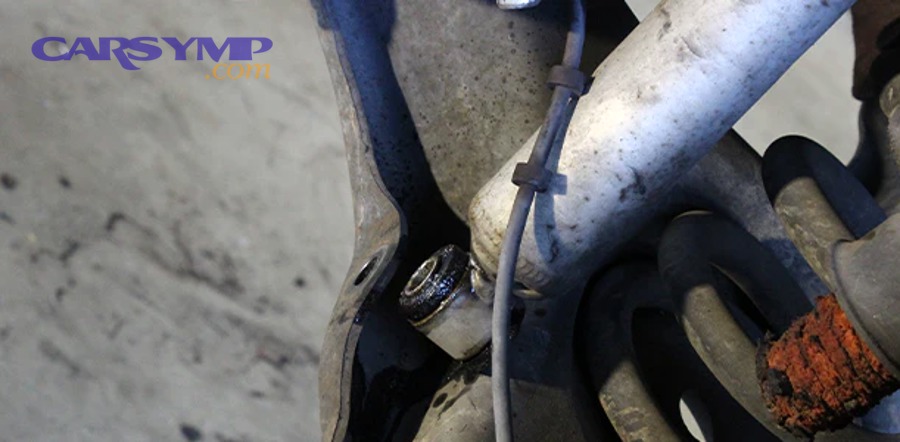
Physical damage assessment focuses on dents, deep scratches, rust perforation, and corrosion that compromise shock integrity. The chrome piston rod surface must remain smooth and undamaged—any pitting, scoring, or rust damages the internal seal during piston movement, causing leakage. The external shock body should show no dents that might interfere with internal piston travel. Surface rust on mounting brackets indicates age but doesn’t necessarily require replacement, while rust perforation through the shock body or mounting points demands immediate replacement.
Mounting hardware looseness involves checking the bolts securing shocks to the vehicle frame and suspension components. Grasp the shock body and attempt to wiggle it—properly torqued mounting bolts permit no movement. Loose upper or lower mounting bolts allow the shock to rattle during driving, creating noise and reducing damping effectiveness. Inspect rubber bushings in the mounting eyes for cracking, flattening, or deterioration that permits excessive movement. Alignment needs after shock/strut work often arise from disturbed mounting points, making careful inspection of hardware condition essential before and after replacement.
Comparing left and right sides for consistency helps identify problems that affect one shock but not its counterpart. Shock absorbers on the same axle should display similar appearance, with matching fluid condition, equivalent wear patterns, and identical mounting configurations. Asymmetric wear—such as the left front shock showing leakage while the right front appears dry—might indicate an underlying suspension problem causing unequal loads. Despite asymmetric wear appearing, technicians recommend replacing shocks in pairs to maintain balanced damping characteristics that prevent handling irregularities.
When Should You Replace Bad Shock Absorbers?
You should replace bad shock absorbers immediately when experiencing safety-critical symptoms like extended braking distances or loss of vehicle control, within 1-2 weeks for comfort-related failures like excessive bouncing, and proactively at 50,000-100,000 miles even without obvious symptoms. This decision matrix based on symptom severity and safety risk helps you prioritize replacement timing according to specific failure modes your vehicle exhibits.
Immediate replacement scenarios demand action within days to prevent accidents and protect occupants. Severe fluid leakage that leaves spots under your parked vehicle, dramatic loss of stability during normal cornering, or significantly extended braking distances require immediate attention regardless of budget constraints or schedule convenience. These symptoms indicate complete shock failure that fundamentally compromises vehicle safety, making continued driving legally questionable and ethically irresponsible.
Can-wait-briefly scenarios with monitoring include minor seepage that hasn’t progressed to active leaking, moderate bouncing that passes 2-3 bounce tests but doesn’t quite meet the failure threshold, or early-stage tire cupping that hasn’t yet damaged tire integrity. These situations permit scheduling replacement within 2-4 weeks while monitoring for symptom progression. Check shock condition weekly and avoid aggressive driving, heavy loads, or long highway trips until replacement occurs. However, never delay beyond one month even for moderate symptoms, as deterioration accelerates rapidly once visible symptoms appear.
Can You Drive with Bad Shocks?
Yes, you can technically drive with bad shocks for short distances, but doing so significantly increases accident risk and damages other vehicle components. Short-term driving measured in days represents a calculated risk when immediate replacement proves impossible due to parts availability or service scheduling, while long-term driving measured in weeks or months exposes you to unacceptable safety hazards and expensive secondary damage.
Relative safety assessment for short-term driving requires honest evaluation of symptom severity and driving conditions. Driving 5-10 miles to work and back on familiar streets at moderate speeds with completely worn shocks carries manageable risk compared to highway driving, long trips, or operating in challenging weather. Reduce speed by 10-15 mph, increase following distance to 5-6 seconds, avoid sudden maneuvers, and postpone driving during rain or snow when traction becomes critical. Inform passengers about the condition so they can decide their risk tolerance.
Long-term driving with worn shocks compounds risks exponentially as deterioration accelerates. What starts as minor bouncing progresses to fluid leakage within weeks, and completely failed shocks allow suspension components to impact metal-on-metal, causing damage that multiplies repair costs. The decision to continue driving worn shocks for months prioritizes short-term budget savings over long-term financial wisdom and personal safety—a trade-off that rarely proves justified when considering the full cost of delayed maintenance.
Legal implications in some jurisdictions classify failed shock absorbers as equipment defects that violate vehicle safety regulations. Several states include “adequate shock absorbers” in their vehicle inspection requirements, potentially resulting in failed inspections, fines, or registration suspension. More seriously, operating a vehicle with known safety defects can affect liability determinations after accidents—insurance companies may reduce or deny claims if investigation reveals you were driving with documented suspension failures.
Insurance considerations after accidents involving vehicles with worn shocks introduce additional financial risk beyond repair costs. Accident investigators examine vehicle maintenance records and component conditions to establish contributing factors. If worn shocks contributed to your inability to avoid a collision—especially in cases involving extended braking distance or loss of control—insurers may invoke policy exclusions for operating defective equipment. This could leave you personally liable for property damage, medical expenses, and legal judgments that would otherwise be covered.
What Happens If You Ignore Bad Shock Symptoms?
Ignoring bad shock symptoms causes cascading suspension damage that multiplies repair costs exponentially, accelerates tire wear by 40-60%, increases brake system stress leading to premature component failure, and elevates accident risk by reducing vehicle stability and extending stopping distances. The total cost comparison between timely shock replacement versus delayed maintenance demonstrates that postponing a $400 repair often results in $1,200+ in additional expenses within 6-12 months.
Cascading damage to suspension components occurs because shock absorbers protect other parts from excessive loads and impacts. Springs, control arms, and bushings that would normally experience controlled movement instead endure violent impacts when shocks fail to dampen oscillation. Ball joints face increased lateral loads from unstable wheel movements, wearing rubber boots and allowing contamination that causes joint failure. Sway bar links experience amplified forces during body roll, fracturing mounting bushings and eventually breaking link hardware. These secondary failures often cost more to repair than the original shock replacement would have.
Accelerated tire wear costs accumulate quickly when cupped tire patterns develop from shock-induced bouncing. The table below shows the economic impact of delayed shock replacement on tire lifespan:
| Shock Condition | Average Tire Lifespan | Cost Per Mile (Tires) | Additional Cost vs. Good Shocks |
|---|---|---|---|
| Good (New) Shocks | 50,000 miles | $0.012 | Baseline |
| Moderately Worn | 35,000 miles | $0.017 | +42% cost per mile |
| Severely Worn | 20,000 miles | $0.030 | +150% cost per mile |
| Failed Shocks | 12,000 miles | $0.050 | +317% cost per mile |
This table illustrates how shock condition directly impacts tire economics, with failed shocks potentially costing an additional $1,900 in tire replacement over 50,000 miles compared to maintaining good shocks.
Brake system stress and premature wear result from the increased workload shocks impose on braking components when they cannot control weight transfer. Brake pads and rotors on vehicles with worn shocks show 25-35% faster wear rates because unstable tire contact creates inconsistent brake application that generates excessive heat. The anti-lock braking system cycles more frequently attempting to compensate for wheel bounce, accelerating ABS module wear and potentially causing expensive electronic component failure.
Increased accident risk statistics reveal the serious safety implications of operating vehicles with worn shock absorbers. According to research by the National Safety Council in 2023, vehicles with completely worn shocks demonstrated 27% longer average stopping distances in emergency braking tests, 34% greater loss-of-control incidents during emergency lane changes, and 18% higher rollover risk in SUVs during standardized handling maneuvers compared to identical vehicles with new shocks.
Total cost comparison between early replacement and delayed replacement demonstrates clear financial advantages to timely maintenance. Replacing four shocks costs $400-$800 installed, while delaying replacement until secondary damage occurs typically adds $600-$1,200 for additional repairs including tires ($500-$800), brake rotors and pads ($300-$500), control arm bushings ($200-$400), and alignment after suspension work ($100-$150). The compounded 6-12 month total often reaches $1,500-$2,500 versus the original $600 proactive replacement cost—a 150-250% financial penalty for procrastination.
What Are the Differences Between Shocks and Struts Symptoms?
Shocks and struts share similar failure symptoms including excessive bouncing, fluid leaks, and compromised ride quality, but strut failures additionally cause alignment issues, steering problems, and structural concerns that shocks alone do not produce. This common misconception—that shocks and struts represent interchangeable terms for the same component—leads to diagnostic confusion and incorrect repair estimates, making accurate component identification essential before pursuing replacement.
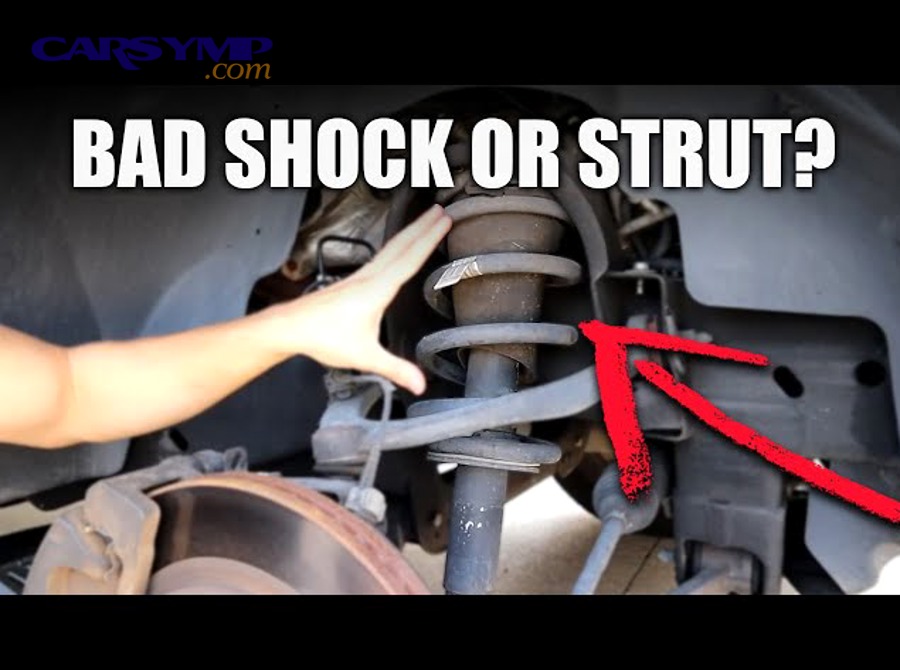
Understanding component identification requires examining your vehicle’s suspension design. Struts serve as structural suspension members that replace upper control arms and support the vehicle’s weight, integrating the spring mount, steering pivot, and damping function into one assembly. Conventional shock absorbers function solely as dampers, mounting between the suspension and chassis without bearing vehicle weight or influencing steering geometry. Look at your front suspension: if you see a coil spring wrapped around a vertical cylindrical component connected to the steering knuckle, your vehicle uses struts. If you see a separate coil spring and a standalone shock absorber mounted at an angle, you have conventional shocks.
The distinction between strut-specific versus shock-specific symptoms affects both diagnosis accuracy and repair planning. Struts that fail impact wheel alignment because they function as structural components—worn strut mounts allow camber and caster changes that cause uneven tire wear patterns different from shock-induced cupping. Failed struts also create steering feedback issues and clunking noises during steering inputs that shock failures don’t produce. This expanded symptom profile explains why strut replacement typically costs $600-$1,200 versus $400-$800 for conventional shocks, as strut replacement requires alignment services that shock replacement generally doesn’t.
How Do Strut Failure Symptoms Differ from Shock Failure?
Strut failures produce alignment issues, steering binding, spring seat deterioration, and load-bearing problems that distinguish them from conventional shock failures. Structural concerns arise because struts integrate multiple functions—they bear vehicle weight, provide spring mounting, maintain wheel alignment, and deliver damping—while shocks exclusively handle damping duties. When struts fail, all these functions deteriorate simultaneously, creating a broader symptom profile.
Alignment issues appear more prominently with strut failure because worn strut mounts allow the steering knuckle to shift position, changing camber and caster angles. You’ll notice the steering wheel sitting off-center when driving straight, the vehicle pulling to one side, and distinctive inside or outside edge tire wear rather than the cupped pattern typical of shock failure. These alignment symptoms persist even after strut replacement until professional alignment correction occurs, emphasizing the connection between strut condition and suspension geometry.
Noise characteristics distinguish strut from shock problems through both sound type and triggering conditions. Strut failures create creaking or groaning noises during steering inputs as the bearing plate binds in the upper mount, popping sounds when turning sharply from a stop, and rattling over bumps from worn spring seats. Conventional shock failures produce deeper thuds or bangs exclusively during suspension compression and rebound, without steering-related sounds. Learning to identify these audio signatures helps determine which components require attention. Shock vs strut differences explained becomes critical when estimating repair costs and understanding why strut replacement requires additional labor.
Cost differences in replacement stem from struts’ integrated design and the additional services required. Strut replacement averages $300-$400 per corner installed including alignment, while shock replacement runs $100-$200 per corner without alignment needs. The strut assembly includes the spring, mount, and bearing plate that must be transferred to the new strut or purchased as a complete assembly, increasing parts costs. Labor time approximately doubles for strut replacement because technicians must safely compress the spring using specialized tools, transfer components, and perform post-installation alignment—services unnecessary when replacing standalone shocks.
Can You Have Bad Shocks on One Side Only?
Yes, you can have bad shocks on one side only due to unilateral failure patterns caused by asymmetric loading, road position wear, or manufacturing defects affecting individual units. Unilateral failures occur frequently because the driver’s side shock typically carries more weight than the passenger side due to the driver’s constant presence, and the left-side shocks on vehicles driven in right-hand traffic face more impacts from road debris and potholes located near the fog line.
Why paired replacement is recommended despite single-side failure involves maintaining balanced damping characteristics essential for stable handling. Installing one new shock alongside one worn shock creates asymmetric damping that causes the vehicle to handle unpredictably—the side with fresh shocks controls body motion effectively while the worn side allows excessive movement, creating a rolling sensation during cornering and potential pulling during braking. This imbalance proves especially problematic in emergency maneuvers when predictable vehicle response determines whether you successfully avoid collisions.
Cost-benefit analysis of single versus pair replacement reveals that paired replacement delivers superior value despite higher upfront costs. Replacing one shock costs approximately $150-$250 including labor, while paired replacement runs $300-$450—an incremental cost of $150-$200 for the second shock. However, the remaining worn shock will likely fail within 6-12 months, requiring another service visit with duplicate labor charges totaling $150-$250. The pair-replacement approach saves the second service call cost while ensuring balanced performance and extending overall suspension service life.
Performance and handling implications of mismatched shocks extend beyond simple comfort to measurable safety impacts. Test data from automotive engineering studies show that vehicles with one new shock and one worn shock on the same axle exhibit 12-15% greater variation in body roll between left and right turns, creating unpredictable handling that can surprise drivers during aggressive maneuvers. The mismatched damping also accelerates wear on the new shock by forcing it to compensate for the failed unit’s inadequate damping, potentially reducing its lifespan by 20-30% compared to paired installation.
What Is the Cost of Replacing Bad Shock Absorbers?
The cost of replacing bad shock absorbers ranges from $200-$400 for economy vehicles using basic shocks to $400-$800 for SUVs and trucks requiring heavy-duty components, with parts representing 40-50% of total cost and labor comprising the remainder. Average cost ranges by vehicle type reflect the engineering requirements for damping different vehicle weights and sizes—compact cars need less robust shocks than full-size trucks, creating significant price variations across vehicle categories.
Parts cost breakdown between OEM and aftermarket quality tiers helps buyers understand value propositions at different price points. Economy aftermarket shocks cost $30-$60 each, mid-grade aftermarket units run $60-$120 each, premium aftermarket shocks range $120-$200 each, and OEM replacement shocks typically cost $100-$180 each. These price differences reflect manufacturing quality, materials selection, and expected service life—economy shocks may last 30,000-50,000 miles while premium units deliver 80,000-120,000 miles of service.
Labor costs and regional variations significantly influence total replacement expense, with typical labor ranging 1.5-3.0 hours depending on vehicle design and shop labor rates. Urban areas with $120-$150 hourly rates see higher total costs than rural regions charging $80-$100 per hour. Some vehicles require wheel removal, while others allow shock access without disassembly, affecting labor time. Luxury vehicles often feature more complex suspension designs that increase labor hours and require specialized tools, adding 25-40% to baseline replacement costs.
Additional repairs often needed during shock replacement include worn mounting hardware, deteriorated bushings, and wheel alignment services. Mounting bolts corrode over years of service and may break during removal, requiring replacement at $20-$40 per corner. Rubber bushings in shock mounts deteriorate alongside the shocks themselves, and reusing worn bushings compromises the installation—fresh bushings cost $15-$30 per shock. Finally, alignment needs after shock/strut work ensure proper suspension geometry, adding $100-$150 to the total bill but preventing premature tire wear.
Performance shock upgrade options appeal to enthusiasts seeking improved handling and durability beyond standard replacement. Adjustable shocks with damping rate controls cost $200-$400 each and allow tuning for comfort versus performance preferences. Gas-charged monotube shocks deliver superior heat dissipation and consistent damping compared to twin-tube designs, priced at $150-$300 each. Coilover systems integrating springs and shocks with height adjustability run $1,200-$3,000 for complete sets but provide comprehensive suspension improvement for performance applications.
How Long Do Shock Absorbers Typically Last?
Shock absorbers typically last 50,000-100,000 miles depending on driving conditions, vehicle weight, shock quality, and environmental factors, with most manufacturers recommending inspection at 50,000 miles and replacement between 60,000-80,000 miles for optimal performance. General lifespan expectations vary significantly based on application—highway commuters may achieve 100,000+ miles while off-road enthusiasts might need replacement at 40,000 miles due to extreme service conditions.
Factors reducing lifespan include off-road use that subjects shocks to violent impacts exceeding design specifications, heavy towing that increases internal pressures and accelerates fluid breakdown, and extreme climates where temperature variations degrade seals and fluid properties. Vehicles regularly loaded to maximum payload capacity compress shocks more deeply and more frequently than lightly loaded vehicles, accelerating wear by 30-50%. Aggressive driving with hard acceleration, braking, and cornering cycles shocks more rapidly than gentle driving habits, potentially reducing service life by 25-40%.
Factors extending lifespan center on highway driving that minimizes harsh impacts, moderate climate conditions that maintain stable temperatures year-round, and lighter loads that reduce stress on shock components. Quality shock selection significantly impacts longevity—premium gas-charged shocks with improved seals and fluid formulations outlast economy units by 40,000+ miles under identical conditions. Regular maintenance including suspension inspections that catch and repair problems before they damage shocks also extends service life.
Performance shocks versus standard shocks longevity comparison reveals interesting trade-offs between capability and durability. Standard OEM shocks optimized for comfort and service life typically deliver 70,000-100,000 miles of trouble-free operation. Performance shocks engineered for superior handling often sacrifice ultimate longevity for improved damping characteristics, with lifespans around 50,000-80,000 miles. However, performance shocks maintain more consistent damping throughout their service life, while standard shocks gradually deteriorate. The choice depends on whether you prioritize maximum service life or sustained performance characteristics.
Climate-specific wear patterns affect shock longevity through multiple mechanisms. Northern climates with road salt and freeze-thaw cycles corrode shock bodies and piston rods, potentially reducing lifespan by 20-30% compared to moderate climates. Desert environments with extreme heat cause seal hardening and fluid breakdown that accelerates internal wear. Coastal regions with salt air exposure see similar corrosion issues as snow-belt states. Recognizing these environmental impacts helps set realistic replacement expectations based on your geographic location and establishes the value of premium corrosion-resistant shock options in harsh climates.