


Belt squeal originates from the engine’s accessory belt system and produces a high-pitched chirping sound during cold starts or accessory engagement, while wheel squeak comes from wheel bearings or brake components and creates grinding or humming noises that vary with vehicle speed. The primary difference lies in their location, sound characteristics, and occurrence conditions—belt squeal typically happens in the engine compartment when accessories like air conditioning or power steering activate, whereas wheel squeak emerges from individual wheel assemblies and intensifies during turning or acceleration.
Understanding the acoustic signatures of each noise type enables car owners to perform accurate preliminary diagnostics before seeking professional help. Belt squeal generally manifests as a consistent, high-frequency screech between 1-5 kHz that may disappear once the engine warms up, while wheel squeak presents as a cyclic, speed-dependent rumble or grinding that persists regardless of engine temperature. These distinct patterns provide critical diagnostic clues for identifying the failing component.
Proper identification between belt squeal and wheel squeak determines both repair urgency and cost implications for vehicle owners. A squealing belt might indicate simple tension adjustment needs or belt replacement costing $100-$300, whereas wheel bearing noise often signals progressive bearing failure requiring immediate attention and repairs ranging from $300-$800 per wheel. Misdiagnosing these sounds can lead to either unnecessary repairs or catastrophic mechanical failures on the road.
The diagnostic process involves systematic testing methods that isolate noise sources through speed variation, turning maneuvers, and accessory engagement cycles. Below, we’ll explore the precise characteristics, causes, diagnostic techniques, and safety implications of both belt squeal and wheel squeak to help you make informed decisions about your vehicle’s maintenance needs.
What Is the Difference Between Belt Squeal and Wheel Squeak?
Belt squeal is a high-pitched noise generated by slippage or vibration in the serpentine belt system, while wheel squeak is a grinding or humming sound produced by degraded wheel bearings or brake components. These two automotive noises differ fundamentally in their mechanical origins, acoustic properties, and the vehicle systems they represent.
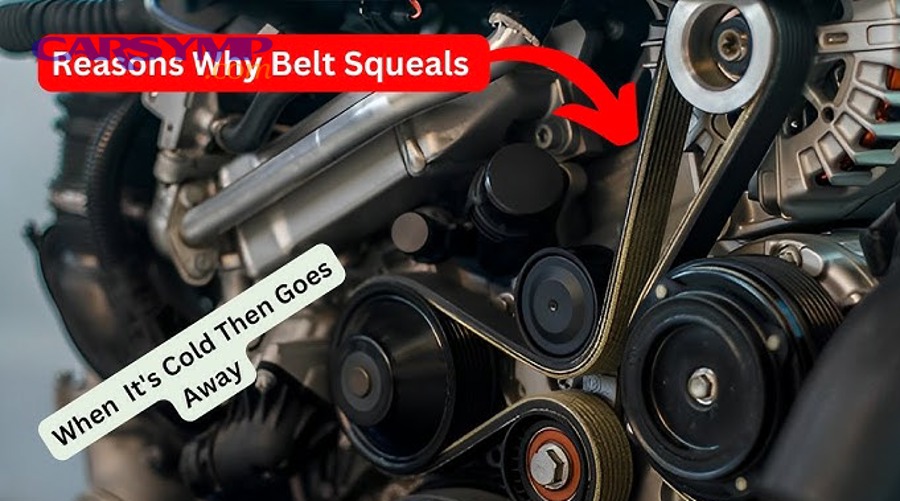
To fully understand these distinctions, we must examine both the sound characteristics and the physical locations where these noises originate. Belt squeal typically emerges from friction between the rubber belt surface and metal pulleys in the engine compartment, creating a sharp, piercing tone that can be heard from outside the vehicle even at idle. The serpentine belt connects the crankshaft to various accessory components including the alternator, power steering pump, air conditioning compressor, and water pump. When this belt loses proper tension, becomes glazed, or encounters pulley misalignment, it slips against the pulley surfaces and produces the characteristic squealing sound.
Wheel squeak, conversely, emanates from the wheel hub assemblies located at each corner of your vehicle. This noise results from metal-on-metal contact within failing wheel bearings, worn brake pads, or contaminated brake rotors. Unlike belt squeal’s consistent pitch, wheel squeak often varies in intensity and frequency based on vehicle speed, load distribution, and steering input. The sound may present as a low-frequency rumble at highway speeds or a high-pitched grinding during low-speed turns.
What Does Belt Squeal Sound Like vs Wheel Squeak?
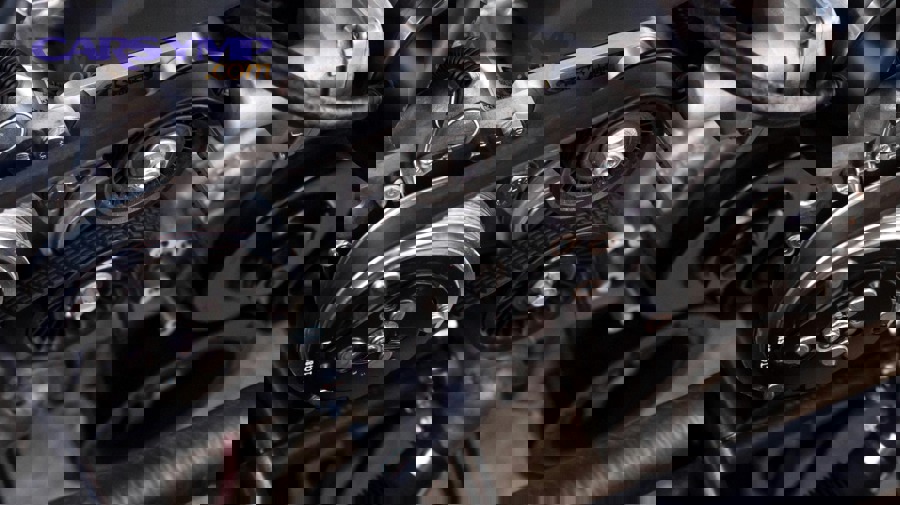
Belt squeal produces a high-pitched, chirping screech typically ranging from 1,000 to 5,000 Hz that resembles a bird call or fingernails on a chalkboard. This sound often occurs in short bursts lasting 1-3 seconds and may repeat intermittently during engine operation. The noise intensity usually peaks during cold engine starts when belt materials are less pliable and exhibit reduced friction coefficients. As the engine warms and the belt reaches operating temperature, the squeal may diminish or disappear entirely.
The acoustic signature of belt squeal changes predictably with engine RPM and accessory load. When you activate the air conditioning system, the compressor clutch engages and adds resistance to the belt system, frequently triggering or intensifying the squealing sound. Similarly, turning the steering wheel at low speeds increases power steering pump demand, which can provoke belt slip and associated noise. This direct correlation between accessory engagement and noise occurrence serves as a key diagnostic indicator.
Wheel squeak manifests as a cyclic grinding, humming, or groaning noise with frequencies typically between 500 and 2,000 Hz. Unlike belt squeal’s sharp chirp, wheel bearing noise often sounds like rolling thunder or a distant airplane, with a deeper, more resonant quality. The sound follows a rhythmic pattern that matches wheel rotation speed—faster driving produces higher-frequency noise, while slower speeds generate lower-pitched rumbling. Severely worn bearings may create a grinding sensation that you can feel through the steering wheel or seat.
Brake-related squeaks produce a metallic, high-pitched screech similar to belt squeal but with distinct triggering conditions. Brake squeal occurs specifically during brake application and may include a pulsing sensation through the brake pedal. Brake pad wear indicators—small metal tabs designed to contact the rotor when pads reach minimum thickness—create an intentional squealing noise to alert drivers of needed replacement. This sound differs from bearing noise by its exclusive occurrence during braking events.
Where Do These Noises Originate in Your Vehicle?
Belt squeal originates exclusively in the engine compartment, specifically at the interface between the serpentine belt and its associated pulley system. Modern vehicles typically employ a single serpentine belt that follows a serpentine path around multiple pulleys, hence the name. This belt drives the alternator (typically located on the passenger side of the engine), the power steering pump (often positioned on the driver’s side), the air conditioning compressor (usually mounted low on the engine block), and the water pump (attached to the front of the engine). Any of these pulley contact points can generate squeal when conditions favor belt slippage.
The belt tensioner assembly plays a crucial role in maintaining proper belt tension across all pulleys. This spring-loaded component automatically adjusts to compensate for belt stretch and wear throughout the belt’s service life. When the tensioner fails or loses spring tension, the belt develops excessive play and bounces against the pulleys rather than maintaining constant contact pressure. This bouncing action creates the intermittent chirping pattern characteristic of tension-related belt squeal. The tensioner is usually located on the driver’s side of the engine, identifiable by its prominent spring mechanism and smooth pulley surface.
Wheel squeak originates from the wheel hub assembly, a complex bearing unit that allows the wheel to rotate freely while supporting the vehicle’s weight. Each wheel contains a sealed bearing assembly pressed into the hub, with steel balls or rollers riding on precisely machined races. The front wheel hubs also house the CV axle connection and, on many vehicles, the wheel speed sensors for the anti-lock braking system. When these bearings degrade, internal clearances increase and metal components contact each other with inadequate lubrication, producing the characteristic grinding or humming noise.
Brake assemblies represent another potential source of wheel-area squeaking. The brake caliper, which houses the brake pads and piston assembly, mounts to the steering knuckle or rear axle housing. Brake pads contact the rotor (a large metal disc attached to the wheel hub) to create friction and slow the vehicle. When brake pads wear thin, accumulate brake dust, or lose their anti-squeal shims, they can generate squeaking noise when driving even without brake application. Suspension components like ball joints and control arm bushings can also create squeaking sounds, though these typically occur during vertical wheel movement over bumps rather than during steady-state driving.
How Can You Tell If the Noise Is From Your Belt or Your Wheels?
You can distinguish belt squeal from wheel squeak by performing speed variation tests—belt squeal maintains consistent pitch regardless of vehicle speed, while wheel squeak changes frequency proportionally with speed increases. Additionally, belt squeal typically occurs during engine start-up or accessory engagement and emanates from the engine compartment, whereas wheel squeak persists continuously during driving and originates from specific wheel locations.
To accurately identify the noise source, you’ll need to conduct systematic diagnostic tests that isolate variables and observe how the sound responds to different conditions. Proper diagnosis prevents unnecessary repairs and ensures you address the actual problem rather than guessing at solutions. The following tests provide reliable indicators that work for most vehicle types and noise scenarios.
When Does Each Type of Noise Typically Occur?
Belt squeal most commonly occurs during cold engine starts, particularly in temperatures below 40°F (4°C) when belt materials contract and lose flexibility. The first few seconds after startup represent the highest-risk period for belt squeal because the belt hasn’t reached its optimal operating temperature and the initial engine rotation creates maximum slippage conditions. Once the engine runs for 30-60 seconds, heat from the engine compartment warms the belt rubber, increasing its coefficient of friction and often eliminating the squeal entirely.
Accessory engagement provides another predictable trigger for belt squeal. When you activate the air conditioning system, the electromagnetic clutch on the compressor suddenly engages, adding rotational resistance to the belt system. This instantaneous load increase can cause the belt to slip momentarily, producing a brief chirp or sustained squeal. Similarly, hard steering maneuvers at low speeds demand maximum power steering pump output, stressing the belt and potentially triggering noise. Cold weather exacerbates this effect because power steering fluid viscosity increases in low temperatures, requiring more pump effort and greater belt load.
Acceleration from a stop represents a third common occurrence scenario for belt squeal. The alternator must work harder to restore electrical charge after the starter motor has depleted battery reserves, while the power steering pump manages steering input during the turn. This combination of high electrical demand and steering load can overwhelm a marginal belt system, causing the belt to slip against one or more pulleys. The squeal typically lasts only 1-2 seconds before belt speed synchronizes with pulley rotation and normal friction resumes.
Wheel squeak exhibits completely different occurrence patterns tied directly to wheel rotation and vehicle dynamics. The noise begins as soon as the vehicle moves and continues throughout the drive, varying in intensity but rarely disappearing completely. As vehicle speed increases, wheel bearing noise frequency increases proportionally—a bearing producing a 2 Hz rumble (2 cycles per second) at 30 mph might generate a 4 Hz sound at 60 mph. This linear relationship between speed and noise frequency serves as a definitive diagnostic indicator.
Turning maneuvers significantly affect wheel squeak characteristics because steering input redistributes vehicle weight across the wheel assemblies. When you turn left, centrifugal force shifts weight to the right side of the vehicle, increasing load on the right-side wheel bearings. A failing right front bearing will produce louder, more pronounced noise during left turns when it carries maximum load. Conversely, the noise may diminish or change character during right turns when weight transfers away from the affected bearing. This load-sensitive behavior helps pinpoint which specific wheel contains the failing bearing.
Brake application may temporarily mask or alter wheel bearing noise as the brake pads grip the rotor and modify vibration patterns through the wheel assembly. However, brake-specific squeal presents its own diagnostic pattern—it occurs exclusively during braking and immediately ceases when you release the brake pedal. Brake squeal often includes a pulsing sensation through the pedal that bearing noise doesn’t produce. Wear indicator squeal continues regardless of brake application, serving as a constant auditory warning that grows louder as pad thickness decreases.
What Simple Tests Can You Perform to Identify the Source?
The water spray test provides immediate confirmation of belt squeal by temporarily altering belt friction properties. With the engine running and the squeal audible, spray clean water from a spray bottle directly onto the ribbed surface of the serpentine belt while standing clear of moving components. If the squeal immediately stops or significantly changes in pitch and intensity, you’ve confirmed belt-related noise. Water temporarily increases belt-to-pulley friction and fills microscopic surface irregularities, restoring grip and eliminating slippage. The effect lasts only 5-10 seconds before the water evaporates or flings off the belt, but this brief confirmation proves invaluable for diagnosis.
The speed variation test exploits the fundamental difference in how belt and wheel noises respond to vehicle velocity changes. Find a safe, empty parking lot or quiet street where you can safely accelerate and decelerate. Start from a complete stop and gradually accelerate to 30-40 mph while listening carefully to the noise character. Belt squeal will maintain a consistent pitch throughout the acceleration because it’s driven by engine RPM, not wheel speed. Engine RPM might increase from 800 to 2,500 RPM during acceleration, but this causes only minor changes in belt squeal frequency. Wheel bearing noise, however, will steadily increase in frequency as the wheels spin faster, creating an obvious rising pitch that tracks vehicle speed precisely.
The turning test isolates wheel-specific noises by manipulating load distribution across individual wheel bearings. While driving at 15-25 mph in an empty parking lot, perform a series of gentle left and right turns while noting changes in noise character. A failing front bearing will produce louder noise during turns in the opposite direction—a bad right front bearing squeaks more during left turns because weight transfers to the right side. Rear bearings exhibit similar behavior but may be less pronounced. If the noise intensity remains constant regardless of turning direction, suspect belt squeal rather than bearing issues. This test works best on smooth pavement where road noise doesn’t interfere with your observations.
The accessory engagement test directly correlates belt squeal with component activation. With the vehicle stationary and engine running, systematically activate individual accessories while listening for squeal initiation. Turn the air conditioning from off to maximum cooling and note whether squeal begins or intensifies. Turn the steering wheel from center to full lock in both directions, paying attention to any noise changes. Turn on high-current electrical loads like headlights, heated seats, and rear defrost to increase alternator demand. Each accessory adds load to specific pulleys in the belt system—if squeal correlates with accessory activation, you’ve confirmed belt-related issues rather than wheel problems.
The listening location technique uses physical positioning to trace noise origin. While a helper drives the vehicle slowly in an empty area, position yourself safely outside the vehicle at various locations. Stand near the front of the vehicle to listen for engine compartment sounds, then move to the side near each wheel. Belt squeal will be loudest near the front grille and engine compartment, with sound intensity dropping dramatically toward the rear of the vehicle. Wheel bearing noise concentrates at the specific wheel with the failing bearing, allowing you to identify which corner of the vehicle needs attention. This method works particularly well for squeaking noise when driving at low speeds where you can safely walk alongside the vehicle.
What Causes Belt Squeal vs Wheel Squeak?
Belt squeal results primarily from inadequate friction between the belt and pulley surfaces due to glazing, contamination, or improper tension, while wheel squeak stems from bearing degradation, lubrication failure, or brake component wear. Understanding these root causes enables targeted repairs rather than trial-and-error component replacement.
The underlying mechanisms differ substantially between these two noise types, reflecting their distinct mechanical systems and failure modes. Belt systems rely on friction-based power transmission where rubber contacts metal under precise tension specifications, whereas wheel bearings depend on rolling-element mechanics with strict lubrication and clearance requirements. Let’s examine the specific failure modes for each system.
What Are the Main Causes of Belt Squeal?
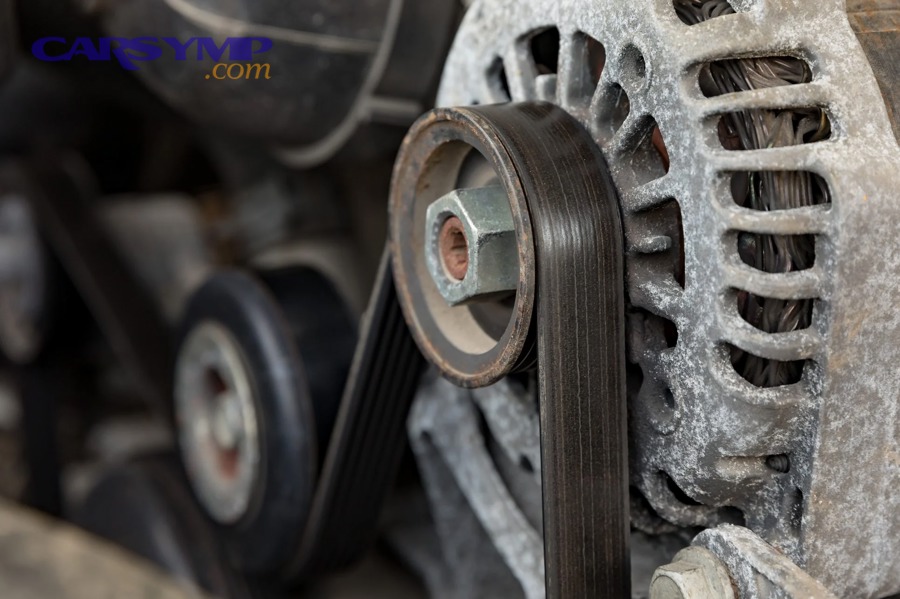
Worn or glazed belt surfaces represent the most common cause of belt squeal, affecting approximately 60% of cases according to automotive service data. Belt glazing occurs when prolonged heat exposure or oil contamination hardens the rubber surface, creating a smooth, shiny appearance that resembles polished leather. This glazed surface loses the microscopic texture that generates friction against pulley grooves, allowing the belt to slip rather than grip. The ribbed underside of a serpentine belt normally features hundreds of tiny rubber peaks that interlock with corresponding grooves in the pulley surfaces. When these peaks wear down or melt together from heat, effective contact area decreases and slippage increases proportionally.
Belt material degradation follows a predictable timeline based on operating conditions and mileage. Most serpentine belts begin showing glazing symptoms after 50,000-70,000 miles of service, though severe operating conditions can accelerate this timeline significantly. Vehicles operating in hot climates, making frequent short trips, or hauling heavy loads place additional stress on belt systems through increased heat generation and accessory load cycling. The belt rubber compound undergoes chemical changes at temperatures above 200°F (93°C), permanently altering its friction characteristics and reducing its effective service life.
Improper belt tension accounts for approximately 25% of belt squeal cases and can occur in two distinct forms—excessive looseness or over-tightening. Insufficient tension allows the belt to bounce or skip across pulley surfaces rather than maintaining constant contact pressure. The belt tensioner spring gradually weakens over time, losing its ability to maintain manufacturer-specified tension values typically ranging from 60-90 pounds-force for automotive serpentine belts. You can verify belt tension by pressing firmly on the belt at its longest unsupported span between pulleys—proper tension allows approximately ½ inch (13mm) of deflection under moderate finger pressure.
Conversely, over-tightened belts create excessive bearing load on accessory components, accelerating wear on pulleys, water pumps, and alternator bearings. Over-tensioning typically occurs during improper installation when technicians use manual force rather than allowing the automatic tensioner to find its designed operating position. An over-tight belt may run silently initially but will wear the pulley bearing surfaces rapidly, leading to noise development within a few thousand miles. The belt itself experiences increased internal stress that causes premature cracking and rib separation.
Misaligned pulleys create non-uniform contact between the belt and pulley surfaces, concentrating wear on specific belt ribs and generating localized squealing. Pulley misalignment occurs when engine components shift due to worn motor mounts, when accessories are replaced without proper alignment procedures, or when the crankshaft pulley itself develops a wobble from harmonic balancer failure. Even 1-2 degrees of angular misalignment can cause the belt to ride on the edge of a pulley rather than centering in the groove, producing both noise and accelerated wear patterns. Visual inspection reveals misalignment through uneven belt wear—one or two ribs will show significantly more wear than others, and the belt may appear to track toward one side of the pulley rather than centering naturally.
Contamination from oil, coolant, or power steering fluid drastically reduces belt friction and causes immediate squealing when the contaminating fluid contacts the belt surface. Engine oil leaks from valve covers, oil pan gaskets, or front crankshaft seals can drip onto the belt and effectively lubricate the rubber-to-metal interface that requires friction for power transmission. A single teaspoon of oil distributed across the belt surface can reduce the coefficient of friction by 70% or more, causing persistent squeal that may temporarily abate with water application but returns once the water evaporates.
Coolant contamination typically originates from water pump seal failure or radiator hose leaks near the belt path. Coolant contains ethylene glycol, which acts as a plasticizer on rubber compounds, softening the belt surface and degrading its structural integrity. Unlike oil contamination that can sometimes be cleaned, coolant-soaked belts require replacement because the chemical damage extends throughout the rubber matrix. Power steering fluid leaks from pump seals or high-pressure hoses create similar contamination issues, often accompanied by identifiable pink or red fluid residue on the belt and surrounding components.
Worn pulleys and tensioners contribute to belt squeal through bearing roughness, surface corrosion, or mechanical failure. Pulley bearings contain small ball or needle bearings that allow rotation around a fixed mounting bolt. These bearings develop roughness after 100,000+ miles as their internal lubrication breaks down and wear particles contaminate the bearing races. A rough bearing creates vibration that transmits through the pulley into the belt, causing localized slippage and associated noise. Severely worn bearings may seize completely, causing the pulley to drag or stop rotating, which instantly overheats and destroys the belt.
Pulley surface corrosion develops in humid climates or when vehicles sit unused for extended periods. Rust or oxidation on the pulley groove surfaces creates an abrasive texture that accelerates belt wear while simultaneously reducing friction. The pulley grooves should present smooth, polished surfaces from normal belt contact—any roughness, pitting, or corrosion indicates replacement needs. Idler pulleys and tensioner pulleys are particularly susceptible because they typically feature lighter construction than accessory-driven pulleys like the alternator or power steering pump.
What Are the Main Causes of Wheel Squeak?
Worn wheel bearings constitute the primary cause of wheel squeak, representing approximately 75% of wheel-area noise complaints according to automotive repair facility data. Wheel bearings contain precision-ground steel balls or tapered rollers that rotate between inner and outer races, supporting vehicle weight while allowing wheel rotation. These bearings operate under extreme conditions—supporting 500-1,500 pounds per wheel, rotating at speeds exceeding 1,000 RPM at highway velocity, and enduring lateral loads during cornering that can exceed 1.5 times the vehicle’s static weight.
Bearing wear progresses through distinct stages that correlate with noise characteristics and severity. Initial wear manifests as increased internal clearance when the rolling elements gradually wear shallow grooves into the bearing races. This stage produces a faint humming noise audible primarily at highway speeds, often mistaken for tire noise by inexperienced drivers. As wear progresses, the bearing develops pitting and spalling—small pieces of hardened steel break away from the race surfaces, creating rough spots that the rolling elements must traverse. This intermediate stage generates pronounced rumbling or grinding that varies with vehicle speed and turning direction.
Advanced bearing failure involves significant material loss from both races and rolling elements, allowing the wheel hub to develop measurable play in multiple directions. The wheel may exhibit 0.020-0.100 inches of radial play (movement toward and away from the vehicle centerline) that creates a clunking sensation over bumps in addition to continuous grinding noise. At this stage, catastrophic failure becomes imminent—the bearing may seize and lock the wheel, or the wheel hub may separate from the spindle entirely, causing complete loss of vehicle control. Modern sealed bearing assemblies typically fail between 80,000 and 150,000 miles under normal operating conditions.
Lack of bearing lubrication accelerates wear exponentially by allowing metal-to-metal contact between rolling elements and races. Older serviceable wheel bearings used packed grease that required periodic replenishment every 30,000-50,000 miles during brake service. Modern sealed bearing assemblies contain lifetime lubrication that should last the bearing’s expected service life, but seal failure can allow this grease to escape or permit water and contaminant entry. Road salt, particularly in northern climates with extensive winter de-icing programs, proves especially destructive to bearing seals and internal components.
Bearing seals prevent external contaminants from entering the bearing assembly while retaining internal lubrication. These seals consist of rubber or synthetic compounds that contact the rotating hub surface, creating a barrier against dirt, water, and salt spray. Seal degradation from heat, chemical exposure, or physical damage compromises this barrier and initiates bearing failure. Water intrusion is particularly damaging because it emulsifies the bearing grease, reducing its lubricating properties and promoting corrosion of the precision-ground bearing surfaces. A bearing with water-contaminated grease may fail within 5,000-10,000 miles compared to the normal 100,000+ mile service life.
Brake pad wear indicators create intentional squealing to alert drivers of needed pad replacement. These indicators consist of small metal tabs attached to the brake pad backing plate, positioned to contact the brake rotor when pad material wears to approximately 3mm thickness—the minimum safe specification. The resulting metallic squeal serves as an auditory warning system that operates continuously while driving, intensifying during brake application. Unlike bearing noise that varies with speed, wear indicator squeal maintains relatively consistent pitch and may include a pulsing quality that matches rotor rotation frequency.
Brake dust accumulation between the pad and rotor creates squeaking through vibration and resonance mechanisms. Brake dust consists of metallic particles from the rotor surface combined with friction material from the pads, bonded together by heat into a fine, abrasive powder. This accumulation can cement itself to the rotor surface, creating an uneven texture that causes the brake pads to vibrate audibly during light contact with the rotor. High-performance brake pads with high metallic content produce more dust and correspondingly higher squeal incidence compared to ceramic or organic pad formulations.
Missing or degraded anti-squeal shims allow brake pads to vibrate at their natural resonant frequencies, producing characteristic squealing sounds. These thin steel or synthetic shims attach to the back of brake pads and dampen vibration transmission to the caliper assembly. When shims fall off, corrode, or become detached, the pads contact the caliper piston directly without vibration damping. The resulting noise may occur during driving without brake application because slight caliper drag maintains minimal pad-to-rotor contact even when you’re not actively braking.
Damaged CV joints or hub assemblies generate clicking or squeaking sounds particularly noticeable during low-speed turns. CV (constant velocity) joints transfer power from the transmission to the drive wheels while accommodating suspension movement and steering angles. These joints contain precision-ground balls that ride in curved tracks, lubricated by special grease and protected by rubber boots. When the protective boot tears, grease escapes and contaminants enter the joint, causing wear and eventual clicking or squeaking during operation. Front-wheel-drive vehicles experience CV joint wear more frequently than rear-wheel-drive configurations due to the additional duty cycle of accommodating steering angles.
Is Belt Squeal or Wheel Squeak More Serious?
Wheel squeak represents a more serious safety concern than belt squeal because wheel bearing failure can cause complete loss of vehicle control, while belt failure typically results in accessory function loss and eventual engine overheating. However, both conditions require timely repair to prevent escalating damage and maintain vehicle safety.
The risk assessment differs substantially between these two failure modes based on their potential consequences and progression timelines. Understanding the severity levels helps you prioritize repairs appropriately and make informed decisions about continued vehicle operation versus immediate service needs.
Can You Still Drive With Belt Squeal?
You can continue driving short distances with belt squeal, but extended operation risks complete belt failure and consequent loss of power steering, electrical charging, and engine cooling. The immediate drivability impact depends on which accessories the belt drives and how quickly the underlying problem progresses toward catastrophic failure.
In the short term (24-48 hours or less than 100 miles), a squealing belt typically maintains sufficient grip to drive essential accessories, allowing you to reach a repair facility safely. The noise itself, while annoying, doesn’t immediately indicate imminent failure unless accompanied by other symptoms like visible belt damage, burning rubber smell, or visible smoke from the engine compartment. Many drivers operate vehicles with mild belt squeal for weeks or months without incident, though this practice accelerates belt deterioration and increases breakdown risk.
The consequences of continued operation with belt squeal compound progressively as the underlying cause worsens. A belt that squeals only during cold starts may progress to constant squealing as glazing or wear intensifies. The belt surface temperature increases from friction and slippage, accelerating rubber degradation and potentially causing the belt to crack, separate into layers, or develop missing ribs. Each of these damage modes brings the belt closer to complete failure, which can occur without warning during normal driving.
Complete belt failure creates immediate and severe consequences depending on your vehicle’s configuration. Loss of alternator function stops battery charging, providing only 30-60 minutes of electrical operation before voltage drops below the level needed to operate fuel injection, ignition systems, and electronic controls. The engine will stall without warning when battery voltage becomes insufficient, potentially creating a hazardous situation if failure occurs in traffic or at highway speeds. Power steering assistance disappears instantly when the belt breaks, requiring significantly greater steering effort—some drivers cannot generate sufficient force to turn the steering wheel, particularly in larger vehicles or those with wider tires.
Water pump failure from belt loss creates the most time-critical consequence. The water pump circulates coolant through the engine to prevent overheating, and belt failure stops this circulation immediately. Engine temperature begins rising within 1-2 minutes depending on ambient conditions and engine load. Continued operation without cooling causes cylinder head warping, head gasket failure, and potentially catastrophic engine damage requiring replacement costing $3,000-$8,000 or more. Temperature gauge warning occurs when coolant temperature exceeds 230-240°F (110-116°C), but internal engine damage may already be occurring at these temperatures.
Air conditioning loss from belt failure represents the least critical consequence, affecting only comfort rather than vehicle operation or safety. However, in extreme heat conditions, loss of air conditioning can create health risks for vulnerable passengers including children, elderly individuals, or those with medical conditions requiring climate control.
When belt failure is imminent, you need to make immediate decisions about continued driving versus stopping and seeking assistance. If the belt breaks completely but you notice the failure immediately (through warning lights, temperature gauge rising, or sudden loss of power steering), pull over safely within 30 seconds and shut off the engine. Attempting to drive even short distances without the serpentine belt will cause expensive engine damage that far exceeds belt replacement cost. Call for a tow truck rather than attempting to drive to a repair facility.
Can You Still Drive With Wheel Squeak?
Driving with wheel bearing squeak is dangerous and should be limited to the minimum distance necessary to reach immediate professional service, as bearing failure progresses rapidly and can cause wheel separation or lockup without warning. Unlike belt squeal which provides multiple warning stages, wheel bearing failure can transition from noise to catastrophic failure within hours or miles depending on the damage severity.
The safety risks of wheel bearing failure substantially exceed those of belt failure due to the direct impact on vehicle control and stability. A wheel bearing supports the entire weight of one corner of the vehicle—typically 500-1,500 pounds depending on vehicle size and load distribution. When the bearing fails completely, the wheel loses proper positioning relative to the suspension and can wobble, lock up, or separate entirely from the vehicle. Any of these failure modes results in immediate loss of control that may cause single-vehicle crashes or multi-vehicle collisions if failure occurs in traffic.
Progressive deterioration of wheel bearings follows a generally predictable timeline, though severe damage or manufacturing defects can accelerate failure dramatically. Initial bearing noise from slight wear may persist for 5,000-20,000 miles before progressing to more serious stages, particularly if highway driving predominates and turning loads remain moderate. However, once bearing noise becomes prominent and grinding sounds emerge, the safe driving window narrows to hundreds of miles rather than thousands. Severe grinding accompanied by wheel wobble or pulling to one side indicates imminent failure—continued operation under these conditions is reckless and may result in accidents.
The consequences of wheel bearing lockup depend on which wheel fails and your driving speed at the moment of failure. Front wheel bearing seizure at highway speeds transfers massive lateral forces through the suspension and steering systems, typically pulling the vehicle sharply toward the affected wheel. The sudden deceleration of one front wheel creates a powerful yaw moment that can spin the vehicle or cause it to depart the roadway, particularly if the driver overcorrects or applies brakes inappropriately. Modern stability control systems can mitigate these effects but cannot completely compensate for a locked wheel.
Rear wheel bearing failure often proves less violent than front failures because rear wheels don’t directly influence steering. However, rear bearing lockup still creates substantial vehicle instability, particularly during braking when rear wheel traction becomes critical for balanced deceleration. The locked wheel may cause the rear of the vehicle to swing outward (oversteer) or create a dangerous skid condition on slippery surfaces. Anti-lock braking systems detect the non-rotating wheel and reduce braking pressure to that corner, but cannot restore normal vehicle dynamics when the underlying cause is bearing seizure rather than brake lock.
Wheel separation represents the most catastrophic bearing failure mode, occurring when complete bearing disintegration allows the wheel hub to detach from the spindle or axle. The wheel, tire, and brake assembly depart the vehicle entirely, removing all traction and control at that corner. Front wheel separation typically causes immediate loss of steering control and violent collision with roadway obstacles, guardrails, or other vehicles. Rear wheel separation may be slightly less violent initially but still creates severe instability and often results in the separated wheel assembly becoming a dangerous projectile that can strike other vehicles or bystanders.
When you identify wheel bearing noise, prioritize immediate inspection and repair over continued vehicle operation. Drive directly to the nearest qualified repair facility using the most direct route that avoids highway speeds if possible. If the grinding noise intensifies, the wheel develops noticeable wobble, or the vehicle begins pulling to one side during straight-line driving, stop immediately in a safe location and arrange for towing. The cost difference between proactive bearing replacement ($300-$800 per wheel) versus post-failure repair that may include suspension damage, accident damage, and injury costs makes immediate service the only rational choice.
Brake-related squeaking presents a more nuanced risk assessment. Brake pad wear indicator noise, while annoying, doesn’t immediately compromise braking function because several millimeters of friction material remain when the indicator begins sounding. You can safely drive 200-500 miles with wear indicator squeal, though you should schedule brake service promptly to prevent damage to rotors from metal-to-metal contact. Once the pads wear completely through their friction material, the steel backing plates contact the rotors directly, scoring deep grooves that require expensive rotor replacement or resurfacing in addition to pad replacement.
Brake squeal without wear indicator contact typically indicates minor issues like dust accumulation or shim problems that don’t significantly affect braking performance. However, any squeaking noise when driving accompanied by reduced braking effectiveness, pulling to one side during braking, or pulsing brake pedal requires immediate inspection because these symptoms may indicate caliper malfunction, fluid leaks, or other serious brake system failures that directly compromise vehicle safety.
What Are the Repair Options and Costs for Belt Squeal vs Wheel Squeak?
Belt squeal repairs typically cost $100-$400 including belt replacement, tensioner service, and pulley inspection, while wheel bearing repairs range from $300-$800 per wheel including parts, labor, and related component replacement. Cost variations depend on vehicle make and model, labor rates in your geographic area, and the extent of related component damage requiring attention during service.
Understanding repair options and associated costs enables informed decision-making about DIY repairs versus professional service, and helps you evaluate estimates from repair facilities for fairness and completeness. Let’s examine the specific repair requirements and cost factors for each condition.
How Much Does It Cost to Fix Belt Squeal?
Belt replacement costs range from $75-$200 for the serpentine belt itself plus $50-$150 in labor charges, totaling $125-$350 for straightforward belt replacement services. Premium belt brands like Gates, Continental, or Goodyear Gatorback command higher prices ($80-$150) but offer superior rubber compounds and longer service life compared to economy belts ($25-$60) that may fail prematurely. The belt cost represents only 30-40% of the total repair expense—labor charges comprise the majority because accessing the belt requires removing shields, mounts, or other components depending on vehicle design.
Compact cars and sedans with transverse-mounted four-cylinder engines typically feature simple belt configurations accessible from above or through the wheel well, requiring 30-60 minutes for replacement. Larger vehicles with longitudinal V6 or V8 engines may position the belt deep in the engine bay between frame rails and suspension components, extending labor time to 90-120 minutes and proportionally increasing costs. Luxury and performance vehicles occasionally require extensive disassembly including radiator removal, fan assembly detachment, or engine mount manipulation to access belt components, pushing labor costs to $300-$500 even for simple belt replacement.
Tensioner replacement adds $75-$200 in parts costs plus 30-60 minutes of additional labor ($40-$100), bringing total repair costs to $240-$550 when both belt and tensioner require replacement. Replacing the tensioner simultaneously with the belt makes sense economically because labor costs overlap substantially—most of the work involves accessing the belt area, which must occur regardless of whether you’re changing just the belt or both belt and tensioner. Tensioner springs weaken predictably with age and mileage, making replacement at 60,000-100,000 mile intervals standard preventive maintenance practice.
Idler pulley replacement costs $30-$100 per pulley for the parts plus $50-$150 labor per location depending on accessibility. Vehicles may have 1-3 idler pulleys depending on belt routing complexity, and replacing multiple pulleys during a single service visit reduces per-pulley labor costs through efficiency gains. Pulley bearings should spin smoothly without roughness, grinding, or resistance—any bearing noise or drag indicates replacement needs. Delaying pulley replacement when bearings show wear symptoms risks bearing seizure that immediately destroys the belt and may cause accessory damage from sudden belt loss.
Pulley alignment services, while rarely needed, can cost $150-$300 when misalignment stems from worn engine mounts or accessory mounting bolt looseness. Proper alignment requires specialized tools including dial indicators and laser alignment systems to measure angular and parallel offset between pulley faces. Most independent shops lack these specialized tools and refer alignment work to dealerships or specialty facilities equipped for precision measurements. Misalignment correction may require engine mount replacement ($200-$600 per mount depending on design), accessory repositioning, or shimming pulley positions to achieve manufacturer specifications.
Contamination cleanup adds minimal cost when performed during belt replacement but may require additional parts if contamination sources require repair. Oil leak repairs vary dramatically based on the source—valve cover gasket replacement costs $150-$400, front crankshaft seal replacement runs $200-$500, and oil pan gasket replacement can reach $400-$800 due to extensive disassembly requirements. Coolant leaks from water pump seals typically necessitate complete water pump replacement ($250-$600 including parts and labor) because seal replacement alone proves impractical on modern pump designs. Power steering fluid leaks may require hose replacement ($80-$200), pump seal service ($150-$300), or complete pump replacement ($300-$700) depending on leak location and component condition.
How Much Does It Cost to Fix Wheel Squeak?
Wheel bearing replacement costs vary significantly between vehicle types and bearing configurations, ranging from $250-$450 per wheel for common passenger cars to $500-$800+ per wheel for trucks, SUVs, and luxury vehicles. Front wheel bearings typically cost more than rear bearings due to increased complexity—front bearings must accommodate steering angles and often integrate with ABS sensor rings and CV axle mounting provisions. The parts cost for a front hub bearing assembly ranges from $80-$250 for standard vehicles and $200-$500 for premium or performance applications.
Labor charges for bearing replacement depend primarily on whether your vehicle uses pressed-in bearings or bolt-on hub assemblies. Modern vehicles (2000+) predominantly feature bolt-on hub assemblies that attach to the steering knuckle or axle housing with 3-5 mounting bolts, allowing replacement in 1-1.5 hours per wheel ($100-$200 labor). Older vehicles and some modern truck platforms use pressed-in bearings that require hydraulic press equipment to remove the old bearing races and install new ones, extending labor time to 2-3 hours per wheel ($200-$400 labor). The pressing operation demands specialized equipment and precise technique to avoid damaging the knuckle or hub, making professional service strongly recommended for pressed bearing applications.
Additional components often require replacement during bearing service, increasing total repair costs beyond simple bearing assembly swaps. The wheel hub nut (sometimes called the axle nut) is typically a one-time-use fastener designed to deform during installation, providing proper bearing preload and stake-lock security. This nut costs $15-$40 but must be replaced rather than reused to maintain proper clamping force. Brake components may require service simultaneously—if the rotor shows significant wear, scoring, or thickness below minimum specifications, replacement adds $40-$100 per rotor. Brake pads near minimum thickness should be replaced during bearing service to avoid repeating the disassembly within a few thousand miles, adding $60-$120 for a complete axle set.
Alignment services become necessary after any front suspension or steering component replacement, adding $80-$150 to total repair costs. Wheel bearing replacement on front-wheel positions requires disconnecting the tie rod end, which disturbs the toe alignment setting. Even minor toe misalignment (0.1-0.2 degrees) causes accelerated tire wear and degraded handling, making post-repair alignment essential for vehicles with front bearing replacement. Rear bearing replacement doesn’t typically require alignment services unless suspension components were disturbed during the repair process.
ABS sensor damage during bearing replacement represents an often-overlooked cost factor that can add $75-$200 to repair expenses. Many modern hub assemblies integrate the ABS sensor ring into the bearing assembly, but separate external sensors must be carefully removed and reinstalled during bearing replacement. These sensors feature brittle plastic bodies and delicate magnetic pickup elements that break easily if mishandled. Always inquire whether ABS sensor condition was verified during bearing replacement and whether sensor replacement is included in the quoted price.
Brake service costs for squeak elimination range from $150-$400 per axle depending on the required intervention. Simple brake cleaning services where technicians remove wheels, clean rotor surfaces, and apply anti-squeal lubricant to pad backing plates cost $60-$120 for both front wheels. Brake pad replacement runs $120-$250 per axle for standard pads including hardware and labor, while premium ceramic or performance pads increase costs to $200-$400 per axle. Complete brake jobs including rotors, pads, and caliper service range from $300-$600 per axle for standard applications.
CV joint replacement becomes necessary when squeaking originates from these components rather than bearings or brakes. A complete CV axle assembly (including both inner and outer CV joints) costs $80-$250 for the parts and requires 1.5-2.5 hours labor ($150-$300), totaling $230-$550 per axle for replacement. Some repair facilities offer CV boot replacement services ($100-$200) as a preventive measure when boots show minor tears but the joints haven’t yet developed damage, though this approach proves cost-effective only if caught very early in the boot failure process.
Can You Fix Belt Squeal Yourself vs Wheel Squeak?
Belt squeal DIY repairs are feasible for mechanically inclined car owners with basic tools, while wheel bearing replacement typically requires specialized equipment and advanced mechanical skills that place it beyond most DIY capabilities. The difficulty difference stems from tool requirements, precision needs, and safety implications of improper installation.
Belt replacement requires only basic hand tools available in most home tool collections—socket set (typically 10mm-19mm range), ratchet, breaker bar or serpentine belt tool, and possibly a torque wrench for tensioner bolt installation. The procedure involves releasing tension with the tensioner tool, slipping the old belt off the pulleys, routing the new belt following the diagram printed on your radiator support or fan shroud, and releasing the tensioner to apply proper tension. Total DIY time runs 30-90 minutes depending on engine accessibility and your mechanical experience. Online videos specific to your vehicle make and model provide visual guidance that simplifies the routing process and identifies common pitfalls.
The primary challenge in DIY belt replacement involves accessing the tensioner and belt routing path, which may require removing the passenger-side wheel and inner fender liner on some vehicles, or lowering the vehicle on jack stands to access components from below. Safety considerations include ensuring the vehicle is properly supported on jack stands (never working under a car supported only by a hydraulic jack), avoiding contact with hot engine components if the engine was recently run, and keeping hands clear of the cooling fan which may engage unexpectedly on some vehicles even with the engine off.
Belt tensioner replacement DIY difficulty increases moderately because you must support accessory weight while removing and installing mounting bolts, and some tensioners require special holding tools to compress the spring during installation. However, the operation remains within DIY capabilities for experienced home mechanics with appropriate tools and patience. Cost savings from DIY installation can reach $100-$200 in labor charges, making the effort worthwhile if you have the time and capability.
Wheel bearing replacement presents substantially greater DIY challenges that exceed the capabilities of most home mechanics. Bolt-on hub assembly replacement requires disconnecting the brake caliper, removing the brake rotor, disconnecting the tie rod end (front wheels), removing the CV axle nut (front-wheel drive), pressing out the CV axle (front-wheel drive), and removing the hub assembly mounting bolts. Each step involves specific torque specifications—the CV axle nut typically requires 150-200 ft-lbs of torque, demanding a high-capacity torque wrench or impact wrench. The tie rod end removal requires a specialty separator tool (ball joint fork or pickle fork) that frequently damages the rubber boot, necessitating tie rod end replacement even when you intended only to disconnect it.
Pressed bearing replacement demands equipment unavailable in most home garages—a 10-20 ton hydraulic press, bearing race drivers of correct sizes, and often specialized bearing pullers or separators. The knuckle or axle housing must be completely removed from the vehicle, taken to the press, and the old bearing pressed out while the new bearing is pressed in with precise alignment to avoid damaging the knuckle bore. Improper pressing technique can cock the bearing in the bore, fracture the bearing race, or damage the mounting surface, resulting in premature failure and necessitating professional correction costing more than hiring a professional initially.
Specialized tools for wheel bearing work that home mechanics typically lack include:
- Bearing separator plates and hydraulic ram ($200-$500)
- Bearing race driver set with correct sizes ($100-$300)
- High-capacity torque wrench capable of 200+ ft-lbs ($150-$400)
- Tie rod separator tools ($20-$60)
- CV axle puller or slide hammer ($40-$150)
- Bearing packer for serviceable bearings ($15-$40)
The post-installation alignment requirement adds another layer of complexity that makes DIY bearing replacement impractical for most home mechanics. Front-end alignment requires computerized alignment equipment costing $10,000-$40,000 that measures camber, caster, toe, and thrust angle with precision to 0.01 degrees. Without post-repair alignment, the vehicle will experience accelerated tire wear and handling degradation that costs more to correct than professional bearing installation would have cost initially.
Safety implications of improper bearing installation far exceed those of belt installation errors. An improperly installed wheel bearing may fail catastrophically within hundreds of miles, potentially causing accidents with serious injury or death. The CV axle nut, if improperly torqued, may loosen and allow the drive axle to separate from the hub, causing immediate loss of drive power and potential wheel separation. These failure modes create liability concerns that extend beyond simple cost considerations—improper DIY bearing installation that causes an accident may result in insurance claim denial or personal legal liability.
For most car owners, the optimal approach involves DIY belt replacement to capture labor cost savings with minimal risk, while leaving wheel bearing replacement to professional technicians who possess proper equipment, experience, and insurance coverage for the work. The typical $100-$150 saved through DIY belt replacement justifies the effort and minimal risk, while the $200-$300 saved through DIY bearing replacement carries disproportionate risk and requires equipment investments that quickly negate cost savings unless you perform multiple repairs.
What Happens If You Ignore Belt Squeal vs Wheel Squeak?
Ignoring belt squeal leads to complete belt failure within weeks to months, resulting in immediate loss of power steering, electrical charging, and engine cooling that causes engine overheating and potential catastrophic damage costing $3,000-$8,000. The progression timeline varies based on the underlying cause—a belt squealing from simple tension loss may survive 1,000-5,000 additional miles before breaking, while a contaminated or severely glazed belt may fail within 100-500 miles.
Belt failure consequences cascade rapidly once the belt breaks or comes off the pulley system. The alternator stops charging the battery immediately, providing only 30-60 minutes of electrical operation before voltage drops below the threshold needed for fuel injection and ignition systems. Modern vehicles with electronic throttle control and drive-by-wire systems require minimum battery voltage (typically 10-11 volts) to maintain engine operation—once voltage drops below this threshold, the engine control module loses power and the engine stalls without warning. This can create dangerous situations if failure occurs while navigating traffic, merging on highways, or driving in adverse weather conditions.
Power steering assistance disappears instantly when belt failure stops the power steering pump. Vehicles equipped with hydraulic power steering systems become extremely difficult to turn at low speeds or when stationary—some drivers cannot generate sufficient force to turn the steering wheel in larger vehicles, trucks, or those with wider tires. Electric power steering systems (increasingly common on vehicles 2010+) continue operating after belt failure because they draw power from the electrical system rather than a belt-driven pump, though battery depletion will eventually disable these systems as well.
Cooling system failure from water pump stoppage creates the most time-critical damage risk. Engine coolant circulation stops immediately when the belt fails, allowing combustion chamber temperatures to rise rapidly toward damaging levels. Modern aluminum cylinder heads begin warping at temperatures exceeding 250-260°F (121-127°C), which can occur within 2-5 minutes of coolant circulation loss depending on engine load and ambient temperature. Continued operation after temperature warning light illumination causes head gasket failure ($1,500-$3,000 repair), cylinder head warping requiring replacement or resurfacing ($2,000-$4,000), and potentially complete engine failure requiring replacement ($4,000-$8,000+).
Air conditioning loss represents the only non-critical belt failure consequence, though it can create health hazards for vulnerable passengers in extreme heat conditions. Some vehicles use dedicated AC belts separate from the main serpentine belt, allowing air conditioning loss without affecting other systems—these configurations are becoming increasingly rare as manufacturers consolidate to single-belt systems for packaging efficiency.
Cost escalation from delayed belt service follows a predictable pattern. A $150 belt replacement delayed by one month may become a $250 repair if the belt damages pulleys before failing, or a $500+ repair if contamination from a leaking seal requires seal replacement plus belt service. Delaying until complete failure adds towing costs ($75-$200) and potential engine damage that multiplies repair expenses by 10-50 times the original belt replacement cost.
Ignoring wheel bearing squeak leads to bearing disintegration, wheel separation, or bearing seizure within hundreds to thousands of miles, potentially causing loss of vehicle control, single-vehicle crashes, or multi-vehicle collisions with associated injury risks and legal liabilities. The progression from initial noise to catastrophic failure varies dramatically based on bearing damage severity, driving conditions, and vehicle load—highway driving at constant speeds with moderate loads allows longer survival than city driving with frequent acceleration, braking, and turning that stress the bearing dynamically.
Wheel bearing failure progression follows generally predictable stages that provide warning signs of increasing urgency. Stage 1 presents as faint humming audible at highway speeds, indicating minor bearing wear with perhaps 10,000-20,000 miles of remaining service life under normal conditions. Stage 2 develops pronounced rumbling and grinding audible at all speeds, with 1,000-5,000 miles of remaining safe operation. Stage 3 includes wheel wobble detectable through steering feedback, pulling to one side, or vibration, indicating imminent failure within 100-500 miles. Stage 4 involves severe grinding, visible wheel play when the wheel is manually rocked, or ABS warning lights from sensor damage—failure may occur within miles or even minutes of these symptoms appearing.
The consequences of wheel bearing seizure depend on the affected wheel position and failure speed. Front bearing lockup at highway speeds generates violent pulling toward the locked wheel, potentially spinning the vehicle or causing departure from the roadway. The sudden deceleration of one front wheel creates a powerful yaw moment around the vehicle’s vertical axis—at 65 mph, one front wheel lockup can generate steering forces exceeding 100 pounds at the steering wheel, which many drivers cannot counteract adequately. Vehicle stability control systems detect the locked wheel through ABS sensors and modulate braking to other wheels in an attempt to maintain stability, but cannot fully compensate for total bearing seizure.
Rear bearing seizure typically produces less violent handling disruption than front failures because rear wheels don’t influence steering directly. However, rear lockup still creates significant instability, particularly during braking when rear wheel traction becomes critical for balanced weight transfer. A locked rear wheel may cause the vehicle to swap ends (spin 180 degrees) during panic braking, or create uncontrolled oversteer during cornering. Modern stability control systems can partially mitigate these effects but cannot restore normal vehicle dynamics when the root cause is mechanical seizure rather than traction loss.
Wheel separation from complete bearing disintegration represents the most catastrophic failure mode, converting the vehicle instantly into a three-wheeled platform with severe stability compromise. Front wheel separation typically causes immediate loss of steering control and collapse of that corner of the vehicle onto the brake rotor or suspension components, creating showers of sparks and rapid deceleration that can trigger rear-end collisions. The separated wheel assembly becomes a dangerous projectile weighing 40-60 pounds (wheel, tire, brake components) traveling at vehicle velocity—these assemblies have struck other vehicles, pedestrians, and buildings with fatal consequences.
Cost escalation from delayed bearing service follows exponential growth patterns. A $350 bearing replacement caught at early noise stage may cost $600-$1,000 if delayed until ABS sensor damage occurs or bearing seizure damages the steering knuckle or axle housing. Complete bearing disintegration that allows wheel separation often destroys multiple suspension components including control arms ($200-$500 each), tie rods ($100-$300), brake calipers ($150-$400), and occasionally the CV axle ($200-$500), pushing repair costs to $2,000-$4,000 per corner. Accident damage from bearing failure adds thousands to hundreds of thousands in vehicle damage, medical costs, and legal liability depending on collision severity and involvement of other vehicles or persons.
According to National Highway Traffic Safety Administration (NHTSA) data from 2020-2023, wheel bearing failures contribute to approximately 2,300 vehicle crashes annually in the United States, with 12-18% involving serious injuries or fatalities. The majority of these incidents occur on highways where bearing seizure at speed creates the most violent loss-of-control scenarios. Independent automotive safety research from the University of Michigan Transportation Research Institute indicates that bearing-related crashes cost an average of $67,000 per incident when including vehicle damage, medical expenses, and property damage—figures that dwarf the $300-$800 cost of proactive bearing replacement.
The legal implications of accident causation from known mechanical defects create additional incentive for timely bearing service. Operating a vehicle with known safety defects may result in negligence determinations in civil litigation, potentially exposing the vehicle owner to liability beyond insurance policy limits. Some jurisdictions impose criminal penalties for operating unsafe vehicles that cause injury or death, particularly when evidence shows the operator was aware of the defect and chose not to repair it. Documentation of bearing noise complaints, declined repair estimates, or inspection reports indicating bearing wear can establish knowledge of the defect and support negligence or recklessness findings.
Insurance coverage may be denied or limited when accidents result from deferred maintenance or operation of vehicles with known mechanical defects. Policy exclusions for “mechanical breakdown” or “lack of maintenance” allow insurers to deny claims when evidence demonstrates the insured operated the vehicle despite awareness of dangerous conditions. Even when coverage applies, insurers may pursue subrogation against vehicle owners who caused accidents through deferred maintenance negligence, seeking to recover claim payments through legal action.
The rational decision framework for addressing belt squeal versus wheel squeak becomes clear when comparing risk profiles, progression timelines, and cost escalations. Belt squeal deserves prompt attention within days to weeks to avoid inconvenient breakdowns and moderate repair cost escalation, while wheel bearing squeak demands immediate service—ideally same-day—to prevent catastrophic safety consequences and exponential cost increases. The stakes differ by orders of magnitude, making wheel bearing noise a true emergency deserving immediate priority over virtually all other automotive maintenance needs.