


Sway bar links should be replaced in pairs when both components show age-related wear (typically after 5-7 years or 50,000-60,000 miles), when visible deterioration exists on both sides, or when cost-effectiveness of combined labor makes simultaneous replacement practical. However, individual replacement remains acceptable for newer vehicles with isolated failures, recent opposite-side replacements, or confirmed single-side damage from impact events. Industry standards from I-CAR explicitly state that stabilizer links are replaceable as single parts and generally do not require pair replacement, though professional mechanics often recommend both-side replacement to prevent uneven stress distribution and avoid future service calls.
Understanding what sway bar links are and recognizing failure symptoms helps vehicle owners make informed replacement decisions. These suspension components connect the anti-roll bar to the control arm or strut assembly, transmitting lateral forces during cornering to reduce body roll and maintain tire contact with the road surface. Common failure indicators include clunking over bumps, rattling during turns, excessive body roll in corners, and visually torn rubber boots that allow moisture and debris into ball joints.
Cost considerations significantly influence the single-versus-pair replacement decision. Parts typically cost $15-$50 per link, while labor for single-side replacement ranges from 0.5-1 hour compared to 1-1.5 hours for both sides. The overlapping labor efficiency often makes pair replacement more economical in the long term, particularly when factoring in potential return visits for the second link’s eventual failure. Professional mechanics consistently emphasize that Sway bar link replacement labor time increases only marginally when addressing both sides simultaneously.
Vehicle-specific factors and component design variations add complexity to replacement strategy decisions. Heavy-duty vehicles like dump trucks experience different stress patterns than passenger cars, while all-wheel-drive systems may prove more sensitive to asymmetric link wear due to torque distribution dynamics. Below, we’ll examine the technical reasoning, industry standards, and practical considerations that guide optimal sway bar link replacement timing.
Should You Always Replace Sway Bar Links in Pairs?
No, you do not always need to replace sway bar links in pairs because industry standards permit individual replacement, though pair replacement offers advantages in symmetrical suspension performance, prevention of uneven stress distribution, and long-term cost savings through combined labor efficiency.
To better understand when each approach makes sense, consider both the technical standards and practical realities of suspension maintenance. The decision hinges on specific vehicle conditions rather than a universal rule.
What Do Automotive Industry Standards Say About Pair Replacement?
I-CAR, the inter-industry organization that sets collision repair standards, explicitly addresses this question in their technical curriculum. According to their published guidelines, stabilizer links may be either ball-and-socket type or an assembly of bolt, spacers, bushings, washers, and nut—and they are replaceable as a single part, generally not requiring pair replacement. This official position differentiates sway bar links from components like coil springs, struts, and shock absorbers, which should be replaced in pairs if the undamaged component appears aged, worn, or cannot be matched.
Original Equipment Manufacturer (OEM) service manuals rarely mandate pair replacement for sway bar links. Toyota, Honda, Mazda, and other manufacturers typically specify replacement only for the failed component unless both sides show measurable wear beyond specifications. Warranty coverage through programs like GM Protection Plan (GMPP) typically authorizes replacement only for components that fail inspection criteria, not preventative pair replacement.
Professional mechanic consensus differs from strict technical requirements, however. Technicians at carsymp.com and similar automotive service platforms often recommend pair replacement based on practical experience with repeat failures. The reasoning centers on similar exposure to road conditions, age, and stress levels—if one link has failed, the opposite side has experienced identical environmental factors and approaches its failure point.
Insurance and warranty considerations sometimes restrict replacement decisions. Extended warranties may only cover the demonstrably failed component, leaving vehicle owners to pay out-of-pocket for the second link if they choose pair replacement. Conversely, some repair facilities include both-side replacement in their standard procedures to reduce comebacks and maintain customer satisfaction.
When Is Individual Link Replacement Acceptable?
Individual sway bar link replacement makes practical sense in several specific scenarios. New vehicles with isolated failures from manufacturing defects or installation issues represent ideal candidates for single-side replacement. When a three-year-old vehicle with 25,000 miles develops a clunking noise traced to one defective link, replacing only that component avoids unnecessary expense while the opposite side likely retains years of service life.
Recent opposite-side replacement creates another justification for individual replacement. If you replaced the passenger-side link six months ago and the driver-side now fails, replacing only the failed side maintains relative component age parity. This scenario often occurs when the initial failure stemmed from impact damage like curb strikes or pothole hits that affected only one side.
Confirmed single-side damage from impact events clearly indicates individual replacement. A collision repair shop assessing front-end damage may find one bent sway bar link while the opposite side shows no wear or damage. Replacing only the damaged component aligns with proper repair procedures and insurance claim practices.
Budget constraints combined with planned future replacement represent a pragmatic approach for financially stretched vehicle owners. If immediate safety requires replacing the failed link but funds are limited, replacing one side now with a commitment to address the second side within three to six months balances safety and affordability. This approach works best when the second link shows minimal wear during inspection.
When Should You Replace Both Links Together?
Age-related wear creates the strongest argument for pair replacement. Vehicles over 5-7 years old typically show similar degradation on both sway bar links regardless of which side fails first. Rubber boots crack from ozone exposure and temperature cycling, ball joints develop play from accumulated cycles of compression and extension, and metal components corrode from road salt exposure. These age-related factors affect both sides equally, making the second link’s failure predictable within months of the first.
High mileage vehicles over 50,000-60,000 miles demonstrate wear patterns that justify pair replacement. Each bump, turn, and road irregularity cycles the sway bar link through compression and tension forces. After five years of daily driving, both links have experienced hundreds of thousands of these cycles, approaching their fatigue life limits simultaneously. Replacing both during a single service interval prevents the inconvenience and duplicated labor cost of returning for the second link shortly afterward.
Visible wear on both sides confirms the need for pair replacement during inspection. When a technician finds torn boots, rusty ball joint housings, or excessive play on both sides during the diagnosis process, replacing both components makes obvious sense. The inspection findings eliminate guesswork about the second link’s condition and justify the additional parts cost.
Cost-effectiveness of combined labor strongly favors pair replacement in most repair scenarios. The labor time to replace both sway bar links increases only 50-75% compared to single-side replacement, while parts costs typically double. If a shop charges $100 labor for one side, both sides might cost $150 labor—adding the second link saves $50 in labor costs compared to two separate service visits. This labor overlap efficiency improves further when the vehicle requires wheel alignment after suspension work, as the alignment cost gets distributed across both repairs.
What Are Sway Bar Links and Why Do They Wear Out?
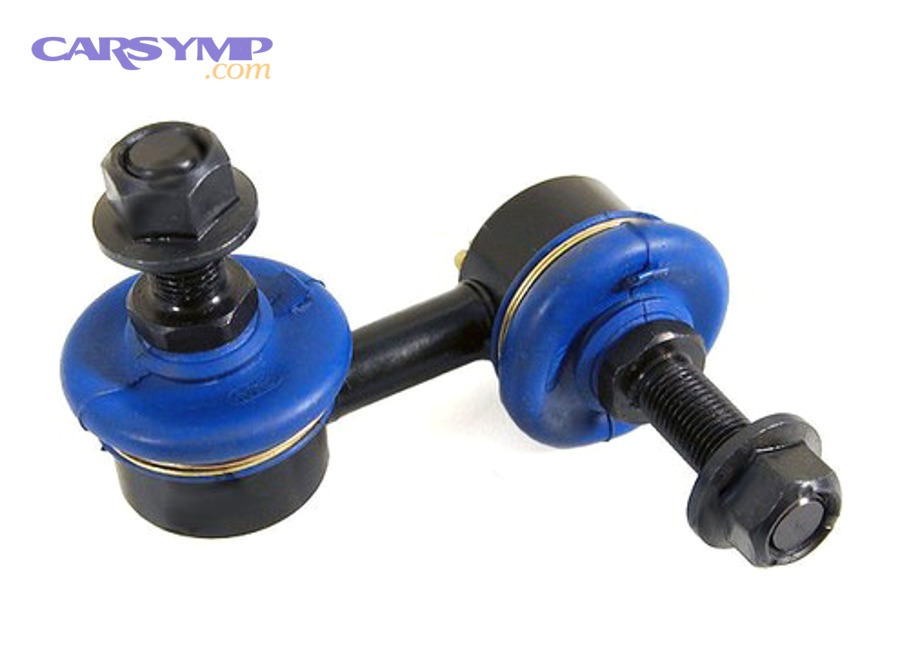
Sway bar links are suspension components that connect the anti-roll bar (sway bar) to the suspension control arm or strut assembly, transmitting lateral forces between opposite wheels during cornering to reduce body roll and maintain optimal tire contact with the road surface.
Specifically, these hardened steel or alloy components serve as the critical mechanical link in the vehicle’s anti-roll system. Understanding their function and failure modes helps vehicle owners recognize problems early and make informed replacement decisions.
How Do Sway Bar Links Function in Your Vehicle’s Suspension?
The sway bar link creates the physical connection between the anti-roll bar (also called the stabilizer bar) and the moving suspension components. During straight-line driving, the sway bar remains relatively inactive and the links experience minimal stress. When a vehicle enters a turn, however, the outside wheels compress while the inside wheels extend, creating unequal suspension travel between left and right sides.
This unequal compression causes the sway bar to twist, and the sway bar links transmit torque from the bar to the opposite wheel’s suspension. The link on the outside (compressed) wheel pulls downward on the sway bar, which twists and pushes upward on the inside (extended) wheel through its link. This torque transfer resists the rolling motion, keeping the vehicle more level during cornering.
Force transmission during cornering subjects sway bar links to substantial stress. A sedan making a moderate turn at 30 mph might generate lateral forces exceeding 0.5g, which the sway bar system must counteract. The links experience these forces in tension and compression simultaneously—the outside link pulls while the inside link pushes. High-quality links like those meeting ISO 9001-certified manufacturing standards use cold-forged steel and corrosion-resistant coatings to withstand these cyclical stresses.
Body roll reduction directly impacts handling precision and safety. Without functioning sway bar links, the anti-roll bar disconnects from the suspension, eliminating its anti-roll effect. Drivers experience excessive body lean in corners, vague steering feedback, and reduced tire contact patch on the inside wheels. This degraded handling increases accident risk during emergency maneuvers or sudden lane changes, particularly in top-heavy vehicles like SUVs and trucks.
What Causes Sway Bar Links to Fail or Wear Out?
Rubber boot deterioration represents the primary failure initiation point for most sway bar links. The rubber or plastic boot seals the ball joint or bushing assembly from environmental contaminants. Over time, ozone exposure, ultraviolet radiation, temperature cycling between -20°F and 150°F, and mechanical flexing cause the boot material to crack and tear. Once compromised, the boot allows moisture and debris into the joint, accelerating wear.
Ball joint wear from debris and moisture follows boot failure predictably. Water entering through torn boots carries road grit, salt, and sand directly into the precision ball-and-socket interface. These abrasive particles act like grinding compound, wearing away the smooth metal surfaces that allow free articulation. The ball develops flat spots and the socket enlarges, creating looseness that produces the characteristic clunking noise. This wear progression typically requires 6-18 months after boot failure before producing noticeable symptoms.
Road salt and corrosion attack sway bar link components aggressively in northern climates. Sodium chloride and calcium chloride used for winter road treatment accelerate metal corrosion rates by facilitating electrochemical reactions. Links without corrosion-resistant coatings like zinc-nickel plating develop surface rust that progresses to structural weakness. Severely corroded links can fracture completely during normal driving, particularly when stressed by pothole impacts.
Age and mileage factors combine to predict link lifespan with reasonable accuracy. Original equipment sway bar links typically last 60,000-100,000 miles or 7-10 years in moderate climates with normal driving conditions. Harsh environments—aggressive winter salting programs, unpaved roads, frequent off-road use—reduce this to 40,000-60,000 miles. According to studies tracking suspension component failures, sway bar links show a sharp increase in failure rates after the 5-year mark regardless of mileage.
Driving conditions including rough roads and potholes significantly impact link longevity. Each pothole strike subjects the sway bar system to shock loads many times greater than normal cornering forces. A vehicle striking a 4-inch deep pothole at 20 mph might experience peak forces exceeding 3g, transmitted through the links to the sway bar. Repeated shock loads fatigue the metal components and stress the boot material, accelerating wear compared to vehicles driven primarily on smooth highways.
What Are the Signs That Your Sway Bar Links Need Replacement?
There are five main signs your sway bar links need replacement: clunking noise over bumps, rattling during turns, knocking on full steering lock, excessive body roll in corners, and visible torn boots or loose ball joints during inspection.
More specifically, these symptoms progress from subtle to severe as link wear advances. Recognizing early indicators allows for planned replacement before complete failure creates safety hazards or damages related components.
What Sounds Indicate Worn Sway Bar Links?
Clunking noise over bumps represents the most common audible symptom of worn sway bar links. This characteristic sound occurs when the vehicle traverses speed bumps, railroad crossings, or expansion joints at moderate speeds. The clunk results from the worn ball joint or bushing allowing excessive movement—the link slaps against its mounting points as the suspension cycles. Clunking over bumps sway bar diagnosis typically confirms this symptom by performing a physical inspection where technicians can move the link by hand, feeling the looseness that creates the noise.
Rattling during turns indicates advanced wear where the ball joint has developed substantial play. As the vehicle corners and the sway bar twists, the loose link vibrates rapidly between its mechanical limits rather than transmitting smooth, continuous force. This rattle typically increases in frequency and volume with sharper turns that load the suspension more heavily. Drivers often describe this as a “rapid knocking” or “marble-in-a-can” sound emanating from the front corners.
Knocking on full lock occurs when turning the steering wheel to its maximum angle while parking or maneuvering in tight spaces. At full lock, the suspension geometry reaches its extreme position, placing maximum articulation demands on the sway bar link. A worn link with a degraded ball joint produces distinct knocking sounds with each small movement as the steering angle changes. This symptom often appears before clunking over bumps becomes noticeable, serving as an early warning sign.
Tapping sounds on rough roads manifest as rapid, light impacts rather than heavy clunks. When driving on washboard-surface dirt roads or roads with frequent small irregularities, the worn link bounces continuously against its mounting points. The tapping maintains a rhythm that corresponds to the road surface irregularities—a damaged link essentially “chatters” as it fails to maintain solid connection between the sway bar and suspension.
What Handling Issues Point to Link Failure?
Excessive body roll in corners directly results from non-functional sway bar links. When one or both links fail completely, the sway bar loses its connection to the suspension and cannot transfer torque between wheels. The vehicle leans dramatically during turns, with the outside suspension compressing excessively while the inside suspension extends. Drivers notice this particularly during highway entrance ramp acceleration or spirited cornering on winding roads.
Unstable lane changes create a wandering sensation when broken sway bar links prevent proper body control. During quick lane changes to avoid road hazards, the vehicle’s weight shifts laterally without the sway bar’s stabilizing effect. This delayed body control response makes the vehicle feel “floaty” or disconnected, reducing driver confidence and increasing accident risk. Emergency maneuvers become particularly dangerous as the vehicle’s trajectory becomes less predictable.
Vague or loose steering feel develops because broken links allow the suspension to move independently rather than working as a coordinated system. The steering wheel requires larger inputs to produce the same turning response, and the vehicle takes longer to settle after completing a turn. This mushiness in steering feedback makes precise vehicle placement difficult, affecting everything from parking accuracy to highway lane keeping.
Uneven tire wear patterns emerge from the altered suspension geometry caused by failed sway bar links. The excessive body roll during cornering scrubs the tire shoulders unevenly, creating scalloped or cupped wear patterns on the outside edges of front tires. According to tire wear analysis from automotive engineers, failed sway bar links can reduce tire life by 20-30% through this abnormal wear mechanism, adding significant long-term costs beyond the link replacement itself.
How Can You Physically Inspect Sway Bar Links?
Visual inspection for torn boots provides the easiest initial assessment without tools. Position yourself under the front of the vehicle with the wheels on the ground and locate the sway bar links—cylindrical components connecting the sway bar to the strut or control arm. Examine the rubber boots covering the ball joint ends for cracks, tears, or missing sections. A torn boot appears as split rubber with exposed metal underneath, often accompanied by rust staining from moisture intrusion.
Check for loose ball joints by grasping the link body and attempting to move it by hand. With the vehicle on the ground, reach between components and try to wiggle the link perpendicular to its long axis. A healthy link shows minimal movement—perhaps 1-2mm of play. A worn link moves noticeably, sometimes 5-10mm or more, often accompanied by a clicking sensation as the ball moves within its socket. This hands-on test quickly identifies links requiring replacement.
Rock tire side-to-side test amplifies subtle wear that might not be apparent during static inspection. Jack up one front wheel until it clears the ground, then grasp the tire at 3 and 9 o’clock positions and rock it vigorously left-right. Have an assistant observe the sway bar link during this test. Excessive movement of the link or audible clicking indicates worn ball joints. This test proves particularly effective because it loads the joint similarly to actual driving conditions.
Look for rust and corrosion on metal components and fasteners. Severe surface rust that flakes off when touched indicates advanced corrosion that compromises structural integrity. Corroded nuts and bolts often require cutting rather than unbolting during replacement, adding labor time. Heavy rust accumulation around ball joint housings suggests moisture has penetrated the boot and damaged internal components. Links showing significant corrosion should be replaced even if they haven’t yet developed looseness, as failure is imminent.
How Do Costs Compare Between Single and Pair Replacement?
Single sway bar link replacement costs $65-$150 including parts and labor, while pair replacement costs $110-$250 total—the combined labor for both sides increases only 50-75% compared to single-side labor, making pair replacement more cost-effective per link when amortizing the labor expense.
In addition, examining the specific cost breakdown reveals why many vehicle owners choose pair replacement despite only one failed link. The economics favor simultaneous replacement when considering total ownership costs.
What Is the Price Difference Between One Link vs. Two?
Part costs for sway bar links typically range from $15-$50 per link depending on quality tier and vehicle application. Economy aftermarket links from budget brands cost $12-$20 each, mid-grade options from established aftermarket manufacturers run $25-$35, and original equipment manufacturer (OEM) links range from $35-$50. Heavy-duty trucks and performance vehicles sometimes require specialized links costing $60-$100 each.
Labor overlap savings make pair replacement economical despite doubling parts costs. Replacing a single sway bar link requires the technician to lift the vehicle, remove the wheel, access the link mounting points, remove the old link, install the new link, reinstall the wheel, and lower the vehicle. This process takes 0.5-1.0 hour. Replacing the second link requires repeating only the link removal and installation steps since the vehicle is already lifted and the opposite wheel already removed—adding just 0.3-0.5 additional hours.
OEM versus aftermarket pricing significantly affects total cost decisions. A vehicle requiring two OEM links at $45 each ($90 parts) versus quality aftermarket links at $30 each ($60 parts) shows a $30 difference. However, OEM parts typically include superior corrosion-resistant coatings and closer tolerances, potentially extending service life by 20-40% according to comparative durability testing. The $30 premium buys peace of mind and potentially longer intervals between replacements.
Total cost scenarios illustrate practical decision-making. Consider a repair shop charging $100/hour labor. This comparison table shows that pair replacement reduces the effective cost per link by $20-$40 through labor efficiency:
| Scenario | Parts Cost | Labor Cost | Total Cost | Cost Per Link |
|---|---|---|---|---|
| Single OEM link | $45 | $100 (1 hour) | $145 | $145 |
| Pair OEM links | $90 | $150 (1.5 hours) | $240 | $120 |
| Single aftermarket | $30 | $100 (1 hour) | $130 | $130 |
| Pair aftermarket | $60 | $150 (1.5 hours) | $210 | $105 |
The savings increase further when factoring in the avoided second service visit.
Is the Labor Cost Significantly Higher for Replacing Both?
Single-side labor time ranges from 0.5-1 hour at most independent repair facilities and dealerships. Simple vehicles with accessible sway bar links and non-corroded fasteners require as little as 30 minutes. Vehicles with limited access, severely corroded bolts requiring cutting, or interference from other components might extend to 1.5 hours for a single side. This variation depends heavily on vehicle design and maintenance history.
Both-sides labor time typically runs 1-1.5 hours total—not double the single-side time. The efficiency comes from shared setup and teardown work. Lifting the vehicle once, removing both front wheels simultaneously, and having tools and parts ready for the second side eliminates duplicated work. Experienced technicians often complete pair replacement in 1.2 hours versus 0.8 hours for a single side, adding just 50% more labor time for twice the work.
Efficiency of combined replacement improves further when considering diagnostic time. Shops typically charge diagnostic time to identify the failure source—usually 0.3-0.5 hours. This diagnostic charge applies to single or pair replacement equally. When spread across two links, the per-link diagnostic cost drops by half.
Shop rate considerations vary by region and facility type. Dealerships typically charge $120-$180/hour, independent shops charge $90-$130/hour, and chain facilities charge $80-$110/hour. At a dealership charging $150/hour, single-link replacement costs $120-$150 labor while both sides cost $180-$225 labor. The second link adds only $60-$75 in labor—substantially less than the $120-$150 it would cost during a separate visit. Understanding sway bar link replacement labor time helps vehicle owners anticipate accurate repair costs and make informed decisions.
What Do Professional Mechanics Recommend?
Professional mechanics recommend replacing sway bar links in pairs for vehicles over five years old or with 50,000+ miles to ensure symmetrical suspension performance, prevent uneven stress distribution, and avoid repeat service calls, though they acknowledge single replacement is technically acceptable for newer vehicles with isolated failures.
Moreover, understanding the reasoning behind professional recommendations helps vehicle owners evaluate whether to follow standard practices or make exceptions based on specific circumstances.
Why Do Most Mechanics Prefer Pair Replacement?
Preventing uneven stress distribution ranks among the top reasons mechanics favor pair replacement. When one new link works alongside one worn link, the new component bears disproportionate load during cornering. The worn link’s excessive play allows more movement before engaging, forcing the tight new link to transmit more torque than intended. This asymmetric loading accelerates wear on both the new link and the remaining worn link, potentially causing premature failure of the fresh component.
Avoiding repeat service calls drives shop policy at many repair facilities. When a customer returns three months after single-link replacement with the predictable second link failure, the shop faces an awkward conversation. Even though the original repair was technically correct, customers often feel dissatisfied that the mechanic “should have known” the second link would fail. Progressive shops include both-side replacement in their standard procedures to maintain customer relationships and reduce comebacks.
Symmetrical suspension performance matters particularly for handling enthusiasts and vehicles used in demanding conditions. Mismatched sway bar links—one new with tight tolerances and one worn with 5mm of play—create slightly different roll resistance characteristics between left and right turns. While most daily drivers never notice this subtle asymmetry, performance-oriented owners detect the difference in handling balance. Professional mechanics servicing these vehicles routinely recommend pair replacement to maintain precision.
Long-term cost savings through labor efficiency convinces many vehicle owners to approve pair replacement. Mechanics clearly explain that returning in six months for the second link doubles the total labor cost. When the cost breakdown shows $240 for both links now versus $290 for two separate services ($145 each), the economics favor immediate pair replacement. Customer advisors at carsymp.com and similar service platforms report that 70-80% of customers choose pair replacement when presented with clear cost comparisons.
In What Situations Do Mechanics Replace Only One Link?
Warranty or insurance coverage limitations sometimes mandate single-link replacement despite technician preference for pairs. Extended warranty companies typically approve only documented failed components, denying coverage for “preventative” replacement of the opposite side. When a customer has limited funds and the warranty covers the failed link, replacing only the covered component makes financial sense. The technician notes the opposite link’s condition and recommends monitoring for future replacement.
Recent opposite-side replacement justifies single-link replacement without concerns about symmetry. If service records show the passenger-side link was replaced 8 months ago and now the driver side fails, replacing only the failed side maintains component age parity. Both links are relatively new and provide years of additional service. This scenario often occurs in vehicles with higher mileage where links are replaced as they fail rather than proactively.
Customer budget constraints represent a reality mechanics face regularly. When a customer’s financial situation allows only the minimum repair to restore safety, replacing the obviously failed link takes priority. Professional mechanics in these situations provide clear written recommendations for future replacement of the second link, establishing a maintenance timeline the customer can budget for. This approach balances safety requirements with economic reality.
Demonstrably different wear conditions between left and right links occasionally justify single replacement. During inspection, one link might show severe play with a torn boot and rusty housing while the opposite link shows minimal play with an intact boot. If the vehicle has relatively low mileage and the links appear to be different ages (perhaps one was previously replaced), replacing only the severely worn component makes technical sense. This scenario requires careful inspection and clear documentation of the condition difference.
How Do Different Vehicle Types Affect Link Replacement Strategy?
Different vehicle types require modified sway bar link replacement strategies based on their unique stress patterns, load-bearing characteristics, drivetrain configurations, and performance demands—with heavy-duty commercial vehicles, all-wheel-drive systems, and sports cars each presenting distinct considerations that influence the single-versus-pair replacement decision.
Especially important, recognizing these vehicle-specific factors helps owners make replacement decisions appropriate to their particular use case rather than following generic guidance.
Do Heavy-Duty Vehicles Require Different Replacement Approaches?
Dump trucks and commercial vehicles subject sway bar links to dramatically higher stresses than passenger cars. A loaded dump truck might weigh 60,000-80,000 pounds compared to a 3,500-pound sedan—increasing sway bar link loading by factors of 15-20x during cornering or rough terrain navigation. These extreme forces make pair replacement critical for heavy-duty applications, as the consequences of link failure include load spillage, rollover risk, and substantial property damage.
Load-bearing stress factors create unique failure modes in commercial applications. As discussed in technical documentation from heavy equipment manufacturers, worn sway bar links on dump trucks cause noticeable sway when loaded, risking cargo spillage during transport. The oscillating load shifts during travel fatigue links much faster than empty vehicle operation. Fleet managers typically mandate pair replacement during scheduled maintenance intervals rather than waiting for individual link failures.
Enhanced durability requirements lead commercial operators toward heavy-duty aftermarket links or OEM components designed specifically for severe service. These upgraded links feature cold-forged steel construction with yield strengths 30-40% higher than standard passenger car links, double-shear mounting designs that prevent shear failure under extreme loads, and greasable joints that allow periodic lubrication to extend service life. Models like the KM2233RLK and CR5350 are engineered specifically for construction equipment and agricultural machinery.
Manufacturer-specific heavy-duty recommendations override general passenger car guidance. Caterpillar, John Deere, and other heavy equipment manufacturers specify replacement criteria based on measured joint play rather than symptom-based diagnosis. When ball joint play exceeds 2mm as measured with a dial indicator, replacement is required regardless of whether symptoms are present. These manufacturers universally recommend pair replacement for links on the same axle to maintain system integrity under extreme operating conditions.
Are AWD and 4WD Vehicles More Sensitive to Asymmetric Link Wear?
All-wheel-drive stress distribution creates scenarios where asymmetric link wear affects driveline components beyond just handling characteristics. AWD systems constantly transfer torque between front and rear axles, and many advanced systems also vary torque distribution left-to-right. When one sway bar link shows significant play while the other remains tight, the suspension geometry differences during cornering affect wheel speed sensors and torque distribution calculations, potentially triggering stability control interventions or causing uneven driveline wear.
Torque vectoring impacts become more pronounced with mismatched sway bar links in vehicles equipped with active torque distribution systems. Systems like Audi’s Quattro with torque vectoring or BMW’s xDrive actively route power to specific wheels based on cornering forces and slip conditions. Asymmetric sway bar link wear creates inconsistent suspension geometry inputs that confuse these systems, potentially reducing their effectiveness or causing premature wear on electronically controlled coupling systems.
Differential strain from mismatched links manifests as unusual wear patterns in limited-slip differentials and active torque transfer units. When one front wheel maintains better camber control through a functional sway bar link while the opposite wheel exhibits excessive camber change due to a worn link, the differential must work harder to accommodate the resulting speed difference during cornering. Over thousands of miles, this additional strain accelerates wear on differential clutch packs or active coupling components.
Performance vehicle considerations elevate the importance of pair replacement for AWD sports sedans and performance SUVs. Vehicles like the Subaru WRX STI, Audi RS models, or BMW M-series AWD variants depend on precise suspension geometry for their performance characteristics. Enthusiast forums and specialized tuning shops universally recommend pair replacement for sway bar links on these vehicles to maintain the handling balance and predictability that defines the driving experience.
How Do Sports Cars and Performance Vehicles Differ?
Higher lateral forces during cornering subject performance vehicle sway bar links to substantially greater stress than economy sedans. A sports car generating 1.2g of lateral acceleration during aggressive cornering creates link forces three times higher than a family sedan at 0.4g. These elevated forces accelerate wear on all suspension components, with sway bar links particularly vulnerable due to their ball joint design. Performance vehicle owners should expect shorter link service life—perhaps 40,000-50,000 miles versus 70,000-80,000 for mainstream vehicles.
Upgraded link materials and designs address the increased stress demands. Performance aftermarket manufacturers offer sway bar links with larger diameter ball studs (14mm versus 12mm standard), heat-treated alloy steel housings, and spherical bearings instead of standard ball joints. These upgraded components reduce flex under load and maintain tighter tolerances longer. Handling improvements after replacement with performance links can be dramatic, particularly on vehicles with worn original links that allowed excessive suspension geometry changes.
Track use versus street use considerations create different replacement strategies. Vehicles regularly driven on racetracks should follow aggressive replacement intervals—perhaps annually regardless of symptoms—because the sustained high lateral loads fatigue components faster than street driving. Track-focused owners often choose adjustable sway bar links that allow fine-tuning of ride height and suspension geometry, replacing these precision components in pairs to maintain left-right symmetry critical for consistent lap times.
Aftermarket performance link options from manufacturers like Moog, Whiteline, and Energy Suspension offer various feature combinations. Greasable joints allow periodic maintenance to extend life, adjustable length facilitates corner-weight balancing and alignment optimization, and polyurethane bushings reduce deflection compared to rubber. These upgraded components typically cost $50-$120 per link but provide measurably improved suspension control. Performance-oriented mechanics universally recommend pair replacement when installing aftermarket links to ensure balanced suspension characteristics.
What Is the Difference Between Ball-Joint and Bushing-Type Links?
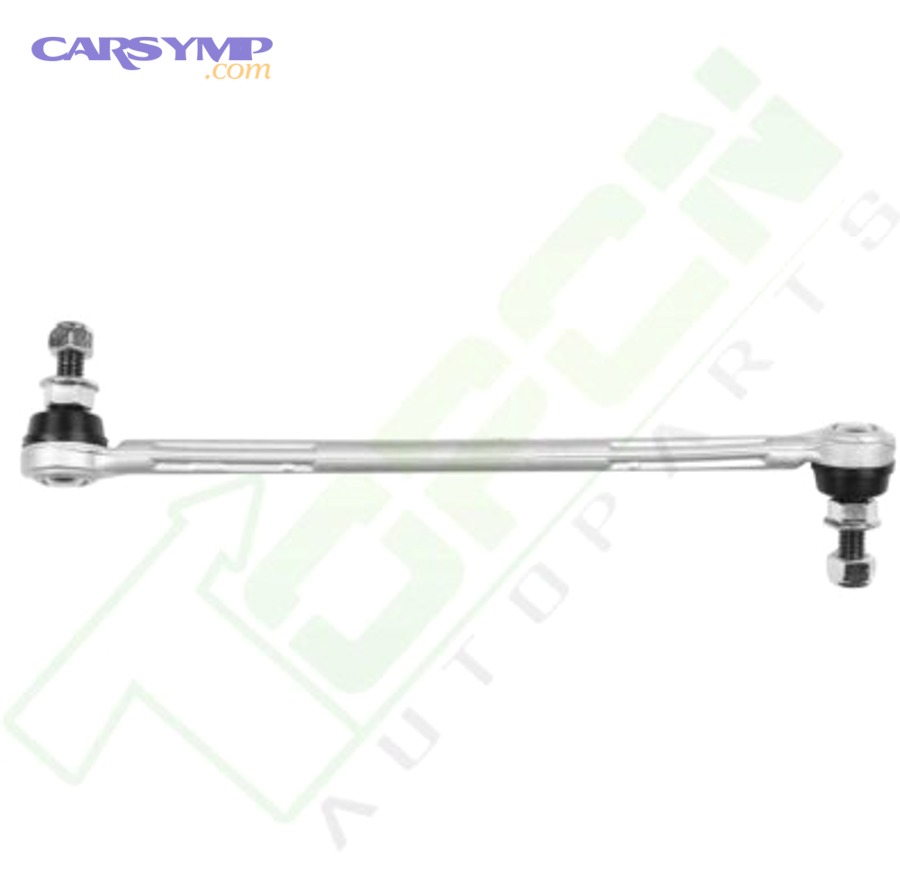
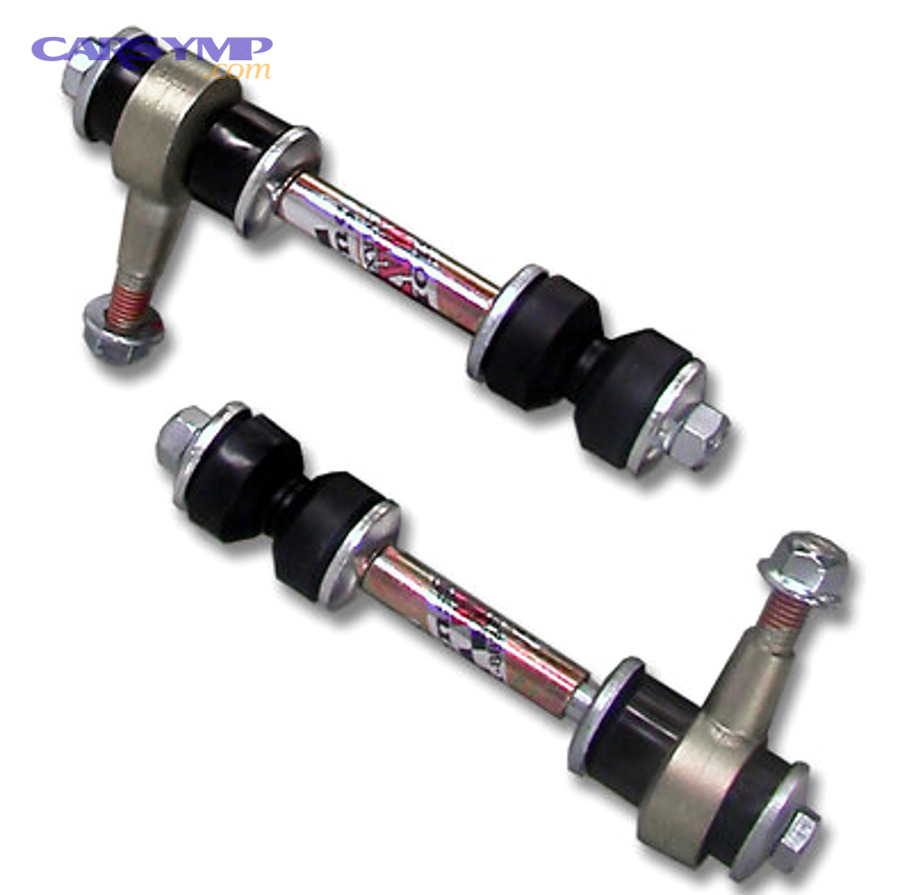
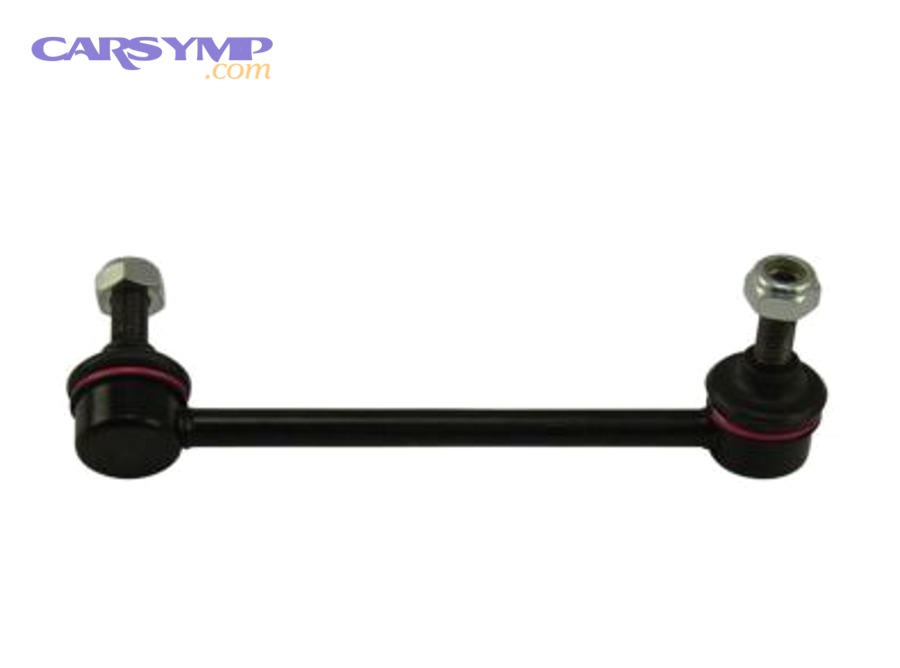
Ball-joint sway bar links use a metal ball captured in a socket housing for multi-axis articulation, while bushing-type links use a solid bolt with rubber or polyurethane bushings and spacers—ball-joint designs offer greater angular movement and smoother operation but wear faster, while bushing designs are simpler and more durable but provide less articulation freedom.
However, understanding these design variations helps vehicle owners select appropriate replacement components and set realistic longevity expectations.
Ball-and-socket versus bolt-with-bushings assemblies represent fundamentally different engineering approaches to the same problem. Ball-joint links contain a precision-machined steel ball swiveling in a polymer-lined socket, allowing movement in all directions with minimal friction. The ball joint accommodates the complex multi-axis movements required as the suspension travels and the sway bar twists. This design dominates modern vehicles due to its smooth operation and compact packaging.
Bushing-type links, common on older vehicles and some trucks, use a simple through-bolt with cylindrical rubber or polyurethane bushings on each end. The bushings twist and compress to allow articulation, with movement limited by the bushing’s material properties. While less sophisticated than ball joints, this design offers extreme simplicity and durability. The absence of precision metal-to-metal contact eliminates the primary wear mechanism that degrades ball-joint links.
Durability and wear pattern differences favor bushing-type designs in harsh environments. Ball joints require intact boots to exclude contaminants—once the boot tears, the joint fails within 12-24 months. Bushing-type links tolerate environmental exposure better because the rubber or polyurethane bushing material itself forms the bearing surface. Rock crawlers and off-road vehicles often use bushing-type links specifically because they survive abrasive conditions longer.
Replacement interval variations reflect these design differences. Ball-joint links typically require replacement at 60,000-100,000 miles in normal service, while well-maintained bushing-type links can exceed 150,000 miles. The tradeoff manifests in noise and ride quality—ball joints operate silently when new while bushing links may transmit some squeaking as the rubber compresses. The design choice reflects manufacturer priorities between longevity, refinement, and cost.
Should You Replace Other Suspension Components at the Same Time?
Yes, you should inspect and potentially replace sway bar bushings, control arm bushings, and strut mounts when replacing sway bar links, as these related components experience similar age-related wear and replacing them together eliminates duplicated labor costs while ensuring comprehensive suspension system restoration.
Next, examining which related components warrant attention helps vehicle owners maximize value from suspension service and avoid multiple repair visits for components that typically fail on similar timelines.
Sway bar bushings inspection should always accompany sway bar link replacement because technicians have direct access to these components during the repair. The sway bar bushings—rubber or polyurethane components that mount the sway bar to the vehicle frame—deteriorate from the same environmental factors affecting links. Worn sway bar bushings create clunking noises nearly identical to failed links, so replacing links without addressing bushing wear might leave the original symptom unresolved. When sway bar bushings show cracking, flattening, or looseness, replacing them adds only $30-$60 in parts and minimal additional labor.
Control arm bushings consideration makes sense when the vehicle shows 80,000+ miles or other symptoms suggesting broader suspension wear. Control arm bushings deteriorate on a similar timeline to sway bar links but require significantly more labor to replace—often 2-3 hours per side. If inspection reveals cracked or separated control arm bushings, addressing them during the same service visit as sway bar links saves substantial labor overlap. However, if control arm bushings appear serviceable, deferring replacement until more obvious symptoms develop is reasonable.
Strut mount evaluation proves particularly important on MacPherson strut suspension designs where the sway bar link attaches to the strut assembly. Worn strut mounts create clunking over bumps, steering wheel vibration, and alignment problems. When a vehicle needs both sway bar links and shows symptoms suggesting strut mount wear, performing both repairs together makes economic sense. New strut mounts cost $40-$80 each, and the labor overlaps significantly with sway bar link replacement, potentially saving 1-2 hours of total labor versus separate service visits.
Comprehensive suspension maintenance strategy involves evaluating the entire system condition rather than addressing only the immediate failure. Professional technicians perform a thorough suspension inspection noting the condition of all bushings, ball joints, tie rod ends, and shock absorbers. Presenting customers with a prioritized list of current failures, near-term needs (6-12 months), and long-term maintenance items allows informed decision-making about which components to replace now versus monitor for future service. This comprehensive approach prevents surprise failures and optimizes repair timing for cost efficiency.
Can You Replace Sway Bar Links Yourself or Should You Hire a Professional?
You can replace sway bar links yourself if you have intermediate mechanical skills, basic tools (jack stands, sockets, penetrating oil), and can address potential challenges like seized bolts and rust, but professional installation is recommended for vehicles with limited access, severely corroded components, or when wheel alignment may be affected by the replacement procedure.
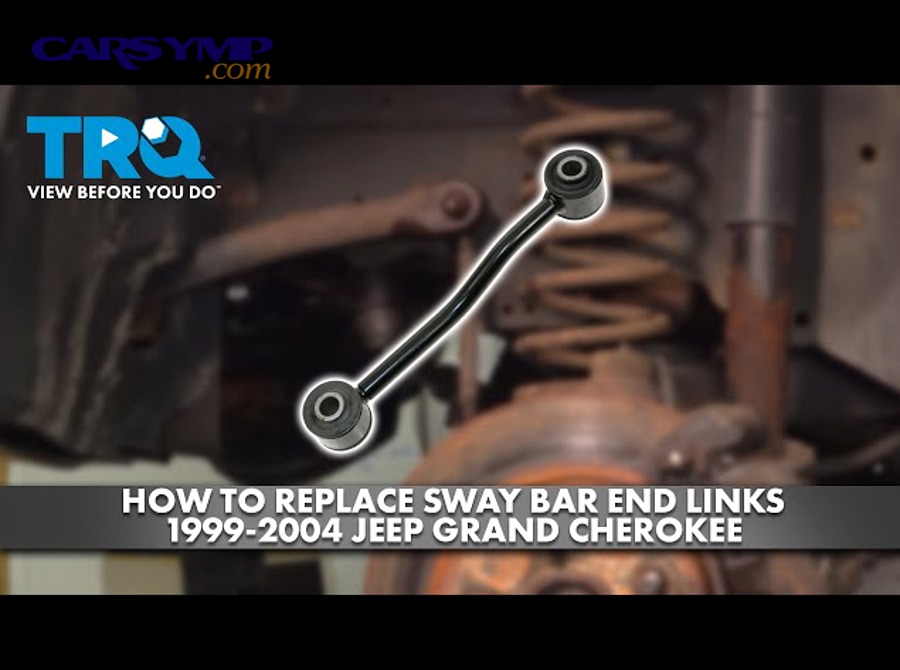
To illustrate, evaluating your skill level and the specific vehicle’s complexity determines whether DIY replacement makes sense.
Skill level requirements for sway bar link replacement fall into the intermediate category—more complex than changing windshield wipers but simpler than replacing brake calipers. You should be comfortable safely lifting and supporting a vehicle on jack stands, working underneath the car, identifying suspension components, and using basic hand tools effectively. Previous experience with oil changes, brake pad replacement, or other under-vehicle maintenance provides good preparation. First-time DIY mechanics should consider this project achievable but challenging.
Tools needed include jack and jack stands rated for your vehicle’s weight (minimum 2-ton capacity for sedans, 3-ton for trucks and SUVs), socket set with metric sizes 12mm-19mm, combination wrenches in matching sizes, penetrating oil like PB Blaster or Liquid Wrench, and a torque wrench for proper installation. Optional but helpful tools include a breaker bar for seized fasteners, wire brush for cleaning threads, and rubber mallet for persuading stubborn components. The total tool investment for someone without these items runs $150-$300, though these tools serve for many future projects.
Common installation challenges include seized bolts requiring cutting, rust preventing easy removal, and insufficient clearance for socket access. Vehicles from northern climates often have severely corroded link mounting bolts that spin rather than unthreading. Professional technicians simply cut these with an angle grinder or reciprocating saw, but DIY mechanics may struggle without these power tools. Applying penetrating oil 24 hours before attempting removal significantly improves success rates. Some vehicles require removing the wheel well liner or other components for adequate access.
Safety considerations center on proper vehicle support and avoiding component damage. Never rely solely on a floor jack—always use jack stands on solid frame contact points. The vehicle must remain stable while you apply significant force to remove stuck fasteners. When working underneath, position yourself so a falling vehicle cannot trap you. Wear safety glasses when wire-brushing rust or cutting corroded bolts. Some newer vehicles have delicate wheel speed sensor wiring or ABS components near sway bar links—be careful not to damage these sensors during the repair.
When professional installation is recommended depends on complexity, available time, and confidence level. If initial inspection reveals severely corroded fasteners that clearly require cutting, paying for professional service may cost less than purchasing the necessary power tools. Vehicles where sway bar link replacement affects alignment settings (some luxury cars with active suspension) should go to professionals with alignment equipment. If you lack confidence in safely supporting the vehicle or identifying the correct components, professional service provides peace of mind and warranty coverage if problems arise.
Final Considerations
The decision to replace sway bar links individually or in pairs ultimately depends on balancing technical standards, practical economics, and vehicle-specific factors. While I-CAR standards permit single replacement and warranty programs often cover only the failed component, the cost-effectiveness of combined labor and the likelihood of near-term opposite-side failure make pair replacement the practical choice for most vehicles over five years old or with 50,000+ miles.
Vehicle owners should base their decision on specific inspection findings rather than universal rules. A three-year-old vehicle with isolated link failure clearly warrants single replacement, while a seven-year-old vehicle with high mileage benefits from pair replacement regardless of whether both sides currently show symptoms. Understanding the technical reasoning behind professional recommendations empowers informed decision-making that balances safety, performance, and budget constraints effectively.