


Clunking noises over bumps typically indicate worn sway bar links or deteriorated bushings, and diagnosing which component has failed requires systematic visual inspection, manual movement testing, and comparative sound analysis. When your vehicle produces metallic rattling or hollow thuds during everyday driving, the sway bar system—specifically the end links that connect the stabilizer bar to the suspension or the rubber bushings that anchor the bar to the frame—has likely degraded beyond functional tolerance. Understanding the distinct failure patterns between these two components empowers you to pinpoint the exact source of the noise, avoid unnecessary part replacement, and restore your vehicle’s handling stability without professional diagnostic fees.
The fundamental difference between sway bar link failure and bushing deterioration lies in their mechanical structure and how they produce noise. Links contain ball-and-socket joints that develop play when worn, creating sharp metallic clunks as the loose connection impacts surrounding components with each suspension movement. Bushings, constructed from rubber or polyurethane, compress and crack over time, allowing the metal sway bar to shift within its mounting bracket and produce duller, more resonant thuds when the bar contacts the frame or bracket edges.
Testing procedures for links and bushings follow different approaches because of their distinct mounting locations and failure mechanisms. Sway bar links extend vertically between the bar and the control arm or strut assembly, making them accessible for hand-shaking tests and visual inspection of the ball joint boots, while bushings sit horizontally where the bar passes through frame-mounted brackets, requiring underneath access and tap-testing with a rubber mallet to detect excessive movement or metal-on-metal contact.
Safety considerations become critical when clunking indicates advanced component wear, as complete sway bar link separation eliminates the mechanical connection that controls body roll during cornering, potentially causing loss of vehicle control during emergency maneuvers or high-speed lane changes. Next, we’ll examine the fundamental causes of sway bar system clunking to establish the diagnostic foundation you’ll need for accurate component identification.
What Causes Clunking Noises Over Bumps in the Sway Bar System?
Clunking noises over bumps originate from excessive mechanical play in sway bar links or degraded bushings that allow uncontrolled metal-to-metal contact during suspension articulation. The sway bar system functions as a torsional spring that mechanically couples the left and right suspension sides, forcing them to share vertical movement and resist the body roll that occurs when cornering forces transfer weight to the outside wheels. When components within this system wear beyond specification, the controlled resistance transforms into loose, impact-generating movement that produces the characteristic clunking sounds drivers hear over even minor road irregularities.
To understand how wear creates noise, consider the mechanical pathway of suspension movement. Specifically, when your front right wheel encounters a pothole, the control arm pivots upward, pulling the attached sway bar link with it. This upward motion twists the sway bar, which transmits force through the opposite link to lift the left wheel slightly, keeping the vehicle level. In a properly functioning system, all connections maintain constant contact through spring preload and friction, but when link ball joints develop play or bushings compress beyond their elastic limit, gaps form that allow components to separate momentarily before slamming back together as the suspension rebounds.
What Are Sway Bar Links and How Do They Fail?
Sway bar links are vertical connector rods featuring ball-and-socket joints at each end that attach the horizontal sway bar to the suspension’s moving components. Each link consists of a threaded shaft with ball studs enclosed in rubber or polyurethane boots, allowing the ball to articulate as the suspension cycles through its travel while maintaining the mechanical connection that transfers anti-roll forces. The upper ball stud typically bolts to a bracket on the sway bar itself, while the lower stud connects to either the lower control arm on double-wishbone suspensions or directly to the strut assembly on MacPherson strut designs.
Link failure occurs through three primary mechanisms that eventually generate clunking noise:
Corrosion and rust penetration: Road salt, moisture, and debris attack the threaded studs and ball joint housing, causing the protective boot to crack and allowing water infiltration. Once moisture reaches the ball-and-socket interface, oxidation roughens the precisely machined surfaces and expands the metal, creating play between the ball and its socket. This corrosion-induced looseness permits the ball to rattle within its housing with each bump, producing the sharp metallic clunk characteristic of failed links.
Physical separation of components: The ball stud can separate from the socket housing entirely when advanced rust weakens the crimped connection or when impact damage from curb strikes or pothole hits exceeds the joint’s structural capacity. Partial separation allows the link to hang loosely, swinging like a pendulum and striking the sway bar, control arm, or strut with each suspension movement. Complete separation eliminates one side’s anti-roll function entirely, causing dramatic handling deterioration and continuous rattling as the disconnected link bounces against surrounding parts.
Bushing deterioration within the ball joint: The rubber or polymer bushing inside each ball socket provides the smooth articulation surface and takes up manufacturing tolerances. Environmental exposure degrades these materials—heat cycles harden rubber, reducing its elasticity, while ozone and UV radiation cause surface cracking. As the bushing material breaks down, the fit between ball and socket loosens, creating the radial play that allows impact noise. Advanced degradation may cause the bushing to tear completely free from the socket, leaving only metal-on-metal contact that produces particularly harsh clunking accompanied by squeaking as the unlubricated surfaces grind together.
The sound signature of failed sway bar links presents as a sharp, distinct metallic clunk or knock that occurs in direct synchronization with wheel movement over bumps. Drivers often describe it as sounding like someone tapping a wrench against a steel pipe—a high-frequency impact noise rather than a dull thud. This clunking typically intensifies over small, sharp-edged bumps like expansion joints or broken pavement edges because these obstacles cause rapid suspension movement that amplifies the impact velocity between loose components. When driving over speed bumps at parking lot speeds, each wheel produces an individual clunk as it crosses the bump, creating a rhythmic one-two pattern that distinguishes link noise from other suspension sounds.
What Are Sway Bar Bushings and How Do They Deteriorate?
Sway bar bushings are semicircular rubber or polyurethane sleeves that cradle the horizontal sway bar where it passes through frame-mounted brackets near the vehicle’s centerline. These bushings serve dual functions: they provide the pivot surface that allows the bar to rotate as suspension on opposite sides moves independently, and they dampen vibration transmission from the bar to the chassis structure. Each bushing sits within a U-shaped or circular metal bracket bolted to the vehicle’s subframe or unibody structure, with the bar passing through the bushing’s inner diameter and typically held in place by the bracket’s clamping force rather than adhesives.
Bushing deterioration follows a predictable degradation pattern influenced by environmental and mechanical factors:
Material compression and permanent set: Rubber bushings compress under the constant clamping force applied by the mounting bracket and the cyclical torsional loads from the rotating sway bar. Over thousands of miles, the rubber’s cellular structure collapses, causing the bushing to thin and harden. This compression creates clearance between the bar’s outer diameter and the bushing’s inner surface, allowing the bar to shift position within the bracket rather than remaining centered. When the bar contacts the metal bracket edge during suspension articulation, it produces a hollow, resonant thud—distinctly different from the sharp clunk of failed links.
Crack formation and material separation: Temperature extremes accelerate bushing aging by causing rubber to become brittle, while flexing under load propagates stress cracks through the material. These cracks typically initiate at the bushing’s inner diameter where bending stresses concentrate during bar rotation, then propagate outward toward the mounting surface. Split bushings lose their ability to maintain consistent contact with the bar, allowing it to move erratically within the bracket and strike metal surfaces. Inspection often reveals circumferential cracks visible around the bar’s perimeter or complete lengthwise splits that have separated the bushing into two pieces.
Lubrication loss and dry friction: Many factory bushings incorporate internal lubrication to reduce friction between the rubber and the rotating bar, but this grease eventually migrates out through cracks or gets squeezed out by compression. Without lubrication, the dry rubber grabs the bar’s surface, preventing smooth rotation and causing the bar to bind rather than pivot freely. This binding creates irregular movement patterns—the bar remains stuck until torsional force overcomes friction, then suddenly releases with a snapping motion that generates a thud or clunk. Drivers sometimes notice grease stains on the bushing exterior or around the bracket, indicating lubrication has escaped from the bushing’s core.
The acoustic signature of failed sway bar bushings differs markedly from link noise. Bushing-generated clunks sound deeper and more muffled—like striking a hollow wooden box rather than tapping metal pipes. This lower-frequency noise results from the sway bar itself acting as a resonator when it impacts the bracket, and the remaining rubber material dampens some of the sound’s sharp edges. The clunking from bad bushings often occurs during weight transfer events such as entering driveways at an angle, where one front wheel rises significantly before the other, forcing maximum bar rotation and amplifying any clearance between bar and bushing. Some drivers also report creaking or groaning noises from dried bushings as the rubber binds and releases against the bar during slow-speed turns.
How Can You Tell If Sway Bar Links or Bushings Are Causing the Clunk?
Sway bar links produce sharp, high-frequency metallic clunks synchronized with individual wheel impacts, while bushings generate deeper, more resonant thuds during body roll or weight transfer events that twist the bar. Distinguishing between these two failure modes requires analyzing four key diagnostic indicators: the acoustic characteristics of the noise itself, the specific driving conditions that trigger the sound, the physical location where the noise appears to originate, and the tactile feedback transmitted through the steering wheel or chassis. These differentiation points emerge from the fundamental mechanical differences between a loose ball-and-socket joint that rattles with linear suspension motion versus a worn cylindrical bearing that allows rotational movement with clearance.
Understanding these distinctions prevents misdiagnosis and unnecessary part replacement. For instance, replacing sway bar links when bushings have actually failed wastes money on parts that won’t eliminate the noise, while ignoring failed links in favor of bushing replacement leaves a safety-critical connection compromised. More specifically, the diagnostic process combines passive observation during normal driving with active testing procedures that isolate specific components under controlled conditions.
What Does a Bad Sway Bar Link Sound Like vs. a Bad Bushing?
Bad sway bar links create a crisp, metallic clunking or knocking sound with a sharp attack—similar to tapping a wrench against a steel pipe—while bad bushings produce a lower-pitched, more muffled thud resembling a hollow knock on wood. This acoustic difference stems from the materials involved in the failure: metal ball joints striking their metal sockets generate high-frequency vibrations that the human ear perceives as sharp and harsh, whereas a rubber-encased metal bar contacting a bracket retains some damping from the degraded bushing material, resulting in a softer, more resonant tone.
The timing and rhythm of the noise provide additional differentiation clues. Link-generated clunking follows a precise one-to-one correspondence with bump impacts—each time an individual wheel crosses a crack, expansion joint, or small pothole, you hear a distinct clunk from that corner of the vehicle. If you drive over a speed bump at an angle where the right wheel crosses first, you’ll hear the first clunk from the right front, then a second clunk from the left front as that wheel crosses roughly one second later. This isolated, per-wheel timing occurs because each link moves independently with its attached wheel, and the loose ball joint rattles at that exact moment of impact.
Bushing noise demonstrates different temporal characteristics. The clunking from worn bushings typically occurs during transitions—when first accelerating from a stop, when hitting the brakes moderately hard, or when turning into a driveway where one side of the vehicle dips before the other. These scenarios share a common element: they induce body roll or pitch that twists the sway bar within the bushings. A degraded bushing allows this rotational movement to occur with clearance, causing the bar to shift position until it contacts the bracket edge and rebounds with a thud. You might experience a single heavier clunk rather than the rapid-fire clunking pattern that bad links produce over washboard pavement.
Frequency analysis reveals another distinction. Worn links can produce almost continuous noise over rough pavement because even minor undulations cause enough suspension movement to rattle the loose ball joint. The clunking may occur dozens of times per minute when driving on deteriorated asphalt, creating what some describe as a “rattling” character to the noise. Failed bushings, conversely, generate intermittent clunking that occurs during discrete events—entering a parking lot entrance ramp, completing a tight turn, or hitting a particularly large bump that forces significant weight transfer. The bushings may remain silent during highway cruising over moderate road imperfections because small suspension movements don’t create enough bar rotation to overcome the remaining friction in the worn bushing.
Vibration transmission through the vehicle structure differs between the two failures as well. When links are bad, drivers often feel a light, rapid vibration or buzzing in the steering wheel that accompanies the clunking noise, particularly over rough surfaces at speeds above 30 mph. This vibration transmits through the direct mechanical path from the failed link through the strut assembly to the steering knuckle and ultimately to the steering rack. Bushing failures produce less steering feedback because the bushings mount to the frame rather than the steering components, so the clunking energy dissipates into the chassis structure before reaching the steering system. Instead, you might feel the thud through the floor pan or seat as a brief, isolated vibration.
Where Do You Feel the Clunking From Links vs. Bushings?
Clunking from failed sway bar links appears to originate from the outer edges of the vehicle near the wheels, while bushing-generated noise seems to come from closer to the centerline underneath the engine or transmission area. This perceived location difference results from the actual mounting positions of these components: links connect at the suspension extremities where they attach to control arms or struts positioned outboard near the wheel assemblies, whereas bushings cradle the sway bar at its center mounting points along the vehicle’s longitudinal centerline, typically beneath the engine oil pan or transmission bell housing.
When diagnosing by location, consider that sound reflection and transmission through metal structures can deceive your ears. A clunk originating from a failed right front link might echo off the engine block or transmission housing, making you think the noise comes from the center of the vehicle. To improve location accuracy, have an assistant drive slowly over speed bumps while you observe from outside the vehicle. Position yourself alongside the front fender and watch the wheel and suspension as the vehicle crosses the bump. If you see the wheel/suspension move and simultaneously hear the clunk, you’ve confirmed an outer location consistent with link failure. Repeat this observation from the front of the vehicle while watching underneath—if the noise occurs without visible wheel movement but during body pitch or roll, you’re likely hearing bushing contact near the center mounts.
The noise location also varies with bump size and suspension travel. Small, sharp-edged impacts like expansion joints or railroad crossings trigger link noise from the corners because these obstacles primarily cause rapid vertical wheel movement without inducing significant body roll. Larger, gradual bumps like speed bumps or driveway approaches generate both vertical wheel movement and chassis pitch/roll, potentially causing both links and bushings to produce noise simultaneously if both are worn. In such cases, you might hear a sequence of sounds: an initial clunk from the outer link as the first wheel rises, followed by a deeper thud from the center bushings as the body pitches forward, then another link clunk as the second wheel crosses the obstacle.
Directional sensitivity provides another location clue. Failed links often produce asymmetric noise—meaning you hear it predominantly from one side of the vehicle rather than equally from both. If only the right front link has failed, you’ll hear clunking primarily when that wheel crosses bumps, while the left side remains relatively quiet. This side-specific characteristic helps narrow your inspection focus. Bushing noise, however, tends to be more centralized and bilateral because the sway bar rotates as a single unit within both bushings simultaneously, so degradation affects both mounting points similarly even if one bushing has deteriorated more severely than the other.
Bump size sensitivity reveals additional location information. Link noise intensifies over small, frequent bumps (like tar strips on highways or expansion joints) because these obstacles cause rapid suspension cycling that rattles the loose ball joint continuously. Bushing noise becomes more prominent over larger obstacles that induce body roll—like speed bumps taken at an angle, dips in the road that compress one side more than the other, or aggressive cornering that loads the outside suspension. If your clunking occurs primarily during turns or uneven weight transfer rather than over continuous small bumps, the center-mounted bushings are the more likely culprits.
How Do You Test Sway Bar Links for Clunking?
Testing sway bar links for clunking requires three systematic procedures: visual inspection for physical damage and deterioration, manual manipulation to detect excessive play, and dynamic bump testing to reproduce the noise under controlled conditions. These methods work together because some link failures become obvious through visual signs like torn boots or rust-separated joints, while others produce no external evidence until you physically move the component or subject it to load. The testing sequence should progress from static observation to progressively more aggressive manipulation, allowing you to identify failures without special tools while maintaining safety during the diagnostic process.
Beginning with the vehicle safely supported, you’ll examine each link individually rather than assuming symmetric failure, as road hazards, manufacturing variations, and unequal load distribution can cause one link to fail while its opposite remains functional. More specifically, front links typically fail before rear links because front suspensions experience larger articulation ranges during steering inputs, and front sway bars generally operate under higher torsional loads due to greater weight transfer during braking.
How to Perform the Visual Inspection Test on Sway Bar Links?
Visual inspection identifies obvious link failures by revealing torn protective boots, rust-damaged connections, or physically separated components before you invest time in manipulation testing. Park the vehicle on level ground and turn the steering wheel fully to one side to improve access to the front links through the wheel well, or raise the vehicle on jack stands if you prefer to work underneath. With the suspension at rest and the wheels supporting the vehicle’s weight, examine each link from both the wheel-well side and from underneath to capture different viewing angles of the ball joint boots and threaded connections.
Focus your visual inspection on these specific failure indicators:
Boot condition and integrity: The rubber or synthetic boots covering each ball joint should appear smooth, pliable, and free from cracks or tears. A torn boot exposes the ball stud and socket to moisture and contaminants, accelerating wear even if the joint hasn’t failed yet. Look for radial cracks spreading from the boot’s center point where it seals around the ball stud—these indicate age-related rubber degradation. Completely missing or severely deteriorated boots guarantee that the joint has experienced contamination and likely has internal wear. Press gently on intact boots with your finger; they should feel resilient with some give, not hard and brittle like old plastic.
Rust patterns and corrosion: Examine the threaded studs where they emerge from the ball joints and pass through the mounting holes in the sway bar and control arm or strut. Surface rust with an orange powdery appearance is cosmetic, but heavy, scale-like rust that has expanded the threads or shows rust-jacking where corrosion has forced the nut away from its seating surface indicates structural compromise. Look at the joint housing itself for rust bloom—rusty staining spreading out from the boot indicates that moisture has penetrated and oxidation is occurring inside the ball socket. Links showing this internal rust pattern will likely have significant play even if they appear physically intact.
Physical alignment and geometry: Compare the installed link’s angle to the opposite side. Both links should hang at similar angles relative to vertical when the vehicle sits at normal ride height. If one link appears noticeably tilted, bent, or angled differently from its partner, it may have been damaged by impact or could be partially separated. The ball studs should be centered in their mounting holes without obvious offset to one side—offset indicates the ball has excessive radial play and is floating in its socket rather than maintaining centered articulation.
Missing or loose hardware: Verify that mounting nuts are present on both ends of each link and torqued properly. A loose nut allows the link to rattle even if the ball joint itself remains in good condition, producing clunking that mimics joint failure. Look for witness marks—shiny spots on threads or mounting surfaces that indicate recent movement between parts that should remain stationary. Check for bent washers, stripped threads, or damaged lock nuts that could allow the connection to work loose during operation.
Document your visual findings because they inform the interpretation of subsequent manipulation tests. A link showing severe boot damage and heavy rust should be replaced regardless of how much play the manipulation test reveals, while a cosmetically perfect link that demonstrates play during testing might indicate manufacturing defects or installation issues rather than wear-related failure.
How to Perform the Manual Movement Test on Links?
The manual movement test detects excessive play in sway bar link ball joints by physically manipulating the link while monitoring for abnormal movement, clicking sounds, or loose connections. This hands-on examination reveals internal wear that visual inspection cannot detect, particularly in links with intact boots that hide degraded internal components. You’ll need to access the links from underneath the vehicle, so use jack stands to elevate the car safely and remove the wheels for improved access and visibility if working through the wheel wells proves difficult.
Execute the manual movement test using this systematic approach:
Direct link manipulation: Grasp the center shaft of the link firmly with one hand and attempt to move it in all directions—pull outward away from the vehicle, push inward toward the centerline, and rock it forward and backward along the vehicle’s longitudinal axis. A good link should feel solidly connected with minimal perceptible movement, perhaps a slight amount of give from bushing compliance but no clunking, clicking, or knocking sensations transmitted to your hand. A failed link will move noticeably when you apply force, and you’ll feel distinct impacts as the loose ball contacts the socket’s internal surfaces. This direct manipulation method works best when the suspension hangs freely with the wheel off the ground, removing preload that might mask the play.
The rock-and-feel technique: Have an assistant sit in the driver’s seat and rock the steering wheel back and forth approximately 30 degrees in each direction while you maintain firm grip on the link shaft. This steering input forces the suspension to articulate and the sway bar to rotate, which would normally move the link smoothly through its range. With your hand on the link, you should feel smooth, continuous motion if the joints are good, but a worn link will produce a distinct clicking or tapping sensation against your palm with each back-and-forth cycle as the loose ball rattles in its socket. This technique proves particularly effective for detecting intermittent play that might not appear during static manipulation.
Sway bar impact test: Locate the sway bar itself between the two links and strike it firmly with your fist or a rubber mallet while keeping one hand on the link. The impact induces vibration that travels through the bar and into the links, causing worn ball joints to rattle audibly. Position your ear near the link as you strike the bar and listen for clicking, rattling, or metallic jingling sounds that indicate loose components. Good links produce only a dull thud from the impact with no subsequent rattling, while failed links continue to rattle for a second or two after the initial impact as the loose balls settle back into their sockets.
Individual wheel jounce test: With the vehicle on the ground, position yourself alongside the front fender and push down firmly on the corner of the vehicle above the wheel, then release to let the suspension rebound. This bouncing motion compresses and extends the suspension, forcing the link to articulate. Listen and watch for clunking noises and visible link movement during the bounce. A failed link will produce an audible clunk synchronized with the suspension movement, and you might see the link shaft move or shift position relative to its mounting points. Repeat this test on both sides to compare the sound and feel—one side should match the other unless only one link has failed.
The manual movement test’s sensitivity depends on accessing the link directly. Links hidden behind skid plates, inner fender liners, or other protective panels might require partial disassembly for proper access, but the diagnostic value justifies the additional time. When testing reveals definite play or produces clear clicking/rattling sounds, you’ve confirmed link failure and can proceed directly to replacement without needing further diagnostic procedures.
How to Use the Bump Test to Identify Bad Links?
The dynamic bump test confirms sway bar link failure by reproducing the clunking noise under actual driving conditions while you systematically observe and listen to isolate the sound source. This real-world testing validates findings from static visual and manual inspections, ensuring you replace only the components actually generating noise rather than preventively changing parts that might still function adequately. The bump test’s effectiveness comes from subjecting the suspension to the same loading conditions that occur during normal driving, revealing failures that might not manifest during static inspection due to suspension geometry changes under load.
Conduct the bump test using these progressive methods:
Low-speed controlled bump crossing: Find a speed bump, driveway entrance, or similar obstacle that you can cross repeatedly at 5-10 mph. Approach the obstacle slowly with your windows down and audio system off to eliminate background noise. As each front wheel crosses the bump, listen carefully for clunking and note whether the sound occurs exactly when the wheel contacts the bump or during the subsequent rebound. Cross the bump at different angles—straight-on so both wheels hit simultaneously, then at an angle so the right wheel crosses first and the left follows. If you hear distinct individual clunks synchronized with each wheel crossing at different times, the links are generating the noise. A single centralized clunk during the body pitch motion suggests bushing noise instead.
The parking lot crack test: Drive slowly through a parking lot with numerous expansion joints, pavement cracks, or tar-filled seams. These small, sharp-edged obstacles cause rapid vertical wheel movement ideal for triggering link noise. Pay attention to whether the clunking occurs continuously over multiple small bumps in rapid succession—this rapid-fire clunking pattern strongly indicates link failure because bushings don’t generate noise from small, quick inputs that lack significant body roll component. Count the clunks per second; if you hear three to five clunks per second over rough pavement, you’re almost certainly dealing with bad links rather than bushings.
Assisted observation method: Have someone drive the vehicle slowly over bumps while you walk alongside (in a safe, controlled environment like an empty parking lot). Position yourself near the front fender and watch the suspension components as the wheel crosses obstacles. With the source of the clunk directly in your line of sight and outside the vehicle to avoid interior sound reflection, you can pinpoint whether the noise emanates from the link area near the wheel or from the center bushing mounts. This external observation perspective often clarifies ambiguous noises that seem to come from everywhere when you’re sitting inside the vehicle.
Uneven terrain testing: Find a location where you can drive slowly over ground with left-right height differences—like driving with one side in a shallow gutter or crossing a raised median at an angle. This uneven loading forces maximum articulation difference between the left and right suspension sides, inducing heavy sway bar rotation. If you hear clunking during these asymmetric inputs, note whether it sounds sharp and localized (links) or deeper and centralized (bushings). The exaggerated suspension travel during uneven terrain testing amplifies any existing play, making marginal failures produce more obvious noise.
Record your bump test observations with notes on exactly which driving situations trigger the noise. This documentation helps correlate symptoms with specific failure modes and proves valuable if you need to communicate findings to a repair shop or parts supplier. When the bump test consistently produces clunking synchronized with wheel impacts over small obstacles, you’ve confirmed link failure and should proceed to replacement regardless of what the static visual inspection revealed.
How Do You Test Sway Bar Bushings for Clunking?
Testing sway bar bushings requires accessing the center mounting points under the vehicle, performing visual assessment of bushing condition, and conducting physical manipulation tests to detect excessive clearance between the bar and bushing. Unlike link testing that can sometimes be accomplished through the wheel wells, proper bushing diagnosis necessitates crawling underneath the vehicle or using a lift, since the bushings mount to the frame or subframe along the vehicle’s centerline, hidden from view when standing beside the car. The testing process aims to identify three specific failure conditions: cracked or split bushing material, compressed bushings that have thinned and created clearance, and dry bushings that bind rather than allowing smooth bar rotation.
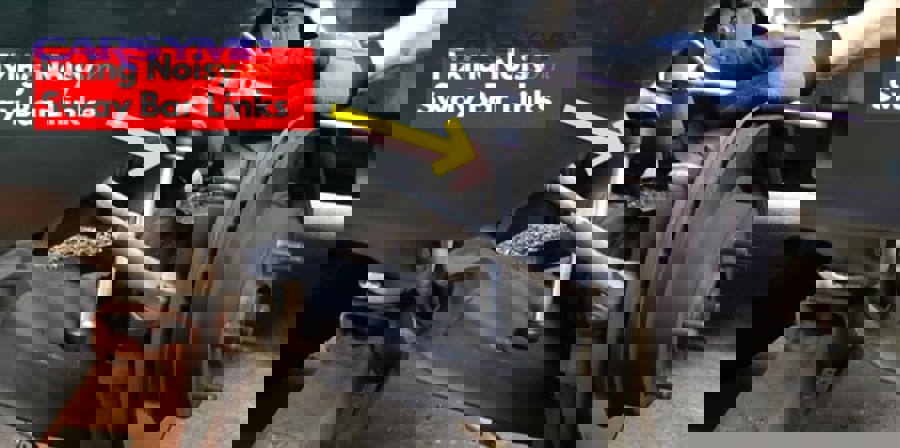
Bushing testing differs from link testing in that bushings should be inspected under load whenever possible. To explain further, the sway bar’s weight and the suspension’s preload compress the bushings during normal operation, so testing with the suspension hanging freely might not reveal problems that only manifest when the bushings bear the bar’s weight. For this reason, drive the vehicle onto ramps or park it on level ground rather than lifting it on jack stands for initial bushing inspection, then raise it only if you need to remove components for closer examination.
How to Perform the Visual Inspection Test on Bushings?
Visual inspection of sway bar bushings reveals deterioration through visible cracks, material thinning, lubrication loss, and positional shifting that indicate the bushing no longer maintains proper contact with the sway bar. Position yourself under the front of the vehicle with adequate lighting—a work light or headlamp proves essential since bushings sit in shadowed areas beneath the engine or transmission. Locate the sway bar running laterally across the vehicle’s width and follow it to the mounting points where the bar passes through the bushings and their surrounding brackets, typically positioned slightly off-center toward each side of the vehicle rather than at the absolute centerline.
Direct your visual inspection toward these specific indicators:
Crack patterns and material splits: Examine the visible outer surface of each bushing for cracks, particularly circumferential cracks that circle around the bar’s perimeter. These circular cracks indicate the bushing has compressed and hardened, causing the material to fail in tension as the bar rotates. Look for lengthwise splits running parallel to the bar’s axis—these critical failures allow the two halves of the bushing to separate, completely eliminating the bushing’s ability to center the bar within the bracket. Minor surface checking (fine cracks that don’t penetrate deeply) is cosmetic, but any crack deep enough that you can see into it or slide a fingernail into represents significant deterioration. Check both sides of each bushing since the underside often degrades faster due to road spray exposure.
Material compression and thickness: Compare the bushing’s apparent thickness to the gap between the sway bar’s surface and the mounting bracket’s inner edge. A healthy bushing should fill this space completely with no visible gap, maintaining snug contact that prevents bar movement. Worn bushings compress to a fraction of their original thickness, creating obvious clearance where you can see through the gap between bar and bracket. Use a flashlight to shine light from one side of the bushing through to the other—if you see light passing through gaps around the bar’s circumference, the bushing has compressed too much. Try to insert a thin object like a zip tie or a piece of wire between the bar and bracket; if it slides through easily, you’ve confirmed excessive clearance from compression wear.
Lubrication evidence: Look for grease or oil residue on the bushing’s exterior surface, on the mounting bracket, or dripping onto components below the bushing mounts. Some bushings contain internal grease pockets designed to lubricate the bar-to-bushing interface, but this lubrication shouldn’t be visible externally in properly functioning parts. Grease stains indicate the bushing has cracked internally, allowing lubricant to escape. Conversely, a completely dry, dusty bushing surface suggests the internal lubrication has depleted entirely. Run your finger along the visible portion of the bar where it emerges from the bushing—a good bushing might leave a thin film of grease on your finger, but heavy grease buildup or a completely dry surface both signal problems.
Position and alignment: Verify that the sway bar sits centered within each bushing and bracket rather than shifted to one side. The bar should run horizontally without obvious tilting or offset. If the bar touches one edge of the bracket while showing clearance at the opposite edge, the bushing has either failed or was never installed correctly. Check the bracket mounting bolts for tightness—loose brackets allow the entire bushing assembly to shift, which might be mistaken for bushing failure when the actual problem is inadequate clamping force. Look for witness marks (shiny spots on otherwise rusty or painted surfaces) that indicate the bracket has been moving relative to its frame mounting points.
Material degradation signs: Assess the bushing material’s condition by its appearance and feel if accessible. Healthy rubber bushings appear matte black with a slightly pliable surface when pressed with your thumb. Degraded bushings take on a shiny, glazed appearance as the surface hardens, may show color changes to brown or gray, and feel hard like plastic rather than yielding rubber. Polyurethane bushings maintain their structure better than rubber but can develop stress whitening—light-colored streaks or patches where the material has been stretched beyond its elastic limit, indicating impending failure.
Document the condition of both bushings even if only one shows obvious damage, as bushing replacement best practice involves changing both sides simultaneously to maintain symmetric suspension behavior. Photograph the bushings from multiple angles if possible, as these images help when ordering replacement parts to ensure you receive the correct dimensions and style.
How to Perform the Tap Test on Sway Bar Bushings?
The tap test uses mechanical impact to induce vibration in the sway bar and bushings, causing worn bushings to produce distinctive rattling or hollow sounds that reveal excessive clearance between bar and bushing. This diagnostic technique exploits the fact that a properly fitted bushing dampens vibration and prevents the bar from moving within the bracket, while a worn bushing allows the bar to rattle against metal surfaces when subjected to impact forces. The test requires only a rubber mallet or dead-blow hammer—avoid using standard metal hammers that could dent the sway bar or damage other components.
Execute the tap test with these systematic steps:
Direct bushing bracket impact: Position yourself under the vehicle with the sway bar visible and accessible. Strike the bushing mounting bracket firmly with the rubber mallet, using enough force to create an audible impact but not so hard that you risk bending the bracket. Listen carefully during and immediately after the impact for secondary sounds beyond the initial striking noise. A good bushing produces only the dull thud of the mallet hitting the bracket with perhaps a brief dampened vibration that dies quickly. A failed bushing generates a hollow, rattling, or jingling sound lasting one to two seconds after the initial impact as the sway bar bounces within the loose bushing and contacts the bracket’s metal edges multiple times before settling. The character of this secondary noise resembles shaking a can with a few loose bolts inside—distinct metallic impacts rather than a single clean thud.
Sway bar shaft percussion: Strike the sway bar itself at a point between the two bushing mounts, roughly at the vehicle’s centerline. This central impact transmits vibration equally to both bushings, allowing you to hear which side rattles. Hit the bar with moderate force and immediately move your ear close to each bushing mount to detect which side produces rattling noise. The vibration travels through the bar and, in a worn bushing, causes the bar to vibrate against the loose bushing material and bracket edges. Good bushings absorb this vibration silently, while bad bushings let it manifest as audible rattling. This central striking point proves particularly valuable because it tests both bushings simultaneously, helping identify whether you have a single failed bushing or bilateral wear.
Comparative tap testing: After testing one bushing, immediately test the opposite side using identical mallet force and technique. Compare the sounds produced—both sides should sound essentially the same if the bushings are wearing symmetrically, or dramatically different if only one has failed. This side-to-side comparison heightens your sensitivity to abnormal sounds because your ear can detect relative differences more easily than absolute sound characteristics. If the right bushing produces a clean thud while the left generates rattling, you’ve clearly identified the failed component even if you weren’t certain whether the left side’s sound was abnormal in isolation.
Resonance variation test: Strike the bar at different points along its length—near the links, at the center, and just inboard of each bushing. Note whether the rattling sound changes in character or intensity depending on strike location. A bushing on the verge of failure might only rattle when struck from certain angles or when vibration reaches it at specific frequencies. Varying your strike location changes the vibration frequency and amplitude reaching each bushing, potentially revealing marginal failures that don’t manifest during fixed-location testing. If you hear rattling only when striking the bar near a particular bushing but not when striking elsewhere, that specific bushing has likely failed while others remain functional.
The tap test’s effectiveness depends on proper technique and environmental factors. Conduct the test in a quiet location without traffic noise, running engines, or other sounds that could mask the subtle rattling from failing bushings. Use your free hand to touch various suspension components while striking the bar—you might feel vibration rattling through failed bushings even if ambient noise prevents you from hearing it clearly. When the tap test produces clear rattling from one or both bushing locations, you’ve confirmed bushing failure and should plan replacement regardless of what visual inspection revealed, as internal deterioration often precedes external visible damage.
How to Check for Bushing Movement and Play?
Checking for bushing movement and play quantifies the clearance between the sway bar and bushing by attempting to physically move the bar within its mounts, revealing wear that might not generate obvious sounds during tap testing. This hands-on examination provides definitive evidence of bushing failure when you can move a bar that should remain stationary, or when you can lift a bar that should be held firmly by bushing friction. The movement test works best with the vehicle on ramps or stands at normal ride height rather than with the suspension hanging freely, since you need to overcome the friction and preload that exist during actual operation.
Perform the bushing movement check using these methodical approaches:
Pry bar displacement test: Insert a pry bar or large screwdriver between the sway bar and the frame or other fixed component near the bushing mount. Apply steady upward or sideways force to the bar while watching the gap between bar and bushing bracket. A properly fitted bushing should resist this force with essentially no visible movement—the bar might deflect slightly due to the bar’s own elasticity, but it shouldn’t rise within the bushing or shift sideways. A worn bushing allows obvious movement of 3-5mm or more as the bar lifts within the bushing or shifts laterally, creating visible gaps that weren’t present before you applied pressure. This movement confirms that the bushing has compressed or deteriorated to the point that clamping force no longer maintains bar position.
Rotational resistance test: Grasp the sway bar between the two bushing mounts and attempt to rotate it along its longitudinal axis—essentially trying to twist the bar as if turning a steering wheel. Apply moderate force, roughly equivalent to opening a tight jar lid. A healthy bushing provides substantial resistance to rotation due to friction between the rubber and bar, requiring significant effort to produce even slight rotation. A failed bushing offers minimal resistance, allowing the bar to rotate fairly easily within the bushing, and you might hear creaking, groaning, or clicking sounds as the degraded bushing material binds and releases. This rotational test directly simulates the bar’s actual operating motion during suspension articulation, making it highly representative of real-world conditions.
Vertical lift assessment: Position yourself under the vehicle and push upward on the sway bar between the bushing mounts, attempting to lift the bar against the clamping force of the mounting brackets. Apply firm upward pressure and watch for gap formation between the bar and the lower half of the bushing. A good bushing holds the bar down through friction and clamping pressure, preventing any upward movement even under substantial force. A worn bushing allows the bar to lift noticeably, creating a crescent-shaped gap along the bottom of the bar where it separates from the bushing material. If you can lift the bar 5mm or more, the bushing has definitely failed and is allowing the bar to contact the bracket during suspension movement.
Bracket clamp torque verification: Before condemning the bushings, verify that the bracket mounting bolts are properly torqued. Loose brackets produce identical symptoms to failed bushings—rattling, movement, and noise—but represent a simple tightening fix rather than parts replacement. Use a torque wrench to verify that mounting bolts meet manufacturer specifications, typically 25-40 ft-lbs depending on vehicle. If the bolts were loose and you retorque them, repeat the movement tests afterward. If the movement and play disappear after proper torquing, the bushings themselves were actually fine and inadequate clamping force caused the symptoms. If movement persists despite proper torque, the bushings have genuinely failed and require replacement.
Load cycling observation: Have an assistant repeatedly press down on one front corner of the vehicle while you observe the bushing area from underneath. This manual bouncing forces the sway bar to rotate within the bushings as the suspension cycles. Watch for the bar shifting position, rotating, or moving up and down within the bushing with each bounce cycle. Listen for clicking, creaking, or clunking synchronized with the bounce motion. A failed bushing will show obvious bar movement relative to the bracket with each suspension cycle, while a good bushing keeps the bar stationary despite the suspension motion occurring around it.
When movement testing reveals play or displacement exceeding 2-3mm, bushing failure is confirmed and replacement becomes necessary to eliminate clunking and restore proper suspension function. Document the amount of movement you observe—this information helps evaluate whether the clunking you hear represents early-stage wear that might worsen gradually or advanced failure requiring immediate attention before the bushings deteriorate to complete loss of retention.
Is It Safe to Drive With Clunking Sway Bar Components?
Driving with clunking sway bar components is mechanically unsafe if the failure involves completely separated links or severely degraded bushings that allow excessive bar movement, though vehicles with early-stage wear that produces minor noise but maintains mechanical connection remain controllable for short-distance emergency use. The safety risk stems from the sway bar’s critical role in limiting body roll during cornering and emergency maneuvers—when links separate completely or bushings fail to the point of releasing the bar, the affected side of the suspension operates independently without the anti-roll coupling the sway bar provides, dramatically increasing rollover risk during hard cornering and reducing emergency handling capability. Vehicles experiencing complete sway bar system failure exhibit excessive body lean in turns, unpredictable weight transfer during quick lane changes, and significantly longer stopping distances when braking while turning.
The severity of the safety concern scales with the degree of component failure. To provide specific context, components showing minor wear that produces occasional clunking but maintains structural integrity pose primarily a comfort and progressive-wear issue, while advanced failures approaching complete separation create immediate safety hazards requiring vehicle immobilization until repair.
What Are the Risks of Driving With Bad Sway Bar Links?
Bad sway bar links create three escalating risk categories: mild wear producing noise without handling changes, advanced wear causing noticeable stability reduction, and complete separation eliminating anti-roll function and potentially creating struck obstacles from loose components. In the early failure stage where links have developed play in their ball joints but remain physically connected, you’ll experience clunking noise over bumps without dramatic handling deterioration since the links still transmit some anti-roll force despite the looseness. However, continuing to drive on worn links accelerates the degradation process—the loose ball joint hammers against its socket with each bump impact, progressively enlarging the wear pattern until the joint fails completely.
Handling degradation from failed links manifests in several observable ways:
Increased body roll during cornering: When one or both front sway bar links fail, the vehicle leans more dramatically during turns because the bar can no longer effectively couple the left and right suspension sides. In normal operation, the sway bar resists the tendency of the outside suspension to compress and the inside to extend during cornering, keeping the vehicle relatively flat. With failed links, this resistance disappears, allowing the body to roll several degrees beyond normal. You’ll notice this excessive lean most dramatically during highway on-ramps, freeway interchange curves, and any sustained turning at speeds above 40 mph. The increased roll feels unsettling and reduces tire contact patch optimization, slightly lengthening the distance required to complete emergency avoidance maneuvers.
Uneven tire wear patterns: Failed sway bar links allow asymmetric suspension movement that causes tires to operate at incorrect camber angles during cornering. The outside front tire in a turn experiences more negative camber (top tilting inward) than designed, causing accelerated wear on the inside edge of the tread. Over thousands of miles with failed links, this abnormal wear pattern becomes visible as the inner tread blocks wear 2-3mm deeper than the outer blocks. While this wear progression takes months to develop, it represents real economic cost beyond the failed links themselves and may necessitate premature tire replacement if you delay link repairs for extended periods.
Complete separation hazards: When a sway bar link separates entirely—either the ball stud pulling free from the socket or the threaded connection breaking—two immediate dangers emerge. First, the disconnected link hangs loosely and may contact rotating components like CV axles or wheels, potentially wedging against these parts and causing sudden loss of steering control or wheel lockup. Second, the completely disconnected sway bar side allows one front wheel to operate with no anti-roll resistance, creating extremely asymmetric handling where the vehicle responds very differently to left turns versus right turns. A vehicle with one front link separated might understeer (plow straight) severely during turns loading the disconnected side while oversteering (tail-out) during turns loading the still-connected side, producing unpredictable and potentially dangerous behavior.
Impact on ABS and stability control systems: Modern vehicles equipped with electronic stability control (ESC) and anti-lock braking systems (ABS) rely on predictable, symmetric suspension behavior to function correctly. Failed sway bar links alter the suspension’s mechanical response, causing different wheel loading patterns than the vehicle’s control systems expect. During emergency braking while turning—a scenario where ESC actively manages individual wheel braking to maintain control—the excessive body roll from failed links can confuse the system’s sensors, potentially causing it to apply brake pressure in ways that don’t match the actual vehicle dynamics. While ESC systems include sufficient safety margins to handle some suspension degradation, severely worn or separated links may exceed these margins and reduce the system’s effectiveness during the precise moments when you need it most.
Statistics from vehicle safety research indicate that suspension component failures contribute to approximately 3% of single-vehicle loss-of-control crashes, with sway bar and steering linkage failures representing a significant portion of this category. According to data analyzed by the National Highway Traffic Safety Administration in their 2019 crash causation studies, suspension failures ranked among the top ten mechanical factors in crashes involving loss of directional control. While these numbers don’t isolate sway bar link failures specifically, they demonstrate that ignoring suspension deterioration creates measurable safety risk beyond mere comfort degradation.
Can You Drive Without Sway Bar Bushings?
You can technically operate a vehicle with completely failed sway bar bushings since the bar remains physically attached through the end links, but doing so severely degrades handling stability and accelerates wear on other suspension components due to uncontrolled bar movement and loss of anti-roll effectiveness. Unlike link failure where complete separation creates obvious symptoms, bushing failure allows the vehicle to remain somewhat controllable because the links still provide mechanical connection between the bar and suspension, but the degraded bushings fail to properly locate and support the bar, reducing its functional efficiency and allowing it to contact frame components with each suspension movement.
The consequences of driving without functional bushings include:
Progressive body roll increase: Failed bushings reduce the sway bar’s effectiveness by introducing compliance and slop into the bar’s mounting system. When the bar should be rotating as a torsional spring resisting body roll, worn bushings instead allow the bar to shift position within its mounts before any twisting force develops. This delay and lost motion mean the bar begins resisting roll later and less effectively than designed. You’ll experience gradually increasing body lean during cornering that worsens as the bushings deteriorate further. The transition is subtle enough that you might adapt your driving without realizing the handling has degraded, but the reduced stability margins become apparent during emergency maneuvers that demand maximum performance from the suspension system.
Metal-on-metal contact damage: When bushings compress or crack sufficiently, the sway bar’s steel surface directly contacts the steel mounting bracket with each suspension movement. This metal-on-metal contact creates two problems: immediate noise (the clunking you hear) and long-term wear damage. The repetitive impact between bar and bracket causes work-hardening and eventual stress cracking in the bracket material, potentially leading to bracket failure that requires more expensive frame repair rather than simple bushing replacement. The sway bar itself may develop wear grooves or flat spots where it repeatedly contacts the bracket edge, and severe cases result in measurable bar diameter reduction at the contact points, weakening the bar’s structural integrity.
Accelerated wear on end links and other components: A sway bar that shifts unpredictably within worn bushings transmits irregular forces to the end links rather than the smooth rotational motion they’re designed to handle. These irregular loads cause the link ball joints to wear faster than normal, potentially causing premature link failure even if the links were originally in good condition. The unpredictable bar movement also transmits vibration and shock loads into the mounting points on the control arms or struts, accelerating wear on these pivot bushings and potentially causing them to fail earlier than their normal service life would predict. This cascade effect means that delaying bushing replacement often results in needing additional suspension repairs that wouldn’t have been necessary if bushings were addressed promptly.
Temperature-dependent behavior changes: Rubber bushing material changes its properties with temperature—cold bushings become harder and less compliant while hot bushings soften and compress more easily. Failed bushings exaggerate this temperature sensitivity, causing your vehicle’s handling to feel dramatically different between morning cold starts and after highway driving has heated the suspension. You might notice that clunking and body roll are worse during the first few miles of driving in cold weather, then improve somewhat as the bushings warm and regain a little compliance. This unpredictable behavior makes it difficult to judge safe cornering speeds since the vehicle’s limits vary with temperature rather than remaining consistent.
Loss of NVH control: Beyond their mechanical function supporting the sway bar, bushings serve a noise, vibration, and harshness (NVH) isolation role, preventing road impacts from transmitting directly into the chassis structure. Failed bushings allow every bump impact that moves the sway bar to transfer vibration through the metal brackets into the frame and ultimately into the passenger compartment. You’ll notice increased road noise, more vibration through the floor and steering wheel, and a generally harsher ride quality beyond just the clunking noise. This NVH degradation makes long drives more fatiguing and may mask other developing problems since the increased background noise level makes it harder to detect new squeaks, rattles, or mechanical sounds that warrant attention.
Mechanics generally recommend against driving more than necessary when bushings have failed to the point of producing continuous clunking. While the vehicle remains operable for getting to a repair facility, extended use accelerates damage progression and increases the likelihood of cascade failures requiring more extensive repairs than simple bushing replacement would involve. When to replace sway bar links or bushings depends on failure severity, but as a practical guideline, plan for repair within one week of confirmed diagnosis and limit driving to essential trips during this interval to minimize safety risk and prevent additional damage.
What Other Suspension Components Can Cause Similar Clunking Noises?
Ball joints, strut mounts, control arm bushings, and tie rod ends can all produce clunking noises nearly identical to failed sway bar components, requiring differential diagnosis based on noise location, triggering conditions, and component-specific testing procedures. The suspension system comprises numerous pivot points, bushings, and articulating joints that experience similar wear mechanisms—metal-on-metal contact after bushing deterioration, loose ball-and-socket connections, and impact noise from excessive clearance—making acoustic diagnosis alone insufficient for accurate component identification. Successful troubleshooting demands systematic testing that isolates individual components and correlates symptoms with the specific mechanical function each part performs during suspension operation.
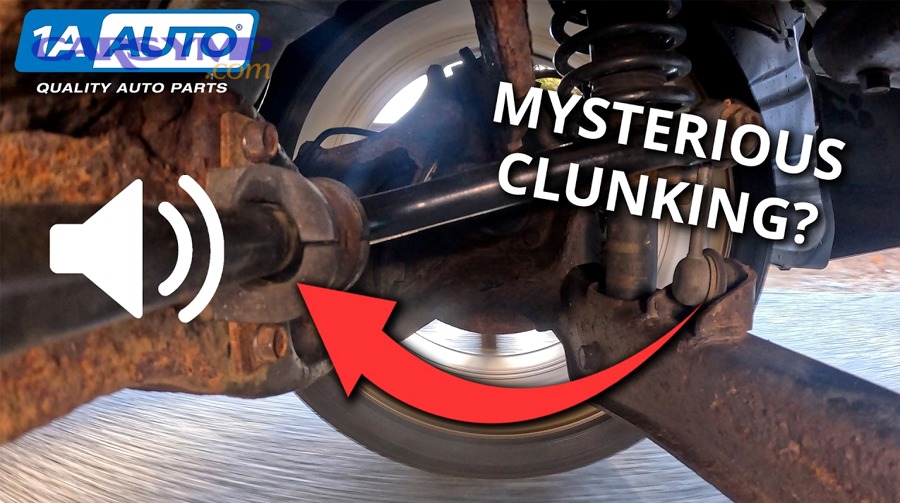
Understanding these alternative failure sources prevents the frustration of replacing sway bar components only to discover the clunking persists because a different part was actually responsible. More importantly, correctly identifying the failed component the first time saves diagnostic time and ensures you address actual safety issues rather than cosmetic noise problems.
How Do Ball Joint Issues Differ From Sway Bar Clunking?
Ball joint failures produce clunking that occurs during turning movements and when traversing diagonal obstacles that articulate the suspension in multiple axes simultaneously, while sway bar noise manifests primarily during straight-line bump impacts and lateral weight transfer events. This distinction exists because ball joints serve as the pivot points allowing the wheels to both move vertically through suspension travel and rotate horizontally for steering, whereas sway bar components only move during events that induce body roll or individual wheel vertical displacement.
Identifying ball joint clunking requires analyzing these characteristic symptom patterns:
Steering-synchronized clunking: Failed ball joints most commonly reveal themselves during low-speed parking lot maneuvers where you’re turning the steering wheel significantly while moving slowly over uneven pavement. As the wheel articulates through its steering arc while simultaneously moving vertically over bumps, the worn ball joint allows the ball stud to shift abruptly within its socket, producing a distinct clunk or snap synchronized with steering motion. This clunk-during-turning behavior rarely occurs with sway bar components, which only make noise during suspension compression/extension or lateral weight transfer, not during steering inputs. If your clunking intensifies during tight turns or occurs when backing out of driveways while turning sharply, suspect ball joints rather than sway bar links.
Diagonal bump response: Drive your vehicle slowly across a speed bump at a 45-degree angle so one front wheel crosses the bump before the other. This diagonal approach forces the early-crossing wheel to compress while the suspension simultaneously articulates laterally and the steering geometry changes, loading the ball joint in multiple directions. A worn ball joint produces a heavy clunk under this complex loading, often accompanied by a clunk on the rebound as the wheel extends. Sway bar components generate cleaner, more singular clunks during straight-on bump crossings without the complex sound pattern that diagonal bumps create when ball joints have failed.
Vibration and wandering characteristics: Severely worn ball joints transmit a vague, loose feeling through the steering wheel even when driving straight, and the vehicle may wander slightly within the lane, requiring constant small steering corrections. This behavior results from excessive radial play allowing the wheel to shift position slightly as road forces vary. Sway bar component failures don’t affect straight-line stability or steering feel since they don’t participate in steering geometry—only body roll control. If you notice the steering feeling sloppy or imprecise along with clunking, prioritize ball joint inspection over sway bar components.
Visual inspection differences: Ball joints show wear through specific indicators different from sway bar link wear. Check for grease leakage from the boot, vertical movement when you pry between the control arm and steering knuckle, and play when you grasp the tire at 12 and 6 o’clock and attempt to rock it vertically. Ball joints often fail with torn boots that expose the joint to contamination, whereas sway bar link boots typically remain intact even as internal wear develops. The distinct mounting locations—ball joints connecting control arms to steering knuckles versus sway bar links connecting the bar to struts or control arms—help differentiate which component you’re examining during visual inspection.
Testing ball joints requires different procedures than sway bar components. The standard ball joint test involves raising the vehicle so the suspension hangs free, grasping the tire firmly at 12 and 6 o’clock, and attempting to rock it vertically. Excessive play indicates ball joint wear, but this same test won’t reveal sway bar link problems since link play only manifests under load or during actual suspension movement. Conversely, the sway bar shaking test that reveals link noise won’t identify ball joint wear, requiring component-appropriate testing for accurate diagnosis.
Can Strut Mounts Cause Clunking That Mimics Sway Bar Problems?
Strut mounts produce dull, hollow-sounding clunks during suspension compression that can closely resemble sway bar bushing noise, particularly when the rubber mount bearing deteriorates and allows the strut shaft to shift abruptly rather than rotating smoothly during steering and suspension movement. The acoustic similarity occurs because both failures involve rubber isolation components that have degraded, allowing metal-on-metal contact between parts designed to remain separated. Strut mount clunking often proves difficult to distinguish from bushing noise without hands-on testing because both originate from the front suspension area and both worsen over moderate to large bumps that compress the suspension significantly.
Differentiate strut mount failures through these diagnostic indicators:
Steering-correlated clunking: Strut mounts incorporate a bearing that allows the strut assembly to rotate as you turn the steering wheel. When this bearing deteriorates, it produces clunking synchronized with steering inputs—particularly during slow-speed maneuvers like parking where you rotate the wheel significantly while the vehicle barely moves. Sit stationary with the engine running and turn the steering wheel back and forth through about 90 degrees of rotation. If you hear clunking that precisely follows the steering motion without any wheel or suspension movement, failed strut mount bearings are likely responsible. Sway bar components remain completely silent during stationary steering inputs since they only respond to actual suspension travel or body roll, not steering motion alone.
Single-wheel bump noise: Drive slowly over obstacles that affect only one front wheel—like speed bumps crossed at an extreme angle or individual potholes. If you hear a single, isolated clunk from the affected corner as that wheel compresses and again as it rebounds, strut mount wear is more likely than sway bar components. The noise location seems to emanate from directly above the wheel, higher in the suspension than sway bar component noise which originates closer to frame level. Some drivers describe strut mount clunking as sounding like it’s coming from inside the engine compartment or even through the firewall into the passenger space, whereas sway bar noise sounds more external and lower to the ground.
Visual inspection of mount condition: Strut mounts are visible under the hood on many vehicles, located at the top of each front strut tower. Open the hood and examine the rubber portion of the mount—look for cracks radiating from the center mounting hole, tears in the rubber, or separation between the rubber and its metal bonding surfaces. The mount may appear compressed or collapsed on one side, or you might see rust staining indicating moisture has penetrated cracks and corroded internal metal components. Press down on the vehicle’s corner above the strut and watch the mount as the suspension compresses—the mount should compress evenly without the center post shifting position or the rubber bulging asymmetrically. Visible mount deterioration confirms the component as a noise source even if other suspension parts also show wear.
Physical manipulation test: With the vehicle on the ground and the hood open, grasp the top of the strut shaft (the exposed metal rod in the center of the mount) and attempt to move it side-to-side and front-to-back. A good mount allows no perceptible movement—the shaft should feel locked solidly in position. A worn mount permits 2-5mm of movement as the degraded rubber no longer maintains shaft centering. While moving the shaft, listen for clicking or clunking sounds as it shifts within the mount. This direct testing immediately identifies mount failure without needing to reproduce noise through driving, though it requires engine-off access and may not be possible on vehicles where the strut shaft doesn’t protrude above the mount.
Strut mount replacement requires different procedures and skills than sway bar component replacement. Mounts necessitate compressing the coil spring with spring compressors and disassembling the strut assembly, presenting safety risks from stored spring energy that can cause injury if the spring releases unexpectedly. This complexity means strut mount replacement typically costs $200-400 per side in labor compared to $50-100 for sway bar links, making accurate diagnosis financially important to avoid unnecessary expensive repairs when cheaper components were actually responsible.
What About Tie Rod Ends and Control Arm Bushings?
Tie rod ends create clunking similar to sway bar links during turning and over bumps, while control arm bushings produce noise patterns resembling sway bar bushings, requiring location-specific testing and visual inspection to differentiate these components from sway bar failures. Both tie rod ends and control arm bushings serve critical suspension and steering functions, making their failures safety-significant beyond the mere annoyance of clunking noise.
Tie rod end failures manifest through:
Steering-related clunking and looseness during direction changes, particularly noticeable during slow-speed parking maneuvers where you rotate the wheel significantly. The tie rods connect the steering rack to the steering knuckles, translating rack movement into wheel rotation, so worn tie rod end ball joints allow play in the steering system that produces clunking when you reverse steering direction or hit bumps while turned. Test tie rod ends by grasping the tire at 9 and 3 o’clock and attempting to rock it side-to-side—excessive horizontal play indicates tie rod wear, whereas the 12-and-6 test that reveals ball joint wear won’t detect tie rod issues.
Control arm bushing degradation presents through:
Noise during acceleration and braking because these bushings mount the control arms to the frame and resist the forces that attempt to rotate the control arm forward during braking and rearward during acceleration. When bushings tear or compress excessively, these longitudinal forces cause the control arm to shift position abruptly, producing clunking synchronized with throttle or brake application rather than purely bump-related noise like sway bar components generate. Visual inspection reveals split rubber, metal-on-metal contact witness marks on the control arm pivot points, and in severe cases, torn bushings where the rubber has completely separated from its metal sleeve.
The critical distinction between all these components and sway bar elements lies in understanding each part’s primary function and testing for symptoms that match that function. Sway bar components only move during events involving lateral weight transfer or independent wheel vertical movement, tie rods only articulate during steering inputs, ball joints move during both steering and vertical travel, strut mounts respond to vertical compression and steering rotation, and control arm bushings react to longitudinal forces. By correlating when the clunking occurs—straight-line bumps versus turning versus acceleration/braking—you can narrow the suspect component list before even beginning physical inspection.
When Should You Suspect Multiple Failed Components?
Multiple simultaneous component failures become likely when the vehicle exceeds 100,000 miles, operates in harsh environments with road salt exposure, or shows evidence of deferred maintenance across multiple systems. Suspension components share similar service lives because they experience identical exposure to road impacts, corrosion, temperature cycles, and operational loads, making it statistically probable that several parts will reach failure thresholds within similar mileage ranges. When diagnostic testing reveals one clearly failed component but clunking persists after replacement, the original diagnosis likely identified a contributor to the noise rather than the sole source, indicating the need for comprehensive suspension inspection.
Consider multiple failures when:
Age and mileage correlation: Vehicles with original suspension components beyond 80,000-100,000 miles have likely exceeded the design service life of rubber bushings and ball joint seals across the entire system. Replacing only the most obviously failed component while ignoring other parts showing wear often results in returning symptoms within months as the next-oldest part fails. Mechanics frequently recommend comprehensive suspension rebuilds—replacing all links, bushings, ball joints, and tie rods simultaneously—on high-mileage vehicles because the labor cost to diagnose and replace components individually over multiple service visits exceeds the cost of replacing everything once.
Noise complexity and variation: If your clunking demonstrates inconsistent character—sometimes sounding sharp and metallic, other times dull and hollow, occurring both during straight-line travel and while turning—multiple components are probably contributing noise from different mechanisms. Pure sway bar link failure produces consistent, repeatable clunking with the same acoustic signature each time, while mixed-source noise varies depending on which combination of worn parts makes contact during any particular suspension event. Complex noise patterns justify comprehensive suspension inspection rather than targeted single-component replacement.
Progressive symptom development: When you replaced sway bar links to address clunking but now hear different noise at different frequencies or under different conditions, a second component has likely failed independently. This sequential failure pattern is common because the mechanical loads don’t decrease after one component is replaced—they simply redistribute to the remaining parts. Replacing worn links may actually increase loads on degraded bushings or ball joints by restoring some of the suspension’s original stiffness, potentially accelerating existing wear in these other components and causing them to fail sooner than they would have with the failed links still installed.
Corrosion environment indicators: Vehicles operated in road-salt environments where winter precipitation is managed with sodium chloride or calcium chloride show accelerated suspension component degradation due to corrosion penetrating boots, seals, and bushings. If you detect heavy rust on exposed suspension components, assume that protected internal components like ball joint sockets and link bearings have also experienced corrosion. In severe salt-exposure cases, replacing a single component without addressing others of similar age and exposure may be false economy, as the remaining parts will likely fail within months, requiring repeated repair visits.
Preventing premature sway bar link wear and bushing deterioration requires regular inspection intervals, prompt replacement when wear becomes evident, and addressing the environmental factors that accelerate degradation. Vehicles in harsh climates benefit from annual undercarriage washing to remove salt accumulation, application of rubber preservative sprays to bushings, and inspection of boots and seals for early crack detection before moisture penetrates and causes internal damage. When repair estimates indicate multiple component failures, confirming each diagnosis through specific testing prevents unnecessary parts replacement while ensuring genuinely failed components aren’t overlooked, maintaining both safety and cost-effectiveness in suspension maintenance.