


A timing belt and a timing chain perform the same essential job — synchronizing the crankshaft and camshaft so your engine’s valves and pistons move in perfect coordination — but the two systems differ fundamentally in material, location, lifespan, and what they demand from you as a vehicle owner. The timing belt is built from reinforced rubber, operates quietly outside the engine’s lubrication circuit, and must be replaced on a strict schedule. The timing chain, by contrast, is a metal link assembly housed inside the engine, bathed in oil, and engineered in most cases to last the full life of the vehicle. Understanding these differences is not just academic — it directly shapes your maintenance budget, your repair decisions, and the risks you take if you ignore warning signs.
When it comes to durability and cost, the comparison between the two systems is more nuanced than it first appears. Timing belts are inexpensive to replace individually, typically running between $500 and $1,000 per service, but they require replacement every 60,000 to 100,000 miles and often need companion parts — tensioners, idler pulleys, and sometimes the water pump — replaced at the same time. Timing chains cost significantly more to service when they do fail, with repair bills commonly ranging from $1,000 to $2,500 or more, but the majority of chain-equipped engines never require chain replacement at all under normal operating conditions.
Maintenance requirements for each system follow entirely different logic. A timing belt demands scheduled replacement regardless of how the belt looks or feels, because rubber degrades with heat, age, and mileage in ways that are not always visible. A timing chain, on the other hand, has no replacement interval — its longevity depends almost entirely on how consistently you change your engine oil, since the chain, its guides, and its tensioners all rely on clean, properly pressurized oil to function correctly.
Beyond the core comparison, there are several layers of practical knowledge that every car owner benefits from understanding: how to identify which system your vehicle uses, when each system signals that something is wrong, and what specialized factors — like interference engine design or variable valve timing — change the stakes of timing system failure. Next, this article walks through each of these topics in full detail, so you have everything you need to make informed decisions about your engine.
What Are a Timing Belt and a Timing Chain?
A timing belt is a toothed rubber drive component, and a timing chain is a metal link assembly — both are engine synchronization devices that connect the crankshaft to the camshaft, ensuring valves open and close at precisely the right moment relative to piston position.
To better understand why these two components differ so significantly in practice, it helps to examine how each one actually operates inside the engine.
How Does a Timing Belt Work?
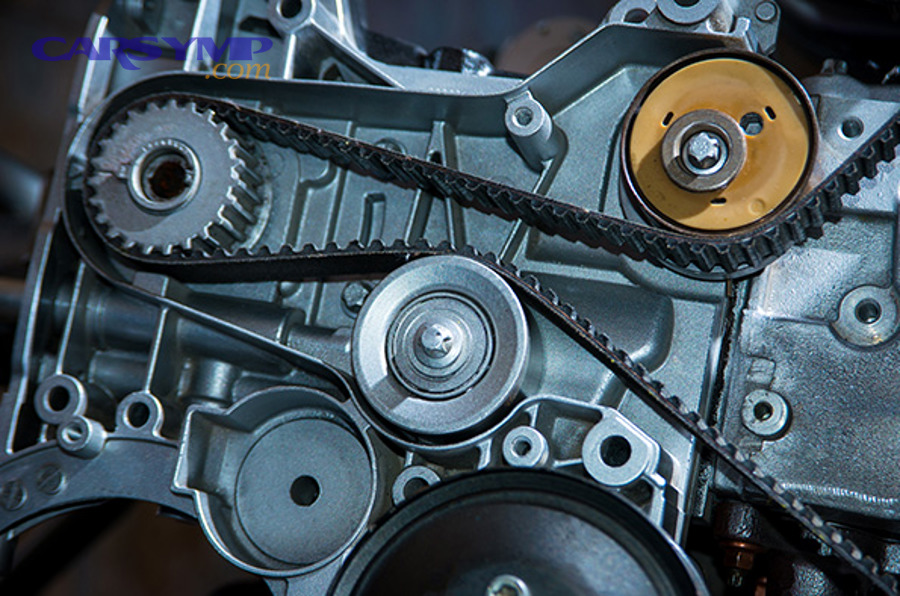
A timing belt is a reinforced rubber band with precisely cut teeth along its inner surface. Those teeth mesh with matching grooves on the crankshaft pulley and camshaft pulley, creating a slip-free mechanical link between the two rotating shafts. Because the belt is made of rubber and polymer composite materials — often reinforced with aramid fibers or Kevlar strands for stretch resistance — it operates in what engineers call a “dry setup.” This means the belt sits outside the main engine lubrication circuit, sealed behind a plastic timing cover, away from oil and coolant. Any oil or coolant contamination that reaches the belt accelerates degradation rapidly, which is why a leaking front crankshaft seal or a weeping water pump can destroy a timing belt far ahead of its scheduled replacement interval.
One critical detail about timing belt design is its relationship with the water pump. In a large number of engine configurations — including many Honda, Toyota, and Volkswagen engines — the timing belt drives the water pump directly. This creates an important service consideration: if the water pump fails while the timing belt is in good condition, replacing only the pump still requires removing the belt. Most mechanics and manufacturers therefore recommend replacing the timing belt and water pump together during any timing belt replacement service, because the labor time involved in accessing either component is nearly identical.
The other key risk associated with timing belts involves interference engine design. In an interference engine, the valves and pistons share overlapping space in the cylinder — they never occupy that space at the same time only because the timing system keeps them perfectly coordinated. If the timing belt snaps or skips a tooth, that coordination is lost instantly, and a piston can strike an open valve at high speed. The result is bent valves, damaged pistons, and in severe cases, a destroyed engine. This interference engine risk explains why timing belt replacement on a strict schedule is not optional — it is the primary line of defense against catastrophic engine failure.
How Does a Timing Chain Work?
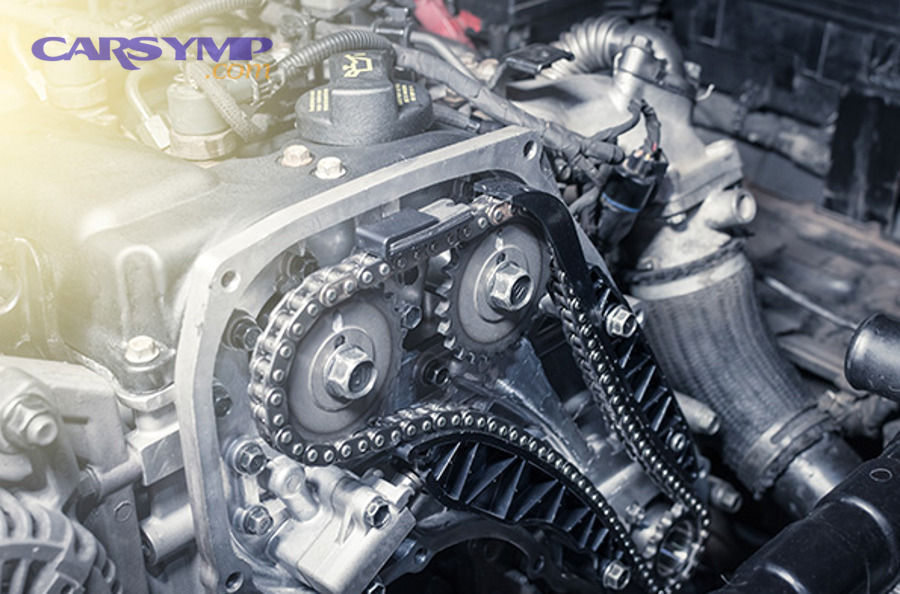
A timing chain functions on the same mechanical principle as a timing belt — it links the crankshaft sprocket to the camshaft sprocket — but it does so using a series of interlocking metal links, much like a heavy-duty bicycle chain. Because the chain is metal, it operates inside the engine block itself, submerged in the same oil that lubricates the bearings, pistons, and valve train. This “wet setup” is what gives timing chains their longevity advantage: as long as clean oil circulates at the correct pressure, the chain and its associated components — guides, tensioners, and sprockets — receive continuous lubrication and cooling.
Unlike a timing belt, which can snap suddenly and without warning, a timing chain rarely fails instantaneously. Instead, chains wear gradually over time, most commonly through a process called chain stretch. As individual link pins wear against their bushings, the effective length of the chain increases slightly, creating slack. Hydraulic or mechanical tensioners compensate for this slack up to a point, but once wear exceeds the tensioner’s adjustment range, the chain can begin to slap against its guides or, in more serious cases, jump a tooth on the sprocket — which throws the engine out of time just as a belt failure would. The important difference is that a worn chain usually announces its deterioration through noise, giving a driver time to act before catastrophic failure occurs.
What Are the Key Differences Between a Timing Belt and a Timing Chain?
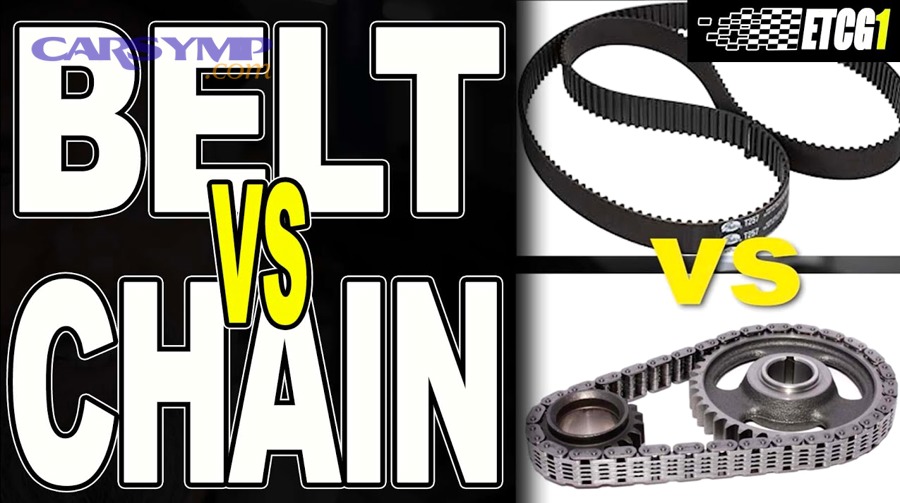
A timing belt wins on noise and initial replacement cost, while a timing chain leads in lifespan and long-term value — the right choice depends on which criteria matter most for your specific vehicle and ownership timeline.

However, understanding these differences requires looking at each criterion separately, because the gap between the two systems varies considerably depending on the factor being evaluated.
The table below summarizes the core differences across the most important comparison criteria:
| Criterion | Timing Belt | Timing Chain |
|---|---|---|
| Material | Reinforced rubber/polymer | Metal alloy links |
| Location | Outside engine (dry setup) | Inside engine (wet setup) |
| Lifespan | 60,000–100,000 miles | 150,000+ miles / engine life |
| Noise Level | Very quiet | Moderate (louder when worn) |
| Replacement Cost | $500–$1,000 | $1,000–$2,500+ |
| Maintenance Dependency | Mileage/time intervals | Regular oil changes |
| Failure Mode | Sudden snap (no warning) | Gradual stretch (with warning signs) |
| Lubrication Required | No | Yes (engine oil) |
This table covers the attributes that most directly affect a vehicle owner’s experience and budget.
Which Is More Durable — Timing Belt or Timing Chain?
A timing chain is significantly more durable than a timing belt under normal operating conditions, primarily because metal withstands heat, stress, and mechanical wear far better than rubber over extended periods. Most factory timing chains are designed to last the full service life of the engine, often exceeding 150,000 to 200,000 miles without requiring replacement, provided the engine receives consistent oil maintenance. A timing belt, by contrast, begins degrading from the moment it is installed — not only through mechanical wear from the constant cycling motion, but also through heat cycling, ozone exposure, and the natural breakdown of rubber compounds over time. This is why manufacturers set a time-based replacement interval in addition to a mileage limit: a timing belt on a rarely driven vehicle still needs replacement after a certain number of years, even if the odometer reading is low.
It is important to note, however, that durability is not absolute for either system. Certain chain-equipped engines have documented histories of premature timing chain wear — notably some Ford EcoBoost, BMW N47, and early GM 2.0T engines — where suboptimal guide materials or tensioner designs led to accelerated wear well before the expected service life. A timing chain is more durable on average, but the specific engine family matters enormously when assessing real-world longevity.
Which Is More Expensive to Replace — Timing Belt or Timing Chain?
Timing belt replacement labor time is typically two to five hours for most vehicles, and total service cost — including parts and labor — generally falls between $500 and $1,000. Timing chain replacement, by comparison, is considerably more involved. Because the chain sits deep inside the engine and requires significant disassembly to access, labor hours run higher and parts costs are greater, placing the total cost of a timing chain service between $1,000 and $2,500 or more depending on the vehicle make and model.
The cost comparison becomes more complex when viewed across a vehicle’s full lifespan. A car driven 180,000 miles with a timing belt will likely require two or three complete belt services over that period, which means total timing belt costs may reach $1,500 to $3,000 — potentially exceeding the one-time cost of a timing chain replacement if that chain ever needs service. For drivers who plan to keep their vehicles long-term, this total-ownership perspective changes the economic calculation considerably.
During any timing belt replacement service, mechanics routinely recommend replacing the water pump, tensioner, and idler pulleys simultaneously. These components are fully exposed once the belt is removed, and their own service life is similar to the belt’s. Replacing them during the same labor visit adds modest parts cost while avoiding a future scenario where one of these components fails shortly after a fresh belt installation — which would require paying for the full labor a second time.
Is a Timing Belt Quieter Than a Timing Chain?
Yes, a timing belt is quieter than a timing chain because rubber absorbs vibration and dampens mechanical noise in a way that metal cannot, making belt-equipped engines noticeably smoother and quieter at idle and under load. This acoustic advantage was one of the primary reasons automakers shifted toward timing belts during the 1960s and 1970s — particularly in passenger cars where cabin refinement was a selling point. A timing chain, by contrast, produces a degree of mechanical noise inherent to metal-on-metal contact, even when new and properly lubricated. As a chain wears and slack develops, that noise increases — a rattling or slapping sound on cold start is one of the most reliable early indicators of timing chain wear.
It is worth noting that modern timing chain engineering has substantially narrowed this noise gap. Manufacturers now use variable-pitch chain designs, improved tensioner materials, and more refined guide geometries that significantly reduce chain noise compared to older systems. In many contemporary vehicles with timing chains, the difference in cabin noise between a belt and chain engine is barely perceptible during normal driving.
What Are the Maintenance Requirements for Each System?
The maintenance requirements for a timing belt and a timing chain follow entirely different frameworks: the belt demands scheduled replacement at fixed intervals, while the chain demands disciplined oil change habits throughout the vehicle’s life.
For a timing belt, the manufacturer sets a specific replacement interval — typically expressed as both a mileage figure (commonly 60,000 to 100,000 miles) and a time limit (often five to seven years). Both limits apply, and whichever is reached first triggers replacement. There is no visual inspection method reliable enough to assess whether a belt can safely continue past its replacement interval, because internal fiber degradation and rubber hardening are not detectable without laboratory analysis. Following the OEM replacement schedule is the only defensible maintenance strategy.
For a timing chain, the single most important maintenance action is regular oil changes at the intervals specified by the manufacturer. Engine oil lubricates the chain links, flushes metal particles from the chain guide surfaces, and maintains hydraulic pressure in the tensioner system. Oil that is overdue for replacement loses viscosity, accumulates sludge, and deposits varnish on chain guides and tensioner components — accelerating wear across the entire timing system. Engines equipped with Variable Valve Timing (VVT) mechanisms place additional oil-pressure demands on the timing system, making oil change discipline even more critical in those applications.
Is a Timing Chain Better Than a Timing Belt?
Yes, a timing chain is generally better than a timing belt for most modern drivers because it offers superior longevity, eliminates mandatory replacement intervals, and reduces the risk of sudden catastrophic engine failure — but this advantage depends on consistent oil maintenance and the specific engine design.
That said, calling one system universally superior oversimplifies a comparison that carries real trade-offs on both sides.
What Are the Pros and Cons of a Timing Belt?
A timing belt offers three clear advantages: it operates quietly, it is lighter than a chain (contributing marginally to engine efficiency), and it is less expensive to replace when its service interval arrives. Rubber construction also means the belt requires no lubrication, simplifying the engine’s internal design and reducing the number of components the oiling system must maintain.
The disadvantages, however, are significant. The mandatory replacement schedule creates a recurring maintenance cost that chain-equipped vehicles avoid entirely. More critically, timing belts fail suddenly — a rubber belt that snaps provides no warning, no unusual sound, and no opportunity to pull over before damage occurs. In an interference engine, that sudden failure can mean the difference between a $700 belt replacement and a $4,000 engine rebuild. Belts are also vulnerable to environmental contamination; a small oil leak from a front crankshaft seal or camshaft seal can saturate and destroy a timing belt in a fraction of its expected service life.
Timing belt advantages at a glance:
- Quiet operation during normal use
- Lower per-service replacement cost
- No lubrication requirement
- Lighter weight than chain systems
Timing belt disadvantages at a glance:
- Mandatory scheduled replacement
- Sudden, no-warning failure mode
- Vulnerable to oil and coolant contamination
- Repeated lifetime cost adds up over high-mileage ownership
What Are the Pros and Cons of a Timing Chain?
A timing chain’s primary advantages are longevity and reliability over the full life of the engine. Under proper maintenance, most chains never need replacement, eliminating a significant recurring service cost. Chains are also more tolerant of the harsh thermal environment inside the engine, and they wear gradually rather than snapping — giving drivers audible warning signs before failure becomes catastrophic.
The disadvantages are real but manageable. Timing chains are heavier, which adds minor rotating mass to the engine. They produce more mechanical noise than belts, particularly as they age. And when they do require replacement — whether due to wear, guide failure, or tensioner collapse — the labor-intensive nature of the job makes it one of the more expensive engine services a vehicle owner can face. Additionally, some chain-equipped engines carry documented reliability concerns tied to specific design weaknesses, which means a chain does not automatically guarantee long service life on every application.
Timing chain advantages at a glance:
- Designed to last the engine’s full service life
- Gradual wear provides audible early warning
- No mandatory replacement interval under normal conditions
- More resistant to environmental contamination
Timing chain disadvantages at a glance:
- Higher repair cost when replacement is needed
- Dependent on consistent, timely oil changes
- Heavier than belt systems
- Some engine families have known premature chain wear histories
How Do You Know If Your Car Has a Timing Belt or Timing Chain?
There are four reliable methods to identify whether your vehicle uses a timing belt or timing chain: checking the owner’s manual maintenance schedule, inspecting the timing cover material, searching by VIN or vehicle specification online, and listening for characteristic cold-start sounds.
Knowing which system your vehicle uses is one of the most practically valuable pieces of information a car owner can have — it directly determines what maintenance your engine requires and what failure risks you need to monitor.
How to Check Your Owner’s Manual for Timing System Type
The owner’s manual maintenance schedule is the most authoritative and accessible source for identifying your vehicle’s timing system. Open the scheduled maintenance section and look for any entry specifying timing belt inspection or replacement — this is typically listed at a mileage interval between 60,000 and 120,000 miles. If a timing belt replacement interval appears in the schedule, your vehicle has a timing belt. If no such entry exists anywhere in the maintenance schedule, your vehicle almost certainly uses a timing chain, which carries no factory-prescribed replacement interval under normal conditions.
Some owner’s manuals also specify a time-based interval alongside the mileage figure — for example, “replace timing belt at 90,000 miles or 7 years, whichever comes first.” This dual-interval format is exclusive to timing belt applications and confirms the system type immediately.
What Other Ways Can You Identify a Timing Belt vs. Chain?
Beyond the owner’s manual, there are several additional identification methods that are practical and reliable:
Visual inspection of the timing cover: Look at the front of the engine near the top of the block. A plastic cover typically indicates a timing belt system, because the belt operates in a dry environment and plastic provides sufficient protection. A metal cover more commonly indicates a timing chain, since the chain operates inside the oiled engine environment and requires more robust enclosure.
Online VIN decoder or model-specific search: Enter your vehicle’s year, make, model, and engine displacement into a search query formatted as “[Year] [Make] [Model] [Engine size] timing belt or chain.” Manufacturer specification sheets, dealership parts databases, and automotive reference sites return reliable answers within seconds. For used vehicle purchases, this search takes less than a minute and provides immediate clarity on what maintenance the engine requires.
Ask during routine service: Any qualified mechanic performing an oil change, inspection, or other routine service can identify your timing system by sight in seconds. If you are unsure, this is one of the easiest questions to resolve at your next service appointment.
Auditory clues: At cold start, a timing chain engine may produce a brief, faint rattling sound that disappears within a few seconds as oil pressure builds and the tensioner extends. A timing belt engine is almost completely silent on startup. A persistent or loud rattle on a chain-equipped engine is a warning sign of wear — not a normal characteristic — and warrants prompt inspection.
When Should You Replace a Timing Belt or Timing Chain?
You should replace a timing belt strictly according to the manufacturer’s specified interval — mileage or age, whichever comes first — and you should replace or service a timing chain only when wear symptoms appear or when a mechanic identifies measurable chain stretch, tensioner failure, or guide wear during inspection.
The replacement timing for each system is governed by entirely different logic, and confusing the two approaches can lead to either unnecessary expense or a missed warning that ends in engine damage.
What Are the Warning Signs of a Failing Timing Belt?
The most important warning sign for a timing belt is not a noise or a dashboard light — it is the mileage and age reading on your service records. Because rubber timing belts typically fail without any preceding symptoms, the service interval itself is the primary diagnostic tool. A belt at 95,000 miles on an engine with a 90,000-mile replacement spec is overdue and carries meaningful failure risk regardless of how it looks or sounds.
That said, there are physical symptoms that can indicate belt deterioration when visible during inspection:
- Visible cracking, fraying, or glazing on the belt surface — indicates heat and age degradation of the rubber compound
- Missing or worn cog teeth — reduces the belt’s grip on the pulleys and creates timing skip risk
- Oil or coolant contamination — any wet appearance on or near the belt warrants immediate inspection of adjacent seals
- Engine misfire or rough idle — can indicate the belt has already skipped a tooth, advancing or retarding valve timing
- Ticking or slapping from the engine front — rare with belts but can occur if a tensioner pulley bearing is failing
In an interference engine, none of these signs may appear before the belt snaps completely — which is precisely why waiting for symptoms is not a safe maintenance strategy. Timing belt replacement labor time may feel significant in the short term, but it is a fraction of what engine repair costs after a belt failure.
What Are the Warning Signs of a Worn Timing Chain?
Unlike a timing belt, a worn timing chain almost always announces its deterioration before failure occurs. The most common and recognizable warning sign is a rattling or slapping noise at cold engine start — typically described as a chattering or metallic rattle coming from the front of the engine. This sound occurs because the tensioner has not yet built full hydraulic pressure, and the slack chain slaps against its plastic or metal guide. As the engine warms and oil pressure stabilizes, the noise may diminish or disappear — but its presence on cold start is a reliable indicator that chain wear has progressed.
Additional warning signs of timing chain wear include:
- Check Engine Light with camshaft/crankshaft correlation codes — fault codes P0016 and P0017 specifically indicate that the crankshaft and camshaft position sensors are reading out of sync, which is a direct sign of chain stretch or timing jump
- Rough idle or hesitation under acceleration — suggests the chain has jumped a tooth on the sprocket, altering valve timing
- Metal particles or debris visible in engine oil — small metallic flakes during an oil change can indicate chain guide material breaking down
- Persistent rattling noise at operating temperature — indicates wear beyond what the tensioner can compensate for; immediate inspection required
According to data compiled by the National Institute for Automotive Service Excellence (ASE), timing system failures rank among the most costly engine repairs, with interference engine timing failures averaging between $2,000 and $5,000 in total repair costs depending on the extent of valve and piston damage — underscoring the value of acting on early warning signs before they escalate.
◆ CONTEXTUAL BORDER
The sections above have fully addressed the primary search intent — the key differences between timing belts and timing chains in material, durability, cost, maintenance, and failure identification. The Supplementary Content that follows expands into specialized and niche territory: interference engine mechanics, Variable Valve Timing interactions, known engine family failure patterns, and the question of whether the two systems can be interchanged.
What Else Should Car Owners Know About Engine Timing Systems?
Beyond the core comparison, engine timing systems interact with three specialized design factors — interference engine architecture, Variable Valve Timing mechanisms, and engine-family-specific failure histories — that significantly alter the consequences of timing system neglect and the decisions a car owner should make.

These topics address the micro-semantic depth of timing system knowledge: the specific contexts where standard maintenance advice is not sufficient and where additional understanding directly protects an engine from avoidable damage.
How Does an Interference Engine Change the Stakes of Timing Belt Failure?
An interference engine is an engine design in which the valves and pistons share overlapping physical space within the cylinder bore — meaning that a piston at top dead center occupies the same geometric space that an open valve would if the two ever arrived there simultaneously. The only reason they never collide during normal operation is that the timing system keeps them perfectly out of phase. In a non-interference engine, sufficient clearance exists between the valves and pistons that a timing failure causes the engine to stop running but does not cause internal mechanical damage.
The Interference engine risk explained simply: if the timing belt snaps on an interference engine, the crankshaft continues rotating by momentum while the camshaft stops. Within a fraction of a revolution, pistons strike open valves — bending them, damaging valve seats, and in severe cases cracking pistons or the cylinder head. The engine cannot be restarted, and repair typically requires at minimum a valve job and new timing components, often totaling $2,000 to $5,000 or more depending on the severity of damage.
Common interference engines that use timing belts — and therefore carry this elevated failure risk — include many Honda four-cylinder and V6 engines, most Volkswagen and Audi TSI and TDI engines, and several Toyota and Subaru applications. Owners of these vehicles should treat timing belt replacement as an absolute priority, not a guideline.
How Does Variable Valve Timing (VVT) Affect Timing Chain Longevity?
Variable Valve Timing systems adjust the phase angle of the camshaft relative to the crankshaft in real time, optimizing valve timing for efficiency at low engine speeds and power at high engine speeds. While VVT delivers measurable improvements in fuel economy and performance, it places substantially higher demands on the timing chain system because the VVT actuator — a camshaft phaser driven by oil pressure — adds both mechanical load and oil-flow requirements to the components surrounding the chain.
In engines with VVT, the timing chain tensioners and guides experience greater cyclical stress than in non-VVT applications. More critically, the VVT phaser actuator is completely dependent on clean, properly pressurized oil to function correctly. When engine oil becomes sludgy from extended drain intervals, the phaser can stick in a fixed position, create irregular chain loading, or fail to maintain consistent camshaft timing — all of which accelerate chain and guide wear. Engines that are particularly sensitive to this interaction include the GM 3.6L V6, Ford EcoBoost 2.0L and 1.6L four-cylinders, and the Chrysler Pentastar V6. For vehicles equipped with VVT and a timing chain, shortening oil change intervals below the maximum recommended figure — using full synthetic oil — is a practical protective measure that extends timing system life considerably.
Are There Known Timing Chain Problems in Specific Engine Families?
Yes, several widely-used engine families have documented histories of premature timing chain failure that contradict the general assumption that chains always outlast belts. These failures typically stem from design weaknesses in chain guides, tensioner materials, or phaser components rather than the chain itself — but the practical outcome for the owner is the same: expensive unplanned repairs, often occurring at mileages where a timing chain should still have decades of life remaining.
Notable examples include:
- Ford 1.0L EcoBoost three-cylinder — early production variants experienced timing chain stretch and guide wear at relatively low mileage, leading to revised chain and tensioner designs in later production
- BMW N47 diesel four-cylinder — a rear-mounted timing chain in this engine requires near-complete engine disassembly to access, making replacement labor-intensive and expensive; chain and guide failures were reported between 80,000 and 120,000 miles
- GM 2.0T LTG and LNF engines — stretch and tensioner wear reported earlier than expected in some applications, linked to extended oil change intervals and oil pressure issues in the VVT phaser circuit
- Chrysler 2.7L V6 — oil sludge accumulation from infrequent oil changes accelerated timing chain guide wear, resulting in catastrophic failures that were largely preventable through proper maintenance
These cases illustrate that the antonym of “chain durability” — premature chain failure — is a real phenomenon tied to specific engineering decisions, not just owner neglect. Researching the timing system reliability history of any specific engine family before purchasing a used vehicle is a worthwhile step, particularly for higher-mileage examples.
Can You Replace a Timing Belt With a Timing Chain (or Vice Versa)?
No, you cannot replace a timing belt with a timing chain or substitute a chain for a belt — the entire engine architecture surrounding each system is purpose-designed for one configuration and is not interchangeable. A timing belt engine uses plastic timing covers, belt-compatible pulleys with smooth or cogged grooves, dry-operation sealing, and in many cases a belt-driven water pump integrated into the timing system layout. A timing chain engine uses metal covers, sprockets with link-compatible teeth, an internal oil feed circuit for chain lubrication, and hydraulic tensioner passages machined directly into the block and head castings.
Swapping systems would require replacing not just the timing component itself but the crankshaft and camshaft sprockets or pulleys, the tensioner system, the timing cover, the lubrication routing, and potentially the water pump configuration — all components that are machined or cast to specific tolerances within the existing engine block and cylinder head. The cost and engineering complexity of such a conversion would far exceed the cost of any normal timing system repair.
In practice, the only decision point where belt versus chain is a variable is at the time of vehicle purchase. Once you own a vehicle, the timing system type is fixed, and your maintenance strategy should be built around the system the manufacturer specified — not around which system you might prefer. Every manufacturer sets OEM timing system specifications for a reason, and replacement components should always match the original system design exactly.
Understanding the full picture of timing belt versus timing chain differences gives car owners a meaningful practical advantage — whether that means scheduling a belt replacement before it becomes an emergency, committing to shorter oil change intervals on a VVT chain engine, recognizing a cold-start rattle as an early warning rather than background noise, or researching an engine’s timing system reliability before signing a purchase agreement. Both systems are capable of delivering long, reliable service when treated correctly. The difference lies in knowing exactly what “correctly” means for the system under your hood.