


Your timing belt is one of the most critical — and most overlooked — components in your engine, and when it begins to fail, it rarely announces itself clearly. There are 7 key warning signs that your timing belt is failing: a ticking noise from the engine, misfires, an illuminated Check Engine light, oil leaks near the timing cover, excessive exhaust smoke, visible wear on the belt itself, and an engine that won’t start. Recognizing even one of these symptoms early can mean the difference between a routine timing belt replacement and a catastrophic engine rebuild costing thousands of dollars.
Understanding these signs matters because a failing timing belt does not always break suddenly — it degrades gradually, and the early symptoms are easy to dismiss as minor engine quirks. Each warning sign points to a specific mechanical failure mode, from loss of synchronization between the crankshaft and camshaft to physical deterioration of the belt’s rubber teeth. Knowing what each symptom means gives you the context to act before the damage becomes irreversible.
Equally important is knowing when to replace the timing belt regardless of visible symptoms. Most manufacturers recommend replacement every 60,000 to 100,000 miles or every 5 to 7 years — whichever comes first. This Timing belt replacement interval guide exists precisely because belts can fail without warning, and proactive replacement is always far cheaper than emergency repair.
Finally, knowing what to do after spotting these signs is just as important as spotting them in the first place. Some warning signs allow a window of time to schedule a professional inspection; others demand immediate action. Below, this guide walks through every sign in detail, explains the replacement timeline, and outlines the risks of delayed action — so you can make informed decisions about your vehicle’s health.
What Is a Timing Belt and Why Does It Matter?
A timing belt is a reinforced rubber internal engine component that synchronizes the rotation of the crankshaft and camshaft, ensuring each engine valve opens and closes at precisely the correct moment during the combustion cycle.
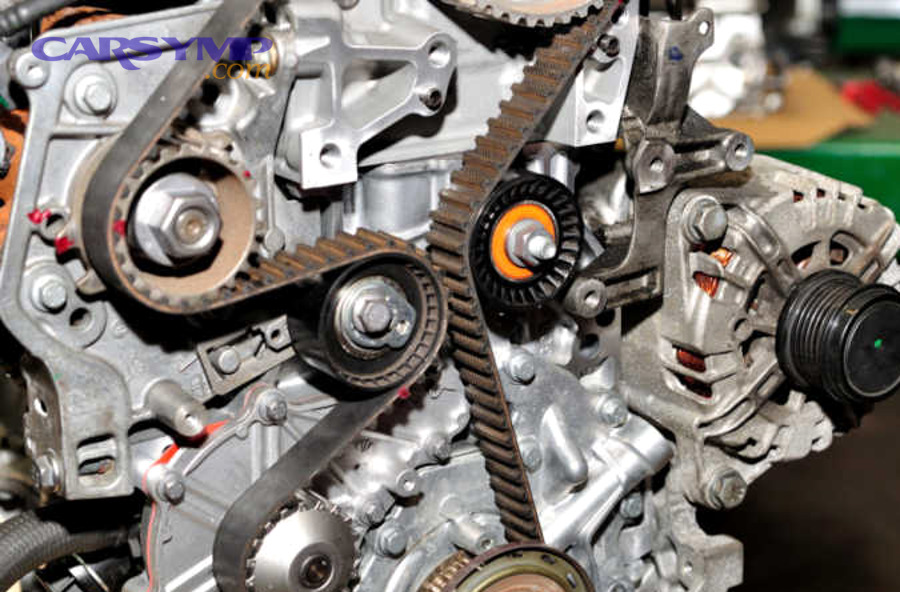
To better understand why its failure is so serious, it helps to know exactly what this belt does inside the engine. Specifically, the timing belt is located at the front of the engine, housed beneath a protective timing cover. It connects two of the engine’s most essential rotating components — the crankshaft, which drives the pistons up and down, and the camshaft, which controls the opening and closing of the intake and exhaust valves.
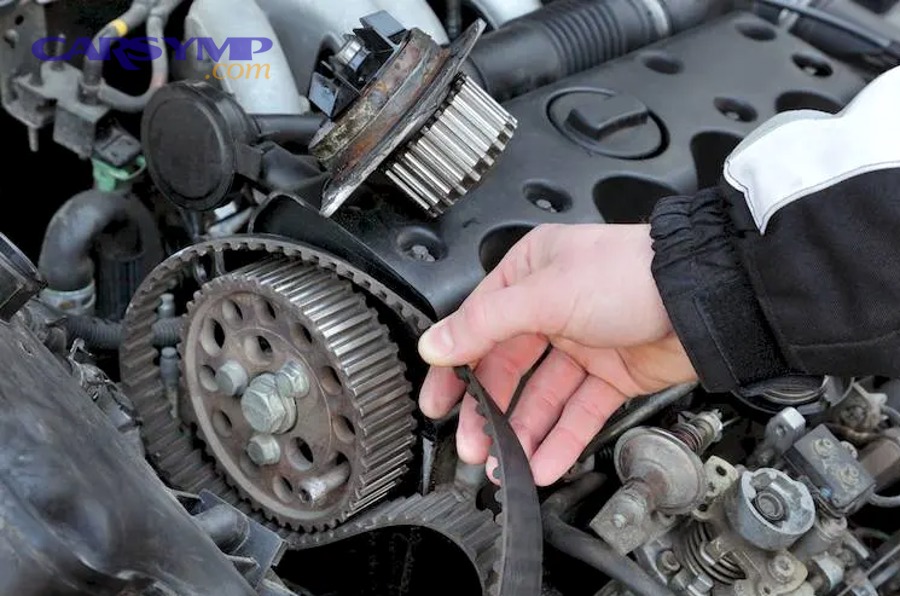
The belt is manufactured from high-tensile rubber reinforced with fiber cords, and its inner surface is lined with teeth that grip corresponding gears on both shafts. This tooth-and-gear engagement is what keeps the crankshaft and camshaft perfectly in sync — a relationship that must be maintained within fractions of a degree for the engine to run correctly. When fuel enters the combustion chamber, the valves must open and close at exactly the right moment. If the timing belt stretches, slips, or breaks, that synchronization is lost, and the engine either runs poorly or stops functioning entirely.
Unlike many car components that degrade slowly and predictably, a timing belt is subject to constant mechanical stress, heat, and exposure to engine oil. Over time, the rubber hardens, the teeth wear down, and the belt loses its ability to maintain accurate timing. This is why both mileage-based and time-based replacement intervals exist — even a belt that looks intact can have internally degraded rubber that is weeks away from snapping.
What Are the 7 Warning Signs Your Timing Belt Is Failing?
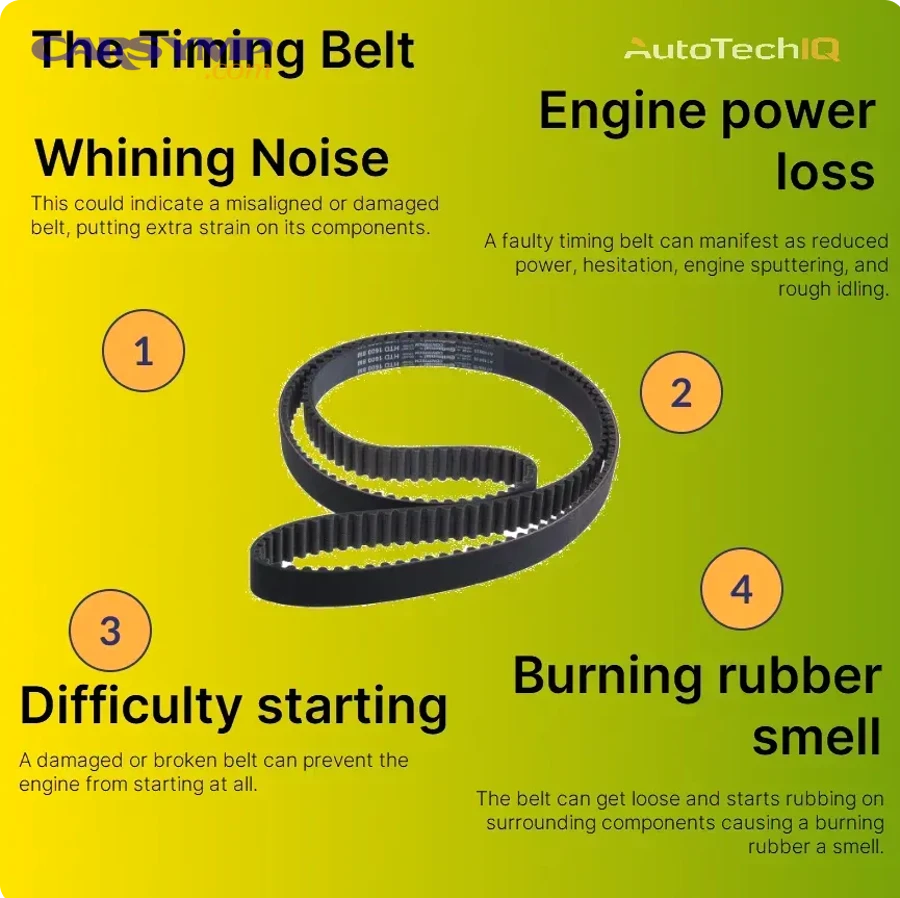
There are 7 main warning signs that a timing belt is failing, each indicating a different stage or mode of belt deterioration: ticking noise, engine misfire, Check Engine light, oil leak, excessive exhaust smoke, visible wear, and failure to start.
Each of these signs corresponds to a specific physical or mechanical event happening inside your engine. Next, let’s examine each one in detail so you know exactly what to look for and how urgently to act.
1. Ticking or Clicking Noise Coming From the Engine
A high-pitched ticking or repetitive clicking sound from the engine is one of the earliest and most recognizable audible warnings of timing belt wear.
The timing belt runs through a system of pulleys attached to the camshaft and crankshaft. As the belt wears down, it loses its ability to move smoothly across these pulleys. The result is a rhythmic ticking sound that increases in frequency as engine RPMs rise. This sound is often described as similar to a sewing machine running at high speed — distinct from the normal operational sounds of a healthy engine.
It is important to note that a ticking noise can also indicate low oil pressure, which is a separate but equally serious issue. For this reason, if you hear this sound, do not assume the cause without a professional diagnosis. What makes timing belt ticking distinctive is that it tends to appear specifically at startup and during acceleration, correlating with belt load.
2. Engine Misfires or Rough Idling
A slipping or worn timing belt can cause one or more engine cylinders to fire out of sequence, producing noticeable misfires and rough, uneven idling.
The timing belt’s teeth are designed to grip the camshaft gear and hold it in precise alignment with the crankshaft. When those teeth wear down or the belt stretches, the camshaft can rotate slightly out of phase. This means the intake and exhaust valves no longer open and close at the correct moment — fuel enters at the wrong time, combustion is incomplete, and the engine misfires. Drivers typically notice this as a sudden loss of acceleration, an uneven or shuddering idle, or a sensation that the engine is “stumbling” under load.
More importantly, misfires triggered by timing belt slippage tend to worsen progressively. Unlike a fouled spark plug, which causes a consistent misfire on one cylinder, a slipping timing belt can cause misfires across multiple cylinders simultaneously, making the engine feel fundamentally unstable.
3. Check Engine Light Illuminates
An illuminated Check Engine light, particularly one accompanied by camshaft or crankshaft position sensor fault codes, is a strong electronic indicator that the timing belt is failing.
Modern vehicles are equipped with engine control units (ECUs) that continuously monitor the relationship between the camshaft and crankshaft using position sensors. When the timing belt wears, stretches, or begins to slip, the ECU detects a deviation in the expected sensor signals — specifically, a CAM/crank correlation error — and triggers the Check Engine light to alert the driver.
However, the Check Engine light alone is never sufficient for diagnosis. It can illuminate for dozens of unrelated reasons, from a loose gas cap to a faulty oxygen sensor. The key is to have the fault codes read by a professional scan tool. If the codes point to a P0016 or P0017 fault (camshaft/crankshaft correlation), this is a direct electronic signal that your timing belt deserves immediate inspection.
4. Oil Leaking Near the Timing Belt Cover
Oil seeping from the area around the timing belt cover is a physical warning sign that the belt’s protective housing has been compromised — and that the belt itself may be in danger.
The timing belt cover is secured to the engine block by a series of bolts and sealed by a gasket. Over time, these bolts can loosen due to engine vibration, and the gasket can crack or harden. When either failure occurs, engine oil seeps out from around the timing cover and may come into contact with the belt itself. This is particularly dangerous because oil rapidly accelerates the deterioration of rubber — softening the belt material, degrading the fiber reinforcement, and making the teeth more likely to strip or snap.
If you notice an oil spot forming under the front of your vehicle, or detect an oily residue along the edge of the timing cover, this should be treated as an urgent warning. Oil-contaminated timing belts can fail far earlier than their expected replacement interval, making immediate inspection essential.
5. Excessive Exhaust Smoke
Unusual volumes of exhaust smoke — particularly black or dark gray smoke — can indicate that the timing belt’s wear is disrupting the engine’s combustion cycle.
When the timing belt stretches or slips, it shifts valve timing slightly out of phase. As a result, the intake valves may not close fully before combustion begins, or the exhaust valves may open too early. In both cases, the fuel-air mixture is not burned completely inside the combustion chamber. The unburned fuel is pushed directly into the exhaust system, where it exits as visible dark smoke.
This symptom often appears alongside reduced fuel efficiency, as the engine compensates for its poor combustion by working harder and consuming more fuel. If your vehicle suddenly produces noticeably more exhaust smoke than usual — especially combined with any of the other signs on this list — the timing system deserves professional evaluation without delay.
6. Visible Wear, Cracks, or Missing Teeth on the Belt
Cracks, fraying, glazing, or missing teeth visible on the timing belt’s surface are direct physical evidence that the belt has deteriorated beyond safe operating condition.
A healthy timing belt has a smooth, uniform surface on its outer face and clean, evenly spaced teeth on its inner face. As the belt ages, several forms of physical degradation become visible. The rubber body may develop surface cracks running perpendicular to the belt’s length — a sign of heat damage and age hardening. The belt may develop a glazed or shiny appearance, indicating that it has been slipping against the pulleys. In more advanced cases, individual teeth may crack, chip, or fall off entirely, leaving gaps in the grip pattern.
It is worth noting that fully inspecting a timing belt is not a straightforward DIY task. The belt is housed beneath a cover that typically requires removal of other engine components to access. For this reason, visual inspection is best performed by a qualified mechanic during a scheduled service visit — particularly when any of the other warning signs are present.
7. Engine Won’t Start or Turn Over Properly
An engine that cranks but refuses to fire, or that produces only the clicking sound of the starter motor with no ignition response, may have a timing belt that has snapped or deteriorated completely.
When you turn the ignition key, the starter motor engages and attempts to rotate the crankshaft. Under normal conditions, the timing belt transmits this rotation to the camshaft, which initiates the valve sequence that allows the engine to start. If the timing belt has snapped or lost so many teeth that it can no longer drive the camshaft, the crankshaft spins freely while the camshaft remains stationary — and the engine cannot fire.
This symptom closely mimics a dead battery: the starter clicks, but nothing happens. The critical diagnostic difference is that a dead battery usually produces a weak, slowing crank sound, while a snapped timing belt often produces a normal-speed crank with zero ignition response. If your vehicle displays this behavior alongside a history of any of the earlier warning signs, a broken timing belt is a strong possibility and requires immediate professional inspection.
Is a Failing Timing Belt Dangerous to Drive With?
Yes, driving with a failing timing belt is extremely dangerous — it risks sudden engine seizure, loss of vehicle control, and catastrophic internal engine damage that can render the engine irreparable.
The danger of continuing to drive with a failing belt extends well beyond the belt itself. More importantly, the consequences of ignoring the warning signs depend heavily on the type of engine in your vehicle.
On interference engines — which include the majority of modern passenger car engines — the pistons and valves occupy overlapping positions in the cylinder at different points in the combustion cycle. The timing belt is the only component that prevents them from colliding. If the belt snaps while the engine is running, the pistons immediately strike the open valves. The result is bent valves, damaged pistons, a cracked cylinder head, and in severe cases, a destroyed engine block. Repair costs in these scenarios routinely exceed $3,000 to $5,000 — or the engine may be deemed a total loss.
On non-interference engines, the pistons and valves have sufficient clearance that they cannot physically contact each other even if the belt fails. In these cases, a snapped belt causes the engine to stop suddenly, but physical damage is typically limited to the belt itself. However, non-interference engines represent a decreasing share of modern vehicles, and determining which type you have requires checking your owner’s manual or consulting a mechanic.
The bottom line is clear: a timing belt showing any of the 7 warning signs should not be driven on until it has been inspected and, if necessary, replaced. The cost of a timing belt replacement is a fraction of the cost of engine reconstruction.
When Should You Replace Your Timing Belt?
The standard timing belt replacement interval is every 60,000 to 100,000 miles or every 5 to 7 years — whichever comes first — as directed by the vehicle manufacturer.
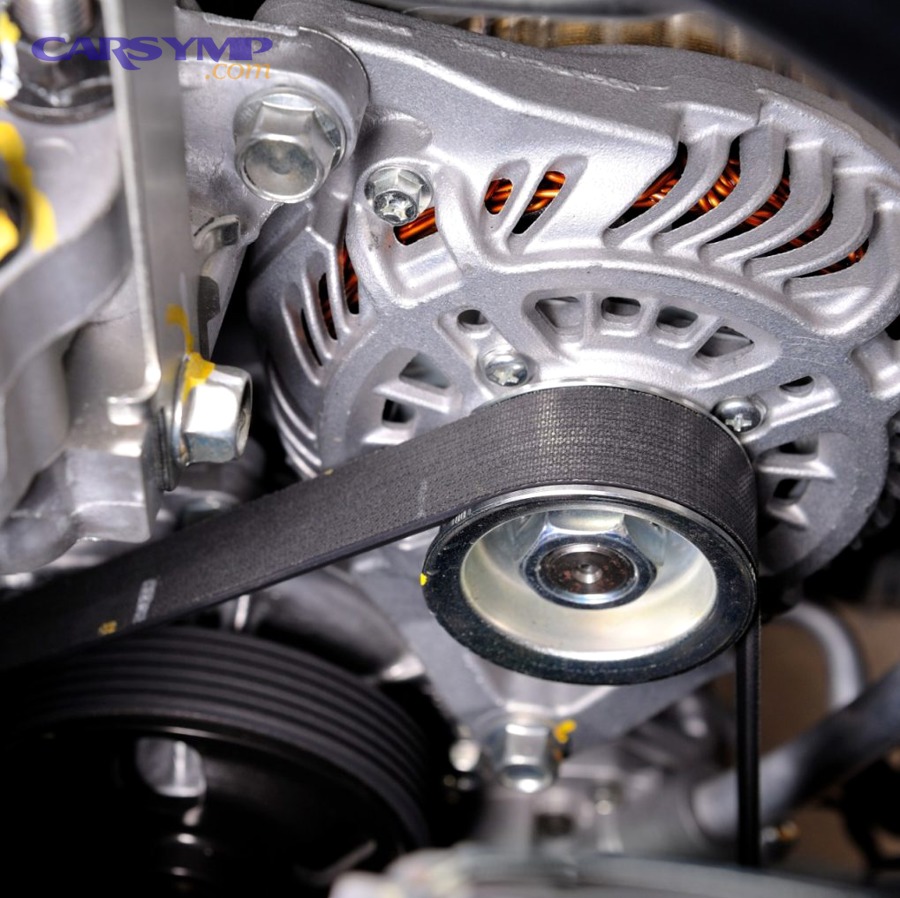
This timing belt replacement interval guide exists because rubber belts degrade both from use and from time, regardless of mileage. A vehicle driven only 30,000 miles over seven years may still need a new timing belt because the rubber has aged, hardened, and become brittle. Below are two critical sub-questions that every vehicle owner should know the answers to before their next service interval.
How Do You Know If Your Timing Belt Has Never Been Replaced?
If you have no service records confirming a prior timing belt replacement, treat the belt as overdue and have it inspected immediately — especially if the vehicle has more than 60,000 miles.
The absence of a service record is itself a red flag. Many used vehicles are sold without complete maintenance histories, leaving new owners unaware of when, or whether, the timing belt was ever changed. In these cases, the standard recommendation from automotive professionals is to inspect the belt at 60,000 miles and replace it proactively if there is any doubt. The cost of an unnecessary early replacement is far lower than the cost of an engine destroyed by a belt that quietly failed at 95,000 miles.
The following table summarizes the general replacement recommendations across driving conditions to help you determine where your vehicle falls:
| Driving Condition | Recommended Action |
|---|---|
| No service records, 60,000+ miles | Inspect immediately; replace if uncertain |
| Normal driving, within manufacturer interval | Follow owner’s manual schedule |
| Frequent short trips or stop-and-go driving | Consider earlier replacement (before interval) |
| Extreme heat or cold climate operation | Consider earlier replacement |
| Known oil leak near timing cover | Inspect immediately regardless of mileage |
This table provides a quick reference for matching your driving situation to the appropriate timing belt service action.
What Other Parts Should Be Replaced With the Timing Belt?
When replacing a timing belt, mechanics strongly recommend simultaneously replacing the water pump, tensioner pulley, and idler pulleys — components collectively known as the Timing belt kit components.
The logic behind this recommendation is straightforward: all of these components are located in the same area of the engine, and accessing them requires the same labor-intensive disassembly process. Replacing the water pump, tensioner, and idler pulleys at the same time as the belt costs significantly less in labor than returning to replace them individually when they fail weeks or months later. A complete timing belt kit typically includes the belt, tensioner, idler pulleys, and in many cases the water pump gasket — providing a comprehensive refresh of the entire timing system in a single service visit.
According to data compiled by RepairPal, the average cost of a timing belt replacement in the United States ranges from $422 to $958 for parts and labor combined, depending on the vehicle make and model — a figure that rises steeply if related components like the water pump are left unreplaced and fail separately.
How Do You Check if Your Timing Belt Needs Replacing?
Checking whether a timing belt needs replacing involves a combination of mileage and age assessment, symptom observation, and professional visual inspection — with professional diagnosis being the most reliable method.
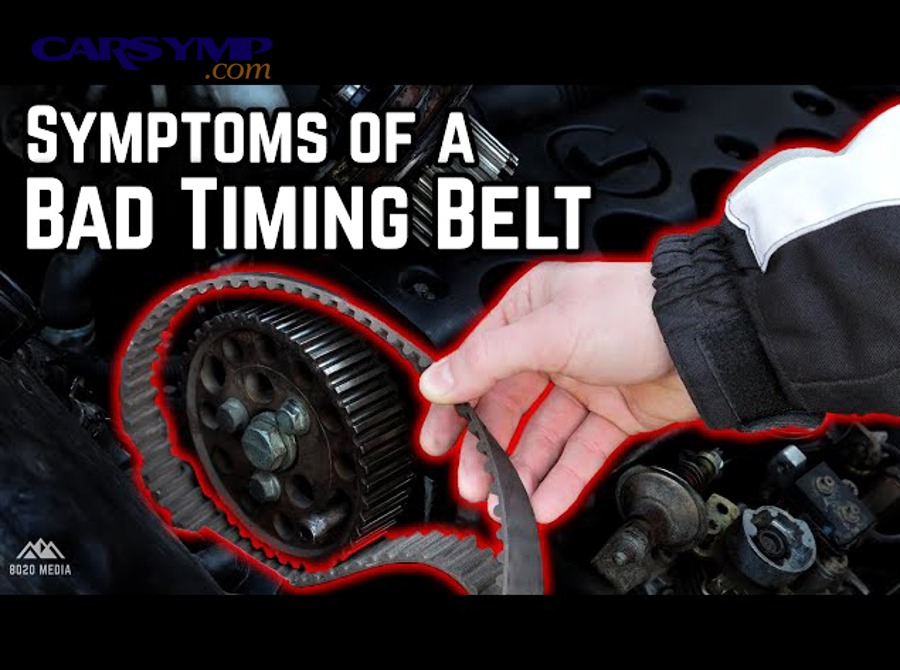
The inspection process is not a simple DIY task, but there are steps a vehicle owner can take before visiting a mechanic. Specifically, here is how the inspection process works at both the owner and professional level:
Owner-level checks:
- Review your vehicle’s service records to identify when the timing belt was last replaced
- Check your owner’s manual for the manufacturer’s specific replacement interval
- Note any of the 7 warning signs described in this article — ticking noise, misfires, Check Engine light, oil leaks, exhaust smoke, visible belt damage, or failure to start
- Check the mileage and the date of last replacement against the 60,000–100,000 mile / 5–7 year standard
Professional inspection: A qualified mechanic will remove the timing cover to directly examine the belt. They assess the belt for cracking, fraying, glazed surfaces, missing or worn teeth, and correct tension. They also inspect the tensioner pulley and idler pulleys for bearing wear, and check for evidence of oil contamination. This level of inspection cannot be replicated by a visual check from outside the engine.
The critical takeaway is this: if you are experiencing any of the 7 warning signs, do not wait for a scheduled maintenance visit. Take the vehicle to a professional immediately. The window between “warning sign appears” and “belt snaps” is unpredictable — it can be days or weeks — and the consequences of waiting too long are severe.
What Happens If a Timing Belt Breaks While Driving?
If a timing belt breaks while the engine is running, the outcome ranges from a sudden engine stall to complete and irreparable internal engine destruction — depending primarily on whether the engine is an interference or non-interference design.
The difference between these two engine types is the single most important variable in determining the severity of a timing belt failure. Understanding this distinction is central to Interference engine risk explained clearly for vehicle owners.
What Is the Difference Between a Timing Belt and a Timing Chain?
A timing belt is a rubber component requiring periodic scheduled replacement, while a timing chain is a metal component designed to last the lifetime of the engine — but both serve the identical function of synchronizing the crankshaft and camshaft.
The most significant practical difference between the two is maintenance. Timing belts are quieter and lighter, which is why many manufacturers prefer them, but their rubber construction means they must be replaced on a defined schedule. Timing chains, made of linked metal, are inherently more durable and are lubricated by the engine’s oil system, which extends their lifespan considerably. However, timing chains are not maintenance-free — they can stretch over high mileage, develop slack, and produce a rattling sound that signals wear.
The key distinction for vehicle owners: if your car has a timing chain, you do not face a fixed replacement interval, but you should still monitor for chain stretch symptoms. If your car has a timing belt, the replacement schedule is non-negotiable.
How Much Does Timing Belt Replacement Cost?
Timing belt replacement typically costs between $400 and $1,000 for most passenger vehicles, though this figure varies significantly based on the vehicle’s make, model, engine complexity, and whether related components are replaced simultaneously.
The cost breakdown reflects both parts and labor. The belt itself is relatively inexpensive — typically $25 to $80 — but the labor involved in accessing it is substantial. On many vehicles, mechanics must remove the engine’s accessory drive belts, the crankshaft pulley, the timing cover, and in some cases engine mounts before the belt is even visible. This labor can represent 70 to 80 percent of the total cost.
European and performance vehicles — including Audi, BMW, Volkswagen, and Porsche models — consistently sit at the higher end of the cost range. Their engines feature more complex designs with tighter component packaging, meaning that accessing the timing belt requires disassembling a greater number of adjacent components. A timing belt service on a 2.0T Audi engine, for example, can exceed $1,200 when all associated components are included.
Can a Timing Belt Fail Early Due to Extreme Weather or Driving Conditions?
Yes, extreme weather conditions and certain driving patterns can significantly accelerate timing belt wear, causing it to fail well before the manufacturer’s recommended replacement interval.
High ambient temperatures cause the rubber compound in the belt to harden and become brittle more quickly than under moderate conditions. Conversely, extreme cold — particularly temperatures below -20°F (-29°C) — reduces the rubber’s flexibility, increasing the risk of cracking during cold starts when the belt is under maximum load. Vehicles operated in desert climates or those exposed to heavy seasonal temperature swings therefore face an elevated risk of early belt failure.
From a driving pattern perspective, frequent short trips are particularly damaging. Short trips mean the engine cycles through cold startup — when belt tension is highest and lubrication is lowest — dozens of times per month without ever reaching full operating temperature. This repeated thermal cycling accelerates the micro-cracking that eventually leads to belt failure. Drivers in urban environments with predominantly short commutes should consider inspecting their belt earlier than the standard mileage-based interval suggests.
Does a Timing Belt Failure Affect the Water Pump?
Yes, on many engines the timing belt directly drives the water pump, meaning that a timing belt failure can simultaneously disable the cooling system and trigger engine overheating within minutes.
On these engine configurations, the water pump pulley is integrated into the timing belt’s drive path. When the belt snaps, the water pump stops turning — and coolant circulation ceases. An engine running without coolant circulation overheats rapidly, typically within three to five minutes at operating load. This overheating is sufficient to warp the cylinder head, blow the head gasket, or cause the aluminum cylinder head to crack — damage that adds thousands of dollars to the repair bill on top of the timing belt failure itself.
This interdependency between the timing belt and the water pump is precisely why the timing belt kit components approach to replacement exists. Replacing the water pump at the same time as the belt — even if the pump appears functional — eliminates the risk of a cascade failure that starts with a worn belt and ends with a destroyed cooling system. It is one of the most cost-effective preventive maintenance decisions a vehicle owner can make, and every timing belt service should include a water pump evaluation as a standard step.