


When comparing dealer vs. independent timing belt pricing, independent shops consistently charge $300 to $800 less than dealerships for the same service — and in most cases, they can deliver equal or comparable quality when the right shop is chosen. The average timing belt replacement cost at a dealership runs between $800 and $2,000 or more depending on your vehicle make and model, while a reputable independent mechanic typically quotes $490 to $1,200 for an equivalent scope of work. That price gap is real, and for budget-conscious car owners, it represents a meaningful decision worth understanding fully before scheduling service.
The cost difference, however, is only part of the story. What separates a smart decision from a risky one is understanding exactly what each shop type includes in their quote — the parts brand, the components replaced, the technician’s experience with your specific engine, and the Warranty on timing belt jobs offered after the work is complete. A dealer quote of $1,400 and an independent quote of $850 may sound like a clear win for the indie shop, but only if both quotes cover the same belt, tensioner, idler pulley, Water pump add-on cost and value, and coolant service.
Beyond pricing, car owners searching this topic are asking a deeper question about trust and risk. A timing belt failure is not a minor inconvenience — it can cause catastrophic engine damage, bending valves and destroying pistons in an interference engine within seconds. The fear of paying less and getting less is legitimate. That fear, though, is often based on outdated assumptions about independent shops rather than on how modern independent mechanics actually operate.
To help you make a fully informed decision, this article breaks down the real cost difference between dealer and independent shop timing belt service, explains what drives the pricing gap, evaluates quality and risk at each option, and gives you a clear framework for choosing the right shop for your vehicle. Next, let’s start with understanding exactly what a timing belt replacement service involves.
What Is a Timing Belt Replacement Service and What Does It Include?
A timing belt replacement service is a scheduled engine maintenance procedure in which a rubber toothed belt — and a set of related components — is replaced to prevent catastrophic engine failure due to belt wear or breakage.
To better understand the cost differences between dealers and independent shops, it helps to first know precisely what you are paying for. The scope of a timing belt service varies significantly between shops, and mismatched quotes are one of the most common reasons car owners overpay or end up with incomplete work.
What Parts Are Typically Replaced During a Timing Belt Service?
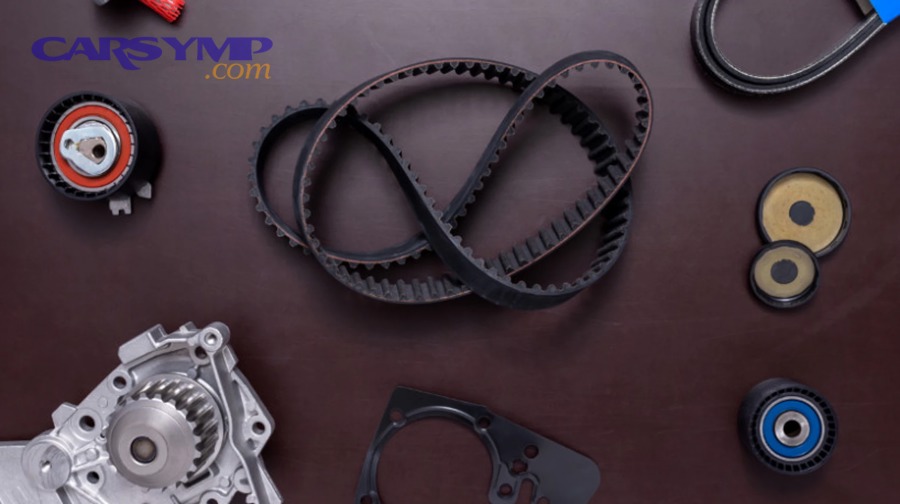
A complete, properly scoped timing belt service includes far more than just the belt itself. When a mechanic opens the timing cover, the labor cost to access that area is already paid — which makes it economically sensible to replace every component in that zone at the same time.
A full timing belt service typically includes:
- Timing belt — the primary rubber belt that synchronizes the crankshaft and camshaft
- Hydraulic tensioner — keeps the belt at the correct tension; a failed tensioner causes belt slippage
- Idler pulley — guides the belt path; worn bearings here will damage the new belt
- Water pump — sits behind the same timing cover; replacing it during this service avoids paying labor twice if it fails within the next 30,000–50,000 miles
- Serpentine/drive belt — often replaced at the same time since it is adjacent and inexpensive
- Coolant flush — required when the water pump is replaced to prevent contamination
Some shops also recommend replacing camshaft and crankshaft seals if they show any sign of seepage, though this is not always included in a base quote. When requesting quotes from any shop — dealer or independent — always ask whether all of the above components are included. A dealer quoting $1,400 and an independent shop quoting $850 may not be quoting the same job.
What Is the Difference Between OEM, Aisin, and Aftermarket Timing Belt Parts?
The parts brand used in your timing belt service is one of the most important quality variables — and it directly affects where the price difference between a dealer and an independent shop comes from.
There are three main tiers of timing belt parts:
OEM (Original Equipment Manufacturer) parts are sourced directly from the vehicle manufacturer — Honda, Toyota, Subaru, etc. Dealers purchase OEM parts at wholesale but bill them at retail list price, which significantly inflates the total cost of service. OEM parts carry the manufacturer’s brand and are identical to what was installed at the factory.
Aisin is a Japanese Tier 1 supplier that manufactures the actual timing system components for many Honda, Toyota, and Lexus vehicles. In many documented cases, Aisin kits are physically identical to OEM parts — same casting marks, same materials, same dimensions — but sold at a lower price point. Many experienced independent mechanics and forum communities consider an Aisin kit the best value available for compatible vehicles.
Budget aftermarket parts represent the lowest price tier. Quality varies widely. For a safety-critical component like a timing belt, budget aftermarket kits carry meaningful risk — substandard tensioner bearings or lower-grade belt rubber can fail prematurely, with consequences as severe as a belt that was never replaced at all.
Understanding this hierarchy explains why an independent shop using an Aisin kit at $165 in parts and $380 in labor can deliver quality equivalent to — or better than — a dealer charging retail markup on OEM parts. The labor difference, meanwhile, reflects dealership overhead rather than superior skill.
How Much Does a Timing Belt Replacement Cost at a Dealership vs. an Independent Shop?
Dealerships charge $800 to $2,000 or more for timing belt replacement, while independent shops typically quote $490 to $1,200 for a comparable full-service job — a savings range of $300 to $800 depending on vehicle, region, and scope.

However, understanding that average gap requires looking at what drives each shop’s pricing structure separately. The following breakdown explains why the numbers diverge so significantly — and what you should actually compare when evaluating quotes.
Why Do Dealerships Charge More for Timing Belt Replacement?
Dealerships charge more for timing belt replacement because of three overlapping pricing factors: structured book-time labor billing, retail parts markup, and franchise overhead costs.
Book-time labor billing means dealers charge based on a standardized flat-rate labor time — typically 5 to 5.5 hours for many Honda and Toyota timing belt jobs — regardless of how long the job actually takes. A skilled dealer technician who completes the job in 3.5 hours still bills the customer for 5 hours. At dealer labor rates averaging $110 to $160 per hour depending on market, this alone generates $550 to $880 in labor charges before a single part is touched.
Retail parts markup compounds the cost. Dealers purchase OEM parts at wholesale pricing but invoice customers at full retail list price. On a timing belt kit that includes belt, tensioner, idler, and water pump, this markup can add $150 to $300 above what the same parts cost at an independent shop.
Franchise overhead — facility costs, service advisor commissions, loaner car programs, and manufacturer compliance requirements — is embedded in every dealer invoice. These costs are real for the dealership but do not translate into a better timing belt replacement for you.
Additionally, some dealer service departments do not automatically replace every component in the timing system. There are documented cases of dealerships inspecting idler bearings visually and leaving them in place rather than replacing them as part of the kit — potentially leaving a worn component that will cause problems before the next belt interval.
How Much Can You Save by Choosing an Independent Shop?
Choosing a reputable independent shop over a dealership for timing belt replacement can save you $300 to $800 on the same service, based on real-world quotes consistently reported across vehicle forums and repair cost databases.
The table below illustrates a realistic side-by-side comparison for a typical Honda or Toyota application:
The following table compares the estimated cost breakdown for a full timing belt service (belt, tensioner, idler, water pump, coolant) at a dealership versus a reputable independent shop using an Aisin kit:
| Cost Component | Dealership | Independent Shop |
|---|---|---|
| Labor (flat rate) | $550 – $880 | $300 – $500 |
| Timing belt kit (parts) | $350 – $600 (OEM retail) | $165 – $300 (Aisin/OEM-eq.) |
| Water pump add-on | $150 – $250 | $80 – $150 |
| Coolant / shop fees | $50 – $120 | $30 – $80 |
| Total estimate | $1,100 – $1,850 | $575 – $1,030 |
These figures align with real quotes shared by owners of Honda Odyssey, Toyota Sienna, Honda Pilot, and Acura MDX vehicles — among the most common timing belt applications. Savings are consistent across vehicle types, with the gap widening for larger engines or vehicles with more complex timing system access.
What Factors Affect the Price Difference Between Dealers and Independent Shops?
Four key factors determine how large the price gap between a dealer and an independent shop will be for your specific timing belt job: vehicle make and model, geographic location, parts brand selected, and the service scope included in each quote.
Vehicle complexity has a significant effect. A compact sedan with easy engine access requires fewer labor hours than a V6 SUV where the front of the engine must be substantially disassembled. On complex applications, dealer book-time billing amplifies the gap further because flat-rate hours are higher.
Geographic location drives labor rate variation across regions. Shops in major metropolitan areas — Los Angeles, New York, Chicago — charge $120 to $160+ per hour in labor, while shops in smaller cities or lower cost-of-living regions charge $75 to $110. This means the same job can cost $400 more in one market than another, at both dealer and independent levels.
Parts brand is a lever that independent shops can use to reduce cost without reducing quality. A shop willing to use an Aisin kit instead of full OEM retail parts can pass $150 to $300 in savings to the customer. Dealers rarely offer this option.
Service scope is the most commonly overlooked variable. Always confirm whether each quote includes the tensioner, idler pulley, water pump, and coolant service — not just the timing belt itself. An independent shop quoting $850 all-in may be a better value than a dealer quoting $1,100 that excludes the water pump.
Is It Safe to Get a Timing Belt Replaced at an Independent Shop?
Yes, it is safe to get a timing belt replaced at an independent shop — provided the mechanic has relevant experience with your vehicle brand, uses quality parts such as an OEM or Aisin kit, and provides a written service warranty covering both parts and labor.
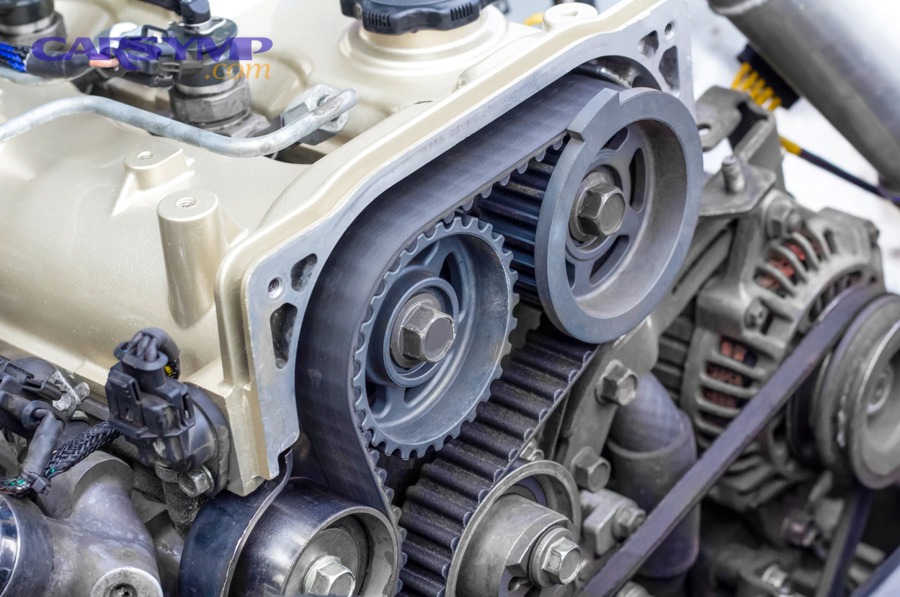
The concern about independent shops stems primarily from the fear of misaligned timing marks, incorrect tensioner installation, or low-quality parts — all of which can cause immediate or delayed engine failure. However, these risks are not inherent to independent shops. They are risks of choosing an unqualified or unverified mechanic, regardless of whether that mechanic works at a dealership or an independent garage. A brand-specific independent shop that performs dozens of timing belt replacements per year carries less risk — not more — than a dealer technician assigned to an unfamiliar engine layout.
What Should You Look for in a Trustworthy Independent Timing Belt Mechanic?
A trustworthy independent timing belt mechanic demonstrates brand familiarity, holds verifiable credentials, provides an itemized written quote upfront, and backs their work with a parts-and-labor warranty.
Specific indicators of a qualified independent shop include:
- Brand or model specialization — a shop that works primarily on Honda, Toyota, or your specific make will have completed the same timing belt job many times and will know the common failure points
- ASE (Automotive Service Excellence) certification — certifies that technicians have passed standardized competency tests; look for ASE Master Technician status for complex engine work
- Affiliation with Napa AutoCare, AAR (Approved Auto Repair), or AAA — these programs require shops to meet quality and warranty standards to maintain membership
- Documented positive reviews specifically mentioning timing belt service — general 5-star reviews matter less than reviews from customers who describe this exact type of work being done correctly
- Willingness to show parts — a reputable shop will show you the Aisin or OEM kit they plan to use, confirm all components being replaced, and provide an itemized invoice
Avoid any shop that gives a verbal-only quote, cannot identify the parts brand being used, or seems unfamiliar with the full component list for your specific vehicle.
Does an Independent Shop Guarantee Timing Belt Work the Same Way a Dealer Does?
Yes, reputable independent shops guarantee timing belt work with parts-and-labor warranties that are comparable to — and sometimes longer than — dealer service guarantees, though the specific terms vary by shop.
A common misconception is that only dealerships stand behind their timing belt work. In practice, most independent shops affiliated with Napa AutoCare, AAA-approved networks, or franchise repair groups offer 12-month/12,000-mile to 24-month/24,000-mile warranties on parts and labor. Some dealer service departments offer similar terms but do not always make them explicit at the time of the quote.
The practical distinction is accountability structure: at a dealership, the manufacturer brand name is attached to the service record, which can matter if you later pursue a warranty claim on a related component. At an independent shop, the warranty is the shop owner’s personal commitment. For high-mileage vehicles or vehicles not under any manufacturer coverage, this distinction rarely matters — what matters is that the shop stands behind the work in writing.
Dealer vs. Independent Shop for Timing Belt: Which One Gives You Better Value?
Independent shops win on cost savings for most vehicles, while dealerships are best for vehicles still under powertrain warranty or requiring proprietary diagnostic equipment — making independent shops the better value choice for the majority of car owners in most real-world timing belt scenarios.

This conclusion holds across the widest range of situations, but it is not absolute. The right answer depends on your specific vehicle, your available options, and how much certainty you require from a shop you may never have used before.
When Does It Make Sense to Choose the Dealership for a Timing Belt Replacement?
Choosing the dealership makes sense when your vehicle is under an active powertrain warranty or certified pre-owned (CPO) agreement, when the engine design requires manufacturer-specific tools not commonly found at independent shops, or when you have no established relationship with a trustworthy independent mechanic.
Specifically, the dealership is the stronger choice in these scenarios:
- Active powertrain warranty — if your vehicle is within its factory warranty period, having service performed at a non-dealer shop could complicate warranty claims on related engine components if a failure occurs afterward, depending on your region’s consumer protection laws
- CPO coverage — certified pre-owned vehicles often have service requirements tied to dealer maintenance records; maintaining that chain of documentation can protect resale value and future warranty claims
- Proprietary tooling requirements — some newer or complex engine designs require manufacturer-specific timing tools for correct installation; not all independent shops invest in these, particularly for less common import models
- High-value vehicles with significant resale consideration — for luxury vehicles where full dealer service history affects resale, the premium paid at the dealership may be partially recovered at time of sale
When Is an Independent Shop the Better Choice for Timing Belt Service?
An independent shop is the better choice when the shop specializes in your vehicle brand, uses Aisin or OEM-equivalent parts, and quotes a fully scoped job at $300 to $800 less than the dealer — which describes the majority of timing belt service decisions for vehicles out of warranty.
Independent shops outperform dealerships on value in these situations:
- Brand-specialist independent shops — a Honda-only or Toyota-specialist shop often completes more timing belt replacements per month than a franchise dealer, resulting in faster, more precise execution
- Aisin kit availability — for Honda, Toyota, and Lexus vehicles, the Aisin timing kit delivers OEM-equivalent quality at a fraction of retail OEM pricing; any indie shop willing to source and install this kit is offering a genuinely comparable product at lower total cost
- Vehicles beyond warranty — once a vehicle passes the factory warranty window, there is no mechanical reason to pay dealer pricing for a service any qualified independent mechanic can perform correctly
- Savings exceeding $500 for identical scope — when the gap between a fully itemized dealer quote and an independent shop quote exceeds $500 for equivalent parts and scope, the independent shop represents a clear value advantage
What Else Should You Know Before Scheduling a Timing Belt Replacement?
Before scheduling a timing belt replacement, car owners should also understand how regional labor rates affect total cost, how to identify hidden fees in a quote, whether DIY timing belt cost vs. shop cost makes sense for their skill level, and whether a timing chain conversion is a legitimate long-term alternative.

These secondary considerations fall outside the direct dealer vs. independent shop comparison but directly affect the total cost and long-term value of the service decision.
How Do Timing Belt Replacement Costs Vary by City and Region?
Timing belt replacement costs vary significantly by metropolitan area, with total service costs ranging from approximately $580 in budget-friendly markets like Houston and Jacksonville to $1,400 or more in high-cost metropolitan areas like New York City or San Francisco.
The primary driver of regional variation is the local shop labor rate, which reflects the cost of living and prevailing wages in each market. The table below summarizes approximate total timing belt replacement cost ranges (belt, tensioner, water pump, coolant) by major U.S. city, combining both dealer and independent shop pricing:
The following table shows estimated full-service timing belt replacement cost ranges by U.S. metropolitan area, based on aggregated labor rate and parts cost data:
| City / Region | Estimated Total Range |
|---|---|
| Houston, TX | $580 – $1,200 |
| Jacksonville, FL | $580 – $1,150 |
| Phoenix, AZ | $600 – $1,250 |
| Chicago, IL | $620 – $1,350 |
| Philadelphia, PA | $620 – $1,300 |
| San Diego, CA | $650 – $1,400 |
| Los Angeles, CA | $700 – $1,600 |
| New York City, NY | $750 – $1,800+ |
These ranges reflect the full service scope including water pump, tensioner, and coolant. Shops in higher-cost cities may charge the same or more than dealerships in lower-cost markets, which reinforces the importance of getting at least three local quotes before authorizing any timing belt work.
What Hidden Fees Should You Watch for in a Timing Belt Quote?
Hidden fees in timing belt quotes typically include coolant flush charges, shop supply fees, cam and crank seal replacement costs, valve adjustment charges, and serpentine belt labor — items that are sometimes added at time of service without being disclosed upfront in the initial estimate.
The most common surprise additions include:
- Coolant/antifreeze flush — required when the water pump is replaced but often not itemized in a verbal quote; adds $30 to $80 depending on shop
- Shop supply fees — a percentage charge (typically 5–10% of labor) for rags, fluids, and consumables; rarely disclosed upfront
- Camshaft and crankshaft seal replacement — legitimate recommendations when seals show seepage, but some shops add them automatically without confirming the condition with the customer; can add $100 to $200
- Valve adjustment — recommended at many timing belt intervals for Honda engines specifically; adds $200 to $400 but is often quoted separately after the car is already disassembled
- “Bait and switch” scope creep — some independent shops quote a low price to secure the job, then revise the estimate upward once the vehicle is disassembled; always get a written, itemized quote and confirm it covers the full kit before leaving your vehicle
The best protection against hidden fees is a written itemized estimate that explicitly lists every part being replaced, the brand and part number of the timing kit, the labor hours being billed, and any conditional recommendations that may add cost pending inspection.
Is DIY Timing Belt Replacement Worth It to Save Even More?
DIY timing belt replacement is worth considering only if you have prior experience with major engine disassembly, own or can borrow the required specialty tools, and have a second vehicle available during the multi-day process — otherwise the risk of catastrophic engine damage makes professional service the safer financial choice.
DIY timing belt cost vs. shop cost shows the most dramatic savings on paper. An Aisin timing belt kit for a Honda or Toyota application typically costs $150 to $280 in parts, compared to a total shop bill of $600 to $1,400. The labor savings are real — but they come with significant conditions.
The risks of DIY timing belt replacement include:
- Timing mark misalignment — even one tooth off on the timing belt installation can cause immediate valve-to-piston contact at startup on an interference engine, resulting in bent valves and a repair bill of $1,500 to $4,000 or more
- Crankshaft pulley bolt removal — this bolt is torqued to extremely high specifications and requires a specialized holding tool to remove without rotating the engine; many first-time DIYers spend hours or days on this single step
- Tensioner preload procedure — hydraulic tensioners must be compressed, pinned, and released in a specific sequence; incorrect installation leads to belt slippage or over-tension, both of which cause premature failure
- No warranty on your own labor — if the installation fails, the entire cost of engine repair falls to you
For mechanically experienced owners with the proper tools, a weekend, and a spare vehicle, DIY timing belt replacement on a familiar engine is a legitimate way to save $500 to $1,000. For everyone else, the risk-adjusted value of professional service — whether dealer or independent — is clearly higher.
Should You Consider Converting to a Timing Chain Instead of Replacing the Belt Again?
Timing chain conversion is a legitimate but expensive option worth considering only for high-mileage vehicles facing their second or third timing belt replacement, where the long-term cost of repeated belt service intervals justifies the one-time conversion investment.
A timing chain serves the same synchronization function as a timing belt but is made of metal rather than rubber. It does not require scheduled replacement intervals under normal conditions, making it a theoretically permanent solution for owners planning to keep their vehicle for another 100,000+ miles.
The cost of timing chain conversion ranges from $1,600 to $4,100 depending on vehicle, and the procedure is significantly more complex than a standard belt replacement. Before considering conversion, weigh:
- Vehicle age and remaining value — spending $2,500 on a conversion for a vehicle worth $5,000 requires a clear long-term ownership plan to justify the investment
- Availability of conversion kits — not all engines have compatible conversion kits; this option is more accessible for some Honda and Subaru platforms than others
- Ongoing oil maintenance — timing chains depend on clean, properly maintained engine oil; a chain in a neglected engine can fail earlier than a properly maintained belt
In most cases, a properly scoped timing belt service at a reputable independent shop using an Aisin kit remains the most cost-effective solution — even over multiple service intervals — compared to the upfront investment of a timing chain conversion.
In summary, independent shops offer the better value for the vast majority of timing belt replacements — delivering $300 to $800 in real savings without sacrificing quality, provided you choose a shop with verified brand experience, quality parts, and a written warranty on the work. Dealerships remain the right choice for vehicles under active warranty or requiring manufacturer-specific tools. The key to getting the best outcome at either option is requesting a fully itemized quote, confirming the complete parts kit being installed, and verifying the shop’s experience with your specific engine before authorizing the job.