

How Much Does Timing Belt Replacement Really Cost? A Complete Price Breakdown for Car Owners
Timing belt replacement cost typically ranges from $400 to $2,000 or more, depending on your vehicle type, geographic location, and whether additional components like the water pump are replaced at the same time. The belt itself is relatively inexpensive — usually $25 to $350 for a full kit — but the labor required to access it drives the total car service cost significantly higher. Most car owners are surprised to learn that a job this critical to engine survival can be completed proactively for a fraction of what they’d pay after a failure.
Understanding what factors push that price up or down is just as important as knowing the average number. Engine layout, regional labor rates, shop type, and the scope of bundled services all play a direct role in your final bill. A compact sedan in a small town serviced by an independent mechanic will cost far less than the same job on a European SUV at a metropolitan dealership. Knowing these variables before you call a shop puts you in a far stronger negotiating position.
Knowing when to replace your timing belt is equally critical — and equally misunderstood. Most manufacturers recommend replacement every 60,000 to 100,000 miles, but age alone can degrade rubber even on low-mileage vehicles. Missing the window doesn’t just mean a repair bill; it can mean a totaled engine. Recognizing the Car Symptoms of a failing belt early can be the difference between a scheduled service and an emergency tow.
For drivers who prefer to handle their own maintenance, the DIY timing belt cost vs shop cost comparison is genuinely compelling — but the risks are equally real. Timing belt replacement is one of the most technically demanding jobs a home mechanic can attempt, requiring specialized tools, precise alignment, and zero margin for error. Next, this guide breaks down every cost layer so you can make the most informed decision possible for your vehicle and budget.
What Is a Timing Belt and Why Does Replacement Cost So Much?
A timing belt is a reinforced rubber belt with teeth that synchronizes the rotation of the crankshaft and camshaft, keeping your engine’s valves and pistons moving in perfect coordination — and replacement costs so much because accessing it requires dismantling a significant portion of the front engine assembly.
To better understand why this service carries such a high price tag, it helps to understand exactly what the timing belt does and why it’s so difficult to reach.

What Does a Timing Belt Actually Do in Your Engine?
The timing belt is the engine’s internal rhythm keeper. Specifically, it connects the crankshaft — which rotates as the pistons move up and down — to the camshaft, which controls the opening and closing of the intake and exhaust valves. Every engine cycle, thousands of times per minute, the timing belt ensures these two systems stay in precise synchronization.
- If the belt slips even one tooth, the valve timing shifts and engine performance drops immediately
- If the belt breaks entirely, pistons and valves can collide in what engineers call a “catastrophic interference event”
- In many vehicles, the timing belt also drives the water pump, making it a dual-function component
This complexity is why even a straightforward belt swap involves removing engine accessories, timing covers, and in many cases the crankshaft pulley. The labor is not optional — it is structurally required to reach the belt at all.
Is a Timing Belt the Same as a Serpentine Belt?
No — a timing belt and a serpentine belt are completely different components that serve entirely separate functions, and confusing them leads to inaccurate cost expectations. The serpentine belt is an external belt that wraps around accessories like the alternator, air conditioning compressor, and power steering pump. It sits on the outside of the engine and is relatively easy to access and replace, typically costing $75 to $200 for parts and labor combined.
The timing belt, by contrast, operates deep inside the engine beneath a protective cover. Replacing it requires the kind of disassembly that the serpentine belt never demands. This distinction matters enormously when evaluating quotes: a shop offering a “belt replacement” service should specify which belt is being replaced before you authorize any work.
How Much Does Timing Belt Replacement Cost on Average?
The Average timing belt replacement cost falls between $400 and $2,000, with most car owners paying somewhere in the $500 to $1,200 range when the job includes the belt kit, tensioner, and labor at an independent shop.

However, that average timing belt replacement cost varies enormously based on what’s included in the service. Below is a breakdown of the two primary cost components every car owner should understand before calling a shop.
How Much Do Timing Belt Parts Cost Alone?
The parts cost for timing belt replacement is surprisingly low relative to the total bill. A timing belt kit — which includes the belt itself along with two to three idler pulleys and a tensioner — typically runs between $100 and $350. The belt alone, purchased separately, costs as little as $25 to $50.
This is where the Timing belt kit vs belt-only pricing distinction becomes important. Many budget-conscious owners try to save money by replacing only the belt and leaving the tensioner and pulleys in place. Shops generally advise against this approach for a straightforward reason: the tensioner and pulleys contain bearings that wear at the same rate as the belt. If a pulley bearing fails six months after a “belt-only” replacement, the entire job must be undone and redone — paying full labor costs twice.
The table below shows the typical parts cost for each component involved in a timing belt service, helping you understand exactly what you’re paying for when reviewing a shop estimate.
| Component | Typical Parts Cost |
|---|---|
| Timing belt (belt only) | $25 – $50 |
| Timing belt kit (belt + tensioner + pulleys) | $100 – $350 |
| Water pump (if added) | $50 – $150 additional |
| OEM kit (e.g., Aisin for Honda/Toyota) | $300 – $600 |
How Much Is Labor for a Timing Belt Replacement?
Labor is where the real Cost factors: engine layout and labor hours come into full effect. Most timing belt replacements require 3 to 5 hours of professional labor, and shop rates in the United States range from $80 to $150 per hour depending on location and shop type. That means labor alone can account for $240 to $750 of your total bill — often more than the parts themselves.
The reason for this time investment is access. In most modern vehicles, the engine sits transversely (sideways), placing the timing belt assembly at the front of the engine bay but behind other components that must be removed first. A mechanic typically needs to:
- Remove the engine splash shield and accessory belts
- Detach the crankshaft pulley
- Remove one or more timing covers
- Release the tensioner before the old belt can even be touched
Each of these steps adds time, and every minute on a lift costs money. This is why Typical service time and downtime for a timing belt job is usually one full business day at a professional shop, and potentially an entire weekend for a home mechanic.
What Is the Average Timing Belt Replacement Cost by Vehicle Type?
There are three broad pricing tiers for timing belt replacement, organized by vehicle size and complexity. Smaller passenger cars with compact four-cylinder engines are the most affordable to service, while larger, more complex vehicles cost significantly more.
The following table gives a practical overview of what car owners typically pay based on vehicle category, helping you set realistic expectations before requesting quotes.
| Vehicle Type | Estimated Total Cost |
|---|---|
| Small/compact car (4-cylinder) | $400 – $800 |
| Mid-size sedan or crossover | $600 – $1,000 |
| Large SUV or minivan (V6) | $800 – $1,300 |
| European luxury or performance vehicle | $1,200 – $2,000+ |
Vehicles with longitudinal engine layouts (where the engine faces front-to-back, common in rear-wheel-drive and some all-wheel-drive cars) often provide easier belt access, which can reduce labor time. Transverse layouts — the most common in front-wheel-drive vehicles — are generally more labor-intensive. According to RepairPal, the national average cost for timing belt replacement across all vehicle types is between $882 and $1,285, inclusive of parts and labor.
What Factors Affect the Total Cost of Timing Belt Replacement?
There are four primary factors that affect timing belt replacement cost: vehicle make and model, geographic location, shop type, and the scope of services bundled into the job.

Understanding these variables makes it easier to evaluate quotes accurately and avoid overpaying. Let’s explore each one in detail.
Does the Type of Car Affect Timing Belt Replacement Price?
Yes — the make, model, and engine configuration of your vehicle is one of the strongest predictors of timing belt replacement cost. Vehicles with simpler engine designs and easy belt access cost less in labor. Vehicles with complex layouts, interference engines, or multiple camshafts cost more.
- Japanese brands (Honda, Subaru, Toyota): Frequently use timing belts; Aisin OEM kits are widely available and reasonably priced ($300–$600). Labor is moderate.
- European brands (Volkswagen, Audi, BMW): Often feature complex multi-camshaft layouts and tight engine bays, pushing labor to the high end of the range.
- Domestic brands (Ford, GM, Chevrolet): Many modern models use timing chains rather than belts, which can last the life of the engine — always confirm which system your vehicle uses before budgeting.
Engine cylinder count also matters. A four-cylinder engine has one camshaft (or two in a DOHC layout), while a V6 or V8 has multiple camshafts that must all be realigned during the belt replacement — adding significant time and skill requirements.
Does Location and Shop Type Change What You Pay?
Yes, and the difference can be substantial. Dealer vs independent timing belt pricing is one of the most actionable cost levers available to car owners. Dealerships typically charge 20% to 40% more for the same job compared to an independent certified repair shop, largely because of higher overhead costs and hourly rates.
Geographic location adds another layer of variation:
- Metropolitan areas (New York, Los Angeles, Chicago): Labor rates of $120–$150/hour are common, pushing total costs toward the upper end of every range
- Suburban and rural areas: Rates of $80–$100/hour are more typical, keeping total costs more moderate
The most effective strategy for managing this cost is to gather at least three quotes from different shop types — dealership, franchise chain (like Midas or Firestone), and local independent — before committing to any service. When evaluating quotes for timing belt service, always confirm that each quote covers the same scope of work. A $500 quote that only includes the belt is not comparable to a $900 quote that includes the full kit and water pump.
Should You Replace the Water Pump at the Same Time?
Yes — in most vehicles, replacing the water pump during a timing belt service is the financially sound decision, and most experienced mechanics will strongly recommend it. The Water pump add-on cost and value argument is compelling: since accessing the water pump requires removing the same components as the timing belt, the incremental labor cost is minimal — usually less than one additional hour.
By contrast, if you decline the water pump replacement today and it fails six months later, you’ll pay full labor costs again to re-expose the same components. The math is straightforward:
- Water pump added during timing belt service: +$100 to $200 in parts, +$50 to $100 in additional labor
- Water pump replaced separately after a failure: $753 to $900 total (parts + full labor)
The only scenario where skipping the water pump makes sense is if it was recently replaced — in which case a visual inspection by your mechanic can confirm it’s still in good condition. In all other cases, bundle it.
Do OEM Parts Cost More Than Aftermarket for Timing Belts?
Yes — OEM (Original Equipment Manufacturer) parts cost more than aftermarket alternatives, but the price difference is often worth paying for a component this critical. For Japanese vehicles especially, OEM kits from suppliers like Aisin (which manufactures original equipment for Honda, Toyota, and Subaru) provide a known quality baseline that many aftermarket kits cannot match.
The counterfeit parts problem is real and well-documented in the Honda community in particular. Counterfeit timing belt kits are often priced under $200 and may look identical to genuine kits, but they use inferior rubber compounds and substandard bearings that fail prematurely. A genuine OEM kit for a Honda Pilot, for example, costs approximately $480 to $600 — but it comes with the assurance that every component meets the manufacturer’s original specification.
For European vehicles, OEM parts from Continental, Gates, or INA are widely regarded as the gold standard and are worth the premium over generic alternatives.
When Should You Replace Your Timing Belt?
You should replace your timing belt every 60,000 to 100,000 miles, or according to the manufacturer’s recommended interval in your owner’s manual — whichever comes first, and always factoring in the age of the belt regardless of mileage.

This guidance exists because timing belts degrade through two independent mechanisms: mechanical wear from use, and chemical degradation of the rubber over time. Both processes run concurrently, which means a low-mileage vehicle with an old belt is just as much at risk as a high-mileage vehicle that’s approaching its service interval.
How Many Miles Does a Timing Belt Last?
Most timing belts are engineered to last between 60,000 and 100,000 miles, with the exact interval varying by manufacturer. The table below outlines common recommended replacement intervals for popular vehicle brands, giving you a quick reference point before consulting your owner’s manual.
| Brand | Typical Replacement Interval |
|---|---|
| Honda | 60,000 – 90,000 miles or 7 years |
| Toyota | 60,000 – 90,000 miles |
| Subaru | 105,000 miles (some models) |
| Mitsubishi | 60,000 miles |
| Volkswagen/Audi | 80,000 – 100,000 miles |
Notably, Honda specifies both a mileage and a time-based interval — meaning a 2016 Honda Pilot with only 50,000 miles that has never had its belt replaced is still due for service if it’s approaching 7 years of age. Your owner’s manual is always the authoritative source for your specific vehicle.
What Are the Warning Signs of a Failing Timing Belt?
Car symptoms of a deteriorating timing belt include engine misfires, rough idle, a ticking or slapping noise from the front of the engine, and difficulty starting. In some cases, the check engine light may illuminate as a secondary indicator, though this is an indirect signal rather than a direct diagnostic.
More specifically, the following symptoms warrant immediate inspection:
- Ticking noise at startup or idle: Often caused by low oil pressure reaching the camshaft, which can be belt-tension-related
- Engine misfires or rough running: A belt that has “jumped a tooth” will throw off valve timing, causing misfires on specific cylinders
- Visible cracking or fraying (if accessible via belt cover inspection): Physical degradation is a clear replacement trigger
- Oil or coolant contamination on the belt: Leaks from the crankshaft seal or water pump that contact the belt accelerate its degradation dramatically
If you notice any of these symptoms, do not continue driving until the belt has been inspected by a qualified mechanic.
Is It Safe to Keep Driving with a Worn Timing Belt?
No — driving with a worn, cracked, or overdue timing belt is not safe under any circumstances. If the belt breaks while the engine is running, the engine stops instantly. In a non-interference engine, this means a tow and a belt replacement. In an interference engine — which covers the majority of modern vehicles — it means the pistons continue moving for a fraction of a second after the camshaft stops, and the resulting collision between pistons and open valves causes catastrophic internal damage.
The Consequences cost of belt failure on interference engines is severe: valve replacement alone can cost $1,000 to $3,000, and in worst-case scenarios, the engine block itself is damaged beyond economical repair, requiring a full replacement at $3,000 to $8,000 or more. No timing belt replacement, regardless of how expensive, approaches these numbers.
Is DIY Timing Belt Replacement Worth It to Save Money?
Yes, DIY timing belt replacement can be worth it for experienced mechanics — but only under specific conditions, and the savings are only realized when the job is done correctly the first time.
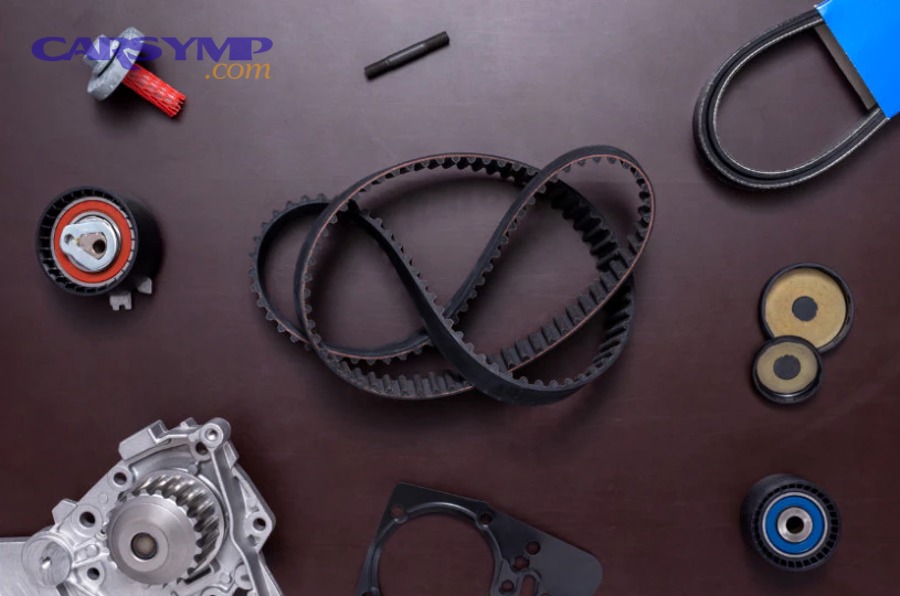
The DIY timing belt cost vs shop cost comparison reveals genuine savings potential. However, the risks of an error on this particular job are categorically higher than almost any other maintenance task a home mechanic might attempt.
How Much Can You Save by Replacing a Timing Belt Yourself?
A DIY timing belt replacement costs approximately $100 to $350 in parts — the price of a quality timing belt kit. Compared to a shop bill of $500 to $2,000, the savings range from $350 to over $1,600 depending on the vehicle. For high-cost vehicles like European luxury cars, the DIY savings can be even more dramatic.
However, the true cost of DIY includes factors that don’t appear on a parts receipt:
- Specialty tools (camshaft locking/alignment tools, crankshaft pulley holders): $50 to $300, and often vehicle-specific
- Time investment: Most home mechanics spend an entire weekend on a first-time timing belt replacement
- Error risk: A single misaligned tooth on reassembly can cause immediate engine damage upon startup
When calculating DIY savings, factor in the full tool cost — especially if you won’t reuse those tools on future jobs.
What Tools Do You Need for a DIY Timing Belt Replacement?
Timing belt replacement requires several specialized tools beyond a standard home mechanic’s toolkit. The most critical are:
- Camshaft alignment/locking tools: These hold the camshaft(s) in their correct position while the belt is removed and reinstalled. They are often vehicle-specific and cannot be improvised.
- Crankshaft pulley holder: Required to prevent rotation while loosening the crankshaft bolt, which is typically torqued to 130–200 ft-lbs.
- Torque wrench: Essential for reassembly — every bolt on the timing assembly has a precise torque specification. Under-torquing causes loosening; over-torquing can damage threads or components.
- Tension gauge (for some vehicles): Required to set belt tension to the manufacturer’s specification.
These tools are available from automotive tool suppliers and some auto parts stores, but the total investment can be $150 to $400 for a full set, which significantly reduces the net savings on a one-time job.
Who Should Avoid DIY Timing Belt Replacement?
Home mechanics without prior experience in engine disassembly should not attempt a DIY timing belt replacement on their daily driver. More specifically:
- Owners of vehicles with transverse engine layouts (most front-wheel-drive cars) face the most difficult access scenarios, requiring removal of the right-side engine mount on some models
- Owners of interference engines face the highest risk: a single error in timing alignment can destroy the engine on first startup
- First-time DIYers should consider practicing on a non-running donor vehicle or at a minimum watching multiple vehicle-specific video tutorials before attempting the job
For drivers who are mechanically confident, have completed similar engine work before, and own their own specialty tools, DIY is a genuinely viable option. For everyone else, the car service cost of a professional shop is the safer investment.
What Happens If You Never Replace Your Timing Belt — And What Does That Cost You?
Failing to replace your timing belt on schedule doesn’t save money — it defers a $500 to $2,000 service while accepting the risk of a $3,000 to $8,000 engine repair, or a complete engine replacement that may exceed the vehicle’s market value.

This section addresses the inverse of the cost-savings discussion: what happens when the timing belt is not replaced, and what the financial and mechanical consequences look like in practice.
What Is an Interference Engine and Why Does It Make Belt Failure More Dangerous?
An interference engine is an engine design in which the pistons and valves share the same space in the cylinder at different points in the combustion cycle. Specifically, the pistons travel high enough in the cylinder that they would physically collide with open valves if the camshaft and crankshaft ever fell out of synchronization — which is exactly what happens when a timing belt breaks or slips.
In a non-interference engine, the pistons and valves never occupy the same space simultaneously. Belt failure in these engines causes the engine to stall and stop, but no internal collision occurs. The repair is limited to belt replacement.
Common vehicles with interference engines include:
- Honda Civic, Accord, CR-V, Pilot (most models)
- Subaru Impreza, Forester, Outback (EJ-series engines)
- Volkswagen Golf, Jetta, Passat (most TDI and TSI engines)
- Mitsubishi Eclipse, Galant, Outlander
- Audi A4, A6 (most four-cylinder and V6 engines)
If you own any of these vehicles, the timing belt is not optional maintenance — it is the single most critical scheduled service your vehicle requires.
How Much Does It Cost to Repair Engine Damage from a Broken Timing Belt?
Engine damage from a broken timing belt on an interference engine can range from moderate to catastrophic depending on engine speed at the moment of failure. The following table outlines typical repair costs following a timing belt failure event, illustrating the dramatic financial difference between proactive replacement and reactive repair.
| Damage Type | Estimated Repair Cost |
|---|---|
| Bent valves only (minor interference) | $800 – $2,000 |
| Bent valves + damaged valve seats | $1,500 – $3,500 |
| Bent valves + damaged pistons | $2,500 – $5,000 |
| Complete engine rebuild | $3,000 – $6,000 |
| Engine replacement (used) | $2,500 – $5,000 |
| Engine replacement (new/reman) | $5,000 – $10,000+ |
The figures above make the financial argument for proactive timing belt replacement impossible to ignore. A $700 timing belt service that prevents a $4,000 engine rebuild delivers a return on investment that no other maintenance item can match.
Does Car Insurance or Warranty Cover Timing Belt Failure?
Standard auto insurance policies do not cover mechanical failures, including timing belt failure. Comprehensive coverage protects against damage from external events (weather, theft, collision), not internal mechanical wear or maintenance neglect.
Regarding the Warranty on timing belt jobs: extended warranties vary significantly by plan type. Bumper-to-bumper extended warranties — which cover most mechanical systems — typically do cover timing belt failure if the belt breaks prematurely while still within a covered mileage window. Powertrain-only warranties may cover the resulting engine damage even if they don’t cover the belt itself. However, most warranty providers require documented proof that the belt was replaced on schedule; failure to maintain records may result in a denied claim.
New vehicle manufacturer warranties typically do not cover timing belt replacement as a scheduled maintenance item, though some manufacturers (Toyota and Honda, for example) include it under their complimentary maintenance programs for the first 2 to 3 years of ownership. Always review your specific warranty documentation before assuming coverage.
How Is Timing Belt Replacement Cost Different from Timing Chain Replacement Cost?
Timing belt replacement and timing chain replacement differ in frequency, urgency, and cost profile. Specifically:
- Timing belts require scheduled replacement every 60,000 to 100,000 miles and cost $400 to $2,000 per service. They are made of reinforced rubber and wear predictably over time.
- Timing chains are made of metal and are designed to last the lifetime of the engine in most cases — typically 150,000 to 300,000+ miles. However, when they do fail or stretch, the repair is significantly more complex and expensive, often running $1,500 to $3,500 or more.
The following vehicle brands predominantly use timing chains in their modern lineups, meaning no scheduled belt replacement is required:
- Toyota (most models from 2009 onward)
- Ford (EcoBoost and most current engines)
- General Motors/Chevrolet (most current V6 and V8 engines)
- BMW (most current models)
Meanwhile, Honda, Subaru, and Mitsubishi continue to use timing belts in many of their most popular models as of recent production years. If you are unsure which system your vehicle uses, your owner’s manual or a quick VIN lookup through your dealership’s service department will provide a definitive answer. Knowing this detail is the first step in building an accurate long-term maintenance budget for your vehicle.


