


Evaluating a timing belt service quote correctly can be the difference between a smart maintenance decision and an expensive mistake. A fair, complete quote should clearly itemize labor costs, parts, warranty terms, and every component included in the service scope — not just the belt itself. Car owners who know what to look for are far less likely to overpay, accept incomplete work, or face a repeat teardown just months later. This guide gives you the exact framework to assess any quote with confidence.
Understanding what a timing belt service quote actually covers is the first step in that process. Many drivers receive a number from a shop and accept it without knowing whether it reflects the full scope of the job or a stripped-down version designed to appear affordable. The difference between a complete kit replacement and a belt-only swap can mean hundreds of dollars in short-term savings — and thousands in long-term consequences.
Beyond the line items, several external factors legitimately push the timing belt replacement cost higher or lower, including your vehicle’s engine layout, your geographic location, the type of shop you choose, and the quality of parts used. Recognizing these variables lets you compare quotes on equal footing rather than being misled by a low number that excludes critical components or uses inferior parts.
Red flags in a timing belt quote are often subtle — a missing water pump recommendation, no mention of tensioner replacement, or vague lump-sum pricing with no itemization. Knowing which questions to ask and what answers should sound like puts you firmly in control of the service conversation. Next, let’s work through each of these evaluation layers in detail so you can approach any shop with clarity and confidence.
What Is a Timing Belt Service Quote?
A timing belt service quote is a cost estimate — categorized as a multi-component repair proposal — that details the labor, parts, and associated services required to replace a vehicle’s timing belt system within manufacturer-specified intervals.
Specifically, this type of quote is fundamentally different from a standard auto repair estimate because it involves a system, not a single part. Understanding this distinction matters enormously when evaluating what you’ve been handed.
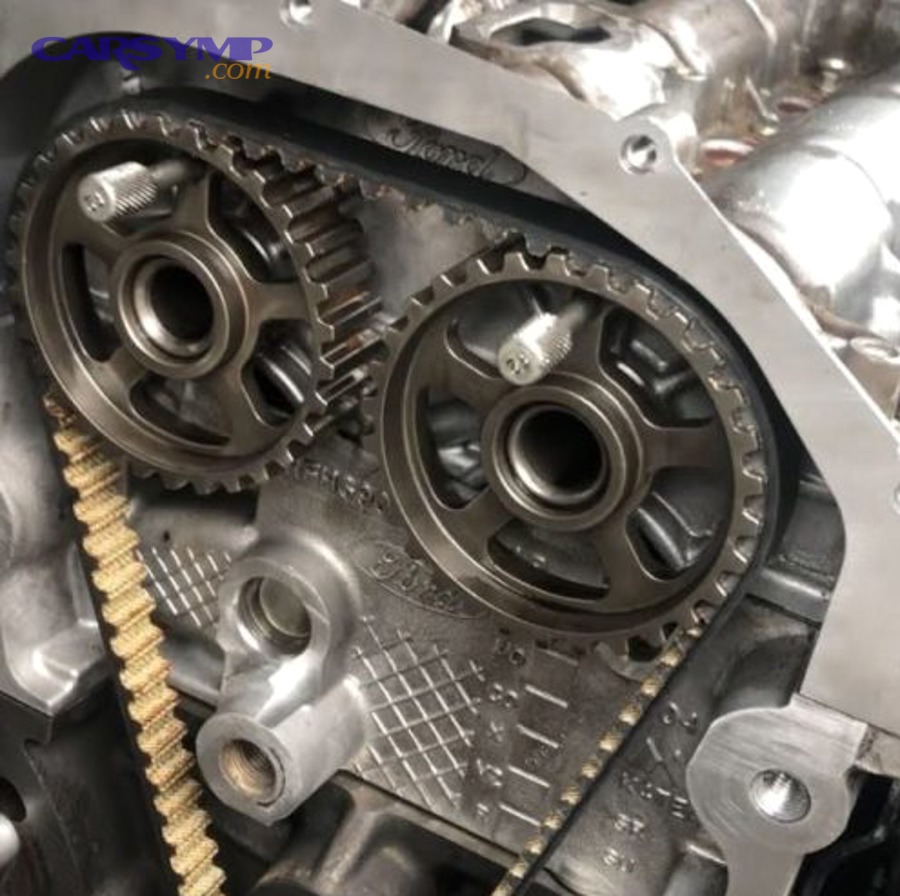
The timing belt itself is a toothed rubber belt that synchronizes the rotation of the crankshaft and camshaft, ensuring that the engine’s valves open and close at precisely the right moment during each combustion cycle. On interference engines — where pistons and valves occupy overlapping space in the cylinder — a snapped or slipped belt can cause immediate, catastrophic internal damage including bent valves and destroyed pistons. On non-interference engines, the consequences are less severe but still result in a stalled, non-starting vehicle. Because the stakes are this high, a proper service quote should never treat this as a single-part replacement job.
What Components Should a Timing Belt Service Quote Always Include?
There are 5 core components a complete timing belt service quote must always include: the timing belt itself, the belt tensioner, idler pulleys, front engine seals, and a recommendation on the water pump — based on whether it is belt-driven.
Each of these components shares the same labor window. Because the technician must disassemble the same area of the engine to access all of them, replacing only the belt while leaving worn tensioners and idlers in place is a false economy. Tensioners and idler pulleys contain bearings that degrade at a similar rate to the belt itself. If a bearing seizes or collapses after a belt-only replacement, the new belt can jump timing or snap entirely — requiring the entire teardown to be performed again at full cost.
The table below summarizes the standard components a complete quote should include and explains why each matters:
| Component | Why It Must Be Included |
|---|---|
| Timing Belt | Core replacement item; degrades with heat, age, and mileage |
| Tensioner | Maintains correct belt tension; bearing failure causes belt slip |
| Idler Pulleys | Guide the belt path; worn bearings cause misalignment or snap |
| Front Cam/Crank Seals | Prevent oil leaks onto the new belt; oil contamination destroys belts rapidly |
| Water Pump (if belt-driven) | Shares the same labor window; neglecting it risks repeat teardown |
| Coolant Flush | Recommended when water pump is replaced to maintain system integrity |
| Accessory/Serpentine Belt | Often accessed during the same service; practical to replace simultaneously |
An itemized quote that lists each of these components by name — with individual part costs and an associated labor figure — is the baseline standard every car owner should expect from a reputable shop.
What Is the Difference Between a Belt-Only Quote and a Full Timing Belt Kit Quote?
A belt-only quote covers just the rubber timing belt and its installation labor, while a full timing belt kit quote covers the belt, tensioner, idler pulleys, and related seals — making the kit quote the far more cost-effective and reliable long-term investment.
The upfront price difference between the two is typically $100 to $250 in parts. However, if a tensioner bearing fails six months after a belt-only replacement, the shop must perform the exact same multi-hour disassembly process again — and this time you pay full labor rates a second time. On most vehicles, labor alone runs between $300 and $600. The “savings” from a belt-only quote are therefore illusory in any scenario where the tensioners and idlers are not also new.
The one context in which a belt-only quote may be acceptable is a non-interference engine with low remaining mileage before the vehicle is retired or sold. In all other scenarios — especially on interference engines and vehicles over eight years old — the full kit is the correct and responsible service scope.
What Are the Key Factors That Affect a Timing Belt Service Quote?
There are 4 primary factors that affect a timing belt service quote: vehicle type and engine access complexity, the ratio of labor hours to parts cost, the type of shop performing the service, and the geographic region where the work is done.

To better understand why two quotes for the same belt can differ by $500 or more, it helps to examine each cost factor: engine layout and labor hours, parts tier, shop category, and location — individually.
How Do Vehicle Type and Engine Design Affect the Quote?
Vehicle type and engine design directly affect the quoted labor hours because they determine how many components must be removed before a technician can physically access the timing belt cover — and those hours are the single largest cost driver in any timing belt service.
More specifically, a compact front-wheel-drive sedan with a transversely mounted four-cylinder engine typically offers straightforward access to the timing system, resulting in 3 to 4 labor hours. By contrast, a transversely mounted V6 in a minivan or a longitudinally mounted engine in a larger SUV or truck may require the removal of engine mounts, cooling fans, the radiator, or multiple accessory systems before the belt cover is even reachable — pushing labor time to 6 hours or more.
Imported vehicles present an additional variable: parts availability. OEM components for Japanese, German, or Korean models may carry a price premium or require longer lead times from overseas suppliers, which some shops factor into their quoted timeline and cost. When evaluating your quote, always ask the shop to confirm the specific labor hours they are charging and cross-reference that figure against the factory flat-rate time for your exact vehicle make, model, and engine code.
How Much of a Timing Belt Quote Is Labor vs. Parts?
In a typical timing belt service quote, labor accounts for 55% to 70% of the total cost, while parts make up the remaining 30% to 45% — a ratio that explains why labor hour accuracy is the most important variable to verify.
For most passenger vehicles, a full timing belt kit including the belt, tensioner, idler pulleys, and seals costs between $100 and $350 in parts. Labor, at shop rates typically ranging from $90 to $180 per hour, adds $270 to $900 on top of that — depending on hours required and regional rate. The Water pump add-on cost and value equation is particularly favorable: because the pump is accessed during the same disassembly, adding it to the service typically costs only $100 to $200 more in parts, with minimal additional labor. Skipping it, only to have it fail 18 months later, means paying full labor a second time for a job that was already half done.
The table below provides a general cost breakdown for reference:
| Service Component | Typical Cost Range |
|---|---|
| Timing belt kit (belt + tensioner + idlers) | $100 – $350 |
| Labor (3–5 hours at $90–$180/hr) | $270 – $900 |
| Water pump add-on | $100 – $200 additional |
| Coolant flush | $50 – $150 |
| Accessory belt | $25 – $80 |
| Total (full service) | $500 – $2,000+ |
According to RepairPal’s cost estimator data, the national average for a timing belt replacement sits between $882 and $1,285, with labor alone accounting for $584 to $858 of that total — confirming that labor is always the dominant cost variable.
Does It Matter Whether You Choose a Dealer or Independent Shop?
Yes, it does matter — dealerships typically charge 20% to 40% more in labor than independent shops, but they offer manufacturer-backed warranty terms and OEM parts as standard, while independent shops offer more pricing flexibility with variable parts quality.
The choice between the two is not simply about cost. Dealer quotes come with the assurance that technicians are factory-trained on your specific brand, that OEM parts are used by default, and that the Warranty on timing belt jobs is backed by the manufacturer’s service network. For vehicles still under a powertrain warranty or for complex, brand-specific engine designs, the dealer premium may be justified.
Independent shops, however, can match or exceed dealer quality when they use OEM-equivalent parts brands such as Aisin, Gates, INA, or KOYO, and when they offer a comparable warranty — ideally 24 months or 24,000 miles. A reputable independent shop with strong reviews and a clear written warranty is often the better value, provided you confirm parts quality and scope in writing before authorizing the work.
How Do You Know If a Timing Belt Quote Is Fair?
You can determine whether a timing belt quote is fair by checking 3 things: that the price falls within the expected range for your vehicle and region, that the quote is fully itemized with no vague lump sums, and that warranty terms on timing belt jobs are clearly stated in writing.

To better understand what “fair” looks like in practice, the following sub-sections break down exactly what a properly structured itemized quote contains, what warning signs to watch for, and how to compare multiple quotes accurately.
What Should an Itemized Timing Belt Service Quote Look Like?
An itemized timing belt service quote should list every part by name and unit price, state the labor hours and hourly rate separately, and include taxes, fees, and warranty terms — leaving no category as a vague or bundled charge.
For example, a transparent quote should look structurally similar to the following:
| Line Item | Detail | Cost |
|---|---|---|
| Timing Belt (Gates brand) | 1 unit | $85 |
| Tensioner | 1 unit | $65 |
| Idler Pulley x2 | 2 units | $80 |
| Cam Seal / Crank Seal | Kit | $35 |
| Water Pump (Aisin) | 1 unit | $110 |
| Coolant | 1 gallon | $30 |
| Labor | 4.5 hours @ $130/hr | $585 |
| Taxes & Shop Fees | — | $48 |
| Total | $1,038 | |
| Warranty | 24 months / 24,000 miles | Included |
Any quote that presents a single number without this level of breakdown should be treated with caution. Lump-sum pricing makes it impossible to verify whether the correct parts tier is being used, whether the labor hours are reasonable, or whether the water pump and tensioners are actually included. Always request itemization in writing before authorizing work.
What Are the Red Flags in a Timing Belt Service Quote?
There are 5 major red flags in a timing belt service quote: a belt-only scope, suspiciously low labor hours, no warranty offered, missing water pump recommendation on a belt-driven pump vehicle, and no mention of recognized OEM-equivalent parts brands.
Each of these signals a potential problem:
- Belt-only scope with no tensioners or idlers listed: This is the most common red flag. It creates an artificially low price that will likely result in a second full teardown within 1 to 3 years.
- Labor hours that are too low: If the factory flat-rate for your vehicle is 5 hours and a shop quotes 2.5, ask specifically how they intend to complete the job in that time. Shortcuts in timing belt installation — particularly improper tension — can throw off engine timing entirely.
- No written warranty: Any shop confident in its work will back it in writing. Absence of a warranty on timing belt jobs is a serious concern.
- No water pump discussion on a belt-driven pump vehicle: A competent technician always addresses the water pump. If they don’t mention it, they may not know your vehicle’s configuration — or they’re hoping you won’t ask.
- Generic or off-brand parts with no named manufacturer: The difference between an Aisin kit and an unbranded kit from an unknown supplier can be 50,000 miles of reliable service life.
How Do You Compare Multiple Timing Belt Quotes Accurately?
Comparing multiple timing belt quotes accurately requires normalizing all quotes to the same service scope, then comparing labor hours against factory flat-rate, parts brand tier, and warranty terms — rather than comparing final dollar figures directly.
A $750 quote and a $1,050 quote are not directly comparable if the first is belt-only and the second is a full kit replacement including the water pump and coolant flush. To compare them fairly, you must first adjust the $750 quote to the same scope — adding tensioner, idler, water pump, and coolant costs. In most cases, you’ll find the two quotes are nearly identical in real-value terms, or that the cheaper quote actually becomes more expensive once scope is equalized.
Use the following comparison checklist when evaluating quotes side by side:
- Scope match: Does every quote include the same components?
- Labor hours: Compare each quoted hour figure against the manufacturer’s flat-rate book time
- Parts brand: Is a named OEM-equivalent brand (Gates, Aisin, INA) specified?
- Warranty terms: Does each shop offer at least 24 months / 24,000 miles?
- Total with tax and fees: Only compare totals after confirming scope and parts quality are equivalent
What Questions Should You Ask Before Accepting a Timing Belt Quote?
There are 4 essential questions every car owner should ask before accepting a timing belt quote: what parts brand is being used, what the complete service scope includes, how the quoted labor hours compare to factory flat-rate, and what the exact warranty terms are in writing.
These questions shift the dynamic of the service conversation from passive acceptance to informed decision-making — and they signal to the shop that you are an engaged customer who cannot easily be oversold or undersold.
Should You Ask About Parts Brand and Quality in a Timing Belt Quote?
Yes, you absolutely should ask about parts brand and quality in a timing belt quote, because the brand tier of the timing belt kit directly affects how long the new components will last and whether the shop’s warranty claim is substantively backed.
Specifically, OEM-equivalent brands — Aisin (used as OEM supplier for Toyota and Honda), Gates (widely used OEM supplier for European and domestic engines), INA (OEM supplier for many German vehicles), NTN, and KOYO — represent the highest tier of aftermarket parts quality. These brands manufacture components to the same specifications as the parts that came on your vehicle from the factory. The cost difference between a named OEM-equivalent kit and an unbranded aftermarket kit is typically $50 to $150 — a small premium that extends reliable service life by tens of thousands of miles.
Off-brand kits sourced from unknown suppliers carry real failure risks, particularly in tensioner bearing quality and belt tooth composition under sustained heat. When a shop cannot or will not name the parts brand they intend to use, that silence is itself an answer. According to automotive repair data published on carsymp.com, using OEM-equivalent brands rather than generic alternatives is one of the most consistent predictors of a long-lasting timing belt service outcome.
How Do You Confirm the Full Scope of Work in a Timing Belt Quote?
Confirming the full scope of a timing belt quote requires asking the shop to verify 7 specific line items in writing: the timing belt, tensioner, idler pulleys, front seals, water pump status, coolant condition, and accessory belt — and to confirm whether your engine is interference or non-interference.
More specifically, the interference vs. non-interference classification is a critical piece of information that shapes how urgently certain components must be replaced. On interference engines, any timing failure — even a tensioner bearing collapse — can cause immediate valve-to-piston contact and destroy the engine. On non-interference engines, the consequences are less immediate, though still serious. A shop that cannot readily tell you which type of engine your vehicle has should not be your first choice for a timing system job.
Use this verbal checklist when speaking with any service advisor or technician:
- “Is my engine interference or non-interference?”
- “Does this quote include the tensioner and idler pulleys, or just the belt?”
- “Is my water pump belt-driven, and if so, are you recommending it be replaced?”
- “What parts brand are you using for the kit?”
- “What is the warranty on both parts and labor, and is it in writing?”
- “How many labor hours are you quoting, and how does that compare to book time for my vehicle?”
- “Does the final price include taxes and all shop fees?”
Getting answers to all seven points in writing — either on a written estimate or a confirmed work order — removes ambiguity and protects you against scope creep, surprise charges, or incomplete work being passed off as a full service.
What Else Should Car Owners Know About Timing Belt Service?
Beyond evaluating quotes, there are 4 additional areas car owners should understand about timing belt service: the water pump bundling decision, the difference between timing belt and timing chain service quotes, quote evaluation for specialty or high-mileage vehicles, and the possibility of supplying your own parts.
These topics expand the semantic context of the evaluation process and address secondary queries that frequently accompany the primary search intent.
Is It Worth Replacing the Water Pump at the Same Time as the Timing Belt?
Yes, replacing the water pump at the same time as the timing belt is almost always worth it on vehicles where the water pump is driven by the timing belt, because the labor overlap makes it one of the best-value add-ons in all of automotive maintenance.
The water pump add-on cost and value case is straightforward: because the technician must already remove the timing belt cover, tensioner, and surrounding components to access the belt, the additional time required to swap the water pump while the system is open is typically less than one hour. The pump itself costs $80 to $200 depending on the vehicle. Declining the water pump replacement to save $100 to $200 today risks a pump failure within 1 to 3 years — at which point the entire timing system must be disassembled again, and you pay full labor rates for a job that was already half-completed. The math consistently favors replacement.
The one exception is a recently replaced water pump with verified documentation. If service records confirm the pump was replaced within the last 30,000 miles or three years, deferring it is reasonable. In all other cases, accept the water pump recommendation as the correct, professionally sound advice that it is.
How Is a Timing Belt Service Quote Different from a Timing Chain Service Quote?
A timing belt service quote focuses on rubber belt, tensioner, and pulley replacement at a scheduled interval, while a timing chain service quote addresses metal chain guides, tensioners, and oil system components — typically only when wear symptoms appear — making chain service quotes generally higher, less predictable, and more variable in scope.
The key difference comes down to maintenance philosophy. Timing belts are scheduled-replacement items with defined intervals — commonly every 60,000 to 105,000 miles or every 7 to 10 years, whichever comes first. Timing chains, by contrast, run in engine oil and are designed to last the life of the engine in many cases. When timing chains do require service, however, the job is more involved: chain guides and plastic tensioner components can shed debris into the oil system, and guide replacement often requires significant engine disassembly.
Before requesting or evaluating any timing system quote, verify whether your vehicle uses a belt or a chain by checking your owner’s manual or confirming via your VIN with a dealer parts department. Many modern engines — particularly those from Honda, Ford, and General Motors — have transitioned to timing chains entirely, and quoting a timing belt service for a chain-equipped engine is a red flag in itself.
How Do You Evaluate a Timing Belt Quote for a Specialty or High-Mileage Vehicle?
Evaluating a timing belt quote for a specialty or high-mileage vehicle requires expecting a broader service scope, longer labor hours, and potentially higher parts costs than standard — because these vehicles often require additional inspections and components that are genuinely justified by age and engineering complexity.
For specialty vehicles — such as the Acura NSX, Subaru WRX STI, or various European sports cars — timing belt service is a significantly more labor-intensive job than on mainstream passenger vehicles. Book time on an NSX, for example, exceeds 12 hours, and OEM parts may be sourced from Japan with lead times of several weeks. Quotes for these vehicles in the range of $3,000 to $6,000 or more are not necessarily inflated; they reflect legitimate parts cost, specialized labor, and extended shop time.
For high-mileage vehicles of any type — those with over 150,000 miles — a responsible shop will also recommend inspecting and potentially replacing cam seals, crank seals, valve cover gaskets, and the thermostat during the same service. These recommendations are appropriate, not opportunistic, because oil leaks from degraded seals onto a fresh timing belt can destroy the new belt within months. Evaluate these add-ons by asking: “If this seal leaks onto the new belt, what does that cost to fix?” In most cases, the answer justifies the additional scope at the time of service.
Can You Supply Your Own Parts to Reduce a Timing Belt Service Quote?
Yes, you can supply your own parts for a timing belt service in some cases, but this approach carries significant risk — many reputable shops will refuse customer-supplied parts or will void the labor warranty if non-shop-sourced components are used.
The potential savings are real: a full OEM-equivalent timing belt kit including the water pump can be sourced from suppliers like RockAuto for $200 to $350, compared to shop retail pricing of $300 to $600 for the same components. In that scenario, supplying your own parts could save $100 to $250 or more on parts alone.
However, the trade-offs are important to weigh carefully:
- Warranty void: Most shops will not warranty their labor if a customer-supplied part fails, meaning any repeat teardown is entirely at your expense
- Liability refusal: Many professional shops — particularly those with liability insurance requirements — have a blanket policy against installing customer parts
- Parts verification: If you order incorrectly and the shop cannot proceed on the scheduled day, you may face rescheduling fees or lost deposit costs
- Negotiation alternative: A more effective approach is to ask the shop to price-match a specific OEM-equivalent brand rather than sourcing parts yourself — many independent shops will accommodate this when presented with a specific parts number and supplier price
If you pursue this route, confirm the shop’s policy on customer-supplied parts and warranty terms in writing before ordering anything.
Knowing how to evaluate a timing belt service quote is one of the most practical skills a car owner can develop, because timing belt replacement cost can vary by more than $1,000 for identical work depending on scope, parts tier, shop type, and location. The difference between a thorough evaluation and blind acceptance of the first number you receive can be measured not just in dollars, but in engine reliability for the next 80,000 miles. Ask for itemization, verify the scope, check the parts brands, confirm the warranty, and compare at least three quotes before committing — your engine, and your wallet, will benefit from that discipline.