


Warranty coverage on a timing belt job is not a single guarantee — it is a layered system made up of four distinct protections: the parts warranty from the belt manufacturer, the labor warranty from the repair shop, the vehicle manufacturer’s factory warranty, and any extended warranty or vehicle service contract you may hold. Each layer covers different risks, and understanding where one ends and another begins is the difference between walking away fully protected and paying thousands of dollars out of pocket after a belt failure. Most car owners assume that because they just paid for a timing belt replacement, something is backing up that investment. The reality is far more conditional than that.
The confusion runs deep because the word “warranty” gets used loosely at the counter of every repair shop. A shop may say the job is “guaranteed” without specifying whether that guarantee covers the belt itself, the labor to reinstall it, or the engine damage that can follow if something goes wrong. Knowing exactly what your parts warranty covers — and whether it is a belt-only policy or a full parts-and-labor agreement — determines how much financial exposure you carry after leaving the shop.
Your vehicle’s factory or powertrain warranty adds another layer, but it comes with a critical timing problem. Most manufacturer warranties expire at 3 years or 36,000 miles, while timing belts typically aren’t due for replacement until 60,000 to 100,000 miles. By the time your belt actually needs replacing, your factory coverage has almost certainly lapsed. Extended warranties and vehicle service contracts can fill that gap, but only for unexpected failures — not for scheduled maintenance replacements.
Beyond the coverage types themselves, your choice of belt brand, whether you use a full kit or a standalone belt, and the specific terms your shop puts in writing all directly shape your protection. Below, this article breaks down every layer of warranty coverage that applies to a timing belt job, so you can walk into any shop fully informed — and walk out fully protected.
What Is a Timing Belt Job Warranty?
A timing belt job warranty is not one policy but a multi-layered coverage system combining parts warranties, labor guarantees, vehicle manufacturer coverage, and extended service contracts, each protecting a different risk in the same repair.
To better understand how these layers interact, it helps to treat them as a stack — each layer covers what the one above it does not. Most consumer frustration with timing belt claims happens precisely because someone expected one layer to do the job of all four.
What Is Covered Under a Parts-Only Timing Belt Warranty?
A parts-only timing belt warranty covers defects in the physical belt — specifically failures caused by manufacturing flaws in the rubber composite material or the belt’s internal construction. What it does not cover is anything that happens as a consequence of that failure: the labor to remove and reinstall the belt, damage to the water pump, tensioners, idler pulleys, or — most critically — engine damage caused when the belt snaps.
This distinction matters enormously. A large portion of timing belts sold through the automotive aftermarket ship with belt-only warranties, which means:
- The belt is replaced at no cost if a manufacturing defect is proven
- The labor to do the replacement is your expense
- Any engine damage resulting from the failure is entirely your responsibility
- Related components (water pump, tensioner, idler) are not covered even if they contributed to the failure
According to Gates Corporation, one of the leading timing belt manufacturers, numerous aftermarket timing belts do not adhere to OEM specifications and carry only belt-only warranties, leaving both repair shops and vehicle owners exposed to expensive engine repair costs if the belt fails prematurely. The practical advice from industry sources is clear: never accept a belt-only warranty on an interference engine application. The financial risk simply is not worth the few dollars saved at purchase.
What Does a Labor Warranty on a Timing Belt Replacement Cover?
A labor warranty on a timing belt replacement covers the cost of reinstalling the belt if the original installation was performed incorrectly by the shop. In plain terms: if the technician made an error setting timing, used incorrect torque, or failed to properly tension the belt, a reputable shop’s labor guarantee means they redo the work at no charge to you.
However, a labor warranty has important limits that are rarely explained at the counter:
- It does not automatically cover engine damage unless you can prove the shop’s installation error directly caused it
- It typically runs 30 to 90 days at most shops, with some reputable independent shops offering up to 12 months
- It becomes void if you supplied your own parts — most shops will not guarantee labor on customer-supplied components
- It requires the shop’s own parts to have been used for the labor guarantee to apply
The most important action you can take before authorizing any timing belt job is to ask for the labor warranty terms in writing. A verbal “we stand behind our work” carries no legal weight if an engine is destroyed two months after the repair. A written 12-month labor guarantee from a shop using OEM-spec brand-name parts is meaningfully valuable coverage.
Does a Manufacturer or Powertrain Warranty Cover a Timing Belt Job?
Yes, a manufacturer or powertrain warranty can cover a timing belt job, but only under two conditions: the belt must fail due to a proven factory defect, and the vehicle must still be within the active warranty mileage or time window when the failure occurs.

The practical problem, however, is that these two conditions are rarely both true at the same time. To better understand why, it helps to look at each warranty type separately.
Is a Timing Belt Covered Under a Powertrain Warranty?
Yes, timing belts are generally classified as powertrain components and are included in powertrain warranty coverage during the period the warranty is active. The powertrain warranty typically lasts five years or 60,000 miles, whichever comes first, and covers components directly involved in generating and transmitting power to the wheels — which includes the timing belt as a core engine synchronization component.
The critical overlap problem is this: the powertrain warranty’s mileage ceiling and the timing belt’s first recommended replacement interval arrive at almost exactly the same point on the odometer. Most manufacturers recommend the first timing belt replacement somewhere between 60,000 and 100,000 miles. By the time that interval arrives, your powertrain warranty has either just expired or is in its final months. The coverage window and the maintenance window barely intersect.
More importantly, scheduled replacement is classified as routine maintenance — not a warranty claim. The warranty exists to cover manufacturing defects and unexpected failures, not the normal wear-and-tear lifespan of a rubber belt. If your belt is due for replacement per the OEM maintenance schedule, the powertrain warranty will not pay for it, regardless of whether the warranty is technically still active.
Does a Manufacturer’s Warranty Cover Engine Damage From a Timing Belt Failure?
Yes — but with significant conditions. If a timing belt fails within the active factory warranty period and the failure is caused by a documented manufacturing defect, the resulting engine damage is typically covered under the manufacturer’s warranty. This is the scenario where warranty coverage pays its highest possible benefit, since engine repair or replacement after a belt failure in an interference engine can cost $3,000 or more.
However, the manufacturer’s warranty will likely deny the engine damage claim if:
- The belt was past its recommended replacement interval and the owner had not serviced it on schedule
- The vehicle was driven recklessly, including excessive off-road use or racing
- The damage was caused by an accident unrelated to belt defect
- The maintenance record does not support compliance with the OEM service schedule
This is why maintaining a documented maintenance record is not just good practice — it is the evidentiary foundation of any future warranty claim. According to ConsumerAffairs, a timing belt replacement could be covered under warranty if the belt fails due to a factory defect, as long as the owner has followed the car’s prescribed maintenance schedule. The moment that condition breaks down, so does the claim.
What Types of Warranty Cover a Timing Belt Job Most Completely?
There are three main types of warranty that together provide the most complete coverage for a timing belt job: a full parts-and-labor belt kit warranty from a major manufacturer, a shop labor guarantee backed by OEM-spec parts, and an extended warranty or vehicle service contract for unexpected premature failure.
Specifically, the combination of all three eliminates nearly every coverage gap a vehicle owner could face. The table below summarizes how each type functions, what it covers, and where its limits lie.
| Coverage Type | What It Covers | Typical Duration | Key Condition |
|---|---|---|---|
| Parts-and-labor belt kit warranty | Belt, related kit components, labor if belt fails | Up to 125,000 miles (registered) | Full kit installed per OEM spec |
| Shop labor guarantee | Reinstallation if shop error caused failure | 30 days – 12 months | Shop-supplied parts used |
| Extended warranty / VSC | Unexpected component failure before replacement interval | Per contract term | Maintenance schedule followed |
| Manufacturer/powertrain warranty | Factory defects within active warranty period | 3yr/36k – 5yr/60k | Belt fails within warranty window |
What Is a Parts-and-Labor Warranty on a Timing Belt Kit?
A parts-and-labor warranty on a timing belt kit is the most comprehensive coverage available for a timing belt job. It means that if the belt or any component within the kit fails prematurely due to a manufacturing defect, the manufacturer will cover both the replacement parts and the labor cost to reinstall them — not just the belt itself.
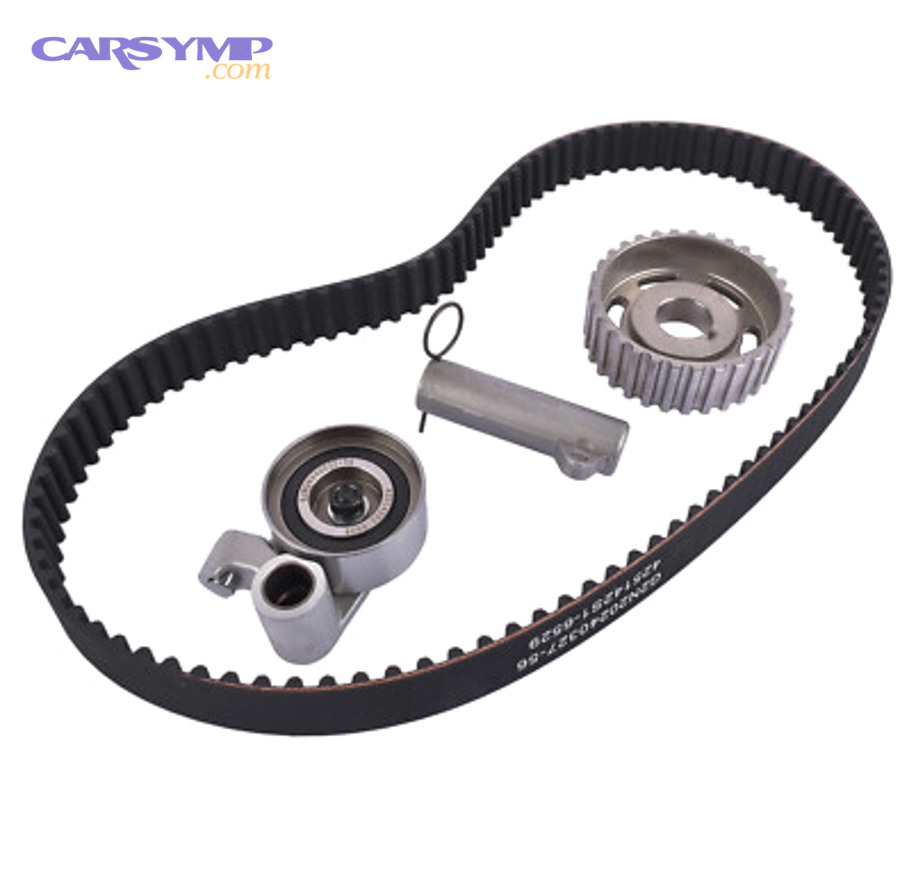
This type of coverage is typically only available when a complete timing belt kit is purchased and installed, rather than a standalone replacement belt. Kits from leading brands like Gates and Dayco include the belt, water pump, tensioner, idler pulleys, and seals — all the components that OEM service instructions identify as requiring simultaneous replacement. Dayco, for example, offers an extended warranty of up to 125,000 miles on its timing belt kit with water pump when the purchase is registered and the kit is installed per OEM specifications including a cooling system flush.
The reason the kit format triggers better warranty coverage is logical: belt manufacturers know that a belt failure is rarely caused by the belt alone. A worn tensioner can cause premature belt failure. A failing water pump bearing can cause catastrophic belt damage. By requiring all components to be replaced together, the manufacturer controls the failure risk across the entire system — and can therefore back the entire system with confidence.
Key advantages of parts-and-labor kit warranties:
- Covers labor costs if the belt fails, not just the belt itself
- Extended mileage coverage that often meets or exceeds the OEM replacement interval
- Protects both the shop and the vehicle owner from comeback claims
- Requires documented installation per OEM spec, which itself reduces failure risk
Does an Extended Warranty or Vehicle Service Contract Cover a Timing Belt Replacement?
An extended warranty or vehicle service contract (VSC) covers a timing belt replacement only when the failure is unexpected and occurs before the belt’s scheduled replacement interval — not when the belt is replaced as a routine maintenance item. This is the foundational distinction that catches most vehicle owners off guard.
Extended warranties are designed to cover breakdowns, not maintenance. If your manufacturer recommends replacing the timing belt at 90,000 miles and it snaps at 45,000 miles for no apparent reason, that is an unexpected mechanical failure — and a VSC that includes powertrain components will typically cover the repair. However, if you are simply replacing the belt because it has reached its recommended service interval, no extended warranty will pay for it, any more than it would pay for an oil change.
The process for using a VSC for an unexpected timing belt failure is straightforward but must be followed in order:
- Do not authorize the repair before contacting your VSC provider
- Call the provider first to report the failure and get pre-authorization
- Allow the shop to communicate directly with the VSC claims adjuster
- Keep all documentation — the repair order, the failed belt, and any diagnostic records
According to Endurance Warranty, if a timing belt or chain fails while the vehicle is in motion, it can cause catastrophic damage that may result in total engine failure — and having an extended warranty in place before that moment is the only way to transfer that financial risk away from the owner.
What Warranty Should a Repair Shop Provide on a Timing Belt Job?
A reputable repair shop should provide a minimum 90-day labor warranty on a timing belt job, with the most trustworthy shops offering 12 months or more when using major-brand OEM-specification parts. This is not a legal requirement in most states, but it is an industry standard that separates professional shops from those cutting corners.
The structure of a shop warranty on a timing belt job typically works as follows:
- Shop-supplied parts: full labor warranty applies — if a part the shop installed fails, they reinstall at no cost within the warranty period
- Customer-supplied parts: most shops will not warranty labor, since they cannot control part quality
- OEM or major-brand parts (Gates, Dayco, AISIN): shop warranty is strongest, as these brands back their parts with their own manufacturer warranties, reducing the shop’s exposure
- Generic or no-name parts: some shops will refuse the job entirely, others will do it without any labor warranty
The most important step any vehicle owner can take is to request the warranty terms in writing before the technician begins work. Ask specifically: “Does your labor warranty cover engine damage if the belt fails during the warranty period?” The answer — and whether it is in writing — tells you everything about the shop’s confidence in their work.
The Average timing belt replacement cost ranges between $884 and $1,284 according to ConsumerAffairs, making this one of the more significant maintenance expenses a vehicle owner faces. At that price point, insisting on written warranty documentation is not excessive — it is prudent.
How Does Parts Brand Choice Affect Warranty Coverage on a Timing Belt Job?
OEM parts win on warranty credibility for in-warranty vehicles, major aftermarket brands like Gates and Dayco are best for out-of-warranty vehicles due to their extended kit warranties, and generic no-name belts offer the weakest protection and should be avoided on any interference engine application.
The brand of timing belt installed is not merely a quality consideration — it directly determines the scope of warranty coverage available to you. Understanding the difference between these three tiers is essential to making an informed decision when discussing timing belt kit vs. belt-only pricing with your shop.
OEM vs. Aftermarket Timing Belt: Which Offers Better Warranty Protection?
OEM timing belts win on warranty credibility for vehicles still covered by a manufacturer or powertrain warranty. Aftermarket brands from Gates and Dayco offer comparable or superior extended coverage for out-of-warranty vehicles, particularly when a full kit is installed. Generic belts lose in virtually every warranty comparison.
Here is how the three tiers break down in practice:
OEM Timing Belts
- Manufactured to exact vehicle specifications by the original equipment supplier (often AISIN for Toyota/Lexus applications)
- Backed by the vehicle manufacturer’s warranty terms during the active warranty period
- Best choice when the vehicle is still within the factory warranty window
- Typically more expensive — dealer vs. independent timing belt pricing reflects this premium
Major Aftermarket Brands (Gates, Dayco)
- Meet or exceed OEM specifications for materials and dimensional tolerances
- Offer documented extended warranties, especially on full kit purchases
- Dayco’s 125,000-mile kit warranty and Gates’ OEM-replacement-interval warranty are the strongest aftermarket coverage options available
- Best choice for out-of-warranty vehicles where extended mileage coverage matters more than brand-name dealer alignment
- Average timing belt replacement cost is often lower at independent shops using these brands vs. dealerships
Generic / No-Name Belts
- Frequently do not meet OEM specifications for belt composition or dimensional accuracy
- Typically carry belt-only warranties with no labor coverage and limited mileage terms
- Represent the highest-risk option, particularly in interference engine vehicles where belt failure destroys the engine
- The short-term savings on timing belt replacement cost are entirely negated if the belt fails and no meaningful warranty is in place
According to Gates Corporation, installing a belt without a complete parts-and-labor warranty leaves repair shops at risk for expensive engine repairs — a warning that applies equally to vehicle owners who authorize belt-only part installations.
What Warranty Conditions Can Void Coverage on a Timing Belt Job?
Warranty coverage on a timing belt job can be voided by improper installation, skipping required components, contamination from oil or coolant, and failure to follow OEM service instructions — conditions that apply to both parts manufacturer warranties and shop labor guarantees.
Understanding these voiding conditions before the job begins is the most underutilized form of consumer protection available. The following table outlines the most common voiding conditions by warranty type:
| Warranty Type | Common Voiding Conditions |
|---|---|
| Belt manufacturer (Gates, Dayco) | Incorrect torque on tensioner, missing kit components, cooling system not flushed, belt contaminated with oil or antifreeze |
| Shop labor guarantee | Customer-supplied parts, post-repair tampering, damage from unrelated accident, non-standard driving conditions |
| Extended warranty / VSC | Failure to follow OEM maintenance schedule, belt replaced late past the recommended interval |
| Manufacturer/powertrain warranty | Reckless driving, off-road use, failure to service at OEM intervals, accident-caused damage |
The most preventable of these voiding conditions is skipping components. When a shop replaces only the timing belt and leaves the original tensioner, idler, and water pump in place, it is a common and documented cause of premature belt failure. If the belt then fails and the manufacturer inspects the claim, finding an original tensioner or water pump still installed will void the warranty — because the failure was foreseeable and caused by incomplete installation, not a product defect.
This is precisely why the full-kit installation model exists, and why both Gates and Dayco tie their strongest warranties to kit purchases rather than standalone belt replacements.
What Else Should You Know to Protect Yourself When Getting a Timing Belt Job?
Beyond understanding the four layers of coverage, protecting yourself on a timing belt job requires knowing your state’s legal rights, recognizing whether your engine type creates elevated risk, understanding exactly how to file a warranty claim, and distinguishing timing belt warranty logic from timing chain warranty logic — four factors that most vehicle owners never consider until after something goes wrong.

Do State Consumer Protection Laws Require Shops to Warranty Timing Belt Work?
Not all states legally require repair shops to provide a warranty on timing belt labor, but most states enforce an implied warranty of workmanship that can hold shops accountable for installation errors even when no written guarantee was provided.
California is the most well-documented example: the Bureau of Automotive Repair requires all shops to provide written repair estimates that the customer must authorize, and the implied warranty of workmanship under California law means that a shop is responsible for repairs performed negligently, regardless of whether a formal warranty was issued. Similar protections exist in other states, though the specific terms vary significantly.
The practical steps for every vehicle owner, regardless of state:
- Visit your state attorney general’s website or consumer affairs division to look up auto repair warranty requirements
- Always request a written repair order that includes parts used, labor performed, and any warranty terms offered
- Document the shop’s verbal statements about guarantees — follow up with an email confirming what was discussed
- Keep all receipts, including the belt kit packaging that shows the manufacturer’s warranty terms
Does Interference Engine Design Change the Stakes of a Timing Belt Warranty?
Yes — interference engine design dramatically raises the financial stakes of any warranty gap on a timing belt job, because a belt failure in an interference engine does not merely strand you; it destroys the engine entirely.
In a non-interference engine, if the timing belt snaps, the engine stops running but the pistons and valves do not physically collide. The repair is costly but limited to the belt replacement itself. In an interference engine, the pistons and valves share the same physical space and are kept apart only by the precise synchronization the timing belt maintains. When that belt snaps:
- Pistons collide with open valves at high speed
- Valves bend or break
- Pistons can crack or deform
- The engine block itself may be damaged
- Total engine replacement becomes the most likely outcome, often costing $3,000 to $6,000 or more
For owners of interference-engine vehicles — which include most modern Honda, Toyota, Volkswagen, Subaru, and Mitsubishi models — the decision between a belt-only warranty and a full parts-and-labor kit warranty is not a minor cost optimization. It is the difference between a manageable parts replacement claim and a total engine loss with no recourse.
The recommendation for interference-engine owners is unambiguous: always install a complete timing belt kit from a major brand with a documented parts-and-labor warranty, and always confirm the shop’s labor guarantee in writing before the job begins.
How Do You File a Warranty Claim After a Timing Belt Fails?
Filing a warranty claim after a timing belt fails involves three distinct processes depending on which coverage layer applies — VSC/extended warranty, shop labor guarantee, or parts manufacturer warranty — and each has a specific sequence that must be followed to preserve the claim.
For VSC or Extended Warranty Claims:
- Stop driving the vehicle immediately after any signs of belt failure
- Call your VSC provider before authorizing any repair work — pre-authorization is mandatory
- Have the vehicle towed to an authorized repair facility
- Allow the shop to contact the VSC adjuster directly and document the failure
- Retain all repair orders and documentation for your records
For Shop Labor Guarantee Claims:
- Return to the original repair shop as soon as the issue is identified
- Present your original repair order showing the date of service and labor warranty terms
- Request a written inspection report documenting the failure mode
- If the shop disputes the claim, escalate in writing — a certified letter creates a legal record
- If unresolved, file a complaint with your state’s Bureau of Automotive Repair or consumer affairs office
For Parts Manufacturer Warranty Claims (Gates, Dayco, etc.):
- Contact the manufacturer directly using the contact information on the warranty registration or packaging
- Provide your original purchase receipt, installation date, vehicle mileage at installation, and mileage at failure
- Submit the failed belt for inspection — most manufacturers require the physical part to evaluate the claim
- Provide the installation record showing all kit components were installed per OEM spec
The single most common reason warranty claims are denied is lack of documentation. Keeping your repair order, the belt kit packaging, and a copy of your vehicle’s maintenance record is the best preparation for any future claim.
What Is the Difference Between a Timing Belt Warranty and a Timing Chain Warranty?
A timing belt warranty and a timing chain warranty operate on entirely different logic: timing belts are scheduled replacement items with defined warranty intervals tied to their wear cycle, while timing chains are designed as lifetime components covered under powertrain warranty without a scheduled replacement interval.
This distinction reflects the fundamental difference in materials. Timing belts are made from rubber composites that degrade over time through heat, oil exposure, and mechanical stress. They are explicitly designed to be replaced at intervals — and warranties are structured around those intervals. Timing chains, by contrast, are made from steel and are expected to last the full service life of the engine under normal operating conditions and proper lubrication.
The practical warranty implications are significant:
| Factor | Timing Belt | Timing Chain |
|---|---|---|
| Material | Rubber composite | Steel |
| Designed lifespan | 60,000–100,000 miles | Lifetime of engine |
| Scheduled replacement | Yes — required | No — only if failing |
| Warranty structure | Tied to replacement interval | Covered under powertrain warranty |
| Failure type for coverage | Premature failure before interval | Unexpected failure at any mileage |
| Maintenance schedule condition | Must be followed to maintain coverage | Must follow oil change intervals |
For timing chains, an unexpected failure is more clearly categorized as a mechanical breakdown rather than a maintenance item — which makes powertrain warranty claims more straightforward, without the maintenance-schedule caveat that complicates timing belt claims. However, timing chains that fail due to oil starvation from neglected oil changes will face the same maintenance-compliance scrutiny as timing belt claims. The material is different; the principle of maintaining the vehicle properly as a condition of coverage is exactly the same.
In short, the complete protection picture for any timing belt job rests on four things: understanding which warranty layer covers which risk, choosing a full parts-and-labor kit from a reputable brand, getting labor warranty terms in writing from your shop, and knowing your rights under your state’s consumer protection framework before the job begins — not after something goes wrong.