


Skipping oil changes is one of the most damaging habits a car owner can develop — and the timing chain pays the heaviest price. When engine oil degrades and goes unchanged, it loses its ability to lubricate the chain’s pins, rollers, and links. Abrasive particles suspended in dirty oil grind between those components, causing the chain to elongate in a process commonly called “stretch.” Left unchecked, this progression moves from a minor lubrication deficiency to complete engine failure — and every mile driven on dirty oil accelerates that journey.
Recognizing the warning signs of a damaged timing chain can mean the difference between a manageable repair and a catastrophic engine rebuild. A rattling noise on cold startup, a check engine light tied to camshaft position codes, or a sudden loss of engine power are not random problems — they are the measurable consequences of oil neglect working its way through your engine’s most critical synchronization system. Understanding these symptoms gives drivers the window they need to act before the damage becomes irreversible.
The financial reality of timing chain neglect is sobering. A routine oil change costs between $30 and $120. A full timing chain repair, once the system has been damaged by contaminated oil, runs from $370 to over $1,500 — and if the chain fails catastrophically and damages pistons or valves, that figure climbs past $3,500 for a long block engine replacement. The math is not complicated: the cost of prevention is a fraction of the cost of failure.
Preventing timing chain problems with maintenance is not about performing extraordinary service — it is about performing ordinary service on time. Below, this article explains exactly how oil neglect destroys the timing chain, which engines are most at risk, what the warning signs look like in real driving conditions, and how a consistent oil change schedule protects one of the most expensive components inside your engine.
What Is a Timing Chain and Why Does It Depend on Clean Oil?
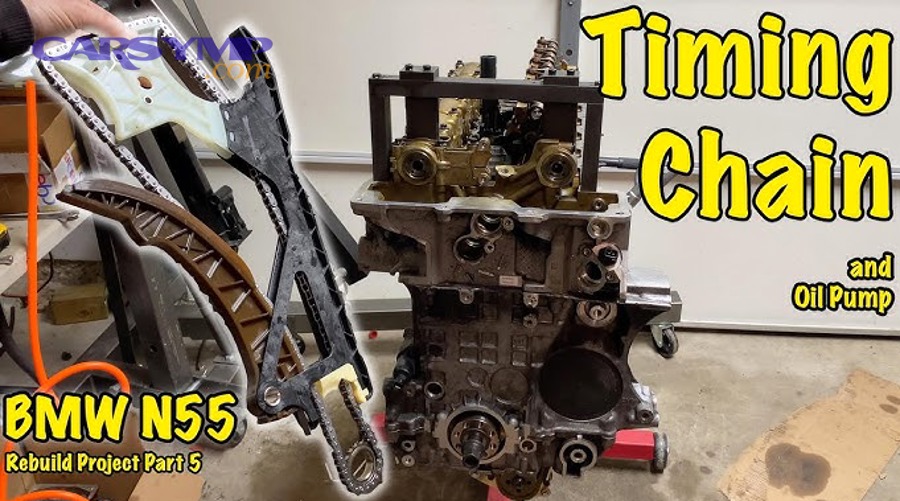
A timing chain is a metal-linked drive component inside the engine that synchronizes the rotation of the crankshaft and camshaft, ensuring the engine’s valves open and close at precisely the right moment during each combustion cycle.
To better understand why oil quality matters so deeply to this component, it helps to recognize where the timing chain lives and what keeps it alive. Unlike an accessory belt on the outside of the engine, the timing chain operates entirely within the engine’s oiled environment — bathed continuously in pressurized engine oil. That oil is not incidental to the timing chain’s function; it is the foundational condition of its survival.
How Does the Timing Chain Work Inside Your Engine?
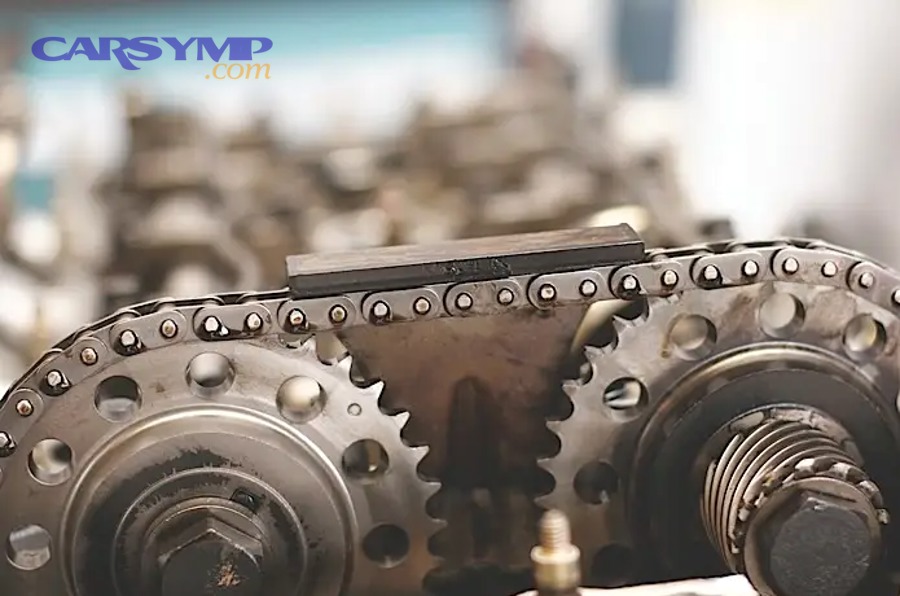
The timing chain is part of an interconnected system that includes the chain itself, a set of sprockets mounted on the crankshaft and camshaft, plastic or metal guides that keep the chain on its path, and a tensioner that maintains the correct amount of tension at all times.
- The crankshaft sprocket drives the chain from below, transferring rotational energy from the pistons upward.
- The camshaft sprocket receives that rotation and uses it to actuate the intake and exhaust valves in precise sequence.
- The chain guides prevent the chain from whipping or sagging under load.
- The tensioner — often hydraulic — pushes against the chain continuously to remove slack, and it relies entirely on oil pressure to function.
The chain’s “pitch” — the measured distance between its link pins — is a critical specification. As pins and rollers wear, that pitch increases. This increase is what engineers and technicians call timing chain stretch, though it is more accurately described as elongation through mechanical wear. Even a small increase in pitch causes the chain to lose synchronization between the crankshaft and camshaft, and that loss of synchronization is where engine problems begin.
Why Is the Timing Chain So Sensitive to Oil Quality?
The timing chain’s sensitivity to oil quality comes down to physics operating at a very small scale. The oil ports that feed the hydraulic tensioner can be as narrow as the tip of a ballpoint pen. Any particle large enough to block that port — and degraded oil carries many such particles — can starve the tensioner of pressure and allow chain slack to develop.
More specifically, worn engine oil no longer holds its suspended contaminants in stable suspension. As the oil degrades, it breaks down into a thicker, more abrasive medium. Metal shavings, combustion byproducts, and oxidized oil compounds accumulate in the fluid. Every time the chain runs through that contaminated oil, those particles work their way between the pins and plates of the chain linkage. The result is accelerated wear at the microscopic level — wear that accumulates with every engine revolution until the chain can no longer maintain accurate timing.
Does Skipping Oil Changes Really Cause Timing Chain Wear?
Yes, skipping oil changes directly causes timing chain wear for at least three well-documented reasons: degraded oil loses lubrication capacity, it carries abrasive particles that physically erode chain components, and it starves hydraulic tensioners of the clean pressure they need to function.

This is not a theoretical concern. Specifically, General Motors, Ford, and Nissan have each acknowledged through technical service bulletins that timing chain stretch in their most affected engine families — the GM High-Feature V6, the Ford Modular 5.4L V8, and the Nissan VQ V6 — is directly attributable to the use of incorrect oil and the failure to change oil at recommended intervals.
How Does Old or Dirty Oil Accelerate Timing Chain Stretch?
Old or dirty oil accelerates timing chain stretch through a mechanical erosion process that operates continuously as long as the engine runs. When oil passes its service life, its additive package — the chemical blend that maintains viscosity, suspends contaminants, and prevents oxidation — begins to break down.
- Viscosity loss means the oil film between metal surfaces becomes thinner, allowing direct metal-to-metal contact between the chain’s pins and roller links.
- Particle accumulation means the oil now carries abrasive material that grinds against those contact points with every revolution of the engine.
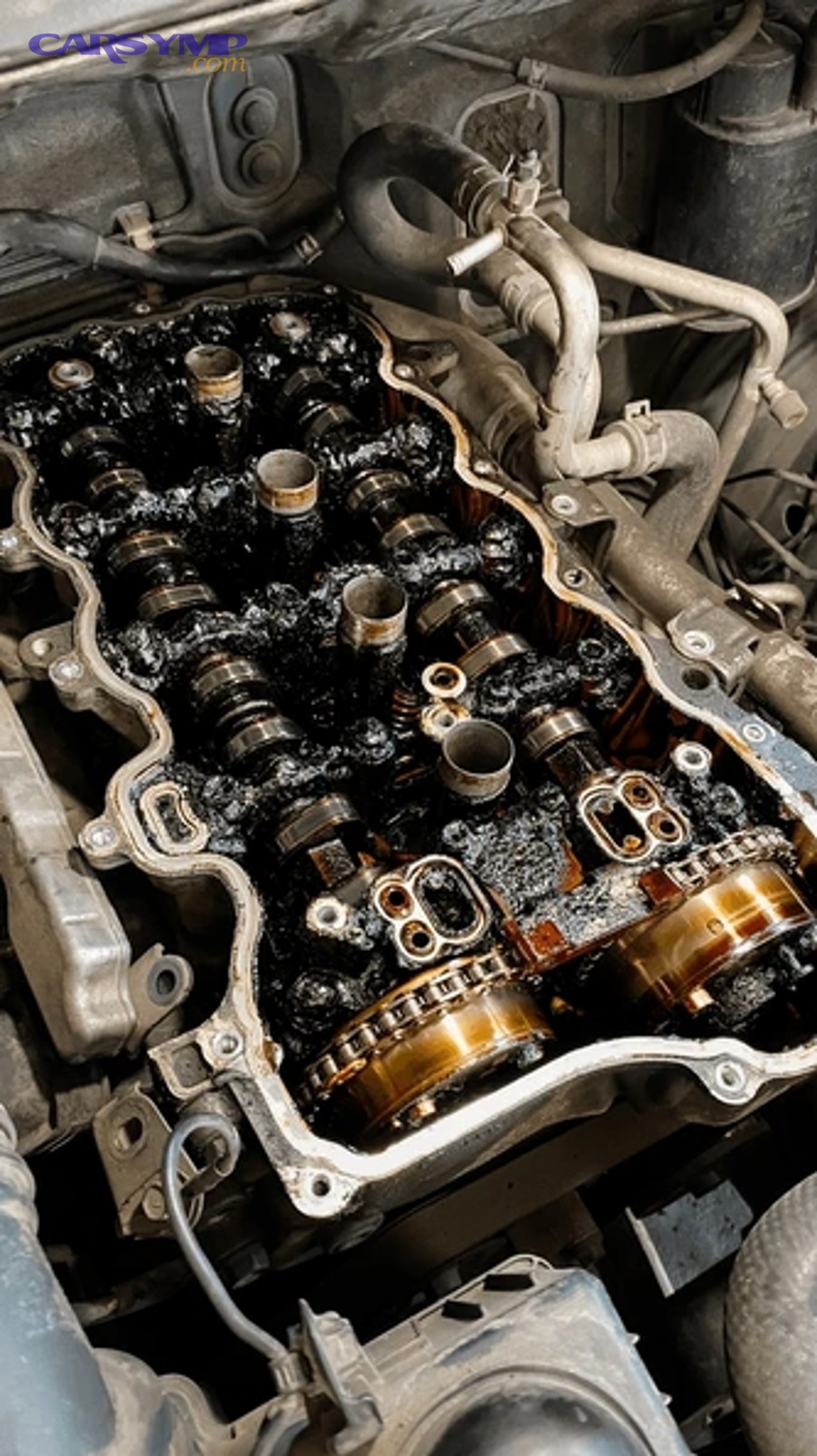
- Oxidation byproducts cause the oil to thicken into a sludge-like consistency that can coat chain guides and tensioner ports, restricting oil flow.
As the chain’s pins and plates wear, the pitch of the chain increases. This elongation shifts the angular relationship between the crankshaft and camshaft position sensors. The engine’s ECU detects that the crankshaft and camshaft positions are no longer correlating correctly and stores fault codes — most commonly P0016 or P0017 — indicating a timing correlation error. If the driver continues operating the vehicle without addressing this, the chain elongates further until the engine experiences significant power loss, rough running, or in severe cases, catastrophic timing failure.
Timing chain stretch symptoms at this stage are no longer subtle. They present as hard starting, a rough idle, multiple cylinder misfires, and a persistently illuminated check engine light that does not clear on its own.
How Long Can You Go Without an Oil Change Before the Timing Chain Is at Risk?
There is no single universal threshold, but the timing chain begins accumulating accelerated wear the moment oil quality drops below its effective service range. For conventional oil, most manufacturers specify changes every 3,000 to 5,000 miles. For full synthetic oil, that interval may extend to 7,500 to 10,000 miles or beyond, depending on the vehicle and operating conditions.
The critical point is that interval extension without chemistry support is where damage begins. An engine running conventional oil at 8,000 miles without a change is operating with oil that has lost a significant portion of its additive protection. At 12,000 miles on conventional oil, the lubrication environment around the timing chain is measurably degraded.
High-stress driving conditions compress these timelines further:
- Frequent short trips (under 5 miles) prevent the engine from reaching full operating temperature, which means moisture and combustion byproducts accumulate in the oil faster.
- Towing or hauling increases thermal stress on the oil, accelerating oxidation.
- Cold climates cause oil to remain thick during cold starts, temporarily reducing flow to the tensioner and chain — a condition that compounds rapidly with oil that is already past its service life.
What Are the Warning Signs Your Timing Chain Is Already Damaged?
There are four primary warning signs of timing chain damage, progressing from early-stage to critical: a cold start rattle near the front of the engine, check engine codes related to camshaft-crankshaft correlation, a rough idle with misfires, and a severe loss of engine power indicating the chain has jumped timing.
Each stage in this progression represents a window of opportunity — and a closing one. Acting on the earliest symptoms prevents the most expensive outcomes. Ignoring them converts a $500 tensioner and chain replacement into a $3,500 engine rebuild.
Why Does a Worn Timing Chain Make a Rattling Noise on Cold Start?
Cold start rattle and chain issues are directly connected through a single mechanical reality: at cold startup, oil pressure is at its absolute lowest point. The oil has drained partially from the upper engine during the time the vehicle was parked, and the hydraulic tensioner has lost some of its built-up pressure.
A worn timing chain — one that has elongated past the tensioner’s ability to compensate — will have excess slack. That slack allows the chain to contact the timing chain cover or the guide rails, producing a distinct metallic rattling sound. As the engine warms up and oil pressure builds, the tensioner may push enough pressure to take up some of that slack, and the rattle may diminish or disappear.
This disappearing rattle is frequently misinterpreted as a minor issue that “sorted itself out.” In reality, it is a critical diagnostic signal:
- If the rattle disappears after warm-up, the tensioner is still partially functional but struggling — early-stage wear.
- If the rattle persists after warm-up, the tensioner can no longer compensate for the chain’s elongation — advanced wear requiring immediate attention.
What Engine Codes and Dashboard Warnings Indicate Timing Chain Wear?
Engine codes P0016 and P0017 are the most common fault codes associated with timing chain wear. These codes indicate that the camshaft and crankshaft position sensors are reporting an angular correlation that falls outside the manufacturer’s acceptable specification — meaning the chain has elongated enough to shift the timing relationship between the two shafts.
The following table summarizes the most common warning signals and what each indicates about the progression of timing chain damage:
| Warning Signal | Stage | What It Means |
|---|---|---|
| Cold start rattle (disappears when warm) | Early | Tensioner compensating; chain elongating |
| Cold start rattle (persists when warm) | Moderate | Tensioner at limit; immediate inspection needed |
| P0016 / P0017 check engine codes | Moderate–Advanced | Chain elongation measurable by ECU sensors |
| Rough idle + multiple misfires | Advanced | Chain affecting valve timing across cylinders |
| Severe power loss + hard starting | Critical | Chain has likely jumped teeth on sprocket |
The above signals represent a progression, not isolated events. A driver who acts on the cold start rattle avoids ever seeing the P0016 code. A driver who clears the P0016 code without addressing the cause will eventually experience misfires. The chain follows a predictable deterioration path — the only variable is when the driver chooses to intervene.
Can a Worn Timing Chain Cause Engine Failure Without Warning?
Yes, in specific circumstances a worn timing chain can cause sudden, catastrophic engine failure with little or no warning. This occurs most frequently in interference engines — engines where the pistons and valves occupy overlapping space in the cylinder bore at different points in the rotation cycle.
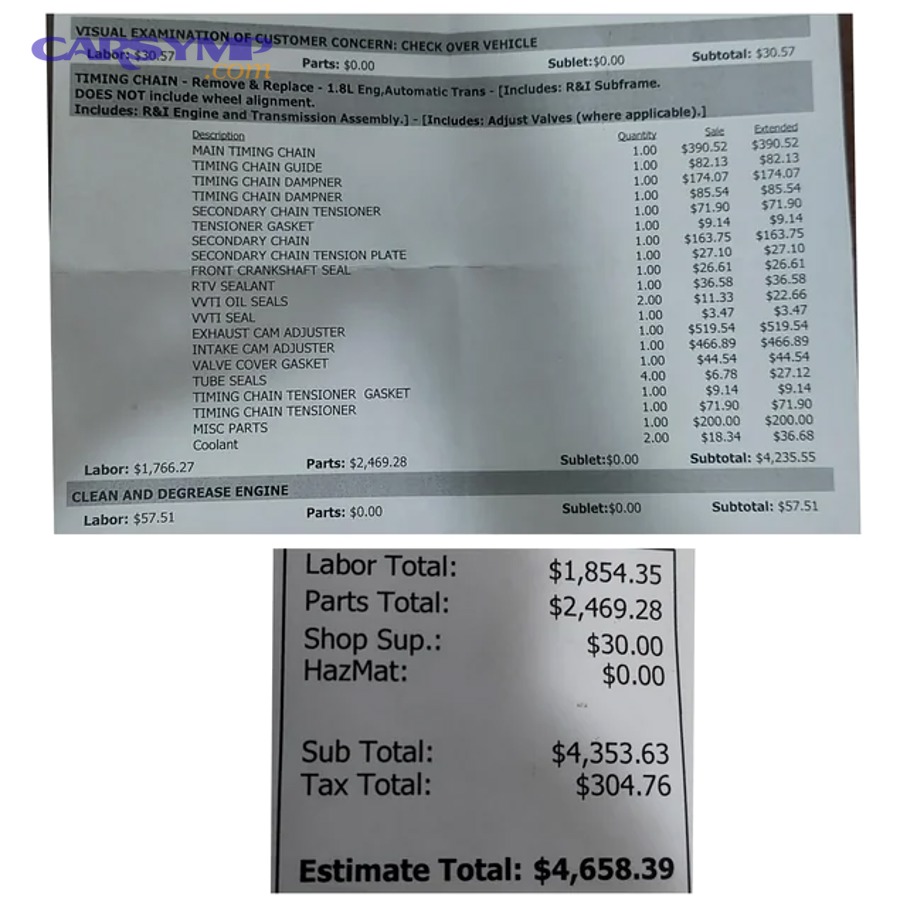
In a properly timed engine, the pistons and valves never occupy that shared space simultaneously because the timing chain keeps the crankshaft and camshaft in precise synchronization. When a worn chain “jumps time” — skips one or more teeth on the sprocket due to excessive slack — that synchronization breaks. In an interference engine, the result is immediate piston-to-valve contact, bending valves, damaging pistons, and in severe cases, destroying the cylinder head.
This failure mode can occur without the driver noticing a gradual symptom progression if:
- The engine has been running with a partially functional tensioner that suddenly loses pressure.
- The vehicle has been operated at high RPM with a chain already at its wear limit.
- Cold start rattle was dismissed as an unimportant noise for an extended period.
Which Engines Are Most Vulnerable to Timing Chain Damage From Oil Neglect?
There are three engine families most frequently cited for vulnerability to oil-neglect-driven timing chain failure: the GM High-Feature V6, the Ford 5.4-liter Modular V8, and the Nissan VQ V6 — each with documented failure patterns attributed by their manufacturers to insufficient oil maintenance.

Understanding which engine you own is practical information. If your vehicle uses one of these powertrains, the margin for error on oil change intervals is significantly smaller than it would be in a more forgiving engine design.
Why Are the GM High-Feature V6, Ford 5.4L V8, and Nissan VQ V6 Notorious for Timing Chain Failure?
Each of these engines has a unique failure pathway, but all three share a common root cause: designs that are highly sensitive to oil quality, combined with owners operating them beyond recommended service intervals.
GM High-Feature V6 (HFV6)
This engine, found in vehicles including the GMC Acadia, Chevrolet Traverse, and Chevrolet Malibu, uses a complex Variable Valve Timing system that depends on precise oil pressure to function. GM issued technical service bulletins reducing the recommended oil change interval for this engine specifically in response to timing chain stretch complaints. The VVT cam phasers in this engine use oil passages that are particularly susceptible to clogging from degraded oil, causing phaser instability and chain whip that damages guides and tensioners well before the chain itself is visibly worn.
Ford 5.4-Liter Modular V8
This engine, used extensively in F-150 trucks, Mustangs, and Expeditions, is known for developing reduced oil flow to its cam phasers as the engine accumulates miles. When that oil flow decreases — accelerated by infrequent oil changes — the phasers lose their ability to control timing accurately. The result is erratic timing, chain instability, and a rattling noise that many owners initially attribute to other causes. Ford’s own documentation acknowledges oil maintenance as the primary factor in the longevity of this engine’s timing system.
Nissan VQ V6
Found in the 350Z, 370Z, Maxima, and several Infiniti models, the VQ V6 is a high-revving engine that places significant demand on its timing chain system. Nissan’s engineering teams have confirmed that timing chain stretch in this engine correlates directly with oil change neglect and the use of incorrect oil viscosity. Because the engine operates at higher RPMs under normal driving conditions, the wear rate on a poorly lubricated chain is accelerated compared to lower-revving engines.
Does Engine Age or Mileage Make Timing Chain Damage Worse?
Yes, engine age and mileage compound the damage caused by oil neglect in measurable ways. A high-mileage engine that has been maintained on schedule is far more resilient than a lower-mileage engine with a history of skipped services — but age still introduces wear factors that reduce the system’s tolerance for oil quality lapses.
As an engine accumulates miles, several components that support the timing chain system degrade incrementally:
- Cam and crankshaft journals wear slightly, which can reduce oil pressure at the bearings and decrease flow available to the tensioner.
- VVT actuator seals age and lose their ability to hold oil pressure precisely, making the phasers more sensitive to oil contamination.
- Chain guides and tensioner plastic components become more brittle with heat cycling, meaning they are less capable of absorbing chain impact loads.
In practical terms, a 150,000-mile engine can tolerate far less oil neglect than a 30,000-mile engine. The margins narrow with every mile, which is why high-mileage vehicles especially benefit from shortened oil change intervals rather than extended ones.
How Much Does It Cost When a Neglected Oil Change Destroys Your Timing Chain?
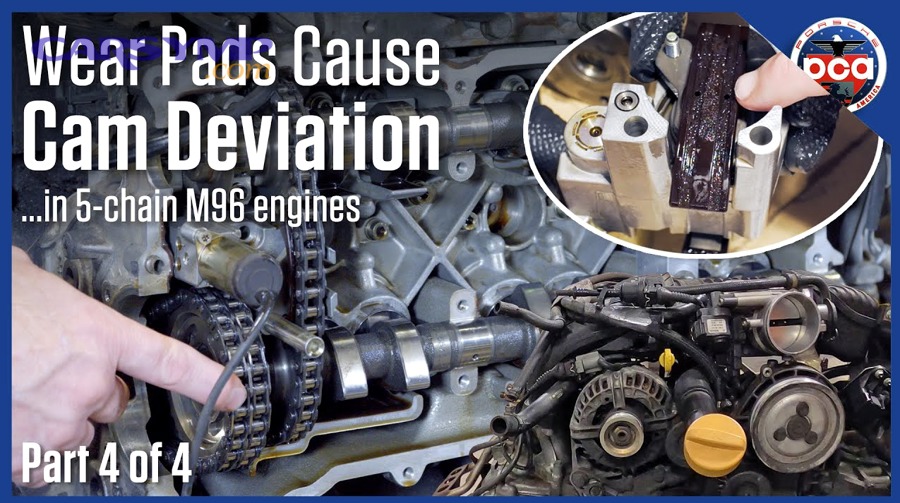
Timing chain repair costs range from $370 to $1,500 for a standard replacement job, but escalate to $3,500 or more if the chain failure causes internal engine damage — making oil change neglect one of the most financially consequential forms of deferred maintenance a vehicle owner can commit.
These numbers represent the gap between two decisions: paying for preventive service on schedule, or paying for structural repair after the damage is done. The following sections break down what those costs actually look like at each stage of failure.
What Is the Average Cost to Replace a Timing Chain?
A standard timing chain repair involves replacing the chain, tensioner, guides, and in many cases the VVT phasers simultaneously. This is not a quick or simple job — accessing the timing chain requires removing significant components at the front of the engine, and labor time alone accounts for the majority of the bill.
The table below outlines typical cost ranges based on failure stage:
| Failure Stage | Components Replaced | Estimated Cost Range |
|---|---|---|
| Early (chain + tensioner + guides) | Chain kit, tensioner, guides | $370 – $800 |
| Moderate (includes VVT phasers) | Full kit + cam phasers/actuators | $800 – $1,500 |
| Severe (piston/valve contact) | Long block or full engine replacement | $3,500 – $6,000+ |
Technicians and timing chain specialists consistently recommend replacing the entire timing system as a kit — chain, tensioner, guides, and phasers — rather than replacing only the worn chain. The reason is logical: the tensioner and guides have experienced the same degraded oil environment as the chain itself. Installing a new chain against worn guides and a fatigued tensioner creates a situation where the new chain wears prematurely, putting the vehicle back in the shop within a fraction of the normal chain lifespan.
How Much Money Could You Have Saved With Regular Oil Changes?
The cost comparison between preventive oil changes and reactive timing chain repair is one of the starkest examples of deferred maintenance economics in automotive ownership. A mechanic case study documented by Machinery Lubrication illustrates this precisely: a customer who had neglected oil changes saved an estimated $750 over the life of their skipped services. The cost of the resulting engine replacement — a remanufactured long block and labor — was $3,500. The vehicle was also out of service for nearly a week.
For context, at $50 per oil change every 5,000 miles over 75,000 miles, the total cost of maintaining that engine properly would have been $750. The cost of not doing so was $3,500 — a 367% cost multiplier on a single maintenance decision.
This is the financial argument for treating oil changes as an investment rather than an expense:
- An oil change at $50–$120 protects a timing system worth $500–$1,500 to replace.
- A missed oil change reduces the lubrication margin that separates normal operation from accelerated wear.
- Repeated missed oil changes eliminate that margin entirely, and the timing chain begins its measurable decline toward failure.
How Do You Prevent Timing Chain Wear by Maintaining Your Oil Correctly?
Preventing timing chain wear requires three maintenance actions performed consistently: using the correct oil type and viscosity specified by the vehicle manufacturer, installing a high-quality oil filter at every change, and adhering to oil change intervals appropriate for your driving conditions — not simply the maximum interval listed in the owner’s manual.
Each of these three factors independently affects the lubrication environment around the timing chain. Together, they create the conditions under which a timing chain can realistically last the life of the engine.
What Type and Viscosity of Oil Does Your Engine Need to Protect the Timing Chain?
Every vehicle manufacturer specifies a minimum API oil service rating and a recommended viscosity grade for a reason that goes beyond general lubrication. For engines with hydraulic timing chain tensioners and Variable Valve Timing systems, the wrong oil viscosity directly impairs the mechanical systems that keep the chain under correct tension.
- Too thin an oil (lower viscosity than specified) may not generate sufficient pressure to fully actuate the hydraulic tensioner, particularly during cold starts when the chain is most vulnerable.
- Too thick an oil (higher viscosity than specified) may flow too slowly to reach VVT cam phaser ports at startup, leaving the phasers uncontrolled during the critical first seconds of engine operation.
- Wrong API rating means the oil’s additive package does not meet the minimum chemical requirements for protecting the timing system components against wear and deposit formation.
Using the wrong viscosity in affected engines like the Ford 5.4L or GM HFV6 can trigger a check engine light independent of any actual chain damage — because the VVT system’s solenoids and actuators are calibrated to function within a specific oil pressure range that only the correct viscosity delivers. Always verify the oil specification in the owner’s manual or on the oil filler cap before purchasing engine oil.
Does the Oil Filter Matter for Timing Chain Health?
Yes, the oil filter has a direct and measurable impact on timing chain health. The filter’s job is to capture particles suspended in the oil before they circulate through the engine — including through the narrow oil ports feeding the timing chain tensioner and VVT phasers.
A low-quality filter with poor capture efficiency allows particles above its filtration threshold to pass through freely and continue circulating. Those particles are the same abrasive agents that grind between chain pins and plates, causing elongation. Installing the correct oil but pairing it with an underperforming filter is a partial solution at best.
Key filter quality considerations:
- Capture efficiency: A high-quality filter captures a higher percentage of particles in the relevant size range (typically 20–40 microns) that cause bearing and chain wear.
- Anti-drain-back valve: Prevents oil from draining out of the filter when the engine is off, ensuring oil pressure builds faster at the next cold start — the moment the timing chain needs lubrication most urgently.
- Structural integrity: A filter that collapses under high oil pressure, or that bypasses filtration when the bypass valve opens prematurely, allows unfiltered oil to circulate through the entire timing system.
Cheap filters paired with correct oil create a false sense of security. The oil is clean coming out of the bottle — but a filter that allows particles to pass returns that oil to a contaminated state within the first operating hours.
How Often Should You Change Your Oil to Protect the Timing Chain?
The correct oil change interval for timing chain protection is the manufacturer’s recommended interval adjusted downward for your actual driving conditions — not extended based on convenience or the assumption that synthetic oil forgives longer intervals indefinitely.
The following framework applies to common driving scenarios:
| Driving Condition | Recommended Adjustment |
|---|---|
| Normal highway driving, mild climate | Follow manufacturer’s maximum interval |
| Frequent short trips under 5 miles | Reduce interval by 25–30% |
| Towing, hauling, or mountainous terrain | Reduce interval by 30–40% |
| Extreme cold climates (below 0°F regularly) | Reduce interval; consider low-viscosity synthetic |
| High-performance or high-RPM driving | Follow manufacturer severe-duty schedule |
The reasoning behind shortening intervals under these conditions is that each condition accelerates oil degradation through a different mechanism. Short trips prevent the oil from reaching the temperature needed to burn off moisture and fuel contamination. Towing increases thermal load, oxidizing the oil faster. Cold climates increase the duration of cold-start stress on every component in the timing system.
Oil change frequency is the single highest-leverage maintenance action available to a vehicle owner who wants to maximize timing chain life. It costs less than any other preventive measure, and it addresses the root cause of the majority of documented timing chain failures.
Beyond Oil Neglect — Other Factors That Accelerate Timing Chain Wear
Beyond standard oil change neglect, there are three additional — and often overlooked — factors that accelerate timing chain wear: Variable Valve Timing system degradation, PCV valve failure introducing combustion contaminants into the oil, and the fundamental design difference between timing chains and timing belts that makes chains uniquely vulnerable to oil-environment failures.
These factors represent the micro-semantic layer of timing chain wear — conditions that amplify or compound the damage caused by insufficient oil maintenance, and that require targeted awareness beyond the standard oil change conversation.
How Does Variable Valve Timing (VVT) Failure Compound Timing Chain Damage?
VVT failure compounds timing chain damage through a specific mechanism called chain whip — a rapid, uncontrolled lateral movement of the chain caused by phaser instability. When the VVT cam phasers lose their ability to hold a stable oil pressure in their internal vane chambers, they oscillate erratically between advance and retard positions. That oscillation transmits lateral load into the timing chain, causing it to whip against the guides and tensioner repeatedly.
- Chain whip accelerates wear on the nylon pad surfaces of the chain guides.
- Repeated impact loads fatigue the tensioner mechanism faster than normal chain tension would.
- The debris from worn guide pads enters the oil supply, adding another abrasive material to the lubrication environment.
This creates a feedback loop: dirty oil damages the phaser → damaged phaser causes chain whip → chain whip destroys guides → guide debris further contaminates oil. For this reason, when performing a timing chain repair on any engine with VVT, technicians consistently recommend replacing the cam phasers and actuators simultaneously with the chain, tensioner, and guides — even if the phasers appear visually intact. The internal seals and surfaces of the phasers have been exposed to the same degraded oil environment as the chain, and their remaining service life is typically comparable to that of the worn chain being replaced.
Can a Failing PCV Valve Accelerate Timing Chain Sludge?
Yes, a failing Positive Crankcase Ventilation (PCV) valve can significantly accelerate the formation of sludge on timing chain guides and within the timing cover — and it does so through a pathway that most drivers never consider when thinking about timing chain health.
The PCV system routes combustion blowby gases — gases that leak past the piston rings during the power stroke — from the crankcase back into the intake manifold for re-combustion, rather than venting them to atmosphere. When the PCV hose cracks or the PCV valve sticks, those blowby gases bypass the intake system and re-enter the engine’s crankcase directly. Those gases carry unburned fuel, water vapor, and combustion byproducts.
When those contaminants mix with engine oil, they accelerate the formation of a thick, waxy sludge. A documented case study from Machinery Lubrication described a vehicle where a cracked PCV hose had allowed blowby contamination to mix with already-degraded oil, producing a thick gritty paste of sludge that coated the inside of both the rocker cover and the timing chain cover. That sludge:
- Coated the chain guides, reducing their ability to keep the chain in alignment.
- Partially blocked the oil ports feeding the tensioner, reducing its hydraulic pressure.
- Introduced abrasive grit particles into direct contact with the chain pins and sprocket teeth.
The PCV valve is a low-cost, often-ignored maintenance item. On many engines, it costs under $20 and takes minutes to replace. Its failure can accelerate timing chain degradation in a way that is invisible until the damage is already advanced.
Is a Timing Chain More Vulnerable to Oil Neglect Than a Timing Belt?
A timing chain is more vulnerable to oil neglect than a timing belt, but more resilient to age-based degradation — because their failure mechanisms are fundamentally different. A timing belt runs dry, outside the oiled environment of the engine, and fails on a fixed mileage and time interval regardless of oil quality. A timing chain runs inside the engine, entirely dependent on clean oil, and is designed to last the engine’s lifetime — but only if that oil environment is maintained correctly.
The table below compares the two systems across the factors most relevant to maintenance decisions:
| Factor | Timing Belt | Timing Chain |
|---|---|---|
| Lubrication dependency | None (runs dry) | Completely oil-dependent |
| Typical replacement interval | 60,000–100,000 miles (scheduled) | Designed to last engine life |
| Primary failure cause | Age and heat cycling | Oil neglect and contamination |
| Warning before failure | Often none | Rattle, codes, misfires |
| Effect of oil neglect | Minimal | Accelerated wear and failure |
A timing belt that has been perfectly maintained on schedule will still require replacement at its specified interval, regardless of how clean the oil has been. A timing chain on a perfectly maintained oil schedule may never require replacement. The inverse is also true: clean oil does nothing to extend a timing belt’s life, but neglected oil will reliably shorten a timing chain’s life. This is why the decision to defer oil changes carries a uniquely high risk in chain-equipped engines — the very longevity advantage that makes chains preferable to belts is entirely contingent on consistent oil quality.
Should You Change Your Oil Immediately After a Timing Chain Replacement?
Yes, changing the oil immediately after a timing chain replacement is strongly advisable, and in the case of engines with hydraulic tensioners and VVT phasers, it approaches being a functional requirement rather than a mere recommendation.
The reasoning is straightforward. The old oil that was present in the engine during the timing chain failure or wear event is contaminated with:
- Metal particles from the worn chain, guides, and tensioner.
- Sludge and oxidation deposits dislodged during the repair process.
- Any debris from the chain guide pads that wore during the chain’s degraded operating period.
Installing a new timing chain — and particularly new VVT cam phasers — into an engine still filled with that contaminated oil immediately exposes the new components to the same abrasive environment that destroyed the original system. The new chain’s link pins and rollers, which have no wear hardening yet, are especially vulnerable to particle damage in the first hours of operation.
Additionally, the hydraulic tensioner — whether the original is reused or a new one is installed — requires clean oil from the very first startup to build correct pressure and seat properly. A tensioner primed with contaminated oil carries particles into its internal pressure chamber, which can interfere with the check valve that prevents pressure bleeddown when the engine is off. That bleeddown is what causes cold start rattle in the first place — meaning installing a new chain without changing the oil risks reproducing the exact symptom the repair was meant to eliminate.
The complete post-replacement procedure recommended by timing chain system manufacturers includes: a full oil and filter change before the first startup after repair, a verification of correct oil viscosity per OEM specification, and in many cases a brief idle period to confirm the tensioner has pressurized correctly before the vehicle is driven under load.