


Preventing timing chain failure is entirely achievable through consistent, proactive maintenance — specifically regular oil changes, scheduled inspections, and timely replacement of worn components before they cause cascading engine damage. The timing chain is one of the most critical components in your engine, and unlike many parts that give obvious warnings, a failing chain can move from early symptoms to catastrophic engine seizure with very little notice. Drivers who follow a disciplined maintenance routine protect themselves from repair bills that routinely exceed $1,000 to $2,500 — and in worst-case scenarios, the cost of a complete engine replacement.
Understanding what causes timing chain problems in the first place is just as important as knowing how to prevent them. Poor lubrication from neglected oil changes, a worn chain tensioner that can no longer maintain proper tautness, and the gradual metal fatigue of chain stretch are the three primary culprits behind premature failure. Each of these causes is preventable — but only when drivers understand the mechanics behind them and take action before the damage compounds.
Recognizing the early warning signs of timing chain wear gives vehicle owners the critical window to intervene before failure occurs. A faint rattling noise from the engine on cold starts, an illuminated check engine light tied to camshaft or crankshaft sensor codes, or a subtle decline in engine power and fuel efficiency are all signals that the timing chain is asking for attention. Ignoring these symptoms does not make them go away — it accelerates the path toward a broken chain and severe internal engine damage.
Beyond prevention and detection, understanding how timing chain maintenance compares to timing belt service — and how specific vehicle brands, driving styles, and engine types affect chain longevity — gives drivers the complete picture. Next, this article walks through every layer of timing chain health, from foundational mechanics to rare but important edge cases, so you can make confident, informed decisions about your engine’s care.
What Is a Timing Chain and Why Does It Matter for Engine Health?
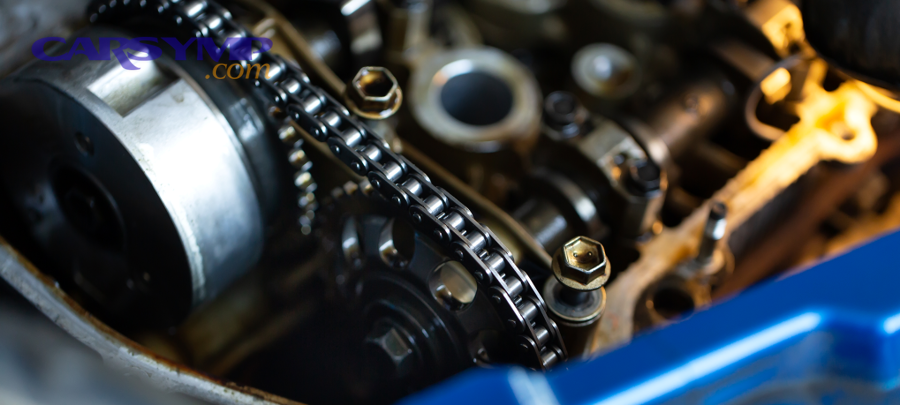
A timing chain is a metal-link drive component that synchronizes the rotation of the crankshaft and camshaft, ensuring engine valves open and close at precisely the right moment during each combustion cycle — making it indispensable to engine function and longevity.
To better understand why timing chain maintenance is so important, it helps to start with what this component actually does and what happens when it is no longer able to do its job correctly.
What Does a Timing Chain Do Inside Your Engine?
The timing chain performs one of the most mechanically precise jobs in your entire vehicle: it keeps the crankshaft and camshaft rotating in perfect synchronization. The crankshaft converts the up-and-down motion of the pistons into rotational energy, while the camshaft controls the opening and closing of the intake and exhaust valves. For combustion to happen correctly — and for your engine to produce power efficiently — these two shafts must remain in exact timing with each other.
The timing chain connects metal sprockets on both shafts and runs continuously inside the engine, bathed in pressurized engine oil that keeps it lubricated and cool. If that synchronization drifts even slightly — due to chain stretch, slack, or a skipped sprocket tooth — the result is mistimed valve events, which causes incomplete combustion, misfires, and in severe cases, physical contact between the valves and pistons. In what engineers call an interference engine, this contact bends or breaks valves and damages pistons immediately, turning a chain problem into a complete engine repair.
Is a Timing Chain Designed to Last the Lifetime of the Engine?
Yes, a timing chain is designed to last the lifetime of the engine — but only under the condition that the engine receives consistent, proper maintenance throughout its service life. Manufacturers engineer timing chains from hardened steel with the expectation that clean, adequately pressurized engine oil will continuously lubricate and cool the chain for the vehicle’s lifespan.
However, “designed to last” does not mean “guaranteed to last regardless of care.” In practice, timing chains typically operate reliably between 100,000 and 150,000 miles — and many exceed 200,000 miles in well-maintained engines. The key variable is maintenance quality. An engine that receives regular oil changes with the correct oil specification, combined with periodic inspections, gives the timing chain every advantage it needs to reach its design lifespan. An engine running on degraded oil, with a weakening tensioner, on extended oil change intervals, will see its timing chain fail significantly earlier — often without dramatic warning.
What Causes Timing Chain Problems in the First Place?
There are three primary causes of timing chain problems: oil degradation and neglect, tensioner wear, and natural metal fatigue from chain stretch — all of which interact and compound each other when maintenance is deferred.

Specifically, each of these causes follows a predictable progression that begins long before any noticeable symptom appears, which is exactly why understanding them is essential to effective prevention.
How Does Engine Oil Neglect Damage the Timing Chain?
Engine oil neglect is the single most common and impactful cause of premature timing chain failure. The timing chain does not run dry — it depends entirely on a continuous supply of clean, properly viscous engine oil to stay lubricated, reduce friction between its metal links, and carry heat away from the contact surfaces. When oil becomes contaminated with combustion byproducts, oxidizes over extended intervals, or drops below the required level, the lubrication film on the chain thins dramatically.
The consequences are direct and measurable. Metal-on-metal contact between chain links and sprocket teeth increases friction, accelerating wear on both surfaces. The chain links begin to elongate — a process called chain stretch — as the pin-and-bushing connections wear down. Stretched chain cannot maintain the correct tension needed for precise timing, causing it to drift, skip teeth on the sprockets, and ultimately mistime the engine’s valve events. Using the correct oil viscosity grade specified by the manufacturer is equally important: too thin an oil fails to maintain adequate film pressure; too thick an oil flows sluggishly at startup, leaving the chain momentarily starved for lubrication during the most vulnerable moment of engine operation — the cold start.
What Role Does the Timing Chain Tensioner Play in Chain Failure?
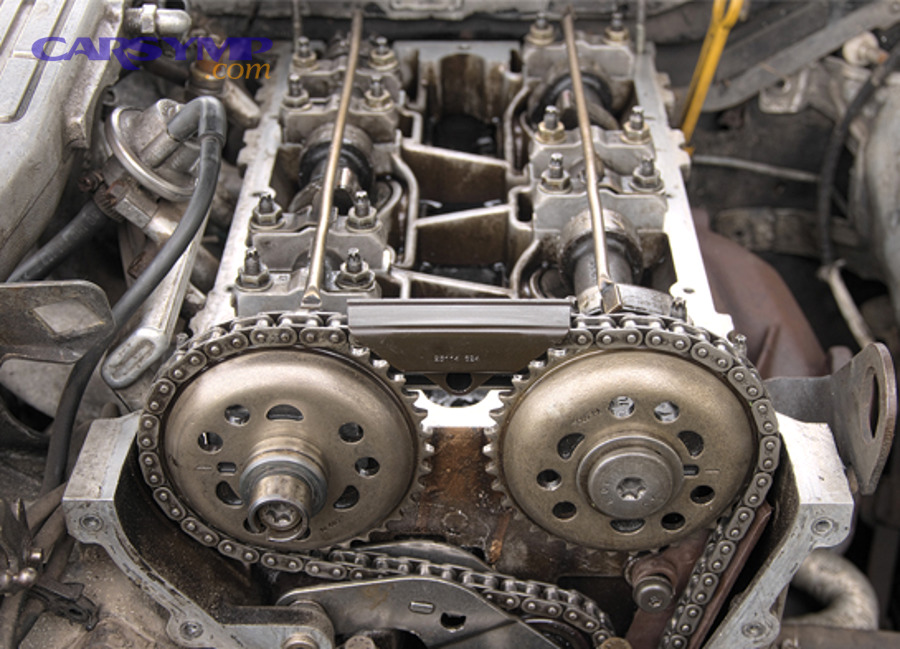
The timing chain tensioner is the hydraulic or mechanical device that maintains consistent, correct tautness on the timing chain throughout its range of motion. As the engine runs, the chain naturally experiences variation in tension caused by load changes, temperature fluctuations, and minor wear. The tensioner compensates for these variations automatically, keeping the chain from going slack or over-tightening.
When the tensioner itself wears out — or when low oil pressure prevents a hydraulic tensioner from maintaining adequate force — the chain develops slack. A slack chain is dangerous for two reasons. First, it can slap against the inside of the timing chain cover, producing the characteristic rattling noise that signals impending trouble. Second, and more critically, a slack chain can jump sprocket teeth, instantly disrupting camshaft-crankshaft synchronization and causing immediate engine damage. Tensioner guides — plastic or nylon rails that the chain rides against — also wear over time and can crack or break, removing the lateral support the chain needs to track properly. timing chain repair that addresses only the chain itself while leaving a worn tensioner and guides in place is a partial fix that will fail again prematurely.
Can Normal Wear and Tear Stretch a Timing Chain Over Time?
Yes, normal wear and tear absolutely can and does stretch a timing chain over time, even in well-maintained engines. This is a fundamental property of metal-link chains under continuous load and thermal cycling. Each link in the timing chain consists of a pin pressed through a bushing, and with millions of articulation cycles over tens of thousands of miles, the pin-bushing interface gradually wears, allowing each link to elongate microscopically. Multiplied across the full chain length, this microscopic elongation becomes measurable slack.
The danger of chain stretch is that it is gradual and often invisible to the driver until it has progressed significantly. As the chain elongates, it begins to lose its ability to maintain precise timing marks between the crankshaft and camshaft. The engine control unit (ECU) may detect this as a cam/crank correlation error — one of the most important Cam/crank correlation codes explained in modern diagnostics — triggering a check engine light before any audible symptom appears. P0016 and P0017 are the most common fault codes associated with timing chain stretch and camshaft-crankshaft misalignment. If a mechanic pulls these codes, the diagnostic pathway moves immediately toward evaluating chain wear, tensioner condition, and the repair vs. engine replacement decision factors that every shop must assess based on the degree of existing damage.
What Are the Warning Signs of Timing Chain Problems Before Failure?
There are four key warning signs of timing chain problems: engine rattling noise (especially at startup), check engine light activation with cam/crank correlation codes, engine misfires, and a noticeable decline in power and fuel efficiency.
However, understanding each symptom individually — what it sounds like, when it occurs, and what it means mechanically — is what allows drivers to act early enough to prevent complete failure.
What Does a Rattling Noise from the Engine Mean for the Timing Chain?
A rattling noise from the engine, particularly during cold start or at idle, is the most recognizable early indicator that the timing chain has developed slack and is moving beyond its intended range of motion. As the chain loosens — whether from stretch, tensioner wear, or guide deterioration — it begins to contact the inside of the timing chain cover or adjacent engine components with each rotation. This produces a rapid, metallic rattling or slapping sound that originates from the front of the engine.
The challenge with this symptom is that it is most prominent in the very early seconds of engine operation, before oil pressure fully builds and before the engine reaches operating temperature. Once the engine warms up and oil pressure stabilizes, the hydraulic tensioner may temporarily take up enough slack to quiet the noise — giving a false impression that the problem has resolved itself. Drivers who only evaluate their engine at operating temperature may miss this symptom entirely for weeks or months. The correct diagnostic approach is to listen carefully at every cold start, with the hood open, for any rattling from the engine’s front end. If that sound is present consistently at startup, it warrants immediate inspection regardless of whether it disappears after warm-up.
Which Dashboard Warning Lights Indicate a Timing Chain Issue?
There are two primary dashboard indicators tied to timing chain problems: the check engine light (CEL/MIL) and, in some vehicles, an oil pressure warning light. The check engine light is by far the more diagnostically useful of the two, because modern engine management systems monitor camshaft and crankshaft position sensor signals in real time and can detect timing drift before it becomes catastrophic.
When the ECU detects that the camshaft position has drifted out of its expected relationship with the crankshaft position — a condition caused by chain stretch or a skipped tooth — it stores a fault code and illuminates the check engine light. The most common codes in this category are P0016 (Crankshaft Position–Camshaft Position Correlation, Bank 1, Sensor A) and P0017, along with variants P0018 and P0019 for vehicles with multiple camshafts. These are among the most important cam/crank correlation codes explained to vehicle owners by mechanics, because they are frequently misdiagnosed as sensor failures when the actual root cause is a worn timing chain. Replacing the sensor without addressing the underlying chain condition will not clear the code permanently. Any illuminated check engine light — regardless of whether the driver notices drivability symptoms — should be scanned promptly at an auto parts store or repair shop.
How Do Engine Misfires and Loss of Power Signal Timing Chain Wear?
Engine misfires and power loss represent a more advanced stage of timing chain wear, where the chain’s elongation has progressed far enough to disrupt actual combustion events. When the timing chain stretches sufficiently, the camshaft rotates slightly out of phase with the crankshaft, causing the intake and exhaust valves to open and close at the wrong points in the piston’s travel. The result is an imperfect fuel-air mixture delivery and exhaust evacuation — conditions that produce incomplete combustion and engine misfires.
Drivers experiencing timing chain-related misfires typically notice rough idle, hesitation during acceleration, and a significant drop in fuel economy. The vehicle may feel sluggish from a stop or stumble under load. These symptoms are particularly concerning because they indicate that chain wear has moved well beyond the early-intervention window. At this stage, the decision framework shifts from simple maintenance to a more complex timing chain vs. tensioner vs. guide failure diagnosis — where the mechanic must determine whether the chain alone has failed, whether the tensioner and guides have also deteriorated, and whether any secondary engine damage (valve timing errors, potential contact in interference engines) has already occurred.
How Do You Prevent Timing Chain Failure Through Regular Maintenance?
Preventing timing chain failure requires four core maintenance actions: regular oil changes with the correct specification, periodic timing chain inspections, strict adherence to the manufacturer’s service schedule, and use of high-quality OEM or equivalent replacement parts.

Below is a breakdown of each action, how to implement it correctly, and why each one directly protects the timing chain from the failure modes described above.
How Often Should You Change Your Oil to Protect the Timing Chain?
Oil change frequency is the most impactful single variable in timing chain longevity. For conventional motor oil, the standard recommendation is every 5,000 miles or per the manufacturer’s specified interval — whichever comes first. For full synthetic oil, intervals of 7,500 to 10,000 miles are generally appropriate, though manufacturer guidance for the specific vehicle should always take precedence.
Beyond interval, oil specification matters enormously. Every engine manufacturer designates a specific viscosity grade (such as 5W-30 or 0W-20) and API/ACEA rating for their engines. Using the wrong viscosity — even if it is a high-quality product — can reduce the oil film thickness on the timing chain at operating temperature, increasing wear rates. Drivers of high-mileage vehicles should also consider whether their current oil formulation includes sufficient anti-wear additives, as older chains and tensioners benefit from oils with robust additive packages. The table below summarizes recommended oil change practices for timing chain protection:
| Oil Type | Recommended Interval | Key Consideration |
|---|---|---|
| Conventional | Every 3,000–5,000 miles | Degrades faster; stricter adherence needed |
| Full Synthetic | Every 7,500–10,000 miles | Greater thermal stability; better chain protection |
| Synthetic Blend | Every 5,000–7,500 miles | Intermediate protection; follow OEM spec |
| High-Mileage Formula | Per manufacturer / 5,000 miles | Beneficial for chains with early wear |
This table outlines the four principal oil types used in modern engines, their recommended change intervals, and the specific relevance of each to timing chain health. Drivers should treat these intervals as maximums, not targets — in demanding conditions like frequent short trips, towing, or extreme temperatures, shorter intervals provide meaningfully better chain protection.
What Does a Timing Chain Inspection Involve and When Should You Schedule One?
A timing chain inspection is a professional assessment of chain tension, tensioner condition, guide integrity, and timing mark alignment — performed by a mechanic with access to the appropriate diagnostic tools and, in many cases, partial engine disassembly or borescope visualization.
During a comprehensive inspection, the mechanic evaluates several key indicators. Chain tension is checked by assessing the amount of play in the chain relative to its guides. Tensioner function is verified to confirm it is maintaining adequate pressure and has not bottomed out its travel range — a sign that the chain has stretched to the limit of what the tensioner can compensate for. Timing marks on the crankshaft and camshaft sprockets are checked for alignment with the engine at top dead center (TDC), confirming that no timing drift has occurred. Any cam/crank correlation fault codes stored in the ECU provide critical supporting data for this assessment.
The recommended schedule for proactive timing chain inspections is at 60,000 miles as a baseline check, again at 100,000 miles as a comprehensive evaluation, and immediately upon the appearance of any symptom — rattle, code, misfire, or power loss. The cost of a timing chain inspection is modest relative to what it can prevent: a full timing chain repair on a typical four-cylinder engine costs $800 to $1,500 in parts and labor, while an engine damaged by a broken chain can require $3,000 to $8,000 in repairs or result in an engine replacement.
Should You Follow the Manufacturer’s Maintenance Schedule for Timing Chain Care?
Yes, following the manufacturer’s maintenance schedule is the single most reliable framework for preventing timing chain problems, because OEM service intervals are engineered specifically around the lubrication requirements, load characteristics, and component tolerances of each engine design.
The manufacturer’s maintenance schedule — found in the vehicle owner’s manual or the OEM service documentation — specifies oil change intervals, inspection milestones, and replacement guidance that account for the timing system’s design parameters. Deviating from these intervals, particularly by extending oil changes beyond the recommended period, effectively removes the protective layer the OEM engineers built into the maintenance program. It is important to note that the “Normal” maintenance schedule in most owner’s manuals assumes favorable driving conditions: highway driving, moderate climate, and no towing. Drivers who primarily drive in stop-and-go urban traffic, make frequent short trips under 10 miles, operate in extreme heat or cold, or tow regularly should follow the “Severe” or “Heavy Duty” schedule — which typically calls for more frequent oil changes and earlier inspection intervals. These conditions place significantly higher thermal and mechanical stress on the timing chain and its associated components.
Does Using High-Quality or OEM Parts Help Prevent Timing Chain Problems?
Yes, using OEM or equivalent high-quality parts plays a measurable role in preventing recurring timing chain problems, particularly when performing a full timing chain repair or proactive replacement. The quality gap between OEM timing chain kits and low-cost aftermarket alternatives is significant and well-documented among professional mechanics.
OEM timing chains are manufactured to the exact link pitch, pin diameter, and tensile strength specifications of the original component. OEM tensioners are calibrated to the correct spring rate and hydraulic pressure range for the specific engine. Aftermarket kits from discount suppliers frequently exhibit looser manufacturing tolerances, which results in faster stretch, improper tensioner force, and premature guide wear — effectively recreating the failure condition the replacement was meant to solve. When budgeting for timing chain service, the cost difference between a quality OEM kit and a budget aftermarket kit is typically $100 to $300 — a fraction of the additional labor cost if the budget kit fails and requires a second repair. Additionally, best practice for any timing chain replacement is to replace the complete system simultaneously: chain, tensioner, tensioner guides, chain guides, and sprockets. Replacing only the chain while leaving a worn tensioner in place is a common and costly mistake that leads to repeat failure.
How Is Timing Chain Maintenance Different from Timing Belt Maintenance?
Timing chain maintenance differs from timing belt maintenance primarily in replacement frequency and failure mode: chains are designed to last the engine’s lifetime with oil-based lubrication, while belts require mandatory scheduled replacement every 60,000 to 100,000 miles regardless of apparent condition.
Moreover, the consequences of unexpected failure differ substantially between the two systems — a distinction that directly shapes how owners and mechanics should approach each type of maintenance.
Is a Timing Chain More Reliable Than a Timing Belt?
Yes, a timing chain is generally more reliable and longer-lasting than a timing belt, making it the preferred choice in modern engine design for vehicles intended for high-mileage or high-performance use. Timing chains are constructed from hardened steel, operate inside the engine bathed in oil, and are engineered without a mandatory replacement interval — whereas rubber timing belts degrade from heat, oil exposure, and simple age regardless of mileage, and carry a manufacturer-mandated replacement schedule.
The following table compares the two systems across the most relevant maintenance and reliability dimensions:
| Criterion | Timing Chain | Timing Belt |
|---|---|---|
| Material | Hardened steel links | Reinforced rubber/composite |
| Lubrication | Engine oil (internal) | Dry (no lubrication needed) |
| Design lifespan | 100,000–200,000+ miles | 60,000–100,000 miles |
| Replacement schedule | Condition-based | Mandatory interval |
| Failure warning | Usually gradual (rattle, codes) | Can snap without warning |
| Repair cost when failed | $800–$2,500+ | $400–$1,000 |
| Noise profile | Slight rattle when worn | Generally quiet until failure |
This comparison table covers seven key criteria that distinguish timing chain and timing belt systems, helping owners understand what their specific engine requires. The critical takeaway is that while chains are more durable, their failure — when it does occur — tends to be more expensive to repair, making proactive maintenance even more valuable for chain-equipped engines.
Do High-Performance and Modified Engines Need More Frequent Timing Chain Maintenance?
Yes, high-performance and modified engines require more frequent timing chain maintenance than standard production engines, because the elevated mechanical and thermal stresses they operate under accelerate every known chain wear mechanism simultaneously.
In a performance or modified application — whether that involves a factory turbocharged engine running at elevated boost, an aftermarket tune increasing peak RPM and cylinder pressure, or a forced-induction conversion — the timing chain experiences significantly higher loads per rotation. Higher peak combustion pressures transmit greater force through the camshaft drive system, increasing tension on the chain during every power stroke. Elevated RPM means the chain articulates through more cycles per hour, compressing the wear timeline relative to a standard commuter engine. Additionally, many high-performance engines incorporate Variable Valve Timing (VVT) systems that use oil pressure to dynamically adjust cam phasing — adding a layer of complexity to the timing chain system. VVT actuators place additional load on the chain by continuously varying sprocket position, and they are highly sensitive to oil quality and pressure. In modified engines, VVT systems under stress can produce timing chain vs. tensioner vs. guide failure diagnosis scenarios that are significantly more complex than standard wear patterns, often requiring specialist-level diagnosis to distinguish between cam phaser failure, tensioner collapse, and chain stretch as the primary root cause.
For owners of high-performance or modified vehicles, the practical guidance is clear: reduce oil change intervals to 3,000 to 5,000 miles using a high-quality full-synthetic oil, inspect the timing system at every major service milestone, and treat any rattling or cam/crank code as an urgent diagnostic event rather than a deferred maintenance item.
Which Vehicle Brands Are Most Known for Timing Chain Problems?
Several vehicle brands and specific engine families have documented histories of premature timing chain failure, making brand-aware maintenance particularly important for owners of affected models. The most widely cited examples in the automotive service industry include BMW’s N20, N47, and N63 engine families, Ford’s 2.0L and 2.3L EcoBoost four-cylinder engines used in the Focus, Fusion, and Escape, and General Motors’ 5.3L and 6.0L V8 engines found in Silverado and Sierra trucks.
In BMW’s case, the N47 diesel engine became notorious for timing chain failures at relatively low mileage — often between 60,000 and 90,000 miles — due to a design that positioned the timing chain at the rear of the engine (making repair exceptionally labor-intensive) combined with a tensioner design that was insufficient for the chain’s load demands. Ford’s EcoBoost engines have shown timing chain stretch and tensioner failures linked to extended oil change intervals and oil dilution from gasoline washing into the crankcase during short-trip cold-weather driving. GM’s V8 trucks have experienced timing chain noise and stretch tied primarily to the Active Fuel Management (cylinder deactivation) system, which varies oil pressure in ways that can stress the timing system under certain operating conditions. Owners of these specific vehicles should treat the manufacturer’s “Severe” maintenance schedule as their baseline and consider beginning timing chain inspections at 60,000 miles rather than waiting for the standard 100,000-mile milestone.
How Does Cold-Start Behavior Affect Timing Chain Wear Over Time?
Cold-start behavior is one of the most underappreciated contributors to long-term timing chain wear, because the period immediately following engine startup represents the highest-risk interval for chain lubrication starvation. When an engine has been sitting for several hours, gravity drains the oil film from the upper engine components — including the timing chain, tensioner, and guides — back into the oil pan. At the moment of startup, the oil pump must build pressure and circulate oil through the entire engine before the timing chain receives adequate lubrication.
During this brief interval — typically two to five seconds in a healthy engine with clean oil — the timing chain runs with minimal lubrication against its sprockets and guides. In an engine with degraded oil, a partially clogged oil pickup screen, or a worn oil pump, this starvation period extends longer and occurs with less effective oil when lubrication does arrive. Repeated cold starts compound this wear across thousands of cycles over the vehicle’s life. The practical implications for timing chain health are direct. Drivers should avoid high-RPM operation — aggressive acceleration, rapid warm-up by revving — in the first 30 to 60 seconds after a cold start. Allowing the engine to idle briefly before placing it under load gives oil pressure time to build and the timing chain time to receive full lubrication before operating under stress. In climates with consistent sub-freezing temperatures, engine block heaters reduce oil viscosity at startup and meaningfully shorten the lubrication starvation window — a simple and cost-effective protective measure for both the timing chain and the broader engine.
According to data cited by automotive engineering researchers studying internal combustion engine wear patterns, a disproportionate share of total engine component wear — including timing system components — occurs during cold-start cycles, underscoring why startup behavior is a legitimate and important dimension of long-term timing chain care.