


Seasonal temperature changes trigger TPMS alerts because the air inside your tires physically contracts in cold weather and expands in heat, causing tire pressure to rise or fall enough to cross the monitoring system’s warning threshold. This is not a malfunction — it is a predictable, physics-driven response that affects virtually every vehicle equipped with a Tire Pressure Monitoring System. Understanding this connection is the first step toward responding with confidence rather than confusion every time that dashboard light appears.
Knowing how to respond when a TPMS alert activates is just as important as understanding why it happens. Many drivers inflate their tires, see the light disappear after a short drive, and assume the problem is solved — but without a systematic approach, the same alert returns with the next cold snap. A proper response involves checking pressure with a manual gauge, inflating to the manufacturer’s recommended cold PSI, and knowing when to seek a professional tire pressure monitoring system service if the light persists.
One of the most practical skills a driver can develop is distinguishing between a temperature-related false alert and a genuine tire issue. A TPMS warning light causes and fixes vary widely — from a simple overnight temperature drop to a slow puncture that has been slowly bleeding air for days. Misreading a real leak as seasonal noise is a safety risk that proper diagnostic habits can prevent entirely.
Beyond the seasonal basics, factors like your specific TPMS system type, nitrogen inflation, sensor battery health, and altitude all influence how and when your system responds to temperature. These less-discussed variables explain why two drivers in the same city with the same car model may experience TPMS behavior differently. Next, this article walks through every layer of this topic — from core physics to advanced edge cases — so you can manage your tire health with total clarity.
What Is a TPMS Alert and Why Does Temperature Affect It?
A TPMS alert is a safety warning issued by your vehicle’s Tire Pressure Monitoring System when tire pressure in one or more tires drops approximately 25% below the manufacturer’s recommended level — and temperature affects it because the pressure of the air sealed inside your tires changes directly with the surrounding temperature.
To better understand this connection, it helps to look at both how the system is built and what makes the air inside a tire behave the way it does across seasons.
How Does a Tire Pressure Monitoring System Work?
There are two main types of TPMS used in modern vehicles: Direct TPMS and Indirect TPMS, each based on a different detection method.
Direct TPMS uses physical pressure sensors mounted inside each tire — typically on the valve stem or wheel — to measure actual air pressure in real time. When pressure in any tire drops to roughly 25% below the recommended cold PSI (for example, below approximately 26 PSI if the recommended level is 35 PSI), the sensor transmits a signal to the vehicle’s onboard computer, which illuminates the TPMS warning light on the dashboard.
Indirect TPMS does not measure pressure directly. Instead, it uses the vehicle’s Anti-lock Braking System (ABS) wheel-speed sensors to infer pressure changes. When a tire loses pressure, it rolls at a slightly smaller diameter and rotates faster than the others. The system detects this speed discrepancy and interprets it as a pressure loss. Indirect TPMS is generally less precise and can be slower to respond to gradual pressure changes caused by temperature.
Understanding which system your vehicle uses matters because it affects how sensitive your alerts will be during seasonal transitions — and whether TPMS relearn procedures by vehicle may be required after a tire rotation, sensor replacement, or seasonal tire swap.
Why Does Air Pressure Inside a Tire Change With Temperature?
Air pressure inside a tire changes with temperature because the molecules of gas inside the tire move faster and take up more space when they are warm, and slow down and compress when they are cold.
Think of a balloon left outside on a freezing morning versus the same balloon brought into a warm room. In the cold, the balloon appears deflated and limp. Indoors, it plumps back up — not because air was added, but because the existing air expanded with the heat. The same principle governs the sealed air in your tires. Cold ambient temperatures cause air molecules to contract, reducing the pressure they exert on the inside walls of the tire. Warmer temperatures cause those same molecules to expand, increasing internal pressure.
This behavior is not a quirk of tires — it is a fundamental property of gases described by the Ideal Gas Law, which states that the pressure of a gas is directly proportional to its temperature when the volume it occupies stays constant. Your tire acts as that fixed-volume container. As a result, every meaningful temperature swing — whether from summer to autumn or from afternoon to the next cold morning — produces a measurable change in the PSI your TPMS is continuously monitoring.
How Much Does Seasonal Temperature Change Affect Tire Pressure?
Seasonal temperature changes can reduce tire pressure by 5 PSI or more across a full seasonal swing, which is frequently enough to trigger a TPMS alert — particularly if tires were already near the lower end of the recommended pressure range when the season changed.
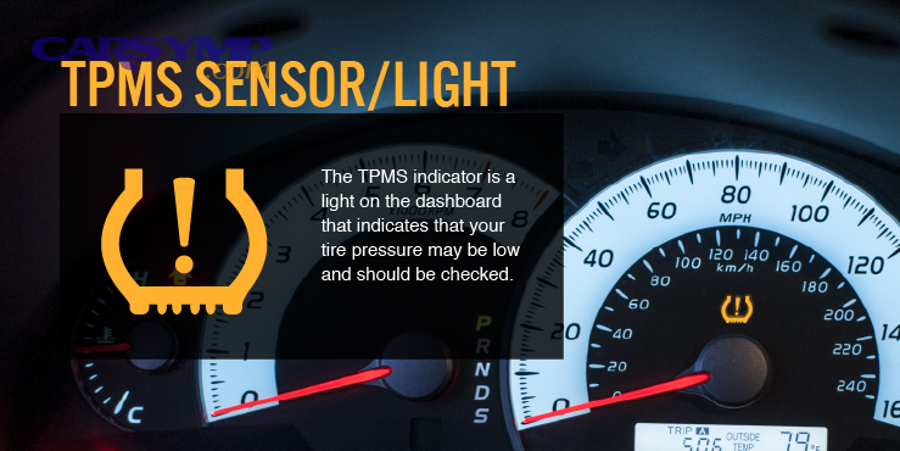
The specific magnitude of this pressure change is predictable, and one simple rule governs most of what drivers need to know.
What Is the 10-Degree Rule for Tire Pressure?
The 10-Degree Rule states that for every 10°F (approximately 5.6°C) drop in ambient temperature, tire pressure decreases by approximately 1 PSI.
This rule is a practical application of the Ideal Gas Law and is widely used by tire technicians, vehicle manufacturers, and fleet maintenance teams as a reliable planning heuristic. The following table illustrates how this rule plays out across common seasonal scenarios:
| Scenario | Temperature Drop | Estimated PSI Loss | TPMS Alert Risk |
|---|---|---|---|
| Early autumn morning | 30°F overnight drop | ~3 PSI | Moderate |
| Full seasonal shift (summer to winter) | 50°F difference | ~5 PSI | High |
| Extreme winter morning | 70°F drop from summer baseline | ~7 PSI | Very High |
| Mild seasonal fluctuation | 10°F swing | ~1 PSI | Low (unless already near threshold) |
The table above illustrates how even moderate temperature swings can produce enough PSI loss to activate a TPMS alert, especially when tires begin the season at or near the recommended minimum. A driver whose tires are correctly inflated to 35 PSI in 70°F weather may find those same tires reading approximately 30 PSI on a 20°F winter morning — a 5 PSI drop that sits comfortably within the threshold range that triggers a warning.
According to FOXWELL, a TPMS tools manufacturer with extensive field data, even a 30°F temperature change can lower tire pressure by 3–4 PSI — enough on its own to activate the TPMS warning light in most passenger vehicles.
When Are Seasonal TPMS Alerts Most Likely to Occur?
There are four high-risk trigger scenarios when seasonal TPMS alerts are most likely to occur: the first cold morning of autumn, overnight temperature drops after warm days, parking in an unheated garage during winter, and transitions between warm and cold climate zones during travel.
Understanding each of these moments helps drivers anticipate the alert rather than react to it with alarm.
First cold morning of autumn is the single most common trigger moment. Tires were inflated during warm summer months and have not been re-checked. When overnight temperatures drop sharply for the first time, pressure falls below threshold and the dashboard light appears before the driver has even left the driveway.
The morning-on, afternoon-off pattern is another characteristic behavior. Tire pressure drops overnight as temperatures fall to their lowest point. The TPMS light activates in the morning. As the driver begins their commute, rolling friction and rising ambient temperatures warm the air inside the tires, pressure rises back above the threshold, and the light extinguishes — sometimes within 15–20 minutes of driving. This pattern is a reliable indicator that temperature, not a leak, is the cause.
Parking in an unheated garage or outdoors during a cold snap accelerates pressure loss because the tires are exposed to sustained low temperatures for hours without any warming from driving.
Traveling between climate zones — for example, driving from a warm coastal area into mountain territory in autumn — can trigger alerts mid-journey because the tires were inflated at one temperature and are now being operated in a significantly colder environment.
In summer, the reverse can occur: sustained heat from pavement temperatures exceeding 130°F can cause pressure to rise, occasionally triggering over-pressure behavior and uneven tread wear, though this is less commonly the source of a dashboard alert than cold-weather pressure loss.
Does a TPMS Alert in Cold Weather Always Mean a Tire Problem?
No — a TPMS alert in cold weather does not always indicate a tire problem. Temperature-induced pressure loss is the most common cause of seasonal TPMS warnings and typically resolves without any physical intervention once tires warm up. However, this does not mean every cold-weather alert can be dismissed.
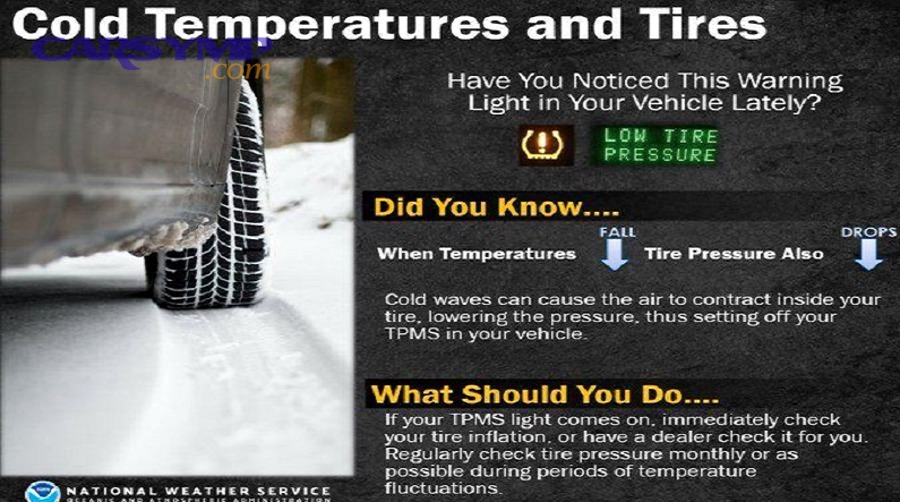
The critical distinction is behavioral. If the alert appears exclusively on cold mornings, disappears within 10 to 20 minutes of driving, and affects all four tires nearly equally, the cause is almost certainly temperature. Conversely, if the light activates and remains on after the tires have fully warmed, or if one tire is noticeably lower than the others, a slow leak, damaged valve stem, or puncture may be the actual source.
The danger in assuming all cold-weather TPMS alerts are false alarms is real. A slow puncture can lose pressure so gradually that the initial alert appears to behave like a temperature issue — showing up on a cold morning and seeming to diminish during driving — until the pressure loss becomes acute. The only reliable way to distinguish between the two causes is to check each tire’s PSI with a calibrated manual gauge and compare the reading to the manufacturer’s recommended cold PSI found on the driver’s door sticker or in the owner’s manual.
How Can Drivers Tell the Difference Between a Temperature Alert and a Real Tire Problem?
Drivers can distinguish a temperature-induced TPMS alert from a genuine tire problem by evaluating three factors: the pattern of alert behavior, the pressure differential between tires, and whether the warning persists after the vehicle has been driven and the tires have fully warmed.
This diagnostic comparison is one of the most practically valuable skills a driver can apply, because the appropriate response differs completely depending on the root cause.
What Are the Signs That a TPMS Alert Is Caused by Temperature, Not a Leak?
There are five key signs that a TPMS alert is temperature-related rather than the result of a puncture or leak.
- The alert appears only on cold mornings and was not present the previous evening when temperatures were warmer.
- The light turns off on its own after 10 to 20 minutes of driving as tire friction and ambient warming raise the internal pressure back above the TPMS threshold.
- All four tires show a similar PSI reading when checked with a manual gauge — uniform pressure loss across all tires points strongly to temperature rather than a localized puncture.
- The actual measured PSI is only slightly below the recommended level — for example, 31 PSI when the recommendation is 35 PSI — consistent with the 1 PSI-per-10°F rule for the overnight temperature drop.
- No visible tire damage is present — no embedded objects, no sidewall bulging, and no audible air escaping when the valve stem is approached.
When all five of these indicators are present, the driver can confidently inflate the tires to the correct cold PSI, reset the system if required, and monitor over the coming days to confirm no recurring pressure loss.
What Are the Signs That a TPMS Alert Indicates a Genuine Tire Issue?
There are four warning signs that a TPMS alert reflects a real tire problem rather than seasonal temperature fluctuation.
- The alert persists after the vehicle has been driven for at least 15 to 20 minutes and the tires have warmed. A temperature-induced alert typically resolves during a normal commute; a leak-based alert does not.
- One tire is significantly lower than the others when checked with a manual gauge. A 3–5 PSI difference between a single tire and the remaining three is a reliable indicator of a localized problem.
- Pressure loss recurs within 24–48 hours after inflating. If a tire repeatedly drops back below threshold within a short period, it is losing air through a puncture, faulty valve, or damaged bead seal.
- Visible damage is present — a nail or screw embedded in the tread, a cut or gouge in the sidewall, or a valve stem that appears corroded or bent are all direct indicators that professional inspection is necessary.
Car Symptoms like pulling to one side while driving, unusual vibration at highway speeds, or visible tire deformation are additional red flags that should never be attributed to seasonal temperature changes. In these situations, driving on the tire — even briefly — risks a blowout. The tire should be checked immediately, and a professional tire pressure monitoring system service should be sought without delay.
How Should Drivers Respond When Seasonal Temperature Triggers a TPMS Alert?
The most effective response to a seasonal TPMS alert involves five steps: check tire pressure with a manual gauge, inflate to the manufacturer’s recommended cold PSI, drive briefly to allow the system to re-read pressure, reset the TPMS if the vehicle requires it, and seek professional inspection if the light remains on after correct inflation.
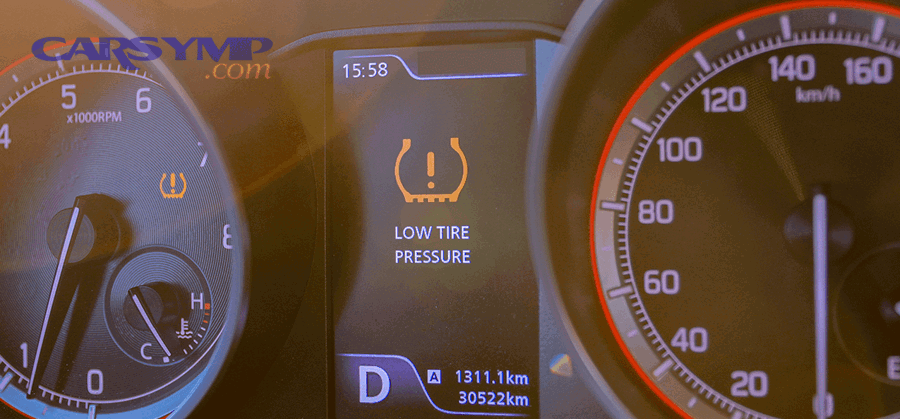
Following these steps in order ensures both an accurate diagnosis and a safe resolution — and prevents the common mistake of inflating tires and assuming the job is done without confirming that the system has registered the correction.
What Steps Should You Take When the TPMS Light Comes On?
Here is the complete five-step response process drivers should follow whenever the TPMS warning light activates:
Step 1 — Check tire pressure with a reliable manual gauge. Do not rely on gas station air pumps for the initial reading, as their built-in gauges can be inaccurate in cold conditions. A dedicated tire pressure gauge, whether digital or analog, gives a more dependable reading. Check all four tires, plus the spare if applicable.
Step 2 — Compare each reading to the manufacturer’s recommended cold PSI. This specification is printed on a sticker inside the driver’s door frame or in the vehicle’s owner’s manual. Note that the number printed on the tire sidewall is the maximum pressure the tire can hold — not the recommended operating pressure. Always use the vehicle manufacturer’s specification.
Step 3 — Inflate all tires to the recommended cold PSI. If temperatures are expected to remain low, some drivers add 1–2 PSI above the base recommendation to offset further cold-weather loss, though this should not exceed the maximum tire pressure.
Step 4 — Drive for 5 to 10 minutes. Many TPMS systems — particularly indirect systems — require the vehicle to be in motion before the sensors update their readings and register that the pressure has been corrected. The light may not extinguish immediately upon inflation.
Step 5 — Manually reset the TPMS if necessary. Some vehicles require a deliberate reset procedure after tire pressure has been adjusted. This process varies by make and model — TPMS relearn procedures by vehicle can range from holding a reset button beneath the steering column to performing a specific drive cycle. Consult the owner’s manual or a certified technician if you are unsure of the procedure for your specific vehicle.
If the TPMS light remains illuminated after completing all five steps, the cause is not temperature. Schedule a professional tire pressure monitoring system service to inspect for sensor faults, slow leaks, or damaged valve stems.
How Should Drivers Adjust Tire Pressure for Seasonal Changes?
Drivers should perform a dedicated tire pressure inspection and adjustment at the start of each major season — specifically at the beginning of winter and at the transition into summer — to proactively prevent TPMS alerts caused by predictable temperature shifts.
Specifically, the following seasonal habits make the most meaningful difference:
- Pre-winter check: As temperatures begin to drop in autumn, check all tire pressures and inflate to the recommended cold PSI or 1–2 PSI above it. This creates a buffer against the ongoing pressure loss that will occur as temperatures continue to fall.
- Pre-summer check: As temperatures rise in spring, check pressures to ensure summer heat has not pushed any tire into over-pressure territory. Over-inflated tires in hot weather reduce the tire’s contact patch, compromise handling, and accelerate center-tread wear.
- Monthly checks year-round: Tires naturally lose approximately 1 PSI per month even without temperature changes, through gradual air permeation through the rubber and around the rim. A monthly pressure check — regardless of whether the TPMS light is on — is the single most effective habit for maintaining tire health and preventing both TPMS alerts and premature tire wear.
- Check in the morning, before driving: Tire pressure readings taken after driving are elevated by heat from friction. The manufacturer’s recommended PSI is a cold-tire specification, meaning the vehicle should have been stationary for at least three hours before measuring.
According to the U.S. Department of Energy, properly inflated tires improve fuel efficiency by up to 3%, and underinflated tires — the most common result of ignoring seasonal pressure changes — are estimated to waste billions of gallons of fuel annually across American roads.
Advanced Factors That Affect How Your TPMS Responds to Temperature
Beyond seasonal inflation habits, several advanced variables influence how your specific TPMS system responds to temperature changes — including your system type, the gas used to inflate your tires, the age and condition of your sensors, and the altitude at which you are driving.

These factors explain why TPMS behavior is not uniform across all drivers, vehicles, and conditions, and why understanding them can help you diagnose unusual alerts more accurately.
Is Direct TPMS or Indirect TPMS More Sensitive to Seasonal Temperature Changes?
Direct TPMS is more sensitive to seasonal temperature changes than Indirect TPMS because it measures actual PSI in real time, meaning even a 1–2 PSI drop from an overnight temperature dip will be detected and can trigger a warning if it crosses the threshold.
Indirect TPMS, on the other hand, infers pressure from wheel rotation speed. Because a 1–2 PSI drop from temperature does not meaningfully change the rolling diameter of the tire, Indirect TPMS may not register minor cold-weather pressure losses at all — making it less likely to generate false alerts from seasonal changes, but also less reliable at catching gradual real leaks early.
This fundamental difference in sensitivity has led several manufacturers to issue Technical Service Bulletins (TSBs) addressing TPMS behavior in cold weather. Volvo identified that its TPMS algorithm used in vehicles from model year 2014 onward was not correctly accounting for temperature-induced pressure fluctuations, and issued a software reflash to recalibrate the system. Hyundai similarly released a TSB recommending that customers perform monthly tire pressure checks to reduce the frequency of cold-weather alerts that the system was correctly flagging but that drivers were interpreting as malfunctions.
Understanding whether your vehicle uses Direct or Indirect TPMS — information available in your owner’s manual or from a dealer — gives important context for interpreting TPMS warning light causes and fixes in your specific situation.
Does Nitrogen Inflation Reduce Temperature-Related TPMS Alerts?
Yes — nitrogen inflation does reduce the frequency and severity of temperature-related TPMS alerts, though it does not eliminate them entirely. Nitrogen molecules are larger than oxygen molecules and permeate rubber more slowly, meaning nitrogen-filled tires lose pressure approximately one-third more slowly than air-filled tires under normal conditions.
More relevantly for seasonal behavior, nitrogen is a drier, more inert gas than compressed air (which contains moisture). Moisture in standard compressed air can contribute to slightly greater pressure fluctuations as it moves between liquid and vapor states with temperature changes. Nitrogen-inflated tires are less susceptible to this moisture-driven variability, resulting in more stable pressure readings across temperature swings.
However, nitrogen inflation should be understood as a complement to good tire maintenance habits, not a replacement for them. A 50°F seasonal temperature swing will still produce measurable PSI loss in nitrogen-filled tires — just slightly less than in air-filled ones. Monthly pressure checks, seasonal adjustments, and proper TPMS monitoring remain essential regardless of what gas fills the tire.
Can Extreme Cold Damage TPMS Sensors Themselves?
Yes — in extreme cold conditions, typically below -10°F (-23°C), TPMS sensors can malfunction or produce false positive readings due to the effect of very low temperatures on their internal lithium batteries.
The sensors embedded in Direct TPMS systems are battery-powered, with typical lifespans of 5 to 10 years. At temperatures approaching or below -10°F, the battery’s ability to output sufficient voltage can be temporarily compromised, causing the sensor to send an erroneous low-pressure signal to the vehicle’s computer — producing a TPMS alert even when the tire is correctly inflated.
If you encounter a TPMS alert during sub-zero temperatures and your manual gauge shows correct PSI in all tires, the following response is recommended:
- Do not bleed air from the tires in an attempt to diagnose the source.
- Drive the vehicle for 15 to 20 minutes. Friction from driving warms the wheel assembly, which in turn warms the sensor battery enough to restore normal voltage output and clear the false alert.
- If the light persists across multiple days in cold conditions despite correct PSI, the sensor battery may be depleted and require professional replacement.
Routine TPMS sensor health checks — particularly as sensors age past the five-year mark — are an underutilized aspect of preventive vehicle maintenance. Including sensor inspection as part of a seasonal tire pressure monitoring system service is the most efficient way to catch aging sensors before they generate misleading alerts.
How Does Altitude Affect TPMS Alerts During Seasonal Travel?
Altitude affects TPMS alerts during seasonal travel because as elevation increases, the atmospheric pressure outside the tire decreases, which widens the differential between internal tire pressure and external air pressure — and this differential is part of what TPMS algorithms interpret when assessing whether a tire is adequately inflated.
To understand this practically: a tire inflated to 35 PSI at sea level maintains the same absolute internal pressure at high altitude. But because the external atmospheric pressure is lower at altitude — roughly 12.2 PSI at 10,000 feet compared to approximately 14.7 PSI at sea level — the tire experiences slightly greater outward stress, and some TPMS systems, particularly those with highly sensitive calibration, may interpret this as a change in pressure state.
This effect is most relevant for drivers who make seasonal trips through mountain passes or who relocate between high-elevation and low-elevation environments. A vehicle whose tires were inflated in a coastal city and then driven into high-altitude mountain terrain in autumn may trigger a TPMS alert from the combined effect of temperature drop and atmospheric pressure change — neither of which reflects an actual loss of air from the tire.
The practical guidance is straightforward: after any travel involving a significant elevation change of 3,000 feet or more, recheck tire pressure and adjust to the recommended cold PSI for your current location. If the TPMS light activates during mountain driving in combination with cold temperatures, check pressure at the new elevation before concluding that a leak is present.
Among the various car symptoms that seasonal driving produces, a TPMS alert that appears specifically during high-altitude cold-weather travel and resolves once you descend to lower elevation is one of the clearest indicators that atmospheric and temperature physics — not a tire fault — are responsible. Recognizing this pattern eliminates unnecessary service visits and gives drivers a more accurate mental model of how their vehicle’s safety systems actually behave in the real world.