How to Fix a Service Tire Pressure Monitoring System Warning: Causes, Costs & Repair Options for Car Owners
When a “Service Tire Pressure Monitoring System” warning appears on your dashboard, it means your vehicle has detected a fault within its TPMS — not simply that a tire is low on air. This is a system-level alert triggered by a dead sensor battery, a damaged sensor, a failed receiver module, or a calibration error, and it requires a specific diagnosis before any repair can succeed. Understanding the distinction between a pressure warning and a system service warning is the first step toward resolving the issue safely and efficiently.
The root cause of a TPMS service warning almost always falls into one of four categories: a sensor battery that has reached the end of its lifespan, physical damage to a sensor from a pothole or tire repair, a faulty receiver module that has lost communication with one or more sensors, or a relearn failure after a tire rotation or wheel change. Each cause has a different fix, which is why a proper diagnostic process — starting with manual pressure checks and progressing to OBD-II scanning when needed — is essential before spending money on parts or labor.
Once the cause is confirmed, repair options range from a free reset at a tire retailer to a full sensor replacement costing $50–$100 per wheel at a professional shop. Whether a car owner chooses to handle a TPMS reset themselves or take the vehicle to a certified technician depends on the specific fault, the tools available, and the vehicle’s relearn requirements. In either case, knowing what the service includes and what it should cost prevents overpaying and ensures the repair is done correctly.
Beyond the immediate fix, TPMS maintenance connects directly to broader vehicle safety. Properly inflated tires improve fuel economy, extend tire life, and reduce the risk of a blowout at highway speeds. Next, this guide walks through every stage of TPMS service — from understanding how the system works, to diagnosing the fault, to completing the repair — so car owners can make confident, informed decisions at every step.
What Is a Tire Pressure Monitoring System (TPMS) and How Does It Work?
A Tire Pressure Monitoring System (TPMS) is an electronic safety system in a category of mandated vehicle safety technology, required on all U.S. passenger vehicles manufactured from the 2008 model year onward under the TREAD Act, designed to alert the driver when one or more tires drop significantly below the recommended inflation pressure.
To better understand why a service warning appears and what it means, it helps to first know exactly what the system is built from and how its components communicate.

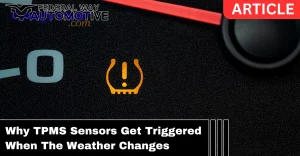
TPMS consists of four primary components working together: individual sensors mounted inside each wheel, a receiver or antenna module that collects sensor signals, an electronic control unit (ECU) that processes the data, and a dashboard warning light — typically a yellow horseshoe-shaped tire icon with an exclamation point — that activates when pressure deviates from the recommended PSI by 25% or more. On direct systems, the display can also show the exact pressure reading for each individual tire, making it easy to identify which wheel is affected. When the system is functioning correctly, this warning light should illuminate briefly at startup and then turn off. A light that stays on solid indicates a low-pressure condition in at least one tire, while a light that flashes for 60–90 seconds before remaining solid indicates a system malfunction — which is specifically what the “Service Tire Pressure Monitoring System” message signals.
What Is the Difference Between Direct and Indirect TPMS?
There are two main types of TPMS: direct and indirect, differentiated by the method each uses to measure and report tire pressure.
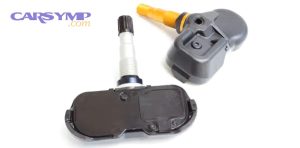
Direct TPMS uses battery-powered pressure sensors physically mounted inside each wheel, typically on the valve stem. These sensors transmit real-time PSI readings for each tire to the vehicle’s receiver module via radio frequency. Direct systems are more accurate, can identify which specific tire is low or malfunctioning, and do not require a manual reset after each tire rotation — though they do require a relearn procedure when sensors are moved between positions. The sensor battery, which is sealed and non-replaceable, typically lasts between 5 and 10 years before the entire sensor unit must be replaced.
Indirect TPMS, by contrast, does not use dedicated pressure sensors inside the tires. Instead, it works with the vehicle’s Anti-lock Braking System (ABS) wheel-speed sensors to infer pressure loss. An underinflated tire has a slightly smaller diameter and therefore rotates faster than a fully inflated tire at the same speed — the system detects this rotational difference and triggers the warning light. Indirect systems are less expensive but less precise: they cannot report actual PSI values, cannot identify which tire is affected by pressure loss, and must be manually reset after every tire rotation so the system establishes a new baseline. The table below summarizes the key differences between direct and indirect TPMS across the most important service and performance criteria.
| Feature | Direct TPMS | Indirect TPMS |
|---|---|---|
| Measurement method | Physical pressure sensor inside wheel | ABS wheel-speed comparison |
| PSI accuracy | High — displays exact PSI per tire | Low — relative inference only |
| Identifies specific tire | Yes | No |
| Requires reset after rotation | Relearn procedure needed | Full manual reset required |
| Sensor battery | 5–10 years, then full sensor replacement | No battery (no internal sensors) |
| Cost of failure repair | Higher (sensor replacement) | Lower (system recalibration) |
| Common on vehicles | 2008+ U.S. vehicles, most modern cars | Older vehicles, some economy models |
What Does the “Service Tire Pressure Monitoring System” Warning Actually Mean?
The “Service Tire Pressure Monitoring System” warning means the TPMS has detected an internal malfunction — a fault in a sensor, the receiver module, or system communication — rather than simply a tire that needs air.
This distinction is critical. A standard low-pressure warning produces a solid, steady dashboard light and is resolved by inflating the affected tire to the correct PSI. The service warning, on the other hand, is triggered when the system itself cannot function correctly. The most recognizable sign is a flashing TPMS light — which blinks rapidly for approximately 60–90 seconds at startup before turning solid — accompanied in many vehicles by a text message in the driver information center (DIC) reading “Service Tire Pressure Monitoring System” or “Service Tire Monitor System.” Another clear indicator is when one or more tires display a dash (“–“) instead of a numerical pressure reading on the dashboard display, signaling that the ECU has lost communication with that sensor entirely. Drivers who notice this symptom should not dismiss it as a glitch — in most cases, it indicates a sensor that is failing, has already failed, or has been disrupted by a tire service event. Addressing the fault promptly is important because a non-functional TPMS leaves the driver without any automated warning if a tire begins losing pressure while driving.
What Are the Most Common Causes of a Service Tire Pressure Monitoring System Warning?
There are four main causes of a Service Tire Pressure Monitoring System warning: a depleted sensor battery, a physically damaged or malfunctioning sensor, a faulty receiver module, and a system calibration or relearn failure — each identified through a different diagnostic pathway.

Understanding which cause is responsible matters because replacing a sensor when the real problem is a relearn failure wastes money, and attempting a reset when a sensor battery is dead will not resolve the fault. The following sections break down each cause in detail.
Is a Dead Sensor Battery the Most Common Cause of a TPMS Warning?
Yes, a dead or depleted TPMS sensor battery is one of the most frequent causes of a service warning, particularly in vehicles that are 7 years or older, because TPMS sensor batteries are sealed, non-rechargeable, and non-replaceable — when the battery dies, the entire sensor unit must be replaced.
Specifically, most TPMS sensor batteries are rated for 5 to 10 years of service, depending on driving frequency, climate, and how often the sensor transmits data. In colder climates, battery drain can accelerate because sensors transmit more frequently as pressure fluctuates. The failure pattern is typically gradual: a sensor nearing end-of-life may transmit intermittently at first, causing the warning to appear and disappear before eventually going silent altogether and showing “–” in place of a pressure reading. Importantly, sensor batteries do not all die at the same time — they fail one at a time, which means a single dashed reading is a reliable early indicator of battery-related TPMS failure. TPMS sensor battery life expectations vary by brand and driving conditions, but as a general rule, any vehicle approaching the 7-to-10-year mark on its original sensors should factor sensor replacement into its tire & wheel service planning.
Can a Damaged or Malfunctioning Sensor Trigger the Service Warning?
Yes, a physically damaged or malfunctioning TPMS sensor can absolutely trigger the service warning, and this is a particularly common outcome following tire repair, wheel replacement, or encounters with road hazards like deep potholes.
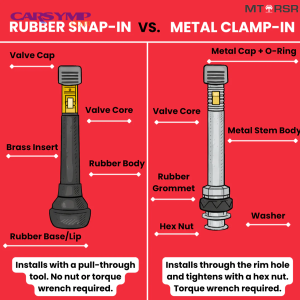
More specifically, TPMS sensors are mounted inside the tire, either integrated into the valve stem or attached to the wheel rim via a band clamp. This positioning makes them vulnerable to contact damage during tire dismounting and remounting procedures. A technician who uses a tire iron or mounting machine without properly accounting for the sensor location can crack the sensor housing, break the valve stem connection, or dislodge the sensor entirely. Similarly, a severe pothole impact can deliver enough force to damage a sensor through the sidewall. Corrosion is another damage pathway — metal valve stem sensors are prone to galvanic corrosion, particularly in regions where roads are salted in winter, which can cause the valve stem to seize or break at the wheel. Rubber valve stem sensors are less prone to corrosion but are more susceptible to physical damage during tire changes. Understanding metal vs. rubber valve stem sensor differences matters during TPMS service, as the replacement process and torque specifications differ between the two types.
What Other System Faults Can Cause the TPMS Service Warning?
Beyond dead batteries and damaged sensors, three additional system-level faults can trigger a TPMS service warning: a faulty receiver or antenna module, a failed relearn or calibration sequence, and wiring or ECU communication errors.
Faulty receiver module: The receiver module collects radio-frequency signals from all four (or five, including the spare on some models) sensors and forwards that data to the ECU. When the receiver module malfunctions, the system loses contact with all sensors simultaneously — causing every tire position to display “–” at the same time. This blanket failure pattern is a useful diagnostic clue: when all four readings disappear at once rather than one at a time, the receiver module is the likely culprit rather than individual sensor batteries. This component is less commonly replaced than sensors, but when it fails, no amount of sensor replacement or relearn attempts will resolve the warning.
Calibration or relearn failure: Every time tires are rotated, replaced, or moved between wheel positions, the TPMS ECU needs to be informed of the new sensor-to-wheel mapping. This process — called a relearn or retraining procedure — requires either driving at a sustained speed for several miles (on some indirect systems) or using a dedicated TPMS activation tool to trigger each sensor in the correct wheel order while the vehicle is in relearn mode. Failure to complete this procedure after a tire service event is one of the leading causes of TPMS issues after tire rotation or replacement. Importantly, the relearn may not fail immediately — on some vehicles, the warning appears several days or weeks after the service event, leading owners to mistakenly assume the problem developed independently.
Wiring and ECU communication errors: In rare cases, particularly following battery replacement, electrical repairs, or aftermarket accessory installation, the communication link between the TPMS receiver and the ECU can be disrupted. Fault codes retrieved via OBD-II scanning will typically distinguish a communication error (U-codes) from a sensor-specific fault (C-codes), guiding the technician toward the correct repair.
How Do You Diagnose a Tire Pressure Monitoring System Problem?
Diagnosing a TPMS problem follows a 4-step process — starting with a manual tire pressure check, progressing through a visual inspection and a drive cycle, and escalating to OBD-II scanning when the warning persists — with the goal of identifying the exact fault before any parts are ordered or replaced.

This structured approach prevents the common mistake of replacing sensors unnecessarily or resetting the system without addressing the actual fault. Let’s explore each stage in the correct sequence.
What Are the First Steps to Diagnose a TPMS Warning at Home?
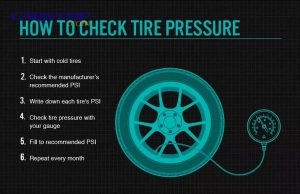
Step 1 — Check tire pressure manually. Use a quality tire pressure gauge to check all four tires, and include the spare if the vehicle monitors it. The correct PSI specification is printed on the driver’s door jamb label or in the owner’s manual — not on the tire sidewall, which shows maximum pressure, not recommended pressure. Knowing How to check tire pressure correctly matters here: always check pressure when tires are “cold” (the vehicle has been parked for at least 3 hours or driven fewer than 1 mile), as driven tires read higher due to heat expansion.
Step 2 — Inflate all tires to the recommended PSI. If any tire is low, inflate it to the correct level. On vehicles with indirect TPMS, this alone may resolve the warning after a short drive. On direct TPMS vehicles, the system should update readings within a few minutes of driving if the sensors are functional.
Step 3 — Drive at a sustained speed for 10–15 minutes. Many direct TPMS systems transmit sensor data at regular intervals while driving above a certain speed (typically 15–25 mph). A short drive at normal speeds gives the system the opportunity to re-establish communication with sensors that may have been temporarily disrupted.
Step 4 — Observe the warning pattern and note specific readings. After driving, check the dashboard display. If all tire readings have returned and the warning is off, the issue was a pressure event. If one tire still shows “–” or the warning light continues to flash, that indicates a sensor fault that requires further investigation. Note which tire position shows the fault — this information speeds up diagnosis at a shop.
When Should You Use an OBD-II Scanner for a TPMS Fault?
An OBD-II scanner should be used for a TPMS fault when the warning light persists after all tires have been inflated to the correct PSI and a sufficient drive cycle has been completed, indicating that the fault is electronic rather than pressure-related.
However, not every OBD-II scanner can read TPMS-specific fault codes. Standard generic OBD-II scanners typically access powertrain codes (P-codes) but may not access chassis codes (C-codes), which are where TPMS faults are stored, or network communication codes (U-codes), which indicate module communication failures. A TPMS-capable scan tool — or a dealer-level diagnostic system — is needed to read the full range of TPMS fault codes. These codes can reveal the specific sensor ID that is failing, the nature of the fault (low battery, signal loss, pressure out of range, internal sensor error), and whether the receiver module or ECU is involved. Some higher-end consumer TPMS tools, available at auto parts stores for $40–$150, can both read fault codes and perform the relearn/activation procedure, making them a practical investment for car owners who perform their own tire & wheel service regularly. Car Symp and similar automotive diagnostic platforms also provide vehicle-specific fault code lookup tools that can help owners interpret TPMS codes before visiting a shop.
How Do You Fix and Service a Tire Pressure Monitoring System?
Fixing a Tire Pressure Monitoring System involves 3 possible service levels — a system reset, a professional service kit replacement, or a full sensor replacement — with the correct choice determined entirely by the root cause identified during diagnosis.

Attempting the wrong fix wastes both time and money: resetting a system with a dead sensor only clears the warning temporarily, while replacing a sensor when a simple relearn would have resolved the issue adds unnecessary cost. Below is a complete breakdown of each repair path.
How Do You Reset a Tire Pressure Monitoring System?
Resetting a Tire Pressure Monitoring System involves 3 main methods — a drive-to-reset cycle, a dashboard button or menu reset, and a manual TPMS relearn sequence using a sensor activation tool — and the correct method depends on the vehicle’s TPMS type and the reason the warning was triggered.
Drive-to-reset (indirect TPMS): After inflating all tires to the correct PSI, indirect TPMS systems typically reset automatically after driving above 15 mph for several minutes. The system recalibrates wheel speed baselines and clears the warning once it confirms consistent rotation across all four wheels.
Dashboard button or menu reset (direct TPMS): Many vehicles equipped with direct TPMS have a dedicated TPMS reset button — often located beneath the steering wheel — or a reset option in the infotainment or vehicle settings menu. Pressing this button while all tires are at the correct pressure initiates a recalibration cycle. The warning light may blink three times to confirm the reset has been initiated.
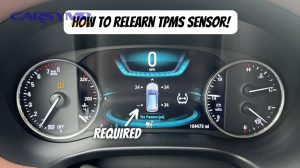
Manual TPMS relearn sequence: This procedure is required when sensors have been moved between wheel positions, new sensors have been installed, or the ECU has lost its sensor ID mapping. TPMS relearn procedures by vehicle vary significantly — some use a specific ignition key sequence, others require a handheld TPMS activation tool that broadcasts a low-frequency signal to each sensor in the correct order (typically left front → right front → right rear → left rear). When the ECU receives each sensor’s signal in the correct sequence, it stores the new ID mapping and confirms completion with a horn beep or a dashboard message. Always consult the vehicle’s owner manual or a model-specific guide for the exact relearn sequence, as an incorrect order will cause the procedure to fail.
What Does a Professional TPMS Service Include?
A professional TPMS service is a comprehensive tire & wheel service procedure that includes, at minimum, inspection of all TPMS sensors, replacement of the valve stem service kit components, a system reset or relearn, and a full function test to confirm all sensors are communicating correctly.
Most reputable tire shops recommend performing this TPMS service kit procedure every time tires are dismounted from the wheels — whether for new tire installation, rotation, or flat repair. The service kit includes four small components that sit at the base of the valve stem and form the seal between the sensor and the wheel: the valve core, the valve seal, the retaining nut, and the valve cap. These rubber and metal components are exposed to heat, road chemicals, and pressure cycling throughout the life of the tire, and they can corrode or crack over time. Replacing them during every tire service costs only a few dollars per wheel but prevents the slow air leaks and sensor moisture damage that commonly develop in neglected valve stems. A complete professional TPMS service typically also includes a TPMS diagnostic scan to check for stored fault codes, sensor activation to verify each unit is transmitting correctly, and a relearn procedure to confirm correct sensor-to-position mapping. This service is distinct from sensor replacement — if sensors are found to be functioning correctly, replacement is not necessary.
Can You Replace a TPMS Sensor Yourself?
Yes, a car owner can technically replace a TPMS sensor themselves, but the process requires tire dismounting and remounting equipment that most home mechanics do not have, making professional shop service the more practical choice for most people.
The DIY vs. shop TPMS service considerations come down to four factors: access to a tire mounting/demounting machine and balancer, the ability to purchase the correct vehicle-specific sensor, a TPMS programming or relearn tool to activate and register the new sensor, and the torque specifications for properly installing the valve stem nut without damaging the sensor or wheel. If all four conditions are met, the DIY process involves deflating and dismounting the tire, removing the old sensor (or valve stem assembly), installing the new sensor with the correct torque and a new service kit, remounting and balancing the tire, and completing the relearn procedure. One important note on parts selection: TPMS sensors are vehicle-specific — they must match the vehicle’s radio frequency (typically 315 MHz or 433 MHz) and in many cases must be programmed to the vehicle’s ECU before installation. Quality OEM sensors or reputable aftermarket brands (such as Schrader, Continental, or Dorman) are recommended over generic unbranded sensors, which have a higher failure rate and may not interface correctly with the vehicle’s receiver module.
How Much Does Tire Pressure Monitoring System Service Cost?
A TPMS service cost estimate ranges from $0 for a basic reset at a tire retailer to $400 or more for a full four-sensor replacement with labor, depending on the specific repair needed, the vehicle make and model, and whether OEM or aftermarket parts are used.
The table below provides a practical cost reference for the most common TPMS service scenarios car owners are likely to encounter.
| Service Type | Typical Cost Range | Notes |
|---|---|---|
| Tire pressure check and inflation | Free–$5 | Most gas stations and tire shops |
| TPMS system reset / relearn | Free–$30 | Free at many retailers (Discount Tire, etc.) |
| TPMS service kit (per wheel) | $5–$15 | Valve core, seal, nut, cap replacement |
| Single TPMS sensor replacement | $50–$100 | Includes part, installation, remount, balance |
| Full set (4 sensors) replacement | $200–$400 | OEM sensors at higher end; aftermarket at lower |
| Receiver module replacement | $75–$200 | Labor-intensive; varies by vehicle |
| OBD-II TPMS diagnostic scan | $30–$75 | At independent shop; may be free at dealer with repair |
What Is the Average Cost of TPMS Sensor Replacement?
The average cost of a single TPMS sensor replacement is $50–$100 per wheel at a tire shop, which includes the sensor unit, installation, tire remounting, and wheel rebalancing — with OEM sensors typically costing more than quality aftermarket alternatives.
This TPMS sensor replacement overview reflects significant price variation depending on the vehicle. Luxury and European vehicles — such as BMW, Mercedes-Benz, or Audi — often use proprietary sensors that cost $80–$150 each, while domestic vehicles like Ford, Chevrolet, or Ram may use sensors priced at $25–$60 per unit. Labor is relatively consistent across vehicles because the process of dismounting and remounting a tire takes roughly the same amount of time regardless of the sensor price. For vehicles where TPMS sensor battery life expectations suggest all four sensors are approaching end-of-life simultaneously — a common situation in vehicles between 8 and 12 years old — replacing all four sensors during the same service visit is more cost-effective than returning for individual replacements as each sensor fails, since the labor cost of tire dismounting is incurred only once.
Are There Any Free TPMS Services Available?
Yes, several TPMS services are genuinely free at major tire retailers, most notably the TPMS sensor relearn and reset procedure, which many shops complete in under two minutes using a handheld activation tool at no charge.
Retailers such as Discount Tire, Firestone Complete Auto Care, and Pep Boys regularly offer free TPMS checks as part of their complimentary tire inspection services. This free service applies specifically to the reset and relearn procedure — it does not cover sensor replacement, valve stem service kit installation, or diagnostic scanning for fault codes. Understanding this distinction helps car owners avoid paying for a reset that should be complimentary. When visiting a shop after a tire rotation or seasonal wheel swap, always ask specifically whether a TPMS relearn is included in the service. In most cases it is, but confirming upfront prevents the frustration of a TPMS warning light reappearing days later because the relearn was skipped.
What Else Should Car Owners Know About Tire Pressure Monitoring System Maintenance?
Beyond repairing active faults, effective TPMS maintenance includes understanding how external factors — seasonal temperature swings, tire sealant use, seasonal tire set swaps, and federal safety regulations — can affect system performance and trigger warnings that are not related to sensor hardware failures.

These micro-context scenarios represent the edge cases that dealership service advisors and experienced tire technicians encounter regularly, yet they are rarely explained to car owners at the point of service. The following sections address each one directly.
How Does Cold Weather Affect Your TPMS and Trigger False Warnings?
Seasonal temperature changes and TPMS alerts are directly connected: tire pressure drops approximately 1 PSI for every 10°F decrease in ambient temperature, which means a cold overnight temperature drop of 20–30°F can reduce tire pressure enough to trigger the TPMS warning light even when no air has actually escaped from the tire.
This is one of the most common misunderstandings car owners have about their TPMS. In autumn and early winter, when overnight temperatures fall sharply, it is entirely normal for the TPMS light to illuminate in the morning and turn off after 10–15 minutes of driving as the tires warm up and pressure increases. However, relying on this pattern to dismiss TPMS warnings is a mistake — the correct response is always to check the actual tire pressure with a gauge and inflate tires to the recommended cold PSI. In colder months, tires naturally lose pressure more quickly, and proactive monthly pressure checks become especially important. Some TPMS sensor batteries also drain faster in cold climates because the sensor transmits more frequently when pressure is fluctuating near the warning threshold.
Can Using a Tire Sealant Kit Damage Your TPMS Sensors?
Yes, using a foam or liquid tire sealant kit to repair a flat tire can permanently damage TPMS sensors, and several vehicle manufacturers explicitly warn against the use of sealant-based flat repair kits in vehicles equipped with direct TPMS.
The mechanism of damage is straightforward: liquid sealant is injected into the tire through the valve stem and distributed by driving, coating the interior of the tire to seal a puncture. Because direct TPMS sensors are mounted inside the tire — either on the valve stem or on the rim — the sealant coats the sensor housing, clogs the pressure inlet port, and can cause the sensor to read inaccurately or fail entirely. In some cases, the sealant hardens around the sensor, making removal difficult without damaging the valve stem or the wheel. If a sealant kit has been used in a tire that also contains a TPMS sensor, always inform the tire technician before service — they will need to inspect and likely replace the affected sensor and thoroughly clean the wheel interior before mounting a new tire.
What Happens to TPMS When You Switch Between Seasonal Tire Sets?
When a driver switches between two sets of mounted tires — for example, summer performance tires and winter tires on separate wheel sets, each with their own TPMS sensors — the vehicle’s ECU must be reprogrammed to recognize the new set of sensor IDs, or the TPMS service warning will appear.
This is one of the more misunderstood aspects of TPMS issues after tire rotation or replacement. Many drivers assume that because both wheel sets have functioning sensors, the system will automatically switch between them. In reality, each sensor has a unique ID code, and the ECU only communicates with the four IDs it has been trained to recognize. When a second set of wheels is installed, the new sensors are strangers to the ECU — it receives no signal from sensors it does not know, interprets this as a system fault, and triggers the warning. The solution is straightforward: every time seasonal wheels are swapped, a TPMS relearn procedure must be performed to register the new sensor IDs. Some shops offer a “TPMS swap service” as a standalone line item during seasonal changeovers, typically for $20–$50 in addition to the mounting and balancing cost. Drivers who perform seasonal swaps annually should budget for this as a regular maintenance expense and confirm it is included whenever a wheel swap is performed.
Is TPMS Required by Law, and What Happens If It Stops Working?
Yes, TPMS is required by federal law in the United States: the TREAD Act mandated that all new passenger vehicles weighing under 10,000 lbs manufactured on or after September 1, 2007, be equipped with a functional tire pressure monitoring system before sale.
This regulation was a direct legislative response to a wave of fatal tire-related accidents in the late 1990s and early 2000s linked to underinflated tires. The National Highway Traffic Safety Administration (NHTSA) enforced the standard to ensure that all drivers receive a warning when tire pressure drops 25% or more below the vehicle manufacturer’s recommended PSI. From a practical standpoint, a non-functional TPMS does not result in a roadside fine for the driver, but it does create a safety exposure — the driver is no longer receiving automated warnings about tire pressure loss that could lead to a blowout. In addition, a failed TPMS will cause a vehicle to fail a state safety inspection in jurisdictions that include TPMS functionality in their inspection criteria, which includes states such as New York, New Jersey, and several others. According to NHTSA research, properly inflated tires reduce the risk of a tire-related crash by preventing the overheating and structural fatigue that leads to tread separation and blowouts. Maintaining a functioning TPMS is not just a legal matter — it is a foundational element of vehicle safety that protects the driver, passengers, and everyone else on the road.